
Enterprise software is transforming at a breathtaking pace in 2026. Companies are racing to adopt new technologies and smarter solutions, making the right choice of enterprise software development services more important than ever.
This guide is designed to help business leaders, CTOs, and decision-makers navigate the complex landscape ahead. We will break down key trends, service models, technology stacks, and vendor selection strategies, so you can make informed decisions and future-proof your software investments.
Get ready to discover actionable insights that will empower your organization for innovation and growth.
The Evolving Landscape of Enterprise Software Development in 2026
The enterprise software landscape in 2026 is moving at a breakneck pace, driven by relentless digital transformation and rapidly shifting business models. Organizations now face a crossroads: adapt quickly or risk falling behind. As a result, enterprise software development services have become the backbone of competitive strategy for forward-thinking companies.
Digital transformation is more than a buzzword—it's a necessity. Over 70% of enterprises, according to Gartner, are investing in AI and automation to streamline operations and unlock new value. This surge is pushing enterprise software development services to center stage, with custom, scalable, and AI-powered solutions in high demand. Companies expect platforms that can process data in real time, automate workflows, and enable smarter decision-making.
Remote and hybrid work models are here to stay, fundamentally changing software requirements. Enterprises demand collaboration tools, robust security, and cloud-first strategies to connect distributed teams. Enterprise software development services now prioritize seamless integration, secure access, and the flexibility to scale as workforces become more dispersed and mobile.
Industry-specific solutions are also gaining traction, especially in healthcare, finance, manufacturing, and retail. Each sector requires tailored compliance and integration capabilities. For instance, healthcare software must be HIPAA-compliant, while financial platforms need to meet stringent data privacy regulations. Enterprise software development services help organizations navigate these complexities, ensuring solutions fit unique operational and regulatory needs.
The rise of SaaS, PaaS, and low-code/no-code platforms is accelerating innovation. These models empower businesses to deploy new tools faster, reduce development costs, and adapt to market changes. Platforms like Bubble and Mendix allow non-technical teams to build and iterate on solutions quickly. For a deeper dive into how these trends are reshaping business, explore Enterprise App Development Services.
The shift is clear in Fortune 500 companies, many of which are adopting microservices and event-driven architectures. These approaches boost agility, allowing enterprises to innovate without overhauling entire systems. For example, a global retailer might use microservices to update its inventory management while maintaining seamless customer experiences across channels.
In summary, the demands on enterprise software development services have never been higher. Companies need adaptable, integrated systems that keep pace with evolving business landscapes. Those who embrace this new era will stay ahead, leveraging technology as a true enabler of growth and resilience.
| Shift in Enterprise Software Needs | 2023 | 2026 |
|---|---|---|
| AI-powered automation | Emerging | Mainstream |
| Remote/hybrid work enablement | Growing | Essential |
| Industry-specific compliance | Important | Critical |
| Low-code/no-code adoption | Early | Widespread |
| Microservices architecture | Niche | Standard |
Core Enterprise Software Development Services in 2026
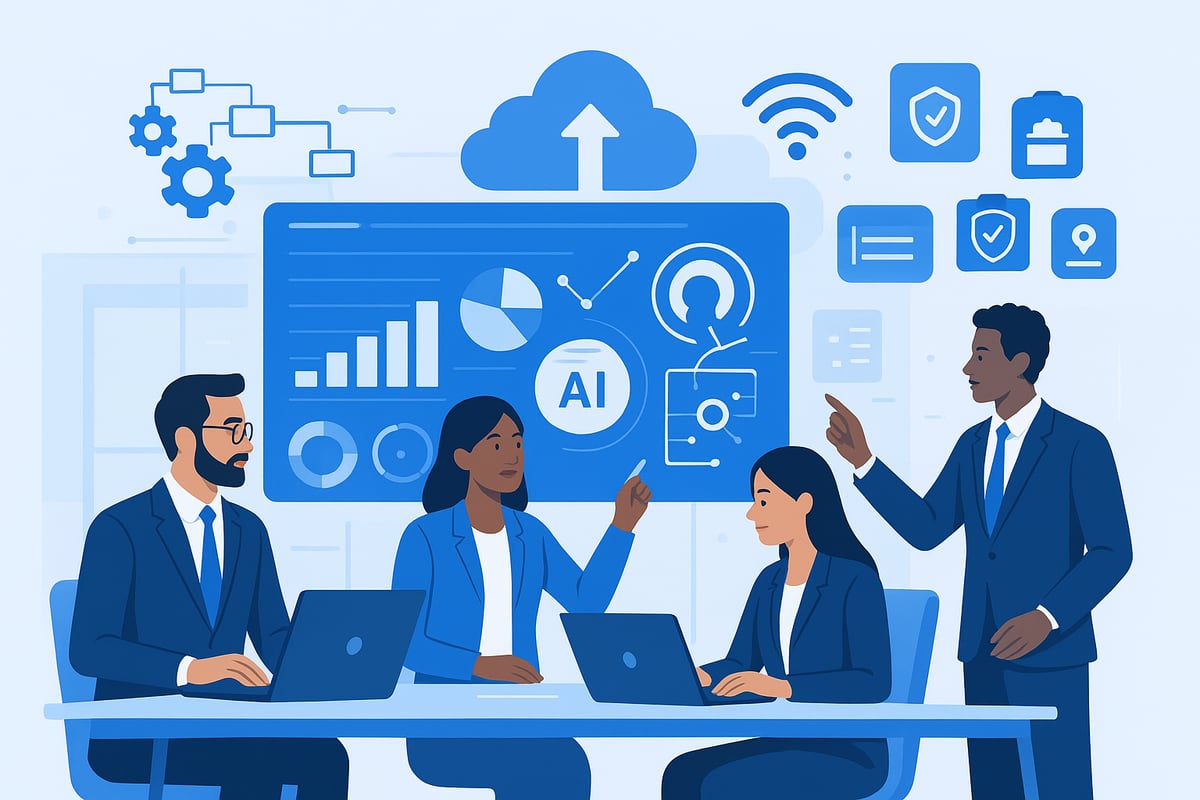
Enterprise software development services in 2026 are more dynamic and essential than ever. Organizations now demand tailored, scalable solutions that power their growth in a digital-first world. These services span custom application development, legacy modernization, mobile enablement, analytics, and ongoing support. The right mix helps businesses stay competitive, secure, and agile.
Let’s break down the core enterprise software development services shaping the future of digital transformation.
Custom Enterprise Application Development
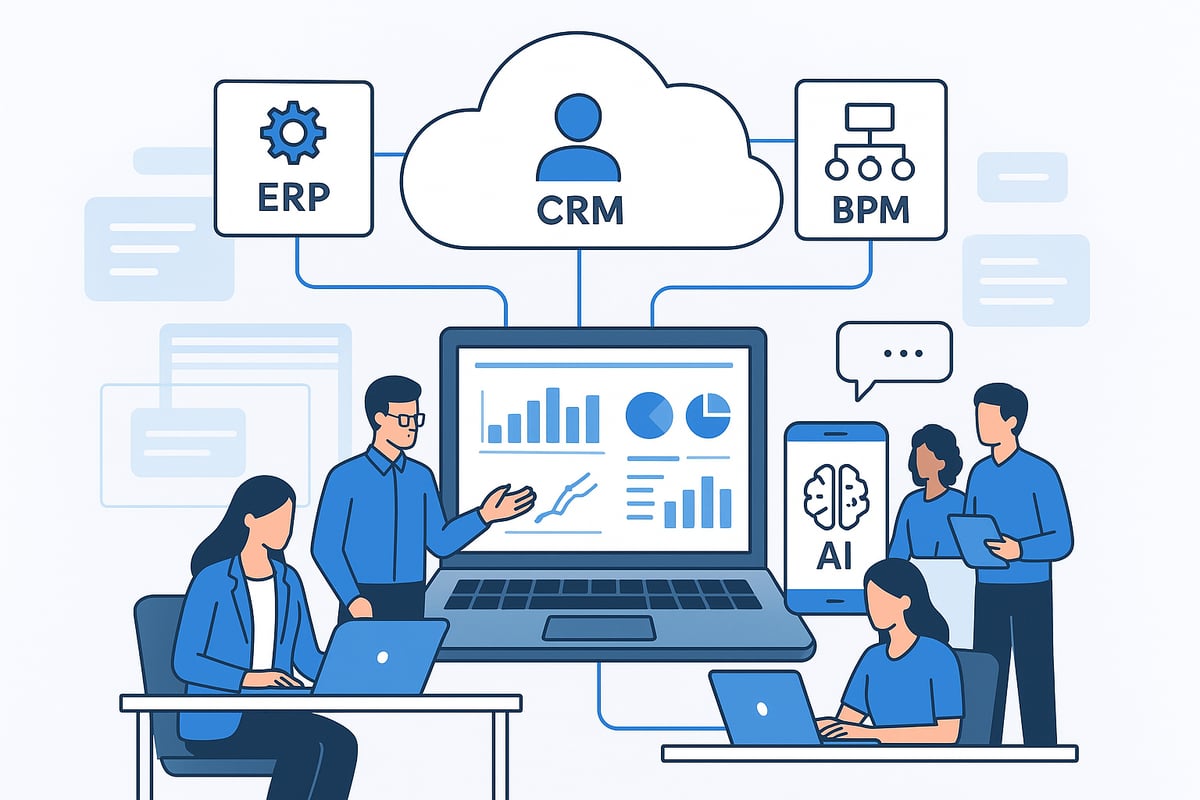
Custom enterprise application development is at the heart of enterprise software development services. In 2026, businesses require platforms that fit their exact processes, not generic tools. This includes custom ERPs, CRMs, HRMS, DMS, and LMS platforms designed for unique workflows.
The focus is on scalability and modularity, ensuring solutions can evolve with business needs. For example, a real estate firm might need a custom CRM that automates lead qualification, contract management, and reporting. These tailored solutions reduce manual effort and improve accuracy.
To dive deeper into how these solutions are crafted, explore Custom Enterprise Application Development.
Custom development empowers organizations to address challenges that off the shelf software cannot solve. This makes it a vital pillar of enterprise software development services.
Digital Transformation & Legacy Modernization
Digital transformation is pushing enterprises to rethink their legacy software. Modernizing outdated systems is a key part of enterprise software development services in 2026. Companies are re architecting decades old platforms into cloud native, microservices based, or event driven models.
This shift brings agility and cost savings. It also improves user experiences through faster, more intuitive interfaces. For instance, an industrial risk management provider migrated from a monolithic app to microservices. Report creation time dropped from 7 days to just 15 seconds.
Legacy modernization reduces technical debt. It helps organizations stay secure and compliant as regulations evolve. Overall, this service is central to future proofing enterprise software development services.
Enterprise Mobility and Remote Enablement
With remote and hybrid work now standard, enterprise mobility is a must. These enterprise software development services provide secure, mobile access to business systems for field teams, executives, and distributed workforces.
Mobile apps streamline logistics, inventory management, and data entry on the go. For example, a logistics company may use a custom mobile app to track shipments in real time and update inventory instantly. Security is always a top priority, with features like biometric authentication and encrypted connections.
Enterprise mobility ensures teams stay connected and productive, no matter where they work. This flexible approach is now a core part of enterprise software development services.
Data Management, Analytics & BI
Modern organizations rely on data to drive decisions. Data management, analytics, and BI have become foundational elements of enterprise software development services. Centralized data pipelines make it easy to collect, store, and analyze information from across the business.
AI powered analytics deliver real time insights for optimization. For example, marine and offshore industries use BI solutions with natural language processing to manage incidents and track compliance. These platforms provide dashboards and automated reporting that keep leaders informed.
Regulatory requirements are also addressed, ensuring data privacy and security. Robust analytics capabilities set leading enterprise software development services apart from the rest.
Application Support, Maintenance & Continuous Improvement
Building great software is only the beginning. Ongoing support and maintenance are crucial parts of enterprise software development services in 2026. This includes continuous monitoring, bug fixes, and performance optimization.
Support teams ensure systems stay secure and compliant as threats and regulations change. For example, proactive support can help enterprises save on license costs and maximize system uptime. Feedback loops and analytics drive ongoing enhancements, keeping solutions aligned with business needs.
Continuous improvement guarantees that enterprise software development services deliver lasting value, not just a one time solution.
Technology Stacks and Platforms Powering Enterprise Solutions
Selecting the right technology stack is a critical step for enterprise software development services in 2026. The right foundation empowers organizations to innovate, scale, and stay secure in a rapidly shifting digital landscape. With so many platforms and tools available, making informed choices has never been more essential.
Cloud-Native and Hybrid Architectures
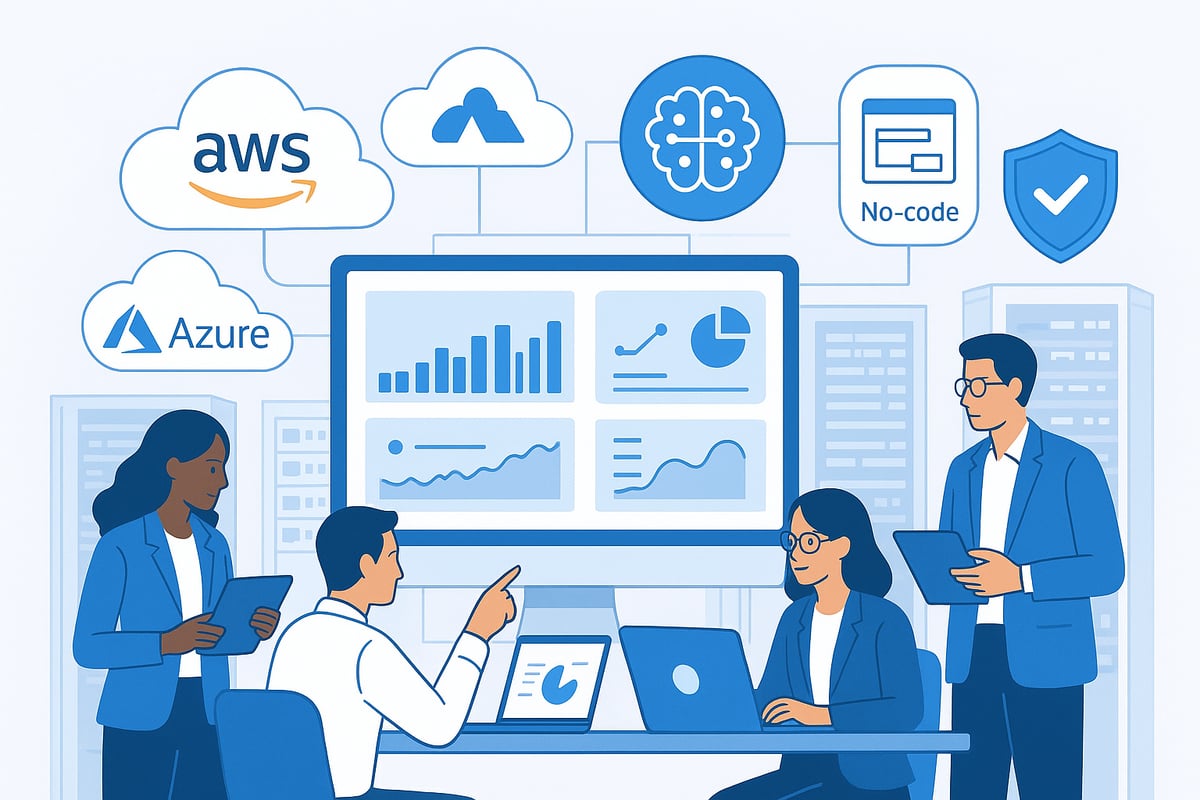
Cloud-native and hybrid architectures have become the backbone of modern enterprise software development services. Organizations are increasingly adopting multi-cloud strategies to ensure flexibility, redundancy, and cost optimization. By leveraging providers like AWS, Azure, and Google Cloud, enterprises can deploy scalable solutions that adapt to changing business needs.
Serverless computing, containerization, and edge computing are at the forefront of this transformation. Tools such as Docker and Kubernetes enable teams to package and deploy applications seamlessly across environments. Enterprises are also embracing serverless functions, using services like AWS Lambda and Azure Functions to handle variable workloads efficiently.
Here is a quick comparison of leading cloud providers for enterprise use:
| Provider | Key Features | Strengths |
|---|---|---|
| AWS | Lambda, S3, EC2, RDS | Global reach, vast service catalog |
| Azure | Functions, SQL, DevOps | Integration with Microsoft tools |
| Google Cloud | BigQuery, AI Platform | AI/ML, big data focus |
These architectures empower enterprise software development services to deliver resilient, high-performing applications that scale as the business grows.
AI, RPA, and Automation Tools
Artificial intelligence and robotic process automation are transforming enterprise software development services. AI-driven analytics, chatbots, and intelligent automation are now standard across many industries, driving efficiency and actionable insights.
Popular frameworks like TensorFlow, PyTorch, and scikit-learn support advanced machine learning models. RPA platforms such as UiPath and Blue Prism handle repetitive tasks, freeing up employees for higher-value work. Internal talent marketplaces powered by AI match employees to projects with remarkable accuracy.
For instance, AI can streamline onboarding, predict customer churn, or automate invoice processing. These capabilities are seamlessly integrated into larger enterprise ecosystems, enhancing productivity and decision-making.
Integrating AI and automation tools into enterprise software development services enables companies to respond rapidly to market demands and unlock new opportunities for innovation.
No-Code/Low-Code Platforms for Enterprise
No-code and low-code platforms are revolutionizing enterprise software development services by enabling rapid prototyping and fast deployment of business applications. Platforms like Bubble, Mendix, and OutSystems allow teams to build complex workflows and internal tools without deep coding expertise.
The mainstream adoption of these platforms means enterprises can launch MVPs and automate processes in days rather than months. This approach empowers non-technical teams, reduces costs, and accelerates innovation cycles.
However, it is crucial to select the right platform for your specific needs. To help with this decision, see this detailed guide on Choosing No-Code Platforms for Enterprise. The right choice will ensure compatibility, scalability, and seamless integration with existing systems.
By incorporating no-code and low-code solutions, enterprise software development services can support both rapid experimentation and robust, enterprise-grade deployments.
Security and Compliance Technologies
Security is a core pillar for enterprise software development services. In 2026, organizations are prioritizing zero trust frameworks, advanced threat monitoring, and compliance automation to protect sensitive data and maintain regulatory standards.
Top security technologies include:
- Identity and access management systems
- End-to-end encryption
- Automated compliance tools for GDPR and HIPAA
- Real-time threat detection and response platforms
Financial and healthcare enterprises are integrating compliance modules directly into their software, ensuring that security is not an afterthought but an integral part of every solution.
Strategic selection of technology stacks and platforms is essential for enterprise software development services to deliver secure, scalable, and innovative solutions that meet the demands of modern business.
The Enterprise Software Development Process: Step-by-Step in 2026
The journey of building enterprise software in 2026 is more dynamic and collaborative than ever. Rapid shifts in technology and business priorities require a flexible, iterative approach. Here’s a step-by-step look at how leading organizations execute enterprise software development services for optimal results.
Step 1: Discovery and Requirements Gathering
Everything starts with discovery. Teams conduct stakeholder interviews and process mapping to understand business objectives and challenges.
Workshops help align everyone on priorities and define the scope of enterprise software development services. By identifying pain points early, businesses set a strong foundation for success.
A manufacturing client, for example, might use collaborative sessions to outline must-have ERP features. This ensures that every department’s needs are captured, reducing costly changes later.
Clear documentation and shared understanding at this stage streamline the entire process.
Step 2: Solution Architecture & Technology Selection
Once requirements are clear, architects design a solution that balances scalability, performance, and cost. This step is crucial for future-proofing enterprise software development services.
Teams evaluate platforms, frameworks, and integration strategies. Should you go cloud-native, use microservices, or choose a hybrid approach? Selecting the right stack impacts flexibility and growth.
For a global logistics firm, picking a microservices-based cloud stack enabled seamless expansion and integration with partners. Thoughtful architecture prevents bottlenecks and ensures your software evolves with your business.
Step 3: UI/UX Design and Prototyping
User experience is central in 2026. UI/UX teams use wireframes and interactive prototypes to visualize workflows and interfaces.
Usability testing and accessibility checks are built into enterprise software development services from the start. Mobile-first design principles ensure solutions work across devices.
For HRMS platforms, Figma-based design sprints help teams iterate quickly on layouts and features. Early visual feedback reduces rework and improves adoption.
Collaboration between designers, developers, and business users leads to intuitive, efficient solutions.
Step 4: Agile Development & Iterative Delivery
Development now moves in agile sprints. Cross-functional teams—dev, QA, ops, business—work together, releasing new features in short cycles.
Continuous feedback and rapid pivots are core to enterprise software development services. Weekly releases allow sales teams, for example, to test CRM updates in real time.
Modern agile practices often include autonomous AI agents that automate routine coding and testing tasks. According to AI agents in enterprise software, these digital employees speed up delivery and boost quality.
This approach keeps projects aligned with business needs and adapts to change quickly.
Step 5: Quality Assurance & Testing
Before launch, rigorous testing ensures reliability and compliance. QA teams use a mix of automated and manual tests to check functionality, security, and performance.
Regulatory requirements are central to enterprise software development services, especially in finance and healthcare. Regression testing keeps updates from breaking existing features.
For example, financial software undergoes user acceptance and compliance testing to meet industry standards. A thorough QA process builds trust and prevents costly errors post-launch.
Step 6: Deployment, Integration & Change Management
Deployment is more than just launching code. CI/CD pipelines automate rollouts and integrations with existing systems.
Change management is a key part of enterprise software development services. User training, clear documentation, and phased rollouts help teams adapt smoothly.
Migrating help desk workflows to platforms like Atlassian with minimal downtime is now standard. Planning for integration and user adoption ensures the transition is seamless.
Support teams are ready to address issues as they arise, keeping business operations stable.
Step 7: Post-Launch Support & Continuous Improvement
The process does not stop at launch. Ongoing monitoring, analytics, and proactive maintenance are vital in enterprise software development services.
User feedback drives continuous enhancements, while support teams resolve bugs and optimize performance.
For many organizations, this stage unlocks new value, such as license cost savings and improved uptime, ensuring long-term success.
Choosing the Right Enterprise Software Development Partner
Choosing the right enterprise software development services partner is a pivotal decision for any organization aiming to innovate and scale in 2026. The right collaboration can unlock new growth, while the wrong choice may hinder digital transformation and erode ROI. With a crowded vendor landscape and evolving technology, how can decision-makers confidently select a partner that aligns with their vision?
Evaluating No-Code and AI-Driven Agencies
As the demand for enterprise software development services grows, organizations are increasingly considering agencies that specialize in no-code and AI-driven solutions. These vendors offer speed and flexibility, making them attractive for rapid prototyping and cost-effective internal tools.
When assessing such partners, look for proven expertise with platforms like Bubble, Mendix, or OutSystems. Check their ability to integrate with core enterprise systems and scale solutions as your needs evolve. It's also wise to evaluate their approach to security, compliance, and long-term support.
Given the rapid low-code development projections, selecting a partner with a strong track record in these technologies can be a competitive advantage. Ask for case studies and examples of complex workflows they've delivered for similar organizations. A transparent, consultative approach is a must.
Big House Technologies: Accelerating Enterprise Software with No-Code and AI
Big House Technologies is a standout provider in the enterprise software development services space, focusing on no-code and AI-driven platforms. Their services cover custom software, MVPs, internal tools, and seamless AI integration for both enterprises and startups.
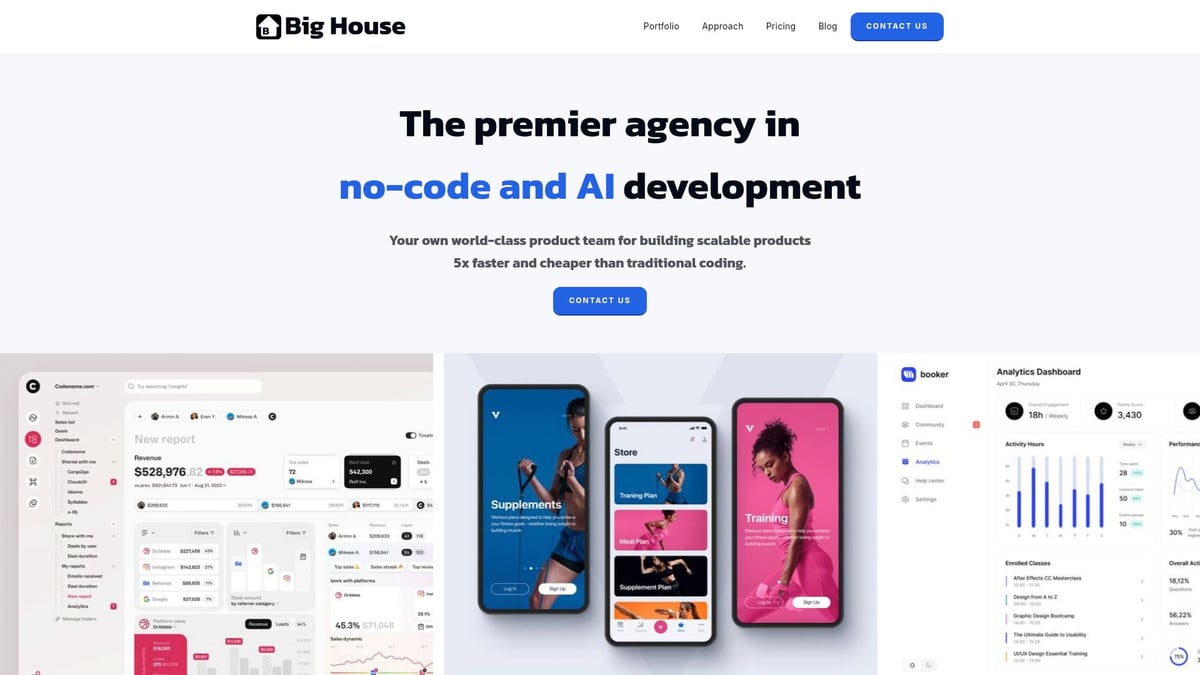
Clients benefit from up to 5x faster delivery and significant cost savings, as Big House leverages platforms like Bubble and Lovable for scalable solutions. Enterprises have reported 3-4x reductions in project costs and much quicker time to market.
If your organization needs rapid innovation and flexible deployment, Big House Technologies can help future-proof your software initiatives. Their expertise empowers companies to adapt quickly and stay ahead in a competitive landscape.
Red Flags and Common Pitfalls in Vendor Selection
Selecting enterprise software development services partners is not without risks. Watch for these common red flags:
- Overpromising on delivery timelines or capabilities
- Lack of relevant domain expertise or references
- Poor communication or unclear project management processes
- Inflexible contracts or limited post-launch support
Projects often falter due to misaligned expectations or vague requirements. Always insist on detailed proposals, transparent pricing, and a robust support plan. References and testimonials from similar industries can provide valuable reassurance.
Building a Long-Term Partnership
The most successful enterprise software development services engagements are built on trust and shared goals. Prioritize partners who invest in understanding your business, offer strategic alignment, and demonstrate ongoing commitment.
Set clear success metrics and schedule regular reviews to track progress. Scalability planning and an innovation roadmap ensure your solutions stay relevant as needs evolve. Multi-year partnerships often yield continuous improvement and sustained digital transformation.
Choosing wisely today means your organization will be ready to adapt and thrive in an ever-changing digital world.
The Future of Enterprise Software Development: What’s Next?
The world of enterprise software development services is on the brink of dramatic transformation. As 2027 approaches, business leaders face a landscape defined by rapid innovation, new technologies, and changing expectations. Staying competitive will require more than incremental upgrades. It demands a forward-looking mindset and a willingness to adapt.
Emerging Technologies to Watch
Enterprise software development services are being reshaped by several groundbreaking technologies. Generative AI is enabling companies to automate code creation, streamline workflows, and deliver hyper-personalized user experiences. Quantum computing, while still in its infancy, promises to solve complex optimization and security challenges that were once out of reach.
Blockchain is gaining traction as a tool for enterprise security, audit trails, and decentralized applications. Edge AI is emerging as a game-changer for industries like manufacturing and logistics, where real-time data processing at the source is critical. By leveraging IoT sensors and edge computing, organizations can achieve predictive maintenance and reduce downtime.
The adoption of containers and microservices has also reached near-universal levels, making systems more agile and resilient. For more on this, see Container adoption statistics.
Here’s a quick comparison of rising technologies:
| Technology | Key Benefit | Use Case Example |
|---|---|---|
| Generative AI | Automated coding, UX | Workflow automation |
| Quantum Computing | Advanced optimization | Financial risk modeling |
| Blockchain | Security, transparency | Supply chain management |
| Edge AI | Real-time analytics | Predictive machine servicing |
As these technologies mature, they will become integral to enterprise software development services, driving new business opportunities and efficiencies.
Preparing Your Organization for the Next Wave
To truly capitalize on the future of enterprise software development services, organizations must foster a culture of innovation and agility. This means investing in digital literacy, upskilling teams, and supporting agile leadership. The rise of citizen developers, empowered by no-code and low-code platforms, is democratizing software creation across departments.
For large enterprises, this trend is already unlocking new levels of productivity. Read more about how no-code is empowering teams in No-Code for Large Enterprises.
Innovation labs are becoming common, allowing organizations to test new concepts and pilot emerging technologies before full-scale deployment. By embracing continuous learning and feedback, companies can adapt to shifting market needs and regulatory landscapes.
Key steps to prepare include:
- Building cross-functional innovation teams
- Encouraging experimentation and rapid prototyping
- Aligning technology adoption with business strategy
With the right mindset and support, enterprise software development services can transform from a cost center into a driver of competitive advantage.
Sustainability and Social Impact in Software Development
Sustainability and ethical considerations are now central to enterprise software development services. Organizations are adopting green IT practices, such as energy-efficient architectures and ethical sourcing, to minimize environmental impact.
Software solutions increasingly support ESG (Environmental, Social, Governance) goals, helping companies track carbon footprints and ensure compliance. Business intelligence platforms now offer features to monitor sustainability metrics, making it easier for decision-makers to align operations with global standards.
By prioritizing social impact and sustainability, enterprise software development services not only meet regulatory requirements but also build trust with customers and stakeholders.
After exploring how no code and AI are transforming enterprise software in 2026, you might be thinking about the next steps for your own business—especially if you need to move fast and stay ahead. The reality is, launching a scalable MVP doesn’t have to take months of development headaches. With the right approach and tools, you can turn your idea into a working product in a fraction of the time, without compromising quality or breaking the bank. Curious how you can make this happen for your team? Check out how others are doing it: Launch Your MVP in Weeks, Not Months.

About Big House
Big House is committed to 1) developing robust internal tools for enterprises, and 2) crafting minimum viable products (MVPs) that help startups and entrepreneurs bring their visions to life.
If you'd like to explore how we can build technology for you, get in touch. We'd be excited to discuss what you have in mind.
Other Articles
Discover how vibe coding tools are transforming software development in 2026. Explore top platforms, benefits, and practical applications for businesses.
Discover six top lovable alternative picks for 2026 Compare features pricing and pros to find the best platform for your app or AI project and boost productivity
Discover proven custom development strategies and best practices for 2025. Master planning, execution, and emerging trends to optimize your next project’s success.