
Imagine a future where your business predicts challenges, automates routine decisions, and adapts instantly to new information. This is the promise of erp ai in 2026.
Artificial intelligence is transforming ERP from a static record-keeping tool into a dynamic engine for smarter, more efficient business operations. In this guide, you will explore the latest erp ai capabilities, discover real-world applications, and learn how to future-proof your organization.
Ready to lead in the era of erp ai? Dive in to master the tools and strategies that will define business management for years to come.
The Evolution of ERP and the Rise of AI
Imagine the business world in the 1990s. Enterprise resource planning (ERP) systems were modular, clunky, and often installed on-premise. Their main promise? To gather all business data into one place and become the single source of truth for operations.
Today, the landscape looks very different. Modern ERP solutions are cloud-based, flexible, and built for rapid change. Yet, the core goal remains: to empower organizations with unified, accurate data that drives smarter decisions and streamlined processes.
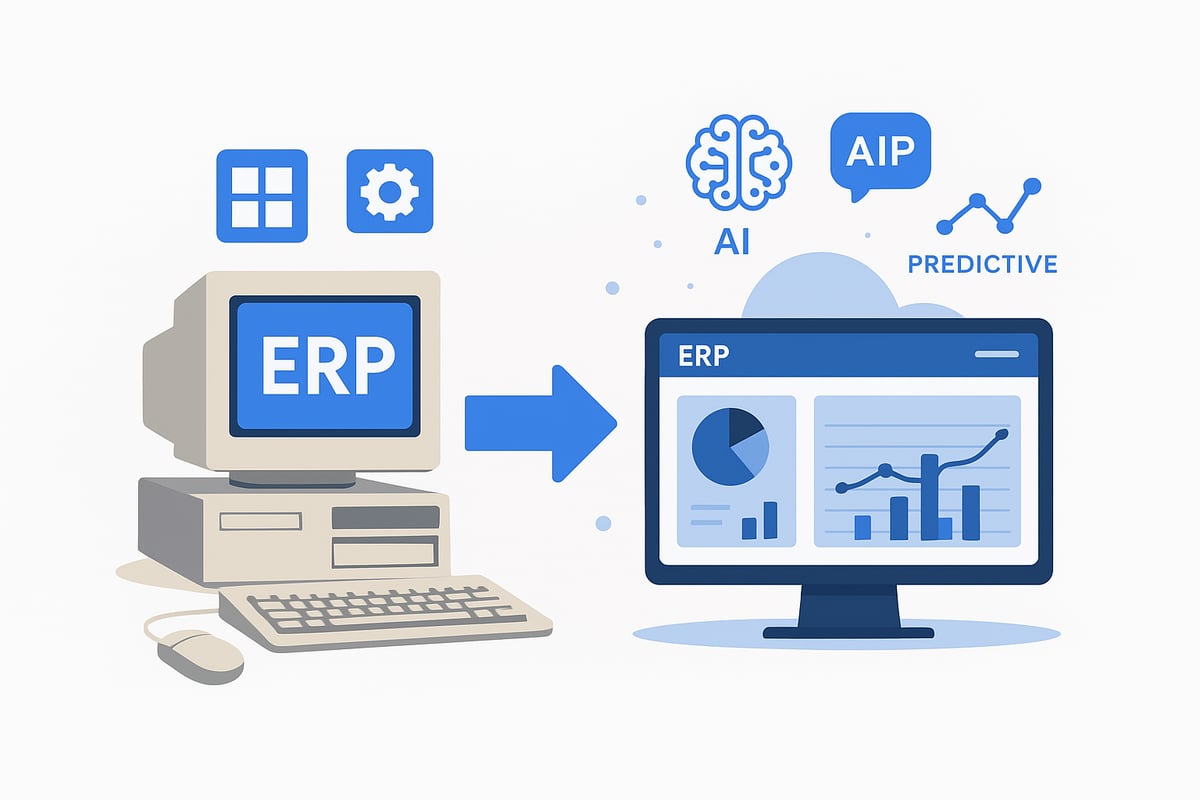
From Traditional ERP to Intelligent Systems
ERP platforms have always aimed to centralize data, but their early versions came with significant limitations. Manual data entry was time-consuming, and information often remained siloed in different departments. This led to slow decision-making and missed opportunities for growth.
As businesses generated more data and markets became more volatile, traditional ERP systems struggled to keep up. The need for advanced analytics and rapid insights grew stronger.
The turning point arrived with the rise of cloud computing and the explosion of big data. Cloud-based ERP solutions unlocked greater scalability, accessibility, and real-time collaboration. Still, the biggest leap came with the integration of erp ai, which started automating repetitive tasks, delivering real-time insights, and enhancing overall business intelligence.
Key Milestones in ERP Evolution
| Year | Advancement | Impact |
|---|---|---|
| 1990s | Modular ERP on-premise | Centralized data, manual input |
| 2000s | Cloud ERP emerges | Scalability, remote access |
| 2020s | AI integration in ERP | Automation, predictive insights |
| 2024 | Generative AI assistants | Personalized, proactive systems |
Recent milestones include Microsoft’s $13B partnership with OpenAI and SAP’s launch of generative AI assistants. The ERP software industry now generates over $44 billion per year, reflecting its critical role in modern business.
How AI is Reshaping ERP
The arrival of erp ai has transformed ERP systems from static record-keepers into dynamic, intelligent business engines. Today, AI technologies like machine learning, natural language processing, predictive analytics, and robotic process automation are deeply embedded in leading ERP platforms.
This shift means businesses can move from reactive management to proactive decision-making. For example, AI-driven ERPs can forecast demand, automate financial processes, and even flag anomalies before they become critical issues. Real-world impact is clear: organizations using erp ai report higher profitability, according to the IBM Institute for Business Value.
Cloud ERP and AI form a powerful synergy. With more computing power and faster innovation cycles, companies can quickly adapt to market changes. Microsoft Dynamics 365 and SAP’s “Joulie” generative AI showcase how erp ai is now central to daily operations, providing smarter recommendations and automating routine work.
For a deeper dive into future projections and how AI is set to fully transform ERP by 2027, see AI Transforming ERP Software Systems, ISG Says.
The rise of erp ai is not just an upgrade, it is a complete reinvention of how businesses operate. Those who embrace this new era are already seeing improved agility, efficiency, and a significant competitive edge.
Core AI Technologies Powering ERP in 2026
The foundation of modern erp ai lies in a blend of advanced technologies that reshape how organizations manage data, processes, and decisions. These core innovations drive the transformation of ERP platforms from static databases into dynamic, intelligent business engines. Let’s explore the five key technologies powering erp ai in 2026.
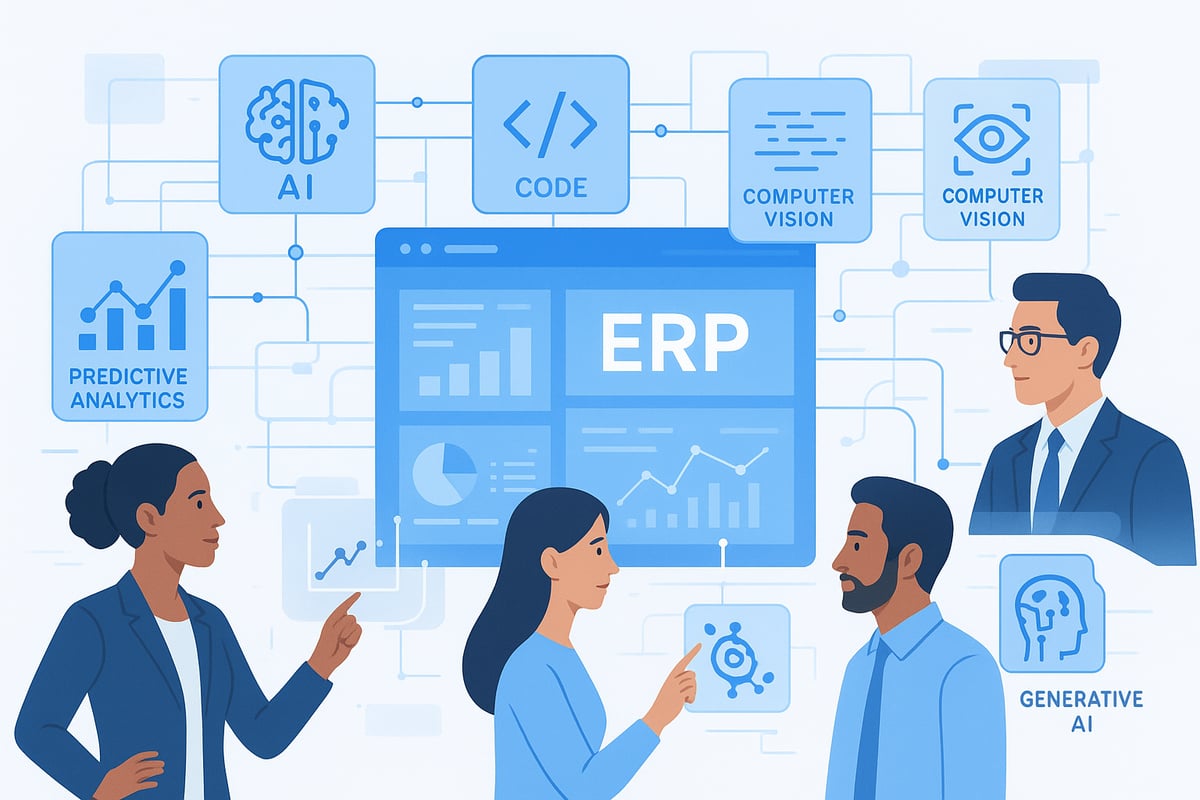
Predictive Analytics and Forecasting
Predictive analytics is at the heart of erp ai, enabling organizations to anticipate trends and make smarter decisions. AI-driven forecasting tools analyze historical sales, supply chain data, and even third-party market signals to predict demand, optimize inventory, and prevent costly stockouts.
IoT sensors and digital twins power predictive maintenance, letting businesses avoid downtime by identifying issues before they escalate. For example, IBM’s predictive maintenance solutions help energy and agriculture sectors increase equipment uptime and reduce costs. According to AI In The ERP Industry Statistics: ZipDo Education Reports 2025, companies using erp ai for forecasting report significant reductions in operational disruptions.
Natural Language Processing (NLP) and Conversational AI
Natural language processing unlocks new possibilities for erp ai by letting systems understand and interact using human language. Employees can now query databases, analyze sentiment, or process documents simply by typing or speaking.
Large language models like ChatGPT are embedded within ERP workflows, powering chatbots and virtual assistants. These tools handle HR inquiries, generate reports, or assist customers 24/7. SAP’s generative AI, for instance, drafts emails and synthesizes account briefings, making communication seamless within erp ai environments.
Machine Learning and Robotic Process Automation (RPA)
Machine learning empowers erp ai to learn from organizational data and continuously improve. Algorithms spot patterns in financial transactions, sales cycles, or supply chain events, enabling more accurate predictions and recommendations.
Robotic process automation takes over repetitive tasks such as data entry, report generation, or invoice processing. This synergy reduces manual errors, cuts costs, and frees staff for higher-value work. Oracle’s AI-assisted ERP financial tools are a prime example, automating invoice approvals and cash flow management with erp ai precision.
Computer Vision and Image Recognition
Computer vision brings a new dimension to erp ai by enabling systems to analyze visual data. AI can scan and verify invoices, inspect manufacturing materials for defects, or ensure compliance through document recognition.
For instance, ERP modules from SAP and Oracle use automated image recognition to streamline invoice verification and quality control. This not only accelerates workflows but also supports regulatory standards, making erp ai a vital tool for industries where accuracy is mission-critical.
Generative AI for Content and Scenario Planning
Generative AI supercharges erp ai by automating content creation and scenario planning. These tools generate customized reports, draft communications, and model business scenarios based on real-time inputs.
AI-driven recommendations help organizations navigate regulations, improve sustainability, and refine strategic plans. For example, ERP platforms can now suggest compliance actions based on new laws or model financial outcomes for different business strategies, showcasing the versatility of erp ai in guiding future-ready decisions.
Practical Applications and Use Cases of AI in ERP
Artificial intelligence is reshaping what’s possible with erp ai, bringing automation, efficiency, and real-time intelligence to every corner of business operations. Let’s explore how organizations are leveraging these advances for transformative results.
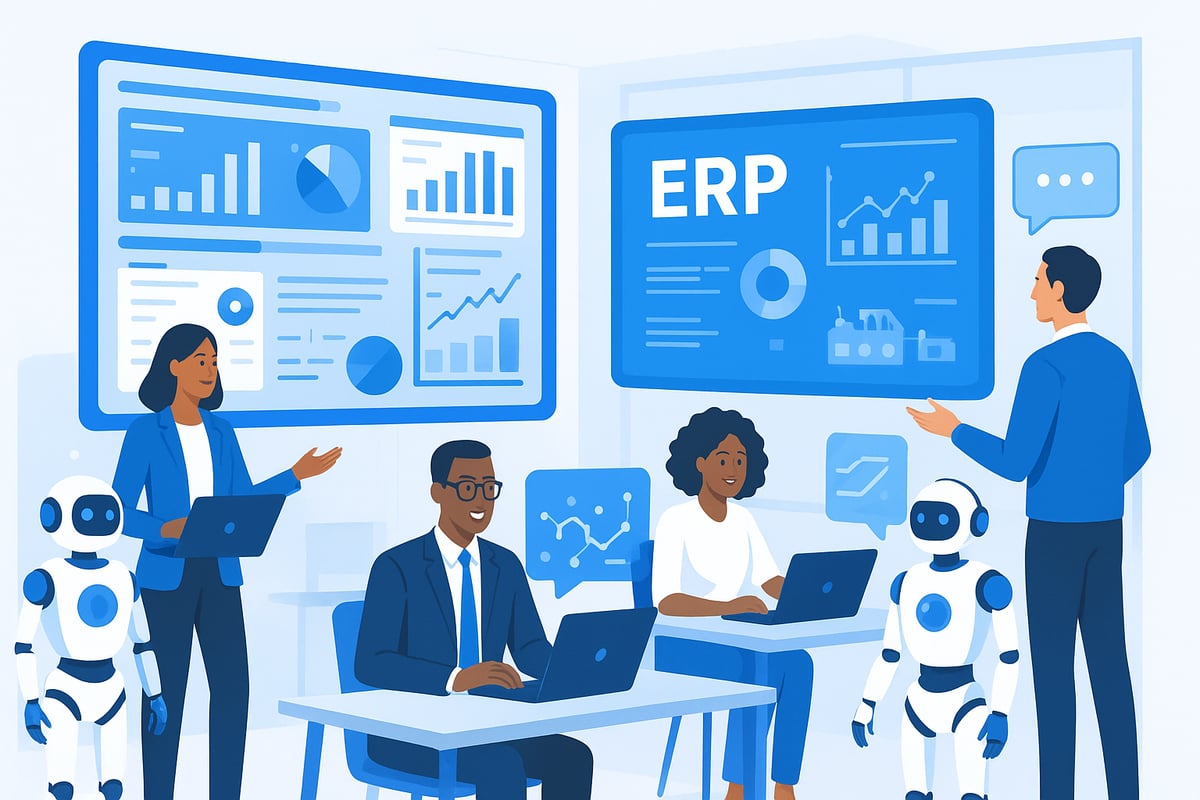
Intelligent Automation Across Business Functions
With erp ai, businesses are automating repetitive and time-consuming tasks across multiple departments. Invoice processing is now powered by natural language processing and robotic process automation, drastically reducing manual data entry and errors.
- Automated HR workflows streamline recruiting, onboarding, and employee learning recommendations.
- AI chatbots provide 24/7 support, handling routine customer queries and enhancing the CRM experience.
- Spend management tools use machine learning to optimize cash flows and budgeting.
For example, platforms like SAP SuccessFactors use AI to personalize employee experiences and suggest tailored learning paths. This frees up staff to focus on higher-value work, making daily operations smoother and more productive.
Supply Chain and Order Management Optimization
erp ai is revolutionizing supply chain management by delivering real-time insights and predictive capabilities. AI-driven forecasting helps prevent stockouts and overproduction, ensuring inventory levels match actual demand.
- Intelligent order management tracks fulfillment, sends automated customer updates, and suggests optimal delivery routes.
- Recommendation engines guide purchasing decisions based on sustainability goals and budget constraints.
- Manufacturers and retailers benefit from AI-enabled supply chain resilience, quickly responding to disruptions.
IBM Sterling Order Management, for example, uses AI to monitor the entire order lifecycle, improving transparency and efficiency. The result is smarter, faster, and more reliable supply chain operations.
Process Mining and Workflow Optimization
Process mining, powered by erp ai, analyzes business workflows to pinpoint inefficiencies and recommend improvements. AI tools can map out entire processes, highlight bottlenecks, and suggest streamlined alternatives.
- Identify steps causing delays or unnecessary costs.
- Support sustainability goals by optimizing resource usage.
- Detect compliance risks and suggest corrective actions.
IBM offers process mining solutions that help businesses achieve KPI compliance and reduce fraud. By continuously monitoring and refining workflows, organizations can boost productivity and maintain agility in changing environments.
Anomaly Detection and Risk Management
With erp ai, companies now have early warning systems that flag anomalies and potential risks in real time. AI algorithms monitor transactions for fraud, detect compliance breaches, and spot operational irregularities.
- Real-time alerts for suspicious activities in finance, banking, and manufacturing.
- Automated risk scoring for transactions and business partners.
- Enhanced audit trails and documentation for regulatory compliance.
For example, banks are leveraging AI-powered ERP to identify deviations from KPI standards and prevent costly errors. This proactive approach minimizes risk and strengthens overall business security.
Digital Transformation and App Modernization
The transformation of legacy systems is accelerating, thanks to erp ai. AI automates code migration, testing, and management, making it easier to modernize existing ERP platforms. Integration with no-code solutions is a game changer here.
No-code and AI platforms, like those from No-code ERP AI solutions, enable rapid prototyping and deployment of ERP enhancements without traditional development delays. Businesses can:
- Build and test custom ERP logic up to five times faster.
- Cut costs significantly compared to conventional IT projects.
- Empower non-technical teams to automate and innovate.
These advances ensure that organizations stay future-ready, adapting quickly to new business needs and regulatory demands.
Real-World Results and Statistics
The impact of erp ai is measurable and compelling. Companies using AI-driven ERP solutions report substantial improvements in profitability and efficiency. According to IBM, organizations leveraging these tools see higher returns, while SAP SuccessFactors delivers personalized learning to over 4 million employees monthly.
Case studies highlight diverse industries:
- Wind farms use predictive maintenance to boost output and minimize downtime.
- Oil and gas companies achieve multi-million euro savings through intelligent automation.
- Agricultural businesses optimize resources and adapt quickly to market changes.
As erp ai becomes embedded across sectors, the results speak for themselves: smarter decisions, reduced costs, and a future-proof business foundation.
Steps to Implement AI-Driven ERP for Smarter Business
Adopting ERP AI is a strategic journey, not just a technical upgrade. Businesses that follow a structured approach unlock the full value of intelligent automation and analytics. Here’s how to implement ERP AI for smarter, future-ready operations.
Step 1: Evaluate Business Needs and Readiness
Start your ERP AI journey by assessing where you stand. Audit your current ERP system, data infrastructure, and core business processes. Identify bottlenecks and areas where ERP AI can deliver quick wins, such as manual data entry or slow reporting.
Key questions to ask:
- Are data silos or legacy systems slowing you down?
- What business goals could ERP AI help achieve faster?
- How do your AI capabilities compare to industry leaders?
Benchmark your readiness by reviewing A Model for Integrating Artificial Intelligence with ERP Systems for best practices in aligning AI with business objectives.
Step 2: Select the Right ERP AI Technologies
Choosing the right technologies is crucial. Evaluate cloud, hybrid, or on-premise ERP AI platforms. Look for solutions with robust analytics, natural language processing, machine learning, and automation.
Consider key factors:
- Integration with existing tools
- Vendor support for AI modules
- Flexibility to scale as needs grow
Compare leading vendors like SAP, Oracle, and Microsoft Dynamics. Prioritize platforms that align with your digital transformation goals and offer proven ERP AI capabilities.
Step 3: Data Preparation and Integration
Clean, accessible data is the lifeblood of ERP AI. Audit your data for quality, consistency, and completeness across departments. Plan for seamless integration of IoT devices, third-party sources, and legacy databases.
Best practices include:
- Establishing data governance policies
- Ensuring compliance with privacy regulations
- Creating processes for regular data audits
Successful ERP AI relies on a unified data foundation. Address gaps early to avoid downstream issues during implementation.
Step 4: Pilot AI Use Cases and Automations
Begin with high-impact, low-risk pilots. Choose ERP AI use cases such as invoice automation, demand forecasting, or AI-driven chatbots. Set measurable KPIs, like reduced manual work or improved forecast accuracy.
Steps to launch a pilot:
- Define objectives and success metrics
- Engage end-users for feedback
- Monitor performance and refine automations
Piloting ERP AI in a controlled environment helps identify challenges and build internal confidence before scaling.
Step 5: Scale, Optimize, and Continuously Improve
Once pilots prove successful, expand ERP AI across more business functions. Use process mining and real-time analytics to monitor outcomes and optimize workflows.
To maximize value:
- Regularly review KPIs and adjust strategies
- Foster a culture of innovation and upskilling
- Encourage cross-functional collaboration
Iterative scaling ensures ERP AI delivers sustained agility and profitability, keeping your business ahead of the curve.
How No-Code AI Solutions Accelerate ERP Transformation
No-code AI platforms are revolutionizing ERP AI adoption. They let business users prototype and deploy ERP enhancements rapidly without coding skills.
Benefits of no-code ERP AI:
- Faster implementation and iteration
- Lower development costs
- Greater flexibility for changing business needs
Explore the future of no-code development to learn how these tools empower teams to innovate, automate, and modernize ERP systems with ease.
Industry-Specific Trends and Future Outlook for ERP AI
AI is changing how every industry approaches ERP, enabling smarter, faster, and more human-centered operations. Let’s explore how erp ai is shaping the future across key sectors and what you can expect as 2026 approaches.
Manufacturing and Supply Chain
Manufacturers are at the forefront of erp ai adoption. Predictive maintenance, powered by AI and IoT sensors, helps reduce downtime and extend equipment life. Real-time analytics reveal bottlenecks before they disrupt production.
- Quality control uses computer vision for instant defect detection.
- Automated procurement ensures materials arrive just in time.
- Digital twins simulate factory scenarios for smarter planning.
With erp ai, supply chains become more resilient and adaptive, helping manufacturers manage risks and meet customer demands efficiently.
Retail and Consumer Goods
In retail, erp ai personalizes customer experiences and streamlines inventory management. AI-driven demand planning prevents both stockouts and excess inventory, keeping shelves optimally stocked.
- Recommendation engines suggest products tailored to each shopper.
- Chatbots answer customer questions instantly, boosting satisfaction.
- Visual analytics track in-store and online trends for rapid response.
Retailers leveraging erp ai see improved sales, faster fulfillment, and stronger customer loyalty in a competitive landscape.
Financial Services and Banking
Financial institutions rely on erp ai for real-time anomaly detection and compliance. AI algorithms scan transactions to spot potential fraud and flag unusual patterns instantly.
- Automated financial reporting reduces manual work and errors.
- Predictive cash flow tools enhance planning and liquidity.
- Spend management solutions optimize budgets and identify savings.
Banks using erp ai are better equipped to meet regulatory demands while increasing operational efficiency and trust.
Healthcare and Life Sciences
Healthcare organizations turn to erp ai to manage complex data and improve patient outcomes. AI streamlines scheduling, inventory, and regulatory reporting, freeing up time for care.
- Predictive analytics support better resource allocation.
- Automated workflows improve patient intake and discharge.
- NLP tools extract insights from clinical notes and records.
With erp ai, hospitals and labs can deliver more personalized care, reduce costs, and ensure compliance with evolving regulations.
Energy, Utilities, and Agriculture
The energy sector leverages erp ai for predictive maintenance and sustainability. For example, wind farms use AI to forecast output and schedule repairs before issues arise.
- Resource optimization tools minimize waste and maximize uptime.
- Automated compliance reporting meets environmental standards.
- Scenario modeling helps plan for shifting market or climate conditions.
Agricultural companies use erp ai to manage planting, harvesting, and logistics, driving efficiency and sustainability.
The Future of ERP AI: What to Expect by 2026
Looking ahead, erp ai will become even more integral to business strategy. Generative AI will drive scenario modeling and strategic planning while low-code and no-code tools will empower business users to build custom automations. Cloud-based, modular ERP platforms will offer greater flexibility and real-time analytics.
Expect deeper integration of AI for autonomous operations and smarter decision-making. According to ERP Shifts To Industry 5.0 To Enable Smarter, Human-Centric Operations, the next wave of ERP will focus on blending AI with human expertise for more adaptive, people-first processes.
Challenges remain, like data privacy and workforce upskilling, but businesses embracing erp ai now will be best positioned for agility and growth in the years ahead.
Now that you’ve seen how AI is completely reshaping ERP systems and making businesses smarter for 2026, you might be wondering how this could work for your own team. The truth is, you don’t need a huge IT department or a big budget to start transforming your internal operations. With the right no code and AI solutions, you can automate processes, boost efficiency, and future proof your business faster than you think. If you’re ready to see what’s possible and start building smarter internal tools, check out how you can Transform Your Internal Tools with AI—your next step toward a truly intelligent business.

About Big House
Big House is committed to 1) developing robust internal tools for enterprises, and 2) crafting minimum viable products (MVPs) that help startups and entrepreneurs bring their visions to life.
If you'd like to explore how we can build technology for you, get in touch. We'd be excited to discuss what you have in mind.
Other Articles
Master scalable bubble app development with this 2026 guide covering architecture, performance, security, and growth strategies to future proof your Bubble app.
Compare Cursor vs Copilot for AI-powered development. Explore features, pricing, and performance to choose the right coding assistant in 2026.
Discover the 10 best software designing tools for developers in 2025. Compare features, collaboration, pricing, and trends to choose the perfect tool for your needs.