
Imagine bringing your startup idea to life in just weeks, all without writing a single line of code. In 2026, knowing how to build an mvp with no-code can be a game changer for entrepreneurs and businesses eager to validate ideas quickly and affordably.
This guide will walk you through everything you need to know—from MVP fundamentals and the benefits of no-code to step-by-step processes, leading platforms, common pitfalls, and inspiring real-world examples.
Discover the speed and accessibility of no-code MVPs, learn about the latest trends, and get ready to turn your vision into reality faster than ever before.
Understanding MVPs and the No-Code Revolution
Bringing your idea to life can feel overwhelming, but understanding how to build an mvp with no-code can change everything. Let’s explore the essentials of MVPs and the game-changing impact of no-code tools.
What is an MVP?
An MVP, or Minimum Viable Product, is the simplest version of your product that delivers core value to early users. The primary goal is to test your idea with real customers before investing heavily.
MVPs are at the heart of lean startup methodology. They help founders validate demand, reduce risk, and use resources wisely. By launching quickly, you learn what works and what doesn’t.
Consider Dropbox’s early demo video or Airbnb’s simple website for renting air mattresses—both classic MVPs. The need is real: 42% of startups fail because there’s no market demand, according to startup failure statistics 2026. That’s why knowing how to build an mvp with no-code is so valuable.
The Rise of No-Code Development
No-code platforms are transforming how to build an mvp with no-code by making development faster and more accessible. These tools let anyone create apps using visual interfaces, not programming languages.
Why the shift? Speed and democratization. Non-technical founders can now launch MVPs in weeks, not months. Compare this:
| Approach | Timeline | Cost |
|---|---|---|
| Traditional | 3–6 months | High |
| No-Code | 2–8 weeks | Low–Medium |
The no-code market is projected to hit $45.5 billion by 2026, showing massive adoption. Startups, SMBs, and enterprises all benefit from how to build an mvp with no-code.
Why Build Your MVP with No-Code in 2026?
Learning how to build an mvp with no-code brings several advantages. Rapid prototyping means ideas turn into products fast. Costs are lower, making validation affordable.
No-code empowers non-technical teams. In 2026, integration with AI and automation tools is seamless, allowing smarter, more adaptive MVPs. For example, a startup reduced launch time by 70% using no-code tools. Some myths suggest no-code is only for simple apps, but today’s platforms support complex features, proving those myths wrong.
Key Considerations Before Starting
Before you dive into how to build an mvp with no-code, assess your product’s complexity. Not every app suits no-code, so focus on must-have features.
Define clear goals and success metrics. Set realistic budgets and timelines. Identify your target users and collect feedback early, as these steps set the stage for a strong MVP launch. Remember, how to build an mvp with no-code is about smart planning as much as fast execution.
Step 1: Defining Your MVP Vision and Scope
Before you dive into how to build an mvp with no-code, it's vital to get clear on your product’s vision and scope. Laying the right foundation will help you avoid wasted effort, keep your team focused, and set you up for a successful launch. Let’s break down the essential steps for defining what your MVP should be.

Identifying the Core Problem and Solution
Start by pinpointing the real user problem your MVP will solve. Use interviews, surveys, and competitor research to understand pain points, not just surface-level frustrations. This is the heart of how to build an mvp with no-code that actually resonates.
Map your findings to a clear problem-solution statement. For example, Uber’s original MVP only let users book black cars in one city, proving demand before expanding. Focus on validating the core need, not building everything at once.
Outlining Essential Features (MUST-HAVES)
Next, prioritize the must-have features that deliver your core value. Story mapping and feature ranking exercises can help you decide what to include in your first release.
- List out every potential feature.
- Rank each by importance to solving the main problem.
- Cut anything that isn’t essential for early validation.
Remember, the secret to how to build an mvp with no-code is ruthless focus. Resist the urge to add extras. For step-by-step guidance, check this Build MVP with No-Code Tools resource for practical examples.
Setting Success Metrics and Validation Criteria
Define what success looks like before you start building. Set clear KPIs, like user signups, retention rates, or feedback responses. This clarity is crucial when learning how to build an mvp with no-code that delivers measurable results.
Use tools like Google Analytics or Mixpanel to track your metrics from day one. Establish benchmarks for product-market fit, so you’ll know when your MVP has traction or when it’s time to pivot.
Creating User Flows and Wireframes
Visualize your user’s journey from start to finish. Map out key screens and interactions using simple wireframing tools like Figma or Whimsical. This step ensures your team shares the same vision for how to build an mvp with no-code that’s intuitive and user-friendly.
Share wireframes with potential users for feedback before you build. Early insights here can save weeks of rework later. Keep flows simple, focusing only on the actions that support your MVP’s main goal.
Step 2: Selecting the Right No-Code Tools and Platforms
Choosing the right platform is crucial when learning how to build an mvp with no-code. Your choice impacts speed, scalability, and future growth. In 2026, with so many options available, it is essential to match your MVP’s needs to the right tools.
Evaluating Platform Capabilities and Limitations
When considering how to build an mvp with no-code, analyze each platform’s features and constraints. Some tools excel at web apps, while others are better for mobile or internal tools. Scalability, integrations, and extensibility matter as your MVP grows.
| Platform | Best For | Integrations | AI Features (2026) |
|---|---|---|---|
| Bubble | Web apps | Extensive | Yes |
| Adalo | Mobile apps | Moderate | Yes |
| Glide | Internal tools | Good | Yes |
| Webflow | Websites | Good | Limited |
| Softr | Marketplaces | Good | Yes |
For a deep dive on platform selection, check out Choosing the Right No-Code Platform to ensure your MVP starts strong.
Comparing Costs, Learning Curves, and Support
Understanding costs and support options is vital for anyone exploring how to build an mvp with no-code. Pricing models range from free to enterprise, so budget accordingly. Learning curves vary—Bubble is powerful but takes time, while Glide is beginner-friendly.
Consider:
- Subscription tiers and hidden fees
- Size and activity of user community
- Quality of documentation and tutorials
- Support channels, including live chat and forums
A clear cost breakdown early on helps you avoid surprises and keeps your MVP on track.
Security, Compliance, and Data Ownership
Security and compliance are non-negotiable when you learn how to build an mvp with no-code in 2026. Protect user data with strong authentication and privacy settings. Ensure your platform supports GDPR, CCPA, or other local laws.
Best practices include:
- Reviewing platform data export and portability policies
- Using secure connections and encrypted storage
- Setting up regular backups and monitoring
- Testing for vulnerabilities before launch
Prioritizing these steps reduces your risk and builds user trust from day one.
Big House Technologies: Your No-Code MVP Partner
If you want expert help on how to build an mvp with no-code, Big House Technologies specializes in end-to-end no-code MVP development. They guide you from scoping and design to launch and QA, delivering rapid results.
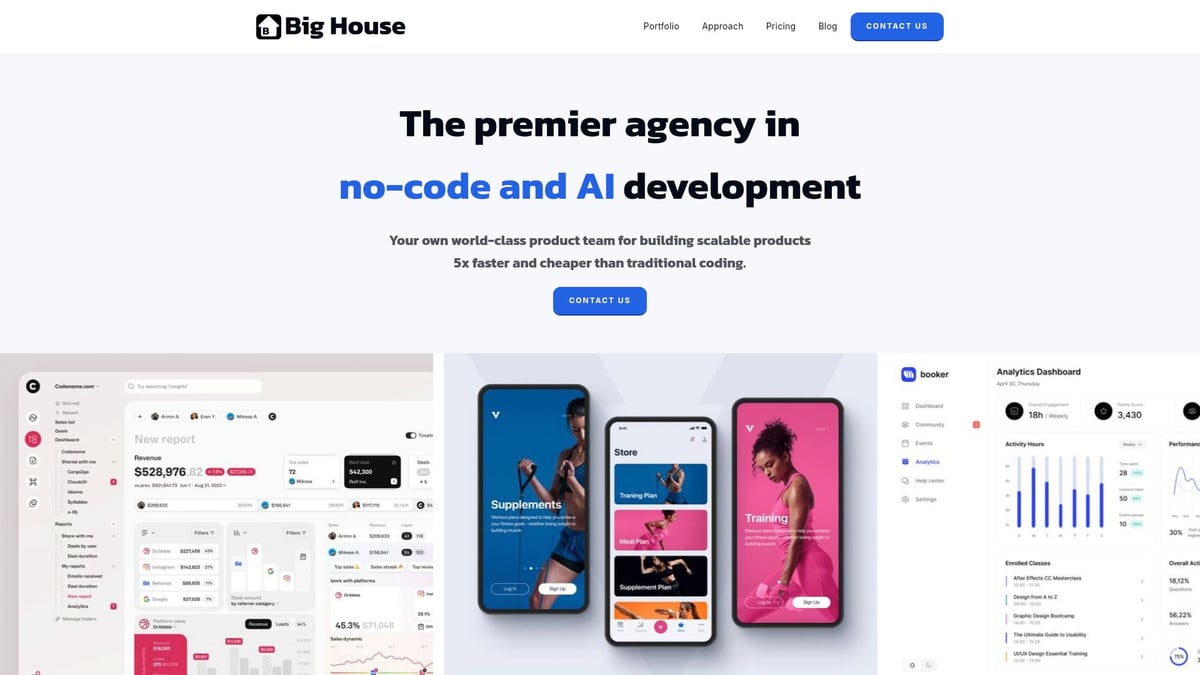
Clients often see:
- 50 percent faster time-to-market
- 40 percent lower costs compared to traditional agencies
- Full support for startups, enterprises, and non-technical founders
With real-world success stories, Big House Technologies is a trusted partner for your MVP journey.
Step 3: Building, Testing, and Iterating Your No-Code MVP
Bringing your idea to life is where the rubber meets the road for how to build an mvp with no-code. This step transforms your vision into a working product, letting you validate, test, and refine rapidly. Let’s break down the process into actionable stages.

Rapid Prototyping and Initial Build
The first phase in how to build an mvp with no-code is rapid prototyping. Start by translating your wireframes into a real, clickable prototype using no-code platforms like Bubble or Glide.
- Use drag and drop interfaces for layout
- Add prebuilt components (forms, buttons, lists)
- Quickly connect basic logic for navigation
Iterate fast. Build, measure, and learn in short cycles. For example, creating a marketplace MVP on Bubble can take less than a month, compared to several months with traditional code. This speed helps you move from idea to user testing without heavy upfront investment.
Integrating Essential Features and APIs
Once your core structure is in place, the next step in how to build an mvp with no-code is integrating features your users expect. This usually includes authentication, payments, notifications, and external data sources.
- Connect payment gateways like Stripe or PayPal
- Add user login and signup flows
- Integrate notifications via email or SMS
Most no-code platforms support plugins or direct API integrations, making it easy to add functionality without custom code. In 2026, AI-driven plugins can even help auto-generate certain features, further speeding up development.
User Testing and Gathering Feedback
Testing with real users is vital to how to build an mvp with no-code that actually solves user problems. Recruit early adopters from your network, or use launch platforms and communities.
Use these methods for feedback:
- Usability testing sessions
- Short surveys and polls
- One-on-one interviews
Leverage built-in analytics or third-party tools to track user flows and pain points. Early feedback helps you identify what works and what needs improvement before a wider launch.
Iterating Based on Data and Insights
Iteration is central to how to build an mvp with no-code. Use data and user feedback to drive decisions, not just gut feeling.
Start by prioritizing fixes or improvements with the greatest impact. Use A/B testing for new features or design tweaks. If data shows users are confused or disengaged, consider a pivot or removing unnecessary features.
Many successful MVPs have gone through multiple cycles of changes before finding product-market fit. Staying agile and responsive gives you a major advantage.
Ensuring Performance and Scalability
A common question about how to build an mvp with no-code is whether these platforms scale. The answer is yes, if you plan correctly.
Tips for scalability:
- Test your MVP with increasing numbers of users
- Optimize images, assets, and workflows for speed
- Choose platforms known for handling growth (like Webflow or Bubble)
Some MVPs have scaled to thousands of users without custom code. Always monitor performance and be ready to upgrade your plan or optimize workflows as needed.
Quality Assurance and Launch Readiness
Before launching, run through a comprehensive QA process to ensure your MVP is robust. Quality assurance is a key part of how to build an mvp with no-code that users trust.
QA checklist:
- Test all user flows for bugs or dead ends
- Check for security issues and data privacy
- Prepare a launch checklist (marketing, legal, technical)
Soft launches or phased rollouts allow you to catch last-minute issues. Use post-launch monitoring tools to track real-world performance and user behavior. For more on strategies when building MVPs and internal tools, see No-Code for Internal Tool Development.
Step 4: Launching, Marketing, and Learning from Your MVP
Bringing your MVP to market is an exciting milestone. This stage is where your work on how to build an mvp with no-code starts to pay off, as you gather real user responses and adapt quickly. Let’s break down the launch, marketing, and learning process into actionable steps.
Go-to-Market Strategies for No-Code MVPs
Launching an MVP successfully means getting it in front of the right early adopters. When considering how to build an mvp with no-code, choose platforms like Product Hunt or BetaList to reach engaged tech communities.
- Craft a clear value proposition to explain your solution.
- Use testimonials or early user quotes to build social proof.
- Tap into micro-influencers and online communities for initial buzz.
Community-driven launches are gaining traction in 2026, making it easier for founders to get feedback and attract loyal users. Short, targeted campaigns can help you stand out and maximize your MVP’s initial impact.
Growth Hacking and Early User Acquisition
After launch, focus on growth hacking to rapidly acquire your first users. A key advantage of how to build an mvp with no-code is the ability to experiment with low-cost channels.
- Leverage content marketing and partnerships to reach new audiences.
- Build a waitlist to generate anticipation and FOMO.
- Use referral programs to encourage sharing and organic growth.
For example, some MVPs have gained over 1,000 users in two weeks using viral loops and clever onboarding. Keep your acquisition channels flexible so you can double down on what works best.
Measuring Success and Analyzing User Data
Tracking progress is essential for anyone learning how to build an mvp with no-code. Set up tools like Mixpanel or Google Analytics from day one to monitor engagement, retention, and conversion rates.
- Use cohort analysis to spot trends and optimize user flows.
- Create dashboards to visualize key metrics and progress.
- Regularly review reports to identify bottlenecks and opportunities.
Remember, validating your idea early helps you avoid the top reasons for startup failure, such as lack of market need. Top reasons for startup failure show that understanding user data can make or break your MVP journey.
Learning, Pivoting, and Planning Next Steps
Analyzing the data you collect is part of how to build an mvp with no-code that truly meets user needs. Use feedback from analytics and direct user input to decide whether to expand features, pivot, or even rebuild.
- Involve your user community in shaping your roadmap.
- Be ready to pivot if usage data suggests a better opportunity.
- Keep communication open with early adopters for honest insights.
Successful founders often discover unexpected use cases or audiences at this stage, enabling smarter, data-driven decisions for their product’s future.
Preparing for Scale and Next-Stage Funding
If your MVP is gaining traction, it’s time to plan for scale. One reason how to build an mvp with no-code is so powerful is the speed at which you can demonstrate traction to investors.
- Use your MVP data to craft compelling fundraising pitches.
- Decide if you need to transition to custom code for further growth.
- Stay updated on 2026 fundraising trends, especially for no-code startups.
As you scale, maintain the agile mindset that got your MVP to this point. This will help you adapt, attract investment, and ultimately turn your MVP into a full-fledged product.
Common Pitfalls and How to Avoid Them
Even with the power of no-code tools, learning how to build an mvp with no-code comes with its own set of challenges. Avoiding common mistakes can save you time, money, and frustration. Let’s break down the biggest pitfalls and how to steer clear of them.
Overbuilding and Feature Creep
One of the top mistakes in how to build an mvp with no-code is adding too many features too early. Feature creep can quickly turn a simple MVP into a bloated project.
- Start with the absolute essentials only.
- Use story mapping to rank features by importance.
- Regularly review your feature list and trim anything non-critical.
Many failed MVPs tried to be everything for everyone. Remember, your goal is to validate one core idea, not launch a full product.
Underestimating User Feedback
Another common pitfall in how to build an mvp with no-code is ignoring early user feedback. It’s easy to fall in love with your solution and overlook what real users are saying.
- Set up feedback channels from day one.
- Run usability tests with actual users, not just your team.
- Act on feedback, even if it means pivoting or removing features.
Successful MVPs are built on a cycle of launch, learn, and iterate. Companies that listened closely to users often found product-market fit faster.
Choosing the Wrong Platform
Selecting the right no-code platform is critical for those learning how to build an mvp with no-code. The wrong choice can lead to platform lock-in, limited scalability, and headaches down the road.
- Match your MVP’s needs to platform strengths.
- Consider future growth, integrations, and export options.
- Research market trends. The No-code development platforms market growth shows rapid expansion, so pick a platform that keeps up with industry standards.
Migrating an MVP later can be costly. Planning ahead saves time and resources.
Neglecting Security and Compliance
Security is crucial in how to build an mvp with no-code, especially when handling user data. Many founders overlook this step, putting their users at risk.
- Choose platforms with built-in security and compliance tools.
- Understand GDPR, CCPA, and other regulations relevant in 2026.
- Regularly test your MVP for vulnerabilities.
Secure products build trust with users and investors from the start.
Real-World No-Code MVP Success Stories
Real-world success stories show just how powerful it can be to learn how to build an mvp with no-code. Let’s look at some standout examples across different industries and see what lessons you can apply to your own project.
SaaS MVP: From Idea to 10,000 Users in Six Months
A SaaS startup wanted to solve a common workflow problem for remote teams. They chose Bubble to bring their vision to life, focusing only on the core feature set. By understanding how to build an mvp with no-code, they launched in just four weeks and quickly iterated based on user feedback.
The results were impressive:
- 10,000 users in six months
- $75,000 ARR by month five
- 40% user retention in the first quarter
The team credited their rapid growth to the agility of no-code tools and the ability to launch fast, learn, and improve.
Marketplace MVP: Disrupting Local Services
A small team aimed to connect local service providers with customers in their city. Using Adalo, they learned how to build an mvp with no-code by focusing on essential booking and messaging features. The MVP went live in three weeks, allowing real users to book services and leave feedback.
Key launch tactics included:
- Hyper-local social media campaigns
- Incentivized early user referrals
- Real-time customer support
Within two months, the platform matched over 1,500 customers with providers. The founders iterated quickly, adding new features only after confirming user demand.
Internal Tool MVP: Enterprise Efficiency Gains
A mid-size enterprise needed a better way to manage project data without waiting for IT resources. By exploring how to build an mvp with no-code, they leveraged Webflow and Airtable to create a custom dashboard for team leads.
Benefits realized:
- 60% reduction in data entry errors
- Automated reporting, saving 12+ hours per week
- 95% team adoption within the first month
This internal MVP showed how no-code solutions can bring immediate value to enterprises, bypassing traditional development bottlenecks.
Social Platform MVP: Community Building at Speed
A founder wanted to launch a niche social platform for creative professionals. Glide enabled them to understand how to build an mvp with no-code, allowing for quick setup of user profiles, posts, and messaging. They capitalized on AI-driven content moderation, a 2026 trend highlighted in the No-code AI platforms market forecast.
Growth hacking strategies included:
- Partnering with micro-influencers
- Hosting virtual launch events
- Building a strong onboarding experience
Within four months, the platform grew to 5,000 engaged members, proving the power of no-code in community building.
Healthcare MVP: Rapid Prototyping for Patient Care
A healthcare startup sought to streamline telehealth appointments for clinics. They learned how to build an mvp with no-code using Softr, prioritizing appointment scheduling, secure messaging, and patient feedback.
Overcoming challenges:
- Navigating strict privacy regulations
- Ensuring a user-friendly interface for all ages
- Integrating with existing EHR systems
Within six weeks, clinics reported faster patient onboarding and higher satisfaction scores. Early feedback led to improvements in accessibility and workflow automation.
Lessons Learned from Failures
Not every attempt to learn how to build an mvp with no-code ends in success. Some common pitfalls include overcomplicating feature sets, neglecting user feedback, or choosing platforms without future scalability. As highlighted in Why No-Code is the Future, adaptability and rapid iteration are key.
What can founders learn?
- Focus on solving one core problem first
- Collect and act on real user feedback early
- Choose platforms with strong community and support
By applying these lessons, you can maximize your chances of MVP success, no matter your industry.
You’ve seen how quickly you can turn an idea into a real product using no code tools and a smart MVP approach. It’s all about moving fast, testing what matters, and learning from every step—without getting stuck in endless development cycles. If you’re ready to take that leap and want to see your vision live in just weeks, not months, you don’t have to go it alone. We specialize in helping founders and teams like yours build scalable, beautiful MVPs with speed and confidence. Ready to get started? Launch Your MVP in Weeks, Not Months

About Big House
Big House is committed to 1) developing robust internal tools for enterprises, and 2) crafting minimum viable products (MVPs) that help startups and entrepreneurs bring their visions to life.
If you'd like to explore how we can build technology for you, get in touch. We'd be excited to discuss what you have in mind.
Other Articles
Discover vibe coding, the conversational AI-powered programming paradigm transforming how businesses build software in 2026 without traditional code.
Learn how to hire React Native developers in 2026. Expert strategies, technical requirements, and cost analysis for building cross-platform apps.
Overwhelmed by 2025's software options? Learn to navigate the chaos, avoid costly mistakes, and use AI-powered guides to make smarter, future-proof tech decisions that unlock your full potential.