
In 2026, launching a new software product is more challenging than ever. Rapid technology shifts and fierce competition mean one misstep can drain budgets and stall growth.
Did you know most new software products fail because they build features users do not want? The stakes are high, and wasted resources are common.
That is why mvp software development is crucial for modern businesses. By focusing on the essentials and testing with real users, companies can validate ideas quickly and avoid costly mistakes.
This guide will show you proven methods to maximize learning, minimize risk, and speed up your market entry. Ready to lead your next software launch to success? Let us get started.
Understanding MVP in Software Development
Launching a successful product in 2026 demands clarity and focus. At the heart of modern mvp software development lies the concept of the Minimum Viable Product (MVP). Understanding what an MVP is, why it matters, and how it differs from prototypes or proofs of concept is foundational for any team aiming to innovate efficiently.
Defining MVP and Its Core Principles
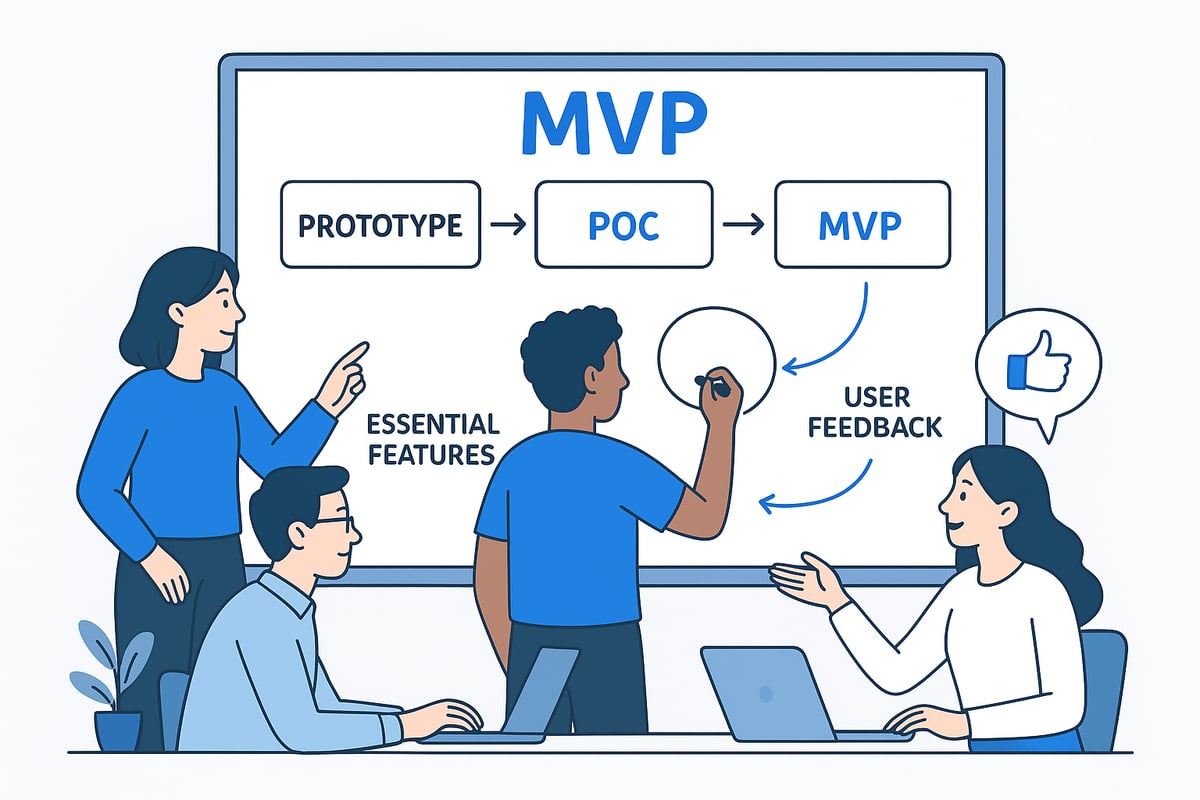
MVP stands for Minimum Viable Product. In mvp software development, this means creating the simplest version of your product that still delivers real value to users. The goal is to learn what customers truly want, using the least resources possible.
This approach is central to the Lean Startup methodology, as defined by Eric Ries. He describes MVP as a tool to maximize validated learning about customers while minimizing effort and expense. Unlike a prototype or a proof of concept, an MVP is not just a test or a demo. It is a working product, albeit with only the most essential features.
Think of Twitter’s early days. The platform launched with a basic communication feature, allowing users to share short messages. Only after collecting user feedback did the team expand its capabilities. This focus on releasing a functional, valuable tool is the essence of mvp software development.
A common misconception is that MVPs are “cheap” or incomplete products. In reality, they are strategic starting points. According to research, 42% of startups fail due to a lack of market need. MVPs help teams avoid this pitfall by testing ideas with real users early.
An MVP is made up of three core elements:
- Minimum: Only essential features are included.
- Viable: The product is usable and delivers real value.
- Product: It is released to real users for feedback.
Iterative development and early feedback loops are fundamental characteristics. Teams build, measure, and learn, adjusting the product based on real-world responses. For practical tips on streamlining this process, see How to Build Scalable MVPs with No-Code.
MVP vs. PoC vs. Prototype: Key Differences
In mvp software development, it is vital to distinguish between MVPs, prototypes, and proofs of concept (PoC). Each serves a different purpose and requires different levels of effort.
Here is a quick comparison:
| Aspect | MVP | Prototype | Proof of Concept (PoC) |
|---|---|---|---|
| Purpose | Real user validation | Explore design/usability | Test technical feasibility |
| Completeness | Usable, with core features | Partial, often non-functional | Very limited, often backend |
| User Interaction | Public or limited user release | Internal or user demos | Usually internal only |
| Dev. Effort | Moderate, production-level | Low to moderate | Minimal, focused |
For example, an MVP is released to real users to validate demand, while a prototype might just show how a feature could look or feel. A PoC, on the other hand, checks if a technology can work as intended.
Selecting the wrong approach can waste resources and delay your market entry. Knowing when to use each tool is critical for efficient mvp software development.
Characteristics and Success Criteria of an MVP
What makes an MVP effective in mvp software development? The best MVPs share several key traits:
- Only the most essential features are included.
- Development is quick and cost-effective.
- Feedback from real users drives improvements.
- The approach reduces risk and avoids wasted effort.
MVPs are not shortcuts; they are strategic tools. Dropbox is a classic example. Before building their file-sharing platform, the team released a simple video explaining the concept. The overwhelming interest validated their idea, allowing them to proceed with confidence.
Data shows that using MVPs can reduce time-to-market by up to 60%. The success of an MVP is measured by:
- User engagement and retention
- Quality of actionable feedback
- Validation of core business assumptions
Iterate quickly, listen to users, and let data guide your next steps in mvp software development. This mindset is what turns early concepts into successful, scalable products.
Strategic Benefits of MVP Development in 2026
In 2026, mvp software development is more than a trend, it is a strategic necessity. As technology evolves and user expectations rise, businesses must deliver value quickly, minimize waste, and reduce risk. Let us explore why adopting mvp software development offers unmatched advantages in today’s fast-paced market.

Accelerating Time-to-Market and Reducing Costs
Mvp software development allows companies to launch products much faster than traditional methods. By focusing only on core features, teams can bring solutions to market in weeks instead of months.
- Faster launches mean capturing early adopters and staying ahead of competitors.
- Cost savings are significant, as MVPs typically require 3-4x less investment than full-feature builds.
- Teams can pivot or iterate before committing major resources, limiting financial exposure.
According to MVP Development Cost Factors 2025, organizations can save up to $100,000 on initial builds with this approach. For startups and enterprises alike, mvp software development provides the agility to respond rapidly to market signals.
Risk Mitigation and Validation of Product-Market Fit
One of the biggest reasons products fail is building something nobody wants. Mvp software development gives businesses a way to test their ideas with real users, reducing the risk of costly missteps.
- Early feedback helps validate the product-market fit.
- Teams can identify must-have features versus nice-to-haves.
- Building only what is essential avoids wasted effort and resources.
With 42% of startups failing due to lack of market need, mvp software development is crucial for learning what works before scaling up. This validation process builds confidence in every next step.
Attracting Investors and Stakeholders
Investors and key stakeholders look for proof before committing funds or support. Mvp software development delivers that proof through working products and real user engagement.
- MVPs serve as tangible evidence of commitment and traction.
- Early metrics and customer stories help secure investment.
- Stakeholders can make informed decisions based on actual product iterations.
By showing progress with an MVP, teams demonstrate both momentum and market relevance. This approach makes it easier to attract funding and build meaningful partnerships.
Building Early Customer Relationships and Brand Trust
Launching with mvp software development means engaging users sooner. Early adopters feel valued, offer actionable feedback, and often become enthusiastic brand advocates.
- Beta testing and early access programs drive loyalty.
- Direct user input shapes the product roadmap.
- Positive experiences build trust and credibility in the market.
By involving customers early, businesses create a feedback loop that strengthens both the product and the brand. This relationship-centric approach is a competitive advantage in itself.
Competitive Advantage in Evolving Markets
Markets evolve quickly, and mvp software development helps teams stay ahead of trends. Rapid iteration and adaptation are key to maintaining relevance.
- MVP-driven companies can pivot based on real-world data.
- SaaS platforms that iterate quickly outperform slower rivals.
- Data shows these teams innovate 2x faster on average.
In 2026, the ability to adapt, scale, and respond to change is what sets leaders apart. Mvp software development provides the framework for sustained innovation and market leadership.
Step-by-Step MVP Software Development Process for 2026
Launching a successful software product in 2026 demands a structured approach. The mvp software development process is a proven path for startups and enterprises to minimize risk, validate ideas, and deliver value fast. Let’s break down each step so you can efficiently guide your next MVP from concept to market.
1. Market Research and Validation
The foundation of mvp software development is understanding your market. Start by identifying your target audience and analyzing competitors. Use surveys, interviews, and online research to pinpoint real user needs and pain points.
Gather both qualitative and quantitative data. Tools like Google Trends or SEMrush can help validate demand. Avoid assumptions—let the data lead your decisions. Remember, most failed MVPs miss the mark due to poor research.
A focused market validation step ensures that your mvp software development starts with a strong, evidence-based direction.
2. Defining Objectives, User Personas, and Value Proposition
Clear objectives are vital in mvp software development. Set measurable goals aligned with your business strategy. Are you testing product-market fit or assessing user engagement? Define this early.
Next, create user personas. These are detailed profiles of your ideal customers, capturing their goals, frustrations, and behaviors. Personas keep development user-centered.
Finally, craft a compelling value proposition. What unique benefit does your MVP offer? Make it specific. This clarity guides all future decisions in your mvp software development journey.
3. Mapping User Journeys and Prioritizing Features
Visualizing user journeys is crucial for mvp software development. Map out the steps users take to achieve their goals. Identify friction points and opportunities for delight.
Once mapped, prioritize features using frameworks like MoSCoW (Must have, Should have, Could have, Won’t have) or the Kano model. Focus only on features that solve the core problem.
Here’s a quick comparison of popular prioritization models:
| Model | Focus | Example Use |
|---|---|---|
| MoSCoW | Necessity | Essential vs. nice-to-have |
| Kano | User delight | Differentiators |
This step ensures your mvp software development stays lean and focused.
4. Prototyping and Technical Feasibility Assessment
Before building, create low-fidelity prototypes. Tools like Figma or Adobe XD are great for wireframes. Prototyping lets you test user flows and interface ideas quickly.
Next, assess technical feasibility. Can your MVP be built with available resources? Identify core integrations, tech stack, and potential blockers.
No-code tools like Bubble can accelerate early mvp software development, especially for non-technical founders. Early prototyping and feasibility checks reduce costly pivots later.
5. MVP Development and Iterative Testing
Now, move to building your MVP. Use agile or lean methodologies for rapid cycles. Focus on essential features—nothing extra. Stability and usability are non-negotiable.
Testing is critical, even for simple MVPs. Perform quality assurance, security checks, and usability tests. Automated testing can save time and catch issues early.
For a deeper, real-world process walkthrough, check out this Step-by-Step MVP Building Guide. It covers practical examples for each mvp software development phase.
6. Launch, Monitor, and Collect Feedback
Release your MVP to a small group of beta users. This controlled launch helps you gather honest feedback without risking your reputation.
Monitor key metrics: user engagement, feature usage, retention, and churn. Use analytics tools like Mixpanel or Google Analytics to track behavior.
Encourage direct feedback through surveys and interviews. Every insight fuels improvements in your mvp software development process.
7. Iteration and Scaling Strategy
After launch, use the data and feedback to iterate quickly. Fix issues, enhance usability, and prioritize feature requests based on actual user needs.
Plan for scalability from the start. Consider cloud hosting, modular architecture, and robust APIs. Early planning ensures your mvp software development can handle growth without major rework.
Document learnings after each iteration. This habit accelerates future cycles and supports a culture of continuous improvement.
8. Common Pitfalls and How to Avoid Them
Even with a solid plan, mvp software development can face challenges. Watch out for these pitfalls:
- Skipping research or validation steps
- Adding too many features (feature creep)
- Neglecting QA or security
- Ignoring user feedback
- Mismanaging resources and timelines
To avoid these traps, stick to your MVP scope, communicate with stakeholders, and always prioritize learning. A disciplined approach leads to a successful mvp software development journey.
Overcoming Challenges in MVP Development
Launching a successful MVP software development project is never a straight line. Startups and enterprises alike face hurdles that can derail progress, eat up budgets, or slow time-to-market. Understanding these pitfalls and how to address them is key to building products that deliver value quickly and reliably.
Avoiding Feature Creep and Maintaining Focus
Feature creep is one of the most common traps in mvp software development. Teams, eager to impress users or stakeholders, often feel pressured to add more features than necessary. This dilutes focus and stretches resources thin.
To combat this, clearly define your MVP’s scope upfront. Document essential features, and revisit them regularly. Use prioritization models like MoSCoW or Kano to keep everyone aligned. Regular check-ins and transparent communication help ensure the team stays on track.
If you feel tempted to expand the scope, ask: “Does this feature solve the core user problem?” If not, save it for future iterations. Staying disciplined preserves your resources and accelerates learning.
Timing the Product Launch for Maximum Impact
Choosing the right time to launch is just as critical as what you build. In mvp software development, launching too early can result in negative first impressions, while waiting too long may mean missing out on market opportunities.
Analyze competitor activity, industry trends, and user readiness before setting a launch date. Use tools like Google Trends and social listening to gauge market sentiment. Sometimes, a soft launch with a small group of early adopters can provide valuable insights without risking your brand reputation.
Proper timing gives your MVP the best shot at user engagement and feedback, setting the stage for future growth.
Ensuring Quality Assurance and Security
Even with minimal features, QA and security are essential in mvp software development. Ignoring these areas can lead to costly problems, damaged trust, or compliance issues down the line.
Incorporate automated testing early to catch bugs and regressions. For security, implement basic protections like input validation, secure authentication, and data encryption. Schedule regular code reviews and vulnerability scans, even for small releases.
A strong foundation in QA and security builds credibility and reassures users that your MVP is reliable and safe to use.
Effective User Testing and Feedback Loops
User testing is at the heart of mvp software development. Relying solely on internal feedback risks introducing bias and missing real-world issues.
Engage early adopters and target users as soon as possible. Set up structured feedback channels, such as surveys, interviews, and analytics dashboards. Track usage patterns and listen actively to user suggestions.
Iterate quickly based on genuine feedback. This approach ensures your product evolves in the right direction and validates your core assumptions.
Managing Resources and Budget Constraints
Resource management is a balancing act in mvp software development. Startups, in particular, must stretch budgets without sacrificing quality or speed.
Prioritize essential features and consider leveraging no-code tools or outsourcing to optimize costs. Outsourcing can provide access to specialized expertise and accelerate development. For more detailed strategies on resource allocation, check out Software Development for Startups.
Always track expenses closely, and set clear budget limits for each development phase. Efficient resource allocation ensures your MVP remains viable and ready for future growth.
Aligning Stakeholders and Managing Expectations
MVP software development often involves multiple stakeholders, from investors to internal teams. Misaligned expectations can cause friction or derail progress.
Set clear objectives and communicate the purpose, scope, and limitations of your MVP from the start. Share regular updates and be transparent about challenges and learnings. Encourage feedback, but also educate stakeholders on the iterative nature of MVPs.
By fostering alignment and open communication, you build trust and keep everyone focused on shared goals.
Future-Proofing Your MVP: Trends and Technologies for 2026
Building a future-ready MVP software development strategy means adopting the latest technologies and best practices. In 2026, success hinges on fast iteration, adaptability, and smart resource allocation. Let’s explore the trends shaping how teams deliver MVP software development that stands the test of time.
Embracing No-Code and AI Platforms
No-code platforms are transforming MVP software development by making rapid prototyping accessible to both startups and enterprises. Tools like Bubble let teams launch functional MVPs quickly, while AI solutions such as Lovable AI automate personalization and workflow optimization.
Adopting no-code not only cuts costs but also accelerates your time to market. In fact, no-code adoption is projected to grow 23% annually through 2026. For a deeper dive into how no-code tools are shaping the future, check out No-Code Development for Enterprises and Startups.
Leveraging Cloud, API Integrations, and Microservices
Cloud-native MVP software development is essential for scalability and cost efficiency. By leveraging cloud infrastructure, teams can scale resources up or down based on user demand without heavy upfront investment.
API-first design allows seamless integration with third-party services and future features. Microservices architecture breaks down your MVP into modular, independent components, making updates and enhancements easier. These practices support flexible, future-proof MVPs.
Continuous Delivery and DevOps Practices
Continuous integration and delivery (CI/CD) pipelines are now a must for MVP software development. CI/CD enables teams to deploy updates faster and respond to user feedback in real time.
DevOps practices foster collaboration between development and operations, reducing bottlenecks. SaaS MVPs using DevOps iterate twice as fast as competitors. This cycle of rapid improvement keeps your MVP ahead in a competitive market.
Data-Driven Decision Making
Smart MVP software development is driven by data. Integrate analytics from day one to track user behavior, feature usage, and retention. Predictive analytics and AI-driven insights help you prioritize features and plan your product roadmap.
By relying on data, you reduce guesswork and build a product that truly meets user needs. This approach ensures every iteration is a step toward a more successful MVP.
Security and Compliance from Day One & Building for Scalability and Flexibility
Security and compliance are critical in MVP software development, especially for industries like healthcare and fintech. Implement basic security practices such as input validation and data encryption early. Address regulatory requirements (GDPR, HIPAA) from the start to avoid costly rework.
Design your MVP architecture for scalability and flexibility. Modular design lets you adapt quickly as your user base grows or market needs shift. By prioritizing these elements, your MVP will be ready for whatever the future brings.
Skills, Teams, and Sourcing Models for MVP Success
In 2026, building a winning MVP software development team means combining the right skills, sourcing models, and culture. As the pace of innovation accelerates, assembling agile, cross-functional teams is more critical than ever. Let’s break down what you need to succeed.
Essential Skills for MVP Development
A successful MVP software development journey begins with assembling the right mix of expertise. The must-have skills include:
- Product management to define strategy and prioritize features.
- UX/UI design for intuitive, user-centric interfaces.
- Full-stack or no-code development, depending on your tech stack.
- QA and testing to ensure reliability, even in early releases.
- Analytics for data-driven decision making.
With the rise of AI and automation, modern MVP software development teams increasingly rely on tools and frameworks that accelerate prototyping and iteration. Learn more about this shift in AI-Driven MVP Strategies for 2025.
Sourcing Models: In-House, Outsourcing, Freelancers, Hybrid
How you source talent for MVP software development can make or break your timeline and budget. Let’s compare the main options:
| Model | Control | Cost | Speed | Best For |
|---|---|---|---|---|
| In-house | High | Highest | Moderate | Established companies |
| Outsourcing | Medium | Lower | Fast | Startups, rapid prototyping |
| Freelancers | Low | Variable | Fast | Specialized short-term work |
| Hybrid | High | Moderate | Fast | Flexibility, scaling teams |
Outsourcing and no-code approaches are trending, helping startups reduce MVP software development costs by up to 50%. For more on trends like machine learning and sustainable design, see MVP Development Trends 2025.
Big House Technologies: Accelerating MVPs with No-Code and AI
Big House Technologies is a leading agency specializing in rapid MVP software development using no-code and AI. They empower startups and enterprises to launch MVPs up to five times faster and at a fraction of the traditional cost.
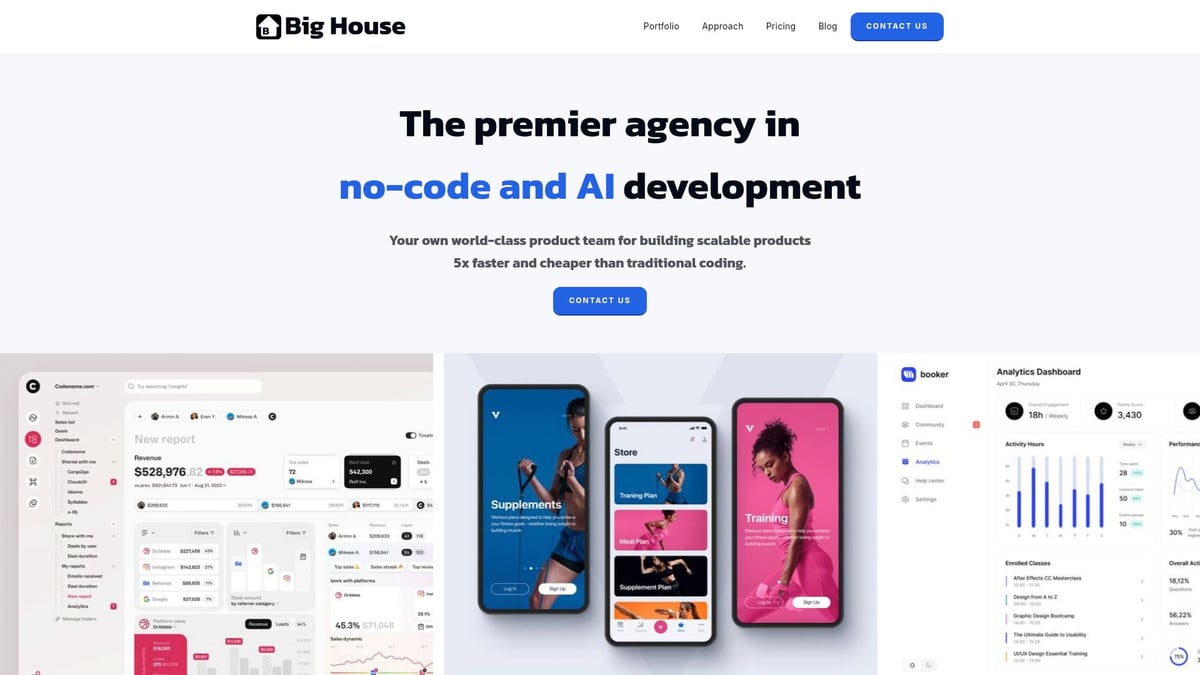
Leveraging platforms like Bubble and Lovable AI, Big House covers everything from scoping and design to development and QA. Their approach ensures each MVP is robust, scalable, and tailored to user needs, making them a top choice for organizations looking to maximize impact without heavy investment.
Interested in transforming your MVP software development process? Learn more at bighou.se.
Building the Right Team and Culture
Beyond skills and sourcing, the real magic of MVP software development lies in fostering the right culture. Encourage:
- Experimentation and rapid iteration.
- Open communication and clear goal alignment.
- A bias for action, learning, and adaptability.
Teams that embrace these values consistently outperform those that stick to rigid, traditional processes.
Case Examples and Success Stories
Many market leaders began their journey with a laser-focused MVP software development approach. Dropbox’s simple explainer video validated demand before a single line of code was written. Twitter’s early MVP allowed rapid iteration based on user feedback.
On the flip side, failed MVPs often skipped research, overbuilt features, or ignored real user input. The lesson is clear: prioritize learning, feedback, and focus at every stage of MVP software development.
You’ve seen how the right MVP strategy can save you time, money, and a whole lot of stress in the fast-changing tech world of 2026. Imagine skipping the endless delays and going straight to real user feedback and tangible results. If you’re ready to turn your ideas into a working product without waiting months or draining your resources, you don’t have to do it alone. Let’s make your next launch smoother and smarter together. Check out how you can Launch Your MVP in Weeks, Not Months and see what’s possible.

About Big House
Big House is committed to 1) developing robust internal tools for enterprises, and 2) crafting minimum viable products (MVPs) that help startups and entrepreneurs bring their visions to life.
If you'd like to explore how we can build technology for you, get in touch. We'd be excited to discuss what you have in mind.
Other Articles
Discover how Claude code review transforms development workflows with AI-powered analysis, multi-agent architecture, and seamless integration.
Discover how low code platforms for internal tools accelerate development, reduce costs, and empower teams to build custom solutions faster.
Master every stage of the development phase in 2025 with this expert guide. Discover proven steps, tools, and strategies for faster, smarter project success.