
No code startups are rewriting the rules of innovation, giving anyone the power to build digital products without traditional coding skills. In 2026, this movement is exploding, opening doors for founders and creators from every background.
This article spotlights eight no code startups that are changing the game. You will see how these companies use no code platforms to launch products faster, cut costs, and disrupt industries from finance to education.
Curious about how no code startups are making tech more accessible and affordable? Read on to discover their features, pricing, and real-world impact. Get inspired to turn your own ideas into reality, no coding required.
The No-Code Revolution: Trends and Industry Impact
The past few years have witnessed an explosive surge in no code startups, with founders and enterprises racing to unlock new possibilities. What was once a niche movement has become a global phenomenon, empowering anyone with an idea to rapidly build and scale digital solutions.
The Surge in Adoption and Market Growth
Between 2024 and 2026, the no code startups ecosystem has seen unprecedented growth. According to Gartner's 2025 No-Code Adoption Forecast, 70% of new applications will be built using low-code or no-code platforms by 2025. This shift is driven by the need for faster innovation, cost efficiency, and a growing pool of non-technical founders eager to launch products.
Platforms like Bubble, Webflow, and Softr have become household names for entrepreneurs, offering intuitive drag-and-drop environments and integrations with tools like Airtable and Zapier. This accessibility means that building a tech company is no longer limited to those with deep coding skills.
Lowering Barriers and Accelerating MVPs
No code startups are rewriting the rulebook for rapid product development. By leveraging visual builders and robust templates, founders can launch MVPs up to five times faster and at a fraction of the traditional cost. In fact, companies adopting no code platforms have reported up to 4x cost savings compared to custom software builds.
This acceleration is not just about speed but also flexibility. Teams can iterate on user feedback, pivot offerings, or scale features with minimal technical overhead. The rise of “citizen developers” within organizations is transforming how internal tools and customer-facing products are delivered.
Industry Disruption and Funding Momentum
No code startups are shaking up major industries. Here’s a snapshot of sectors impacted and the impressive funding these ventures have attracted:
| Sector | Notable Startups | Funding/MRR |
|---|---|---|
| Finance | Dividend Finance | $384M+ raised |
| Education | Bloom Tech | $122M+ raised |
| SaaS/Tools | Softr, Comet | $5.1M+ revenue, €14M+ funding |
| Fintech | Qoins | $2.3M+ raised |
| Marketing | Swipe Files | Thousands of paying users |
From streamlining solar financing to democratizing tech education, these no code startups are reshaping what’s possible—and attracting serious investor interest.
Overcoming Challenges and Enabling Iteration
Despite the explosive growth, no code startups face hurdles:
- Scalability concerns for enterprise-grade apps
- Limited deep customization compared to traditional coding
- Complexity when integrating with legacy systems
However, many startups succeed by adopting hybrid approaches, combining no code tools with custom development for unique needs. The ability to quickly pivot—whether refining an MVP or responding to market shifts—remains a standout advantage.
The revolution led by no code startups is just beginning. As the ecosystem matures, expect even more ambitious ideas and transformative digital solutions to emerge.
8 Inspiring No Code Startups Transforming 2026
The landscape of no code startups in 2026 is vibrant, bustling with innovation and disruption. These companies are not just building apps faster, they are redefining what’s possible for founders, enterprises, and creators everywhere.
From fintech to education, no code startups are unlocking opportunities, removing barriers, and accelerating progress. Let’s dive into eight remarkable examples that showcase the true power and promise of this movement.
Big House Technologies
Big House Technologies stands out as a premier agency in the world of no code startups, specializing in scalable, enterprise-grade solutions. Their approach combines end-to-end app development with advanced AI integration, all powered by leading platforms like Bubble and Lovable.
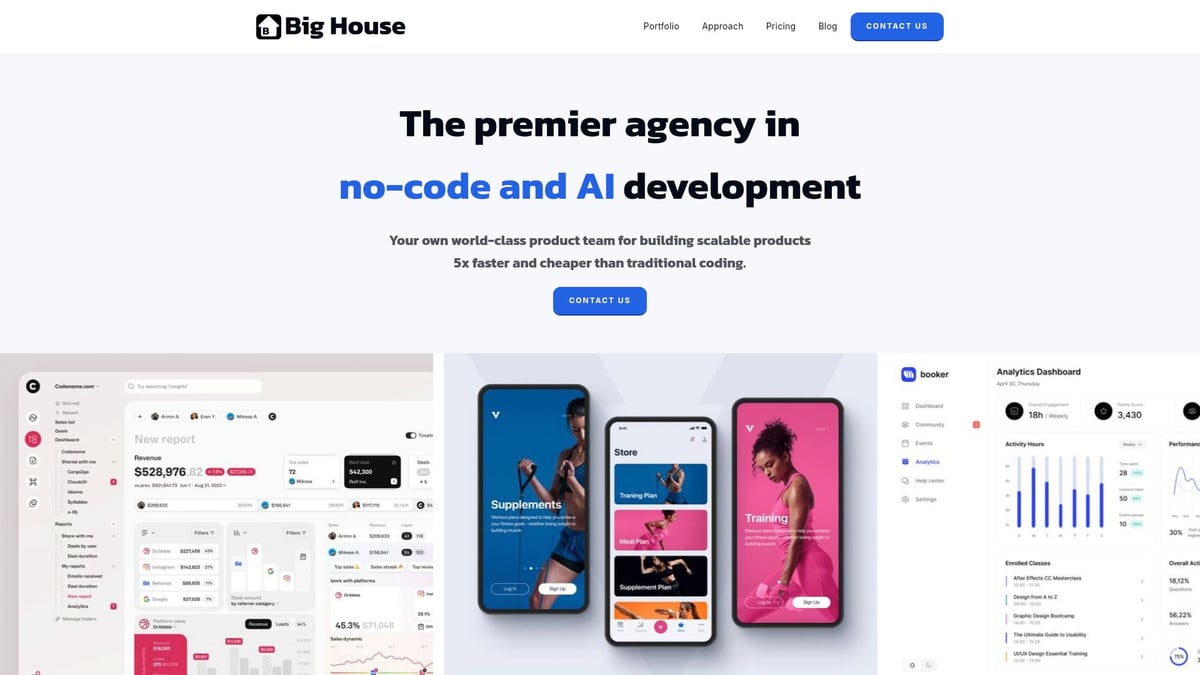
Pricing: Big House Technologies offers flexible tiers: Basic, Growth, and Enterprise. Custom quotes ensure each client gets a tailored solution, making their services accessible for startups and global enterprises alike.
Core Features:
- Full-cycle product development using Bubble
- Seamless AI integration for smarter apps
- Rapid MVP launches and internal tool creation
- UI/UX design with Figma
- Rigorous QA and strategic consulting
Key Benefits: Clients enjoy 5x faster delivery and up to 4x cost savings compared to traditional agencies. Their collaborative style ensures deep client engagement and custom-fit solutions.
Target Audience: Startups, SMEs, and enterprises across industries looking for robust, affordable digital products.
Pros:
- Speed and affordability
- Proven track record
- Flexible engagement models
- Deep client partnership
Cons: May not suit businesses needing highly specialized, code-level customization.
Use Cases: Big House Technologies is trusted for MVPs, enterprise internal tools, AI-powered apps, and rapid product scaling.
Example: They delivered €2M in cost savings for an oil and gas client by building a custom internal tool, a testament to how no code startups can drive tangible impact.
No code startups like Big House Technologies are at the forefront of transforming how companies build and launch digital products, making innovation accessible to all.
Dividend Finance
Dividend Finance is one of the most impactful no code startups in the renewable energy sector. Their platform enables homeowners to finance solar and energy improvements quickly and easily, using a streamlined no code SaaS infrastructure.

Pricing: While specific rates are not listed, Dividend Finance typically operates on B2B and B2C financing models, making it flexible for various market needs.
Core Features:
- Digital loan onboarding and application processing
- Automated approvals and financial partner integrations
- Simple, user-friendly experience
Key Benefits: The platform streamlines access to home improvement financing, supports sustainability, and minimizes paperwork for all users.
Target Audience: Homeowners, solar installers, and renewable energy providers seeking accessible financing.
Pros:
- $384M+ in funding
- Over $1B in sales processed
- Rapid market scaling with Bubble’s no code infrastructure
Cons: Focused mainly on the US market and may face regulatory challenges when expanding.
Use Cases: Residential solar financing, home energy upgrades, and contractor-integrated lending solutions.
Example: Dividend Finance is recognized as an industry leader, having received multiple innovation awards. This demonstrates how no code startups can disrupt traditional financial services and accelerate green energy adoption.
Comet
Comet has carved a niche among no code startups by building a thriving marketplace connecting businesses with vetted tech and data freelancers. Utilizing Bubble, Comet delivers scalable, on-demand talent solutions.
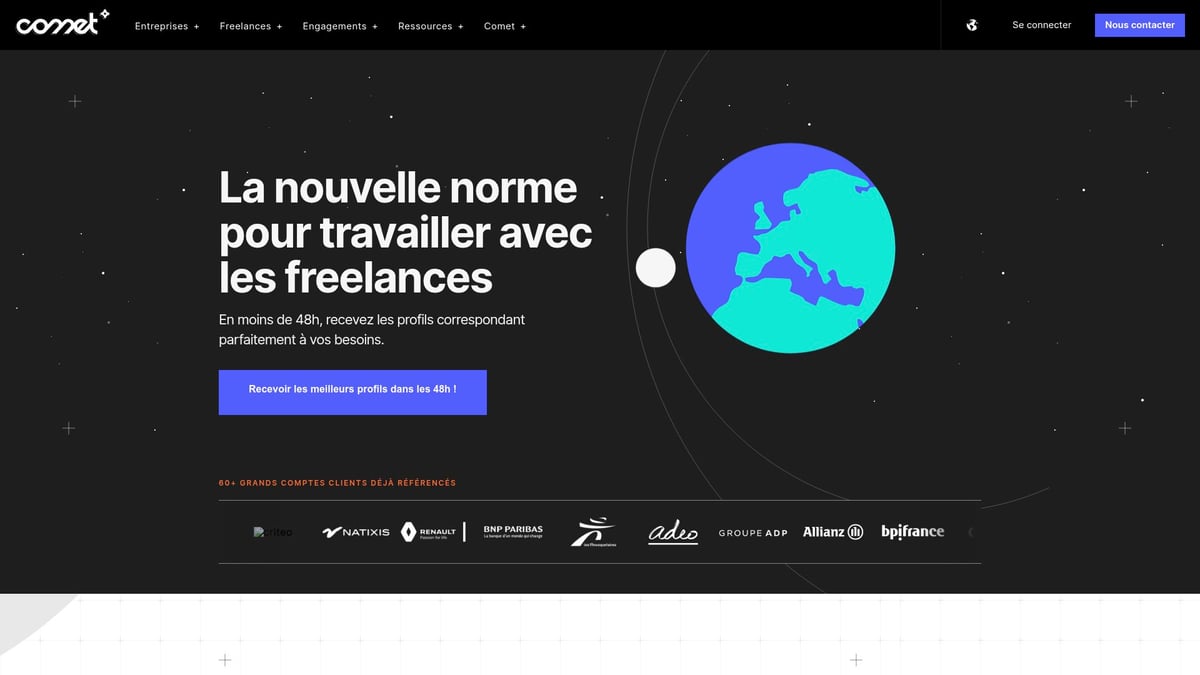
Pricing: The platform uses a commission-based model, with costs varying by project and freelancer rates.
Core Features:
- Freelancer vetting and onboarding
- Robust project management tools
- Company dashboards for seamless tracking
Key Benefits: Fast, reliable talent matching and a scalable platform trusted by major brands like Renault and LVMH.
Target Audience: Enterprises, startups, and agencies seeking high-quality, on-demand tech talent.
Pros:
- €14M+ raised in funding
- $800K+ MRR
- Rapid scaling and a curated talent pool
Cons: Faces competition from larger freelance platforms and relies on the scalability of no code platforms.
Use Cases: Hiring for tech projects, short-term consulting, and scaling development teams.
Example: Comet has helped over 1,000 companies hire freelancers and deliver more than 300 successful projects, highlighting the operational power of no code startups.
Softr
Softr is a standout among no code startups for enabling users to build websites, client portals, and web apps directly from Airtable data. Its intuitive platform empowers non-technical users to launch digital products in record time.
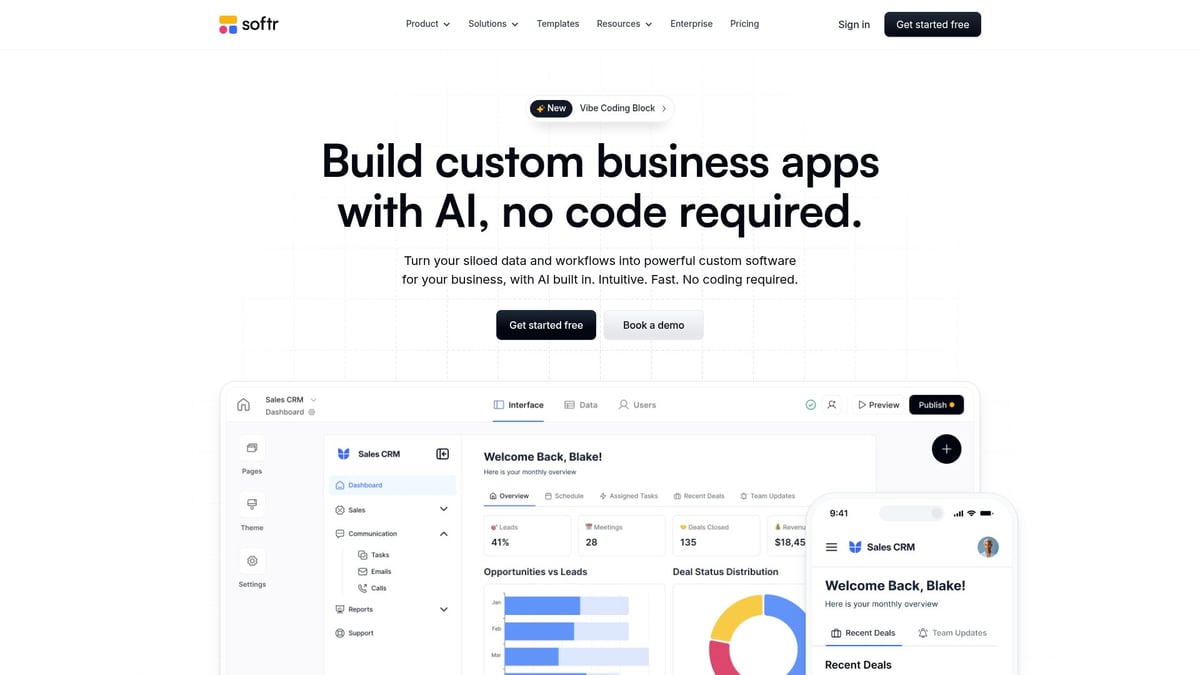
Pricing: Softr offers a free tier, with paid plans starting at $49 per month for advanced features.
Core Features:
- Drag-and-drop builder with a rich template library
- Airtable integration and user authentication
- Client portal creation
Key Benefits: Launch products in hours, not weeks, with a minimal learning curve. Softr’s supportive community adds extra value.
Target Audience: Entrepreneurs, SMBs, agencies, and educators seeking fast solutions.
Pros:
- $5.1M+ in revenue
- Fast, user-friendly onboarding
- Strong community support
Cons: Limited advanced customization and reliant on Airtable for backend data.
Use Cases: Membership sites, internal tools, and online directories.
Example: Softr powered LetterHunt, a directory featuring over 10,000 newsletters, proving the agility of no code startups in digital publishing.
Qoins
Qoins is a financial wellness app that helps users pay off debt faster by rounding up purchases and automating payments, all built on a no code foundation using Bubble.
Pricing: Subscription-based, with a standard plan at $2.99 per month.
Core Features:
- Automated debt payments and financial coaching
- Round-up savings and payment tracking
Key Benefits: Simplifies debt repayment, delivering proven results such as $30M+ in debt paid off and recognition for fintech innovation.
Target Audience: Individuals with consumer debt, millennials, and those focused on financial wellness.
Pros:
- $2.3M in funding
- Award-winning app design
- Seamless user experience
Cons: Limited to US users, and the subscription model may not appeal to everyone.
Use Cases: Managing student loans, credit card repayment, and personal finance.
Example: Qoins won the Fintech Innovation Award Challenge, showing how no code startups can make a real difference in users’ lives.
Bloom Institute of Technology
Bloom Institute of Technology, formerly Lambda School, is a trailblazer in no code startups for accessible, job-focused tech education. Their model allows students to pay tuition through income-share agreements, making tech careers more attainable.
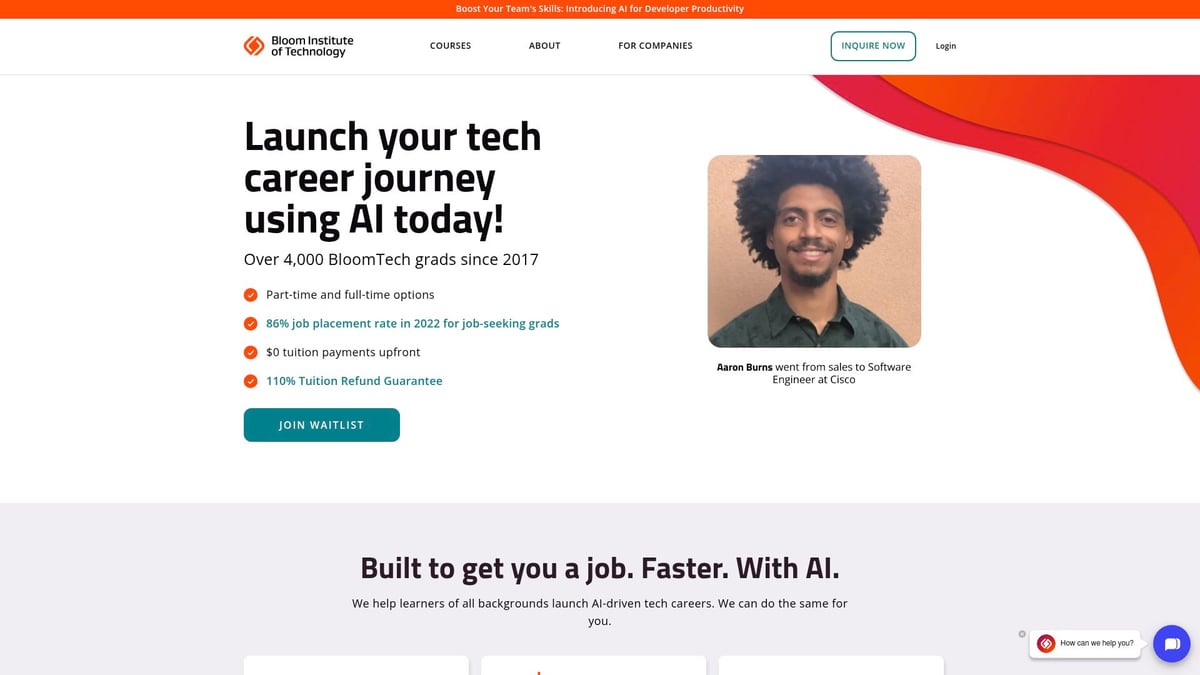
Pricing: The Income Share Agreement (ISA) model means students pay only after securing employment.
Core Features:
- Online bootcamps with live instruction
- Job placement support and automated admissions
Key Benefits: No upfront tuition, rapid program scaling (over 3,000 users), and $122M+ in funding.
Target Audience: Career changers, aspiring developers, data scientists, and underrepresented groups.
Pros:
- Democratizes tech education
- Flexible, remote learning options
- Strong employment outcomes
Cons: The ISA model may not fit all learners, and the edtech space is highly competitive.
Use Cases: Coding bootcamps, data science training, and workforce upskilling.
Example: Bloom Tech has helped thousands transition into tech jobs at zero upfront cost, proving the life-changing potential of no code startups.
Swipe Files
Swipe Files is a marketing training platform that brings together the power of no code startups and SaaS. Built with Webflow, Jetboost, and ConvertKit, it offers marketers a comprehensive resource hub.
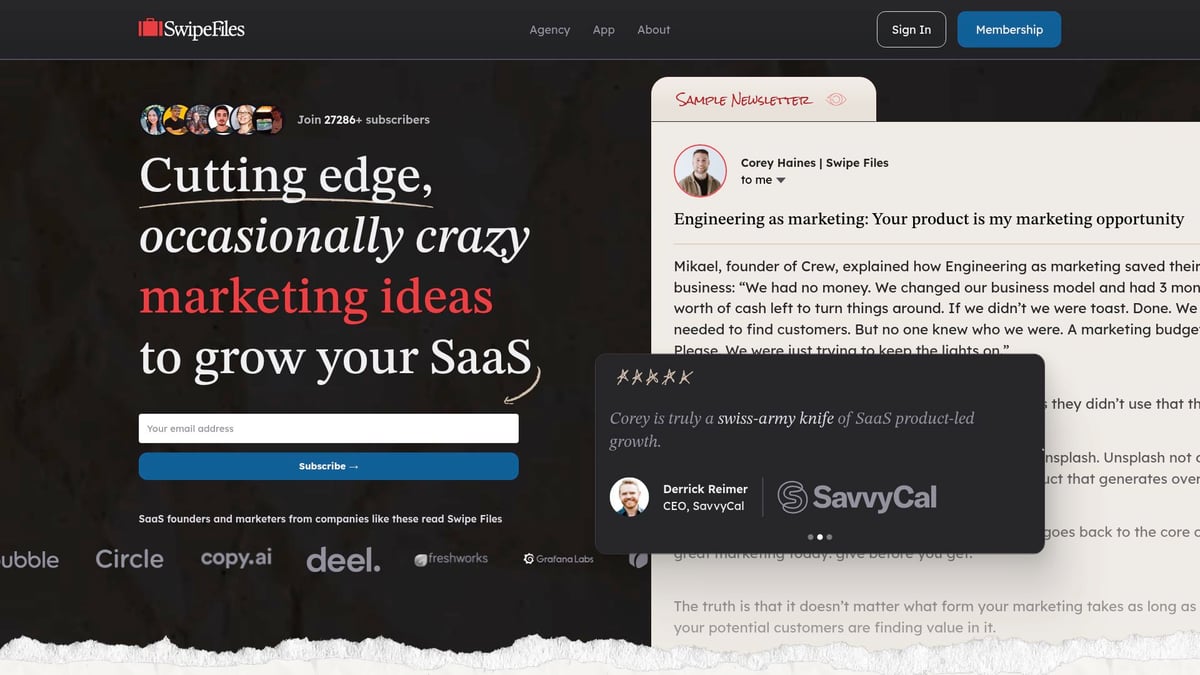
Pricing: Memberships start at $99 per year, with a free newsletter option.
Core Features:
- Curated swipe file library and expert community
- In-depth marketing courses and automation tools
Key Benefits: Accelerates marketing learning, encourages collaboration, and provides actionable resources.
Target Audience: Marketers, founders, SaaS teams, and content creators.
Pros:
- Comprehensive, frequently updated resources
- Active and supportive community
Cons: Focused on the SaaS/marketing niche, with advanced features behind a paywall.
Use Cases: Campaign inspiration, marketing upskilling, and SaaS growth strategies.
Example: Swipe Files has empowered thousands of marketers to create high-converting campaigns, exemplifying the knowledge-sharing ethos of no code startups.
Newsletter OS
Newsletter OS is an all-in-one resource and workflow system for newsletter creators, built entirely within Notion. It showcases how no code startups can streamline content creation for indie creators and businesses alike.
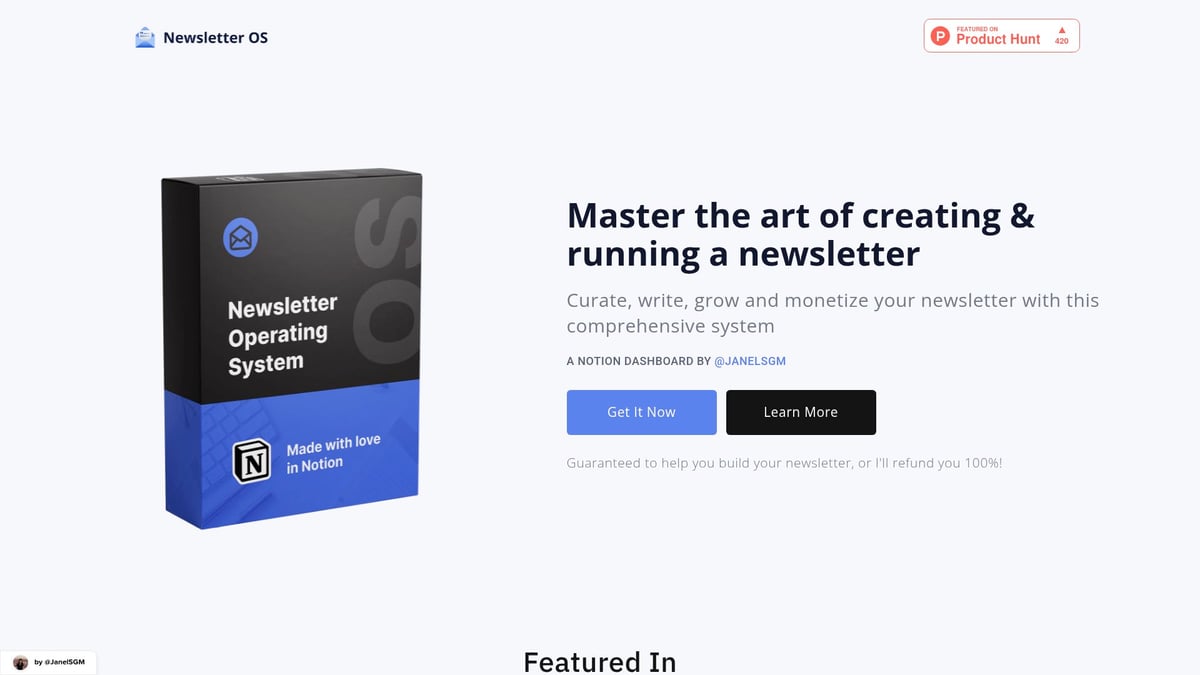
Pricing: One-time purchase of $49 for lifetime access.
Core Features:
- Content templates and curation tools
- Analytics tracking and scheduling workflows
Key Benefits: Streamlines newsletter creation, supports monetization, and offers an extensive resource library.
Target Audience: Indie creators, journalists, marketers, and businesses building newsletters.
Pros:
- Instant setup and highly actionable content
- Praised by major media outlets
Cons: Built on Notion, so it may lack deep automation and is best for solo or SMB use.
Use Cases: Launching newsletters, content planning, and audience growth.
Example: Used by thousands to launch and scale successful newsletters, Newsletter OS embodies the democratizing spirit of no code startups.
How No-Code Startups Achieve Rapid Growth
The rise of no code startups is changing how entrepreneurs build, launch, and scale new products. By removing technical roadblocks, these companies are unlocking rapid growth, creative freedom, and access to innovation for a much wider audience.
The Power of No-Code Platforms
No code startups thrive because platforms like Bubble, Softr, Webflow, and Notion give anyone the ability to build software visually. Drag-and-drop interfaces, easy database integrations with Airtable, and automation using tools like Zapier empower founders to create apps without hiring large engineering teams.
For example, Comet used Bubble to reach €14M in funding and scale its freelancer marketplace. Softr enabled LetterHunt to launch a directory with thousands of listings in weeks. To understand how teams quickly validate ideas, see this guide on how to build scalable MVPs with no-code. The result: no code startups can test, iterate, and launch at unprecedented speeds.
Funding, Revenue, and Scaling Strategies
No code startups use flexible business models to drive growth. Dividend Finance secured $384M, Bloom Tech raised $122M, and Qoins brought in $2.3M, all while leveraging no-code tools. Subscription, marketplace, and pay-per-use pricing models let them reach a broad customer base.
With no code startups, founders can pivot quickly if the market shifts. Iterating on customer feedback is easier and less risky compared to traditional dev cycles. The ability to experiment rapidly helps these companies find product-market fit and scale efficiently.
Overcoming Challenges: Scalability, Security, and Integration
As no code startups grow, they face hurdles like platform limits, data security, and integrating with legacy systems. Some tools may have constraints, especially for complex workflows or high-traffic apps.
To address these, innovative teams like Big House Technologies combine no-code with custom code, ensuring both speed and scalability. This hybrid approach allows no code startups to move from MVP to robust enterprise solutions while maintaining security and compliance. Creative problem-solving is key to overcoming these challenges.
Community, Support, and Ecosystem Growth
A strong community ecosystem supports no code startups at every stage. Online forums, template libraries, expert networks, and accelerators help founders solve problems and share best practices.
Educational resources and agency partners make it easier to learn, launch, and grow. Collaborative innovation is the heartbeat of the no-code movement, driving adoption and encouraging more entrepreneurs to reimagine what’s possible. The future looks bright for no code startups as these networks continue to expand.
Future Outlook: The Next Wave of No-Code Innovation
The momentum behind no code startups shows no signs of slowing. As we approach 2026, the landscape is rapidly evolving, fueled by advances in technology and a growing appetite for faster, more accessible digital solutions. What does the next wave hold for no code startups, and how will this movement shape the future?
Artificial intelligence is set to become deeply embedded in no code startups, empowering founders to automate complex tasks, analyze data, and personalize user experiences. According to Grand View Research on No-Code AI Market, the U S no code AI platform market is projected to grow at a 25.6 percent CAGR from 2025 to 2033. This surge will drive the emergence of industry-specific no code platforms, enabling tailored solutions for healthcare, finance, education, and more.
The boundary between no code and low code is blurring. Enterprises are increasingly embracing hybrid platforms that combine the ease of no code with the flexibility of low code for custom integrations and advanced logic. This convergence allows no code startups to scale beyond MVPs and deliver robust, enterprise-grade applications that meet complex requirements without sacrificing speed or cost efficiency.
No code startups are also redefining the future of work. The rise of “citizen developers” means anyone with an idea can now build, launch, and iterate digital products, regardless of technical background. This democratization is accelerating entrepreneurship, fostering innovation in small teams, and enabling larger organizations to unlock the creativity of their workforce. The workplace of the future will be more collaborative, agile, and inclusive thanks to the no code movement.
Market forecasts point to exponential growth in adoption and sector disruption. Experts predict millions of new users will join the no code revolution in the next few years, with startups driving digital transformation across every industry. If you’re considering building your own solution, now is the time to explore what no code startups can offer. For a deeper dive into how this approach is reshaping the software landscape, check out Why no-code development is the future.
After seeing how these no code startups are shaking up industries and making innovation more accessible than ever, it’s clear that you don’t need to wait months or hire a huge dev team to bring your next big idea to life. Whether you’re a founder with a fresh concept or an enterprise looking to move fast, the right tools and partners can help you build, test, and launch with incredible speed and confidence. Curious how you can turn your vision into a real product—without the usual roadblocks? Launch Your MVP in Weeks, Not Months and see just how quickly you can get started.

About Big House
Big House is committed to 1) developing robust internal tools for enterprises, and 2) crafting minimum viable products (MVPs) that help startups and entrepreneurs bring their visions to life.
If you'd like to explore how we can build technology for you, get in touch. We'd be excited to discuss what you have in mind.
Other Articles
Discover why no-code platforms like Bubble are transforming enterprise software development, offering faster build times, reduced costs, and empowering non-technical teams to create scalable, customized internal tools.
Discover 2025’s top enterprise dev best practices, tools, and AI trends. Future-proof your team with strategies for secure, scalable, and innovative solutions.
Discover how ai simulation accelerates innovation, reduces costs, and enables data-driven decisions for enterprises and startups in 2026.