
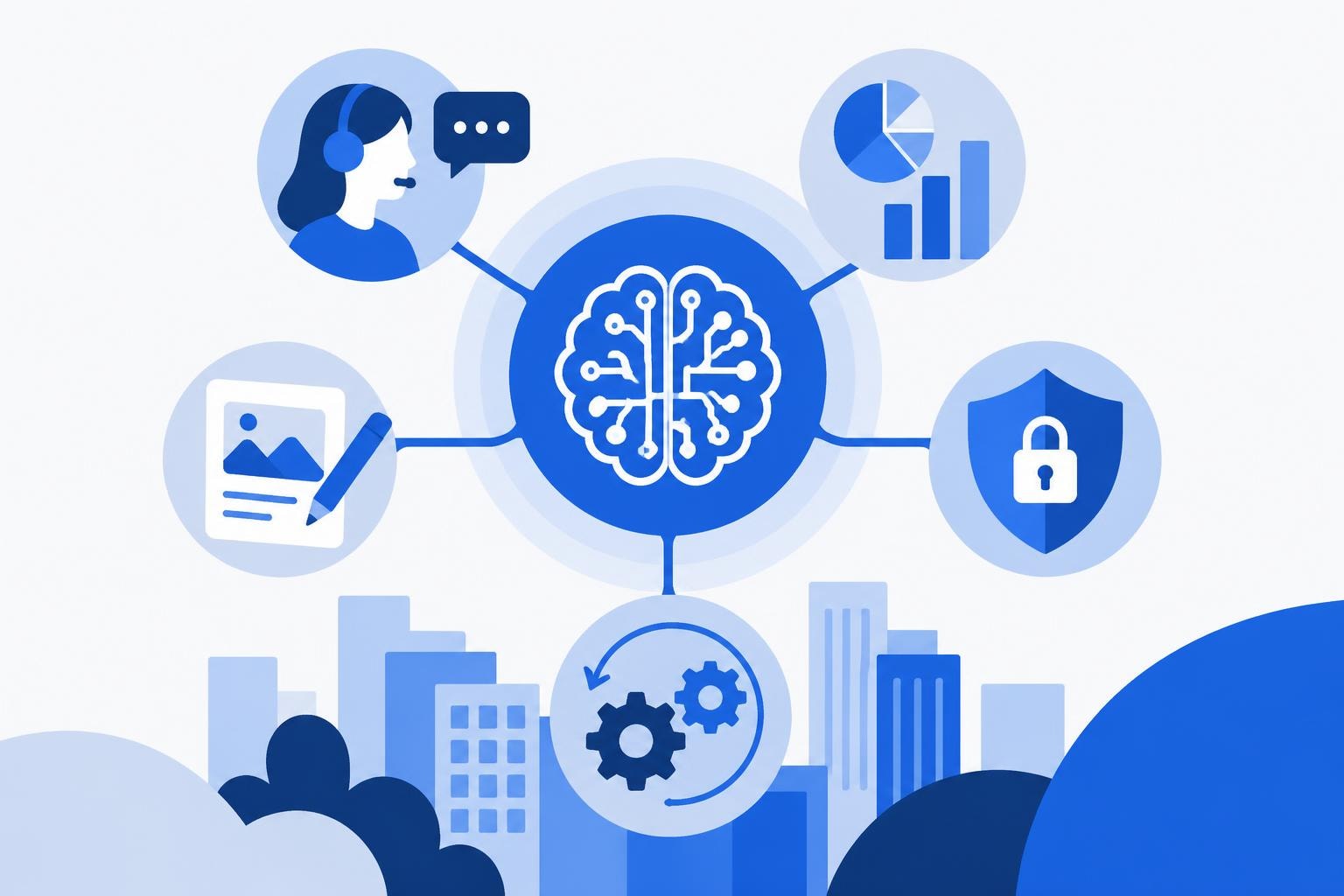
Artificial intelligence has evolved from a futuristic concept into an essential business tool that's reshaping how companies operate across every sector. Organizations of all sizes are discovering that AI isn't just about replacing human tasks, but rather about augmenting capabilities and unlocking new possibilities. Understanding the practical applications of AI helps business leaders make informed decisions about where to invest their technology budgets and how to stay competitive in an increasingly digital marketplace. For no-code development agencies and their clients, these 5 applications of ai represent opportunities to build sophisticated solutions without the traditional overhead of custom coding.
Customer Service Automation and Chatbot Solutions
The first of our 5 applications of ai focuses on revolutionizing customer interactions. AI-powered chatbots and virtual assistants have transformed customer service from a cost center into a strategic advantage. These intelligent systems can handle thousands of simultaneous conversations, provide instant responses 24/7, and learn from each interaction to improve over time.
Modern AI chatbots go far beyond simple scripted responses. Natural language processing enables them to understand context, sentiment, and intent, allowing for genuinely helpful conversations that feel human. Companies can deploy these solutions across multiple channels including websites, mobile apps, social media, and messaging platforms.
Real-World Implementation Benefits
- Cost reduction of up to 70% in customer service operations
- Immediate response times eliminating customer wait queues
- Scalability to handle peak demand without additional staffing
- Multilingual support expanding global market reach
- Data collection providing insights into customer needs and pain points
The no-code revolution has made implementing these AI solutions accessible to businesses without dedicated development teams. Platforms like Bubble enable agencies such as Big House Technologies to rapidly prototype and deploy sophisticated chatbot interfaces that integrate with existing customer relationship management systems. This democratization of AI technology means even startups can compete with enterprise-level customer service capabilities.
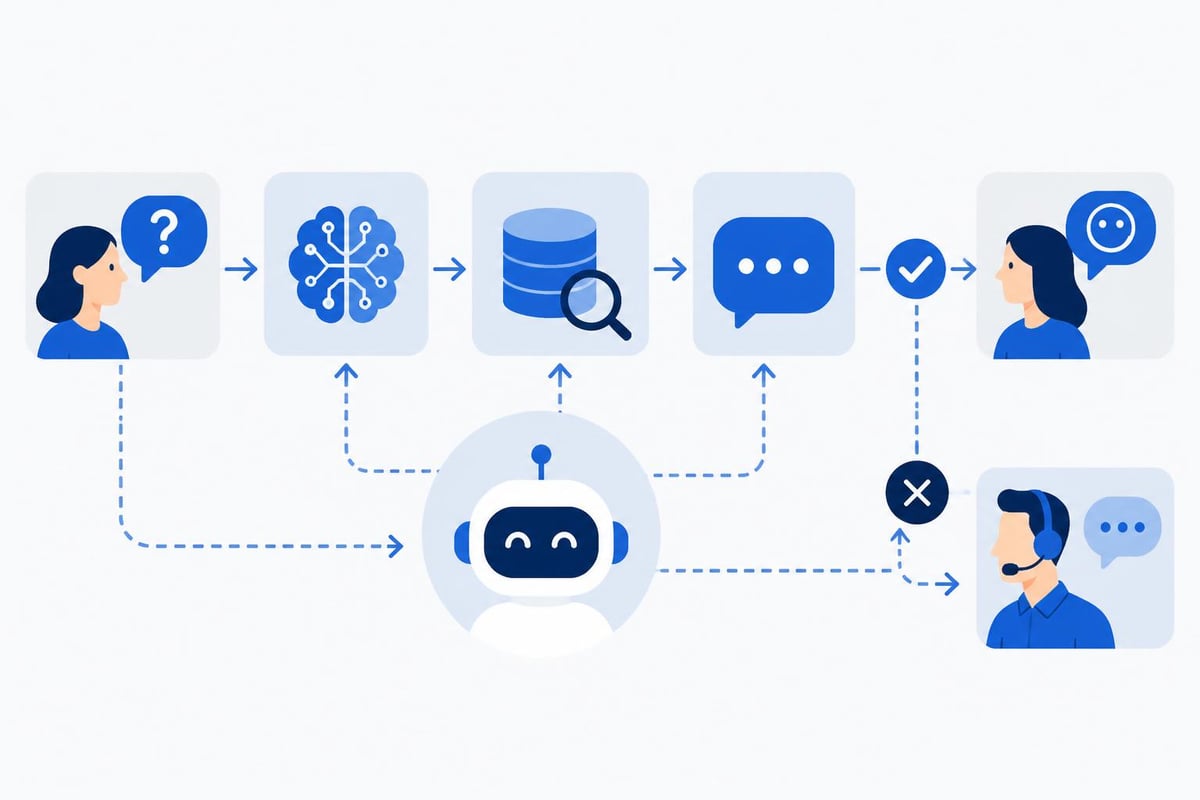
Consider a mid-sized e-commerce company that implemented an AI chatbot to handle order tracking, returns, and common product questions. Within three months, they reduced support ticket volume by 60% while actually improving customer satisfaction scores. The chatbot handled routine inquiries instantly, freeing human agents to focus on complex issues requiring empathy and creative problem-solving. This hybrid approach, combining AI efficiency with human expertise, represents the future of customer service across industries as noted in Google Cloud's comprehensive overview of AI applications.
Predictive Analytics and Business Intelligence
The second among these 5 applications of ai demonstrates how businesses can transform raw data into actionable insights. Predictive analytics powered by machine learning algorithms analyzes historical patterns to forecast future trends, enabling proactive decision-making rather than reactive responses.
Data volume and complexity have grown beyond human analytical capabilities. AI systems can process millions of data points simultaneously, identifying correlations and patterns that would take human analysts months or years to discover. This capability applies across every business function from sales forecasting to inventory management.
| Application Area | AI Capability | Business Impact |
|---|---|---|
| Sales Forecasting | Pattern recognition in buying cycles | 15-25% improvement in forecast accuracy |
| Inventory Management | Demand prediction and optimization | 20-30% reduction in carrying costs |
| Customer Churn | Behavior analysis and risk scoring | 10-15% decrease in customer attrition |
| Financial Planning | Scenario modeling and risk assessment | Better capital allocation decisions |
Organizations implementing predictive analytics often start with a specific use case rather than attempting enterprise-wide transformation. A manufacturing company might begin by predicting equipment maintenance needs, avoiding costly downtime through proactive repairs. A retail business could forecast seasonal demand with unprecedented accuracy, optimizing stock levels across locations.
Building Predictive Systems with No-Code Tools
The intersection of AI and no-code development has created unprecedented opportunities. Development agencies can now build sophisticated predictive models and dashboards without extensive data science teams. Integration with APIs and third-party AI services means businesses can leverage cutting-edge machine learning without building infrastructure from scratch.
Financial services firms particularly benefit from AI-driven risk assessment models that evaluate loan applications, detect fraudulent transactions, and optimize investment portfolios. These systems process structured and unstructured data, including text documents, images, and behavioral patterns, to make more informed decisions faster than traditional methods.
According to research exploring AI applications across industries, companies using predictive analytics report significant competitive advantages, including faster time-to-market for products and better resource allocation. The key is starting with clean, organized data and clearly defined business objectives.
Content Creation and Marketing Automation
Among the 5 applications of ai gaining rapid adoption, content generation stands out for its immediate practical value. AI writing assistants, image generators, and video creation tools are revolutionizing marketing departments and creative agencies. These technologies don't replace human creativity, but they accelerate production and enable personalization at scale.
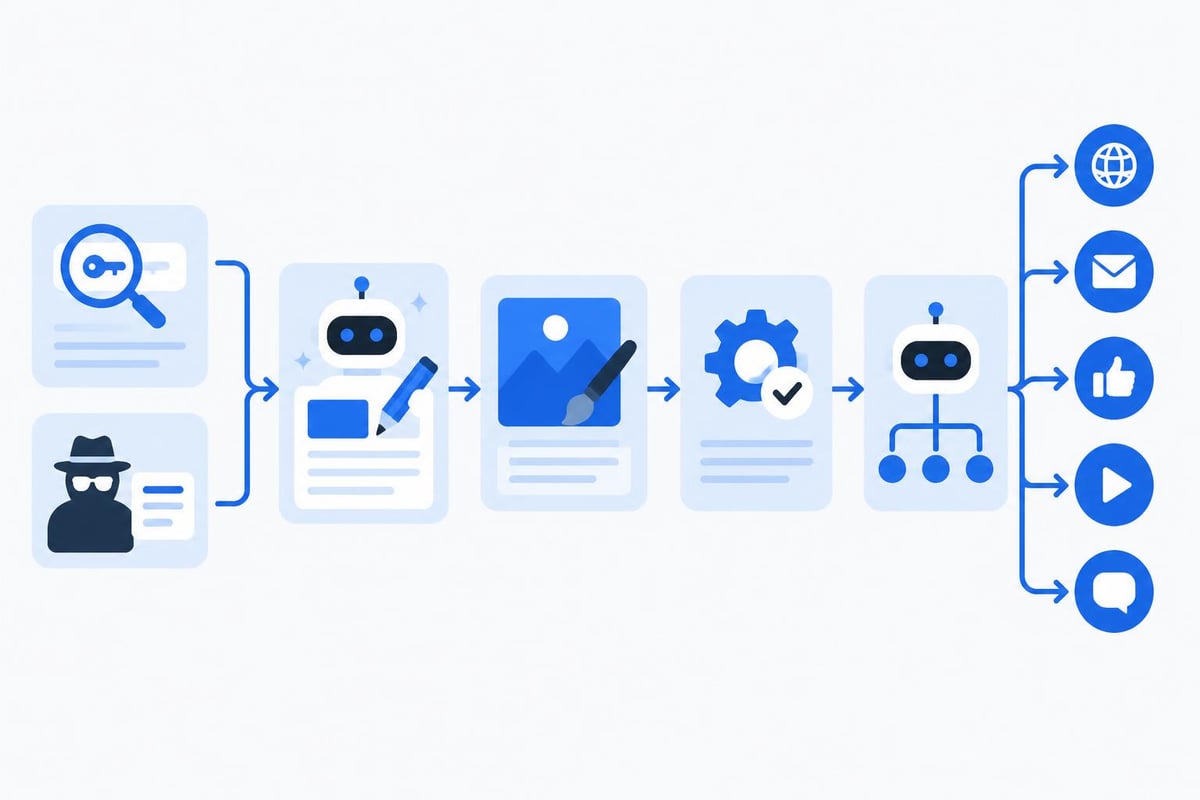
Content marketing requires consistent output across multiple channels and formats. AI tools can generate blog posts, social media updates, email campaigns, and product descriptions while maintaining brand voice and tone. More importantly, they can create variations tailored to different audience segments, something practically impossible to do manually at scale.
Video content creation has been democratized by AI platforms like AdsRaw, which enables businesses to create realistic user-generated content style video ads without hiring creators. These tools allow marketing teams to test multiple creative approaches quickly, identifying winning concepts before significant budget allocation. The speed advantage is substantial when testing different ad creatives, helping brands optimize campaign performance in days rather than weeks.
SEO and Content Strategy Enhancement
Beyond creation, AI enhances content strategy through search engine optimization and distribution. Platforms like RankPill automate the entire SEO content workflow, from competitor keyword analysis to automated publishing schedules. This automation means businesses can maintain consistent content calendars without expanding their teams proportionally.
- Generate topic ideas based on trending searches and competitor gaps
- Optimize content structure for search engine visibility
- Create meta descriptions and title variations for A/B testing
- Schedule and distribute content across multiple platforms
- Analyze performance metrics and adjust strategy accordingly
For companies exploring AI product development tools, content automation represents an accessible entry point. The technology integrates seamlessly with existing content management systems and marketing automation platforms. A startup can achieve content output comparable to companies with teams ten times their size by leveraging these tools strategically.
The content creation landscape has shifted dramatically. What once required writers, designers, video editors, and coordinators can now be managed by smaller teams using AI assistance. However, human oversight remains essential for strategy, quality control, and ensuring content aligns with brand values and legal requirements.
Cybersecurity Threat Detection and Prevention
The fourth of our 5 applications of ai addresses one of business's most critical challenges. Cybersecurity threats evolve constantly, with attackers using sophisticated techniques that traditional security measures struggle to counter. AI-powered security systems provide adaptive defense mechanisms that learn from attack patterns and identify anomalies in real-time.
Traditional signature-based security relies on recognizing known threats, leaving organizations vulnerable to zero-day exploits and novel attack vectors. Machine learning algorithms analyze network traffic, user behavior, and system activities to establish baseline patterns, then flag deviations that might indicate security breaches.
According to research on explainable AI in cybersecurity, transparency in AI-driven security systems has become increasingly important. Organizations need to understand not just that a threat was detected, but why the system flagged it and what evidence supports the assessment. This explainability enables security teams to respond appropriately and improve their defensive strategies.
Multi-Layered AI Security Approach
| Security Layer | AI Function | Protection Provided |
|---|---|---|
| Perimeter Defense | Traffic pattern analysis | Blocks malicious requests before network entry |
| Access Control | Behavioral biometrics | Identifies unauthorized access attempts |
| Data Protection | Anomaly detection in file access | Prevents data exfiltration |
| Endpoint Security | Malware behavior recognition | Stops unknown threats on devices |
| Incident Response | Attack correlation and prioritization | Enables faster threat mitigation |
Financial institutions, healthcare providers, and enterprises handling sensitive data are deploying AI security solutions at unprecedented rates. These systems monitor millions of events per second, something impossible for human security teams regardless of size. When a potential threat is identified, AI can automatically initiate containment protocols while alerting security personnel for investigation.
The integration of AI security with no-code platforms enables rapid deployment of security monitoring dashboards and incident response workflows. Organizations can customize their security operations to match their specific risk profile without lengthy development cycles. This agility is particularly valuable as threat landscapes shift and new vulnerabilities emerge.
Workflow Automation and Process Optimization
The final entry in these 5 applications of ai may have the broadest business impact. Intelligent process automation combines AI with robotic process automation to handle complex workflows requiring decision-making and adaptation. This goes beyond simple task automation to reimagine entire business processes.
Workflow automation powered by AI analyzes how work flows through an organization, identifies bottlenecks, and optimizes processes for efficiency. It can handle document processing, data entry, approval routing, and compliance checking with minimal human intervention. The technology learns from corrections and adjustments, continuously improving its performance.
Consider accounts payable processing, a task-heavy operation in most companies. AI systems can extract data from invoices regardless of format, match them to purchase orders, flag discrepancies, route for appropriate approvals, and schedule payments. What once required hours of manual work happens in seconds with higher accuracy rates.
Implementation Across Business Functions
Organizations implementing workflow automation typically follow a phased approach:
- Identify high-volume, repetitive processes suitable for automation
- Map current workflows documenting decision points and exceptions
- Design AI-enhanced processes incorporating decision logic
- Build and test in controlled environments with sample data
- Deploy gradually with human oversight and feedback loops
- Monitor and optimize based on performance metrics
Human resources departments automate candidate screening, interview scheduling, and onboarding processes. Finance teams use AI for expense report validation, budget variance analysis, and financial close procedures. Sales operations automate lead scoring, proposal generation, and contract management. The applications span virtually every department.
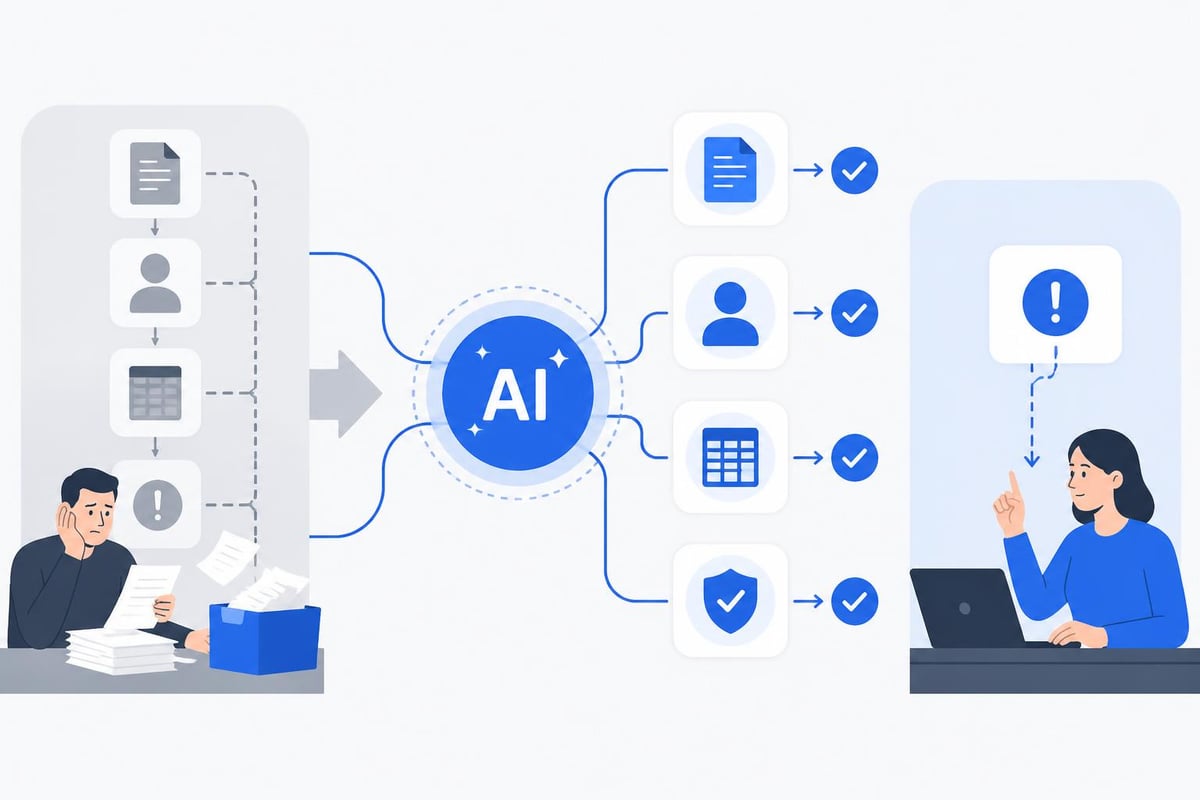
The combination of AI and no-code platforms like those used by agencies specializing in AI apps and development makes process automation accessible to organizations without extensive IT resources. Business users can configure workflows, set decision rules, and adjust processes as needs change, reducing dependence on traditional software development cycles.
According to insights from Telefónica's exploration of AI applications, companies implementing intelligent automation report productivity gains of 25-40% in automated functions. Employees redirect their time from repetitive tasks to strategic initiatives requiring creativity, critical thinking, and human judgment.
Integration Strategies for AI Solutions
Successfully implementing these 5 applications of ai requires thoughtful integration strategies. Organizations should avoid the common pitfall of deploying AI as isolated point solutions without considering how they interconnect. A holistic approach creates synergies where data and insights flow between applications, multiplying their individual value.
Start with clear objectives rather than technology-first thinking. Identify specific business problems or opportunities where AI can deliver measurable impact. This focus ensures initiatives align with strategic priorities and resources are allocated to highest-value applications. Many organizations find success beginning with a pilot project that demonstrates ROI before expanding.
Data infrastructure forms the foundation for effective AI implementation. Quality, accessible data enables AI systems to learn accurately and make reliable predictions. Organizations should audit their data assets, establish governance policies, and invest in integration platforms that connect disparate systems. The payoff comes when AI applications can draw on comprehensive, real-time information.
Building vs. Buying AI Capabilities
The decision between building custom AI solutions and adopting existing platforms depends on several factors:
- Competitive differentiation needed from the AI application
- Available technical expertise within the organization
- Time-to-value requirements and market pressures
- Budget constraints for development and maintenance
- Integration complexity with existing systems
Most organizations benefit from a hybrid approach, leveraging cloud-based AI services for common functions while developing custom solutions for unique competitive requirements. No-code platforms bridge this gap, enabling rapid customization of AI applications without full custom development overhead.
Agencies like those offering no-code startup solutions help businesses navigate these decisions, designing architectures that balance capability, cost, and speed-to-market. The key is maintaining flexibility as AI technologies evolve and business needs change.
Measuring ROI and Success Metrics
Implementing the 5 applications of ai requires investment, and organizations rightfully expect measurable returns. Success metrics vary by application type but should always connect to business outcomes rather than just technology performance. A chatbot's value isn't measured by conversation count, but by reduced support costs and improved customer satisfaction.
Establish baseline metrics before implementation to enable accurate comparison. Document current performance levels, costs, and customer feedback related to the processes being enhanced with AI. This baseline becomes the reference point for calculating improvement and ROI.
| AI Application | Primary Success Metrics | Secondary Indicators |
|---|---|---|
| Customer Service AI | Cost per interaction, resolution time, CSAT scores | Ticket deflection rate, agent productivity |
| Predictive Analytics | Forecast accuracy, decision speed | Revenue impact, cost avoidance |
| Content Automation | Content production volume, engagement rates | Cost per piece, SEO performance |
| Cybersecurity AI | Threat detection rate, false positive rate | Incident response time, breach prevention |
| Process Automation | Time savings, error reduction | Employee satisfaction, process cycle time |
Track both efficiency gains and effectiveness improvements. An AI system might process invoices faster while also catching errors that previously went undetected. Both benefits contribute to ROI but require different measurement approaches. Regular reporting ensures stakeholders understand value delivery and informs ongoing optimization efforts.
Consider also measuring adoption rates and user satisfaction among employees interacting with AI systems. High-performing technology that people resist using delivers limited value. Successful implementations balance technical capability with user experience, making AI assistance intuitive and genuinely helpful rather than another complex system to learn.
Future-Proofing AI Investments
As we progress through 2026, AI capabilities continue evolving rapidly. Organizations implementing these 5 applications of ai should design for adaptability, ensuring systems can incorporate new capabilities as they emerge. This future-proofing approach protects investments and maintains competitive advantage over time.
Modular architecture enables replacing or upgrading individual components without rebuilding entire systems. When a more capable language model becomes available, for instance, organizations with modular designs can swap it into their customer service chatbot without redesigning the entire application. This flexibility reduces technical debt and extends solution lifespan.
Stay informed about emerging AI developments relevant to your industry. Technologies like multimodal AI that processes text, images, and audio simultaneously, or federated learning that trains models while preserving data privacy, may create new opportunities for your organization. Regular technology reviews help identify when new capabilities justify investment.
Partnership with AI development specialists provides access to expertise without maintaining large in-house teams. Working with agencies experienced in platforms like Bubble and Lovable, businesses can leverage cutting-edge AI capabilities through no-code implementations that evolve as platforms add new features. This approach balances capability with practical resource constraints.
Consider exploring resources like Rice University's overview of AI applications to understand both traditional and modern implementations. Academic research often previews capabilities that will reach commercial availability within 12-24 months, providing valuable insight for strategic planning.
Training and change management deserve significant attention in AI initiatives. Technology alone doesn't transform operations; people using it effectively do. Invest in helping teams understand AI capabilities and limitations, when to trust automated recommendations and when to apply human judgment. This cultural adaptation often determines whether AI delivers transformative impact or disappointing results.
These 5 applications of ai-customer service automation, predictive analytics, content creation, cybersecurity, and workflow optimization-represent proven pathways to operational excellence and competitive advantage in 2026. Whether you're enhancing existing operations or building entirely new capabilities, AI technologies offer unprecedented opportunities when implemented thoughtfully. If you're ready to explore how these applications could transform your business, Big House Technologies specializes in delivering scalable AI and no-code solutions that turn strategic vision into functional reality, with expertise in both Bubble and Lovable platforms to ensure your projects succeed.

About Big House
Big House is committed to 1) developing robust internal tools for enterprises, and 2) crafting minimum viable products (MVPs) that help startups and entrepreneurs bring their visions to life.
If you'd like to explore how we can build technology for you, get in touch. We'd be excited to discuss what you have in mind.
Other Articles
Discover the best platforms to hire Bubble developers, explore pricing models, and learn about project timelines, skill levels, and tips for selecting top-tier no-code development talent.
Discover the best chat gpt apps for 2025 to boost productivity and creativity Compare features pricing and tips to find your ideal AI chat companion today
Learn how to build MVPs in 2025 with a proven step-by-step guide. Discover expert frameworks, real success stories, and actionable tips to launch faster.