

Building a startup in 2026 requires speed, efficiency, and the ability to do more with less. Traditional development approaches often drain resources and extend timelines beyond what early-stage companies can sustain. That's where ai product development tools for startups have become game-changers, enabling founders to move from concept to market-ready product faster than ever before. These intelligent platforms automate repetitive tasks, generate code, streamline workflows, and eliminate bottlenecks that traditionally required large development teams. Whether you're building your minimum viable product or scaling an existing solution, the right AI-powered toolkit can mean the difference between running out of runway and reaching profitability.
The Rise of AI-Powered Development Platforms
The landscape of software development has fundamentally shifted over the past two years. What once required months of custom coding can now be accomplished in weeks or even days through AI-assisted platforms.
Startups benefit from AI development tools in several critical ways:
- Reduced time-to-market by 60-80% compared to traditional coding approaches
- Lower development costs through automation of routine tasks
- Smaller team requirements, allowing more budget for customer acquisition
- Faster iteration cycles based on user feedback
- Built-in best practices and security standards
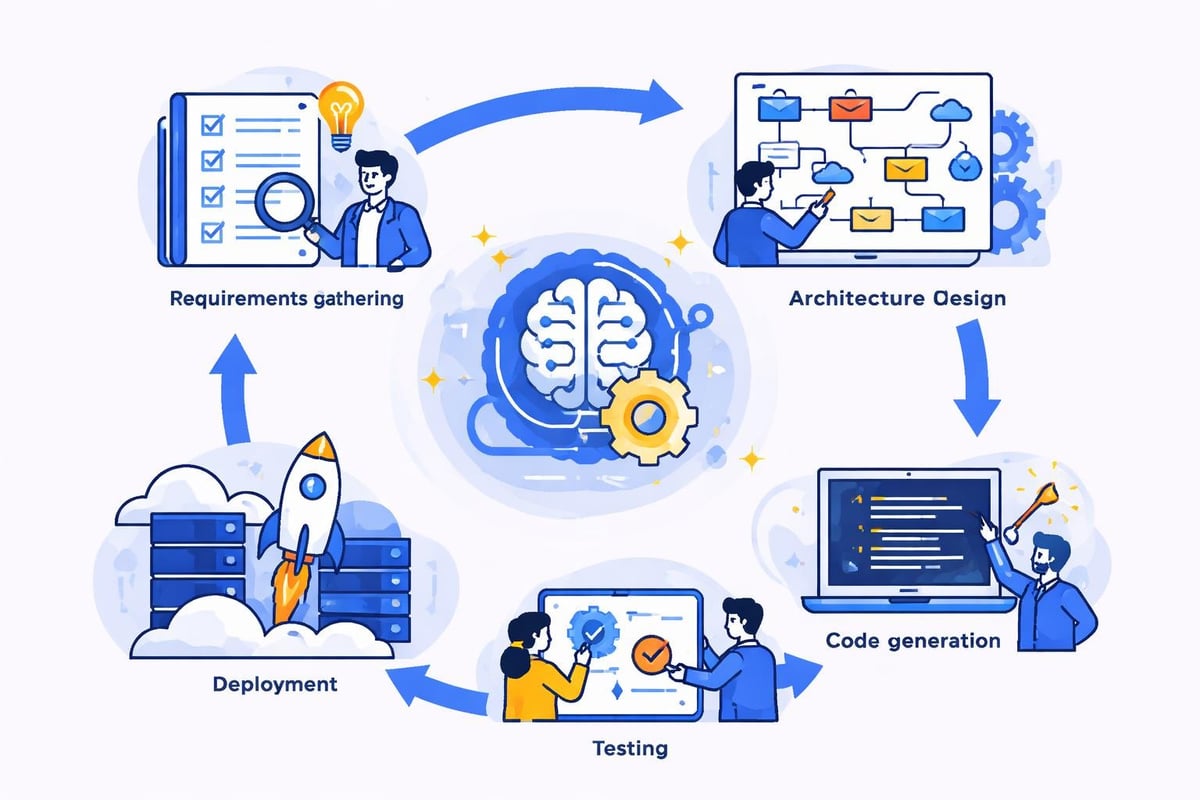
The emergence of AI-powered integrated development environments like AWS Kiro demonstrates how major tech companies are investing heavily in this transformation. These platforms can automatically generate project plans, create code structures, and even suggest optimizations based on your specific requirements.
Understanding the No-Code AI Development Ecosystem
No-code platforms have evolved significantly, now incorporating sophisticated AI capabilities that make them powerful enough for enterprise-grade applications. These tools democratize software development, allowing non-technical founders to bring their visions to life while technical teams focus on complex customizations.
Building MVPs with no-code tools has become standard practice among successful startups. The combination of visual development interfaces with AI-driven features creates an environment where iteration happens at unprecedented speeds.
Modern ai product development tools for startups include:
- Visual development environments that translate designs into functional applications
- AI code generators that create custom logic from natural language descriptions
- Intelligent testing suites that identify bugs and security vulnerabilities automatically
- Automated deployment pipelines that handle infrastructure setup and scaling
- Performance optimization engines that improve application speed without manual intervention
Essential AI Tools Every Startup Should Consider
Choosing the right toolkit depends on your specific product requirements, technical capabilities, and budget constraints. However, certain categories of tools have proven essential across different types of startups.
Code Generation and Development Acceleration
AI-powered code generation has matured dramatically. Modern vibe coding tools allow developers to describe what they want in plain English and receive production-ready code in response. This approach works particularly well for standard functionality like authentication, payment processing, or database operations.
| Tool Category | Primary Benefit | Best For | Integration Complexity |
|---|---|---|---|
| AI Code Generators | 3-5x faster development | Feature implementation | Low |
| No-Code Platforms | Non-technical building | MVPs and prototypes | Very Low |
| AI Testing Tools | Automated quality assurance | Bug prevention | Medium |
| Design-to-Code | Eliminates handoff delays | UI-heavy applications | Low |
The shift toward AI-assisted development doesn't mean abandoning traditional coding. Instead, it means strategically applying AI where it provides maximum leverage. Red Hat's developer workflow efficiency tools exemplify how established companies are helping teams modernize applications while maintaining code quality standards.
Design and Prototyping Automation
Visual design remains a critical component of product success, and AI has revolutionized how startups approach this phase. Rather than spending weeks refining mockups, teams can now generate multiple design variations in hours.
Tools like Lovart demonstrate this capability effectively. Creating complete brand kits through AI shows how a single prompt can produce logos, color schemes, typography systems, and marketing materials that maintain consistent brand identity across all touchpoints.
Key advantages of AI design tools include:
- Instant generation of multiple design directions for comparison
- Automatic adherence to accessibility standards
- Responsive layouts that work across all device sizes
- Brand consistency enforcement across all assets
- Rapid iteration based on stakeholder feedback
AI graphic design capabilities have reached a point where startups can maintain professional visual standards without hiring full-time designers during early stages. This doesn't replace design expertise for complex products, but it dramatically reduces the barrier to entry for founders validating their concepts.
Practical Implementation Strategies
Successfully adopting ai product development tools for startups requires more than just selecting the right platforms. Implementation strategy determines whether these tools accelerate your roadmap or create additional complexity.
Building Your First AI-Enhanced Product
Start with a clear scope definition. AI tools work best when they have specific, well-defined problems to solve. Vague requirements lead to generic outputs that require extensive customization.
Follow this implementation sequence:
- Map your core user flows and identify which can be built with pre-built components
- Select tools that integrate well together rather than trying to use the "best" tool for each function
- Begin with AI-generated scaffolding, then customize critical differentiators manually
- Implement automated testing from day one to catch AI-generated bugs early
- Set up continuous deployment to validate changes with real users quickly
The comprehensive development approach used by experienced agencies provides a blueprint for structuring your AI-enhanced workflow. From scoping through testing, each phase should leverage AI where it provides clear advantages while maintaining human oversight for strategic decisions.

Avoiding Common Pitfalls
Many startups make predictable mistakes when first adopting AI development tools. Understanding these pitfalls helps you avoid costly delays.
Watch out for these issues:
- Over-relying on AI without understanding the underlying logic it generates
- Choosing tools that create vendor lock-in with proprietary formats
- Skipping proper testing because AI-generated code "should just work"
- Neglecting security reviews of automatically generated authentication and data handling
- Building features faster than you can validate them with customers
The balance between speed and quality remains crucial. AI product development tools for startups enable rapid building, but successful products still require thoughtful strategy and user validation at every stage.
Specialized Tools for Different Product Types
Not all AI development tools work equally well for every type of product. Your specific use case should guide tool selection more than general popularity or feature lists.
SaaS Application Development
SaaS products require robust database management, user authentication, subscription handling, and API integrations. No-code tools designed for SaaS founders specifically address these requirements with pre-built components that handle common patterns.
| Requirement | Traditional Approach | AI-Enhanced Approach | Time Savings |
|---|---|---|---|
| User Authentication | 2-3 weeks custom build | 1-2 hours configuration | 95% |
| Payment Integration | 1-2 weeks implementation | 2-4 hours setup | 90% |
| Database Design | 1-2 weeks schema creation | Hours with AI suggestions | 85% |
| API Development | 3-4 weeks per integration | Days with AI generation | 75% |
Mobile and Web Applications
Consumer-facing applications prioritize user experience, performance, and cross-platform compatibility. AI tools excel at generating responsive layouts and optimizing load times automatically.
Building with Bubble through specialized agencies combines no-code speed with AI enhancements for complex business logic. This hybrid approach delivers professional results without the overhead of managing multiple development tools.
Internal Tools and Dashboards
Companies often need internal tools for operations, analytics, or customer support. These products have different priorities than customer-facing applications. Specialized dashboard building tools focus on data visualization, real-time updates, and integration with existing business systems.
AI excels at generating data pipelines, creating visualizations from raw data, and suggesting dashboard layouts based on the metrics you want to track. This makes internal tool development significantly faster than custom coding approaches.
Cost Analysis and ROI Considerations
Understanding the true cost of ai product development tools for startups requires looking beyond monthly subscription fees. The total cost of ownership includes learning curves, customization requirements, and potential migration costs if you outgrow a platform.
Direct and Indirect Costs
Subscription fees for AI development tools typically range from $20-300 per user monthly for startup-tier plans. Enterprise features that startups might need as they scale can push this to $500-1000+ per month.
Development time savings represent the largest ROI component. If AI tools reduce development time by 70%, a startup can launch 3-4 major features in the time traditional development would deliver one. This acceleration directly impacts revenue potential and competitive positioning.
Team size optimization allows startups to remain lean longer. A team of 2-3 people using AI tools can often accomplish what previously required 5-7 traditional developers. This difference compounds over time as you avoid scaling hiring prematurely.
Comparing no-code versus custom code costs reveals that AI-enhanced no-code approaches typically cost 40-60% less than traditional development while delivering products 50-70% faster. These economics are particularly compelling for pre-revenue startups managing limited runway.
Hidden Value Creation
Beyond direct cost savings, AI development tools create value through improved flexibility. The ability to test product variations quickly enables more rigorous validation before committing resources to features customers don't want.
Additional value drivers include:
- Reduced technical debt through standardized, well-tested components
- Faster onboarding for new team members using familiar platforms
- Better documentation automatically generated from AI-assisted code
- Lower maintenance costs from using actively supported platforms
- Easier pivots when market feedback demands direction changes
Ecosystem and Community Support
The strength of a tool's ecosystem often matters more than its raw features. Strong communities provide solutions to common problems, share best practices, and create extensions that expand capabilities.
Learning Resources and Support Networks
Established ai product development tools for startups benefit from extensive documentation, video tutorials, and active forums where you can find answers quickly. This support infrastructure dramatically reduces the time spent troubleshooting issues.
Evaluate potential tools based on:
- Size and activity level of user community
- Availability of certified experts for hire if you need help
- Frequency of platform updates and new feature releases
- Quality of official documentation and tutorials
- Third-party course and training availability
Programs like the Agentic Launchpad initiative from Microsoft and Nvidia show how major companies are investing in startup success through AI tools. These programs provide not just software access but also mentorship and technical guidance that accelerates learning curves.

Integration Capabilities
Your AI development tools must work together seamlessly. Fragmented toolchains create friction that eliminates the speed advantages AI should provide.
Enterprise integration platforms using no-code demonstrate how different systems can connect without custom API development. Look for tools that offer pre-built connectors to the services you already use for CRM, analytics, marketing, and operations.
Security and Compliance Considerations
AI-generated code requires the same security scrutiny as human-written code, but the approach differs. Rather than line-by-line reviews, focus on understanding what the AI is generating and ensuring proper testing coverage.
Best Practices for AI-Generated Code Security
Implement automated security scanning that checks AI-generated outputs for common vulnerabilities. Tools exist specifically for analyzing code produced by AI assistants, identifying potential SQL injection risks, authentication bypasses, or data exposure issues.
Essential security measures include:
- Automated vulnerability scanning integrated into your deployment pipeline
- Regular dependency updates to patch security issues in AI-selected libraries
- Code review focused on business logic rather than syntax
- Penetration testing before launch, regardless of development method
- Data encryption and access controls configured properly from the start
AI software development security considerations require understanding that AI tools follow patterns from their training data. If that data included insecure practices, the AI might reproduce them. Human oversight remains essential for critical security decisions.
Compliance and Data Privacy
Startups in regulated industries must ensure their AI development tools comply with relevant standards. GDPR, HIPAA, SOC 2, and other frameworks impose specific requirements on how you build and deploy software.
Choose platforms that provide compliance certifications and documentation showing how they meet regulatory requirements. This due diligence during tool selection prevents costly rebuilds later when you need to pass audits.
Future-Proofing Your Technology Decisions
The AI development tool landscape evolves rapidly. Decisions you make today should account for where the market is heading, not just current capabilities.
Emerging Trends to Watch
Specialized AI agents are becoming more sophisticated. Rather than general-purpose code generators, we're seeing tools optimized for specific frameworks, industries, or use cases. Research into AI-assisted development environments shows how these specialized tools can provide better results than generalist platforms.
Key trends shaping the future:
- Multi-agent systems where different AIs handle design, coding, testing, and deployment
- Improved understanding of business requirements leading to better code generation
- Tighter integration between AI tools and existing development workflows
- Better support for migrating from AI-generated code to custom implementations
- Enhanced ability to explain and document the code they generate
Plan for evolution rather than lock-in. The tools you choose should allow gradual migration to more sophisticated platforms as your needs grow. Alternatives to specific platforms ensure you have options if your initial choices prove limiting.
Building for Scale
AI product development tools for startups must support growth from MVP to enterprise-grade application. Evaluate whether platforms you're considering can handle:
- Increased user loads as your customer base grows
- More complex feature requirements as you differentiate from competitors
- Integration with enterprise systems when you land larger customers
- Team collaboration as you hire additional developers
- Advanced customization when pre-built components no longer suffice
The comprehensive approach to development used by experienced agencies shows how to structure products for long-term growth while maintaining the speed advantages of AI-enhanced development during early stages.
Measuring Success and Optimizing Workflows
Adopting ai product development tools for startups isn't a one-time decision. Continuous measurement and optimization ensure you're extracting maximum value from your chosen platforms.
Key Performance Indicators
Track metrics that reveal whether AI tools are truly accelerating your development or creating hidden inefficiencies.
Monitor these indicators:
- Time from feature specification to production deployment
- Number of bugs introduced per 1000 lines of code (or equivalent in no-code)
- Developer productivity measured in features delivered per sprint
- Customer satisfaction scores for newly released functionality
- Technical debt accumulation requiring future refactoring
Compare these metrics before and after AI tool adoption to quantify actual improvements. Some startups find that initial productivity gains plateau as complexity increases, requiring workflow adjustments to maintain momentum.
Continuous Improvement Processes
Establish regular reviews of your development toolchain. Monthly or quarterly assessments help identify bottlenecks, underutilized features, or new tools that might provide advantages.
Include these elements in your reviews:
- Team feedback on what's working and what's frustrating
- Analysis of where manual work still dominates despite available AI tools
- Evaluation of new features your existing tools have released
- Assessment of emerging tools that might replace current solutions
- Benchmarking against industry standards for development velocity
AI-powered no-code development tools continue evolving rapidly. Staying current with platform improvements ensures you're leveraging the latest capabilities rather than using AI tools like traditional development environments.
The transformation of product development through AI represents a fundamental shift in how startups can compete. By strategically combining AI-powered tools with smart development practices, early-stage companies can achieve velocity and quality that were previously available only to well-funded competitors. Whether you're building your first MVP or scaling an existing product, the right AI toolkit accelerates every phase of development. Big House Technologies specializes in helping startups leverage these powerful platforms, combining Bubble's no-code capabilities with AI-enhanced development to deliver scalable solutions faster and more cost-effectively than traditional approaches. If you're ready to transform your product vision into reality with the speed and efficiency modern AI tools enable, let's discuss how we can help you build smarter.

About Big House
Big House is committed to 1) developing robust internal tools for enterprises, and 2) crafting minimum viable products (MVPs) that help startups and entrepreneurs bring their visions to life.
If you'd like to explore how we can build technology for you, get in touch. We'd be excited to discuss what you have in mind.
Other Articles
Discover 7 inspiring software project ideas for 2026 to boost your skills and portfolio Explore AI no code SaaS and more with practical steps to get started
Explore Builder IO in 2025 with this comprehensive guide. Learn about AI-powered features, integrations, and expert tips to build and scale digital products faster.
Discover what is vibe coding, how AI-driven development works, and why it's transforming software creation for businesses in 2026.