
The SaaS world in 2026 is a high-speed race. Every founder is searching for the next big advantage to build, launch, and scale faster than the competition.
Enter no-code tools for saas founders, transforming how products are created, tested, and improved—no complex coding required. These platforms are opening doors for innovators who want to move quickly and make an impact.
This article spotlights ten game-changing no-code tools for saas founders who want to accelerate growth, cut costs, and outpace their rivals. Get ready to explore the most powerful platforms, their standout features, pricing, and real-world benefits tailored for SaaS leaders in 2026.
Why No-Code Tools Are Essential for SaaS Founders in 2026
The SaaS world in 2026 is a high-speed innovation race. Every founder is pushed to launch features faster, adapt to customer needs, and outpace competitors. In this environment, no-code tools for saas founders are not just helpful, they are essential.
The SaaS Innovation Race and the Need for Speed
SaaS startups are launching at record rates. With more players in the market, rapid iteration is crucial. No-code tools for saas founders enable teams to move from idea to MVP in weeks instead of months.
Shorter product cycles mean founders can test, learn, and pivot quickly. This agility is a game-changer. Instead of waiting for developer resources, founders can prototype, validate, and launch features on their own timeline.
The True Cost of Traditional Development
Building SaaS products the traditional way is costly and complex. Hiring developers, managing codebases, and maintaining infrastructure can drain budgets fast. For many early-stage startups, these costs are simply unsustainable.
No-code tools for saas founders cut expenses dramatically. With intuitive interfaces and pre-built components, founders can handle much of the work themselves. Studies show that no-code platforms can reduce development costs by up to 70%, making SaaS innovation more accessible to all.
| Development Approach | Time to MVP | Cost Estimate | Required Skills |
|---|---|---|---|
| Traditional | 3-6 months | $30K–$150K | Coding, DevOps |
| No-Code | 2-6 weeks | $5K–$40K | Product, Design |
Democratizing SaaS: Leveling the Playing Field
No-code tools for saas founders empower non-technical visionaries. You no longer need a CS degree or a full-stack team to bring an idea to life. Platforms like Bubble, Webflow, and Airtable let founders focus on product-market fit, not syntax errors.
This democratization is leveling the playing field. More diverse founders are entering SaaS, bringing fresh perspectives and innovative solutions. The result? A more vibrant, competitive, and inclusive industry.
The No-Code Advantage: Speed, Savings, and Scale
The impact of no-code tools for saas founders is measurable. Companies like dividend.com and Qoins have scaled operations, reduced costs, and accelerated growth using these platforms.
In fact, Gartner forecasts 80% of tech products built with no-code by 2026. This surge reflects a major shift in how SaaS products are built and delivered.
Key benefits include:
- Launching products at least 5x faster
- Reducing development costs by up to 70%
- Enabling rapid iteration and A/B testing
- Freeing up technical teams for core challenges
Limitations: When No-Code Isn’t Enough
Despite the advantages, no-code tools for saas founders are not a silver bullet. Complex, highly-customized SaaS products may still require custom code for scalability or security. Some integrations or advanced features might push the limits of no-code platforms.
Founders should assess their product’s complexity and growth plans. In many cases, a hybrid approach—starting with no-code, then layering in custom code as needed—offers the best of both worlds.
No-code tools for saas founders are redefining what’s possible in 2026. For most startups, they unlock speed, savings, and new opportunities, but knowing when to go beyond no-code remains key to long-term success.
10 Game-Changing No-Code Tools for SaaS Founders in 2026
The race to build and scale SaaS products has never been more intense. In 2026, no-code tools for saas founders are essential for staying agile, reducing overhead, and launching innovative products faster. Below, we spotlight ten standout no-code platforms that empower founders to move from idea to impact with unprecedented speed and flexibility. Whether you’re validating an MVP or scaling global operations, these tools are reshaping the way SaaS is built.
Big House Technologies
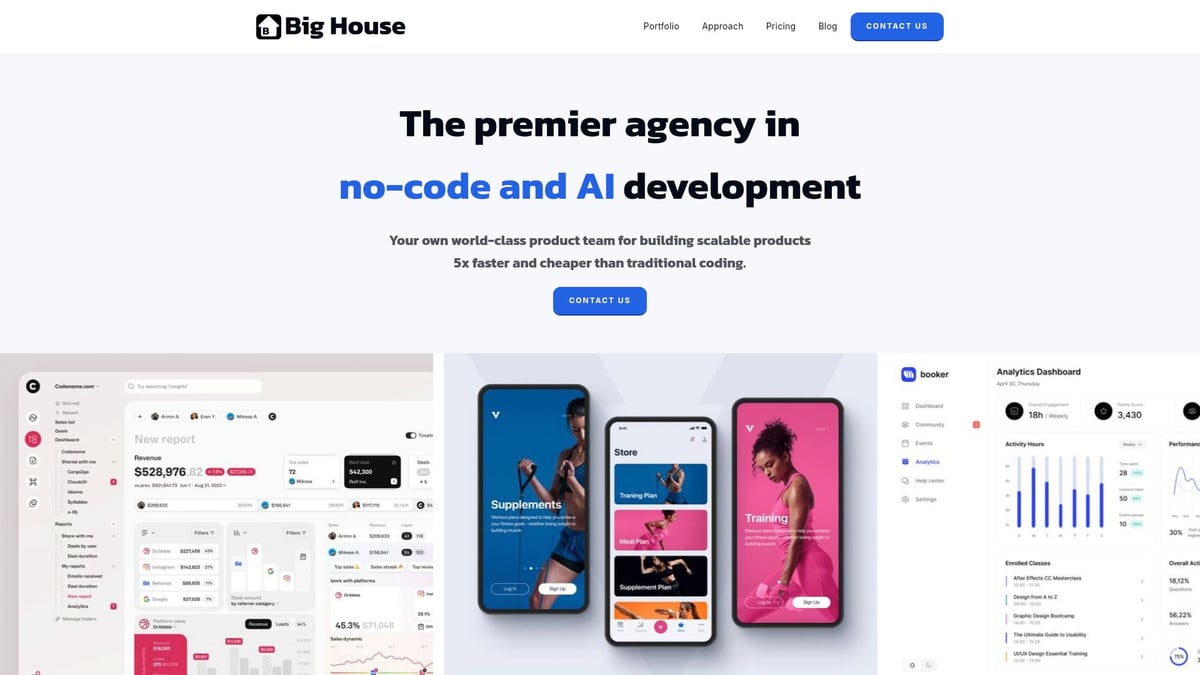
Big House Technologies is redefining what no-code tools for saas founders can accomplish. Their flexible pricing includes Basic, Growth, and Enterprise plans, with custom quotes tailored to project needs.
Core Features:
- End-to-end no-code SaaS development (powered by Bubble)
- AI integration for smarter products
- MVP prototyping
- UI/UX design
- QA and product testing
Key Benefits:
Founders experience up to 5x faster delivery and 3–4x cost savings compared to traditional development. The Big House team brings deep expertise in both no-code and AI, acting as a full-stack product team for startups and enterprises.
Target Audience:
SaaS startups, enterprises, and non-technical founders seeking a comprehensive partnership.
Pros:
- Rapid prototyping
- Expert consulting
- Transparent, collaborative process
Cons:
- Not a DIY platform
- Requires agency engagement
Unique Selling Point:
Big House Technologies blends no-code and AI, delivering scalable, production-ready SaaS solutions. For founders wanting to focus on vision rather than engineering, this is one of the most powerful no-code tools for saas founders today.
Bubble
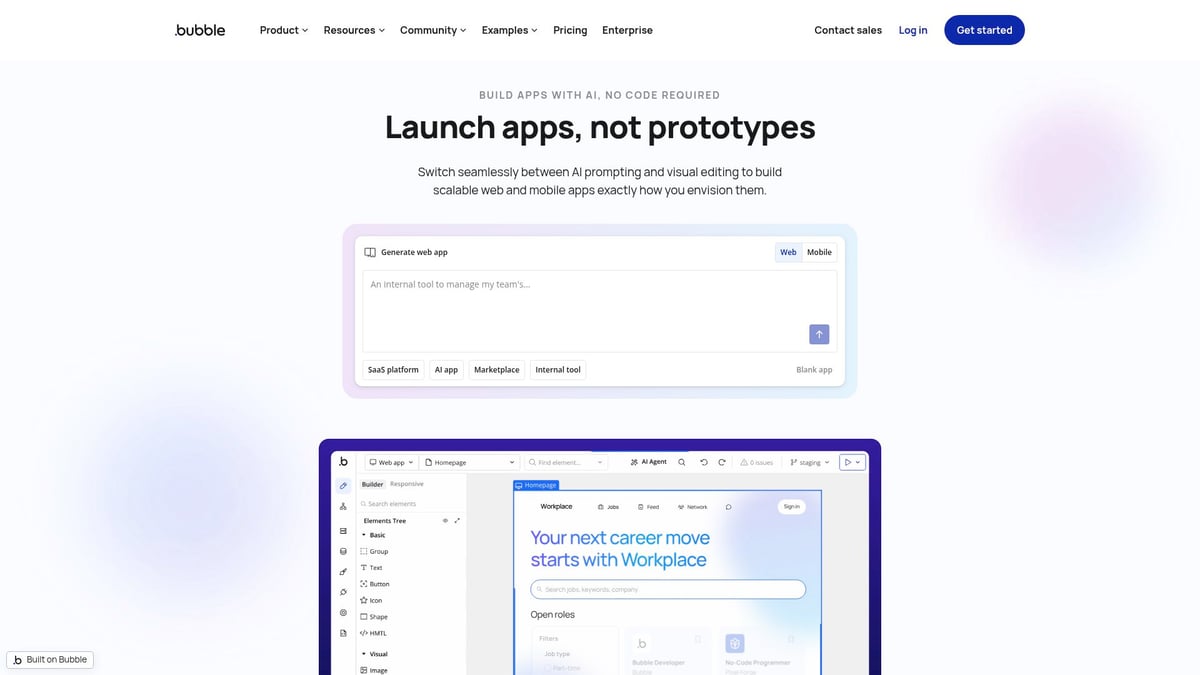
Bubble remains a cornerstone among no-code tools for saas founders, offering a free tier and paid plans starting at $32/month.
Core Features:
- Drag-and-drop web app builder
- Responsive design
- Database management
- API integrations
- Extensive plugin ecosystem
Key Benefits:
Bubble enables full-stack SaaS development without a single line of code. Its visual editor is highly customizable, making it possible to create complex, scalable apps.
Target Audience:
SaaS founders, product managers, and startups looking for production-grade solutions.
Pros:
- Comprehensive documentation
- Large, active community
- Robust scalability
Cons:
- Steeper learning curve for advanced apps
Unique Selling Point:
What sets Bubble apart is the ability to build and iterate SaaS products visually, from MVP to enterprise scale. For practical guidance, check out How to Build Scalable MVPs with Bubble, a resource that helps no-code tools for saas founders unlock Bubble’s full potential.
Zapier
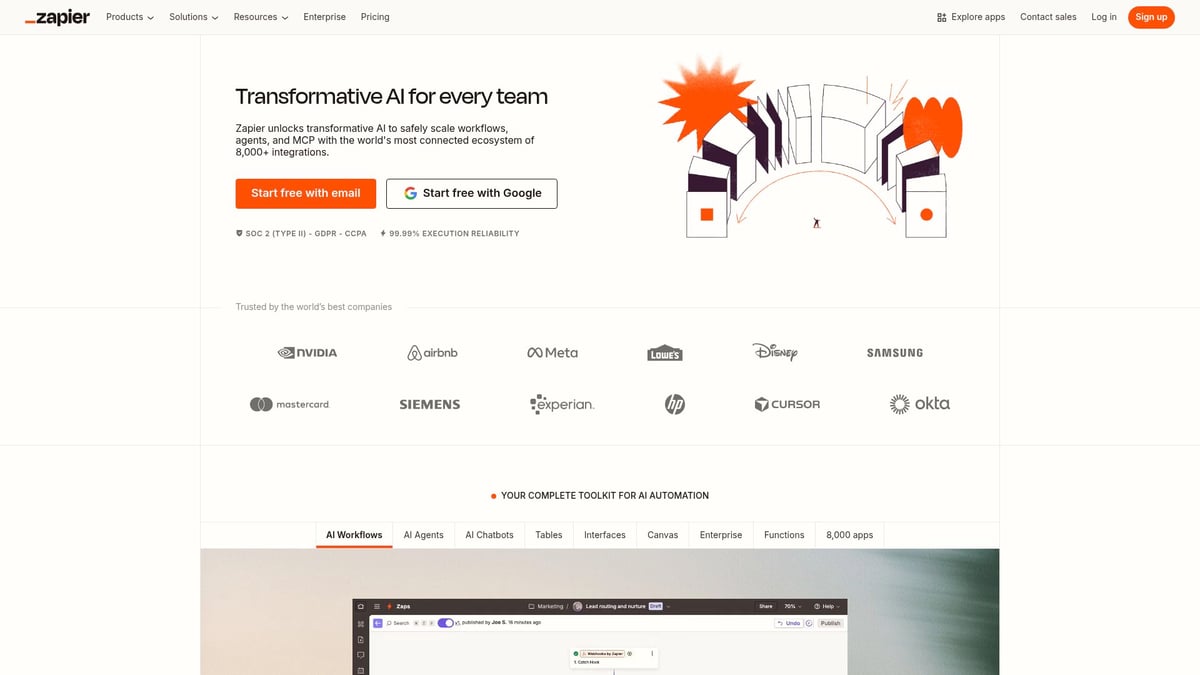
Zapier is a leader in workflow automation, making it a staple among no-code tools for saas founders. Their free plan and paid options starting at $19.99/month are accessible for teams of all sizes.
Core Features:
- 6,000+ app integrations
- Workflow automation
- Multi-step Zaps
- Conditional logic
Key Benefits:
Zapier automates repetitive SaaS operations, enabling teams to connect apps and services effortlessly. This saves time and eliminates manual tasks for no-code tools for saas founders.
Target Audience:
SaaS founders, operations teams, and marketers seeking efficiency.
Pros:
- User-friendly interface
- Massive integration library
Cons:
- Limited advanced logic on lower tiers
- Can become costly at scale
Unique Selling Point:
Zapier seamlessly connects SaaS stacks, making automation accessible to all. For founders, it’s one of the most reliable no-code tools for saas founders to streamline daily workflows.
Webflow
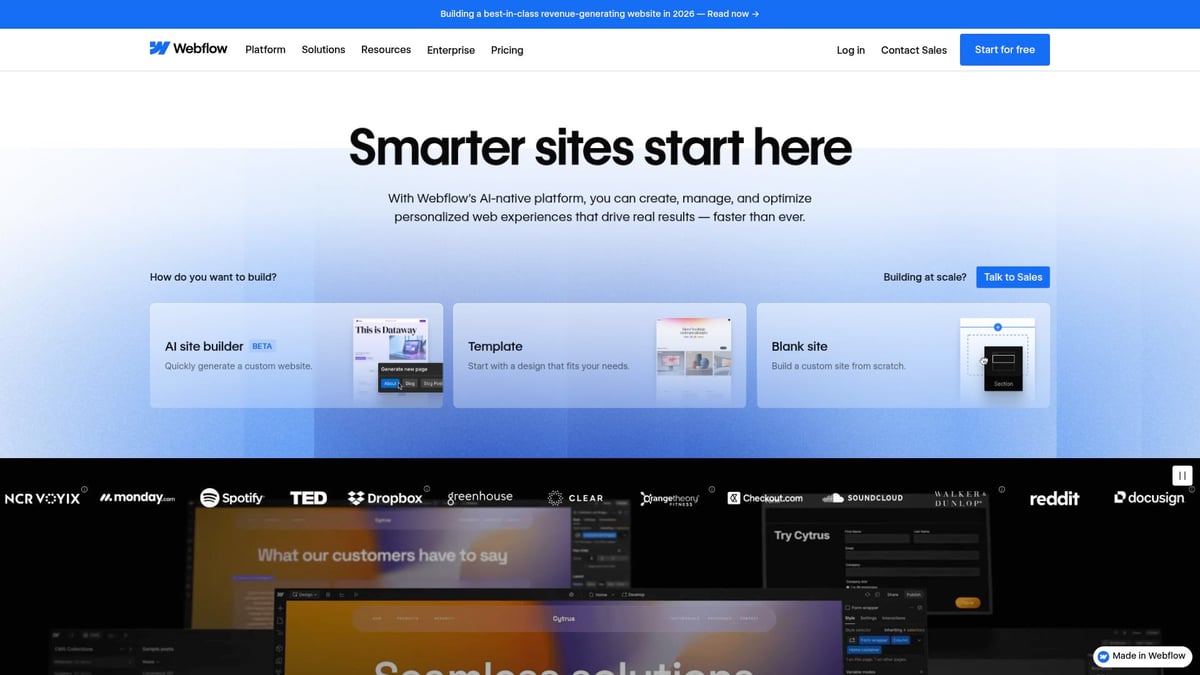
Webflow is a go-to platform for SaaS landing pages and onboarding flows, making it a vital player among no-code tools for saas founders. With a free starter plan and paid plans from $18/month, it fits startups and growing businesses alike.
Core Features:
- Visual web design
- CMS
- Hosting
- E-commerce capabilities
Key Benefits:
Webflow delivers pixel-perfect design and dynamic content management, all without code. This eliminates the gap between design and development for no-code tools for saas founders.
Target Audience:
SaaS founders, marketers, and designers who want control over their site.
Pros:
- Professional-grade design
- Fast publishing
Cons:
- CMS limitations for more complex apps
Unique Selling Point:
Webflow combines design freedom with powerful CMS features, making it ideal for marketing, onboarding, and support flows. It’s one of the most creative no-code tools for saas founders aiming for standout web presence.
Airtable
Airtable is a flexible spreadsheet-database hybrid, central to many no-code tools for saas founders. It offers a free plan and paid options from $20/user/month.
Core Features:
- Relational data
- Integrations
- Automation
- Customizable views
Key Benefits:
Airtable centralizes SaaS data, supports workflow management, and enables rapid prototyping. Its approachable UI is ideal for no-code tools for saas founders needing agility.
Target Audience:
Product managers, operations, and support teams in SaaS.
Pros:
- User-friendly
- Flexible structure
- Strong API
Cons:
- Scaling limitations with very large datasets
Unique Selling Point:
Airtable bridges the gap between spreadsheets and databases, empowering no-code tools for saas founders to innovate quickly and manage data intuitively.
OutSystems
OutSystems is an enterprise-grade platform, ranking high among no-code tools for saas founders in large organizations. It offers a free community edition and custom-priced paid plans.
Core Features:
- App builder
- Workflow automation
- AI-assisted development
- Integration with legacy systems
Key Benefits:
OutSystems accelerates complex SaaS builds and supports mission-critical applications. Its robust features are tailored for no-code tools for saas founders at scale.
Target Audience:
Large SaaS enterprises and IT teams.
Pros:
- Scalable
- Secure
- Dedicated enterprise support
Cons:
- Higher learning curve
- Premium pricing
Unique Selling Point:
OutSystems brings enterprise readiness to no-code tools for saas founders, making it possible to deliver secure, compliant, and scalable solutions.
Glide
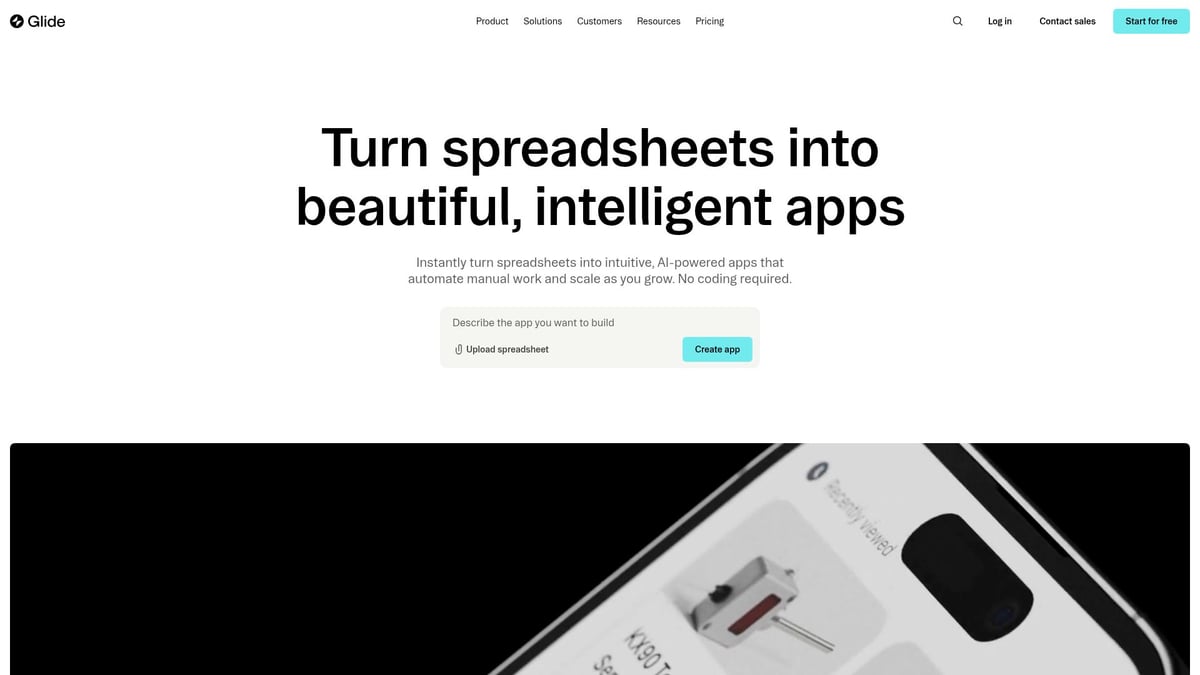
Glide is perfect for turning spreadsheets into SaaS apps, a favorite among no-code tools for saas founders launching MVPs. Free starter plans and paid options from $25/month make it accessible.
Core Features:
- App builder from Google Sheets or Airtable
- Templates
- Data sync
- User authentication
Key Benefits:
Glide transforms data into SaaS apps within minutes, making it ideal for MVPs and internal tools. This speed is a huge win for no-code tools for saas founders.
Target Audience:
SaaS founders, internal tool creators, and non-technical teams.
Pros:
- Fast deployment
- Easy to use
Cons:
- Limited customization for advanced needs
Unique Selling Point:
Glide’s instant app creation from spreadsheets is unmatched, empowering no-code tools for saas founders to test and iterate rapidly.
Retool
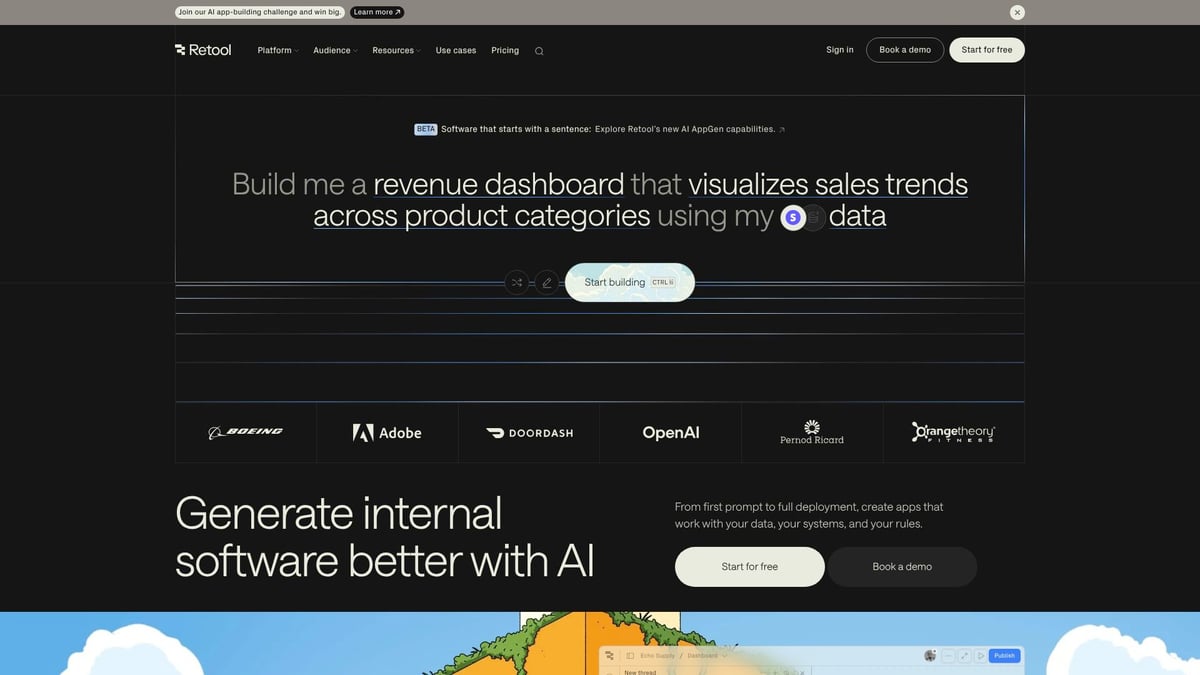
Retool stands out among no-code tools for saas founders building internal dashboards and admin panels. Their free plan and paid tiers from $12/user/month cater to various team sizes.
Core Features:
- Drag-and-drop UI
- Database integrations
- API support
- Internal tool builder
Key Benefits:
Retool empowers founders to create custom admin panels and analytics dashboards quickly. This is crucial for no-code tools for saas founders who need operational visibility.
Target Audience:
SaaS operations, developers, and product managers.
Pros:
- Highly customizable
- Developer-friendly
Cons:
- Best for internal tools rather than client-facing apps
Unique Selling Point:
Retool enables rapid creation of internal SaaS tools, making it essential for no-code tools for saas founders focusing on efficiency.
Memberstack
Memberstack is a go-to solution for adding memberships and payments to SaaS products, securing its spot among top no-code tools for saas founders. The free tier and paid plans from $29/month make it accessible.
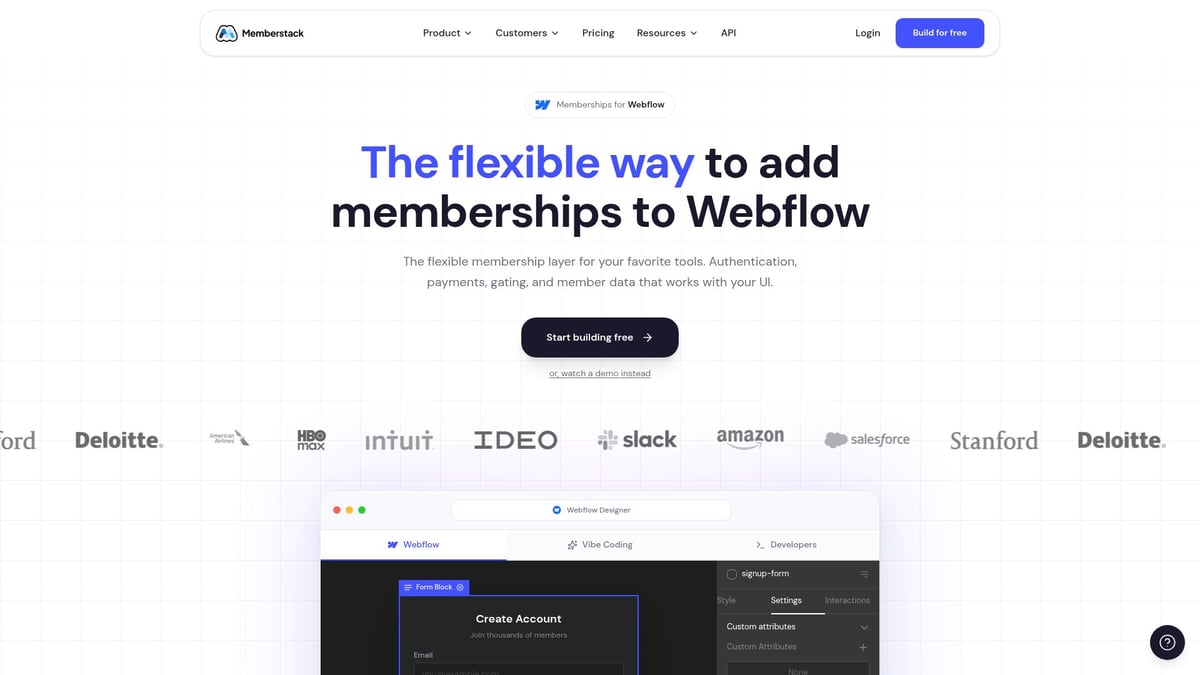
Core Features:
- User authentication
- Memberships
- Payments
- Gated content
Key Benefits:
Memberstack lets founders monetize SaaS products with secure memberships and recurring payments. For no-code tools for saas founders, it simplifies user management.
Target Audience:
SaaS founders, content creators, and online communities.
Pros:
- Easy integration
- Recurring payments support
Cons:
- Limited to web-based SaaS
- Requires compatible builders
Unique Selling Point:
Memberstack specializes in monetization and secure user access, making it a must-have for no-code tools for saas founders seeking to grow revenue.
Parabola
Parabola is the backbone for automating data flows, rounding out this list of no-code tools for saas founders. Pricing starts with a free plan, then $80/month for higher usage.
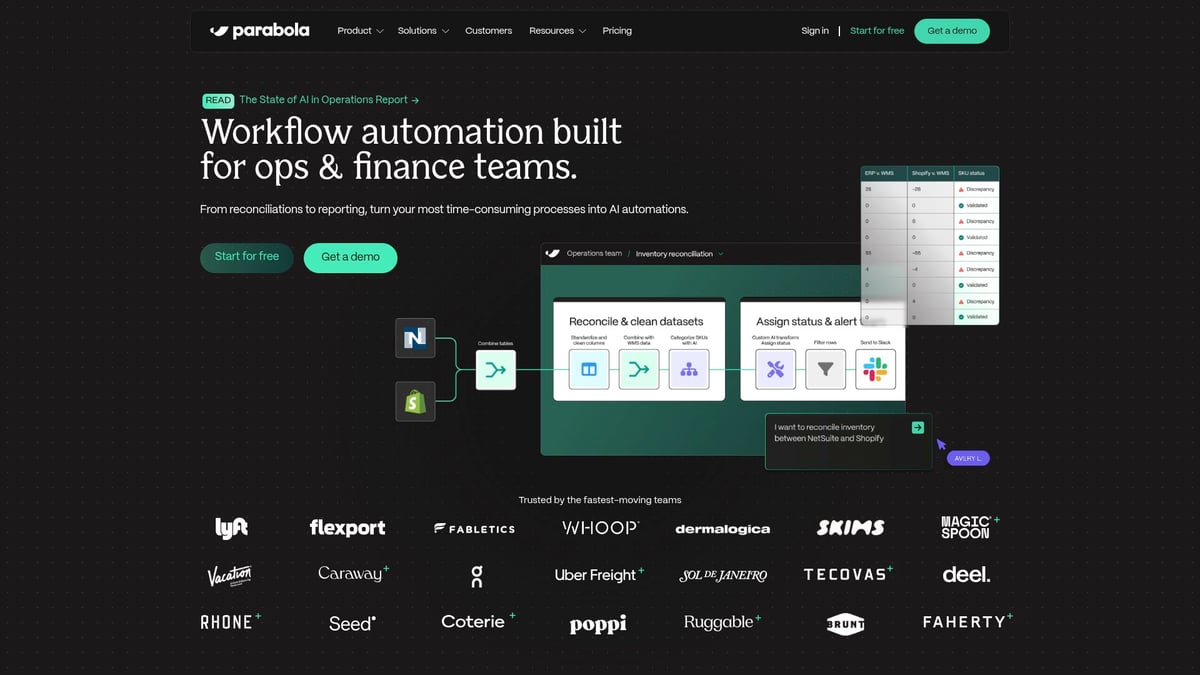
Core Features:
- Data transformation
- Visual workflows
- API connectors
Key Benefits:
Parabola automates SaaS data pipelines, integrating seamlessly with CRMs, databases, and spreadsheets. This efficiency is vital for no-code tools for saas founders dealing with complex data.
Target Audience:
SaaS data teams, operations, and marketers.
Pros:
- Visual workflow builder
- Handles advanced data tasks
Cons:
- Higher pricing for heavy usage
- Learning curve for complex flows
Unique Selling Point:
Parabola empowers no-code tools for saas founders to automate and scale data operations, freeing up valuable engineering resources.
How to Choose the Right No-Code Tool for Your SaaS Startup
Selecting the best no-code tools for saas founders is a critical decision that shapes your product’s success, agility, and future growth. The right platform can unlock new opportunities, while the wrong choice may limit your vision or slow you down. Let’s break down the key factors to consider, so you can confidently navigate this fast-moving landscape.
Assessing Your SaaS Needs
Before diving into any platform, start by mapping out your product’s complexity and scalability requirements. Are you building a simple MVP to validate an idea, or do you need a robust, enterprise-grade SaaS solution? No-code tools for saas founders come in many flavors. Some excel at quick prototyping, while others are built for scale and advanced customization.
Think about your future roadmap. Will your app need to support thousands of users, handle sensitive data, or offer intricate workflows? If so, prioritize platforms with proven scalability and advanced features. For simpler apps, user-friendly builders may provide all you need without added complexity.
Evaluating Integrations and Team Skills
Seamless integration with APIs, databases, and third-party services is essential for most SaaS products. As you compare no-code tools for saas founders, check each platform’s capabilities for connecting with your essential software stack. Some tools offer native integrations, while others rely on plugins or custom connectors.
Equally important is your team’s skillset. Non-technical founders may prefer drag-and-drop builders with strong documentation, while teams with some coding knowledge might leverage platforms offering deeper customization. Choose a tool that matches your team’s strengths to maximize efficiency and minimize frustration.
Cost, Security, and Platform Considerations
Long-term costs and potential platform lock-in can significantly impact your SaaS journey. No-code tools for saas founders often use subscription models, so calculate expenses based on your anticipated usage, user base, and feature needs. Watch for extra fees tied to integrations, storage, or advanced support.
Security, compliance, and data privacy should never be an afterthought. Evaluate each platform’s security protocols, certification standards, and data handling policies. Enterprise SaaS startups may need robust governance features or compliance with regulations like GDPR or HIPAA. Always weigh the trade-offs between flexibility and vendor lock-in for your chosen platform.
Real-World Example & Essential Checklist
For example, Bubble is ideal for highly customizable, visually-built SaaS apps, while OutSystems targets enterprise-grade, complex solutions. Your choice should reflect your product strategy, technical resources, and growth plans.
To streamline your selection, use this essential checklist:
- Does the platform meet your app’s current and future complexity?
- Are required integrations supported out of the box?
- Does your team have the skills to build and maintain on this platform?
- What are the long-term costs and risks of vendor lock-in?
- Are security, compliance, and privacy needs addressed?
- Is there strong community and documentation support?
For a deeper dive, check out this Choosing the Right No-Code Platform guide for actionable frameworks and evaluation tips tailored for SaaS founders.
Future Trends: The Evolution of No-Code for SaaS in 2026 and Beyond
The landscape of no-code tools for saas founders is on the brink of a new era. As SaaS innovation accelerates, these platforms are evolving to meet even more ambitious needs. The coming years will see no-code tools for saas founders becoming smarter, more secure, and deeply integrated into every stage of the SaaS journey.
AI-Powered No-Code Platforms and Natural Language App Building
AI is set to transform no-code tools for saas founders by making app creation as simple as describing your vision. Imagine building a SaaS platform just by chatting with an AI, which intuitively translates your needs into real features. AI copilots are becoming essential, offering suggestions, automating workflows, and predicting user needs.
Recent advancements allow founders to leverage natural language processing for rapid prototyping. These smart assistants not only accelerate development but also democratize access for non-technical teams. For a deeper dive into how AI is revolutionizing the space, see AI's role in enhancing low-code/no-code development.
Expansion into Complex SaaS Domains and Hybrid Development
No-code tools for saas founders are expanding into industries that once required heavy custom coding, such as fintech and healthcare. These platforms now offer robust compliance, data security, and support for regulatory standards, making them viable for mission-critical SaaS products.
Hybrid development is another emerging trend. SaaS teams are blending no-code, low-code, and pro-code approaches, allowing founders to start with visual builders and scale with custom code as complexity grows. This flexibility ensures no-code tools for saas founders remain relevant at every stage of growth.
Security, Community, and Open-Source Evolution
With the rise of no-code tools for saas founders, security and compliance have become top priorities. Platforms are introducing advanced authentication, encryption, and governance features to protect sensitive SaaS data. This shift is especially critical as more enterprise clients demand robust security assurances.
Community-driven growth and open-source no-code projects are also shaping the future. Founders now benefit from active user communities, shared templates, and transparent development roadmaps. Open-source options empower customization and foster innovation in the no-code ecosystem.
Industry Predictions and the Future for SaaS Founders
What lies ahead for no-code tools for saas founders? Industry analysts predict explosive growth. Forrester estimates the low-code market will hit $50 billion by 2028, reflecting surging adoption by SaaS teams worldwide. Gartner forecasts that no-code and low-code will underpin most tech products in the coming years.
Experts agree that the next wave will bring even deeper AI integration, improved scalability, and a seamless blend of no-code with traditional development. For more on these projections, see Forrester estimates low-code market to reach $50 billion by 2028.
The world of SaaS is moving fast and, as we've seen, no code tools are making it easier than ever to turn your ideas into real products without a massive investment of time or money. Whether you're just getting started or ready to scale, you don't have to wait months to see your vision take shape. If you want to get your MVP off the ground quickly and start learning from real users, now's the perfect time to make your move. Ready to see how fast you can go? Launch Your MVP in Weeks, Not Months

About Big House
Big House is committed to 1) developing robust internal tools for enterprises, and 2) crafting minimum viable products (MVPs) that help startups and entrepreneurs bring their visions to life.
If you'd like to explore how we can build technology for you, get in touch. We'd be excited to discuss what you have in mind.
Other Articles
Unlock the full potential of your app with expert Bubble plugin development services in 2026. Discover trends, costs, and best practices to scale efficiently.
Discover the essentials of software managers for beginners in 2025. Learn features, setup steps, best practices, and future trends to streamline your workflow.
Learn how replit com python helps developers build, test, and deploy Python applications quickly with cloud-based tools, AI assistance, and collaboration.