
The landscape of AI-powered development tools has exploded in recent years, transforming how developers write, review, and optimize code. While GitHub Copilot dominated early conversations, the market now offers dozens of compelling ai coding assistant alternatives that cater to different workflows, budgets, and technical requirements. Whether you're building enterprise applications, developing MVPs for startups, or managing large-scale software projects, understanding the full spectrum of options helps you select tools that genuinely enhance productivity without creating vendor lock-in or breaking the bank.
Understanding the AI Coding Assistant Ecosystem
The AI coding assistant market has matured significantly since 2022, evolving from simple autocomplete features to sophisticated development environments that understand context, suggest architectural patterns, and even generate entire functions from natural language descriptions. Modern ai coding assistant alternatives now integrate with popular IDEs, support multiple programming languages, and offer varying levels of customization to match team preferences.
Key capabilities that distinguish leading platforms include:
- Context-aware code completion that understands your entire codebase
- Multi-file editing and refactoring suggestions
- Natural language to code translation
- Code explanation and documentation generation
- Security vulnerability detection
- Test case generation and debugging assistance
The Tabnine platform exemplifies how AI code completion tools have evolved beyond simple predictions to offer whole-line and full-function suggestions trained on millions of open-source repositories. Similarly, Sourcegraph's code intelligence capabilities demonstrate how search and navigation features complement generative AI features.
Enterprise vs. Individual Developer Needs
Selecting ai coding assistant alternatives requires understanding fundamental differences between enterprise and individual use cases. Enterprises prioritize security, compliance, on-premise deployment options, and team collaboration features. Individual developers and small teams often value affordability, ease of setup, and integration with existing workflows.
| Feature | Enterprise Priority | Individual Priority |
|---|---|---|
| Data Privacy | Critical | Moderate |
| Custom Model Training | High | Low |
| Team Collaboration | Essential | Optional |
| Pricing Flexibility | Per-seat licensing | Free tier availability |
| Compliance Certifications | Required | Not needed |
Organizations building with no-code and AI development approaches face additional considerations, as they need tools that complement visual development environments rather than traditional code editors.
Top AI Coding Assistant Alternatives by Use Case
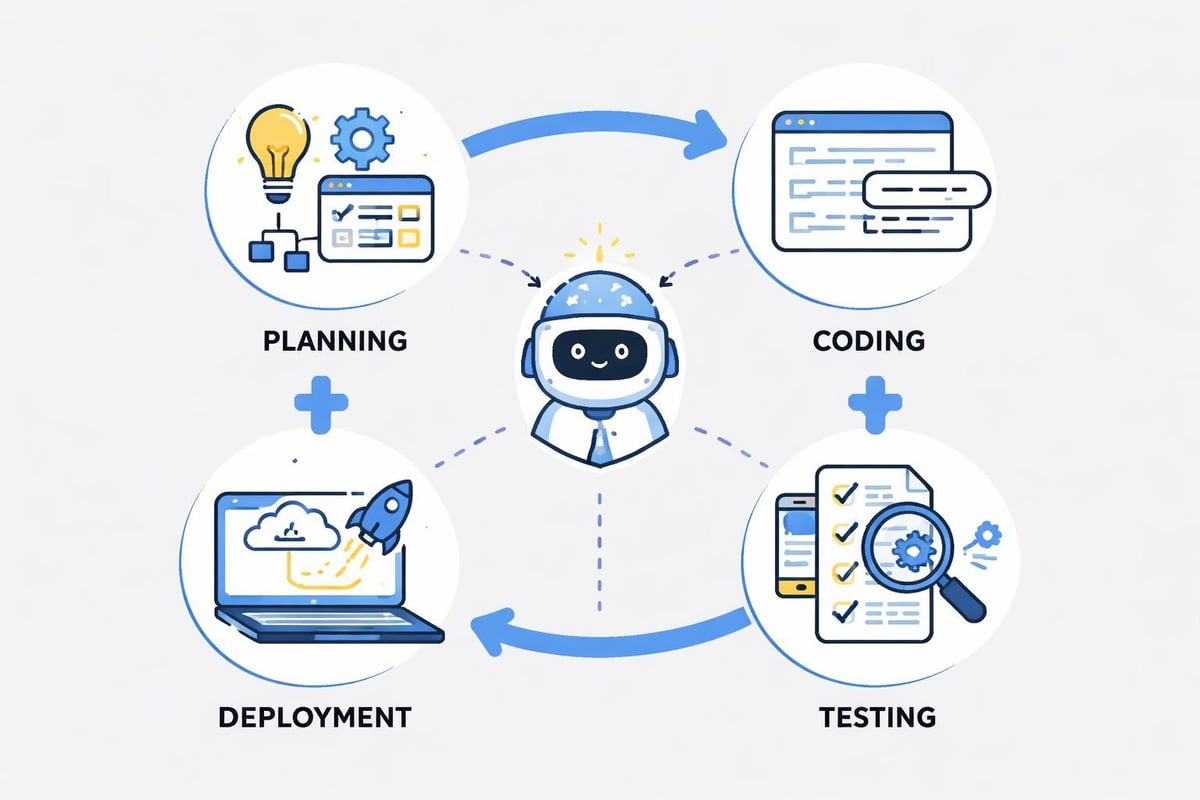
Different development scenarios demand different tooling approaches. The following categories represent the most relevant ai coding assistant alternatives for various workflows in 2026.
Code Completion Specialists
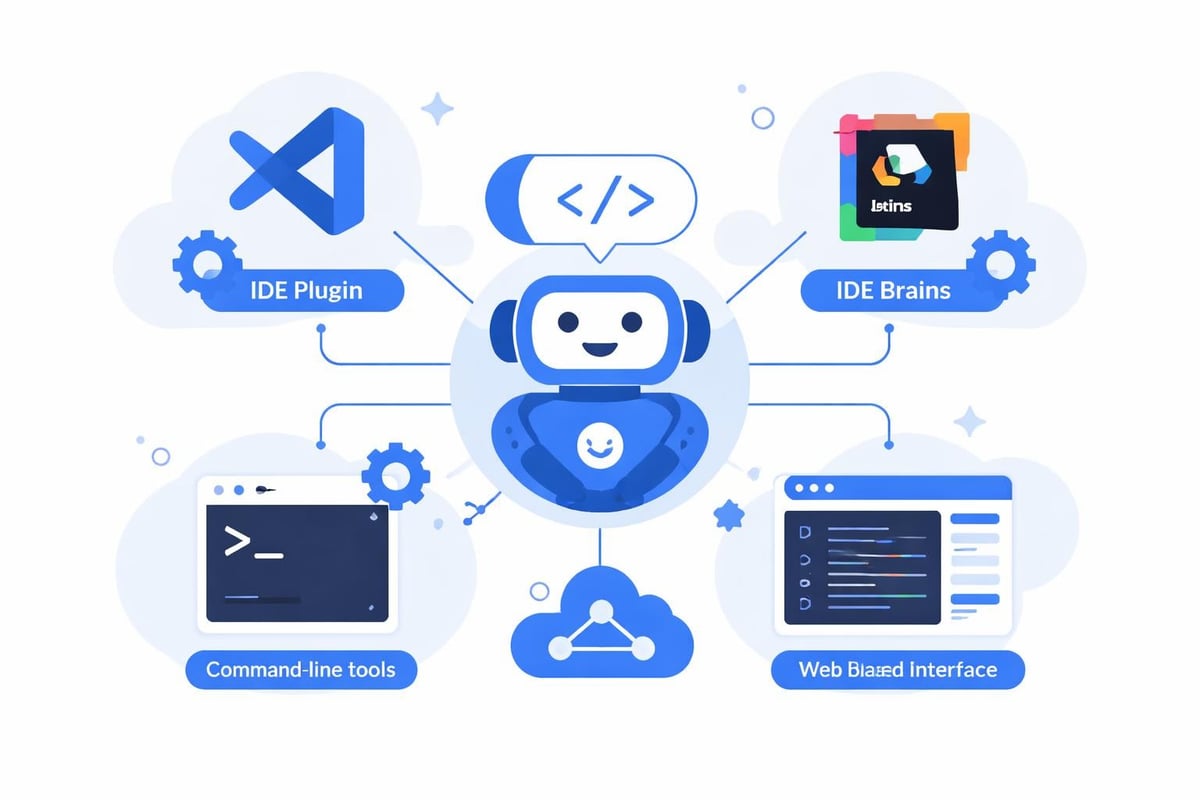
Tabnine remains a powerhouse for developers seeking privacy-focused, customizable code completion. Unlike cloud-dependent alternatives, Tabnine offers on-device processing options that keep your proprietary code secure. The platform supports over 30 programming languages and integrates seamlessly with VS Code, JetBrains IDEs, and other popular editors.
Codeium has emerged as a formidable free alternative, offering unlimited usage for individual developers. Its AI model provides context-aware suggestions comparable to premium tools, making it an attractive option for startups and independent developers managing tight budgets. The platform's aggressive pricing strategy has disrupted the market, forcing established players to reconsider their value propositions.
Full-Stack Development Assistants
Cursor represents the next generation of AI-native IDEs, building the entire development environment around AI assistance rather than retrofitting features into existing editors. Developers can chat with their codebase, request multi-file edits, and receive architectural suggestions that consider project structure and dependencies.
Recent research on proactive LLM-powered programming assistants highlights how tools like CodingGenie are pushing boundaries by anticipating developer needs before explicit requests, offering a glimpse into the future of ai coding assistant alternatives.
Windsurf and Zed have gained traction among developers seeking performance-optimized alternatives. These editors combine AI assistance with lightning-fast responsiveness, addressing one common complaint about heavier AI-integrated environments.
Specialized Domain Tools
For teams working on specific frameworks or languages, specialized ai coding assistant alternatives often outperform generalist tools:
- Android Studio Bot provides Android-specific suggestions and best practices
- JetBrains AI Assistant offers deep integration with IntelliJ ecosystem
- Amazon CodeWhisperer excels at AWS-specific implementations
- Replit Ghostwriter shines for web development and rapid prototyping
The evaluation of CodeAid in educational settings demonstrates how specialized assistants can be tuned for specific contexts, balancing automation with learning objectives.
Open-Source and Self-Hosted Options
Organizations with strict data governance requirements increasingly turn to open-source ai coding assistant alternatives that can be deployed within their own infrastructure. This approach ensures complete control over code privacy while still leveraging AI capabilities.
Leading Open-Source Platforms
Continue has rapidly become the most popular open-source coding assistant, offering features comparable to commercial alternatives while allowing complete customization of underlying models. Teams can connect Continue to OpenAI, Anthropic, local models, or proprietary fine-tuned versions.
Tabby provides an entirely self-hosted solution that runs inference on your own servers. This approach eliminates data transmission to third-party services entirely, making it ideal for highly regulated industries like finance and healthcare.
According to the Code4MeV2 research, open-source code completion plugins for JetBrains IDEs demonstrate that community-driven development can achieve quality levels comparable to commercial offerings, particularly when teams contribute domain-specific training data.
Deployment Considerations
- Infrastructure requirements - Assess GPU availability and compute costs
- Model selection - Choose between foundational models (GPT-4, Claude) and specialized code models
- Update frequency - Establish processes for incorporating model improvements
- Performance optimization - Implement caching and context management strategies
- Security hardening - Configure access controls and audit logging
| Deployment Model | Control Level | Setup Complexity | Ongoing Costs |
|---|---|---|---|
| Cloud SaaS | Low | Minimal | Per-user subscription |
| Self-hosted Open Source | High | High | Infrastructure + maintenance |
| Hybrid | Medium | Moderate | Infrastructure + some licensing |
Privacy-Focused Alternatives
Data privacy concerns have driven significant innovation in ai coding assistant alternatives that prioritize code confidentiality. These tools address legitimate fears about intellectual property leakage and regulatory compliance.
On-Device Processing Solutions
Tabnine Enterprise processes code entirely on your infrastructure, never transmitting source code to external servers. The platform's hybrid approach allows teams to benefit from general AI capabilities while keeping proprietary logic secure.
Qodo (formerly CodiumAI) takes a different approach, focusing on test generation and code review while maintaining strict data boundaries. The Qodo platform analyzes code behavior without requiring external transmission, generating test cases based on local analysis.
Zero-Data-Retention Policies
Several providers now offer zero-data-retention guarantees, promising not to store or train on customer code. This contractual protection matters for organizations in regulated industries or those handling sensitive intellectual property.
When evaluating privacy claims:
- Verify certifications - SOC 2, ISO 27001, and GDPR compliance documentation
- Review terms of service - Understand exactly what data gets transmitted
- Test offline capabilities - Confirm functionality without internet connectivity
- Audit network traffic - Monitor actual data transmission during usage
For agencies like Creator Concepts developing MVPs for clients, ensuring code privacy protects both the agency's methodologies and client intellectual property throughout the development process.
Cost-Effective Alternatives for Startups
Budget constraints significantly influence tool selection for early-stage companies. Fortunately, competitive pressure has created numerous affordable ai coding assistant alternatives that deliver substantial value without enterprise pricing.
Free Tier Options
Codeium leads with unlimited free usage for individuals, offering premium features typically locked behind paywalls. Startups can equip entire development teams without immediate costs, deferring expenses until later growth stages.
GitHub Copilot provides free access for verified students, teachers, and maintainers of popular open-source projects. While limited in scope, this offering helps developer communities building foundational tools.
Freemium Models
Understanding freemium vs free trial approaches helps startups maximize value from ai coding assistant alternatives before committing to paid plans. Many platforms offer generous free tiers with reasonable usage limits, allowing teams to validate productivity gains before budgeting ongoing expenses.
The economics of AI assistance align well with low-cost MVP development strategies, where accelerated development timelines justify modest tool investments that reduce overall time-to-market.
Pricing comparison for small teams (5 developers):
- GitHub Copilot: $100/month ($10/user)
- Tabnine Pro: $60/month ($12/user)
- Codeium: Free (Teams plan available)
- Cursor: $100/month ($20/user)
- Amazon CodeWhisperer: Free for individuals
Integration with No-Code Development Workflows
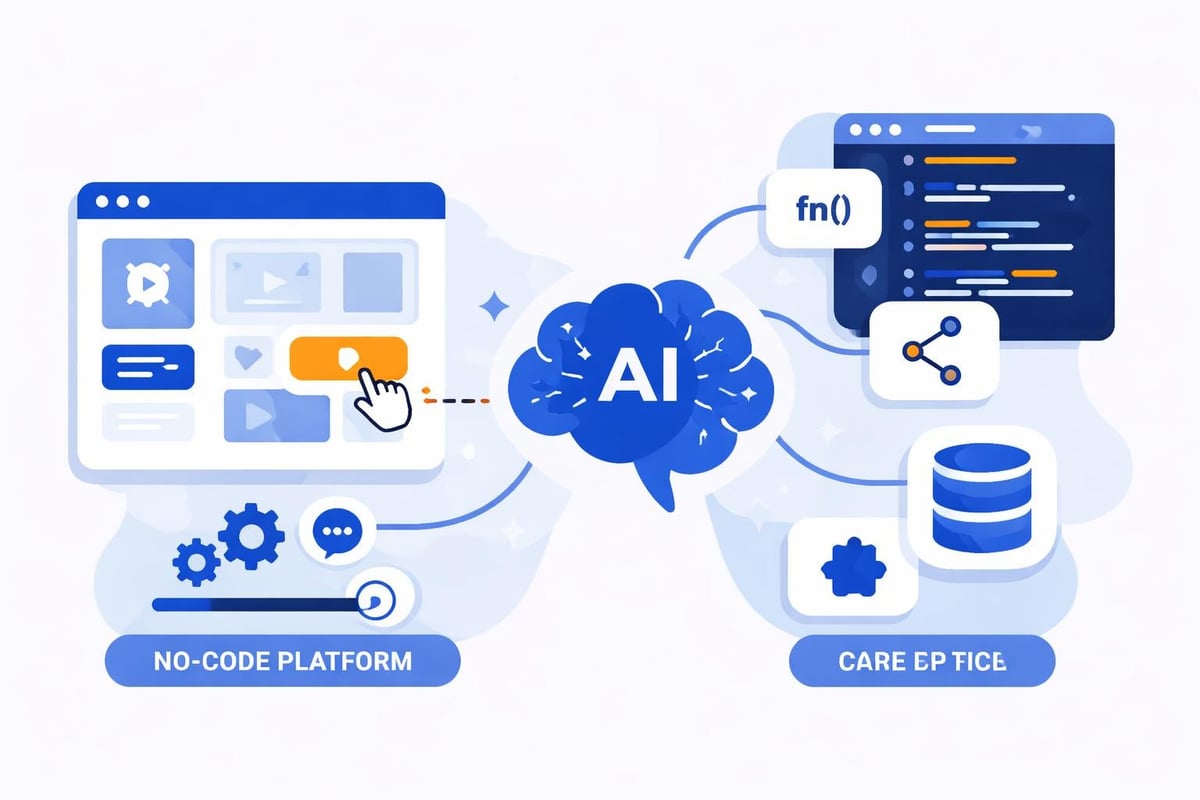
The intersection of AI coding assistants and no-code platforms represents an emerging frontier that particularly benefits agencies focused on rapid application development. While ai coding assistant alternatives traditionally target traditional coding environments, their capabilities increasingly complement visual development approaches.
Extending No-Code Platforms
Tools like Bubble and Lovable allow custom code injection for specialized functionality beyond built-in capabilities. AI coding assistants excel at generating these code snippets, particularly for:
- Custom API integrations and data transformations
- Advanced workflow logic requiring JavaScript
- Database query optimization
- Third-party service connections
Teams working with AI tools for Bubble developers can leverage coding assistants to bridge gaps between visual development and custom functionality, maintaining rapid development pace while accessing deeper technical capabilities when necessary.
Hybrid Development Approaches
Modern product development increasingly combines no-code foundations with selective custom coding for performance-critical features or unique differentiators. This hybrid approach, detailed in no-code vs custom code comparisons, benefits significantly from ai coding assistant alternatives that reduce the friction of switching between paradigms.
Evaluating AI Assistant Quality and Reliability
The effectiveness of ai coding assistant alternatives varies significantly based on programming languages, frameworks, and code patterns. Systematic evaluation helps teams select tools that genuinely enhance their specific workflows.
Testing Methodologies
- Language-specific benchmarks - Test code generation quality in your primary stack
- Context awareness assessment - Evaluate multi-file understanding capabilities
- Suggestion acceptance rates - Track which suggestions developers actually use
- Error rate monitoring - Measure incorrect or insecure code generation frequency
- Productivity impact - Compare development velocity before and after adoption
Research from Shakudo's AI coding assistant analysis provides frameworks for objective tool comparison, emphasizing real-world usage patterns over marketing claims.
Common Pitfalls
Over-reliance on AI-generated code creates technical debt when developers accept suggestions without understanding implementation details. This problem particularly affects junior developers who may lack experience to critique AI outputs effectively.
Security vulnerabilities emerge when assistants suggest outdated patterns or fail to implement proper input validation. Regular code reviews remain essential even with AI assistance.
Context limitations mean assistants sometimes miss important project-specific conventions or architectural decisions documented outside the immediate code context. Teams should establish clear coding standards that assistants can reference.
Future Trends in AI Coding Assistance
The trajectory of ai coding assistant alternatives points toward increasingly sophisticated capabilities that blur lines between assistance and autonomous development.
Agentic Coding Systems
Platforms like OpenAI Codex demonstrate early implementations of AI agents that can understand high-level requirements and generate substantial code implementations autonomously. Google's Antigravity IDE pushes this further by embedding AI agents directly into development environments as collaborative partners rather than suggestion engines.
Emerging capabilities include:
- Autonomous debugging and root cause analysis
- Automated code migration across frameworks
- Performance optimization without manual intervention
- Natural language project specification to working prototypes
These advances particularly benefit enterprise product development teams managing complex codebases where AI can identify optimization opportunities invisible to individual developers.
Specialization and Vertical Integration
Rather than single generalist tools, the market trends toward specialized ai coding assistant alternatives optimized for specific domains. Financial services, healthcare, and industrial automation each present unique coding patterns and regulatory requirements that benefit from purpose-built assistance.
This specialization mirrors broader trends in AI software development where vertical expertise increasingly differentiates valuable tools from generic offerings.
Selecting the Right Alternative for Your Team
Decision frameworks help teams navigate the overwhelming number of ai coding assistant alternatives without succumbing to feature comparison paralysis.
Decision Criteria
| Criterion | Weight | Evaluation Method |
|---|---|---|
| Security & Privacy | Critical | Infrastructure audit |
| Programming Language Support | High | Test with actual codebase |
| IDE Integration | High | Developer trial period |
| Cost | Medium | TCO calculation |
| Context Window Size | Medium | Multi-file editing tests |
| Update Frequency | Low | Release notes review |
Teams should conduct structured pilots with 2-3 finalists, measuring actual productivity impact rather than relying on vendor demonstrations. Developer satisfaction surveys capture qualitative factors like suggestion quality and workflow disruption that metrics alone miss.
Organizational Readiness
Successful AI assistant adoption requires more than tool selection. Organizations need:
- Clear usage guidelines defining when to use AI suggestions vs. manual coding
- Training programs helping developers maximize assistant capabilities
- Code review processes adapted for AI-generated contributions
- Performance baselines establishing pre-adoption productivity metrics
Working with experienced development teams can accelerate this organizational transformation, particularly for companies without prior AI tooling experience.
Choosing among ai coding assistant alternatives in 2026 requires balancing capability, privacy, cost, and workflow integration considerations unique to your development context. Whether you prioritize open-source flexibility, enterprise security, or startup affordability, the maturing market offers compelling options for every scenario. Big House Technologies combines no-code platforms with strategic AI tooling to deliver scalable software solutions faster and more cost-effectively than traditional development approaches, helping enterprises and startups transform concepts into production-ready applications without the overhead of managing complex AI infrastructure.

About Big House
Big House is committed to 1) developing robust internal tools for enterprises, and 2) crafting minimum viable products (MVPs) that help startups and entrepreneurs bring their visions to life.
If you'd like to explore how we can build technology for you, get in touch. We'd be excited to discuss what you have in mind.
Other Articles
Discover the top 9 UI UX and development agencies for 2026 success Compare leading firms strengths pricing and ideal clients to choose the best partner for your goals
Discover how no coding tools empower enterprises and startups to build scalable software solutions faster and more cost-effectively in 2026.
Discover the 2026 landscape of enterprise software development services Explore trends, tech stacks, and best practices to future proof your business success