
AI-driven automation is rapidly transforming how businesses operate, with projections showing a major shift by 2026. Companies are racing to adopt smarter, more efficient workflows to stay ahead.
Bubble has emerged as a top no-code platform, making AI automation accessible without traditional coding. It empowers teams to build, launch, and scale AI-powered tools faster than ever.
Mastering bubble ai automation services can unlock operational efficiency, fuel innovation, and give your business a clear competitive advantage. This guide will show you how.
Here, you’ll discover Bubble’s AI automation capabilities, explore service types, learn step-by-step implementation, see real-world use cases, and get best practices and future insights to ensure your business thrives in 2026.
Understanding Bubble AI Automation Services
Bubble AI automation services are transforming how businesses build and deploy intelligent solutions without needing extensive coding skills. This section explores what Bubble is, how its AI automation capabilities have evolved, the range of services available, their benefits, and the challenges you should consider.

What is Bubble?
Bubble is a powerful no-code platform designed for web and app development, enabling users to create complex digital products through a visual drag-and-drop interface. Its scalability and rich plugin ecosystem make it a favorite for both startups and large enterprises.
Compared to traditional coding, Bubble removes steep learning curves and lets teams focus on innovation. Unlike some no-code competitors, Bubble shines with its robust customization and flexibility. For instance, a startup can rapidly prototype a customer portal in days rather than weeks.
To learn more about Bubble’s AI capabilities and how they integrate into the platform, visit the Bubble AI capabilities overview.
The Evolution of AI Automation on Bubble
Since 2020, Bubble AI automation services have seen rapid advancement. Bubble started by supporting basic automation plugins and has since integrated cutting-edge AI features. From 2023 onward, native AI tools and advanced APIs became part of the platform, making intelligent automation accessible for all users.
The introduction of GPT-4 and GPT-5 plugins has dramatically expanded what apps can do. Adoption rates have soared, with more than 60% of new Bubble apps in 2025 utilizing at least one AI feature. These capabilities have transformed how businesses automate workflows and deliver smarter user experiences.
Types of AI Automation Services Available on Bubble
Bubble AI automation services cover a broad spectrum. Users can implement AI chatbots for customer support, predictive analytics for sales, image recognition for content moderation, and natural language processing for data insights. These services are accessible through both native plugins and third-party APIs like OpenAI and Google Cloud AI.
For example, automating customer support with an AI chatbot inside a Bubble app can dramatically reduce response times and boost customer satisfaction. Market demand for AI-powered no-code solutions continues to grow, making these services essential for staying competitive.
Benefits of Using Bubble for AI Automation
Businesses leveraging Bubble AI automation services benefit from faster development cycles and significant cost savings. The platform’s accessibility empowers non-technical users to create sophisticated automations, while its flexibility allows for seamless scaling as needs grow.
Workflow automation with Bubble increases productivity and reduces manual tasks. For example, a startup implemented Bubble AI workflows and cut manual data entry by 60 percent, freeing up resources to focus on growth. These advantages help organizations stay agile in a fast-moving digital landscape.
Challenges and Limitations
Despite the promise of Bubble AI automation services, there are challenges to consider. Plugin compatibility issues, AI training data requirements, and scalability can pose hurdles. Security and privacy are also critical, especially in sensitive sectors like healthcare.
Bubble may not match the full customization or performance of hand-coded AI solutions. For instance, a healthcare business must address data privacy concerns before automating patient information workflows. Overcoming these obstacles involves careful planning, regular audits, and choosing plugins wisely to ensure secure and reliable automation.
Step-by-Step Guide: Implementing Bubble AI Automation in 2026
Bringing bubble ai automation services into your business is more accessible than ever. Follow this step-by-step guide to ensure your automation journey is smooth, scalable, and future-ready.
Scoping and Planning Your Automation Project
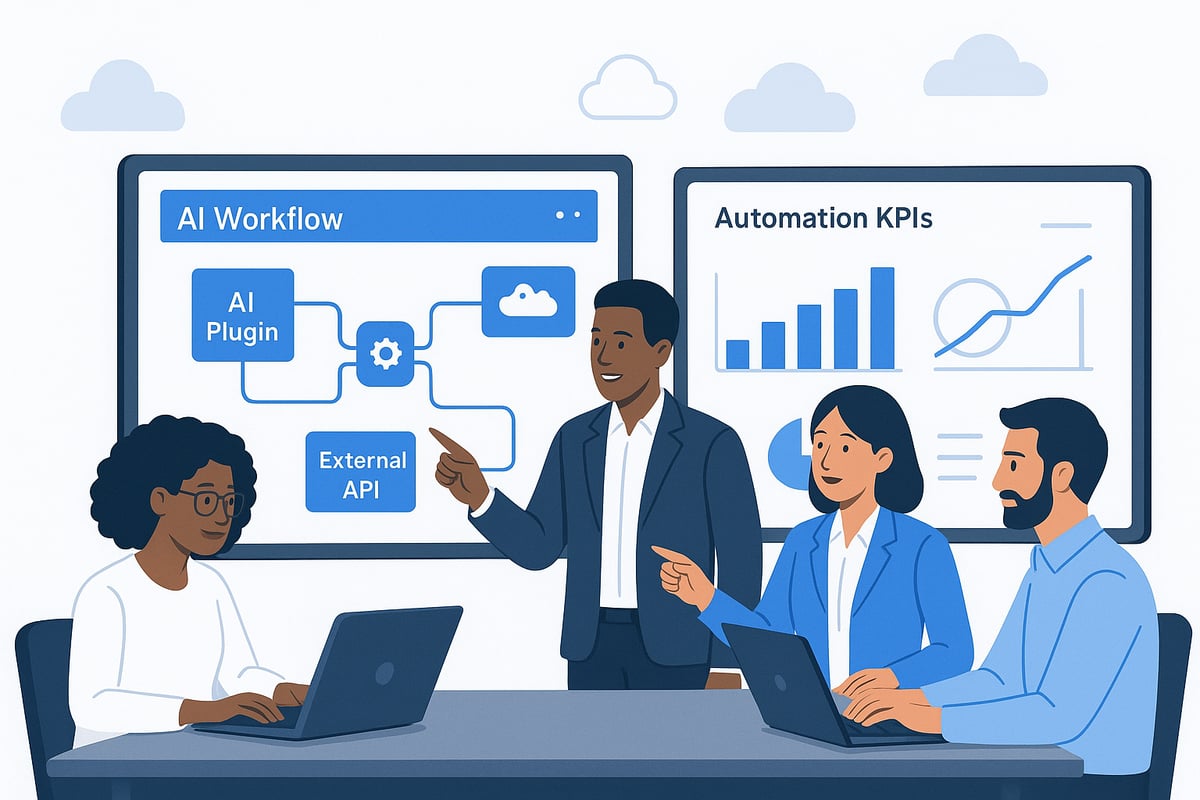
The first step in leveraging bubble ai automation services is identifying which business processes are best suited for automation. Start by mapping out repetitive, time-consuming tasks that impact efficiency.
Define clear goals, KPIs, and success metrics for your project. Evaluate the feasibility of AI by checking data availability and quality. Outline user journeys to visualize how automation will fit into your workflow.
For example, many finance teams automate invoice processing to reduce manual entry and errors. When planning, always align your automation goals with broader business objectives.
Designing AI-Driven Workflows in Bubble
With bubble ai automation services, you can visually craft robust workflows using Bubble’s drag-and-drop editor. Begin by laying out the logic of your process, identifying decision points and triggers.
Integrate AI plugins or APIs to add intelligence, such as lead scoring or sentiment analysis. Set up conditions and actions that respond to user input or system events.
Prioritize user experience when designing AI-powered features. For example, a lead qualification tool should guide users intuitively from data entry to outcome, making the process seamless.
Integrating External AI Services
Expanding the reach of bubble ai automation services often means connecting to powerful external AI tools. Use Bubble’s API Connector to link your app with platforms like OpenAI or Google Cloud AI.
Configure authentication, manage data flow, and ensure responses from the AI service are mapped to your app’s workflows. This enables advanced capabilities like real-time sentiment analysis or image recognition.
For a deeper look at available tools and integration strategies, see AI tools for Bubble developers. Proper integration ensures your automation is both scalable and intelligent.
Testing and Iterating Your Automation Solution
Quality assurance is vital for any bubble ai automation services implementation. Develop test cases for each AI-powered feature to check logic, accuracy, and user experience.
Monitor workflow performance and gather feedback from end users. Use this data to refine both automation logic and AI model parameters.
A/B testing is particularly effective for features like chatbots, where different response strategies can be compared for effectiveness. Iteration leads to continuous improvement and higher ROI.
Ensuring Security, Compliance, and Scalability
Securing your bubble ai automation services involves encrypting sensitive data, implementing access controls, and staying compliant with regulations such as GDPR or HIPAA.
Plan for scalability from the outset. As your user base grows, ensure your automation infrastructure can handle increased load without sacrificing speed or reliability.
For instance, healthcare apps using Bubble must prioritize secure data handling and regular compliance audits. This protects both users and your business reputation.
Measuring Success and ROI
To evaluate bubble ai automation services, track metrics such as time saved, error reduction, and user satisfaction. Set up dashboards to monitor these KPIs in real time.
Calculate ROI by comparing automation costs to the value gained from improved efficiency and accuracy. Benchmark your results against industry standards to identify areas for further optimization.
A retail business, for example, might see a 40% boost in operational efficiency after implementing automation, validating the investment and informing future projects.
Real-World Use Cases: Bubble AI Automation in Action
The true value of bubble ai automation services comes to life through practical applications across diverse industries. Below, we explore five impactful use cases demonstrating how businesses are leveraging these solutions to transform operations, improve efficiency, and boost innovation.
Customer Support Automation
Bubble ai automation services empower businesses to provide round-the-clock customer support with intelligent AI chatbots. These chatbots can answer FAQs, resolve common issues, and escalate complex queries to human agents seamlessly.
For example, an e-commerce retailer used Bubble to implement an AI-driven support system that integrates directly with their CRM and ticketing workflows. As a result, they reduced average response times by 70 percent and saw a marked increase in customer satisfaction.
AI automation ensures consistent service quality, handles high volumes, and allows support teams to focus on more complex cases. This leads to both happier customers and more efficient operations.
Sales and Marketing Automation
Sales and marketing teams can leverage bubble ai automation services to score leads, nurture prospects, and personalize outreach at scale. AI models evaluate customer behavior, prioritize high-value leads, and trigger automated follow-ups for improved conversion rates.
A SaaS company using Bubble’s no-code tools automated its email campaigns and lead qualification process. The result was a measurable boost in conversion rates, thanks to timely, personalized communication based on AI-driven insights.
Industry benchmarks show that AI marketing automation can improve ROI significantly, helping businesses achieve more with fewer resources. This approach makes campaigns smarter and more data-driven.
Operations and Workflow Optimization
With bubble ai automation services, organizations streamline internal processes like approvals, scheduling, and reporting. AI-powered document processing and automated data extraction minimize manual errors and reduce operational costs.
For instance, a logistics provider automated shipment tracking updates, integrating Bubble with external APIs. This reduced manual intervention and improved accuracy across their supply chain.
Businesses interested in scaling their internal automation can benefit from exploring enterprise workflow automation tools that complement Bubble’s capabilities for even greater efficiency and control.
Industry-Specific AI Automation Solutions
Bubble ai automation services are highly adaptable to sector-specific needs, from healthcare and finance to education and logistics. These solutions address unique compliance, privacy, and workflow challenges within each industry.
For example, telemedicine providers use Bubble to automate patient triage, securely handling sensitive health data while accelerating response times. AI-driven document analysis in finance helps with regulatory compliance and fraud detection.
Adoption rates for industry-focused AI automation continue to climb, reflecting strong demand for tailored, no-code solutions that address real-world business challenges.
Big House Technologies: Expert Bubble AI Automation Partner
Big House Technologies stands out as a trusted partner for organizations seeking to master bubble ai automation services. This team offers end-to-end support, from project scoping and design to integration and quality assurance.
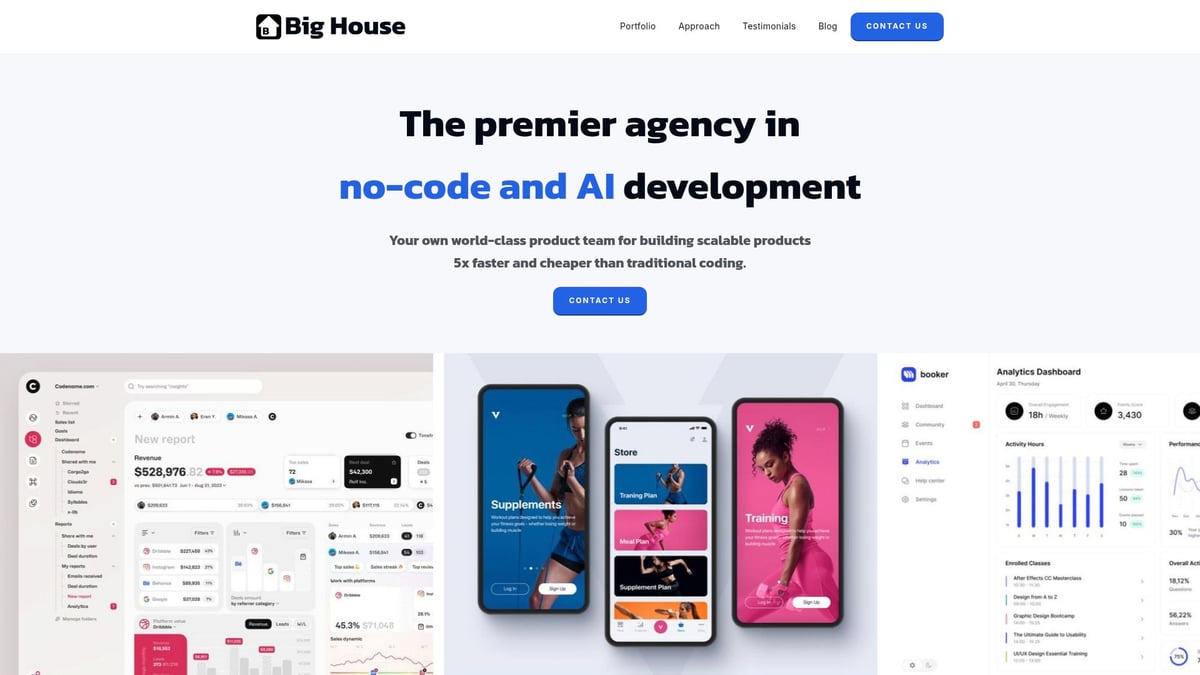
Their track record spans startups and enterprises, delivering rapid deployment, measurable cost savings, and deep expertise in no-code AI automation. Clients regularly report operational efficiency gains and accelerated innovation cycles.
Choosing an expert partner ensures that your automation journey is future-proof, scalable, and aligned with your unique business goals.
Best Practices for Bubble AI Automation Success
To truly excel with bubble ai automation services, businesses need more than technical skills. Adopting best practices ensures your automations are not only functional but also user friendly, secure, and future proof.
Designing for Usability and User Experience
When building with bubble ai automation services, prioritize intuitive design. Ensure AI-powered features are simple for users to understand and operate. Use clean interfaces, clear prompts, and helpful tooltips.
Balance automation with the option for human intervention, especially in customer-facing scenarios. For example, design your AI chatbot to seamlessly pass conversations to a human agent if needed. This approach improves satisfaction and trust.
Data shows that investing in user experience can lead to higher retention rates. Keep interfaces accessible, and test with real users to identify friction points early.
Maintaining Data Security and Privacy
Security is essential for any solution built with bubble ai automation services. Encrypt sensitive data in your workflows, such as personal information or payment details. Always implement strict user access controls to limit who can view or edit critical data.
Regularly schedule security audits and compliance checks, especially if you operate in regulated industries like healthcare or finance. For instance, securely handling patient data in healthcare automation is not optional, it is a requirement.
Educate your team about privacy best practices. Make sure your automations comply with relevant regulations, such as GDPR or HIPAA, to avoid costly penalties.
Continuous Improvement and Monitoring
Successful bubble ai automation services require ongoing evaluation. Set up analytics to monitor workflow performance, including error rates, user engagement, and AI prediction accuracy.
Create feedback loops with users to gather insights on what works and what needs refinement. Use these insights to retrain AI models or adjust automation logic.
For example, continually improving an AI-driven recommendation engine can lead to more relevant suggestions and better business outcomes. Continuous iteration keeps your automations effective as user needs evolve.
Collaboration Between Business and Technical Teams
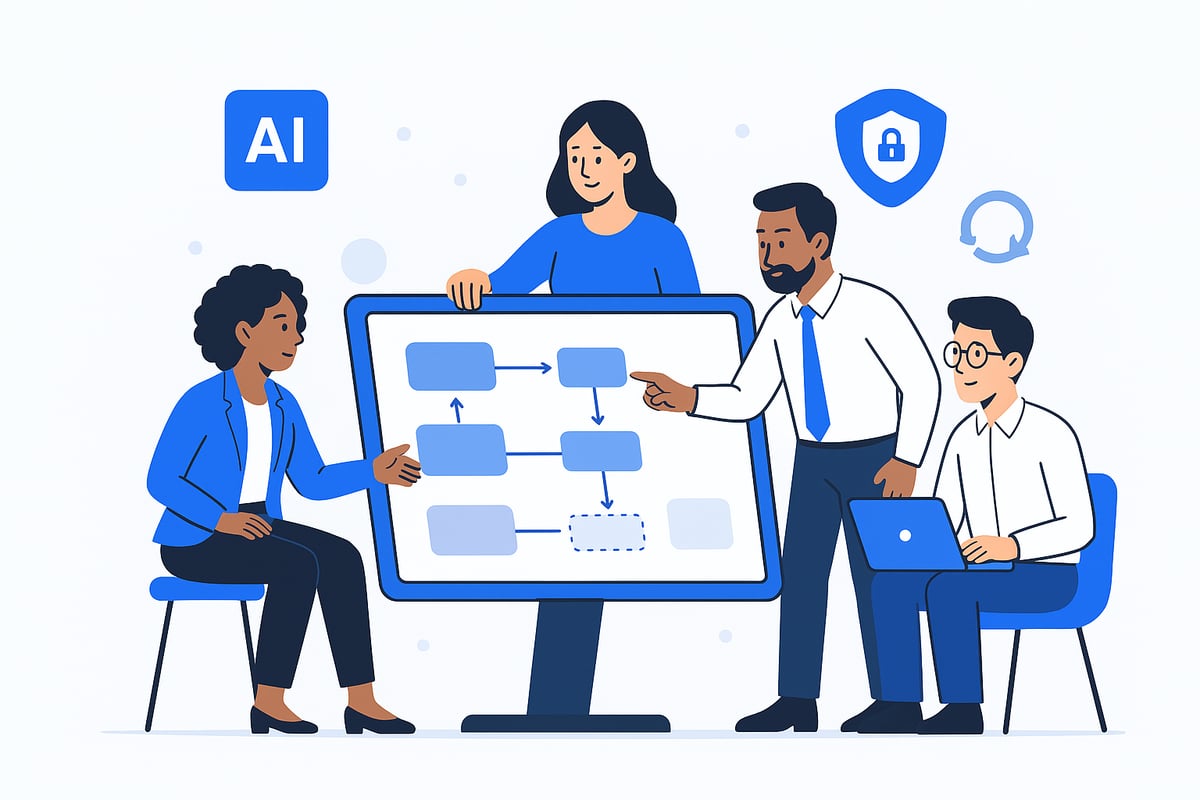
Cross functional teamwork is vital for maximizing bubble ai automation services. Encourage business and technical staff to collaborate from the start, so both perspectives shape automation goals and features.
Provide training to non technical team members so they can contribute ideas and manage workflows. Sometimes, partnering with experts in custom Bubble app development services can accelerate your progress and provide advanced solutions.
For example, marketing and IT teams working together can co develop automated lead generation tools that fit business goals and technical constraints.
Staying Updated with Bubble and AI Advancements
The landscape of bubble ai automation services evolves rapidly. Stay informed by monitoring Bubble’s updates, new AI integrations, and plugin releases. Participate in community forums and webinars to learn from peers.
Adopting the latest trends, such as those highlighted in AI Automation Trends to Watch in 2026, can give your business a competitive edge. Early adoption of powerful plugins or new AI features helps you stay ahead.
Make learning a habit for your team. Continuous education ensures your automations remain innovative and effective as technology advances.
The Future of Bubble AI Automation: Trends and Predictions for 2026
The future of bubble ai automation services is unfolding rapidly, with 2026 expected to mark a turning point for businesses leveraging no-code AI. As new technologies emerge and the no-code ecosystem expands, organizations have more opportunities than ever to future-proof operations and drive innovation. Let’s explore what lies ahead for bubble ai automation services.
Emerging AI Technologies on Bubble
By 2026, bubble ai automation services will integrate cutting-edge AI technologies such as advanced natural language processing, computer vision, and autonomous agents. Multi-modal AI, which combines text, image, and voice inputs, will become increasingly accessible within Bubble’s ecosystem. For example, AI-powered virtual assistants built in Bubble apps will handle complex tasks like scheduling, customer support, and data analysis with near-human understanding.
These advancements will empower businesses to build sophisticated, intelligent workflows without traditional coding. As highlighted in the Top 5 Trends in AI-Powered Automation for 2026, generative AI and real-time language services are set to become standard features in no-code platforms.
Expanding Ecosystem of AI Plugins and APIs
The ecosystem supporting bubble ai automation services is set to grow exponentially. The Bubble plugin marketplace will see a surge in third-party AI integrations, ranging from specialized industry tools to general-purpose automation APIs. Collaboration between Bubble and leading AI providers will yield plugins for real-time translation, image recognition, and predictive analytics.
For instance, businesses may soon access plugins that enable instant language translation in customer-facing apps, removing global communication barriers. This expansion not only increases the flexibility of bubble ai automation services but also ensures that users can keep pace with evolving tech trends.
Democratization of AI Automation
One of the most exciting shifts is the democratization of bubble ai automation services. As no-code tools become more intuitive, non-technical users will be able to deploy advanced automation features with minimal learning curves. The rise of "citizen developers" will empower small businesses and teams to build, customize, and scale AI-powered solutions independently.
Imagine a local retailer using bubble ai automation services to create their own AI-driven inventory management tool, without hiring developers. This trend will open doors for creativity and efficiency across all business sizes.
Impact on Business Models and Workforce
The adoption of bubble ai automation services will reshape business models and workforce roles. Organizations will shift towards AI-augmented positions, focusing more on strategy, creativity, and oversight while automation handles repetitive tasks. According to AI Trends 2026: The Key Enterprise Shifts You Must Know, businesses investing in unified AI infrastructure will see improved agility and scalability.
Data from industry forecasts indicates that no-code and AI automation adoption will continue to accelerate, creating demand for new job categories centered on automation management and optimization. Companies that embrace this change will remain competitive in the evolving digital landscape.
Preparing for the Next Wave of Automation
To fully leverage bubble ai automation services in 2026 and beyond, businesses must develop future-proof strategies. This includes investing in upskilling their workforce, fostering continuous learning, and adopting agile change management practices. Enterprises leading the way are encouraging teams to experiment with new AI features, ensuring adaptability as the technology evolves.
Continuous improvement, regular training, and a focus on innovation will position organizations to capitalize on every wave of automation that bubble ai automation services deliver.
As you’ve seen throughout this guide, mastering Bubble AI automation is a game changer for future proofing your business in 2026—whether you want to streamline workflows, boost innovation, or tackle new challenges head on. If you’re inspired to leverage the speed and cost efficiency of no code and AI but aren’t sure where to start, why not chat with an expert? You don’t have to figure it out alone. Talk to an AI Strategist and discover how your business can unlock its next level of success with Bubble’s AI automation services.

About Big House
Big House is committed to 1) developing robust internal tools for enterprises, and 2) crafting minimum viable products (MVPs) that help startups and entrepreneurs bring their visions to life.
If you'd like to explore how we can build technology for you, get in touch. We'd be excited to discuss what you have in mind.
Other Articles
Build a powerful bubble website in 2026 with our complete guide covering planning, design, integrations, scaling, and expert tips for future-proof success.
Discover the 2025 software house guide—learn definitions, services, trends, and how to choose the right partner for digital transformation and project success.
Discover how ai-assisted app builder platforms are transforming software development in 2026. Expert insights on tools, benefits, and implementation.