
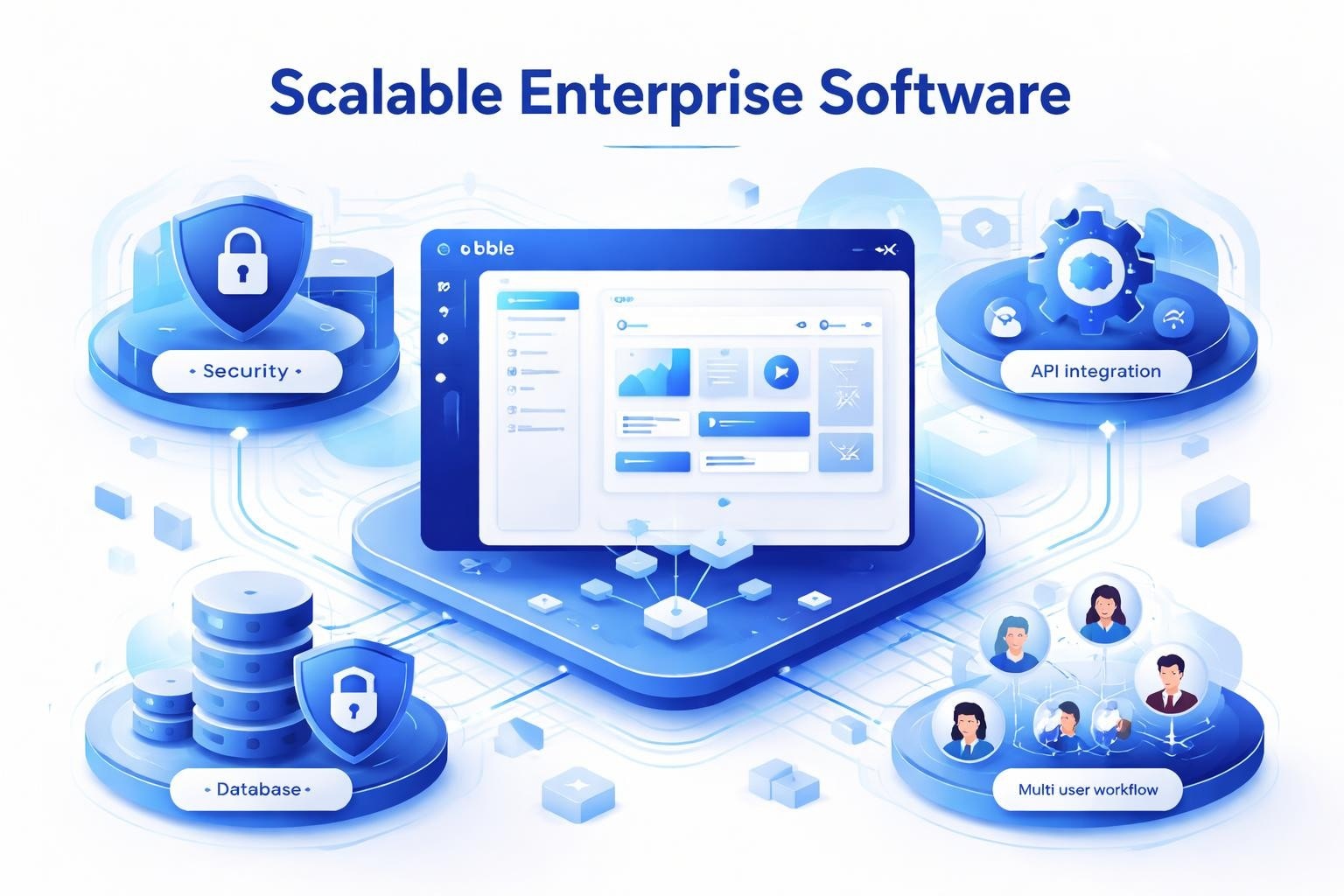
The no-code revolution has transformed how organizations approach software development, and Bubble has emerged as a platform capable of delivering far more than simple prototypes. Today's enterprise-grade bubble apps power mission-critical workflows, handle thousands of concurrent users, and integrate seamlessly with existing technology stacks. For enterprises seeking agility without sacrificing security or performance, understanding how to leverage Bubble at scale has become essential. This shift represents a fundamental change in how large organizations build and deploy custom software solutions.
Understanding Enterprise Requirements in No-Code Development
Building applications for enterprise environments demands a different approach than creating consumer apps or simple MVPs. Organizations need solutions that handle sensitive data, support complex user hierarchies, and maintain uptime standards that align with business-critical operations.
Security and Compliance Foundations
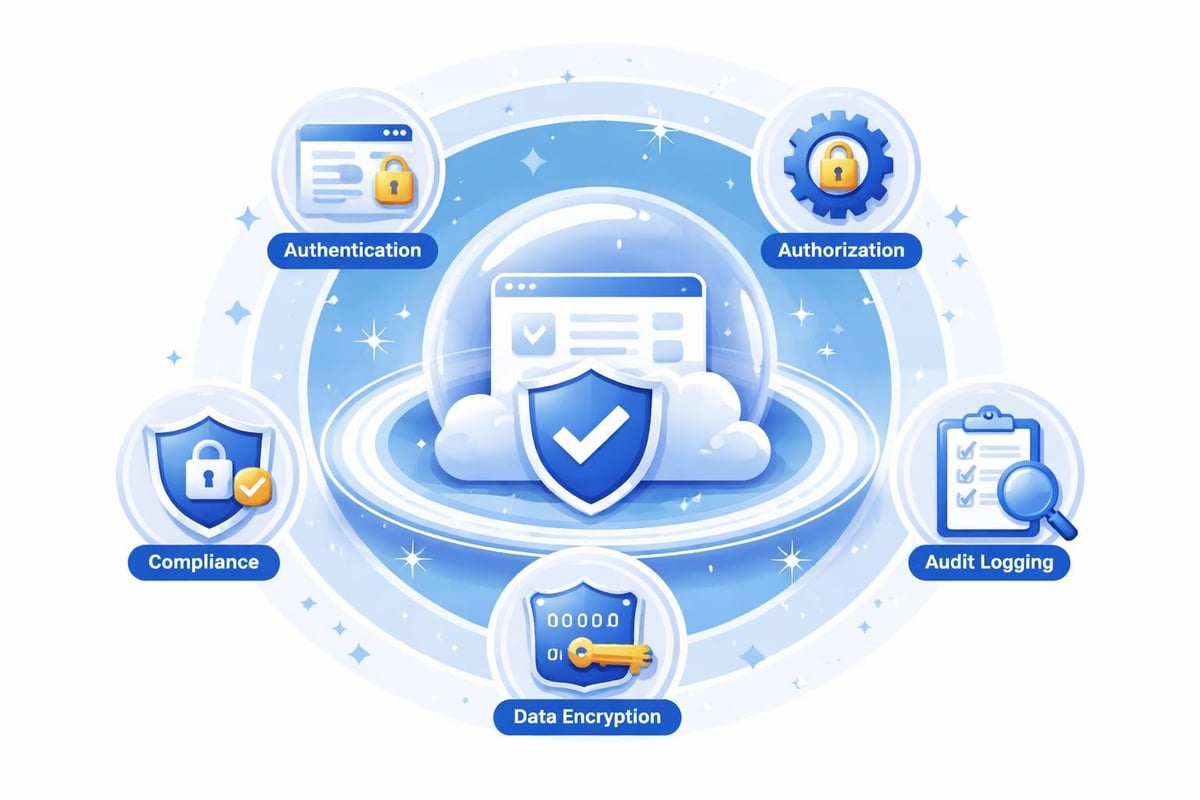
Enterprise-grade bubble apps must address multiple security layers simultaneously. Data encryption at rest and in transit forms the baseline, but organizations also require granular access controls, audit logging, and compliance with industry-specific regulations like HIPAA, SOC 2, or GDPR.
Key security considerations include:
- Role-based access control with conditional visibility
- Single sign-on (SSO) integration with enterprise identity providers
- Regular security audits and penetration testing
- Data residency controls for multinational operations
- Automated backup systems with point-in-time recovery
The Bubble enterprise platform provides dedicated infrastructure options that address these requirements, offering enhanced security features beyond the standard shared hosting environment. Organizations can implement multi-factor authentication, IP whitelisting, and custom domain SSL certificates to meet their security standards.
Scalability Architecture
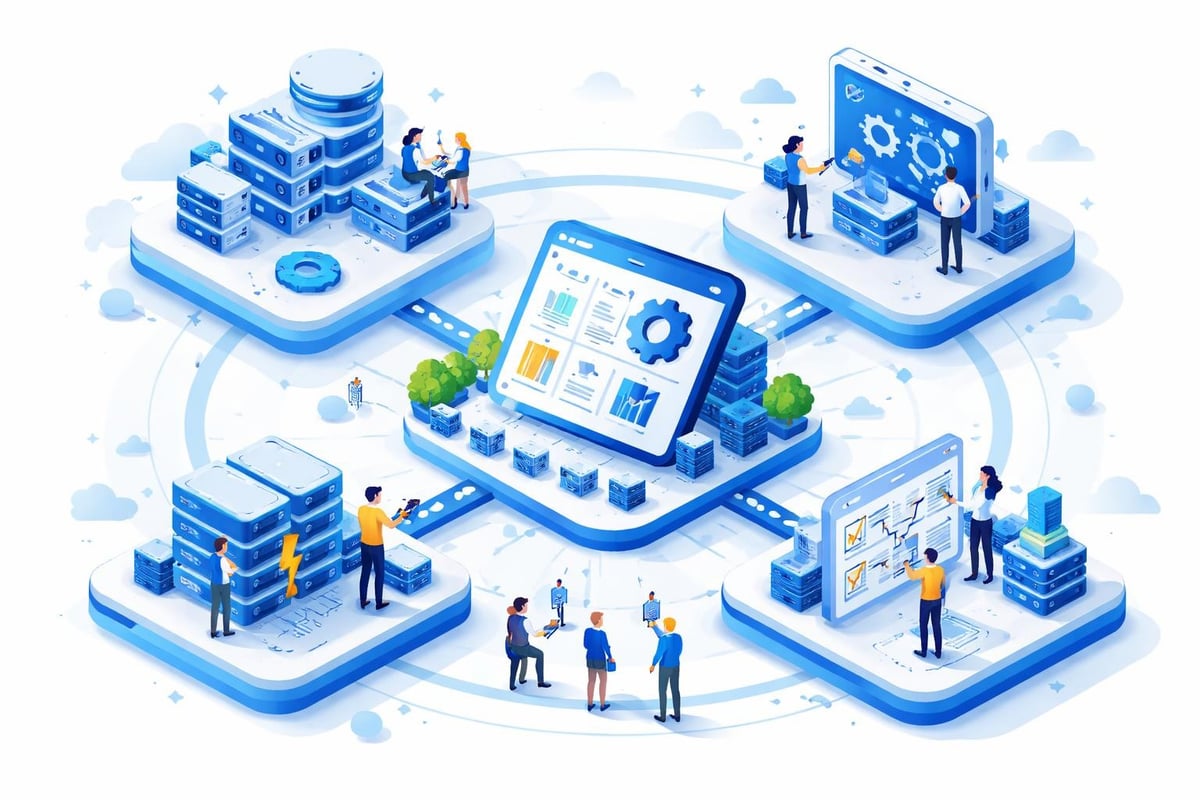
Performance under load separates enterprise applications from lighter-use tools. When designing enterprise-grade bubble apps, architects must consider database query optimization, API rate limiting, and caching strategies that maintain responsiveness as user bases grow.
| Scalability Factor | Standard Apps | Enterprise-Grade Apps |
|---|---|---|
| Concurrent Users | 10-100 | 1,000-10,000+ |
| Database Calls per Page | Unoptimized | Minimized through aggregation |
| API Integration | Direct calls | Cached with fallback logic |
| Workflow Efficiency | Sequential processing | Parallel execution where possible |
Professional agencies like Big House Technologies implement proven strategies for no-code startups that scale effectively from initial deployment through enterprise-level usage.
Building Production-Ready Features
The difference between a functional prototype and an enterprise-grade bubble app lies in production-ready features that ensure reliability, maintainability, and user experience quality.
Advanced Data Architecture
Sophisticated data structures form the backbone of enterprise applications. Unlike simple apps with basic CRUD operations, enterprise systems require normalized database schemas, relational integrity, and performance-optimized indexes.
Developers must design data types with future scalability in mind. Privacy rules should enforce data isolation between organizational units while maintaining efficient query patterns. Custom states manage temporary data without database overhead, and scheduled workflows handle batch processing during off-peak hours.
Database optimization techniques:
- Create focused data types for specific business objects
- Implement search indexes on frequently queried fields
- Use thing options for controlled vocabularies instead of text fields
- Archive historical data to separate tables
- Monitor database capacity and query performance metrics
Integration Ecosystem
Modern enterprises operate within complex technology ecosystems. Enterprise-grade bubble apps must connect seamlessly with CRM systems, ERP platforms, payment processors, authentication providers, and analytics tools.
The API Connector plugin enables connections to virtually any REST or GraphQL API, but enterprise implementations require additional considerations. Error handling, retry logic, and timeout management prevent integration failures from disrupting user workflows. Rate limiting compliance ensures applications respect third-party service constraints.
When building enterprise integration platforms, teams should document API dependencies, establish monitoring for third-party service health, and implement graceful degradation when external services become unavailable. Webhook receivers enable real-time data synchronization while scheduled API workflows handle batch updates.
Performance Optimization Strategies
Speed and responsiveness directly impact user adoption and satisfaction. Enterprise users expect applications that load quickly and respond instantly to interactions, regardless of data volume or concurrent usage.
Page Load Optimization
Every element on a page contributes to load time. Enterprise-grade bubble apps minimize initial data loading through strategic use of custom states, reusable elements, and lazy loading patterns.
Performance best practices include:
- Loading only essential data on initial page render
- Using groups set to collapse when hidden to reduce DOM complexity
- Implementing pagination for large datasets
- Leveraging repeating groups with scroll loading for infinite lists
- Optimizing image assets through compression and appropriate sizing
Content delivery networks (CDNs) automatically distribute static assets globally, but developers must also optimize dynamic content delivery. Conditional workflows prevent unnecessary database operations, and search constraints limit result sets to relevant records only.
Workflow Efficiency
Backend workflows power the business logic in enterprise applications. Poorly designed workflows create performance bottlenecks and increase infrastructure costs. The approaches to bubble development at specialized agencies emphasize workflow optimization from initial design.
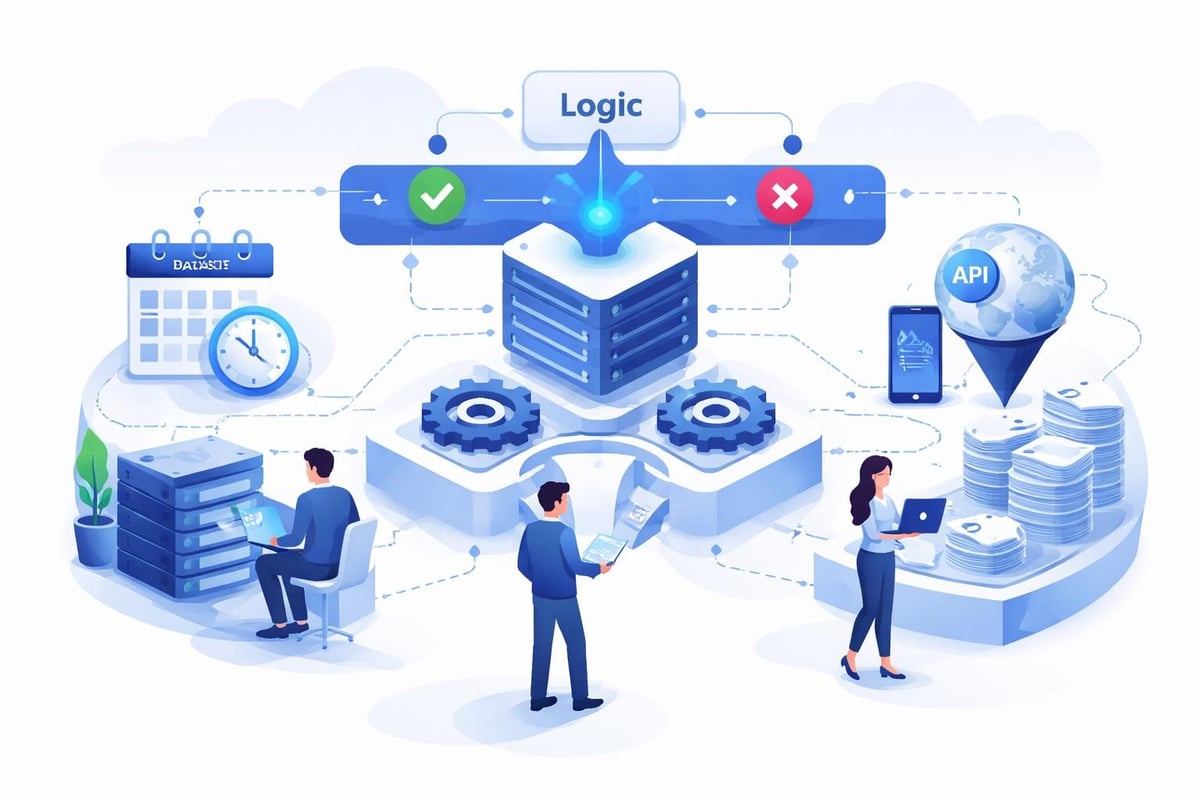
Recursive workflows should include termination conditions and rate limiting to prevent infinite loops. API workflows enable external systems to trigger actions within Bubble applications, supporting integration scenarios like webhook processing and mobile app backends.
User Experience at Enterprise Scale
Enterprise applications serve diverse user populations with varying technical skills and accessibility needs. UX design must balance power-user efficiency with new-user onboarding simplicity.
Role-Based Interfaces
Different user types require different interfaces. Administrative users need comprehensive controls and detailed analytics, while end users benefit from streamlined interfaces focused on specific tasks.
Bubble's conditional visibility rules enable a single application to present customized interfaces based on user roles, departments, or permission levels. This approach reduces maintenance overhead compared to building separate applications while ensuring users see only relevant features.
| User Type | Interface Focus | Key Features |
|---|---|---|
| Administrators | System configuration | User management, settings, analytics |
| Managers | Team oversight | Dashboards, reporting, approval workflows |
| End Users | Task execution | Streamlined forms, status tracking |
| External Users | Limited access | Self-service portals, read-only views |
Responsive Design Requirements
Enterprise users access applications across devices-desktop workstations, tablets for field work, and smartphones for on-the-go updates. Enterprise-grade bubble apps must deliver consistent functionality across screen sizes while optimizing for each form factor.
Mobile-specific design patterns include bottom navigation for thumb-friendly access, larger touch targets, and simplified forms that reduce typing on small keyboards. The growing need for mobile developer expertise reflects how critical cross-platform functionality has become for enterprise deployments.
Governance and Maintenance Frameworks
Long-term success requires structured approaches to application governance, version control, and ongoing maintenance.
Development Workflow Standards
Professional development teams follow structured workflows that prevent conflicts, enable rollbacks, and maintain code quality. Bubble's built-in version control system provides branching capability for testing changes before production deployment.
Enterprise development practices:
- Maintain separate development, staging, and production environments
- Document all custom code, plugin configurations, and API integrations
- Implement peer review processes for significant changes
- Create automated testing protocols for critical workflows
- Establish change management procedures aligned with IT governance
Teams building bubble MVP solutions must plan for post-launch evolution from the beginning, establishing patterns that scale as applications mature into full enterprise systems.
Monitoring and Analytics
Visibility into application health enables proactive issue resolution before users experience problems. Enterprise-grade bubble apps incorporate comprehensive monitoring covering performance metrics, error rates, and business KPIs.
Built-in application logs track workflow execution, API calls, and user actions. Integration with external monitoring tools like Datadog, New Relic, or custom analytics platforms provides deeper insights into user behavior and system performance.
Custom error handling workflows capture exceptions and notify technical teams through Slack, email, or incident management systems. User analytics inform product decisions by revealing which features drive engagement and where users encounter friction.
Security Hardening Techniques
Beyond basic authentication, enterprise security demands multiple defensive layers that protect against both external threats and internal risks.
Access Control Implementation
Granular permissions ensure users can access only the data and functions appropriate to their roles. Privacy rules in Bubble define who can view, modify, or delete specific records based on conditional logic that evaluates user attributes, organizational hierarchy, or custom permission systems.
Advanced security patterns include:
- Time-based access that expires automatically after specified periods
- Context-aware permissions that vary based on workflow stage
- Delegation systems allowing temporary privilege elevation
- Audit trails tracking who accessed sensitive data and when
- Mandatory two-person approval for high-risk actions
For regulated industries, enterprise development practices must demonstrate compliance through automated controls rather than relying solely on user training and policies.
Data Protection Measures
Sensitive information requires special handling throughout its lifecycle. Field-level encryption protects data even if database access is compromised. Tokenization replaces sensitive values with random identifiers, storing actual data in segregated, highly secured environments.
Personal identifiable information (PII) handling follows data minimization principles-collecting only essential information and purging it when no longer needed. Automated data retention policies delete records after specified periods, and user-initiated data exports support GDPR-style data portability requirements.
Cost Optimization for Enterprise Deployments
While enterprise-grade bubble apps cost less than traditional development, optimization ensures maximum value from platform investments.
Capacity Planning
Bubble's pricing tiers scale with workload units-a metric combining server processing time, database operations, and file storage. Understanding consumption patterns enables accurate capacity planning and cost forecasting.
Applications with efficient workflows consume fewer workload units per user interaction. Database query optimization, API call caching, and scheduled batch processing during off-peak hours all contribute to cost efficiency at scale.
Organizations should monitor workload unit consumption trends and identify optimization opportunities. The best no-code platforms for agencies serving enterprises offer transparent pricing that aligns with usage patterns.
Infrastructure Right-Sizing
Dedicated server instances provide performance guarantees and enhanced security for enterprise-grade bubble apps, but they represent significant investments. Teams must balance performance requirements against infrastructure costs.
Capacity considerations include:
- Expected concurrent user counts during peak periods
- Data processing requirements for reporting and analytics
- File storage needs for documents, images, and uploads
- Geographic distribution requiring multi-region deployment
- Disaster recovery and backup retention requirements
Quality Assurance Processes
Testing separates amateur applications from enterprise-grade bubble apps that users trust for critical business processes.
Comprehensive Testing Protocols
Manual testing catches obvious bugs, but systematic quality assurance requires structured test plans covering functional requirements, edge cases, and integration scenarios. Test scripts document expected behavior and actual results, creating accountability and repeatability.
Testing categories include:
- Functional testing validating core business logic
- Integration testing confirming third-party API connections
- Performance testing under simulated load conditions
- Security testing attempting to bypass access controls
- User acceptance testing with representative end users
- Regression testing ensuring updates don't break existing features
Agencies with bubble expertise employ dedicated quality assurance professionals who understand both the platform's capabilities and enterprise quality standards.
Automated Testing Integration
While Bubble lacks native unit testing, creative teams implement automated validation through scheduled workflows that verify critical application states. These automated checks run overnight, alerting teams to data integrity issues, broken integrations, or configuration drift.
External testing tools can interact with Bubble applications through API endpoints, enabling integration with continuous delivery pipelines. Test automation becomes particularly valuable for applications with frequent updates or complex conditional logic.
Migration and Integration Planning
Enterprise-grade bubble apps rarely exist in isolation. They must coexist with legacy systems during transition periods and integrate permanently with enterprise platforms.
Legacy System Bridges
Organizations migrating from traditional software need phased approaches that maintain business continuity. Bubble applications can operate alongside existing systems, gradually assuming more functionality as user confidence grows.
API integrations synchronize data between old and new systems during transition periods. Middleware platforms like Zapier or Make enable complex data transformations without custom coding. Database replication ensures historical data remains accessible while new records flow into the Bubble application.
Data Migration Strategies
Moving existing data into new applications requires careful planning and validation. Bulk data import tools handle initial migration, but teams must verify data integrity, relationship preservation, and format conversions.
Migration best practices:
- Perform test migrations in development environments
- Validate sample records across all data types
- Document transformation rules and field mappings
- Plan for incremental migrations minimizing downtime
- Establish rollback procedures if critical issues emerge
Understanding enterprise integration requirements helps teams anticipate challenges and design robust migration processes.
Team Structure and Skill Development
Building enterprise-grade bubble apps requires specialized skills beyond basic platform knowledge.
Development Team Composition
Successful enterprise projects combine technical expertise with business domain knowledge. Teams typically include Bubble specialists, UX designers, project managers, and business analysts who translate requirements into application features.
Key roles include:
- Lead developer establishing architecture and standards
- Frontend specialist focusing on user experience and interface design
- Backend developer optimizing workflows and data structures
- Integration specialist managing API connections and third-party services
- QA engineer ensuring quality through systematic testing
Organizations can engage specialized Bubble development services that provide enterprise-focused teams with proven track records building production applications.
Ongoing Skill Development
The Bubble platform evolves continuously with new features, plugins, and best practices. Teams must invest in ongoing learning to leverage platform capabilities fully and maintain security awareness as threats evolve.
Regular training sessions, participation in the Bubble community, and review of platform updates ensure teams stay current. Knowledge sharing within teams prevents single points of failure and improves overall code quality through peer learning.
Real-World Enterprise Applications
Organizations across industries deploy enterprise-grade bubble apps for diverse use cases that demonstrate the platform's versatility and power.
Internal Operations Tools
Custom workflow applications replace manual processes with automated systems that enforce business rules and maintain data consistency. Employee onboarding portals guide new hires through documentation, training, and account provisioning. Project management dashboards aggregate data from multiple sources, providing executives with real-time visibility into organizational performance.
These internal tools deliver immediate ROI through efficiency gains and error reduction. Unlike off-the-shelf software requiring customization, Bubble applications match exact business processes from initial deployment.
Customer-Facing Platforms
B2B portals enable customers to track orders, submit support tickets, and access documentation through branded interfaces. Marketplace applications connect buyers and sellers with transaction processing, rating systems, and dispute resolution workflows. Booking and scheduling systems manage complex availability rules, payment processing, and automated confirmation communications.
The comprehensive Bubble platform capabilities support full-stack applications from database through user interface, enabling cohesive customer experiences that rival traditionally developed systems.
Regulatory Compliance Systems
Highly regulated industries use Bubble to build applications managing compliance workflows, audit trails, and reporting requirements. Quality management systems track corrective actions, document control, and training records. Healthcare applications manage patient data with HIPAA-compliant privacy controls and audit logging.
These use cases demonstrate how enterprise-grade bubble apps meet stringent requirements when developed with appropriate security controls and process rigor.
Enterprise-grade bubble apps represent a powerful option for organizations seeking custom software solutions without traditional development timelines and costs. By implementing proper architecture, security controls, and quality processes, businesses can deploy production applications that scale reliably while maintaining the agility no-code development provides. Big House Technologies specializes in transforming enterprise requirements into scalable Bubble applications, combining deep platform expertise with proven development methodologies to deliver solutions that meet the highest standards for performance, security, and user experience.

About Big House
Big House is committed to 1) developing robust internal tools for enterprises, and 2) crafting minimum viable products (MVPs) that help startups and entrepreneurs bring their visions to life.
If you'd like to explore how we can build technology for you, get in touch. We'd be excited to discuss what you have in mind.
Other Articles
Discover the best AI girlfriend app options in 2026. Compare features, customization, and user experiences to find your ideal AI companion platform.
Discover how to scale Bubble apps to enterprise level with expert 2026 strategies covering performance, security, integration, and future-proofing for success.
Discover the ultimate tool build guide for beginners in 2025. Learn step-by-step strategies, avoid pitfalls, and start creating your own powerful tools today.