
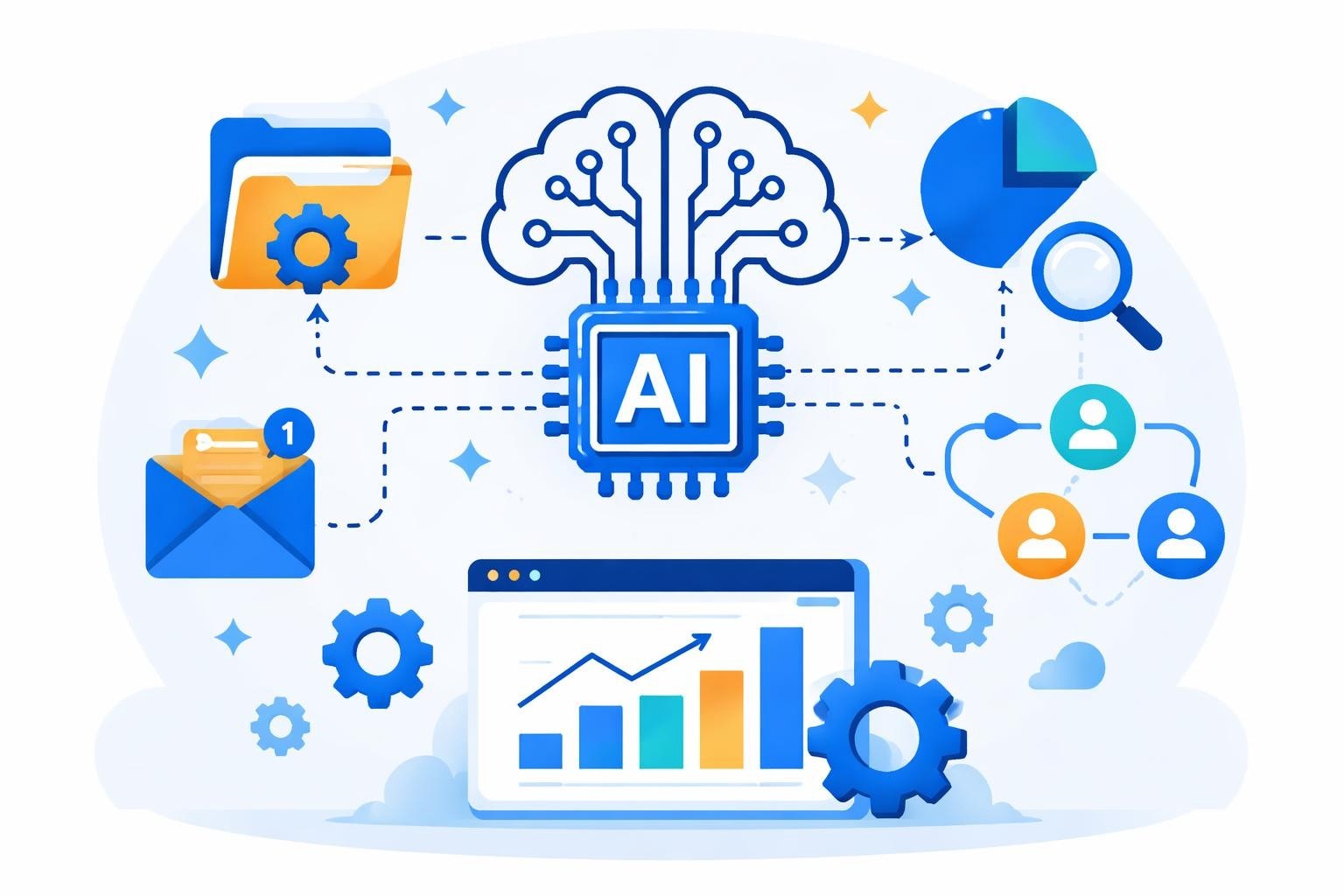
The transformation of enterprise operations through artificial intelligence isn't happening in consumer-facing products alone. While public AI applications capture headlines, the most significant productivity gains are emerging from a quieter revolution: internal tools that leverage AI to streamline workflows, automate repetitive tasks, and empower teams with intelligent decision-making capabilities. Organizations worldwide are discovering that when internal tools deepen AI integration, they unlock unprecedented efficiency gains that directly impact their bottom line. This shift toward AI-enhanced internal tooling represents a fundamental change in how modern businesses operate, particularly as no-code platforms make sophisticated AI capabilities accessible without extensive engineering resources.
The Strategic Value of AI-Powered Internal Tools
Internal tools have always served as the backbone of enterprise operations, handling everything from inventory management to employee onboarding. When these systems incorporate AI capabilities, they evolve from simple data processors into intelligent assistants that predict needs, suggest optimizations, and automate complex decision trees. Companies implementing AI-enhanced internal tools report significant reductions in manual processing time and improved accuracy across workflows.
The strategic advantage becomes clear when examining specific use cases. Customer service teams using AI-powered internal dashboards can instantly access customer history, predict potential issues, and receive suggested responses based on historical data. Sales operations benefit from lead scoring systems that analyze patterns across thousands of data points. Human resources departments deploy AI tools that match candidates to positions while eliminating unconscious bias from initial screening processes.
Key benefits of AI integration in internal tools include:
- Reduced time spent on repetitive data entry and processing tasks
- Enhanced decision-making through predictive analytics and pattern recognition
- Improved employee satisfaction by eliminating tedious manual work
- Faster onboarding as AI guides new team members through processes
- Real-time insights that enable proactive rather than reactive management
Organizations seeking to implement these capabilities can explore no-code AI app development platforms that dramatically reduce implementation timelines and technical barriers.
Building AI Capabilities Into Existing Systems
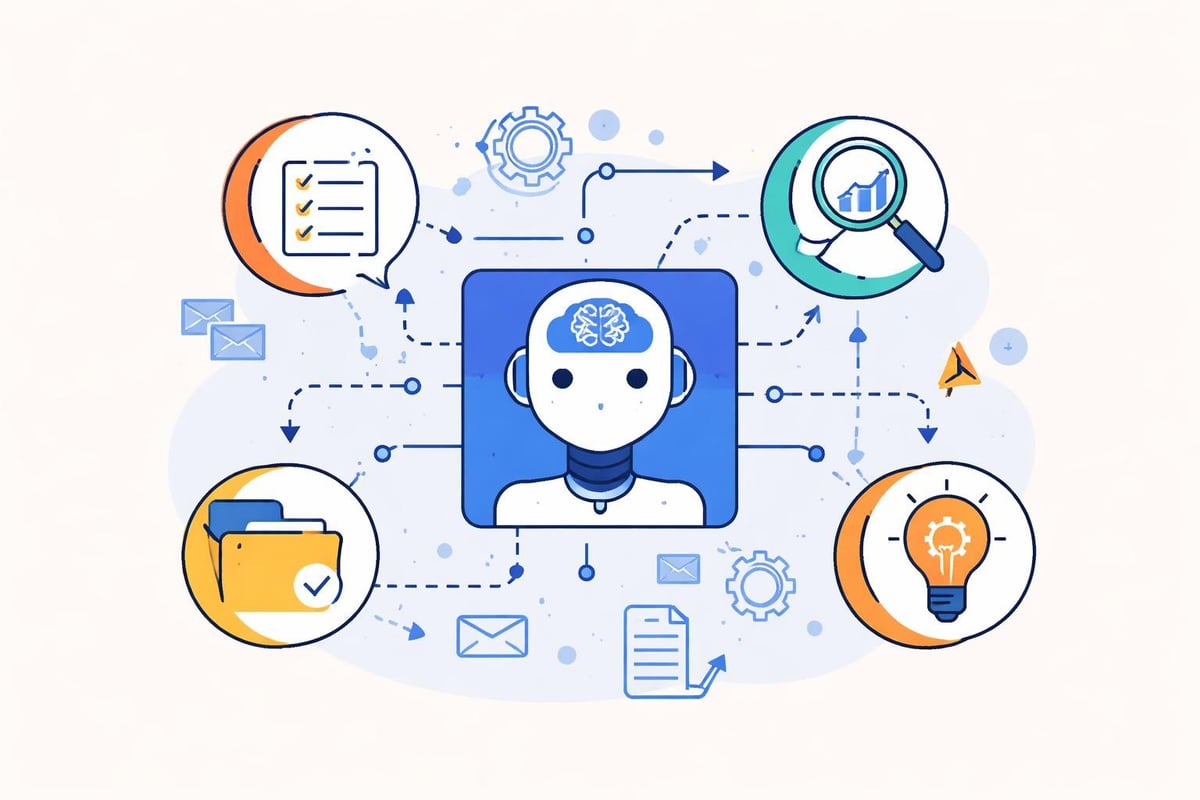
The question facing most enterprises isn't whether to adopt AI-enhanced internal tools, but how to integrate these capabilities without disrupting current operations. Traditional software development approaches require months of planning, custom coding, and extensive testing. No-code platforms have fundamentally changed this equation by providing pre-built AI components that connect to existing systems through standard APIs and integrations.
Modern no-code development environments enable teams to layer AI functionality onto legacy systems incrementally. A finance department might start by adding natural language query capabilities to their reporting dashboard, allowing managers to ask questions in plain English rather than learning complex query languages. Operations teams can implement predictive maintenance algorithms that analyze equipment data to forecast failures before they occur.
Practical Implementation Strategies
When internal tools deepen AI capabilities through thoughtful implementation, organizations follow several proven strategies. Starting with high-impact, low-complexity use cases builds organizational confidence and demonstrates ROI quickly. A procurement team might begin with an AI assistant that categorizes invoices and flags anomalies, then expand to predictive ordering systems once the initial success is proven.
| Implementation Phase | Focus Area | Expected Timeline | Key Metric |
|---|---|---|---|
| Phase 1 | Process automation | 2-4 weeks | Hours saved per week |
| Phase 2 | Data analysis | 4-8 weeks | Decision accuracy improvement |
| Phase 3 | Predictive insights | 8-12 weeks | Proactive vs reactive ratio |
| Phase 4 | Cross-system integration | 12+ weeks | End-to-end process efficiency |
The enterprise-grade LLM applications approach demonstrates how large language models can be safely integrated into internal systems while maintaining data security and compliance requirements. Organizations must balance the power of cloud-based AI models with the security needs of proprietary internal data.
Testing and iteration remain crucial even with no-code platforms. Internal tools deepen AI integration most successfully when organizations establish feedback loops with actual users. A marketing operations team might pilot an AI-powered campaign planning tool with a small group before rolling it out company-wide, gathering insights that inform refinements and additional features.
Domain-Specific AI Applications for Internal Workflows
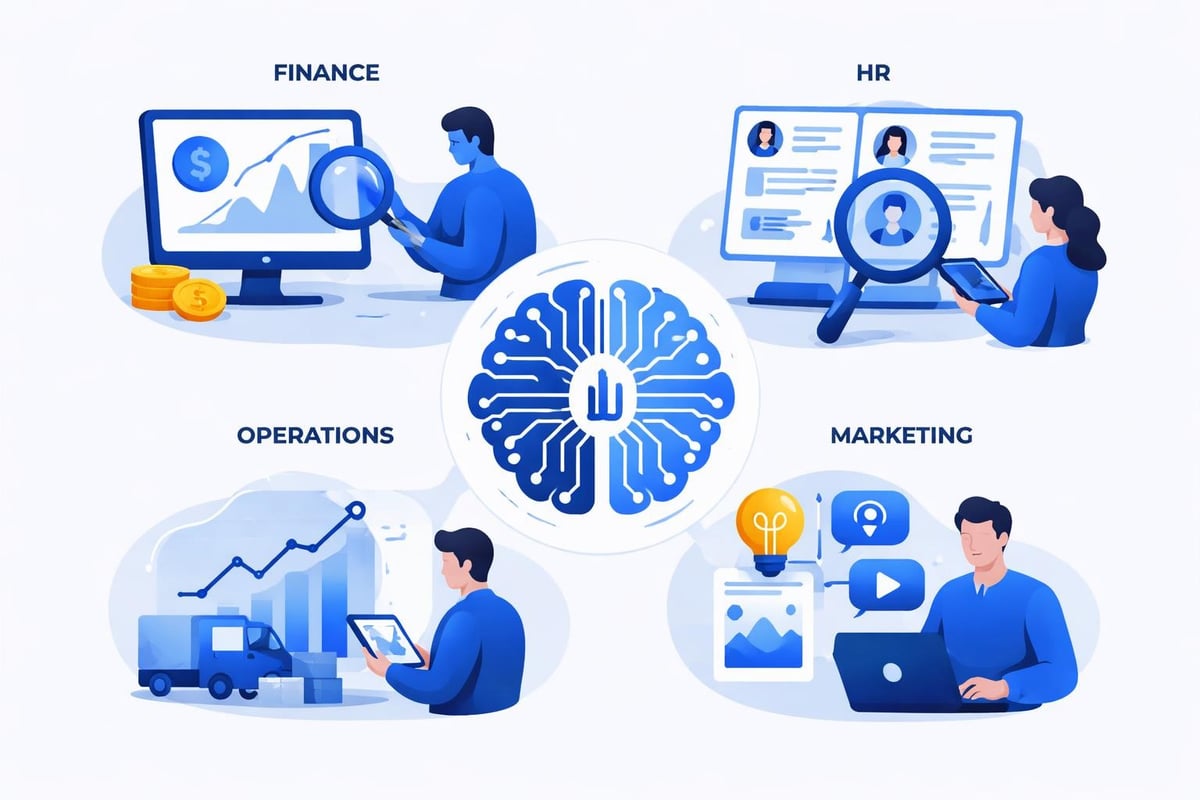
Different departments require distinct AI capabilities tailored to their specific workflows and data types. Finance teams benefit from anomaly detection algorithms that identify irregular transactions, while creative departments need AI tools that organize digital assets and suggest relevant content based on project requirements. This specialization means that effective AI implementation requires understanding both the technology and the unique challenges of each business function.
Finance and Accounting Applications:
- Automated reconciliation systems that match transactions across multiple sources
- Expense categorization tools using computer vision to extract data from receipts
- Cash flow forecasting models that analyze historical patterns and market conditions
- Audit trail generators that document decision processes for compliance
Operations and Supply Chain:
- Demand forecasting engines that optimize inventory levels
- Route optimization algorithms for logistics and delivery planning
- Quality control systems using image recognition to identify defects
- Supplier performance scoring based on delivery times, quality metrics, and pricing
Companies exploring these specialized applications often discover that best tools for building internal dashboards provide the visualization layer necessary to make AI insights actionable for decision-makers who aren't data scientists.
Human Resources and Talent Management
HR departments represent particularly fertile ground for AI-enhanced internal tools. Recruitment workflows benefit from AI systems that screen resumes, schedule interviews, and even conduct initial candidate assessments through conversational interfaces. Once employees join, AI-powered onboarding tools guide them through company policies, answer common questions, and route complex queries to appropriate team members.
Performance management systems incorporating AI can identify skill gaps, suggest training resources, and even predict flight risk among high-value employees. These capabilities transform HR from a primarily reactive function into a strategic partner that anticipates organizational needs. The AI-powered internal tools approach enables rapid deployment of these capabilities without requiring dedicated engineering teams.
The No-Code Advantage in AI Tool Development
The convergence of no-code platforms and AI capabilities has democratized access to sophisticated internal tooling. Previously, only organizations with substantial engineering resources could build custom AI-powered systems. Today, business analysts and operations managers can construct powerful internal tools using visual development environments that abstract away technical complexity while maintaining flexibility and scalability.
No-code platforms designed for AI integration typically provide several key components. Pre-trained models handle common tasks like sentiment analysis, text classification, and image recognition without requiring data science expertise. Workflow builders enable users to chain AI capabilities together with business logic, creating sophisticated automation sequences. Integration marketplaces offer connections to hundreds of external services, allowing internal tools to pull data from CRMs, ERPs, and specialized business systems.
Organizations leveraging no-code platforms for enterprise workflows report development timelines measured in weeks rather than months or years. This speed enables rapid experimentation and iteration, critical factors when internal tools deepen AI capabilities in response to evolving business needs.
Customization and Control
A common misconception about no-code platforms suggests they sacrifice customization for ease of use. Modern no-code environments actually provide extensive customization options through visual configuration rather than code. Teams can define custom data models, build complex conditional logic, and create tailored user interfaces that match their specific workflows.
When internal tools deepen AI integration through no-code platforms, organizations maintain control over their data and processes. Unlike SaaS tools that impose rigid workflows, no-code development allows companies to encode their unique business logic and competitive advantages into custom systems. A manufacturing company might build proprietary quality prediction models based on their specific production processes, creating tools that competitors cannot simply purchase off the shelf.
The AI-assisted app builder platforms category has expanded rapidly, offering options for different technical skill levels and use case requirements. Selecting the right platform requires evaluating factors like integration capabilities, AI model libraries, deployment options, and total cost of ownership.
Security and Governance Considerations
Implementing AI in internal tools introduces important security and governance questions. How should organizations handle sensitive data when routing it through AI models? What approval processes ensure AI-generated recommendations align with company policies? Which roles should have access to AI capabilities that can automate decisions or access confidential information?
Essential security measures include:
- Data encryption both in transit and at rest
- Role-based access controls that limit AI capabilities to appropriate users
- Audit logging of all AI-generated decisions and recommendations
- Model explainability features that document how AI reaches conclusions
- Regular security assessments and penetration testing
Organizations must also consider data residency requirements, particularly when operating across multiple jurisdictions with varying privacy regulations. Some top open-source AI internal tools offer self-hosted deployment options that keep data within organizational boundaries, addressing compliance concerns while still providing sophisticated AI capabilities.
Bias and Ethical AI Use
When internal tools deepen AI capabilities, organizations must actively manage potential biases in their systems. AI models trained on historical data can perpetuate past inequities, particularly in areas like hiring, promotion decisions, and resource allocation. Implementing AI responsibly requires regular audits of model outputs, diverse training data, and human oversight of consequential decisions.
Establishing clear governance frameworks before widespread AI adoption prevents future problems. These frameworks should define acceptable use cases, outline testing requirements, specify approval processes for new AI implementations, and create feedback mechanisms for employees who notice problematic behavior. Transparency about how AI assists rather than replaces human judgment helps maintain trust and adoption.
Measuring ROI and Impact
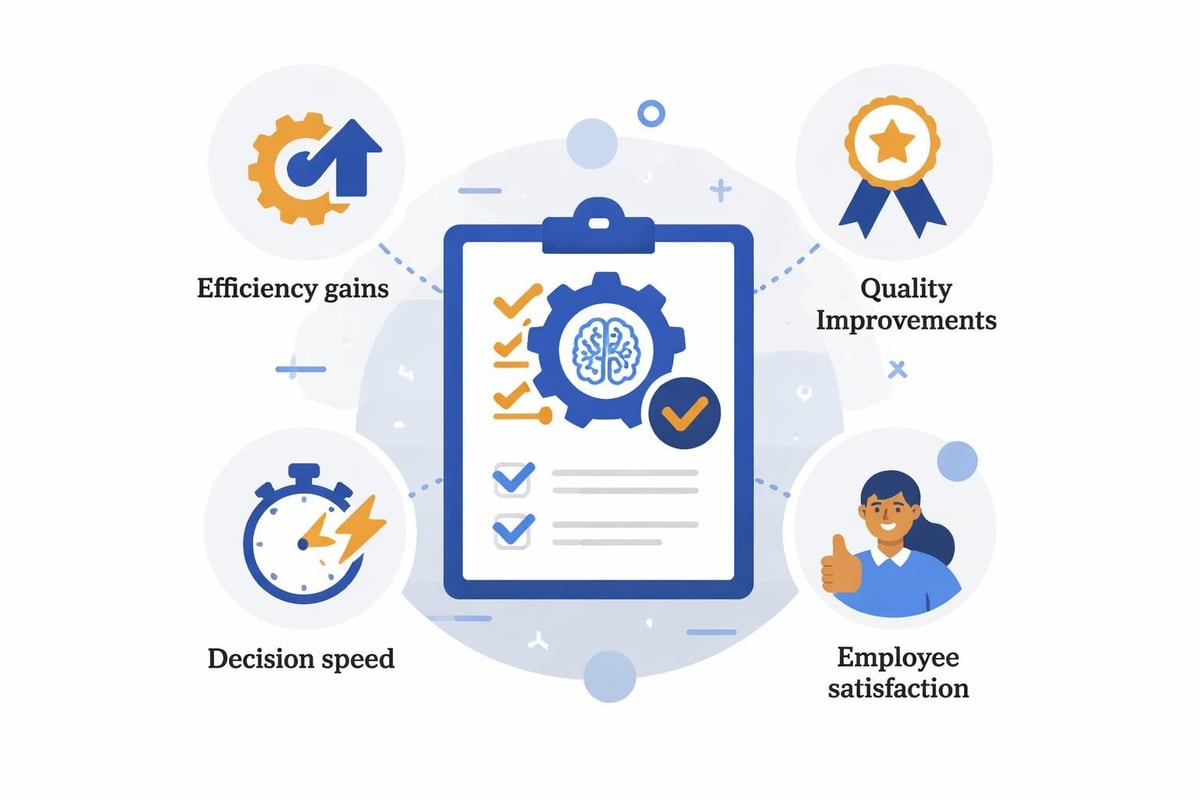
Quantifying the value of AI-enhanced internal tools requires establishing baseline metrics before implementation and tracking improvements over time. Simple time savings represent the most straightforward measure – if an AI-powered expense processing system reduces the time per transaction from five minutes to thirty seconds, the ROI calculation is clear. However, the true value often extends beyond direct time savings to include improved accuracy, faster decision-making, and enhanced employee satisfaction.
| Metric Category | Example Measurements | Business Impact |
|---|---|---|
| Efficiency | Processing time, transaction volume | Cost reduction, capacity increase |
| Quality | Error rates, rework frequency | Customer satisfaction, compliance |
| Speed | Time to decision, response time | Competitive advantage, revenue |
| Employee | Task satisfaction, retention | Talent acquisition, knowledge retention |
Organizations should track both quantitative metrics and qualitative feedback. An AI-powered customer service tool might reduce average handling time by 30%, but employee surveys revealing that agents feel more empowered and less stressed represent equally important success indicators. When internal tools deepen AI integration effectively, both productivity metrics and employee engagement scores improve simultaneously.
Integration Patterns and Architecture
Successful AI implementations follow several common architectural patterns. The microservices approach treats AI capabilities as discrete services that internal tools can call as needed, promoting reusability and maintainability. A single natural language processing service might support multiple applications across different departments, from email categorization to document summarization.
Event-driven architectures enable AI systems to respond automatically to business triggers. When a customer submits a support ticket, the event triggers AI classification, sentiment analysis, and priority scoring without human intervention. When inventory levels cross certain thresholds, AI forecasting systems automatically generate purchase recommendations. This reactive approach ensures AI capabilities activate precisely when needed.
API-First Development
Building internal tools with API-first architectures ensures flexibility as AI capabilities evolve. Rather than tightly coupling AI models to specific applications, organizations expose AI functionality through well-documented APIs that any internal tool can consume. This separation allows teams to upgrade models, experiment with new AI providers, or switch between cloud and on-premise deployments without rewriting applications.
The custom AI development approach emphasizes creating reusable AI components that serve multiple business needs. A customer data enrichment service might power CRM automation, marketing personalization, and sales forecasting simultaneously, maximizing the return on AI development investment.
Future Directions and Emerging Capabilities
The landscape of AI-powered internal tools continues to evolve rapidly. Multimodal AI systems that process text, images, audio, and video simultaneously will enable new categories of internal applications. Quality control systems will analyze product photos, inspector notes, and sensor data in a single workflow. Meeting assistants will combine audio transcription with screen sharing analysis and calendar context to generate comprehensive action items.
Autonomous agents represent another frontier. Rather than simply analyzing data and making recommendations, these AI systems will execute multi-step workflows with minimal human oversight. A procurement agent might identify supply needs, research vendors, negotiate pricing, and generate purchase orders, escalating to humans only when decisions exceed predefined parameters or confidence thresholds.
Emerging capabilities to watch:
- Continuous learning systems that improve from user interactions and feedback
- Cross-functional AI orchestration that coordinates workflows across departments
- Augmented reality interfaces for AI-powered internal tools in field operations
- Quantum-enhanced AI for complex optimization problems in logistics and finance
- Federated learning approaches that train AI across distributed datasets while preserving privacy
Organizations building internal tools today should architect for flexibility, anticipating that AI capabilities will expand significantly over the coming years. Platforms offering no-code platforms for building AI-powered tools position businesses to adopt new capabilities as they emerge without complete system redesigns.
Change Management and Adoption Strategies
Technology implementation succeeds or fails based on user adoption. When internal tools deepen AI capabilities, employees may feel uncertain about how these changes affect their roles and responsibilities. Effective change management addresses these concerns through transparent communication, comprehensive training, and demonstrable quick wins that build confidence.
Starting with volunteer departments or teams creates champions who advocate for broader adoption. These early adopters provide valuable feedback, identify edge cases, and develop best practices that smooth the rollout to other groups. Sharing success stories through internal communications helps overcome skepticism and builds momentum.
Training and Enablement
Training programs should focus on outcomes rather than technical details. Users need to understand what AI-powered tools can accomplish and when to use them, not how neural networks function. Role-specific training ensures relevance – sales teams learn how AI assists with pipeline management, while finance teams explore AI-powered forecasting and reporting capabilities.
Creating accessible documentation, video tutorials, and interactive guides reduces dependence on IT support. Conversational AI platforms can even provide in-application assistance, answering user questions and guiding them through unfamiliar features in real-time.
Building a Sustainable AI-First Culture
Long-term success with AI-enhanced internal tools requires cultural shifts beyond technology deployment. Organizations must foster experimentation, accept that not every AI initiative will succeed, and create safe spaces for learning from failures. Encouraging employees to identify automation opportunities and propose AI use cases generates a pipeline of high-value projects grounded in real operational needs.
Cross-functional collaboration becomes essential as AI initiatives often span multiple departments. A supply chain optimization tool might require input from procurement, logistics, finance, and sales to accurately model the business. Breaking down silos and establishing shared objectives ensures AI implementations deliver enterprise-wide value rather than optimizing individual departments at the expense of overall performance.
Recognition and incentive systems should reward AI adoption and innovation. Celebrating teams that successfully implement AI-powered internal tools, sharing lessons learned, and providing resources for continued exploration creates positive reinforcement. When internal tools deepen AI integration becomes a strategic priority reflected in performance objectives and career advancement criteria, adoption accelerates across the organization.
The competitive landscape increasingly favors organizations that embed AI throughout their operations rather than treating it as a specialized capability concentrated in data science teams. Companies that distribute AI capabilities through accessible internal tools empower every employee to work more intelligently, make better decisions, and focus on high-value activities that machines cannot replicate.
Internal tools deepen AI capabilities most effectively when organizations combine the right technology platforms with thoughtful implementation strategies and strong change management. The convergence of no-code development and advanced AI creates unprecedented opportunities for enterprises to build sophisticated internal systems without massive engineering investments. Big House Technologies specializes in helping organizations navigate this transformation, leveraging Bubble's no-code platform and Lovable's AI capabilities to create custom internal tools that drive measurable productivity gains. From initial scoping through deployment and ongoing optimization, our team delivers scalable solutions that transform how your teams work and compete.

About Big House
Big House is committed to 1) developing robust internal tools for enterprises, and 2) crafting minimum viable products (MVPs) that help startups and entrepreneurs bring their visions to life.
If you'd like to explore how we can build technology for you, get in touch. We'd be excited to discuss what you have in mind.
Other Articles
Unlock your freelance software developer potential in 2025 with expert tips on skills, client acquisition, pricing, and future proofing your career for success
Unlock the secrets of developing an MVP in 2025 with step by step guidance trends and tools Learn how to build test and launch a standout product faster
Explore Cursor AI pricing in 2026. Compare free, Pro, and Business plans with detailed cost breakdowns to find the best fit for your development needs.