

Imagine launching a product in 2026 that instantly captures your audience and stands out from the crowd. The secret? A smart, focused mvp application built to validate your idea quickly, without burning through your resources.
This MVP Application Guide is your blueprint for success. You will discover proven strategies, frameworks, and real-world insights designed for founders, product managers, and innovators navigating the fast-changing tech landscape.
Inside, we break down the essentials: MVP fundamentals, strategic planning, design, development, testing, measuring results, and scaling up. Let’s turn your vision into a thriving MVP that leads the way in 2026.
Understanding MVPs in 2026: Trends, Definitions, and Strategic Value
The landscape of mvp application is evolving rapidly as we approach 2026. Founders and product teams are rethinking what it means to launch with a minimum viable product. Today, MVPs are not just about building less—they are about delivering core value, validating ideas fast, and adapting quickly to feedback. Let’s dive into what sets the modern mvp application apart and why it is more crucial than ever in the tech world.
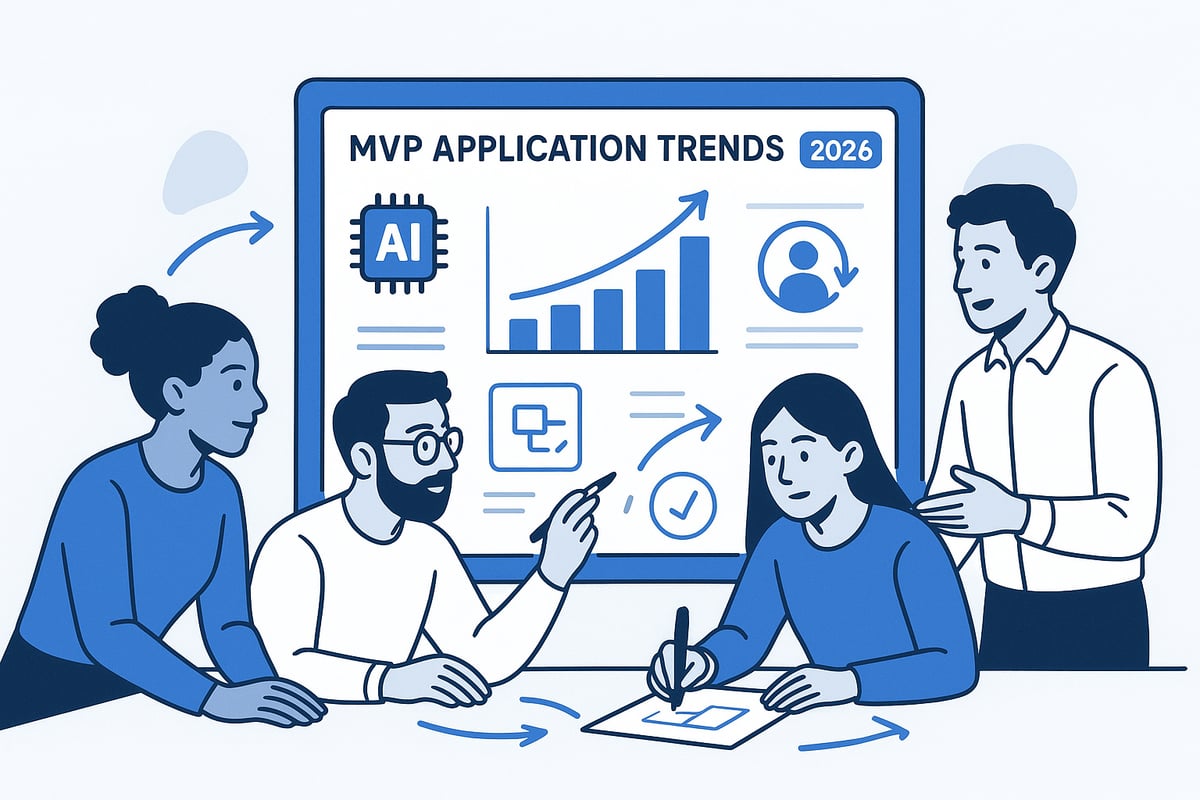
The Evolving Definition of MVP
In 2026, the definition of mvp application has matured far beyond a simple, stripped-down prototype. It now centers on delivering the core solution to a real user problem, gathering data, and learning rapidly. Rather than launching with as few features as possible, teams focus on what is essential for validation.
For example, Dropbox’s original MVP was a simple demo video. Today, an mvp application might leverage AI to personalize experiences from day one. According to CB Insights, 60 percent of startups now use MVPs to validate before scaling. This marks MVPs as a vital tool for reducing risk and optimizing resources early.
MVPs and Emerging Technologies
Emerging technologies are reshaping the world of mvp application. No-code platforms like Bubble and AI-driven tools have made it possible to launch MVPs in days, not months. Automation and AI are now embedded from the start, enabling smarter MVPs that adapt post-launch.
Consider how AI-powered chatbots serve as MVPs for SaaS startups, quickly validating user demand with real conversations. No-code adoption has grown by 40 percent between 2022 and 2025, according to Gartner. If you want a deeper dive into how no-code tools are fueling this trend, check out this guide on how to build scalable MVPs. The takeaway: MVPs are now living products, ready to evolve as feedback comes in.
Strategic Importance of MVPs
The strategic value of mvp application is clearer than ever. MVPs act as learning engines, allowing teams to gather actionable insights before committing significant resources. Speed to market is a major advantage—getting your product in front of users early can set you apart from competitors.
Airbnb’s MVP, for instance, validated a global demand for short-term rentals before scaling. Early user testing helps identify potential pitfalls, saving time and money. Investors now expect to see MVP validation as proof of traction and market fit. In short, MVPs are no longer optional—they are the foundation for modern product strategy.
Common MVP Myths Debunked
Many myths still surround the mvp application process. Some believe MVPs are low-quality or unfinished, but in reality, they are focused and intentional. They deliver the core value, not a half-baked idea. Another myth is that MVPs are only for startups. Large enterprises like Google release “Beta” products, essentially MVPs, to test innovation at scale.
Let’s clarify:
| Myth | Reality |
|---|---|
| MVPs are low-quality | MVPs are focused and deliver core value |
| Only for startups | Enterprises use MVPs for innovation pilots |
Understanding these truths helps teams approach MVPs with the right mindset—quality and learning come first.
Key Challenges and How to Overcome Them
Building a successful mvp application means navigating several challenges. Balancing speed with quality is a constant struggle. Feature creep can easily derail focus, while getting stakeholder buy-in can slow progress. Scalability should be considered from the start to avoid future headaches.
One major pitfall is building without confirming market need. In fact, 42 percent of failed startups cite “no market need” as the cause, according to CB Insights. The best teams embrace feedback, iterate quickly, and always keep the user problem at the center of their mvp application journey.
Step 1: Ideation and Market Validation for Your MVP Application
Bringing your mvp application idea to life starts with a solid foundation. At this stage, you want to ensure your concept solves a real problem and resonates with users, so you avoid building in the dark. The journey begins with creative ideation and moves quickly into focused market validation.

Ideation Techniques and Frameworks
Generating ideas for your mvp application is more than just a creative exercise. Start with brainstorming sessions, mind mapping, and problem interviews to uncover unmet needs. Use the Lean Canvas and value proposition design to structure your thinking and focus on the core problem.
For example, customer journey mapping helps visualize user pain points and identify opportunities for innovation. According to Harvard Business Review, 72% of successful MVPs begin with a well-defined problem statement. This clarity sets the stage for a focused and impactful mvp application.
Market Research and User Persona Development
Once you have an idea, dive into market research to see where your mvp application fits. Analyze competitors, size up the market, and look for gaps your solution can fill. Develop detailed user personas to ensure your product speaks directly to your target audience.
In industries like fintech and healthtech, persona-driven MVPs help teams prioritize features that matter most. Data shows that 54% of MVPs pivot based on early market feedback, so listening to real users from the start is critical. For a deeper understanding of the end-to-end process, the App and Software Development Guide offers step-by-step insights.
Validating Your MVP Idea
Validation is where your mvp application idea meets the real world. Use surveys, landing pages, smoke tests, and pre-orders to gauge genuine interest. A/B testing can help you compare different value propositions and messaging.
Take inspiration from Buffer, which started with a simple landing page to test user demand before building its product. Research from Startup Genome shows that MVPs with pre-launch validation are three times more likely to succeed. This step ensures you invest time and resources wisely for your mvp application.
Defining Success Metrics Early
Setting measurable goals for your mvp application is essential. Identify key performance indicators such as user sign-ups, engagement rates, and retention. Align these metrics with your business objectives to track progress and make informed decisions.
For example, SaaS teams often monitor daily active users to assess early traction. Having clear metrics enables rapid iteration and helps you focus your efforts where they matter most. Remember, defined success metrics are the compass guiding your mvp application post-launch.
Avoiding Common Pitfalls in Ideation
The ideation phase for your mvp application can be tricky. Avoid confirmation bias by seeking diverse feedback and challenging your assumptions. Do not ignore negative responses—sometimes critical feedback leads to the most valuable pivots.
Skipping validation due to time pressure is a common trap. The most successful MVPs embrace data-driven decision making and are open to course corrections. Stay flexible, listen to your users, and your mvp application will be positioned for long-term growth.
Step 2: Planning and Designing Your MVP Application
Transforming your mvp application from concept to reality starts with strategic planning and thoughtful design. In this step, you’ll learn how to choose the right features, map user experiences, leverage modern tools, and set a clear development path. Let’s break down the essentials of planning and designing an mvp application that’s built for success.
Scoping Your MVP: Features and Functionality
Defining the right scope for your mvp application is crucial. Focus on the features that deliver your core value. Use prioritization frameworks like MoSCoW and Kano to separate “must-have” from “nice-to-have” features. A clear scope keeps your team aligned and prevents feature overload.
| Prioritization Model | What it Does | Best For |
|---|---|---|
| MoSCoW | Categorizes features by must, should, could, won’t | Fast MVP builds |
| Kano | Ranks features by user delight and necessity | User-driven MVPs |
Remember, Instagram’s first mvp application focused only on photo sharing, which let them launch quickly and validate demand. According to the Product Management Institute, 68% of MVPs fail from packing in too many features. Keep it lean and laser-focused.
Creating Wireframes and Prototypes
Wireframing brings clarity to your mvp application’s user flow before a single line of code is written. Sketch out user journeys and main screens to spot gaps early. Tools like Figma, Sketch, and Adobe XD allow for rapid prototyping and easy collaboration.
- Figma: Cloud-based, great for teams
- Sketch: Mac-focused, powerful vector tools
- Adobe XD: Cross-platform, integrates with Creative Cloud
For e-commerce, rapid prototypes help visualize checkout flows and reduce confusion. Early prototyping can cut your development time by 30%, letting you iterate on your mvp application design before committing resources.
UI/UX Best Practices for MVPs
A user-centric approach sets your mvp application apart. Prioritize clean layouts, intuitive navigation, and simple onboarding. Fintech MVPs, for example, succeed with clear sign-up flows and minimal distractions.
Best practices for MVP UI/UX:
- Use familiar patterns to reduce learning curves
- Limit color palettes for clarity
- Guide users with microcopy and tooltips
Did you know 75% of users judge an app’s credibility by its design? Investing in UI/UX for your mvp application builds early trust and boosts engagement from day one.
Leveraging No-Code and AI Tools for Rapid Design
No-code platforms are game-changers for mvp application development. Tools like Bubble, Webflow, and Adalo allow you to build functional prototypes and even production-ready apps without deep coding skills. AI-powered design assistants help you generate layouts, suggest improvements, and accelerate iteration.
For SaaS MVPs, using Bubble can get you to market 5x faster than traditional coding. To learn more about how low-code and no-code solutions can supercharge your mvp application, check out this detailed guide on Low-Code Platforms for MVPs.
Leveraging these tools means you can validate ideas and pivot quickly, keeping your mvp application ahead of the curve.
Big House Technologies: Accelerate MVP Design and Development
Big House Technologies specializes in rapid mvp application development using cutting-edge no-code and AI solutions. Their end-to-end service covers scoping, design, development, and testing, making it easy to launch scalable MVPs within weeks.
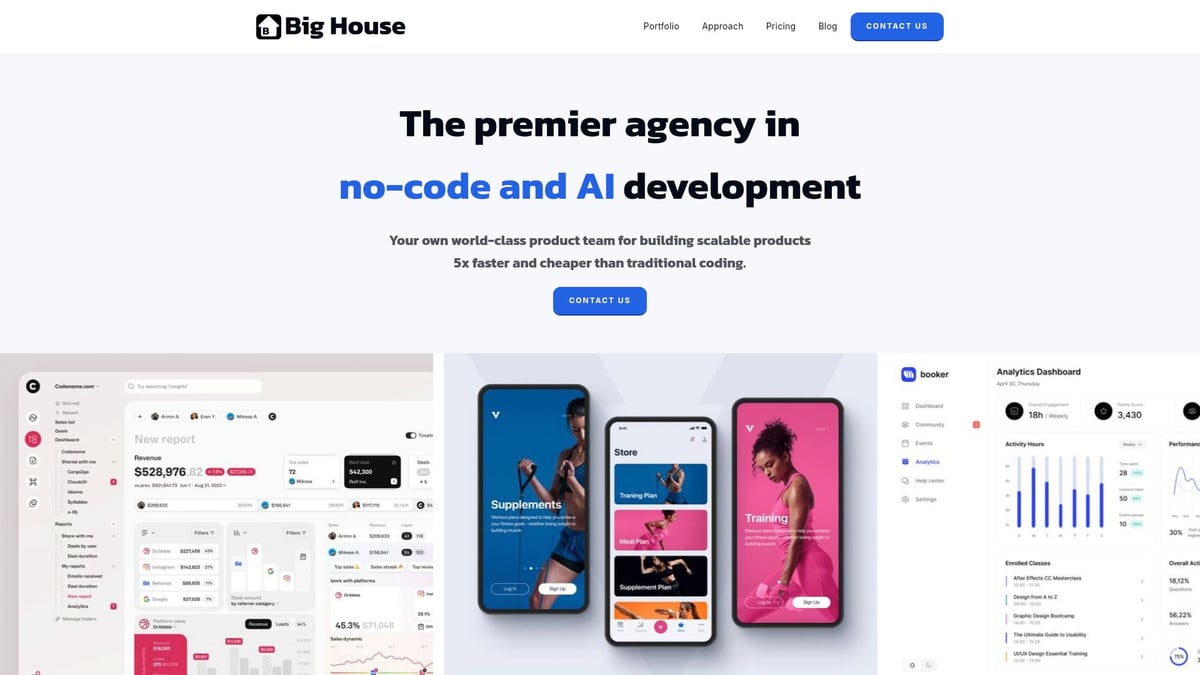
Real-world examples show startups and enterprises saving up to 5x in time and 3-4x in cost compared to traditional approaches. Flexible pricing ensures your mvp application fits your budget and needs. With a focus on quality, scalability, and user experience, Big House helps you deliver an MVP that’s ready for growth.
Building a Roadmap and Timeline
A clear roadmap keeps your mvp application moving forward. Break your project into milestones and deadlines, using agile methods for iterative progress. Many teams use 2-week sprint cycles to release updates, gather feedback, and adjust quickly.
Example sprint plan:
| Sprint | Goal                | Deliverable           |
|--------|---------------------|-----------------------|
| 1      | Core features       | Functional prototype  |
| 2      | User onboarding     | Signup flow           |
| 3      | Feedback integration| Improved UI           |
Timelines prevent scope creep and keep everyone accountable. With a well-structured plan, your mvp application will stay on track and adapt as you learn from users.
Step 3: Developing and Testing Your MVP Application
Developing and testing your mvp application is where your idea becomes a real, working product. This stage is crucial for ensuring your solution is not only functional, but also scalable and secure. Let’s break down each step so you can confidently move from prototype to a robust mvp application.

Choosing the Right Tech Stack or Platform
Selecting the right tech stack lays the foundation for a successful mvp application. You need to weigh scalability, flexibility, speed, and cost. Traditional coding languages like JavaScript or Python offer control, while no-code and low-code platforms such as Bubble or Adalo accelerate development. Consider integration needs, team expertise, and long-term vision.
Here’s a quick comparison:
| Criteria | Traditional Coding | No-Code/Low-Code |
|---|---|---|
| Flexibility | High | Moderate |
| Speed | Moderate | High |
| Cost | Higher upfront | Lower upfront |
| Scalability | Excellent (with effort) | Good for early stage |
For the latest insights on what tools and frameworks are best for your mvp application, check out this Best Tech Stack for MVP 2026 resource.
Building the MVP: Core Development Process
A streamlined development approach is essential for your mvp application. Agile methodologies are widely used, focusing on iterative releases and feedback loops. Start by breaking features into small, manageable tasks and organize them into sprint cycles, often lasting one or two weeks.
Version control systems like Git help maintain code integrity, while documentation keeps everyone aligned. Continuous integration tools automate builds and testing, ensuring your mvp application evolves smoothly. Remember, the goal is to launch a core solution fast, then improve based on user data.
Quality Assurance and User Testing
Quality assurance is key to delivering a reliable mvp application. Include both manual and automated testing to catch bugs early. Manual testing is great for usability, while automated tests cover repetitive scenarios and speed up the process.
Consider these QA methods:
- Manual exploratory testing
- Automated unit and integration tests
- Closed beta testing with real users
Involve users in the testing phase to gather honest feedback and spot usability issues. Structured QA reduces post-launch bug rates, boosting confidence in your mvp application.
Gathering and Implementing Feedback
Your mvp application thrives on actionable feedback. Use surveys, analytics, and interviews to collect insights. Leverage analytics platforms to monitor real-time user behavior and identify friction points.
Rapid iteration is critical. After each feedback cycle, prioritize changes that align with your goals. For example, if users struggle with onboarding, update the workflow in the next sprint. Fast response to feedback helps your mvp application find product-market fit faster and keeps users engaged.
Security and Compliance Considerations
Security should never be an afterthought for your mvp application. Adhere to data privacy laws like GDPR or CCPA from the beginning. Implement secure authentication, encrypt sensitive data, and use trusted cloud services.
If your mvp application handles sensitive information, such as health or financial data, ensure compliance with industry-specific standards like HIPAA. Regularly update your security protocols and conduct audits to prevent vulnerabilities. Addressing these concerns early builds user trust and reduces future risks.
Step 4: Launching, Measuring, and Iterating Your MVP Application
Launching your mvp application is a major milestone, but it is only the beginning. This phase is about more than just going live; it is about learning from real users and making smart, data-driven decisions. The right approach here sets the foundation for your product’s evolution and long-term success.
Launch Strategies for MVPs
Choosing the right launch strategy for your mvp application can make all the difference. Should you opt for a soft launch or go all in with a full launch? A soft launch lets you test the waters with a smaller audience, gather early feedback, and fix issues before a wider rollout. A full launch, on the other hand, can help you make a bigger splash and build momentum quickly.
To build anticipation, consider using waitlists, beta invites, or even a community launch event. Clubhouse famously used invite-only access to create buzz and exclusivity for their mvp application. According to recent data, 40% of successful MVPs use staggered launches to maximize feedback and engagement.
Modern launch strategies often leverage no-code tools and rapid iteration. For inspiration, check out these No-Code Startups Success Stories, which showcase how founders bring mvp application ideas to market faster and smarter.
Tracking Key Metrics Post-Launch
Once your mvp application is live, tracking the right metrics is essential. Focus on indicators like retention rate, churn, Net Promoter Score (NPS), and customer acquisition cost to understand how your product is performing. Use analytics tools such as Google Analytics or Mixpanel to monitor user behavior and revenue metrics like monthly recurring revenue (MRR).
For SaaS MVPs, measuring MRR and user engagement is key for early validation. Data shows that data-driven mvp application teams iterate twice as fast. Staying on top of trends, including those highlighted in AI-Driven MVP Development Trends 2026, can help you identify new metrics and automation tools to improve your tracking.
Set up dashboards to visualize your progress and spot patterns. This empowers your team to act quickly and keep your mvp application on track.
Interpreting User Feedback and Analytics
Collecting feedback for your mvp application is only useful if you know how to interpret it. Combine qualitative insights from user interviews and surveys with quantitative analytics. Look for actionable feedback, not just surface-level praise or complaints.
Avoid chasing vanity metrics like raw signups if they do not reflect real engagement or product-market fit. For example, if users are not using a key feature, dig deeper to understand why. Sometimes, a low engagement metric is a signal to pivot or refocus your mvp application on what users truly value.
Let data inform your decisions but do not let it dictate every move. Balance analytics with your vision and user empathy.
Iterative Improvement: When and What to Change
Iteration is the heartbeat of a successful mvp application. After launch, set a regular schedule for reviewing feedback and deciding on the next set of improvements. Many teams use two-week sprints to keep momentum and avoid stagnation.
Decide which features to prioritize based on user demand and business goals. For instance, if users consistently request integrations, consider adding those before expanding into new areas. Continuous improvement ensures your mvp application stays relevant and grows with your audience.
Think of each iteration as a learning loop. Test, measure, and adapt—this is how you build a product users actually love.
Avoiding Post-Launch Pitfalls
It is easy to overreact to the first wave of feedback after launching your mvp application. Stay calm and look for patterns before making big changes. Do not lose sight of your long-term vision in pursuit of quick wins.
Common pitfalls include neglecting core user needs, chasing every feature request, or failing to iterate at all. Data shows that 32% of MVPs fail because teams stop improving after launch.
Keep your team focused on your mvp application’s mission. Embrace feedback, stay agile, and make continuous iteration part of your culture.
Step 5: Scaling Your MVP to a Full Product in 2026
Scaling your mvp application from a validated concept to a full-fledged product is where founders truly unlock value. This stage is about more than adding features—it’s about strategic growth, market fit, and building a foundation for long-term success. Let’s break down the steps to ensure your mvp application becomes a standout product in 2026.
Assessing Product-Market Fit
Reaching product-market fit is the true north for your mvp application. But how do you know you’ve arrived? Look for high retention rates, organic user growth, and consistently positive feedback. For example, Notion’s transition from a basic mvp application to a mainstream productivity tool was driven by users who kept coming back and spreading the word. Only 20% of mvp applications achieve genuine product-market fit, so measure carefully. Use surveys, churn rates, and NPS to track progress. Here’s a quick reference:
| Indicator | What to Look For |
|---|---|
| Retention | 40%+ after 3 months |
| Organic Growth | Steady, without paid ads |
| User Feedback | High satisfaction/NPS |
Building for Scalability and Performance
To handle growth, your mvp application must scale efficiently. Upgrade infrastructure as your user base expands—think cloud hosting, robust databases, and efficient APIs. Migrating from no-code to custom code can be a smart move once traction is proven. Planning for scalability now prevents expensive rewrites later. Focus on performance testing and automated monitoring to catch bottlenecks early. Scalability is about preparing your mvp application to support thousands, not just dozens, of users. Prioritize load balancing, redundancy, and security at this stage for a seamless user experience as you grow.
Expanding Features Based on User Demand
Feature expansion is a balancing act. Use real user data from your mvp application to prioritize additions that deliver the most value. Avoid feature bloat by focusing only on elements that align with your core vision. For instance, many SaaS teams add payment integrations or collaboration tools only after validating user demand post-MVP. Keep a feedback loop alive: survey your users, analyze usage analytics, and test new features with small groups first. The most successful mvp applications grow by staying laser-focused on user needs and iterating based on clear, actionable insights.
Growing Your User Base
With a solid foundation, it’s time to ramp up marketing for your mvp application. Use a mix of content, SEO, targeted ads, and partnerships to reach new audiences. Early adopters can be your best advocates—referral programs often drive substantial organic growth. For example, SaaS products that incentivize sharing see up to 65% of new users come from referrals. Build a community around your mvp application, engage users on social platforms, and collect testimonials to boost credibility. Consistent, authentic communication is key to sustained user acquisition and retention.
Preparing for Investment and Scale
Investors want to see traction, scalability, and a clear growth path for your mvp application. Use your metrics—retention, revenue, user growth—to craft a compelling story. As you prepare for funding, consider the MVP Development Market Outlook 2025-2032 to understand industry trends and set realistic expectations. Structure your team for scale by hiring strategically and refining processes. Highlight how your mvp application stands out in a crowded market, and be ready to show how investment will accelerate your roadmap.
You’ve seen how building an MVP in today’s fast paced world is all about working smarter, not harder—from validating your idea and planning features to leveraging no code and AI for rapid development. If you’re ready to turn your vision into a real product without waiting months or breaking the bank, you’re not alone. We’ve helped founders and teams like yours bring ideas to life faster than ever. Why not take the next step and see how you can launch your MVP quickly and confidently? Launch Your MVP in Weeks, Not Months

About Big House
Big House is committed to 1) developing robust internal tools for enterprises, and 2) crafting minimum viable products (MVPs) that help startups and entrepreneurs bring their visions to life.
If you'd like to explore how we can build technology for you, get in touch. We'd be excited to discuss what you have in mind.
Other Articles
Discover bubble developer cost breakdowns for 2026, including freelance rates, agency pricing, and project budgets for no-code development projects.
Discover Lovable pricing structure, costs, and value for AI-powered development. Compare plans and learn if Lovable fits your project budget.
Discover the best scalable backend options for Bubble apps in 2026. Compare Xano, Supabase, AWS, and custom solutions for enterprise growth.