
Staying ahead in 2026’s fast-changing business world is no longer optional. Companies everywhere face the challenge of keeping up with innovation while managing daily operations. Choosing the right product software can make the difference between growth and falling behind.
This article uncovers the 7 top product software solutions set to transform how businesses work. You’ll discover each option’s standout features, core benefits, pricing, and best-fit scenarios. See how these tools solve common business hurdles and help teams collaborate, operate efficiently, and boost profitability.
Ready to drive your business forward? Explore these solutions and unlock your path to digital transformation.
Why Product Software Solutions Are Essential for Modern Businesses
Staying ahead in today's business world means embracing smarter, faster ways of working. Product software has evolved into the backbone of modern companies. Let’s explore why these solutions are now mission-critical for organizations of every size.
Evolution of Business Software
Business operations have shifted radically from manual paperwork and siloed spreadsheets to highly integrated digital platforms. As companies grew, so did the need for tools that could handle more data and complex tasks. The rise of cloud-based, AI-driven, and collaborative product software has transformed how teams communicate, manage projects, and make informed decisions. Today, digital solutions are not just convenient, they are essential.
Key Benefits of Adopting Product Software
Embracing product software brings powerful benefits across every department. Teams work more efficiently thanks to automation, reducing repetitive tasks and manual errors. Enhanced collaboration tools provide real-time data visibility, leading to faster, smarter decisions. Plus, these solutions scale easily as your business evolves. For more in-depth insights, check out this Guide to Business Software Solutions.
- Increased operational efficiency
- Streamlined workflows and communication
- Flexibility to adapt as business needs shift
Challenges Without Modern Software Solutions
Relying on outdated methods can put your business at risk. Without product software, you face:
- Higher risk of manual errors and lost information
- Siloed data, leading to poor cross-team collaboration
- Bottlenecks that slow decision-making and growth
Missed opportunities and lower productivity are common when advanced tools are lacking. Staying competitive means overcoming these hurdles with the right technology.
Market Trends and Statistics for 2026
The business software market is growing rapidly. Gartner predicts global enterprise software spending will surpass $1 trillion by 2026. Companies are increasingly adopting AI, no-code, and integrated platforms. Demand for customizable and industry-specific product software is also on the rise, reflecting a shift toward solutions tailored to unique business needs.
| Trend | 2026 Outlook |
|---|---|
| Global software spend | $1 trillion+ |
| AI & no-code adoption | Sharp increase |
| Custom/vertical solutions | High demand |
How the Right Software Drives Competitive Advantage
Companies using the right product software scale faster than their peers. For example, organizations that invest in digital tools can quickly pivot, innovate, and stay customer-focused. Product software enables continuous improvement and supports business growth. Digital maturity often translates to higher profitability, as agile teams outperform competitors stuck in legacy systems.
Criteria for Selecting Top Product Software
Choosing the best product software requires careful evaluation. Focus on:
- User-friendly interfaces and easy onboarding
- Integration with existing systems and future scalability
- Strong security, compliance, and vendor support
Assess return on investment and make sure the solution aligns with your business goals. The right product software is a foundation for sustainable growth.
7 Top Product Software Solutions to Boost Your Business in 2026
Staying ahead in 2026 means adopting the right product software. Businesses are seeking solutions that streamline workflows, foster innovation, and scale with growth. But with so many options, knowing which product software will deliver the most impact is critical.
This curated list showcases the seven leading product software solutions set to define business success in 2026. Each selection is based on industry reviews, user feedback, standout features, and innovation. You will discover their pricing, core features, unique benefits, best use cases, and how they address common business pain points. Whether you run a startup or an enterprise, these product software leaders are transforming how teams collaborate, launch products, and drive results.
Big House Technologies – No-Code & AI-Powered Development
Big House Technologies is redefining product software with a unique blend of no-code platforms and AI-driven development. Their flexible pricing spans Basic, Growth, and Enterprise tiers, with custom quotes for specialized needs. The core features include rapid no-code development (using Bubble), seamless AI integration via Lovable, comprehensive product lifecycle management, UI/UX design with Figma, and robust QA/testing processes.
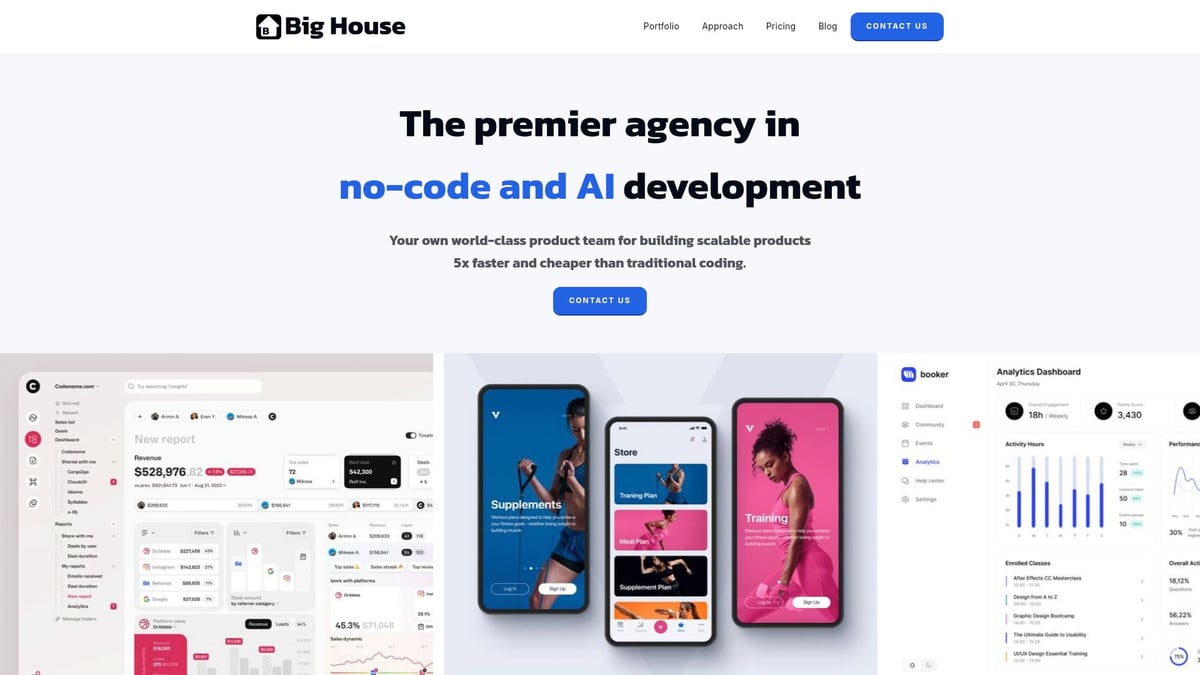
The main benefit? Businesses can launch products up to five times faster and slash development costs by as much as 75 percent. This product software approach is highly scalable and secure, supported by a dedicated product team that works closely with clients from ideation to launch.
Big House Technologies is ideal for startups, established enterprises, SMBs, and non-technical founders. It serves industries like finance, agriculture, and energy. Clients appreciate the speed, affordability, and collaborative process, although those requiring deep custom code or on-premise deployment may need to look elsewhere.
A real-world example includes Humi SR&ED, who saved 3-4x on cost and time, and IMSI, who reduced rework and saved €2M. The unique selling point is the marriage of no-code speed, AI innovation, and deep client partnership.
For more on why enterprises are embracing no-code product software, see Benefits of No-Code for Enterprises.
Wrike – Best for Product Development & Custom Workflows
Wrike stands out as a leading product software for managing complex product development and custom workflows. The pricing model includes a free plan with limited features and paid plans starting at $9.80 per user per month.
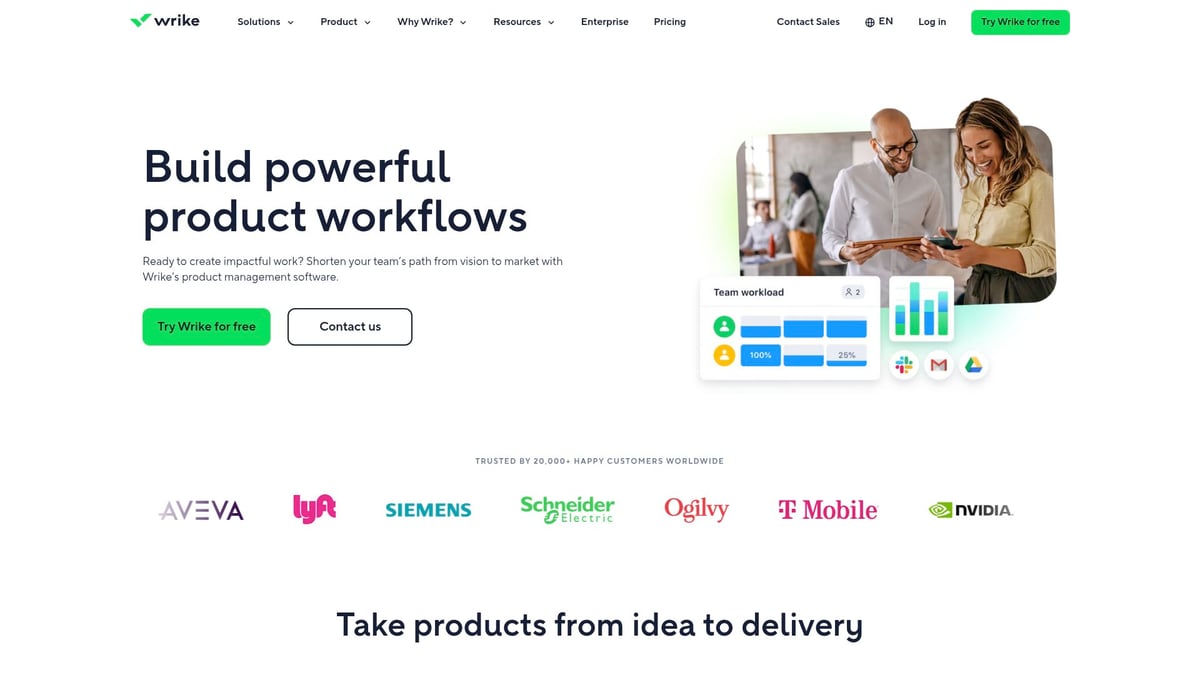
Key features include customizable Kanban and Gantt workflows, AI-powered risk prediction, integrations with tools like GitHub, Jira, and Slack, and powerful time and resource tracking. Wrike’s product software offers custom fields to tailor workflows to agile or waterfall methodologies, plus real-time dashboards to centralize project data and boost team accountability.
Wrike is perfect for product managers, development teams, and enterprises tackling sophisticated projects. Its strengths are flexibility, detailed reporting, and robust integrations. However, advanced features are not available in the free plan, and live chat support is limited.
Companies using Wrike report improved project visibility and reduced delays. The unique selling point is the combination of workflow customization and predictive analytics, empowering proactive product management. This product software makes it easier to manage cross-functional teams and deliver projects on time.
Productboard – Best for Roadmapping & Customer Feedback
Productboard is designed for product teams who put customer needs at the heart of their strategy. Pricing starts at $20 per maker per month, with higher tiers unlocking advanced reporting and customization.
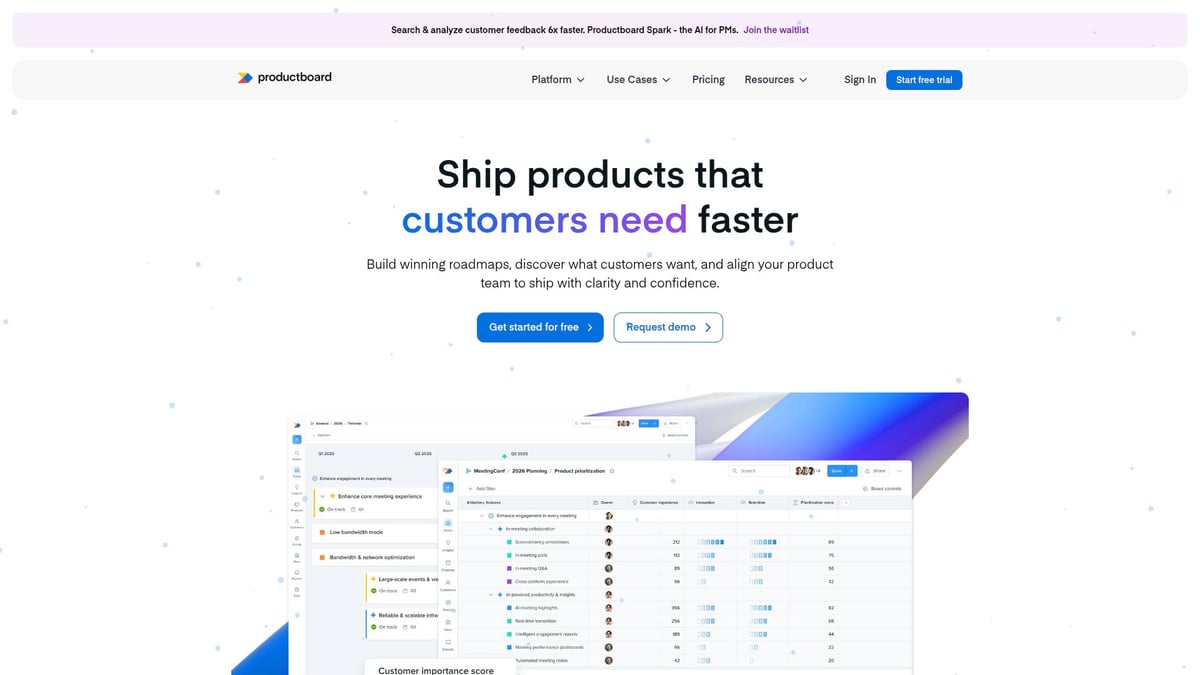
The product software’s core features include centralized product roadmaps, a unified feedback repository, automated prioritization, and scoring mechanisms. Multiple roadmap views help teams visualize strategy and progress.
Productboard aligns teams on product vision, empowers data-driven feature prioritization, and enables easy sharing and collaboration. It is ideal for SaaS companies, organizations prioritizing customer-driven development, and product teams seeking clarity.
Pros include a user-friendly interface, seamless workflow integration, and strong feedback management. The starter plan lacks some advanced capabilities, but many teams find the essentials more than sufficient.
Teams leveraging Productboard consistently launch features customers want most, leading to higher satisfaction. Its unique selling point is making customer feedback central to product software planning and execution.
Jira Align – Best for Large-Scale Forecasting & Simulation
Jira Align is the product software of choice for large enterprises needing to connect strategy to execution. Pricing is custom, starting around $27,000 a year for 30 to 140 users, reflecting its enterprise focus.
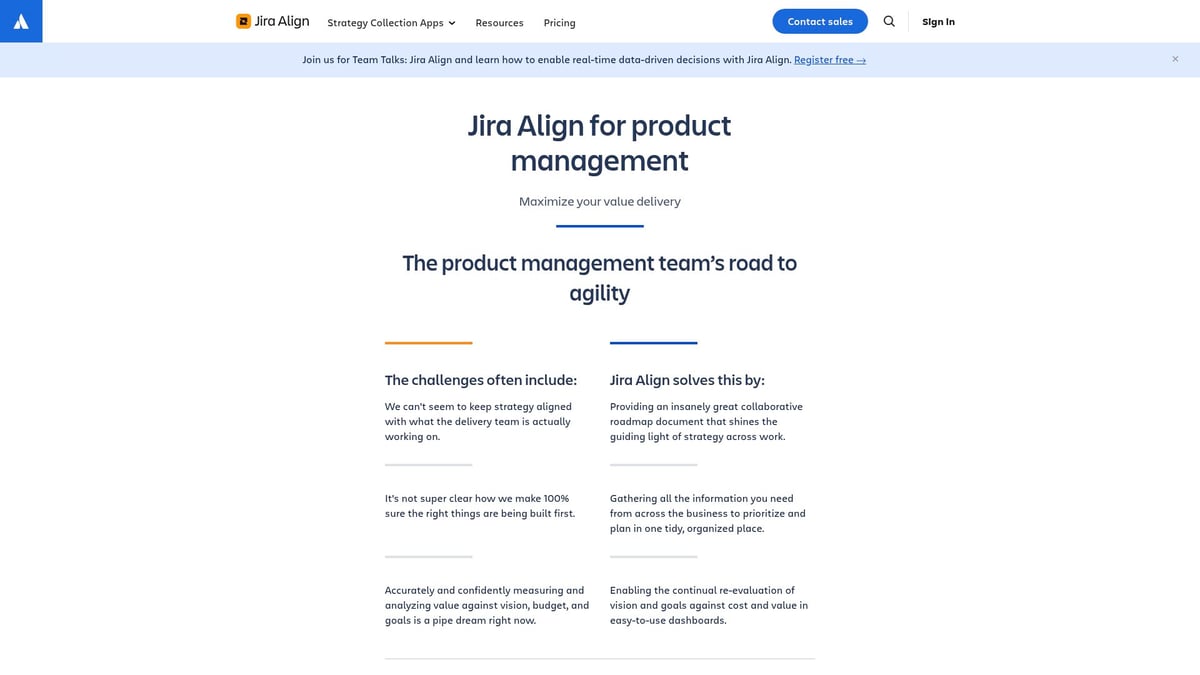
Key features include real-time roadmaps, advanced portfolio management, dependency tracking, and outcome measurement. Jira Align also offers customer feedback analytics and scenario simulation for risk and ROI assessment.
This product software is ideal for organizations with multiple product lines, large agile teams, or those needing to scale agile practices. Pros include deep analytics, robust collaboration, and the ability to align business and product goals. The tradeoffs are a steep learning curve, high entry price, and setup complexity.
Enterprises use Jira Align to forecast pricing, optimize resource allocation, and plan feature rollouts. Its unique selling point is the unmatched ability to scale agile and simulate business outcomes across entire portfolios, making it a powerhouse for strategic product software management.
ProProfs Project – Simplified Project & Resource Management
ProProfs Project is a straightforward product software solution tailored for startups, SMBs, and agencies managing multiple client projects. Pricing starts at $39.97 per month, with a 15-day free trial to get started.
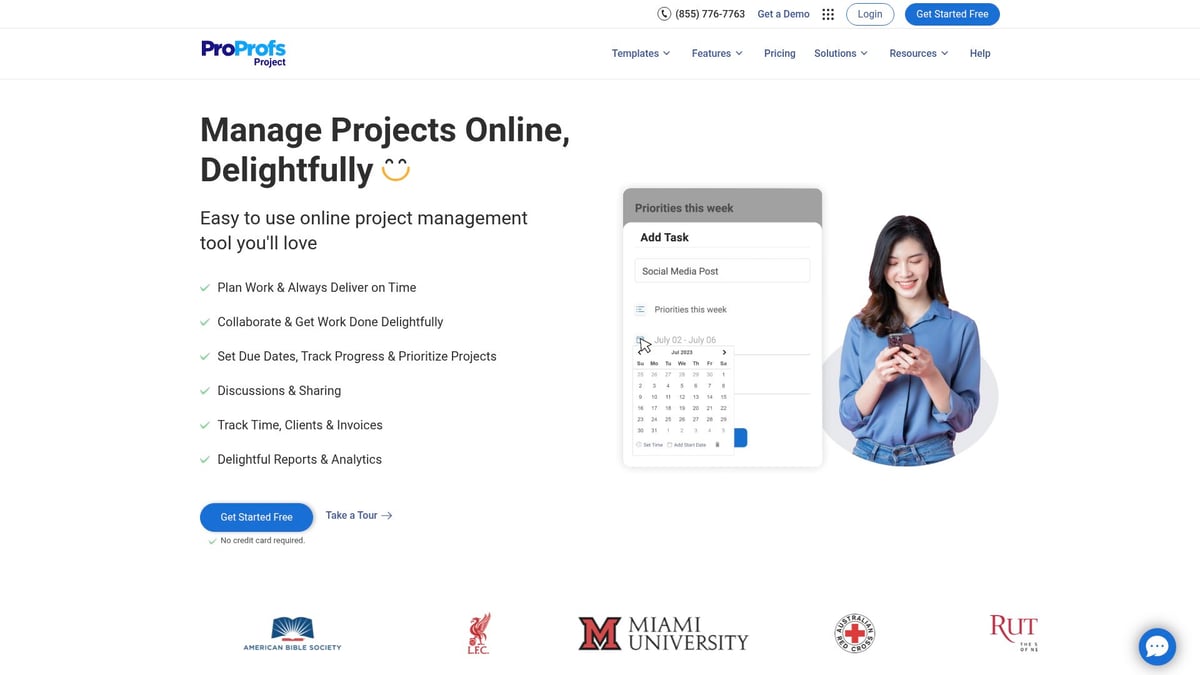
Core features include task dependencies, multiple product dashboards, time and billing tracking, and versatile Gantt, Kanban, and calendar views. Automated reporting simplifies oversight and ensures no detail is missed.
The main benefits are centralized project management, streamlined resource allocation, and simplified invoicing. ProProfs Project is praised for its easy setup, all-in-one dashboard, and strong reporting and billing tools. The main drawback is a limited trial period and performance that may depend on internet connectivity.
Businesses using this product software consistently deliver projects on time and track billable hours efficiently. Its unique selling point is a no-fuss, quick-setup platform that gives small teams clarity and control over their projects.
monday dev – Agile Sprint & Collaboration Platform
monday dev is a flexible product software platform designed for agile sprint management and real-time collaboration. Pricing starts at $27 per month, with tiered plans offering additional features as teams grow.
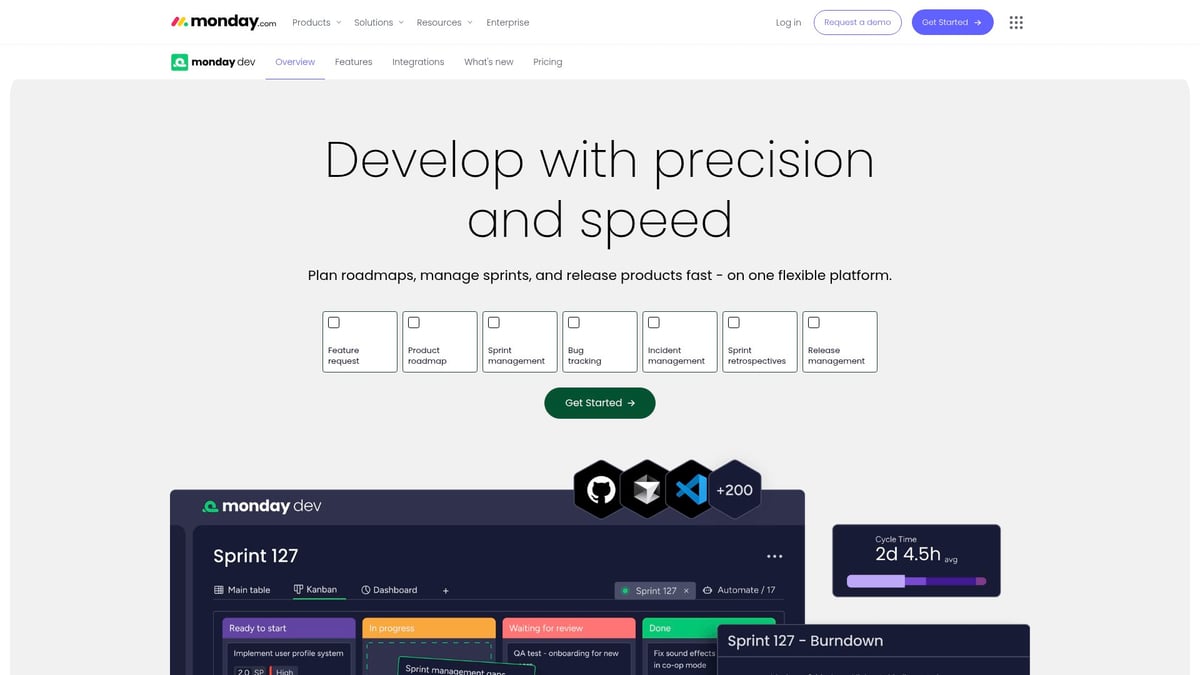
Key features include sprint and task boards, real-time updates, data visualization tools, requirements and bug tracking, and built-in collaboration via comments and file sharing. monday dev makes product software management visual and intuitive.
Ideal for agile teams, software developers, and product managers who value customizable workflows, monday dev stands out for its easy-to-use interface, strong collaboration features, and real-time insights. The starter plan lacks time tracking, and some users mention slow support responses.
Teams using monday dev report fewer sprint delays and improved delivery cadence. The unique selling point is the blend of agile best practices with a user-friendly design and powerful integrations, making it a favorite for fast-moving product software teams.
Asana – Best for Risk Management & Cross-Functional Teams
Asana is a top product software for teams needing both project management and risk oversight. Pricing begins at $10.99 per user per month, with a free basic plan available for smaller teams or simple needs.
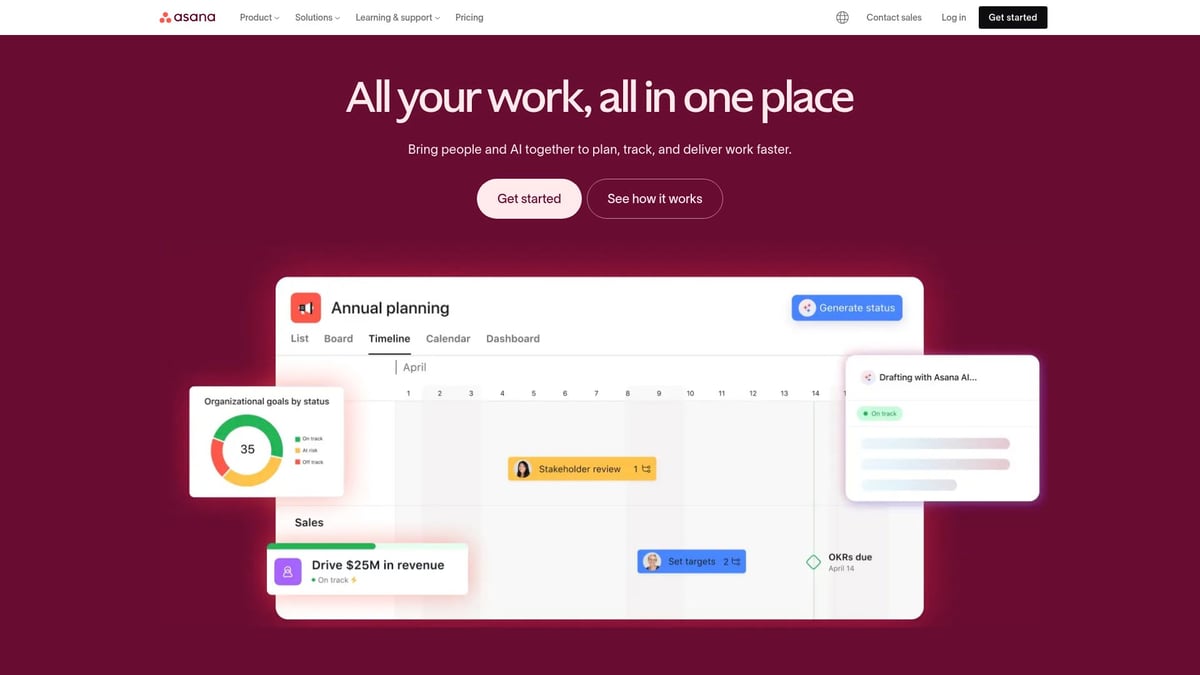
Core features include task and project tracking, risk management tools, custom workflows, cross-team reporting, and automation to handle repetitive tasks. Asana’s product software visualizes project risks, keeps teams aligned, and streamlines operations.
It is ideal for cross-functional teams, marketing, operations, and product launches. Pros are flexibility, scalability, strong automation, and integrations with major business apps. Some advanced features require higher-tier plans, and the platform may feel overwhelming for very simple projects.
Teams using Asana identify and mitigate risks early to ensure smoother product launches. Its unique selling point is being the leading choice for organizations that need strong project management combined with robust risk management capabilities.
Quick Comparison Table
| Product Software | Best For | Starting Price | Unique Selling Point |
|---|---|---|---|
| Big House Technologies | No-code & AI-powered dev, startups/enterprises | Custom | Combines no-code speed, AI, and deep client partnership |
| Wrike | Product dev, custom workflows, enterprises | $9.80/user/month | Custom workflows with predictive analytics |
| Productboard | Roadmapping, customer feedback, SaaS | $20/maker/month | Centralizes customer feedback for data-driven planning |
| Jira Align | Large-scale forecasting, simulation | ~$27,000/year | Scales agile, simulates business outcomes |
| ProProfs Project | SMBs, agencies, resource management | $39.97/month | Quick setup, all-in-one project clarity |
| monday dev | Agile sprints, collaboration, dev teams | $27/month | Agile best practices with user-friendly design |
| Asana | Risk management, cross-functional teams | $10.99/user/month | Integrates risk management with project tracking |
No matter your business size or industry, these product software solutions are shaping the future of work. By selecting the right platforms, you empower your teams to innovate, collaborate, and outperform the competition.
How to Choose the Right Product Software for Your Business Goals
Selecting the right product software is a pivotal step for any business aiming to scale, innovate, and outpace the competition. To make the best decision, it’s essential to evaluate both your current needs and your future ambitions.
Assessing Your Business Needs and Growth Plans
Begin by mapping out your current workflows, identifying bottlenecks, and pinpointing pain points that hinder productivity. Consider what your organization aims to achieve over the next few years.
List your must-have capabilities, such as automation, collaboration, or analytics, and align these with your strategic objectives. By being clear on your vision, you can ensure that the product software you select not only solves immediate challenges but also supports long-term growth.
Comparing Features, Integrations, and Usability
Not all product software is created equal, so it’s vital to compare platforms based on features, integrations, and ease of use. Evaluate user interfaces for intuitiveness, consider onboarding time, and check the learning curve for your team.
Examine which integrations are available with your existing CRM, ERP, or communication tools. If you’re debating between no-code and low-code options, this No-Code vs Low-Code Platforms guide can clarify which best matches your needs. A smooth user experience ensures higher adoption rates and better ROI.
Budget Considerations and ROI Calculation
Factor in both upfront costs and ongoing subscription fees when reviewing product software. Remember to include potential savings from increased efficiency or reduced manual tasks.
Study case studies or statistics to estimate ROI. For instance, many businesses report up to 75% cost savings by adopting no-code product software. Weigh these benefits against your budget constraints to make a financially sound choice.
Security, Compliance, and Vendor Support
Security and compliance are non-negotiable in today’s business landscape. Ensure the product software you consider meets relevant industry standards and holds the necessary certifications.
Evaluate the vendor’s reputation for regular updates and responsive customer service. Strong support and ongoing improvements can make a significant difference in your team’s experience and data protection over time.
Gathering Team Feedback and Running Trials
Include key stakeholders from different departments in the decision-making process. Their insights can help identify potential issues and ensure the product software aligns with real-world workflows.
Take advantage of free trials or pilot programs to test functionality in your own environment. This approach allows you to validate your choice before making a long-term commitment.
Future Trends: What to Expect from Product Software in 2026 and Beyond
The future of product software is unfolding fast, bringing new opportunities for businesses to stay ahead. As digital transformation accelerates, leaders must keep an eye on the trends shaping the tools they use every day. Let’s explore what’s on the horizon for 2026 and beyond.
AI and Automation Shaping Business Software
AI-driven automation is set to redefine how businesses interact with product software. Expect smarter predictive analytics, automated workflows, and hyper-personalized user experiences. According to the AlixPartners 2026 enterprise software technology predictions report, AI will become even more embedded in everyday operations, from risk assessment to customer engagement. As AI capabilities expand, product software will help companies operate with greater speed and insight.
No-Code and Low-Code Platforms Democratizing Development
No-code and low-code platforms are empowering non-technical users to create solutions without needing to write complex code. This democratization is changing the game, allowing teams to solve problems and launch products faster. The no-code AI platforms market projected to reach $24.7 billion by 2029 highlights just how quickly adoption is growing. For many, product software with no-code tools means reduced IT bottlenecks and accelerated innovation.
Enhanced Collaboration and Remote Work Capabilities
Work is no longer bound to a single office. Product software is evolving with features like real-time updates, shared dashboards, and built-in communication tools. These enhancements foster seamless collaboration for distributed teams, making it easier to keep everyone aligned. As remote work continues to rise, expect product software to double down on intuitive interfaces and flexible access, no matter where teams are located.
Industry-Specific and Customizable Solutions
One size rarely fits all. Product software in 2026 will offer more industry-specific features and greater customization. This shift ensures businesses get solutions tailored to their unique workflows, regulations, and customer needs. From healthcare to finance, specialized product software will deliver higher ROI and help organizations stay compliant while driving measurable results.
Greater Focus on Data Security and Compliance
Security is top of mind as cyber threats and regulations evolve. Product software vendors are investing in advanced encryption, multi-factor authentication, and compliance management tools. Certifications such as SOC 2 and GDPR readiness are becoming standard. Businesses can confidently adopt product software knowing their data is protected and regulatory requirements are met.
Sustainability and Ethical Software Practices
Sustainability and ethics are gaining traction in the software world. Vendors are making conscious choices, from green hosting to inclusive design and responsible AI. Companies want product software that aligns with their values, supports eco-friendly initiatives, and fosters an ethical digital environment. This trend is pushing the industry toward more transparent, responsible innovation.
Maximizing the Impact: Best Practices for Implementing Product Software Solutions
Rolling out new product software can transform your business, but success depends on a thoughtful approach. By following proven best practices, you can maximize value and ensure a smooth transition for your team.
Building a Change Management Strategy
Start with a clear change management plan. Prepare your teams for new product software by communicating benefits and addressing concerns early. Training sessions, feedback channels, and phased rollouts reduce resistance and boost adoption.
Modern businesses cannot afford outdated systems. For an in-depth look at why embracing up-to-date solutions is essential, see the Importance of Modern Software in 2025.
Setting Clear Objectives and KPIs
Define what success looks like before launching any product software. Set measurable KPIs aligned with your business goals. Examples include time saved, increased productivity, or reduced errors.
Regularly review these metrics to track progress and adjust strategies as needed. This approach keeps your team focused and accountable.
Ensuring Seamless Integration with Existing Systems
Map out how the new product software will connect with your current tools. Plan for data migration, API connections, and interoperability.
Test integrations in a pilot environment first. This reduces disruptions and ensures all systems work together smoothly. Proper setup helps avoid costly errors and downtime.
Investing in Ongoing Training and Support
Continuous training is key to unlocking the full potential of product software. Schedule regular workshops, provide resources, and encourage knowledge sharing among team members.
A strong support system, including responsive vendor help and community forums, keeps users confident and engaged as they work with new features.
Measuring Value and Iterating for Growth
Monitor ROI and user satisfaction after implementation. Use dashboards and regular check-ins to assess productivity gains and identify areas for improvement.
Stay agile by iterating on processes based on feedback. As more companies invest in software, keeping your approach flexible helps maintain a competitive edge.
After exploring these top software solutions, it’s clear that staying ahead in 2026 means thinking smarter about how you build and launch new products. If you’re inspired to move fast and want to see your ideas come to life without months of waiting, there’s a better way. You don’t have to do it alone—or from scratch. You can launch your MVP in weeks and start growing your business sooner. Ready to take the next step? Check out how you can Launch Your MVP in Weeks, Not Months and see what’s possible for your business.

About Big House
Big House is committed to 1) developing robust internal tools for enterprises, and 2) crafting minimum viable products (MVPs) that help startups and entrepreneurs bring their visions to life.
If you'd like to explore how we can build technology for you, get in touch. We'd be excited to discuss what you have in mind.
Other Articles
Discover the complete 2025 app and software development guide. Explore trends, best practices, tools, and strategies to build successful, future-ready solutions.
Discover essential software teaming best practices for 2025. Learn proven strategies, structures, and tools to build high-performing, agile software teams.
Discover the best AI product development tools for startups in 2026. Learn how to build faster, smarter, and more cost-effectively.