
In 2026, enterprises that ignore workflow efficiency will quickly lose ground in a digital-first world. The mvp for enterprise workflows offers a proven way to accelerate digital transformation and boost operational excellence. This guide will help you uncover the strategic value of MVPs, walk through step-by-step implementation, highlight key technologies, share real-world examples, and explore future trends. Ready to streamline your enterprise for success? Dive in for practical insights and actionable guidance.
Understanding MVPs in the Enterprise Context
In today's rapidly evolving business world, the mvp for enterprise workflows is a powerful tool for driving transformation and competitive advantage. Understanding how MVPs work within large organizations is crucial to deploying them effectively and achieving results.
Defining MVP for Enterprise Workflows
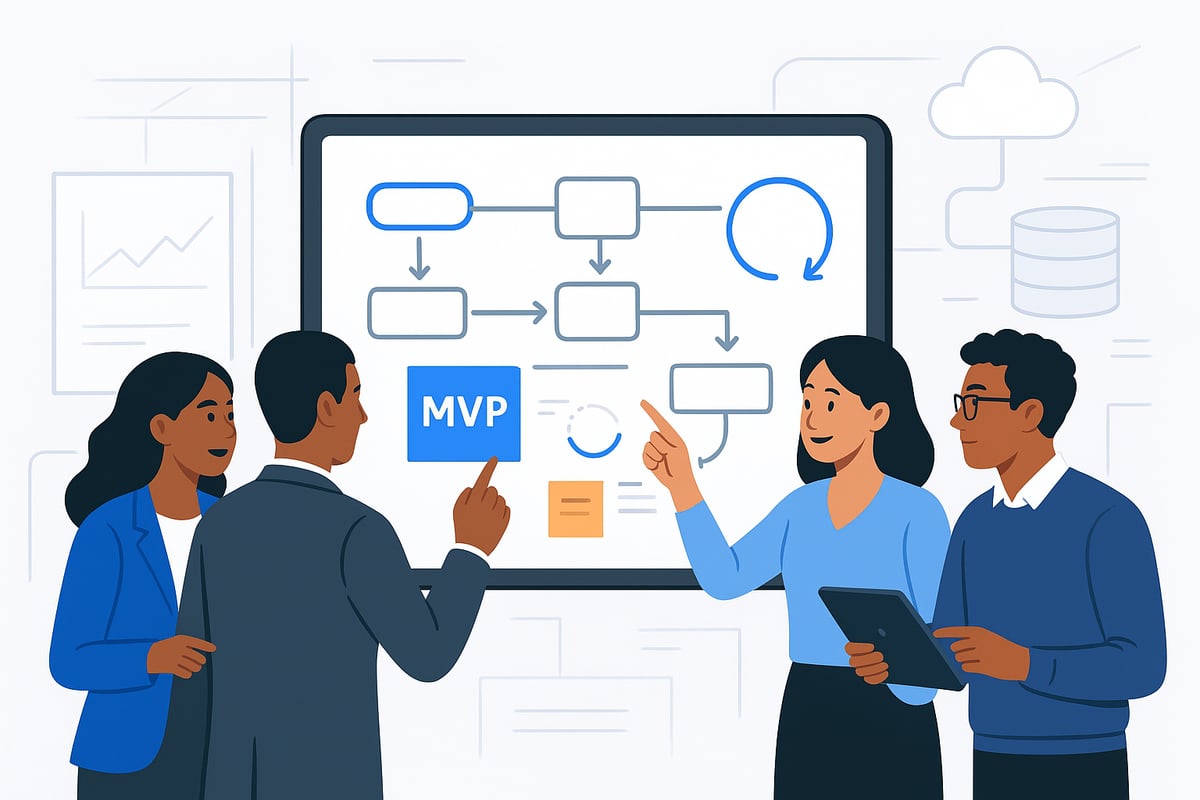
An MVP, or Minimum Viable Product, is the simplest version of a solution that delivers core value and collects feedback. In the mvp for enterprise workflows, this means building only the essential features needed to solve a workflow pain point while enabling rapid iteration.
Unlike startups, where MVPs often target new markets or products, enterprise MVPs focus on optimizing internal processes. They must account for large user bases, compliance, and integration with existing systems. Iterative development is key, allowing teams to test ideas quickly and refine solutions based on real user input.
For example, a Fortune 500 company piloted an HR onboarding workflow as an MVP. By focusing on just the critical steps, they cut onboarding time by 30 percent and gathered valuable insights for future improvements. Leveraging modern approaches, many organizations now use Building MVPs with no-code tools to accelerate this process, enabling rapid prototyping and easier stakeholder involvement.
Unique Challenges and Opportunities for Enterprises
Enterprises face unique hurdles when implementing the mvp for enterprise workflows. The complexity of legacy systems and the scale of operations make change difficult. Aligning stakeholders across departments is essential, as is ensuring compliance with regulations and protecting sensitive data.
Integration is another challenge. New MVPs must connect seamlessly with tools like ERP or CRM systems, often requiring careful planning. Data security is always top of mind, especially during prototyping and testing.
However, these challenges also present opportunities. Enterprises can drive cross-departmental innovation by piloting MVPs in one area and scaling success elsewhere. According to Gartner, 67 percent of digital transformation projects stall due to workflow complexity, highlighting the need for focused, iterative solutions. When done right, MVPs help break down silos and foster a culture of collaboration.
Benefits of MVPs for Enterprise Workflows
Deploying an mvp for enterprise workflows delivers measurable benefits. Teams see faster time to value, since only the most impactful features are built first. This speeds up process optimization and reduces wasted effort.
Cost savings are significant compared to full-scale rollouts. Early feedback from real users enables data-driven decisions, ensuring the final solution matches business needs. Change management becomes smoother, as users are involved early and see quick wins.
Consider a supply chain management team that launched an automation MVP. They identified repetitive approval steps and streamlined them, leading to immediate cost reductions and higher user satisfaction. By starting small, enterprises can prove value, build momentum, and scale success across other workflows.
Step-by-Step Guide: Building an MVP for Enterprise Workflows
Building an MVP for enterprise workflows is a strategic journey, not just a technical task. Each step shapes the foundation for agile transformation and operational excellence. Let’s break down the process into actionable stages, ensuring you move from idea to impact with clarity and confidence.
Step 1: Identify Workflow Pain Points and Objectives
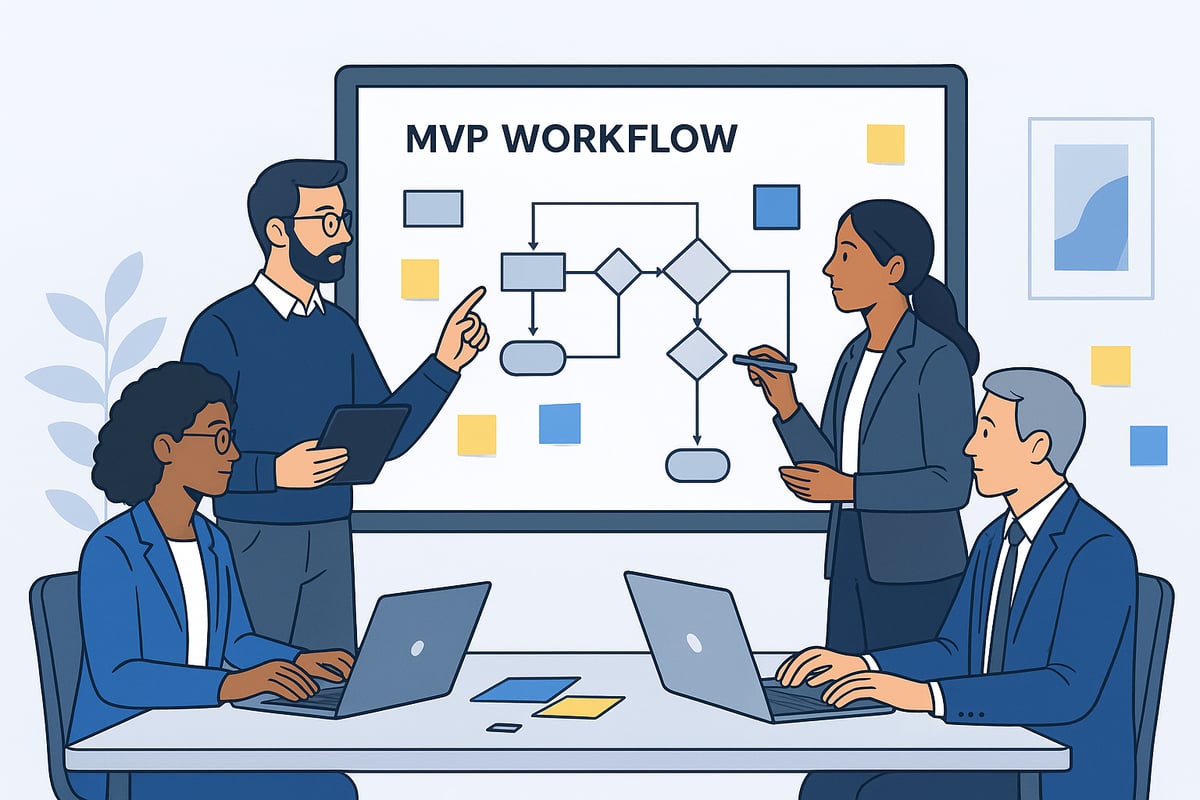
Begin your MVP for enterprise workflows journey by uncovering the real pain points within your organization’s processes. Map out current workflows using visual diagrams, conduct interviews with stakeholders from each department, and analyze performance data to pinpoint inefficiencies.
Prioritize workflows that are highly repetitive, error-prone, or bottlenecked. For example, in procurement, approvals often get delayed due to manual reviews and unclear responsibilities. By focusing on these high-impact areas, your MVP will deliver meaningful value from day one.
List of methods to identify pain points:
- Process mapping sessions
- Stakeholder interviews
- Data analysis of workflow metrics
Defining clear objectives at this stage ensures your MVP for enterprise workflows is laser-focused on solving the right problems.
Step 2: Define Success Metrics and MVP Scope
Once you’ve identified pain points, set measurable KPIs that will determine the MVP’s success. These might include reducing cycle times, minimizing errors, or achieving specific cost savings.
Draw a line between must-have and nice-to-have features. The MVP for enterprise workflows should include only the essentials needed to validate the solution and gather feedback, while aligning with business goals and compliance requirements.
Checklist for defining scope:
- Set quantifiable KPIs (e.g., 20% reduction in approval time)
- List critical features for launch
- Ensure compliance and risk alignment
By keeping the MVP for enterprise workflows tightly scoped, you maximize the chances of rapid, data-driven improvement.
Step 3: Assemble a Cross-Functional Team
A successful MVP for enterprise workflows requires a blend of expertise across business and technology. Assemble a team with representatives from product ownership, IT, operations, end users, and compliance. Executive sponsorship is crucial for removing roadblocks and championing the initiative.
Agile methodology helps keep the team flexible and responsive. For instance, a healthcare organization might bring together HR, IT, and compliance to develop an HR onboarding MVP, ensuring all perspectives are addressed.
Key roles to include:
- Product owner (vision and prioritization)
- IT lead (integration and security)
- Operations (process expertise)
- End users (feedback and adoption)
- Compliance (risk and governance)
This cross-functional mix ensures your MVP for enterprise workflows is both practical and scalable.
Step 4: Design, Prototype, and Validate
With your team in place, start visualizing solutions. Use wireframes and user flow diagrams to map out the MVP for enterprise workflows. Rapid prototyping tools let you quickly build interactive mockups for early feedback.
Invite pilot users from affected departments to test the prototype. Gather their input on usability and business impact, then iterate quickly. For example, a prototype for procurement approvals might reveal that users need clearer status indicators or simpler forms.
Validation checklist:
- Create wireframes and process diagrams
- Run usability tests with real users
- Iterate based on feedback
This iterative approach helps the MVP for enterprise workflows evolve into a solution users will actually embrace.
Step 5: Develop Using Modern Tools and Best Practices
Move from prototype to working MVP by leveraging platforms that accelerate development. Low-code and no-code tools, as well as AI-driven automation, are game changers for enterprises seeking speed and flexibility. Integrate the MVP for enterprise workflows seamlessly with existing systems like ERP and CRM, focusing on scalability, security, and compliance from the outset.
It’s worth exploring why so many companies now turn to no-code for enterprise tool development to rapidly build, test, and deploy workflow solutions.
Best practices for development:
- Use low-code/no-code platforms for faster iteration
- Ensure robust integration with core enterprise apps
- Prioritize security and compliance in every phase
By adopting these modern tools, your MVP for enterprise workflows can deliver value without lengthy development cycles.
Step 6: Launch, Measure, and Iterate
Deploy your MVP for enterprise workflows in a controlled environment, such as a single department or business unit. Collect data on the KPIs established earlier and actively solicit user feedback.
Monitor adoption rates, process improvements, and any unexpected issues. Use this information to refine the MVP further, releasing updates in phases rather than waiting for a “perfect” product.
Launch and measure steps:
- Pilot MVP in a limited scope
- Track performance against KPIs
- Gather continuous user feedback
Iterative launches ensure your MVP for enterprise workflows adapts quickly to real-world needs and delivers measurable value.
Step 7: Scale or Pivot Based on Insights
Review the data and feedback from your pilot. If the MVP for enterprise workflows meets its goals and gains user acceptance, develop a roadmap to scale it across additional departments or geographies.
If KPIs are not met, analyze the reasons and be prepared to pivot—perhaps by adjusting features, revisiting user requirements, or even targeting a different workflow entirely. For example, an HR onboarding MVP could expand to payroll or benefits once proven, or shift focus if initial results fall short.
Criteria for scaling or pivoting:
- Achieved or exceeded KPIs
- High user satisfaction and adoption
- Clear path for integration and expansion
A disciplined approach to scaling ensures the long-term success of your MVP for enterprise workflows, positioning your organization for continuous improvement and innovation.
Technology Stack for Enterprise MVPs in 2026
Selecting the right technology stack is critical to the success of any mvp for enterprise workflows. The tools and platforms you choose will shape how quickly your team can iterate, how well the solution integrates with existing systems, and whether your MVP can scale to meet future needs. In 2026, the landscape is evolving rapidly, with new trends and solutions emerging to address enterprise demands.
Core Technologies Powering Workflow MVPs
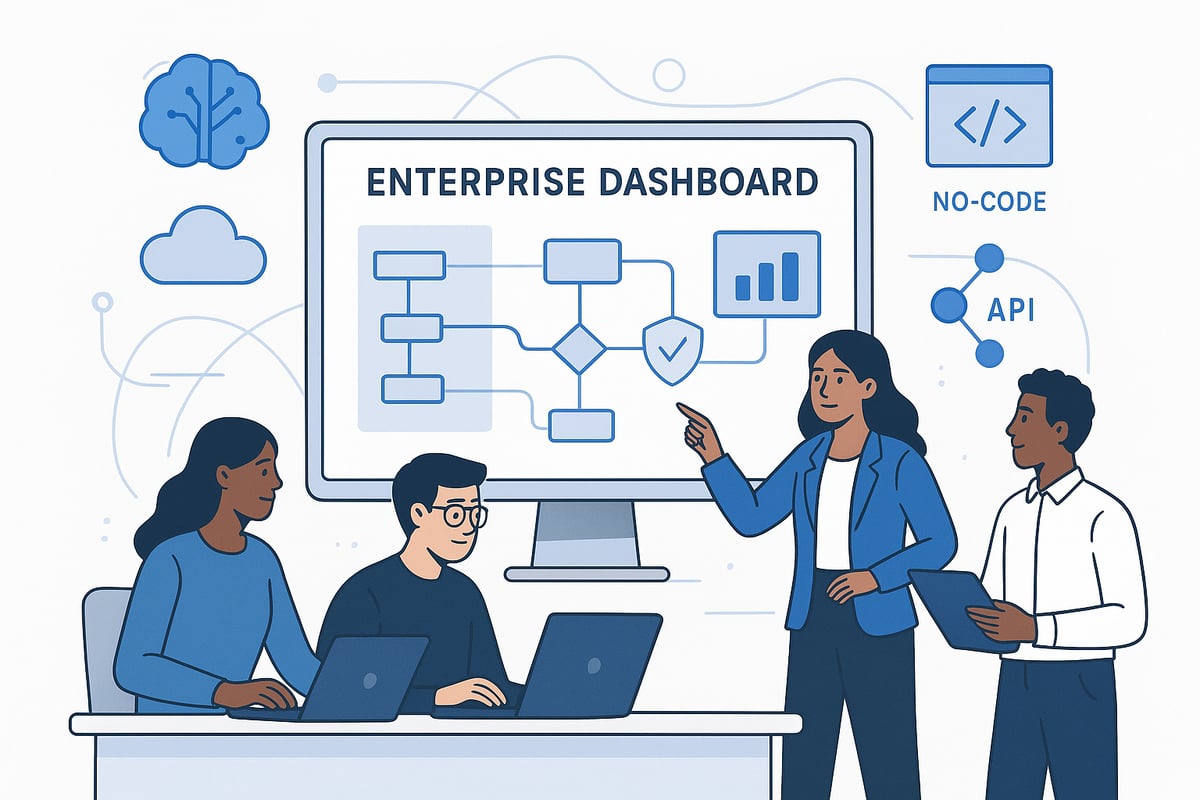
The backbone of any mvp for enterprise workflows is a robust technology stack that balances speed, flexibility, and security. In 2026, several core technologies stand out:
- Low-code/no-code platforms (e.g., Bubble, Mendix, OutSystems) empower non-developers to prototype and deploy solutions quickly. They reduce IT bottlenecks and accelerate innovation cycles. For a deeper look at their advantages, explore the top benefits of no-code in enterprises.
- AI-driven automation tools like intelligent document processing, robotic process automation (RPA), and machine learning analytics enable enterprises to automate repetitive tasks and uncover workflow insights.
- Cloud-native infrastructure ensures scalability, reliability, and security, making it possible to launch and grow MVPs without heavy upfront investments.
- API-first architectures allow seamless integration with existing ERP, CRM, and legacy systems, breaking down data silos and enhancing interoperability.
| Technology | Key Benefit | 2026 Example Use Case |
|---|---|---|
| Low-code/No-code | Rapid prototyping | HR onboarding automation |
| AI Automation | Intelligent task handling | Invoice processing |
| Cloud-native | Scalable deployment | Global supply chain workflows |
| API-first | Easy integration | Real-time data sync |
These technologies form the foundation for building an effective mvp for enterprise workflows, letting organizations rapidly respond to business needs.
Evaluating Tools and Platforms
Choosing the right tools for your mvp for enterprise workflows involves more than just picking the latest trend. Enterprises must weigh critical criteria:
- Security and compliance are non-negotiable, especially in regulated industries. Look for solutions with built-in encryption, access controls, and compliance certifications.
- Scalability is vital to ensure your MVP can grow from a pilot to an enterprise-wide deployment without major rework.
- Ease of use impacts adoption. Platforms should offer intuitive interfaces and strong support resources.
- Vendor lock-in and interoperability are key concerns. Open APIs and data portability features help prevent long-term limitations.
Here’s a quick checklist to guide your evaluation process:
- Does the platform align with enterprise compliance needs?
- Can it integrate with existing systems easily?
- Is there a risk of vendor lock-in?
- How quickly can teams iterate and get feedback?
- What support and community resources are available?
Selecting the right stack for your mvp for enterprise workflows not only boosts time to value but also reduces the risk of costly rework down the line. Pilot projects should stress-test these criteria before moving to a larger rollout.
Trends: AI, Automation, and Hyperautomation
As technology advances, the mvp for enterprise workflows is increasingly driven by AI, automation, and hyperautomation. Generative AI is transforming workflow design, making it possible to generate process maps, automate decision points, and optimize user experiences on the fly.
Hyperautomation is the next frontier. By combining RPA, AI, and process mining, enterprises can automate complex workflows end-to-end, uncover hidden inefficiencies, and adapt to market changes faster than ever. According to Forrester, 80% of enterprises plan to increase their investment in AI-powered workflow automation by 2026.
Emerging solutions are also democratizing workflow innovation. Business users can now launch and manage MVPs using intuitive, AI-enhanced tools, reducing the burden on IT and accelerating transformation. The mvp for enterprise workflows is no longer just a tech initiative—it’s a strategic lever for competitive advantage.
Overcoming Common Pitfalls in Enterprise MVP Development
Navigating the journey of building an MVP for enterprise workflows can be a minefield of challenges. Even the most innovative organizations face common pitfalls that can stall progress or undermine results. By proactively addressing these obstacles, you can turn your MVP for enterprise workflows into a launchpad for lasting transformation.
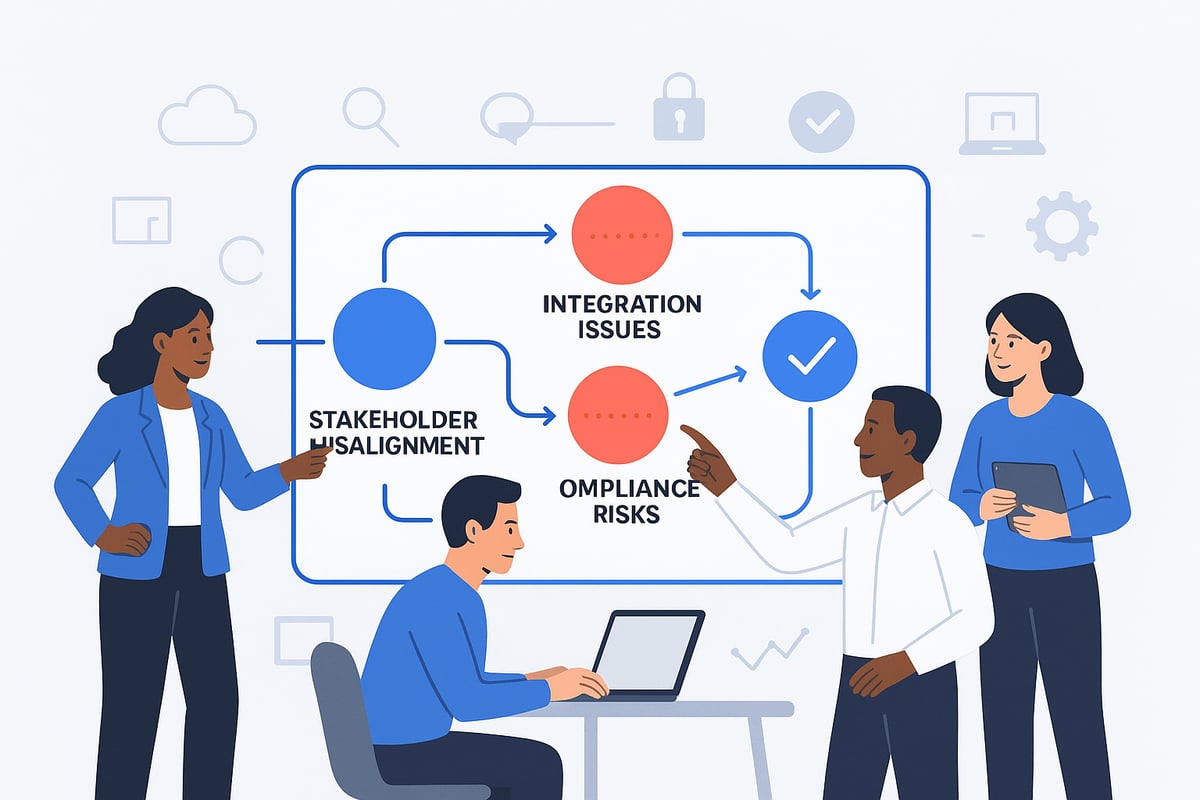
Stakeholder Misalignment and Change Resistance
One of the biggest hurdles in any MVP for enterprise workflows is getting everyone on the same page. With so many departments and interests involved, misalignment can creep in quickly. Early stakeholder engagement is essential. Start by mapping out all key players, from IT to compliance to end users.
Establish clear communication channels, and don’t underestimate the power of regular updates. Transparency builds trust, especially when changes impact daily work. Use workshops and feedback sessions to surface concerns and address resistance before it grows.
Change management is not a one-time effort. Keep reinforcing the purpose of your MVP for enterprise workflows, and spotlight quick wins to build momentum. By making stakeholders feel heard and valued, you lay a foundation for smoother adoption.
Technical Debt and Integration Issues
Many MVP for enterprise workflows stumble when legacy systems and technical debt are ignored. A patchwork of outdated platforms can make integration complex and frustrating. In fact, 45% of enterprise MVPs fail due to poor integration planning, according to McKinsey.
To avoid this, design your solution with modularity and future-proofing in mind. Choose tools and platforms that are proven to work well with your existing stack. For a deeper dive into best practices, check out these Enterprise application development strategies.
Document integration points early, and create a roadmap for phasing out technical debt over time. Testing is critical. Run pilot integrations before full rollout to catch issues before they spread. By prioritizing compatibility, your MVP for enterprise workflows can scale without costly rework.
Compliance, Security, and Data Privacy Challenges
Enterprises operate in a world of strict regulations and high stakes for data security. Embedding compliance into your MVP for enterprise workflows from day one protects your organization and builds user confidence. Consider regulations like GDPR, HIPAA, and SOX, depending on your industry.
Work closely with compliance and security teams during design and testing. Implement role-based access controls, encryption, and audit trails to safeguard sensitive data. When prototyping or running pilots, use anonymized data if possible.
Document every step to ensure traceability. Regularly review security protocols and update them as threats evolve. By treating compliance and security as core features, not afterthoughts, your MVP for enterprise workflows will be robust and trustworthy.
Measuring and Demonstrating Business Value
Proving the impact of your MVP for enterprise workflows is crucial for ongoing support and future investment. Define clear ROI metrics from the outset, such as time saved, error reduction, or cost savings. Use dashboards and transparent reporting to communicate progress.
Continuous feedback loops help refine the MVP for enterprise workflows and demonstrate responsiveness. For example, a process automation MVP may highlight tangible cost reductions within months, making it easier to secure buy-in for expansion.
Regularly share success stories and lessons learned across teams. By showing how your MVP for enterprise workflows delivers measurable value, you foster a culture of innovation and continuous improvement.
Real-World Case Studies: MVPs Transforming Enterprise Workflows
Enterprise transformation is not just theory—it comes alive through real-world examples. Here, we explore how organizations have leveraged mvp for enterprise workflows to drive tangible business results, accelerate digital adoption, and set new standards for operational excellence.
Digital Onboarding in Banking
A leading global bank faced long onboarding cycles that frustrated new clients and slowed revenue. By launching an mvp for enterprise workflows focused on digital onboarding, the bank replaced paper forms with a streamlined portal and automated compliance checks.
Within three months, onboarding time dropped by 50 percent. Early feedback from clients and compliance teams shaped rapid iterations. This mvp for enterprise workflows proved the value of pilot-driven transformation and showed how quick wins can build momentum for broader digital adoption.
Automated Procurement in Manufacturing
A multinational manufacturer struggled with slow procurement cycles and manual approvals. Leadership prioritized an mvp for enterprise workflows targeting procurement automation. The team mapped bottlenecks and built a lightweight platform integrating with their ERP and supplier network.
The result was a 40 percent reduction in procurement cycle times. Cross-functional collaboration and phased rollout ensured user buy-in and minimized disruption. This mvp for enterprise workflows provided measurable cost savings and set the stage for scaling automation across additional departments.
AI-Powered HR Workflows in Healthcare
In healthcare, HR processes are often complex and regulated. One major provider built an mvp for enterprise workflows to automate leave management, integrating AI for document verification and scheduling. The system reduced errors, improved employee satisfaction, and delivered actionable insights.
Inspired by advances in Generative Business Process AI Agents for ERP, the team ensured secure integration with legacy HRIS while maintaining data privacy. This mvp for enterprise workflows highlighted the importance of AI-driven innovation in highly regulated environments.
Lessons and Best Practices from Case Studies
Across all cases, several success factors emerged. Strong leadership buy-in, agile iteration, and robust metrics were essential. Teams that prioritized user feedback and compliance achieved higher adoption rates.
To avoid pitfalls like scope creep or inadequate testing, organizations must stay focused on business goals and continuous improvement. Emerging trends in AI workflow automation suggest that future mvp for enterprise workflows will rely even more on data-driven insights, hyperautomation, and cross-departmental collaboration for transformative results.
Future Trends: The Evolving Role of MVPs in Enterprise Workflows
The future of mvp for enterprise workflows is being shaped by rapid advances in technology, changing business priorities, and the demand for continuous innovation. As we approach 2026, enterprises are reimagining how MVPs drive agility, efficiency, and competitive advantage. Let us explore the trends that will define the next era of workflow transformation.
The Shift Toward Continuous Workflow Innovation
Mvp for enterprise workflows is no longer a one-time project, but an ongoing journey. Enterprises are embracing MVPs as tools for continuous improvement, allowing teams to test, learn, and adapt workflows in real time.
Instead of waiting for large-scale rollouts, organizations now deploy “micro-MVPs” to tackle incremental pain points. This shift supports rapid experimentation, reduces risk, and fosters a culture of agility. Teams can respond to market changes, regulatory updates, or internal feedback with speed and precision.
Continuous innovation keeps enterprise workflows relevant and efficient, ensuring that businesses remain ahead of disruption.
AI, Process Mining, and Predictive Analytics
Artificial intelligence is transforming the landscape for mvp for enterprise workflows. AI-driven tools now uncover hidden inefficiencies and recommend improvements through process mining and predictive analytics. By 2026, 70% of enterprises are expected to use process mining to inform workflow MVPs, according to IDC.
Generative AI is also making it easier to design, test, and optimize workflows, automating complex decision-making and reducing manual intervention. For organizations seeking to consolidate their AI capabilities, the move toward unified AI infrastructure in enterprises is streamlining MVP scalability and integration.
Predictive analytics empower teams to anticipate bottlenecks and adjust workflows proactively, creating a smarter, more resilient enterprise.
Democratization of MVP Development
The democratization of mvp for enterprise workflows is accelerating, thanks to no-code and AI-powered platforms. Business users, often called “citizen developers,” are now empowered to build and deploy workflow MVPs without deep technical expertise.
This shift reduces IT bottlenecks and accelerates innovation cycles. Teams in HR, finance, or operations can launch targeted MVPs that address their unique needs, driving faster adoption and higher satisfaction.
By enabling more people to participate in workflow transformation, enterprises unlock creativity, speed, and scalability at every level.
Evolving Best Practices for MVP Success
As the use of mvp for enterprise workflows matures, best practices are evolving. Organizations are focusing on ethical AI, responsible automation, and adaptive governance to ensure sustainable success.
Key best practices include:
- Embedding continuous user feedback into every iteration
- Maintaining transparent metrics and ROI tracking
- Preparing for shifting regulatory landscapes
- Prioritizing security and privacy from the outset
These evolving standards help enterprises maximize the long-term value of their MVP initiatives and avoid common pitfalls.
The Competitive Edge of MVP-Driven Enterprises
Enterprises that prioritize mvp for enterprise workflows gain a powerful competitive edge. They outpace rivals by embracing rapid innovation, building cultures of experimentation, and future-proofing operations.
Competitive advantages include:
- Faster response to market and customer demands
- Greater resilience to disruption or regulatory change
- Higher employee engagement through empowered teams
By making MVP-driven innovation a core competency, enterprises position themselves to lead in 2026 and beyond.
If you’re ready to put these strategies into action and actually see results, why not take the next step and launch your MVP faster than you thought possible? We’ve seen how no code and AI tools can dramatically speed up workflow innovation, helping you adapt quickly and stay ahead in 2026. You don’t have to wait months (or get stuck in endless planning cycles) to start transforming your enterprise processes. With the right guidance, you can deliver real value in just weeks. Curious how? Launch Your MVP in Weeks, Not Months

About Big House
Big House is committed to 1) developing robust internal tools for enterprises, and 2) crafting minimum viable products (MVPs) that help startups and entrepreneurs bring their visions to life.
If you'd like to explore how we can build technology for you, get in touch. We'd be excited to discuss what you have in mind.
Other Articles
Unlock creative coding in 2025 with our Rep Lit guide Explore AI no code tools real world examples and step by step tips to build and launch your own apps
Discover the top 7 AI apps iPhone users need in 2025 to boost productivity, creativity, and convenience Explore must have AI tools and tips for smarter workflows
Unlock success in 2026 with our MVP for enterprise workflows guide. Learn strategies, tools, real cases, and future trends to streamline and optimize operations.