
The world of startups is changing fast. Today, startup product development without engineers is not just possible, it is becoming the new normal.
Non-technical founders and lean teams now have access to powerful no-code and AI tools that put product creation within reach. This guide will walk you through proven strategies, step-by-step processes, and real startup examples to help you build, validate, and scale your idea.
Ready to turn your vision into reality, without writing a single line of code? Let’s dive in.
The 2026 Landscape: Why Startups Go Engineer-Free
The world of startup product development without engineers is rapidly transforming. In 2026, non-technical founders and lean teams have more power and options than ever before. The landscape is defined by accessible tools, faster timelines, and a new approach to building innovative products.
The Rise of No-Code and AI Platforms
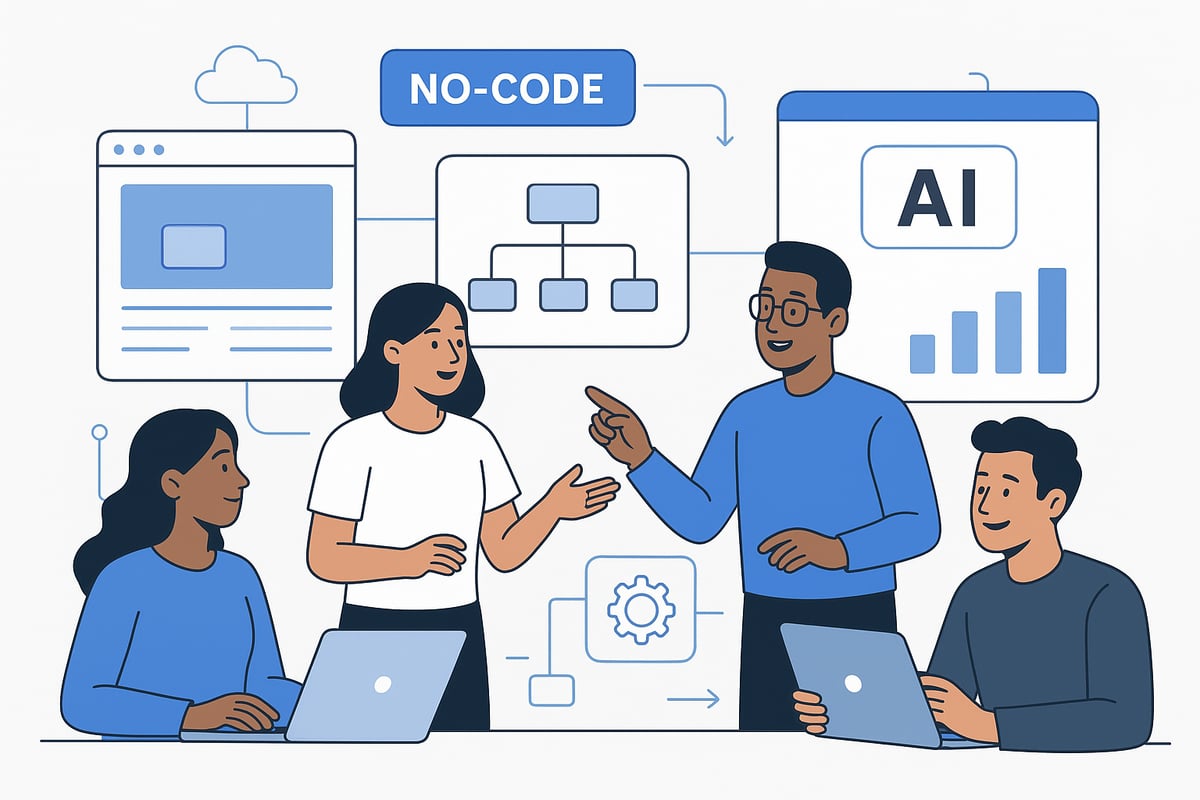
Over the past few years, no-code and AI platforms have exploded in popularity. This shift has made startup product development without engineers a realistic goal for many. Since 2020, tools like Zapier, Bubble, and Lovable AI have made building sophisticated digital products possible for anyone, regardless of coding experience.
According to Gartner forecasts 70% of new applications will use low-code/no-code by 2025, the adoption of these platforms is only accelerating. For non-technical founders, this means barriers are lower and the speed to market is higher. Startups can launch MVPs in weeks, not months, and save significantly on development costs.
Here’s a quick comparison:
| Approach | Time to MVP | Cost | Team Size Needed |
|---|---|---|---|
| Traditional Coding | 6-12 months | $50k-$250k | 4-8 engineers |
| No-Code / AI | 1-8 weeks | $2k-$20k | 1-3 founders |
By democratizing access, these platforms level the playing field. Anyone with a vision can test, iterate, and launch, even if they have no tech background. This new wave of startup product development without engineers also impacts funding, as investors now expect faster MVPs and more rapid market validation.
Common Challenges Without Engineers
Despite these advantages, startup product development without engineers comes with unique challenges. No-code and AI platforms have technical limitations, especially when it comes to advanced features like real-time data, complex automations, or custom logic.
Integrating cutting-edge AI or handling large-scale, real-time operations can stretch platform capabilities. Scalability and security are also concerns, especially if your product handles sensitive information. Founders must be aware of these boundaries and plan accordingly.
Investor perceptions may also be a hurdle. Some investors question the long-term viability of products built without engineers. Addressing these concerns means showing traction, understanding technical limits, and planning for scale.
Consider the case of a fintech startup that built its MVP on a no-code platform. The team quickly gained users but hit a wall when trying to add custom compliance features. They pivoted, using no-code for the front end and integrating custom APIs in the backend, showing how startup product development without engineers requires creativity and adaptability.
Step-by-Step Guide: Startup Product Development Without Engineers
Breaking into startup product development without engineers is more achievable than ever. With the right approach, you can go from an idea to a live product using intuitive tools and structured processes. Let’s walk through each step, ensuring you maximize your resources and move quickly.
Step 1: Ideation and Market Validation
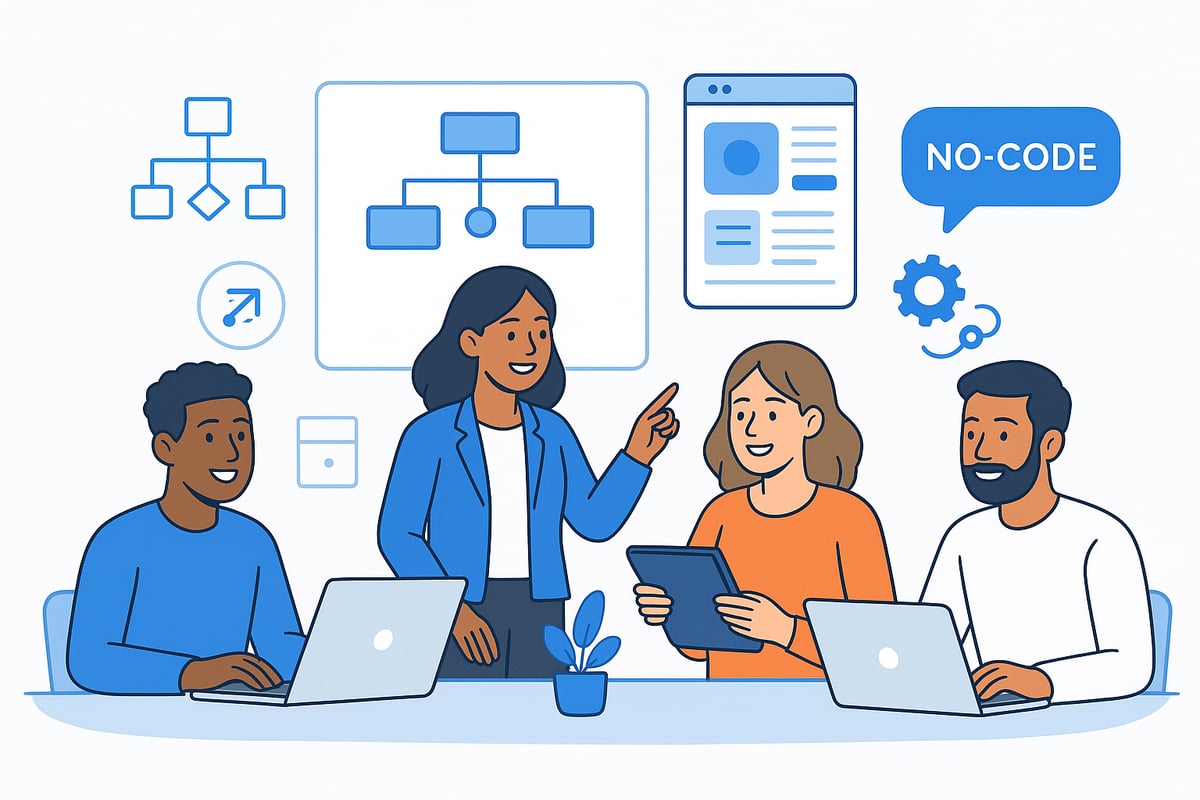
Every successful journey in startup product development without engineers starts with a strong idea and real market need. Begin by brainstorming problems you’re passionate about solving. Use mind mapping tools or simple whiteboards to generate ideas without worrying about technical feasibility yet.
Validate your concepts before investing time or money. Conduct quick customer interviews to gather insight into pain points. Launch surveys using Typeform or Google Forms to collect data from your target audience. Build a one-page landing site with Carrd to test demand and capture interest.
For example, a founder might launch a landing page describing their app idea, then run ads to measure sign-ups or email capture rates. This early feedback loop keeps your startup product development without engineers focused and resource-efficient.
- Interview 5-10 potential users
- Create a minimal landing page
- Measure conversion rates and survey responses
Step 2: Product Scoping and Feature Prioritization
Once you confirm demand, it’s time to define what to build. In startup product development without engineers, clarity is crucial. Write user stories from the customer’s perspective, like “As a user, I want to track my spending so I can save money.”
Map out your product’s flows using tools such as Miro or Whimsical. Limit your first build to features essential for solving the primary problem. Use prioritization frameworks like MoSCoW (Must have, Should have, Could have, Won’t have) or RICE (Reach, Impact, Confidence, Effort) to stay focused.
Here’s a simple prioritization table:
| Feature | Must Have | Should Have | Could Have |
|---|---|---|---|
| User signup | X | ||
| Dashboard | X | ||
| Notifications | X | ||
| Integrations | X |
This disciplined approach to startup product development without engineers helps avoid scope creep and ensures you deliver value fast.
Step 3: Choosing the Right No-Code and AI Tools
Selecting the right platforms is the backbone of startup product development without engineers. No-code tools have evolved dramatically, allowing you to build web apps, mobile apps, and even AI-powered features.
Compare options based on your needs:
| Platform | Best For | Learning Curve | Integrations | Cost |
|---|---|---|---|---|
| Bubble | SaaS, Web Apps | Moderate | High | $$ |
| Webflow | Websites, CMS | Low | Medium | $$ |
| Adalo | Mobile Apps | Low | Medium | $ |
| Lovable AI | AI Automation | Moderate | High | $$$ |
Match your must-have features to the platform’s strengths. For instance, if you need complex workflows, Bubble excels. For beautiful, responsive sites, Webflow is a winner. Many founders have used Bubble to launch SaaS MVPs, while Webflow powers content-rich platforms.
If you want a step-by-step breakdown for building and scaling MVPs, check out this How to Build Scalable MVPs with No-Code guide.
Step 4: Designing the User Experience
In startup product development without engineers, design matters as much as functionality. A great user experience keeps people engaged and coming back.
Start with wireframes in Figma or Canva to visualize your flows. Focus on intuitive navigation and clear onboarding. Use consistent colors, fonts, and button styles to create a professional feel.
Tips for non-designers:
- Keep layouts simple and uncluttered
- Use clear calls to action
- Test with real users for feedback
A founder recently improved their onboarding flow by switching from a multi-step form to a single, guided process, boosting completion rates. Small changes in UI can have a huge impact in startup product development without engineers.
Step 5: Building, Testing, and Iterating
Now it’s time to bring your product to life. Configure workflows and automations in your chosen no-code platform. Integrate tools like Zapier for connecting apps or automating repetitive tasks.
Test with a small group of users. Ask for honest feedback, and use analytics tools like Hotjar or PostHog to see how people interact with your product. Track bugs and iterate quickly, making updates without waiting for code deploys.
A typical workflow might look like this:
User submits form → Data saved in Airtable → Notification sent via email → Dashboard updates automatically
The beauty of startup product development without engineers is the speed of iteration. Launch, learn, and improve—all without writing code.
Expert Solutions: Overcoming No-Code Limitations
Building a startup product development without engineers is liberating, but it's not without hurdles. As no-code tools become more advanced, they still have boundaries that founders must navigate. Knowing when and how to overcome these limits is crucial for staying agile and competitive.
When No-Code Isn’t Enough
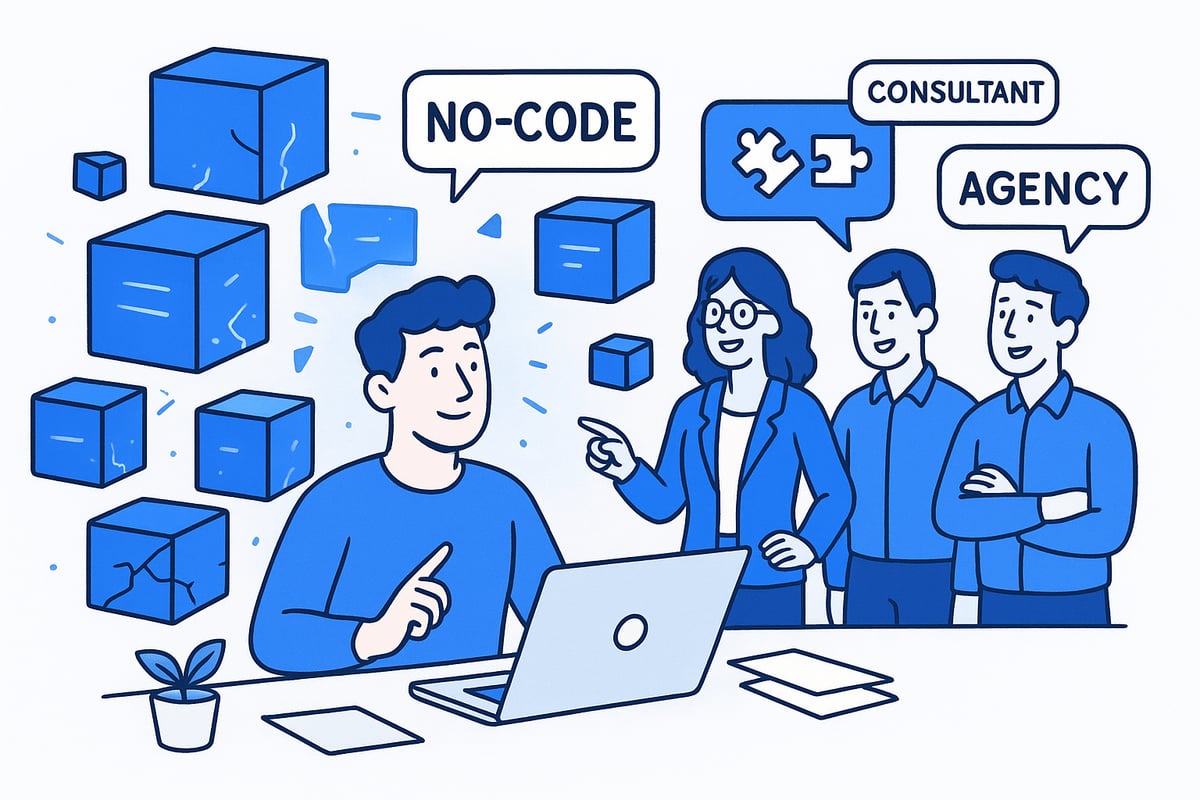
Even the best no-code platforms can’t do everything. As your startup product development without engineers progresses, you may notice technical ceilings—certain features or performance levels that just aren’t possible within your chosen tool. Maybe you need real-time data, advanced AI, or complex user permissions.
Common limitations include:
- Advanced integrations: Some platforms struggle with third-party APIs or custom logic.
- Performance bottlenecks: Large datasets or high user traffic can slow things down.
- Security and compliance: Handling sensitive data might require more granular controls.
- Unique features: If your idea demands something truly novel, built-in modules might fall short.
Workarounds often involve plugins, custom code snippets, or external automation. For example, you can enhance Bubble apps by integrating Stripe or connecting to custom APIs. Many founders also use tools like Zapier to bridge gaps between services.
A table can help clarify options:
| Challenge | Possible Solution |
|---|---|
| Real-time updates | Use third-party plugins |
| Custom AI functionality | Connect external APIs |
| Large data sets | Optimize workflows, cache |
| Security requirements | Use platform best practices |
For some limitations, hiring a technical consultant for targeted tasks makes sense. They can write small scripts, set up secure environments, or advise on compliance.
If you want a deeper dive into why no-code is redefining what's possible in startup product development without engineers, check out Why No-Code Development is the Future.
Working with No-Code Agencies and Partners
When your startup product development without engineers hits a wall, no-code agencies can help you break through. Agencies specialize in pushing platforms to their limits and often have access to advanced resources and talent pools.
Why partner with an agency?
- Speed: Agencies can accelerate your timeline, launching MVPs in weeks instead of months.
- Expertise: They know the quirks and hidden features of every no-code tool.
- Cost efficiency: Compared to hiring engineers, agencies offer predictable, often lower costs.
- Quality: Agencies provide refined UI, robust testing, and scalable architectures.
What should you expect? Clear communication, milestone-driven processes, and a focus on your business goals. You’ll collaborate on product scoping, UI/UX, integrations, and testing. Many agencies offer flexible pricing models, from fixed-fee to ongoing support.
A cost-benefit analysis is simple: agencies handle the heavy lifting, letting you focus on growth and customer feedback. This approach keeps your startup product development without engineers lean and adaptable for the long term.
Real-World Startup Success Stories Without Engineers
The landscape of startup product development without engineers has shifted dramatically in recent years, producing a wave of inspiring stories. Founders are launching and scaling products on their own, using no-code and AI tools to compete with larger, more technical teams. These real-world examples prove that with the right approach, anyone can bring an idea to life, regardless of technical background.
Case Study: SaaS Startup Built on Bubble
Meet Maya, a non-technical founder who wanted to solve a pain point in remote team management. She dove into startup product development without engineers, leveraging Bubble to build her SaaS MVP.
Her journey included:
- Defining her core features and user flows with mind maps
- Validating demand through a simple landing page and early signups
- Building the initial product in just six weeks using Bubble’s visual editor
Key milestones:
- Over 500 users acquired in the first quarter
- Positive feedback on UI and onboarding process
- Fast iteration cycles based on user analytics
Challenges arose as she scaled, such as handling large datasets and integrating advanced analytics. Maya overcame these by exploring Bubble plugins and external APIs. Her story is just one of many featured in No-Code Startups Success Stories, where founders share their paths to market using startup product development without engineers.
Case Study: Marketplace Launched with Webflow and Zapier
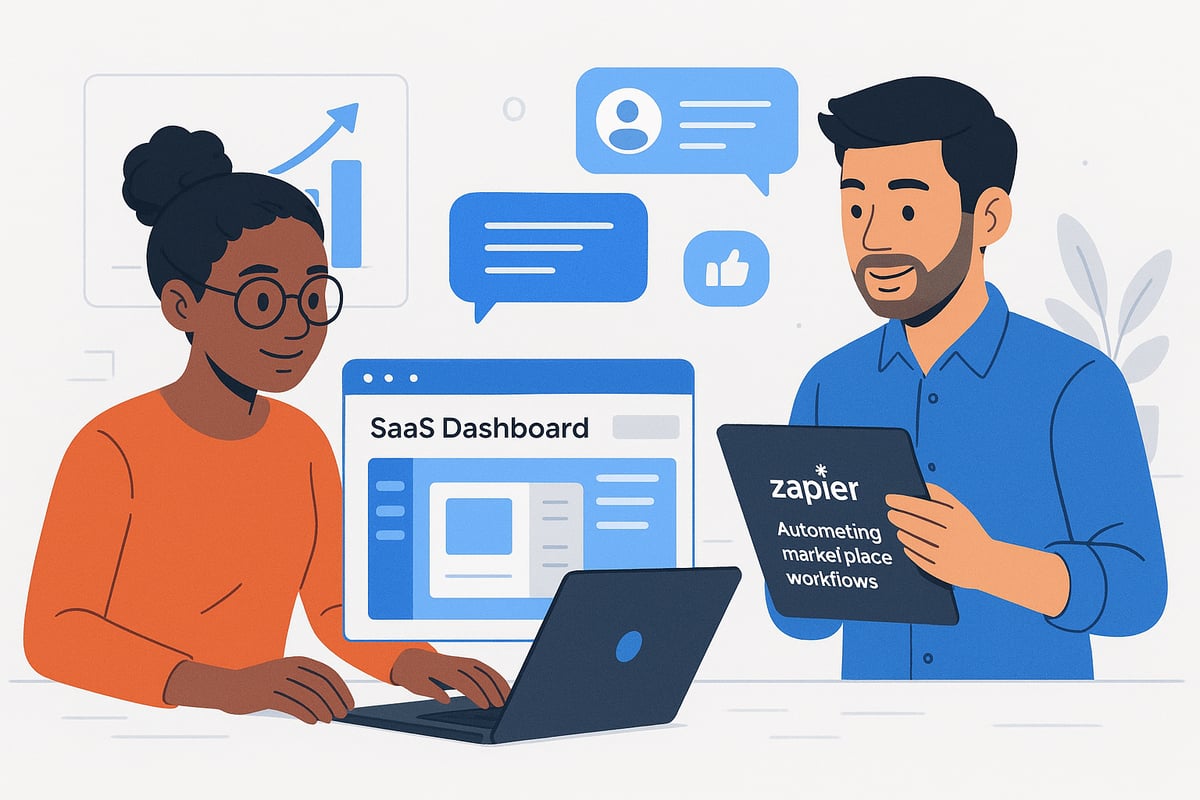
Another standout example involves a two-person team launching a niche marketplace. Lacking engineering skills, they turned to startup product development without engineers by combining Webflow for the front end and Zapier for backend automation.
Their step-by-step process included:
- Designing a polished marketplace site in Webflow
- Connecting forms and payments through Zapier automations
- Onboarding first users via targeted social media campaigns
Automations powered everything from order notifications to database updates, letting the founders focus on growth instead of code. They learned to work within platform limits, occasionally needing to simplify complex workflows. For more inspiration, check out Comet's success with no-code development, which highlights similar journeys in startup product development without engineers.
Lessons from Failed Attempts
Not every attempt at startup product development without engineers is a success. Common pitfalls include:
- Over-scoping features and underestimating platform constraints
- Neglecting early user feedback
- Relying on tools that could not scale as user numbers grew
These lessons have shaped best practices for new founders. Prioritizing a focused MVP, validating with real users, and planning for future technical needs are now standard advice. By learning from these stories, aspiring founders can avoid common traps and make the most of startup product development without engineers.
Scaling, Funding, and Growing Your Product Without Engineers
The world of startup product development without engineers is rapidly expanding in 2026. No-code and AI platforms have matured, empowering founders to scale products to impressive heights. Startups can now focus on growth, fundraising, and long-term success, all without a traditional engineering team.
Scaling No-Code Products: What’s Possible in 2026?
In 2026, scaling a product built without engineers is not just possible, it is increasingly common. No-code platforms like Bubble, Webflow, and Lovable AI have significantly improved their scalability, offering better integrations, performance, and even enterprise-level features.
According to Gartner's forecast on low-code development technologies in 2026, the adoption of these tools will continue to rise, making startup product development without engineers even more accessible. Many platforms now support hybrid approaches, letting founders combine no-code with microservices or APIs for complex needs.
Consider a SaaS startup that scaled from MVP to over 100,000 users, relying solely on a no-code stack. This was unthinkable five years ago, but today, founders can iterate rapidly, test new features with real users, and pivot quickly. The key is to monitor platform constraints and plan for a possible transition to custom code if your growth outpaces current capabilities.
Fundraising and Investor Perceptions
Securing funding for startup product development without engineers is easier in 2026 than ever before. Investors are becoming more comfortable with no-code products as they see real traction and revenue growth from these startups.
Still, some investors may raise concerns about scalability, intellectual property, and defensibility. To address these, highlight your product's growth metrics, user feedback, and the flexibility of your chosen no-code stack. When pitching, focus on your ability to move fast, test ideas, and keep burn rates low.
Table: Key Talking Points for Investors
| Concern | How to Address |
|---|---|
| Scalability | Show platform improvements, user growth stats |
| IP/Defensibility | Highlight custom workflows, unique logic |
| Speed of Execution | Emphasize rapid iteration, low overhead |
| Future Transition | Explain hybrid/code migration options |
Several no-code startups have successfully raised significant funding by demonstrating strong market validation, user traction, and a clear vision for scaling beyond MVP.
Building a Team Without Engineers
Building a strong team is critical for startup product development without engineers. Instead of hiring traditional developers, focus on roles like product managers, UI/UX designers, growth hackers, and no-code specialists.
Tap into the growing community of no-code talent. Platforms and forums make it easier to find experienced builders, while training resources help upskill non-technical team members. Consider leveraging insights from How No-Code Empowers Non-Technical Teams to structure your hiring strategy and develop a collaborative, agile team.
List: Key Roles in a No-Code Startup
- Product Manager
- No-Code Builder
- UI/UX Designer
- Growth Marketer
Cross-functional teams can collaborate closely, rapidly iterate, and respond to feedback, all while minimizing dependencies on traditional engineering.
Ensuring Long-Term Product Success
The final piece of startup product development without engineers is ensuring your product thrives long-term. Build continuous user feedback loops to inform updates and new features. Schedule regular maintenance to address bugs, security, and platform changes.
Stay informed about market trends and evolving no-code capabilities. Upskill your team as platforms introduce new features. Planning for ongoing support and improvements will keep your product competitive and resilient.
The future of startup product development without engineers is bright. By focusing on scalability, funding, team building, and continuous improvement, founders can achieve sustainable growth and lasting impact.
After seeing how startups in 2026 are building real products without hiring engineers, you might be wondering how quickly you can turn your own idea into something real. The guide showed that with no code and AI, you don’t have to wait months or blow your budget—there’s a faster, smarter way to launch. If you’re ready to move from research to action and want to see your MVP live much sooner than you thought possible, check out how you can Launch Your MVP in Weeks, Not Months.

About Big House
Big House is committed to 1) developing robust internal tools for enterprises, and 2) crafting minimum viable products (MVPs) that help startups and entrepreneurs bring their visions to life.
If you'd like to explore how we can build technology for you, get in touch. We'd be excited to discuss what you have in mind.
Other Articles
Discover the best AI tools for rapid MVP building. Learn how no-code platforms and AI accelerate product development for startups and enterprises.
Discover the 7 best AI design graphic tools for 2025 that streamline workflows, boost creativity, and deliver professional results for any project or business.
Discover the vibe coding meaning and how this AI-driven development approach is transforming software creation for enterprises and startups in 2026.