
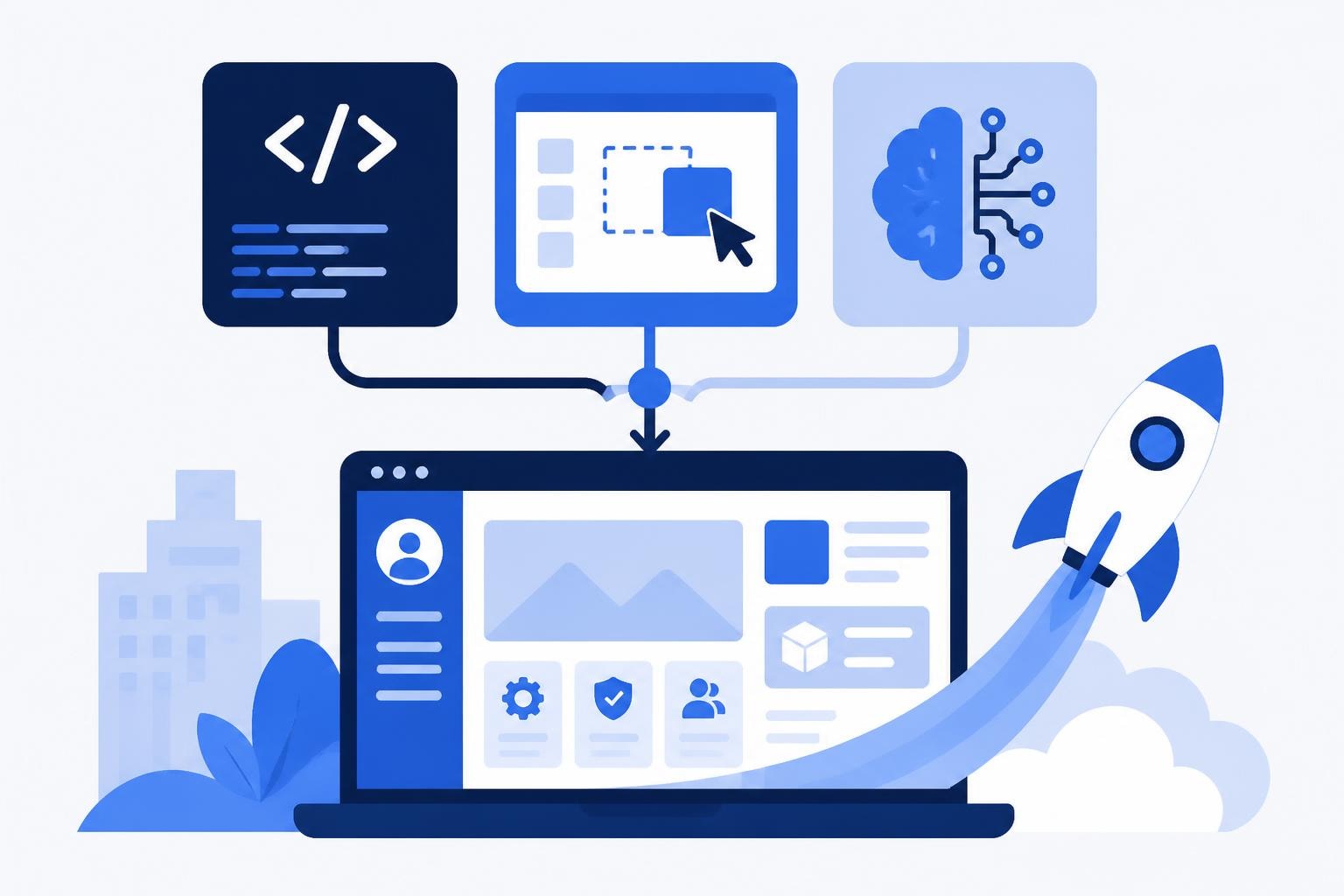
Choosing the right app dev company can make or break your digital product vision. In 2026, the application development landscape has evolved dramatically, with AI-powered tools and no-code platforms reshaping how businesses bring ideas to market. Whether you're a startup founder launching your first MVP or an enterprise leader modernizing internal systems, understanding what separates exceptional development partners from mediocre ones is critical to your success. The right partner doesn't just write code-they translate business objectives into scalable, user-friendly solutions that drive measurable results.
The Changing Face of Application Development
The traditional app dev company model has transformed significantly over the past few years. Gone are the days when every project required six months of custom coding and a team of 10+ developers. Modern development agencies now leverage AI-powered no-code development tools to accelerate timelines while maintaining quality standards.
This shift reflects broader industry trends:
- Visual development platforms reducing code-by-hand requirements by 70-80%
- AI-assisted coding tools suggesting optimized solutions in real-time
- Increased focus on rapid prototyping and iterative deployment
- Greater emphasis on business logic over technical implementation
According to recent insights on application development trends, machine learning and artificial intelligence have become integral to how development teams work, not just what they build. This transformation means businesses can now achieve results in weeks that previously took months.
Speed Without Sacrificing Quality
The velocity advantage isn't just about faster delivery. When an app dev company uses modern platforms effectively, they can iterate based on user feedback much more rapidly. This creates a feedback loop that improves product-market fit while traditional development teams are still in their first build phase.
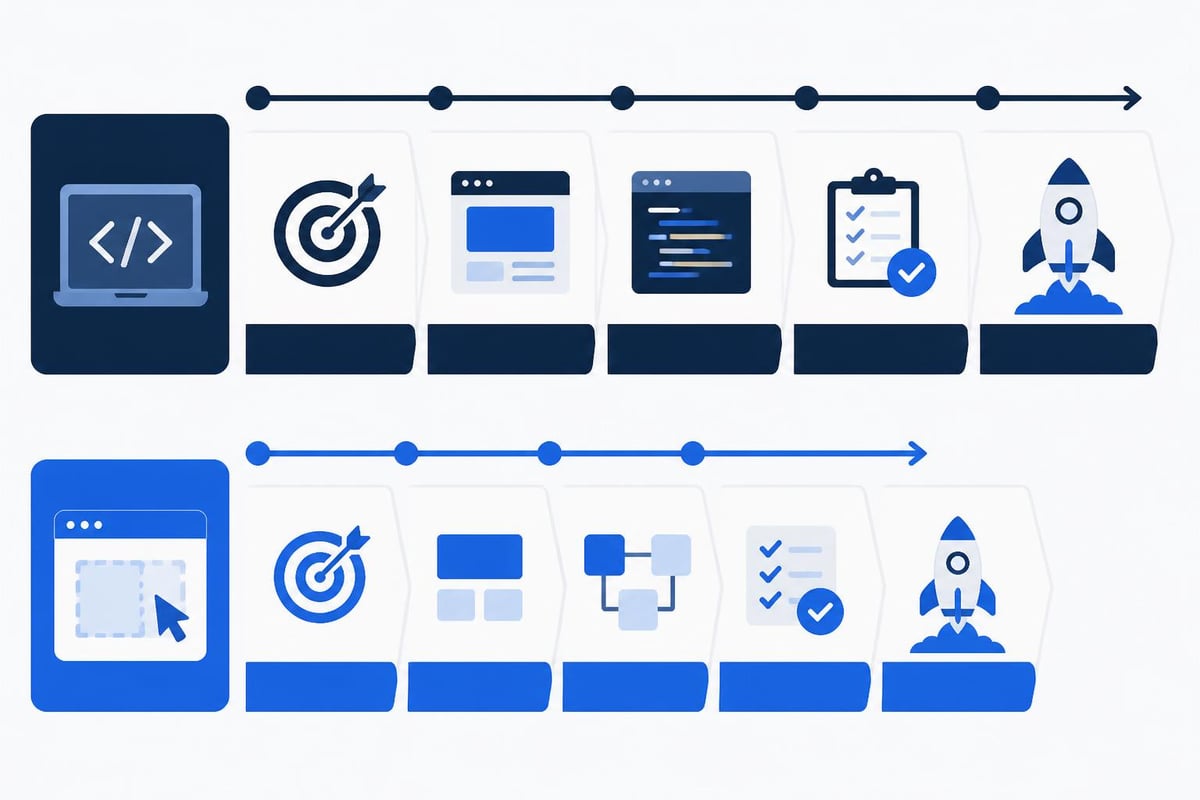
Consider a typical enterprise dashboard project. A conventional approach might involve:
- Two weeks of requirements gathering
- Two weeks of technical architecture planning
- Eight weeks of backend and frontend development
- Two weeks of integration testing
- One week of deployment preparation
Compare this to a no-code approach where building internal dashboards can compress the same scope into 4-6 weeks total, with continuous testing throughout.
Essential Capabilities Every App Dev Company Should Offer
Not all development partners bring the same value proposition to the table. Understanding what capabilities matter most helps you evaluate potential partners effectively.
Technical Expertise Across Platforms
The best app dev company teams maintain proficiency in multiple technologies rather than specializing too narrowly. This flexibility allows them to recommend the optimal solution for your specific use case rather than forcing every project into their preferred stack.
| Capability | Traditional Approach | Modern No-Code/AI Approach |
|---|---|---|
| Initial prototype | 4-6 weeks | 1-2 weeks |
| User authentication | Custom build | Pre-built secure modules |
| Database design | Manual schema creation | Visual data modeling |
| API integrations | Hand-coded for each service | Plugin marketplace |
| Mobile responsiveness | Separate mobile development | Automatic responsive design |
Key technical areas include:
- Database architecture and data modeling
- API integration and third-party service connectivity
- User interface and experience design
- Security implementation and compliance management
- Performance optimization and scalability planning
Agencies like Creator Concepts have demonstrated how specialized no-code expertise can deliver award-winning MVPs for startups, proving that platform proficiency matters as much as traditional coding skills.
Business Process Understanding
Technical skills alone don't make a great partner. An exceptional app dev company invests time understanding your business model, industry constraints, and competitive landscape. This contextual knowledge informs every design decision and feature prioritization.
When evaluating development agencies, look for those who ask probing questions about your target users, revenue model, and success metrics. The guide to application development from SAP emphasizes starting with clear requirements, which requires developers who understand business objectives deeply.
The No-Code Revolution in Enterprise Development
Traditional perceptions dismissed no-code platforms as toys for simple projects. That narrative has completely shifted in 2026. Fortune 500 companies now regularly deploy mission-critical applications built on visual development platforms, recognizing the strategic advantages they offer.
Why Enterprises Are Embracing No-Code Solutions
Cost efficiency represents just one factor. More importantly, no-code platforms enable business units to maintain and modify applications without constant IT department involvement. This democratization of development accelerates innovation while reducing technical debt.
The evidence is compelling. Organizations are turning to no-code for internal tool development because it addresses persistent challenges:
- Reducing the backlog of IT requests that can stretch years
- Enabling faster response to changing market conditions
- Lowering total cost of ownership across application lifecycles
- Improving alignment between business needs and technical solutions
An app dev company that understands how to leverage platforms like Bubble or Lovable can deliver enterprise-grade solutions at a fraction of traditional costs. This isn't about cutting corners-it's about working smarter by standing on the shoulders of powerful platforms rather than reinventing every component.
Security and Compliance Considerations
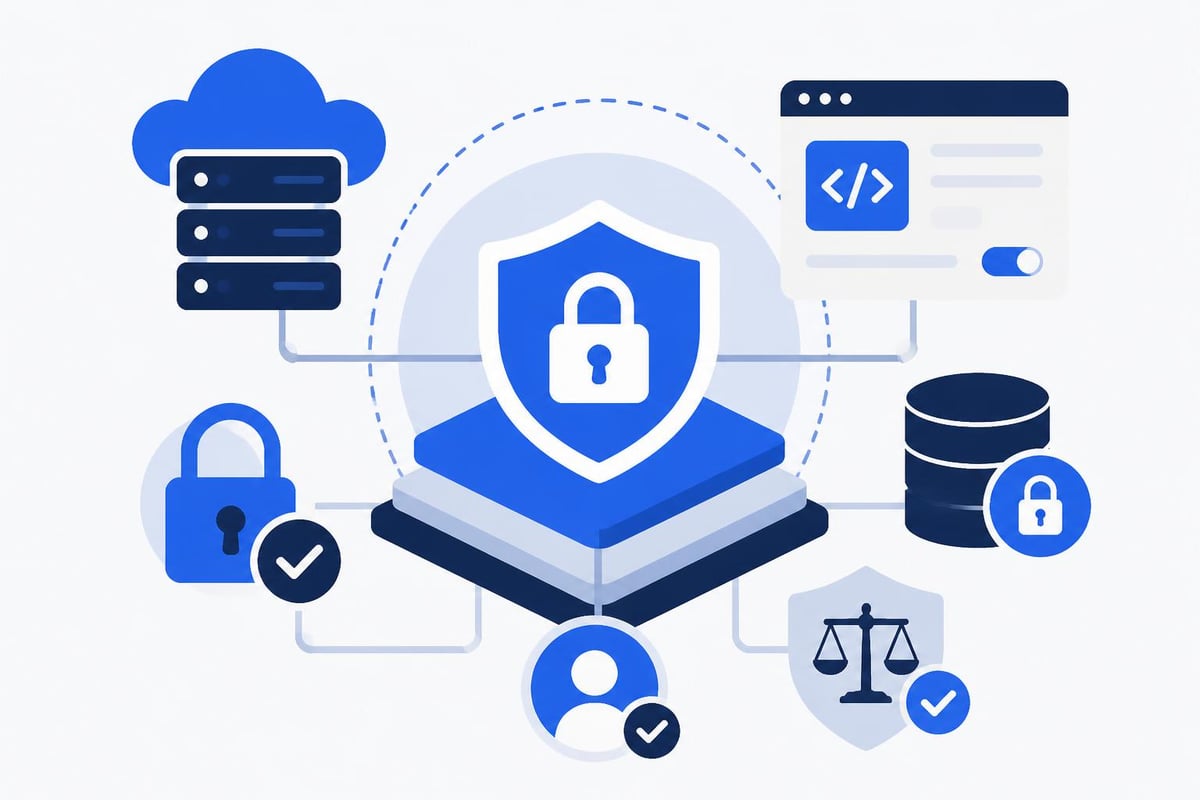
Concerns about security and compliance are valid, but modern no-code platforms have matured significantly. Research on mobile application security practices shows that platform-based development can actually improve security postures when platforms handle authentication, encryption, and infrastructure security as built-in features.
The key is partnering with an app dev company that understands how to properly configure these platforms and implement additional security layers where needed for your specific compliance requirements.
MVP Development: Testing Ideas Without Betting the Farm
One of the most valuable services an app dev company can provide is rapid MVP development. The ability to test market assumptions with real users before committing to full-scale development has become a competitive necessity.
Strategic Approach to Minimum Viable Products
Building an effective MVP requires balancing three competing priorities: speed to market, feature completeness, and user experience quality. Too many teams optimize for just one, creating products that launch quickly but fail to gain traction, or that include every conceivable feature but miss their market window.
The most effective MVP strategies follow these principles:
- Identify the single core value proposition that must work perfectly
- Include only features that directly support testing that core hypothesis
- Design for the end vision but build incrementally
- Plan for instrumentation and analytics from day one
- Build on platforms that support rapid iteration post-launch
When you're ready to build an MVP with no-code approaches, you gain the flexibility to pivot based on market feedback without rewriting your entire codebase. This adaptability proves invaluable during the crucial early stages when you're still discovering product-market fit.
Budget-Conscious Development Without Compromising Vision
Startup founders often face impossible choices between building something great and building something they can afford. Modern development approaches, particularly those utilizing low-cost MVP development tools, have largely eliminated this false dichotomy.
An experienced app dev company can scope projects in phases, delivering a functional core product within budget constraints while maintaining a roadmap for future enhancement. This phased approach prevents the common trap of running out of funding before reaching a launchable product.
Evaluating Potential Development Partners
With hundreds of agencies claiming expertise, how do you identify the right fit? The selection process requires looking beyond marketing claims to understand actual capabilities and working style.
Portfolio and Past Performance
Review completed projects carefully, but don't just admire the screenshots. Dig deeper into the complexity of the problems solved, the scale of the applications built, and the business outcomes achieved. An app dev company with a strong track record will gladly share case studies that include metrics and lessons learned.
Questions to ask about portfolio projects:
- What was the initial timeline and budget, and what were the final figures?
- How is the application performing today, months or years after launch?
- What challenges arose during development and how were they resolved?
- Can you speak with the client directly about their experience?
The insights from experts on choosing the right app development company emphasize verifying claims through reference conversations and detailed portfolio examination.
Development Methodology and Communication Style
Process matters enormously in software development. An app dev company might be technically brilliant but still fail to deliver if their project management approach doesn't align with your needs and expectations.
| Methodology Aspect | What to Look For | Red Flags |
|---|---|---|
| Sprint planning | Regular cadence with clear deliverables | Vague timelines or undefined milestones |
| Communication | Multiple channels, daily/weekly updates | Radio silence between milestone meetings |
| Stakeholder involvement | Structured feedback loops, demo sessions | "We'll show you when it's done" attitude |
| Change management | Clear process for handling scope adjustments | Resistance to any modifications |
| Testing approach | Continuous testing, automated where possible | Testing only at the end of development |
Understanding mobile app development trends and challenges helps you ask informed questions about how potential partners adapt to evolving best practices and emerging technologies.
AI Integration: The New Development Frontier
Artificial intelligence has moved from experimental feature to expected capability. Any forward-thinking app dev company now incorporates AI across multiple dimensions of their work-from the tools they use internally to the intelligent features they build into client applications.
AI-Assisted Development Tools
The development process itself has been transformed by AI. Code completion tools, automated testing frameworks, and intelligent debugging assistants enable developers to work faster and produce higher-quality code. Insights on developers evolving into business enablers highlight how these tools free developers to focus on strategic problem-solving rather than routine implementation tasks.
Modern AI development capabilities include:
- Natural language to code generation for rapid prototyping
- Automated code review and optimization suggestions
- Predictive analytics for identifying potential bugs before deployment
- Intelligent testing that generates comprehensive test cases automatically
When evaluating an app dev company, ask about their use of AI tools in their development workflow. Agencies that leverage these technologies deliver faster while maintaining quality standards.
Building AI-Powered Features Into Applications
Beyond internal tools, the most valuable AI integration happens in the applications themselves. From recommendation engines to predictive analytics, conversational interfaces to automated workflows, AI features create competitive differentiation and enhance user experiences.
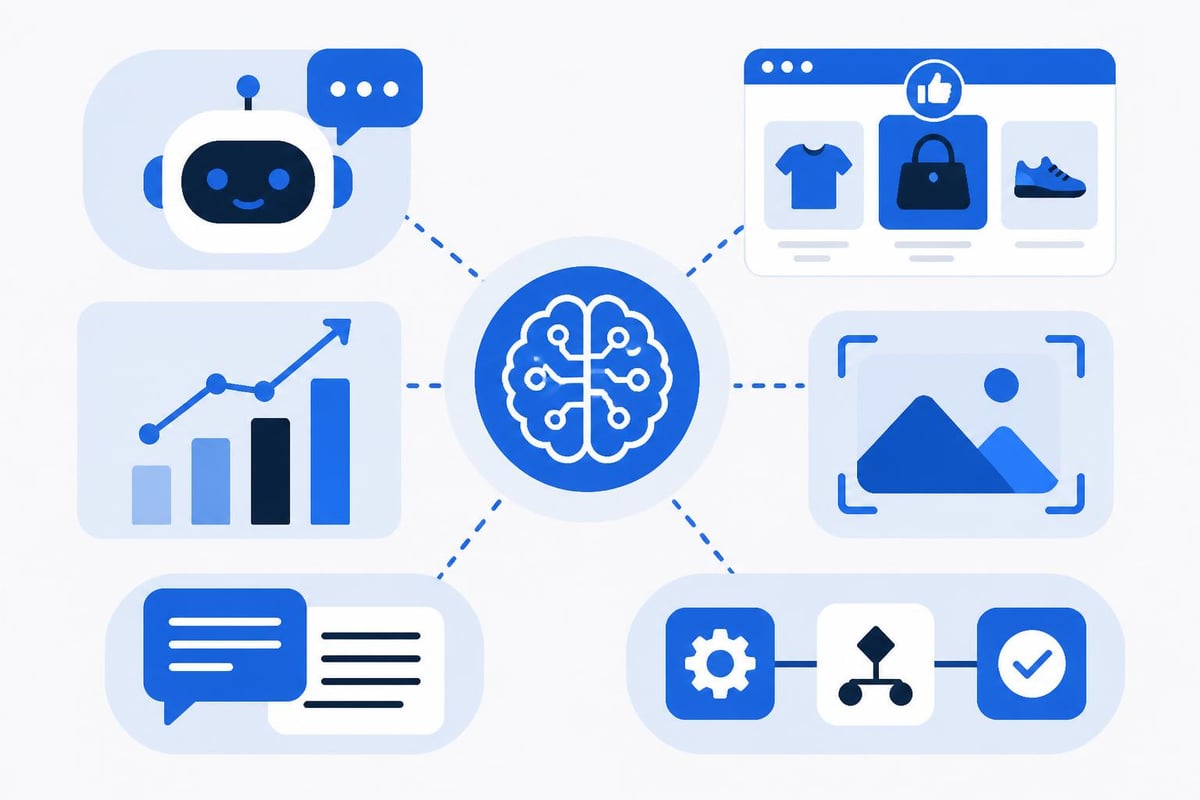
The challenge isn't accessing AI technology-cloud APIs make powerful models available to any developer. The expertise lies in identifying which AI capabilities create genuine value for your specific use case and implementing them in ways users find intuitive and helpful.
Cost Structures and Pricing Models
Understanding how an app dev company structures pricing helps you budget appropriately and avoid surprises. Different engagement models suit different project types and organizational preferences.
Fixed-Price Projects Versus Time and Materials
Fixed-price contracts offer budget certainty but require extremely detailed upfront specifications. Any scope changes trigger change orders that often cost more than if you'd started with a flexible arrangement. This model works well for clearly defined projects with minimal expected variation.
Time and materials arrangements provide flexibility to adjust priorities as you learn from user feedback and market response. You pay for actual hours worked, which aligns incentives around efficiency while allowing organic evolution of requirements. This approach suits innovative projects where discovery is part of the process.
Hybrid models combine elements of both:
- Fixed price for a defined MVP with time-and-materials for post-launch iterations
- Monthly retainer for ongoing development capacity
- Milestone-based payments with scope flexibility within each phase
Transparency matters more than the specific model chosen. An ethical app dev company clearly explains their pricing structure, what's included, and what triggers additional costs.
Hidden Costs to Watch For
Beyond the obvious development fees, several expenses can surprise clients unfamiliar with the full application lifecycle:
- Third-party service subscriptions (authentication, payment processing, analytics)
- Hosting and infrastructure costs (servers, databases, CDN services)
- Maintenance and updates post-launch
- App store fees for mobile applications
- SSL certificates, domain names, and other technical necessities
The best development partners provide comprehensive cost projections that account for these ongoing expenses, not just the initial build.
Platform Selection: Matching Technology to Requirements
An experienced app dev company helps you navigate the overwhelming array of development platforms and frameworks available in 2026. The right choice depends on your specific requirements, timeline, budget, and team capabilities.
Evaluating No-Code Platforms for Your Project
Not every no-code platform suits every project type. Bubble excels at complex web applications with sophisticated database relationships and business logic. Other platforms specialize in mobile apps, e-commerce, or specific industry verticals. Reviews of mobile app development software provide useful comparisons of capabilities and limitations.
Key evaluation criteria include:
- Scalability limits and performance at volume
- Available integrations with your existing systems
- Customization flexibility for unique requirements
- Learning curve for your team if you'll maintain it internally
- Platform vendor stability and long-term viability
Working with specialists like Bubble development agencies ensures you maximize platform capabilities rather than fighting against limitations or missing powerful built-in features.
When Custom Development Still Makes Sense
No-code platforms handle 80% of business applications beautifully. The remaining 20% genuinely require custom development-perhaps due to extreme performance requirements, highly specialized algorithms, or integration constraints. An honest app dev company will tell you when you're in that 20% rather than forcing a platform solution where it doesn't fit.
Sometimes a hybrid approach delivers the best results: no-code for the user-facing application and rapid iteration, with custom microservices handling specialized processing or integrations.
The Importance of Post-Launch Support
Application development doesn't end at launch. In fact, many argue that's when the real work begins. User feedback reveals opportunities for improvement, traffic patterns expose performance bottlenecks, and business growth demands new features.
Maintenance and Iteration Strategies
An app dev company's commitment extends beyond delivery. The best partners offer structured support packages that keep applications running smoothly while enabling continuous enhancement based on actual usage data.
Effective post-launch support includes:
- Monitoring and alerting for performance issues or downtime
- Regular security updates and patches
- Bug fixes and minor adjustments
- Feature additions based on user feedback
- Scaling infrastructure to match growth
Planning for iteration from day one changes how you approach initial development. Features can launch simpler knowing you'll enhance them based on real user behavior rather than assumptions.
Analytics and Data-Driven Improvement
Modern applications generate enormous amounts of behavioral data. An app dev company that understands analytics implementation ensures you can actually learn from this data rather than drowning in metrics that don't inform decisions.
The key is instrumenting applications to answer specific business questions: Which features drive retention? Where do users get stuck? What paths lead to conversion? These insights guide intelligent iteration that systematically improves business outcomes.
Making Your Final Decision
After researching options, reviewing portfolios, and conducting initial conversations, you'll need to make a final selection. Trust your instincts, but also verify them against objective criteria.
Creating a Scoring Framework
Develop a weighted scoring system that reflects your priorities. Technical expertise might matter most for complex projects, while communication style could be paramount if you're new to software development and need guidance.
| Evaluation Criterion | Weight | Agency A Score | Agency B Score | Agency C Score |
|---|---|---|---|---|
| Technical capabilities | 25% | 8/10 | 9/10 | 7/10 |
| Industry experience | 15% | 6/10 | 7/10 | 9/10 |
| Communication style | 20% | 9/10 | 6/10 | 8/10 |
| Portfolio quality | 20% | 7/10 | 9/10 | 8/10 |
| Cost competitiveness | 10% | 8/10 | 6/10 | 9/10 |
| Cultural fit | 10% | 9/10 | 7/10 | 7/10 |
This structured approach prevents a single impressive demo or charismatic salesperson from overriding practical considerations that determine long-term success.
Starting with a Pilot Project
If budget allows, consider beginning with a smaller engagement before committing to your full vision. This pilot project-perhaps a single module or simplified version-lets you evaluate the app dev company's working style, communication effectiveness, and technical delivery in a lower-stakes environment.
The investment in this validation phase often saves much larger amounts by preventing mismatched partnerships that require switching vendors mid-project.
Selecting the right app dev company fundamentally shapes your product's trajectory, affecting everything from time-to-market to total cost of ownership to long-term maintainability. Modern development approaches, particularly those leveraging no-code platforms and AI tools, have democratized access to enterprise-grade applications while dramatically reducing costs and timelines. If you're ready to transform your vision into a functional, scalable application, Big House Technologies combines no-code expertise with comprehensive development services to deliver solutions that meet your business objectives on time and within budget.

About Big House
Big House is committed to 1) developing robust internal tools for enterprises, and 2) crafting minimum viable products (MVPs) that help startups and entrepreneurs bring their visions to life.
If you'd like to explore how we can build technology for you, get in touch. We'd be excited to discuss what you have in mind.
Other Articles
Hire mobile developer with confidence in 2025. Discover trends, skills, costs, and proven strategies to find and secure top talent for your next app project.
Learn how to connect SendGrid to your Bubble app with this step-by-step guide, fix sender verification issues, and unlock email automation for MVPs, AI tools, and enterprise apps.
Discover essential programing development best practices, methodologies, and standards that drive efficient software creation in 2026.