
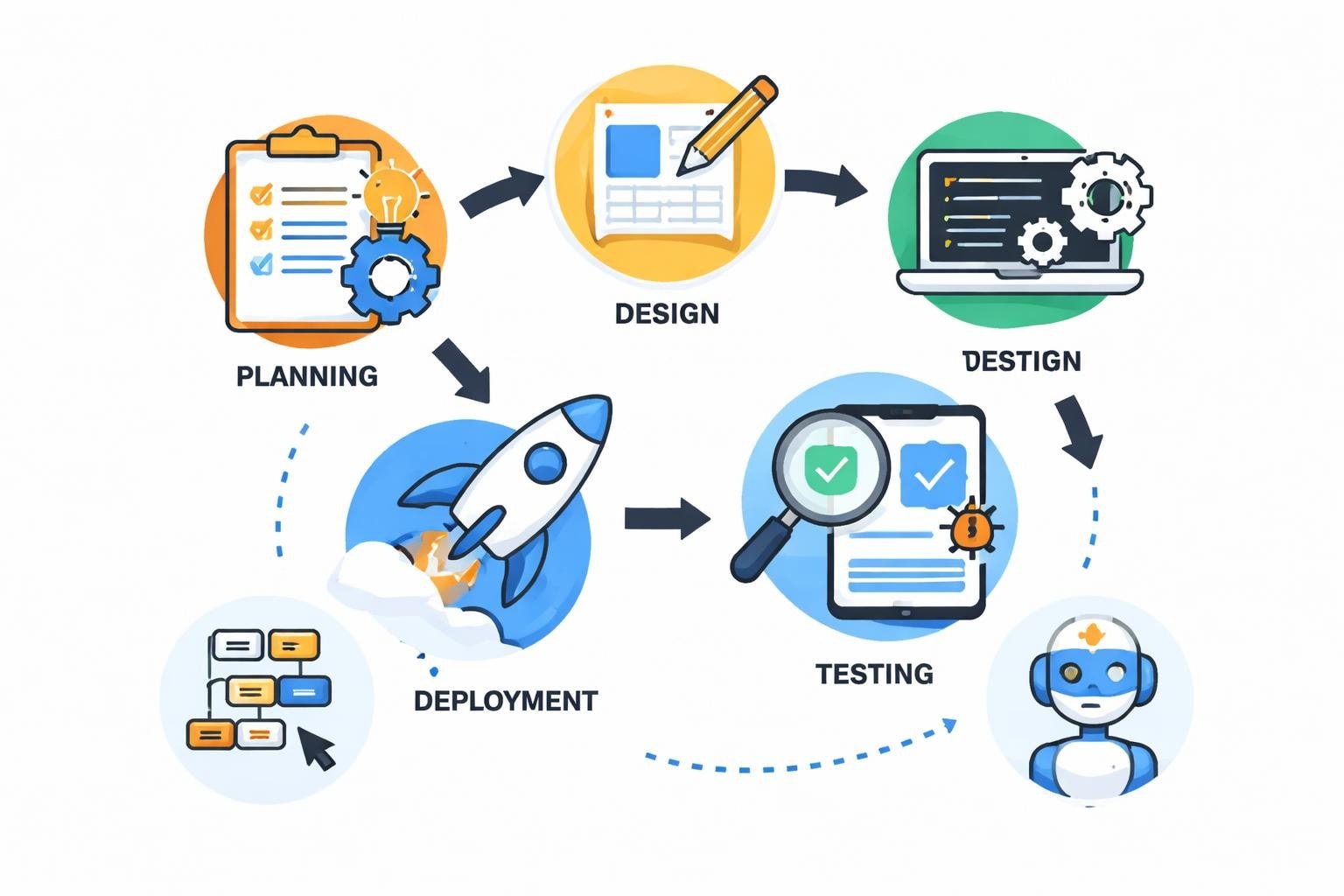
The landscape of app development has transformed dramatically in recent years, with 2026 bringing unprecedented opportunities for businesses to create sophisticated software solutions faster and more affordably than ever before. Whether you're building enterprise tools, customer-facing applications, or innovative SaaS platforms, understanding current development methodologies and emerging technologies is critical to success. The rise of no-code platforms, AI-assisted development, and security-first approaches has fundamentally changed how teams approach building digital products.
The Evolution of Modern App Development
Traditional app development required extensive coding knowledge, large development teams, and months of iteration before launching a minimum viable product. Today's environment looks vastly different. Organizations are increasingly turning to no-code platforms for enterprise workflows to accelerate their digital transformation initiatives while reducing costs.
The shift toward more accessible development tools hasn't compromised quality. Instead, it has democratized software creation, allowing business stakeholders to participate directly in the development process. This collaborative approach ensures that applications align more closely with actual business needs rather than technical interpretations of requirements.
Key Trends Shaping App Development in 2026
Several major trends are defining how applications are built this year:
- AI integration: Machine learning capabilities are now standard features rather than advanced add-ons
- Security-first design: With Google rejecting nearly two million Android apps in 2025, security has become non-negotiable
- Cross-platform compatibility: Users expect seamless experiences across devices
- Performance optimization: Speed and efficiency remain critical differentiators
- No-code and low-code adoption: Visual development environments are mainstream
The transformative role of AI in software development continues to accelerate, with new capabilities emerging monthly. However, this rapid evolution also introduces challenges around security, adoption rates, and maintaining productivity standards.
Platform Selection and Technology Stack Decisions
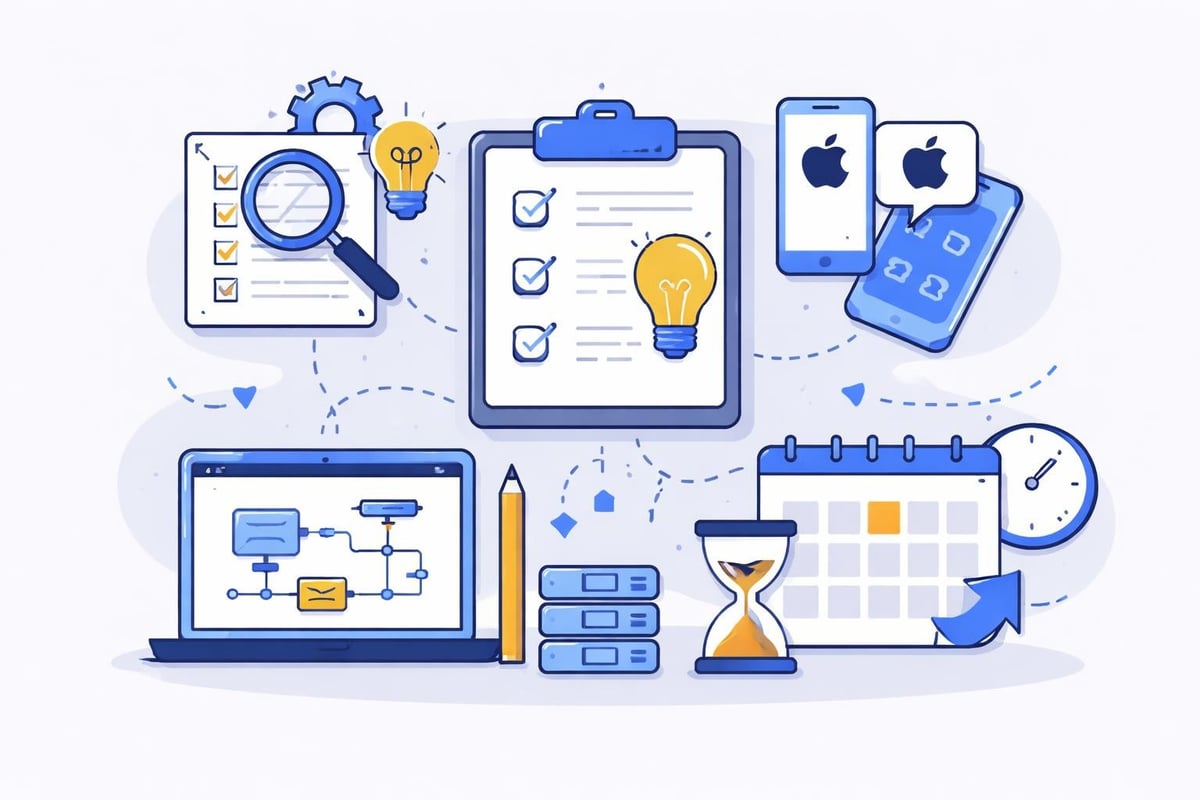
Choosing the right foundation for your application determines much of its future success. The decision between traditional coding, no-code platforms, or hybrid approaches depends on multiple factors including timeline, budget, technical complexity, and long-term scalability requirements.
Evaluating Development Platforms
| Platform Type | Best For | Time to Market | Cost Range | Scalability |
|---|---|---|---|---|
| Traditional Code | Complex custom logic | 4-12 months | High | Excellent |
| No-Code | MVPs, internal tools | 2-8 weeks | Low-Medium | Good |
| Low-Code | Enterprise apps | 6-16 weeks | Medium | Very Good |
| Hybrid | Specialized features | 3-6 months | Medium-High | Excellent |
For many organizations, no-code AI app development platforms offer the optimal balance between speed, cost, and capability. These platforms enable rapid prototyping and iteration while maintaining professional-grade output quality.
Understanding Bubble developer costs and similar platform economics helps organizations make informed decisions. The total cost of ownership extends beyond initial development to include hosting, maintenance, and future enhancements.
Architecture Considerations
Modern app development requires thoughtful architecture planning from day one. Consider these critical elements:
- Data structure design: How information flows through your application
- API integration strategy: Connecting to third-party services and internal systems
- User authentication: Securing access while maintaining usability
- Scalability planning: Ensuring performance as usage grows
- Backup and recovery: Protecting against data loss
Best practices for mobile app development emphasize the importance of defining clear objectives before writing a single line of code. This planning phase prevents costly pivots and ensures all stakeholders share a common vision.
Security and Compliance in App Development
Security threats evolve constantly, making it essential to build defense mechanisms into applications from the ground up. Adversarial AI is coming for your applications, creating new attack vectors that developers must anticipate and mitigate.
Implementing best practices for secure Kotlin development or other language-specific security measures helps create robust applications. Key security principles include:
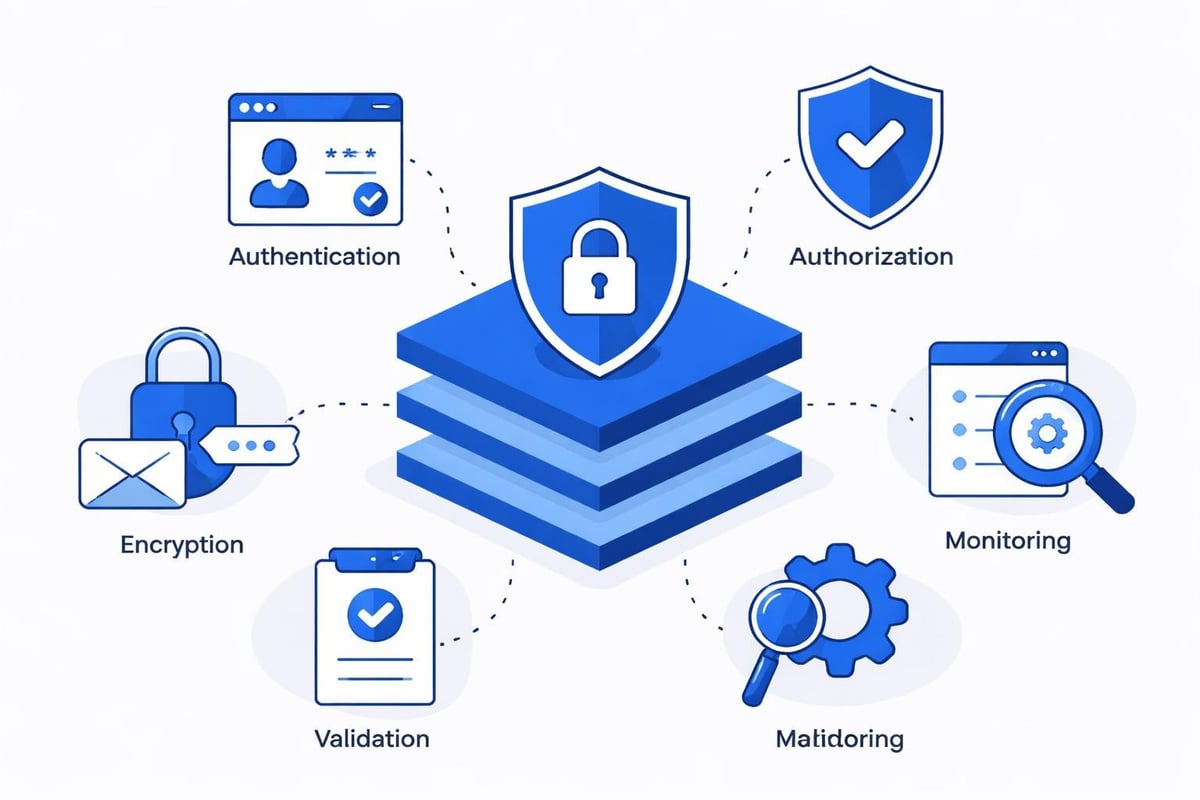
- Input validation: Never trust user-submitted data without verification
- Data encryption: Protect sensitive information both in transit and at rest
- Authentication protocols: Implement multi-factor authentication where appropriate
- Regular security audits: Continuously test for vulnerabilities
- Access controls: Limit permissions based on user roles
Compliance Requirements
Different industries face varying regulatory requirements. Healthcare applications must comply with HIPAA, financial services need SOC 2 certification, and European market apps require GDPR compliance. Understanding these requirements early prevents expensive retrofitting later.
For apps targeting Android devices, following best practices for Android Go development ensures your application performs well even on resource-constrained devices, expanding your potential user base.
User Experience and Design Principles
Exceptional user experience separates successful applications from abandoned projects. Every interaction should feel intuitive, responsive, and purposeful. The app development process must prioritize user needs throughout every stage.
Design-First Development
Starting with design mockups before development begins saves significant time and resources. Turning Figma designs into software has become increasingly streamlined, allowing designers and developers to collaborate more effectively.
Key UX principles for 2026:
- Minimalist interfaces: Remove unnecessary elements that don't serve user goals
- Consistent navigation: Users should always know where they are and how to proceed
- Fast load times: Every second of delay increases abandonment rates
- Accessibility: Design for users with varying abilities and assistive technologies
- Mobile-first thinking: Even desktop apps benefit from mobile design constraints
Testing with real users throughout development catches usability issues before they become embedded in the final product. Iterative feedback loops improve outcomes dramatically compared to waiting for a complete build before user testing.
Development Methodologies and Team Collaboration
Agile methodologies dominate app development for good reason. Breaking projects into manageable sprints allows teams to adapt quickly to changing requirements and market conditions. Enterprise team collaboration tools facilitate this iterative approach, keeping distributed teams aligned and productive.
Effective Development Workflows
- Sprint planning: Define achievable goals for two-week cycles
- Daily standups: Quick synchronization prevents blockers from festering
- Code reviews: Peer feedback improves quality and knowledge sharing
- Automated testing: Catch regressions before they reach production
- Continuous integration: Deploy updates frequently and reliably
Low-cost MVP development tools enable startups to validate concepts quickly without massive upfront investment. This lean approach reduces risk while maintaining the option to scale successful products.
For Node.js projects, implementing best practices for Node.js app development ensures maintainable, performant applications. Modular architecture and efficient coding patterns become increasingly important as applications grow.
Testing and Quality Assurance Strategies
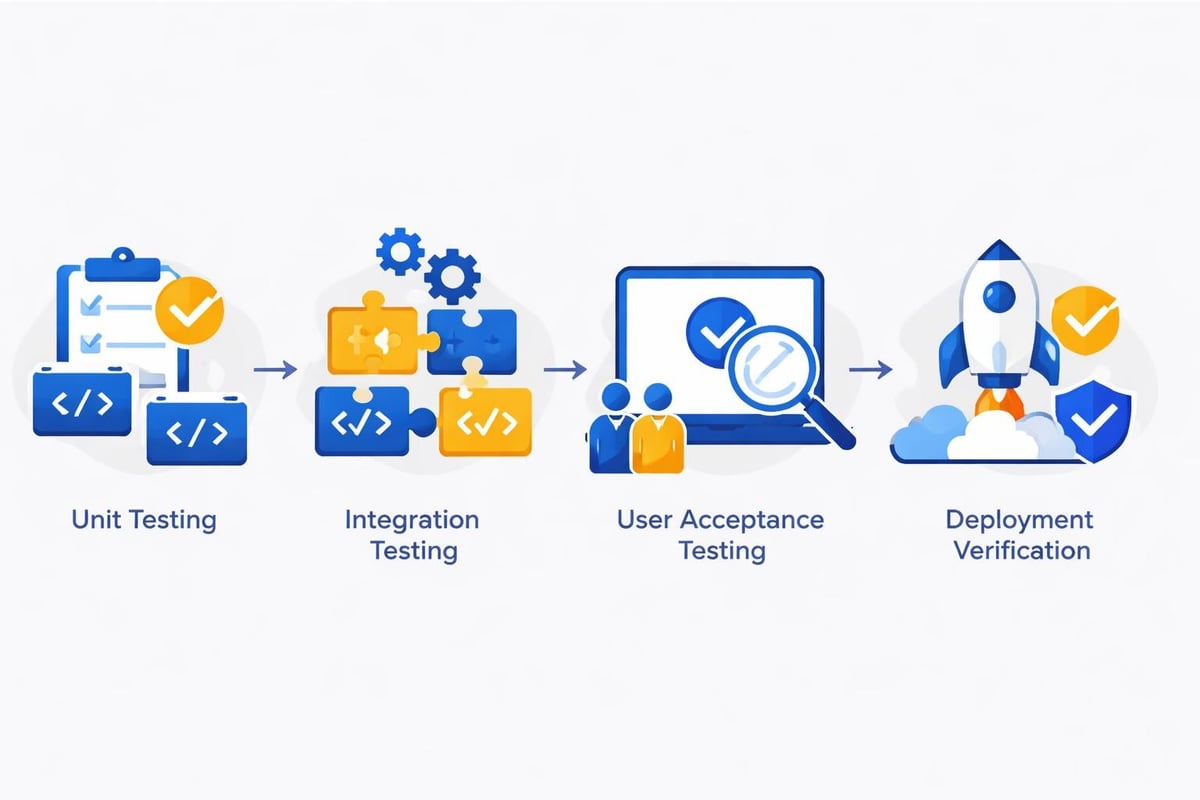
Comprehensive testing separates professional-grade applications from buggy disappointments. Quality assurance should never be an afterthought tacked onto the end of development cycles. Instead, testing must be integrated throughout the entire process.
Testing Layers
| Test Type | Purpose | When to Run | Automation |
|---|---|---|---|
| Unit Tests | Verify individual functions | During development | High |
| Integration Tests | Check component interactions | Before builds | High |
| UI Tests | Validate user interfaces | Weekly | Medium |
| Performance Tests | Measure speed and load capacity | Before releases | Medium |
| Security Tests | Identify vulnerabilities | Continuously | High |
| User Acceptance | Confirm business requirements | Before launch | Low |
Automated testing catches the majority of issues, freeing human testers to focus on exploratory testing and edge cases that automated scripts might miss. Continuous integration pipelines run test suites automatically with each code commit, providing immediate feedback to developers.
Performance Optimization Techniques
Users expect instant responses from applications. Slow performance drives abandonment and negative reviews faster than almost any other factor. App development teams must prioritize performance from initial architecture decisions through post-launch optimization.
Frontend Optimization
- Lazy loading images and components reduces initial load times
- Code splitting delivers only necessary JavaScript to users
- Caching strategies minimize redundant server requests
- Image compression balances quality with file size
- Content delivery networks serve static assets from geographically distributed servers
Backend Optimization
Database query optimization often yields the largest performance gains. Indexing frequently accessed fields, avoiding N+1 queries, and implementing caching layers can improve response times by orders of magnitude.
Enterprise workflow automation tools help teams identify performance bottlenecks through monitoring and logging. Understanding where applications spend time processing requests guides optimization efforts effectively.
Scaling Applications for Growth
Applications that succeed often grow rapidly, placing unexpected stress on infrastructure and architecture. Planning for scale from the beginning costs less than retrofitting systems later. However, premature optimization wastes resources on problems you may never face.
The key is building scalable foundations while avoiding over-engineering. Use cloud infrastructure that scales automatically with demand. Design database schemas that accommodate growth without requiring major migrations. Implement monitoring that alerts teams to capacity issues before users experience problems.
Infrastructure Considerations
Modern cloud platforms offer incredible flexibility, but they require thoughtful configuration. Consider these scaling dimensions:
- Horizontal scaling: Adding more servers to distribute load
- Vertical scaling: Increasing individual server capacity
- Database replication: Spreading reads across multiple database instances
- Caching layers: Reducing database queries through intelligent caching
- Microservices architecture: Breaking monoliths into independently scalable components
Application development platforms increasingly handle scaling automatically, removing infrastructure management complexity from development teams. This allows organizations to focus on building features rather than managing servers.
No-Code and AI-Assisted Development
The app development landscape has fundamentally changed with the maturation of no-code platforms and AI-assisted coding tools. These technologies don't replace traditional development entirely, but they dramatically expand who can build applications and how quickly teams can move from concept to launch.
Vibe coding represents an emerging trend where developers describe desired functionality in natural language, with AI generating implementation code. This approach requires different skills than traditional programming but can accelerate certain development tasks significantly.
When No-Code Makes Sense
No-code platforms excel in specific scenarios:
- Internal tools: Dashboards, admin panels, and workflow applications
- MVPs: Quick validation of business concepts before major investment
- Simple CRUD apps: Applications centered on data management
- Integration projects: Connecting existing systems without custom code
- Rapid prototyping: Visual mockups that become functional applications
Best no-code tools for SaaS founders enable entrepreneurs to build and launch products without technical co-founders. This democratization of development creates opportunities for innovation from unexpected sources.
Deployment and Maintenance Strategies
Launching an application marks the beginning of its lifecycle, not the end. Successful app development includes planning for ongoing maintenance, updates, and user support. Continuous deployment practices allow teams to ship improvements quickly while minimizing downtime and risk.
Release Management
- Feature flags: Toggle new functionality without redeploying code
- Staged rollouts: Release to small user segments before full deployment
- Rollback procedures: Quick recovery if releases introduce problems
- Version control: Track all changes and enable easy reversion
- Documentation: Maintain updated technical and user documentation
Monitoring tools provide visibility into application health, user behavior, and system performance. Setting up proper observability from day one makes troubleshooting issues faster and less stressful.
The future of app development continues to evolve rapidly, with new tools, frameworks, and methodologies emerging constantly. Organizations that embrace modern approaches while maintaining focus on user needs, security, and performance will build applications that succeed in increasingly competitive markets.
Building successful applications in 2026 requires balancing speed, quality, security, and user experience across increasingly complex technology landscapes. Whether you're creating internal tools, customer-facing products, or innovative SaaS platforms, the right development approach and partnership can mean the difference between success and frustration. Big House Technologies specializes in transforming ideas into fully functional applications using no-code and AI-powered platforms, delivering enterprise-grade solutions faster and more affordably than traditional development approaches. Ready to bring your application concept to life? Let's discuss how we can help you build scalable software solutions that meet your timeline and budget requirements.

About Big House
Big House is committed to 1) developing robust internal tools for enterprises, and 2) crafting minimum viable products (MVPs) that help startups and entrepreneurs bring their visions to life.
If you'd like to explore how we can build technology for you, get in touch. We'd be excited to discuss what you have in mind.
Other Articles
Learn how to build stunning websites with Website Bubble in 2025. This beginner guide covers setup, customization, best practices, and success stories for you.
Discover top agencies building Bubble MVP in 2026 Compare pricing features and expertise to choose the best partner for fast cost effective MVP launches
Discover the ultimate guide to custom bubble app development services for 2026 Learn benefits AI trends and how to choose the right partner for business growth