

Understanding bubble developer cost is essential for businesses planning to leverage no-code platforms for their software projects in 2026. Whether you're a startup building an MVP or an enterprise creating internal tools, knowing what to budget for Bubble development expertise can make the difference between project success and costly overruns. The pricing landscape varies significantly based on developer experience, project complexity, geographic location, and engagement model, making it crucial to understand all the factors that influence your investment.
Understanding Bubble Developer Pricing Models
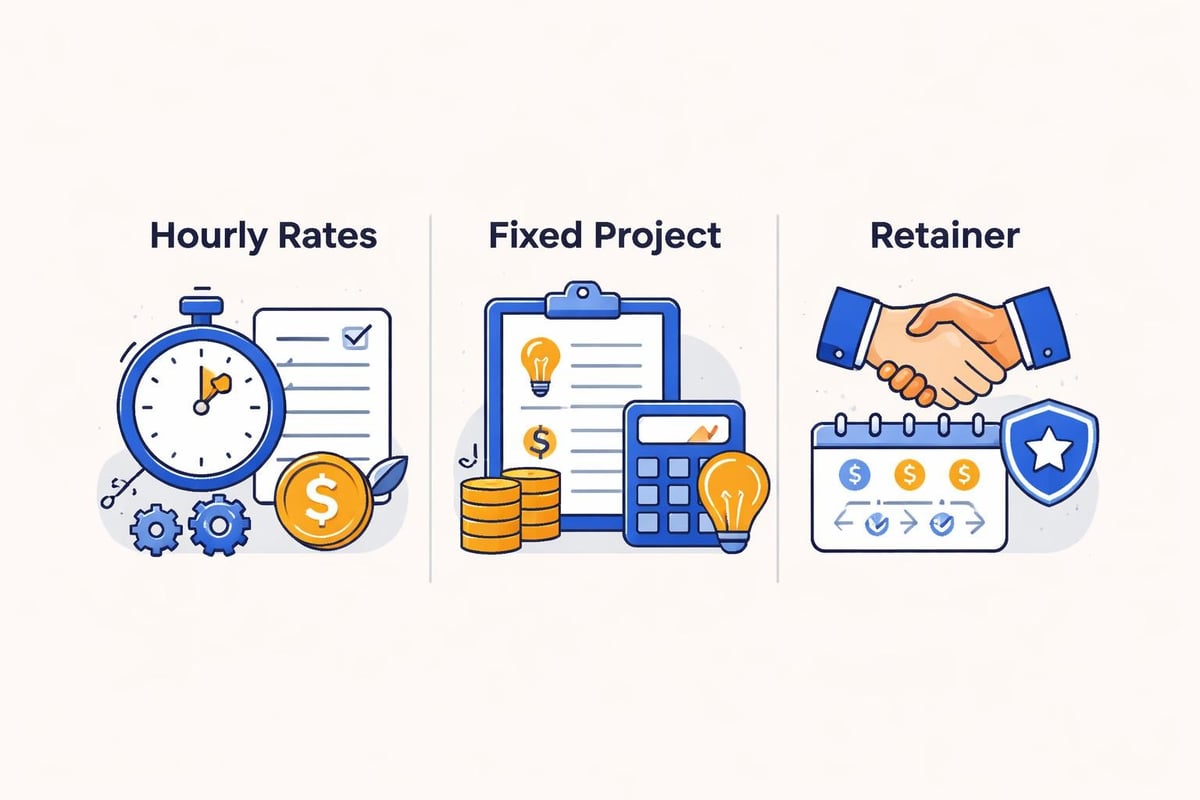
When evaluating bubble developer cost, you'll encounter several distinct pricing structures that serve different project needs and budgets. The three primary models include hourly rates, fixed project pricing, and retainer arrangements.
Hourly rate pricing remains the most common approach, especially for smaller projects or ongoing maintenance work. This model offers flexibility but requires careful scope management to avoid budget creep. Developers typically track their time and bill accordingly, which works well when requirements evolve during development.
Fixed project pricing provides budget certainty for well-defined projects. When you have detailed specifications and clear deliverables, experienced Bubble agencies can estimate total costs accurately. This approach shifts risk to the developer but often results in better planning and fewer surprises.
Retainer and Dedicated Team Models
Monthly retainers suit businesses with ongoing development needs. Rather than hiring full-time staff, you secure a developer's time at a predictable monthly cost. This arrangement works particularly well for:
- Continuous feature development
- Regular platform maintenance
- Iterative product improvements
- Technical support and troubleshooting
The dedicated team model scales beyond individual developers to include designers, testers, and project managers. Agencies like Big House Technologies offer this comprehensive approach, ensuring all aspects of development receive proper attention while maintaining cost efficiency.
Hourly Rate Breakdown by Experience Level
Bubble developer cost varies dramatically based on expertise and geographic location. Understanding these tiers helps you match budget with project complexity and quality expectations.
| Experience Level | Hourly Rate Range | Typical Skills | Best For |
|---|---|---|---|
| Junior Developer | $30 - $60 | Basic workflows, simple UI, standard integrations | Simple prototypes, basic MVPs |
| Mid-Level Developer | $60 - $100 | Complex logic, API integrations, database design | Standard applications, most business tools |
| Senior Developer | $100 - $175 | Architecture, optimization, advanced integrations | Enterprise solutions, complex platforms |
| Expert/Architect | $175 - $250+ | System design, performance optimization, custom solutions | Mission-critical applications, large-scale systems |
Hiring a Bubble.io developer at the junior level might seem cost-effective initially, but complex projects often require senior expertise to avoid technical debt and costly rebuilds.
Geographic factors significantly impact these rates. North American developers typically command premium pricing, while Eastern European and Asian developers offer competitive rates with strong technical capabilities. However, time zone differences and communication considerations factor into the total cost equation.
Specialized Skills That Increase Costs
Certain specialized capabilities command premium rates regardless of geographic location:
- Advanced API integration expertise for connecting enterprise systems
- Performance optimization for high-traffic applications
- Custom plugin development extending Bubble's native functionality
- Security hardening for applications handling sensitive data
- Migration specialists moving from other platforms to Bubble
Projects requiring these skills naturally increase the overall bubble developer cost, but they often prevent more expensive problems down the road.
Project-Based Pricing for Common Applications
Fixed project pricing provides clearer budget expectations for defined scopes. Here's what different application types typically cost when working with professional Bubble developers in 2026.
Simple MVP development for startups usually ranges from $5,000 to $15,000. These projects include basic user authentication, core workflows, and essential features needed to validate a business concept. The MVP development approach focuses on speed and functionality over polish.
Mid-complexity business applications such as CRM systems, project management tools, or marketplace platforms typically cost $15,000 to $40,000. These projects involve multiple user roles, complex data relationships, third-party integrations, and custom workflows. Understanding no-code capabilities and limitations helps scope these projects accurately.
Enterprise-grade applications with extensive features, security requirements, and integrations range from $40,000 to $150,000 or more. These sophisticated systems often require senior developers and architectural planning. The enterprise integration platforms used in these projects add complexity but enable crucial business functionality.
Timeline Impact on Total Costs
Project timelines directly affect bubble developer cost through several mechanisms:
- Rush projects incur premium rates (often 25-50% higher)
- Extended timelines may secure discounted rates but increase total investment
- Phased development spreads costs but requires careful version planning
- Maintenance periods add ongoing costs post-launch
Most Bubble projects take 6-12 weeks for mid-complexity applications when properly scoped and staffed. Attempting to compress timelines without additional resources rarely succeeds and often increases costs through rework.

Freelancer vs Agency Cost Comparison
Choosing between independent freelancers and established agencies significantly impacts bubble developer cost and project outcomes. Each option offers distinct advantages and tradeoffs.
Freelance developers typically charge 20-40% less than agencies for equivalent expertise levels. This cost advantage appeals to budget-conscious startups and simple projects. Freelancers often provide:
- Direct communication without intermediaries
- Flexible engagement terms
- Specialized niche expertise
- Personal investment in project success
However, freelancers carry inherent risks. Single points of failure, limited availability, and absence of backup resources can jeopardize timelines. When a freelancer becomes unavailable due to illness or competing commitments, projects stall completely.
Agency Value Proposition
Development agencies charge premium rates but deliver structured processes, team redundancy, and comprehensive capabilities. Working with specialized no-code agencies provides:
| Agency Advantage | Value Delivered | Cost Impact |
|---|---|---|
| Team redundancy | No single point of failure | +25-40% vs freelancer |
| Multiple specialties | Design, development, testing in-house | Comprehensive but higher |
| Project management | Structured timelines and communication | Reduced risk premium |
| Quality assurance | Systematic testing and validation | Fewer post-launch issues |
| Ongoing support | Maintenance and enhancement capability | Long-term relationship value |
The bubble developer cost premium for agencies often proves worthwhile for business-critical applications and complex projects. The application development platforms that agencies employ ensure scalability and maintainability beyond initial launch.
Hidden Costs and Budget Considerations
Beyond direct developer fees, several additional expenses contribute to total bubble developer cost. Smart budgeting accounts for these often-overlooked factors.
Bubble platform subscription costs represent ongoing operational expenses separate from development fees. The Bubble.io pricing structure offers multiple tiers ranging from free hobby plans to enterprise agreements exceeding $500 monthly. Production applications typically require at least the Professional plan ($129/month in 2026) for custom domains and increased capacity.
Third-party service integrations add recurring costs that accumulate quickly:
- Payment processors (Stripe, PayPal) charge transaction fees
- Email services (SendGrid, Mailgun) bill based on volume
- SMS providers (Twilio) cost per message sent
- Storage solutions (AWS S3) scale with usage
- Analytics platforms often charge monthly subscriptions
Plugin and template licenses can accelerate development but require one-time or recurring payments. Premium Bubble plugins range from $20 to $200+ depending on complexity and licensing terms.
Maintenance and Scaling Costs
Post-launch expenses continue indefinitely and should factor into total project budgets:
- Bug fixes and updates: Budget 10-20% of initial development cost annually
- Feature enhancements: Ongoing development as business needs evolve
- Capacity scaling: Higher Bubble plan tiers as user base grows
- Security updates: Maintaining integrations and dependencies
- Technical support: User assistance and troubleshooting
Projects comparing no-code versus traditional development costs often overlook these operational expenses, leading to budget shortfalls post-launch.

Optimizing Your Bubble Development Investment
Strategic approaches can significantly reduce bubble developer cost without sacrificing quality or functionality. These optimization strategies apply across project types and scales.
Comprehensive scoping prevents expensive mid-project changes and scope creep. Investing 5-10% of total budget in detailed requirements definition and wireframing pays dividends through:
- Clearer developer understanding of expectations
- More accurate cost estimates and timelines
- Reduced rework from misunderstood requirements
- Better prioritization of must-have versus nice-to-have features
Building an MVP with no-code methodologies emphasizes launching with core functionality first, then iterating based on real user feedback rather than assumptions.
Phased development approaches spread costs over time while delivering incremental value. Rather than building everything simultaneously, prioritize:
- Core user workflows and essential features
- Secondary features that enhance the experience
- Advanced capabilities and optimizations
- Integrations and automation workflows
This staged approach reduces initial bubble developer cost while proving concept viability before major investment.
Leveraging Templates and Pre-built Components
Starting from template foundations rather than blank canvases can reduce development time by 30-50%. Quality templates provide:
- Proven UI/UX patterns and responsive designs
- Pre-configured database structures for common use cases
- Working authentication and user management systems
- Basic workflow logic requiring only customization
While templates require licensing fees ($50-$500 typically), they dramatically reduce billable development hours. Customizing a template for your specific needs costs far less than building everything from scratch.
Reusable component libraries offer similar advantages. Working with developers who maintain component libraries means common functionality doesn't require reinvention for each project.
Vetting Developers and Managing Costs
Selecting the right Bubble developer directly impacts project success and final costs. Effective vetting processes identify qualified candidates while avoiding expensive hiring mistakes.
Portfolio review should examine actual Bubble applications the developer built, not just generic web development work. Request:
- Links to live applications (not just screenshots)
- Explanations of complex workflows they implemented
- Examples of API integrations they've configured
- Performance optimization work they've completed
The types of applications built with Bubble vary widely in complexity; ensure candidate experience matches your project requirements.
Technical assessment validates claimed expertise through practical evaluation. Quality developers welcome opportunities to demonstrate skills through:
- Small paid test projects (2-4 hours)
- Technical interviews discussing Bubble architecture
- Code reviews of existing work
- Problem-solving scenarios relevant to your project
Contract Terms That Protect Your Investment
Well-structured contracts minimize bubble developer cost overruns and disputes. Essential contract elements include:
| Contract Element | Purpose | Cost Protection |
|---|---|---|
| Detailed scope definition | Prevents scope creep | Limits additional charges |
| Milestone-based payments | Ties payment to delivery | Reduces risk exposure |
| Revision limits | Caps included changes | Controls variable costs |
| Ownership clauses | Ensures IP transfer | Protects business assets |
| Termination terms | Exit strategy definition | Limits exposure to poor performers |
Communication expectations should specify response times, update frequency, and preferred channels. Clear communication reduces misunderstandings that lead to costly rework.
Change order processes establish how additional work gets priced and approved. When scope changes inevitably occur, structured processes prevent budget chaos and relationship strain.
Regional Cost Variations and Remote Work
Geographic arbitrage significantly affects bubble developer cost in 2026's fully remote development landscape. Understanding regional pricing helps optimize budgets without compromising quality.
North American developers command premium rates reflecting higher living costs and strong demand. United States and Canadian developers typically charge $80-$200+ per hour depending on experience and specialization. These rates reflect market realities but don't necessarily indicate proportionally higher quality.
European developers offer competitive pricing with excellent technical capabilities. Western European rates ($60-$150/hour) approach North American pricing, while Eastern European developers ($40-$90/hour) provide strong value propositions with minimal time zone challenges for US-based businesses.
Asian and Latin American developers deliver cost advantages with rates often 40-60% below North American equivalents. Quality varies widely, making thorough vetting essential. Time zone differences require consideration for projects needing real-time collaboration.
Remote Work Advantages for Cost Management
The fully remote nature of no-code development work enables access to global talent pools without relocation costs or visa complications. This geographic flexibility allows businesses to:
- Access specialized expertise unavailable locally
- Reduce labor costs through strategic hiring
- Build distributed teams across time zones
- Scale teams rapidly without office space constraints
However, remote coordination requires investment in communication tools, project management systems, and potentially overlapping work hours to ensure effective collaboration.
Cultural and language considerations impact project efficiency beyond hourly rates. Developers with strong English communication skills and cultural familiarity with your market often deliver better outcomes despite potentially higher bubble developer cost.
Value Optimization Through Strategic Planning
Maximizing return on bubble developer cost requires strategic thinking beyond simply minimizing hourly rates. Value-focused approaches balance investment with business outcomes.
Building for scalability from day one prevents expensive rebuilds as your application grows. While initial development costs increase 15-25% for scalable architecture, avoiding complete rebuilds saves multiples of this investment. No-code tools for SaaS founders emphasize scalability considerations from initial planning.
Performance optimization investment early in development prevents user experience problems that drive customers away. Budget 10-15% of development cost for load testing, workflow optimization, and efficiency improvements. Poor performance often requires expensive post-launch remediation and damages reputation.
Security hardening for applications handling sensitive data justifies premium developer rates. Data breaches and compliance failures cost far more than preventive security measures. Enterprise clients particularly value developers with security expertise.
Knowledge Transfer and Documentation
Investing in comprehensive documentation reduces long-term bubble developer cost through:
- Easier onboarding of new developers if you switch providers
- Faster troubleshooting when issues arise
- Simplified future enhancements and modifications
- Reduced dependency on specific individuals
Request detailed documentation as part of project deliverables, even if it slightly increases initial costs. Technical documentation, user guides, and architecture diagrams prove invaluable over application lifecycle.
Training and knowledge transfer sessions ensure your team understands the application's inner workings. While adding 5-10 billable hours to projects, this investment enables internal staff to handle minor updates and configuration changes without developer assistance.
Understanding bubble developer cost empowers businesses to budget accurately and make informed decisions about their no-code development investments. Whether you choose freelancers for simple projects or engage comprehensive agency services for complex enterprise applications, knowing the cost drivers and optimization strategies ensures maximum return on investment. Big House Technologies specializes in delivering scalable Bubble solutions that balance quality, speed, and cost-efficiency, transforming your ideas into fully functional products through expert scoping, development, and testing processes.

About Big House
Big House is committed to 1) developing robust internal tools for enterprises, and 2) crafting minimum viable products (MVPs) that help startups and entrepreneurs bring their visions to life.
If you'd like to explore how we can build technology for you, get in touch. We'd be excited to discuss what you have in mind.
Other Articles
Hire mobile developer with confidence in 2025. Discover trends, skills, costs, and proven strategies to find and secure top talent for your next app project.
Discover the essentials of platform in software development for 2025. Learn key types, lifecycles, trends, and best practices to maximize value and innovation.
Comparing Cursor vs VSCode for 2026: AI capabilities, performance, pricing, and which code editor best suits no-code and AI development workflows.