
The no-code revolution is transforming how businesses build digital products, and in 2026, the bubble developer vs webflow developer debate is more relevant than ever. As organizations look for speed, flexibility, and cost savings, choosing the right platform and developer skillset will shape success.
In this article, we break down the strengths and limitations of each, comparing platform capabilities, developer skills, scalability, cost, and industry trends. By the end, you’ll know which path offers the best value and future-proofing for your business or creative project. Get ready to make an informed choice.
Bubble Developer: Strengths, Limitations, and Use Cases
Bubble developers have become essential players in the no-code ecosystem, especially as businesses demand more sophisticated digital solutions in 2026. When comparing the bubble developer vs webflow developer landscape, it is important to understand Bubble's unique strengths, limitations, and ideal use cases.
Platform Capabilities and Flexibility
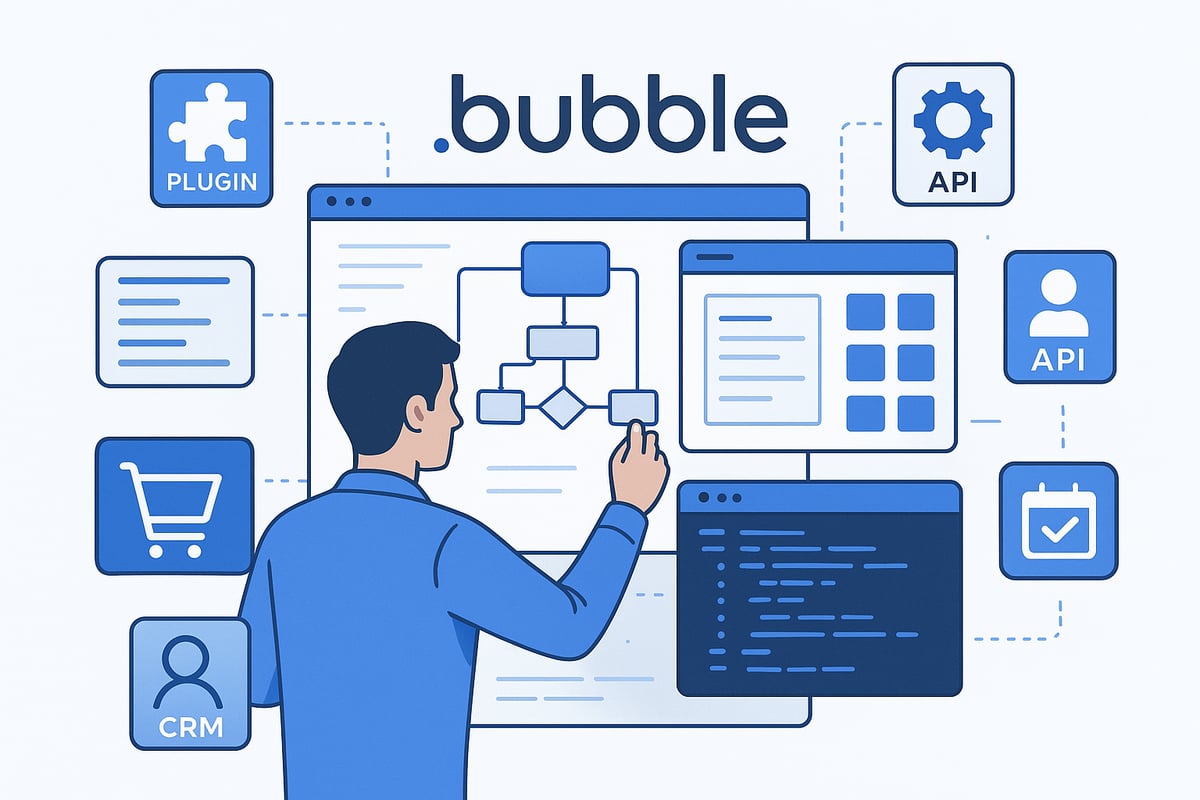
Bubble stands out for its visual programming approach, allowing users to build complex, database-driven applications without writing traditional code. Unlike other tools, Bubble offers full-stack capabilities, letting developers manage backend logic, workflows, API integrations, and frontend design within a single platform.
The platform is particularly strong in connecting with third-party services, automating tasks, and handling multi-user environments. Bubble developers have built everything from SaaS platforms to large marketplaces using visual workflows and logic.
For those looking to launch robust MVPs quickly, Bubble excels in turning ideas into scalable products. If you want a deeper dive, check out this guide on building scalable MVPs with Bubble to see why the bubble developer vs webflow developer debate often leans toward Bubble for app-centric projects.
Customization and Extensibility
Bubble's plugin marketplace is a major asset, offering a wide range of pre-built solutions for payments, analytics, and more. Developers can also inject custom code, expanding the platform's capabilities even further.
Flexible automation and advanced logic are possible through Bubble's workflow editor. This allows for sophisticated business processes and integrations that go beyond basic site builders.
However, there are some limitations. Highly complex apps may hit performance ceilings, especially with heavy data processing or real-time features. Still, for most use cases in the bubble developer vs webflow developer comparison, Bubble offers greater extensibility for app logic.
Learning Curve and Developer Skills
Learning Bubble requires a solid understanding of databases, workflows, and application logic. Compared to Webflow, the learning curve is steeper, especially for non-technical users. Bubble developers need to think like software engineers, even when working visually.
Fortunately, Bubble has a strong community and plenty of learning resources, including documentation, tutorials, and forums. Many bubble developer vs webflow developer discussions highlight how Bubble's complexity can be an advantage for those seeking real app-building skills.
Use Cases and Industries
Bubble is ideal for creating:
- Marketplaces (e.g., real estate, booking)
- SaaS products and internal business tools
- Custom CRMs and workflow automation platforms
- MVPs for startups and enterprise prototypes
Industries like real estate, logistics, and professional services rely on Bubble for solutions tailored to their processes. In the bubble developer vs webflow developer debate, Bubble is often the go-to for projects requiring advanced user roles, data management, and automation.
Notable Statistics and Trends
Bubble's adoption has skyrocketed, with over 2 million users as of 2024. Enterprise clients are increasingly choosing Bubble for rapid digital transformation.
Demand for certified Bubble developers is rising, as shown by LinkedIn job trends. The bubble developer vs webflow developer market is shifting, with Bubble developers seeing more opportunities in SaaS, custom tools, and large-scale business apps.
Bubble's ecosystem is growing, and its community-driven approach ensures ongoing support and innovation.
Webflow Developer: Strengths, Limitations, and Use Cases
Webflow developers have carved out a unique space in the no-code landscape, offering unparalleled visual control for modern websites. In the ongoing debate of bubble developer vs webflow developer, understanding what sets Webflow apart is crucial. Let’s break down the platform’s core strengths, the learning curve, customization possibilities, top use cases, and 2026 trends.

Platform Capabilities and Design Freedom
Webflow stands out for its pixel-perfect design tools, giving creative professionals unmatched control over every visual detail. The platform empowers developers to craft visually stunning, interactive sites with ease. When comparing bubble developer vs webflow developer, Webflow’s strength lies in its robust front-end editor and built-in CMS, making it ideal for content-rich projects.
| Feature | Webflow Strength | Bubble Strength |
|---|---|---|
| Visual Design | Excellent | Good |
| Animation/Interactions | Advanced | Basic |
| CMS | Powerful | Moderate |
Webflow developers leverage these tools to produce modern, responsive websites that capture attention and drive engagement.
Ease of Use and Learning Curve
If you’re weighing bubble developer vs webflow developer, Webflow’s intuitive drag-and-drop interface is a major selling point. Even those without a technical background can quickly build and launch professional-grade sites. The learning curve is gentle, especially for designers and marketers familiar with visual tools.
Rapid prototyping is another advantage. You can go from concept to live site in record time, empowering teams to test ideas and iterate without waiting on traditional development cycles.
This ease of use makes Webflow a favorite for agencies and creative teams looking to streamline their workflow.
Customization and Integrations
A Webflow developer can seamlessly connect sites to a wide array of third-party apps, eCommerce tools, and marketing solutions. The platform’s CMS enables dynamic content management, while its eCommerce features support everything from product catalogs to checkout flows.
However, in the bubble developer vs webflow developer discussion, Webflow does have limits. Complex backend logic or database-heavy apps are outside its core capabilities. For SEO and customization differences, the Bubble vs Webflow SEO comparison provides a detailed look at how each platform handles technical optimization and integrations.
Still, for most content-driven sites, Webflow provides everything needed for customization and scalability.
Use Cases and Industries
Webflow shines in projects where design and user experience take center stage. The platform is a top choice for:
- Marketing websites and product landing pages
- Creative portfolios and agency sites
- eCommerce stores and online catalogs
- Blogs, news outlets, and digital magazines
In the bubble developer vs webflow developer context, Webflow is best suited for teams prioritizing visual impact and rapid deployment over advanced app logic.
This versatility explains its popularity among creative agencies, SaaS marketing teams, and independent designers.
Notable Statistics and Trends
By 2024, Webflow’s user base exceeded 3.5 million, with over 400,000 live sites powered by the platform. The bubble developer vs webflow developer debate is fueled by Webflow’s growing adoption among designers and marketers who want more control and speed.
Demand for Webflow experts has surged, especially as businesses seek to stand out with visually compelling, high-performing websites. The trend is clear: as the no-code movement matures, Webflow developers are becoming essential to digital teams aiming for both beauty and functionality.
Head-to-Head Comparison: Bubble Developer vs Webflow Developer in 2026
The choice between a Bubble developer vs Webflow developer in 2026 is pivotal for any digital project. Both platforms are leaders in the no-code movement, but their strengths diverge sharply. Let's break down how they stack up across the most important criteria for businesses and creators.

Development Speed and Time-to-Market
When it comes to launching quickly, the bubble developer vs webflow developer debate depends on project type. Bubble excels at getting complex MVPs and app prototypes off the ground, thanks to its integrated backend, database, and workflow tools. Webflow, meanwhile, is unmatched for visually polished websites that need to go live fast, especially for marketing or content-driven projects.
For teams prioritizing speed, Webflow's drag-and-drop UI and instant publishing deliver impressive results with minimal setup. Bubble's visual logic builder is powerful for app-centric launches, but may take longer for highly designed interfaces. For a deeper analysis, check out this Bubble vs. Webflow comparison which details how each platform performs under tight deadlines.
Ultimately, choosing a bubble developer vs webflow developer for speed is about matching your needs: app logic and workflows, or pixel-perfect design. Both offer rapid prototyping, but shine in different scenarios.
Scalability and Performance
As your business grows, scalability becomes a major concern in the bubble developer vs webflow developer decision. Bubble can handle complex workflows, user authentication, and API integrations, allowing products to grow from MVP to robust SaaS platforms. However, as applications scale, Bubble apps may face performance bottlenecks, especially in data-heavy environments or with thousands of simultaneous users.
Webflow, on the other hand, is built for high-performance static and dynamic sites. Its hosting infrastructure ensures lightning-fast page loads and excellent reliability. Yet, for app-level complexity, such as real-time updates or custom user dashboards, Webflow's scalability hits a ceiling. For pure website performance, Webflow is hard to beat, but Bubble offers more room for backend growth.
So, when considering bubble developer vs webflow developer for future scaling, the choice hinges on whether your project is data-driven or content-focused.
Customization and Flexibility
Both platforms offer customization, but in different ways. Bubble gives you deep control over databases, workflows, and app logic. You can inject custom code, tap into a plugin marketplace, and connect to external APIs. This makes Bubble a favorite for SaaS apps and marketplaces.
Webflow prioritizes design freedom, letting you create pixel-perfect layouts and rich animations. Its CMS is flexible for content, but backend logic is limited.
Here's a quick comparison:
| Feature | Bubble | Webflow |
|---|---|---|
| Backend Logic | Advanced workflows | Limited |
| Visual Design | Good, but less granular | Pixel-perfect |
| API Integrations | Extensive | Good, but less flexible |
| Plugin Ecosystem | Growing | Large, design-focused |
When it comes to bubble developer vs webflow developer, choose Bubble for logic-heavy needs and Webflow for visual and content-centric customization.
Cost of Development and Maintenance
Budget is always a deciding factor in the bubble developer vs webflow developer debate. Bubble offers lower upfront costs for building complex apps, especially for MVPs. Its all-in-one platform means you avoid separate backend and frontend expenses. However, as your user base grows, hosting and scaling fees can increase.
Webflow is cost-effective for simple sites and portfolios. Pricing is transparent, and hosting is included. But advanced features, team collaboration, and high-traffic sites can drive up monthly costs.
For long-term projects, it's vital to weigh ongoing platform fees, maintenance, and the potential need for custom solutions. The bubble developer vs webflow developer decision should factor in both initial investment and future expenses.
Community, Ecosystem, and Support
A thriving ecosystem can make or break your experience with a no-code platform. The bubble developer vs webflow developer landscape has evolved, with both communities offering robust resources.
Bubble's ecosystem features an expanding plugin marketplace, active forums, and a growing pool of certified experts. Its community is known for sharing best practices and troubleshooting tips.
Webflow boasts a massive template library, an engaged designer community, and extensive educational content. Support is responsive, and the platform regularly hosts events and challenges.
If community support and ecosystem tools are priorities, both options offer rich environments, but the bubble developer vs webflow developer choice will depend on the type of help and resources you need.
Real-World Examples and Case Studies
Examining real-world projects can clarify the bubble developer vs webflow developer decision. Bubble powers SaaS MVPs, internal business tools, and custom marketplaces. Enterprises have launched booking systems, CRMs, and even healthcare apps using Bubble's full-stack capabilities.
Webflow shines in award-winning agency sites, eCommerce stores, and media outlets. Its users create visually stunning websites for brands, portfolios, and online shops that are easy to manage and scale.
Both platforms have proven their value across industries, so look at similar case studies when choosing between a bubble developer vs webflow developer.
Future-Proofing and Platform Roadmaps
Future readiness is crucial in the bubble developer vs webflow developer conversation. Bubble is investing in enterprise features, improved scalability, and AI integration, aiming to support more ambitious projects.
Webflow is expanding its CMS, eCommerce, and developer API capabilities, making it even more attractive for content-driven businesses. Both platforms are committed to regular updates and have growing user bases.
When planning for the long term, consider which roadmap aligns with your business vision. The bubble developer vs webflow developer decision is not just about today, but how your platform will evolve in 2026 and beyond.
Choosing the Right Developer for Your Project in 2026
Selecting between a Bubble developer vs Webflow developer in 2026 is one of the most important decisions for your digital project. Your choice will shape workflow, scalability, and your team’s future flexibility. To make the best decision, consider your project’s type, resources, team strengths, and long-term goals.
Project Type and Business Goals
Start by identifying if your project is app-centric or content-centric. If you need a complex SaaS, internal tool, or marketplace, a Bubble developer vs Webflow developer is likely to offer deeper logic and automation. For marketing sites, portfolios, or eCommerce, Webflow shines with its visual design capabilities.
Scalability and integration requirements also matter. App-centric businesses benefit from Bubble’s database features, while content-driven brands thrive on Webflow’s CMS. For enterprise workflow needs, tools like no-code platforms for enterprise workflows can guide your decision.
Budget, Timeline, and Resource Considerations
Budget and speed are critical. For complex apps, a Bubble developer vs Webflow developer can often deliver an MVP faster and at a lower upfront cost than traditional coding. However, ongoing hosting and scaling costs may rise as your app grows.
Webflow is cost-effective for simple sites and allows for rapid prototyping. Yet, advanced features or eCommerce can increase expenses. Evaluate not just the initial build, but also long-term maintenance and future feature expansion.
Team Skills and Collaboration Needs
Think about the skills your team already has and how you want them to collaborate. A Bubble developer vs Webflow developer will be more comfortable with backend logic, workflows, and automation, making them ideal for teams building complex apps. Non-technical teams may find Bubble’s learning curve challenging.
Webflow is perfect if your team is design-driven or includes marketers who want direct control over the site. Its intuitive interface allows rapid updates, easy collaboration, and smooth handoffs between designers and content creators.
Platform Longevity and Ecosystem Growth
Consider the future. The Bubble developer vs Webflow developer debate is shaped by each platform’s growth, updates, and job market demand. Both platforms have expanded their user base and ecosystems in 2026, making them safe bets for most projects.
Platform lock-in is a real risk, so review recent updates, community size, and available integrations. For enterprise projects, refer to resources like no-code platforms for enterprise workflows to understand how each tool scales with business needs.
Decision Matrix and Flowchart
To simplify your choice, use the table below as a quick reference:
| Criteria | Bubble Developer | Webflow Developer |
|---|---|---|
| Project Type | Complex apps, SaaS | Websites, eCommerce |
| Design Flexibility | Moderate | High |
| Backend Logic | Advanced | Limited |
| Learning Curve | Steep | Easy |
| Cost (Simple Site) | Higher | Lower |
| Cost (Complex App) | Lower | Higher |
When comparing a Bubble developer vs Webflow developer, match your requirements to the strengths above. If your needs shift, revisit your decision as both platforms continue to evolve.
The Evolving Role of No-Code Developers in 2026
The landscape for no-code professionals is changing rapidly. As businesses seek faster solutions, the debate over bubble developer vs webflow developer is more relevant than ever. No-code roles are evolving, blending traditional development with fresh, future-facing responsibilities.
Shifting Skillsets and Professional Opportunities
In 2026, the boundary between designer, developer, and strategist is fading. No-code professionals are now product thinkers and solution architects. The bubble developer vs webflow developer conversation reflects a broader trend: companies want experts who can combine visual design with workflow automation and AI tools.
Hybrid roles are emerging, where a developer might build a dynamic marketplace on Bubble, then use Webflow to craft a polished landing page. Upskilling is essential, as no-code plus AI expertise is in high demand. According to no-code development trends, these new skills are helping reduce costs and speed up delivery for businesses worldwide.
Industry Adoption and Enterprise Use
No-code is no longer just for startups. Enterprises across healthcare, finance, and logistics are adopting these platforms for mission-critical projects. The bubble developer vs webflow developer debate is playing out in boardrooms as leaders choose the right tool for each solution.
Large-scale deployments include custom CRMs for healthcare, automated workflows in finance, and internal dashboards for logistics. The flexibility of no-code allows rapid iteration and adaptation, making it a solid choice for industries needing speed and innovation.
Salary and Job Market Trends
The market for no-code talent is thriving. In 2026, average salaries for Bubble developers range from $80k to $120k, while Webflow experts earn between $70k and $110k. This reflects the growing value of specialized skillsets in the bubble developer vs webflow developer discussion.
Certification programs are on the rise, offering clear pathways for career growth. Job postings for no-code roles have surged, with companies prioritizing candidates who understand both platforms and can guide digital transformation projects from ideation to launch.
Challenges and Limitations Ahead
Despite the rapid growth, there are hurdles to overcome. Platform dependency is a real concern, especially for businesses worried about future-proofing. Security remains a top priority, as sensitive data often passes through no-code apps.
For some projects, traditional coding is still necessary to achieve custom functionality or integrate unique business logic. The bubble developer vs webflow developer debate will remain central as teams balance the advantages of no-code with the need for flexibility and control.
Big House Technologies: Your Partner in No-Code Transformation
Choosing between a bubble developer vs webflow developer can feel overwhelming in 2026. That’s where Big House Technologies steps in. As a leading no-code and AI development agency, we help you navigate the shifting no-code landscape with confidence.
Our team specializes in both Bubble app development and advanced AI integration. Whether you’re a startup looking to launch fast or an enterprise aiming to digitize operations, we tailor solutions to your unique needs. Our experts understand the nuances of bubble developer vs webflow developer projects, ensuring you always get the right fit.
At Big House Technologies, our services cover every stage of your journey:
- Project scoping and technical discovery
- UI/UX design and rapid prototyping
- Full-stack Bubble development and workflow automation
- AI-powered features and integrations
- Rigorous quality assurance and ongoing support
We’ve built a proven track record delivering scalable, efficient, and robust solutions across industries. Clients consistently report faster launches, lower costs, and operational improvements. Curious about hiring globally? Check out our insights on the best countries to hire Bubble developers for a competitive edge.
Our flexible pricing adapts to your scope, from MVPs and prototypes to full-scale enterprise platforms. Transparent packages mean you always know what to expect, with no surprises.
Why choose us in the bubble developer vs webflow developer debate? It’s our blend of expertise, speed, and a truly client-centric approach. We stay ahead of 2026’s no-code trends, so your business is always future-ready. Let’s unlock your next big idea together.
After exploring the strengths of both Bubble and Webflow developers for 2026, you might be wondering which path is right for your next big idea. Whether you’re aiming for a dynamic SaaS app or a visually stunning site, getting your MVP out fast can make all the difference. At Big House Technologies, we help founders like you turn concepts into scalable, real products—quickly and cost efficiently. If you’re ready to see how no code can accelerate your launch timeline and get your product in front of users faster, check out how you can Launch Your MVP in Weeks, Not Months.

About Big House
Big House is committed to 1) developing robust internal tools for enterprises, and 2) crafting minimum viable products (MVPs) that help startups and entrepreneurs bring their visions to life.
If you'd like to explore how we can build technology for you, get in touch. We'd be excited to discuss what you have in mind.
Other Articles
Learn how to turn Figma designs into software with no-code tools, AI platforms, and modern development workflows. Expert guide for 2026.
Discover how to select the perfect app dev company for your project. Learn about no-code solutions, AI integration, and modern development strategies.
Discover how a bubble technical partner for startups accelerates development, reduces costs, and brings your product vision to life in 2026.