
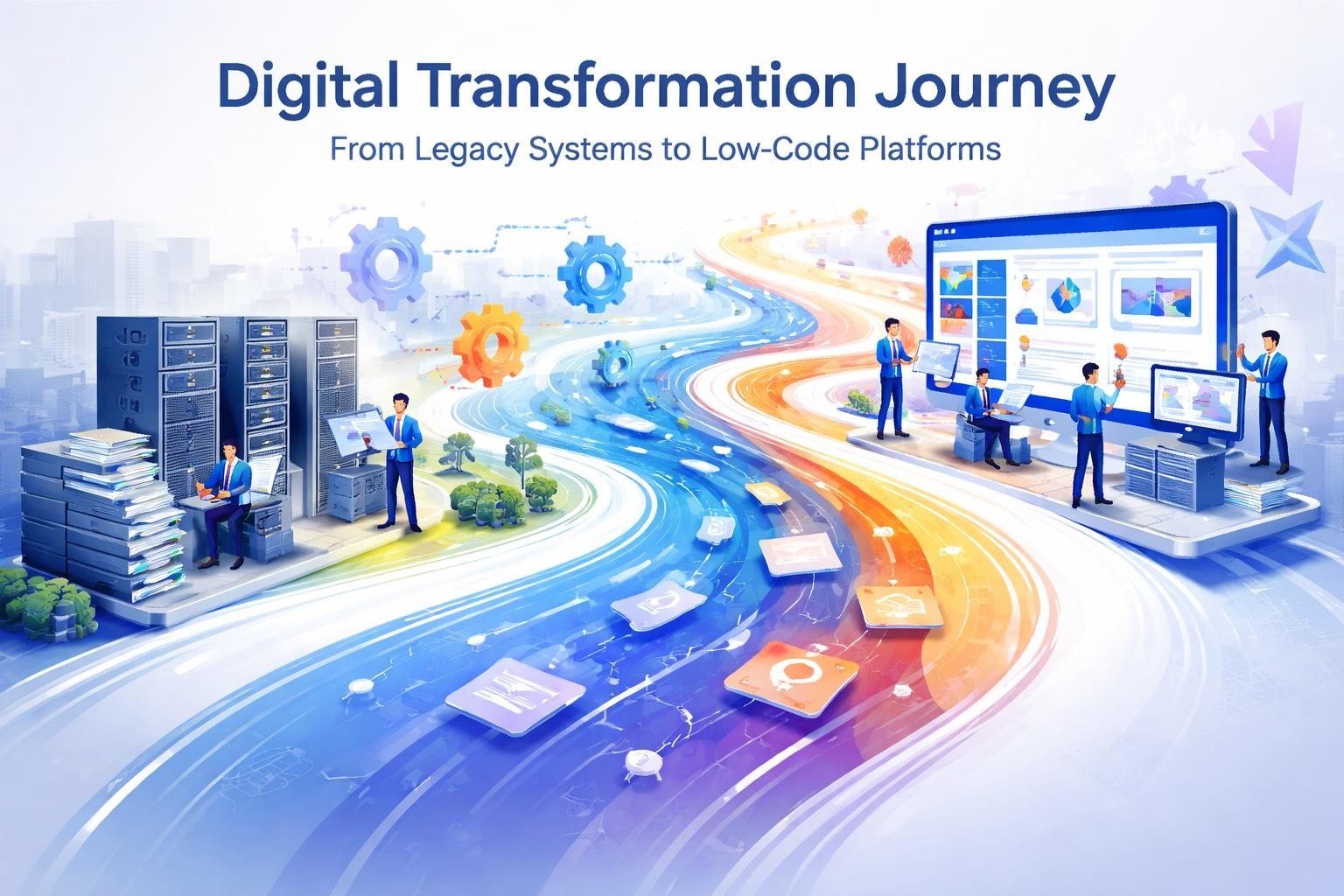
Digital transformation isn't just a buzzword anymore. It's the defining factor separating thriving businesses from those struggling to keep pace. As organizations face mounting pressure to innovate faster while controlling costs, low-code digital transformation tools have emerged as a critical enabler. These platforms empower both professional developers and business users to create sophisticated applications without extensive coding knowledge, dramatically accelerating the journey from concept to deployment. By 2026, companies that leverage these tools effectively are seeing measurable improvements in operational efficiency, customer experience, and competitive positioning.
Understanding the Low-Code Revolution
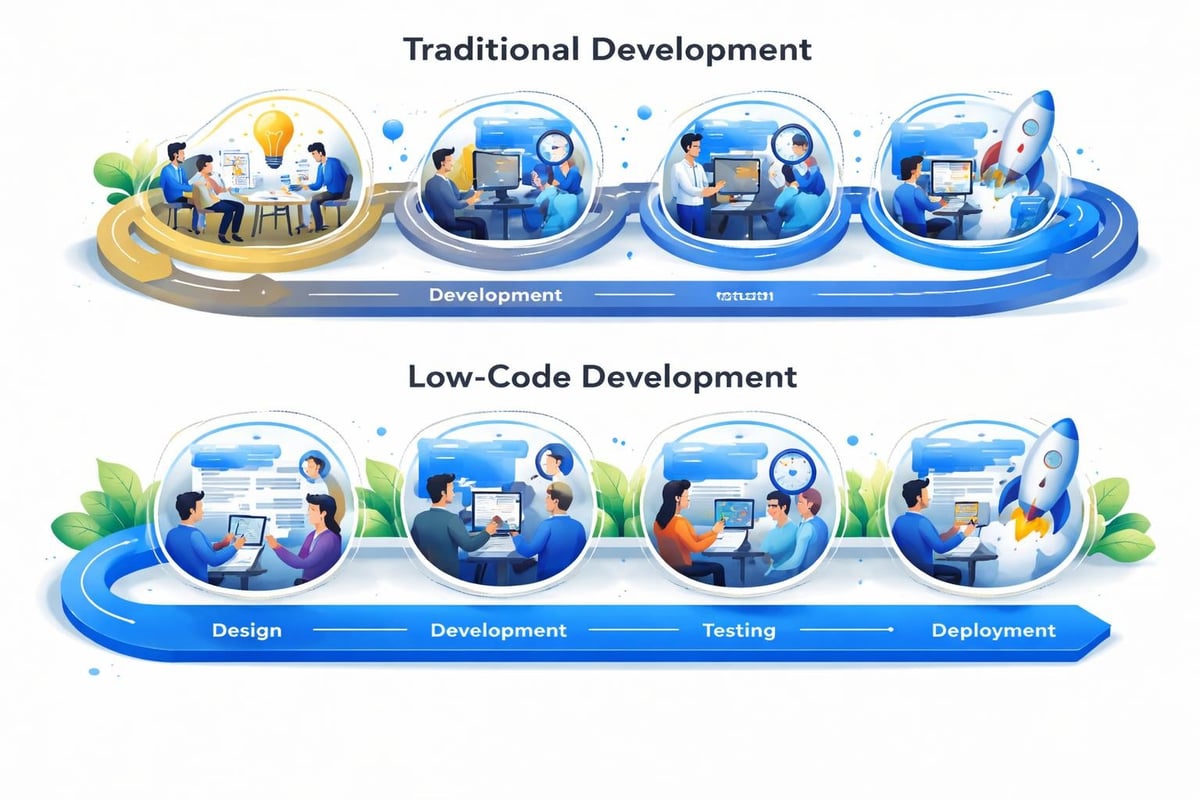
The technology landscape has fundamentally shifted in recent years. Traditional software development, with its lengthy timelines and resource-intensive processes, can no longer match the pace of modern business demands. Low-code platforms address this gap by providing visual development environments, pre-built components, and automated workflows that reduce manual coding by up to 90%.
What makes these platforms transformative:
- Visual modeling interfaces that replace hand-coded logic
- Drag-and-drop functionality for UI design and workflow creation
- Pre-built connectors for databases, APIs, and third-party services
- Automated testing and deployment capabilities
- Built-in security and compliance features
According to recent insights on low-code platforms as digital transformation accelerators, organizations implementing these tools report 50-70% faster development cycles compared to traditional methods. This speed advantage directly translates to competitive benefits, enabling businesses to respond to market changes with agility.
The Business Impact of Acceleration
Speed isn't the only benefit. Low-code digital transformation tools fundamentally change how organizations approach software development. Instead of waiting months for IT departments to build custom solutions, business units can prototype and iterate rapidly, validating ideas before committing significant resources.
This democratization of development reduces bottlenecks. Marketing teams can build campaign management tools, operations departments can create process automation workflows, and customer service can design custom support portals. All without waiting in the traditional IT queue.
Key Capabilities Driving Transformation
Modern low-code digital transformation tools offer sophisticated capabilities that extend far beyond simple form builders. These platforms now support complex enterprise requirements, from advanced data modeling to AI integration and scalable cloud architectures.
Enterprise Integration and Data Management
Integration capabilities separate basic app builders from true transformation platforms. Enterprise-grade solutions offer robust connectors for legacy systems, cloud services, and modern APIs. This connectivity is essential for creating unified experiences that span multiple systems.
For organizations exploring enterprise integration platforms, the ability to connect disparate data sources without custom coding accelerates digital initiatives significantly. Research on model-driven low-code approaches for Cloud-of-Things applications demonstrates how these platforms handle complex integration scenarios efficiently.
| Integration Type | Traditional Approach | Low-Code Approach |
|---|---|---|
| REST API Connection | 2-3 days custom code | 30 minutes configuration |
| Database Migration | 1-2 weeks development | 2-3 days setup |
| Legacy System Bridge | 4-6 weeks coding | 1 week implementation |
| Third-Party Service | 3-5 days per service | 1-2 hours per service |
Workflow Automation and Process Optimization
Business process automation represents one of the most immediate value drivers. Low-code platforms enable organizations to digitize manual workflows, eliminate redundant data entry, and create intelligent routing based on business rules.
Common automation scenarios include:
- Approval workflows with conditional logic
- Document generation and distribution
- Customer onboarding sequences
- Invoice processing and reconciliation
- Inventory management triggers
- Employee request handling
These automations don't just save time. They improve accuracy, create audit trails, and free employees to focus on higher-value activities. Companies implementing workflow automation through low-code tools typically see ROI within 6-12 months.
Empowering Citizen Developers
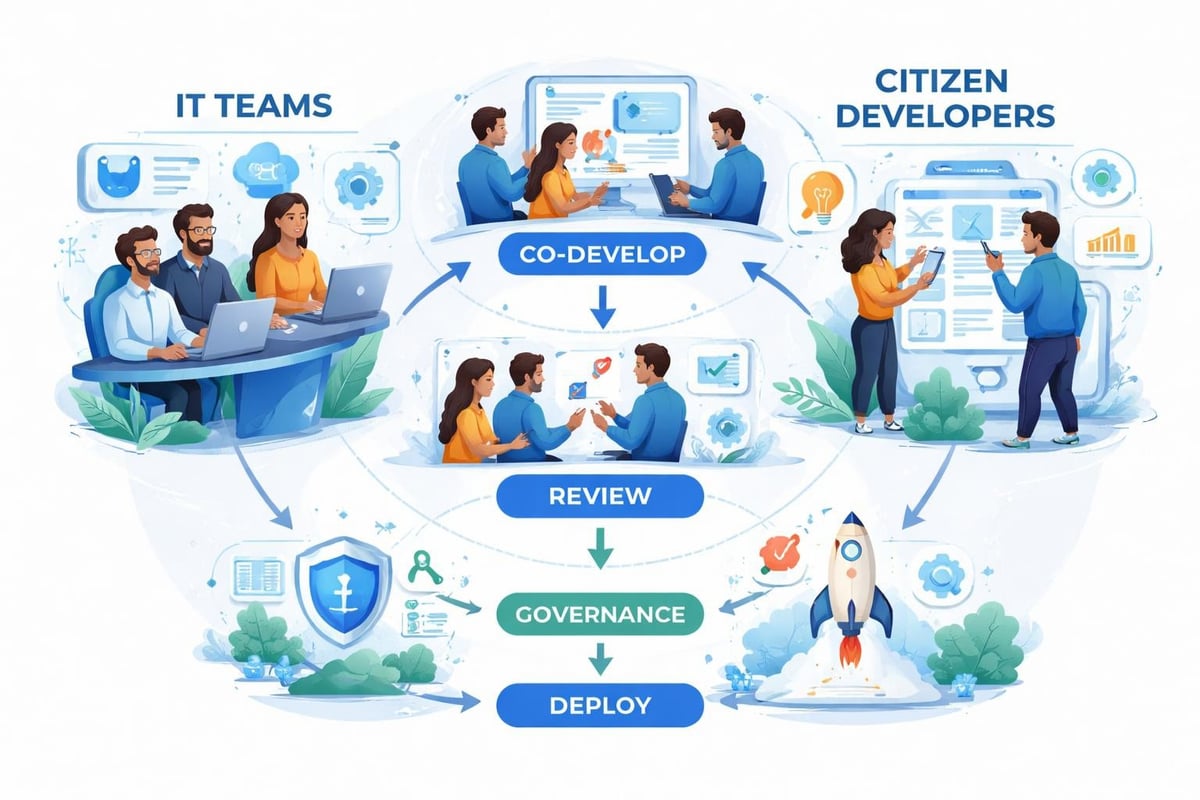
The rise of citizen developers represents a fundamental shift in how organizations approach technology creation. These business users, equipped with domain expertise but limited coding skills, can now build functional applications that solve real problems.
This democratization doesn't eliminate the need for professional developers. Instead, it creates a partnership model where IT teams focus on architecture, security, and complex integrations while business users handle departmental applications and process improvements.
Governance and Control
Successful citizen developer programs require proper governance frameworks. Organizations must balance empowerment with oversight, ensuring applications meet security standards, compliance requirements, and architectural guidelines.
Essential governance elements:
- Application review processes before production deployment
- Security scanning and vulnerability assessment
- Data access controls and permission management
- Version control and change tracking
- Performance monitoring and optimization
- Documentation and knowledge transfer requirements
When exploring application development platforms, enterprises prioritize those offering robust governance features alongside ease of use. This balance ensures innovation doesn't compromise security or create technical debt.
Industry-Specific Applications
Different sectors leverage low-code digital transformation tools in unique ways, addressing industry-specific challenges while maintaining compliance and security standards.
Financial Services and Banking
Banks and financial institutions use low-code platforms to modernize customer-facing applications while maintaining strict regulatory compliance. From mobile banking features to loan origination systems, these tools enable rapid iteration without compromising security.
The ability to quickly adapt to regulatory changes proves invaluable. When new compliance requirements emerge, banks can update processes and interfaces in days rather than months.
Healthcare and Life Sciences
Healthcare providers leverage low-code solutions for patient portals, appointment scheduling, telemedicine platforms, and internal workflow management. The framework for rapid development of machine learning applications in Industrial IoT shows similar principles applied in clinical settings for predictive analytics and patient monitoring.
Privacy and security features built into enterprise low-code platforms help healthcare organizations maintain HIPAA compliance while innovating patient care delivery.
Manufacturing and Supply Chain
Manufacturers deploy low-code applications for inventory management, quality control, production scheduling, and supplier coordination. Real-time dashboards provide visibility across complex supply chains, enabling proactive decision-making.
Companies building internal dashboards with modern tools gain instant visibility into operations, identifying bottlenecks and optimization opportunities that traditional reporting systems miss.
Cost Efficiency and ROI Considerations
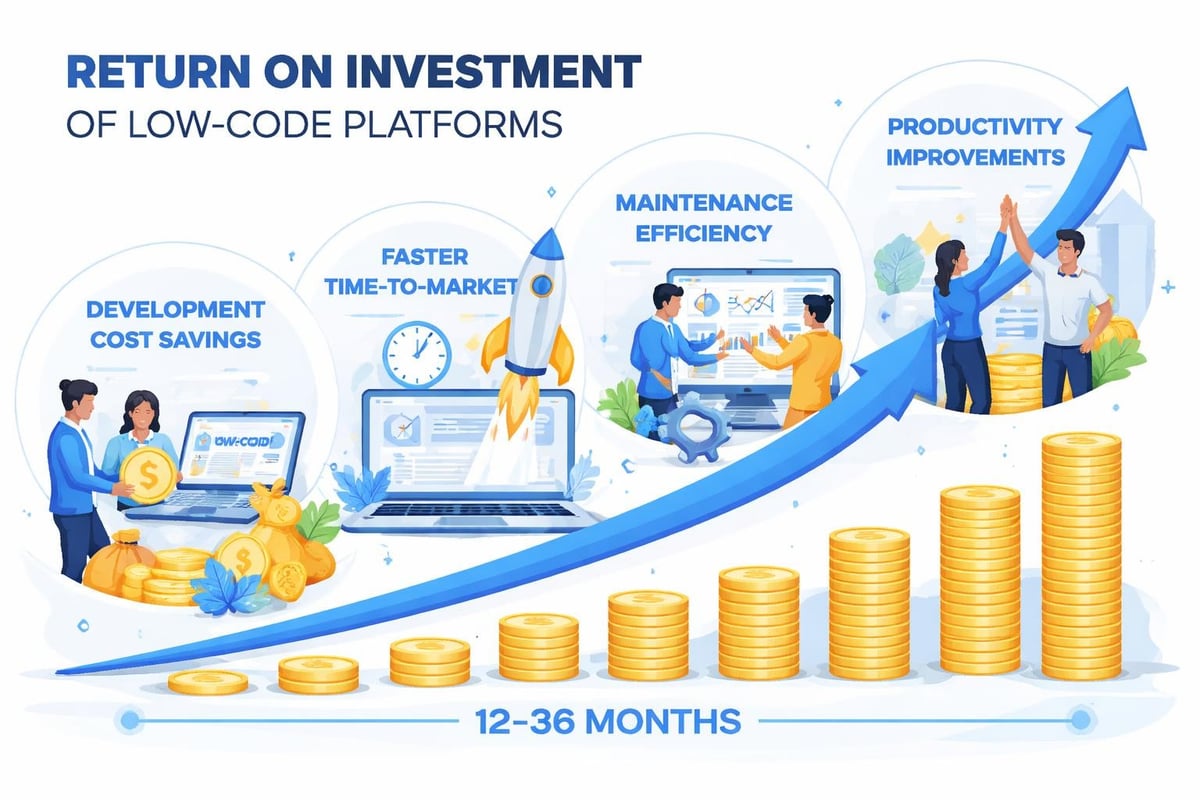
Financial justification for low-code digital transformation tools extends beyond development speed. Organizations experience cost savings across multiple dimensions, from reduced licensing fees to lower maintenance overhead.
Total Cost of Ownership Analysis
| Cost Factor | Traditional Development | Low-Code Platform |
|---|---|---|
| Initial Development | $150K - $500K | $30K - $100K |
| Annual Maintenance | 15-20% of initial cost | 5-10% of initial cost |
| Update Cycles | 6-12 months per release | 2-4 weeks per release |
| Developer Resources | 3-5 full-time specialists | 1-2 developers + citizen developers |
| Infrastructure | Separate hosting/licensing | Included in platform |
According to comprehensive analysis of low-code benefits for digital transformation, organizations typically achieve 300-500% ROI within the first year of implementation when factoring in development speed, reduced resource requirements, and operational improvements.
Hidden Value Creation
Beyond direct cost savings, low-code platforms generate value through faster time-to-market, improved employee satisfaction, and enhanced customer experiences. Business units solving their own problems reduces IT backlog, allowing technical teams to focus on strategic initiatives.
The ability to prototype and validate ideas quickly reduces wasted investment in features users don't want. Building MVPs with modern platforms enables rapid market testing and iterative refinement based on real user feedback.
Selecting the Right Platform
Choosing appropriate low-code digital transformation tools requires careful evaluation of organizational needs, technical requirements, and strategic objectives. Not all platforms offer the same capabilities or align with every use case.
Evaluation Criteria for Enterprise Adoption
Technical capabilities to assess:
- Scalability for enterprise workloads
- Security certifications and compliance support
- Integration options for existing systems
- Customization and extensibility features
- Performance under production loads
- Mobile application support
- AI and advanced analytics capabilities
Organizational fit factors:
- Learning curve for intended users
- Vendor support and training resources
- Community size and ecosystem health
- Pricing model and total cost predictability
- Migration and exit strategy options
The landscape of digital transformation tools continues evolving, with new platforms emerging regularly. Organizations benefit from piloting multiple solutions with small projects before committing to enterprise-wide deployment.
Implementation Best Practices
Successful deployment of low-code digital transformation tools requires strategic planning and organizational change management. Technology alone doesn't guarantee transformation success.
Phased Rollout Strategy
Smart organizations start small, proving value with pilot projects before expanding platform use across departments. This approach builds confidence, develops internal expertise, and identifies potential challenges in controlled environments.
- Discovery Phase: Identify high-value use cases with manageable scope
- Pilot Implementation: Build 2-3 applications with mixed teams
- Evaluation Period: Measure results against traditional development
- Training Investment: Develop internal capability across business units
- Governance Establishment: Create frameworks for broader adoption
- Scaled Deployment: Expand to additional departments and use cases
- Continuous Improvement: Refine processes based on lessons learned
Organizations that rush deployment without proper governance often create shadow IT problems, security vulnerabilities, or unsustainable application portfolios requiring eventual remediation.
Building Internal Expertise
Training programs should target multiple audiences. Professional developers need platform-specific technical training, while citizen developers require guidance on best practices, security awareness, and design principles.
Partnerships with agencies specializing in these platforms can accelerate capability development. Whether working with specialized agencies or building internal teams, organizations benefit from expert guidance during initial implementations.
Future Trends and Evolution
The low-code landscape continues advancing rapidly. Understanding emerging trends helps organizations make strategic platform selections and prepare for next-generation capabilities.
AI-Powered Development
Artificial intelligence increasingly enhances low-code platforms. Natural language interfaces allow users to describe desired functionality in plain English, with AI generating appropriate logic and interfaces. Code suggestion engines recommend optimal approaches based on project patterns.
These AI capabilities don't replace human judgment. They accelerate routine tasks and help less experienced developers avoid common pitfalls. As AI tools integrate with development platforms, the line between low-code and traditional development continues blurring.
Edge Computing and IoT Integration
As IoT deployments expand, low-code platforms are adding capabilities for edge computing scenarios. Applications can process data closer to sensors and devices, reducing latency and bandwidth requirements while maintaining central coordination.
This evolution makes low-code digital transformation tools viable for manufacturing, logistics, and smart building applications previously requiring specialized embedded development.
Industry-Specific Solutions
Platform vendors increasingly offer pre-built solutions tailored to specific industries. Healthcare platforms include HIPAA-compliant patient management templates. Financial services platforms provide KYC workflows and regulatory reporting modules. Manufacturing platforms offer production scheduling and quality control components.
These vertical solutions accelerate time-to-value while ensuring compliance with industry standards and regulations.
Security and Compliance Considerations
Enterprise adoption of low-code platforms requires rigorous security evaluation. While these tools include built-in security features, organizations must understand their responsibilities versus vendor-provided protections.
Critical security aspects:
- Data encryption at rest and in transit
- Role-based access control implementation
- Authentication and authorization frameworks
- Audit logging and monitoring capabilities
- Vulnerability scanning and patch management
- Compliance certifications (SOC 2, ISO 27001, GDPR)
KPMG's analysis of low-code platforms for digital transformation emphasizes that security should be evaluated during platform selection rather than addressed retroactively. Organizations operating in regulated industries must verify platforms meet specific compliance requirements before deployment.
Data Governance Frameworks
Proper data governance ensures low-code applications handle information appropriately. Organizations need policies covering data classification, retention, access controls, and disposal procedures that apply consistently across all applications regardless of development approach.
Citizen developers require training on data handling best practices. Even simple applications can create compliance issues if personal information, financial data, or proprietary content isn't managed correctly.
Measuring Transformation Success
Quantifying the impact of low-code digital transformation tools helps justify continued investment and identify optimization opportunities. Organizations should establish metrics before implementation to track progress objectively.
| Success Metric | Measurement Method | Target Improvement |
|---|---|---|
| Development Speed | Time from concept to production | 50-70% reduction |
| Development Cost | Total project expenditure | 40-60% reduction |
| Maintenance Burden | Hours spent on updates/fixes | 30-50% reduction |
| IT Backlog | Number of pending requests | 25-40% reduction |
| User Satisfaction | Application usability scores | 20-30% improvement |
| Business Agility | Time to implement process changes | 60-80% reduction |
Beyond quantitative metrics, qualitative feedback provides valuable insights. Regular surveys of both developers and end-users identify pain points and opportunities for platform optimization or additional training.
Organizations should review metrics quarterly, adjusting strategies based on results. Early wins build momentum for broader adoption while identifying challenges requiring attention.
Low-code digital transformation tools represent more than a development shortcut. They fundamentally reshape how organizations approach innovation, enabling rapid experimentation and deployment while maintaining enterprise-grade security and scalability. Whether you're modernizing legacy systems, building customer-facing applications, or empowering business users to solve departmental challenges, the right platform accelerates your digital journey significantly. Big House Technologies specializes in helping enterprises and startups leverage Bubble's no-code and Lovable's AI platforms to transform ideas into production-ready solutions quickly and cost-effectively, providing comprehensive support from initial scoping through deployment and beyond.

About Big House
Big House is committed to 1) developing robust internal tools for enterprises, and 2) crafting minimum viable products (MVPs) that help startups and entrepreneurs bring their visions to life.
If you'd like to explore how we can build technology for you, get in touch. We'd be excited to discuss what you have in mind.
Other Articles
Discover the 7 best business soft solutions for 2025. Compare features, pricing, and benefits to find the ideal software to boost productivity and growth.
Discover the latest trends, tools, and best practices shaping software in development for 2025. Stay ahead with actionable insights and future-ready strategies.
Build powerful AI voice apps in 2026 with no-code platforms. Learn best practices, development strategies, and implementation tips for success.