
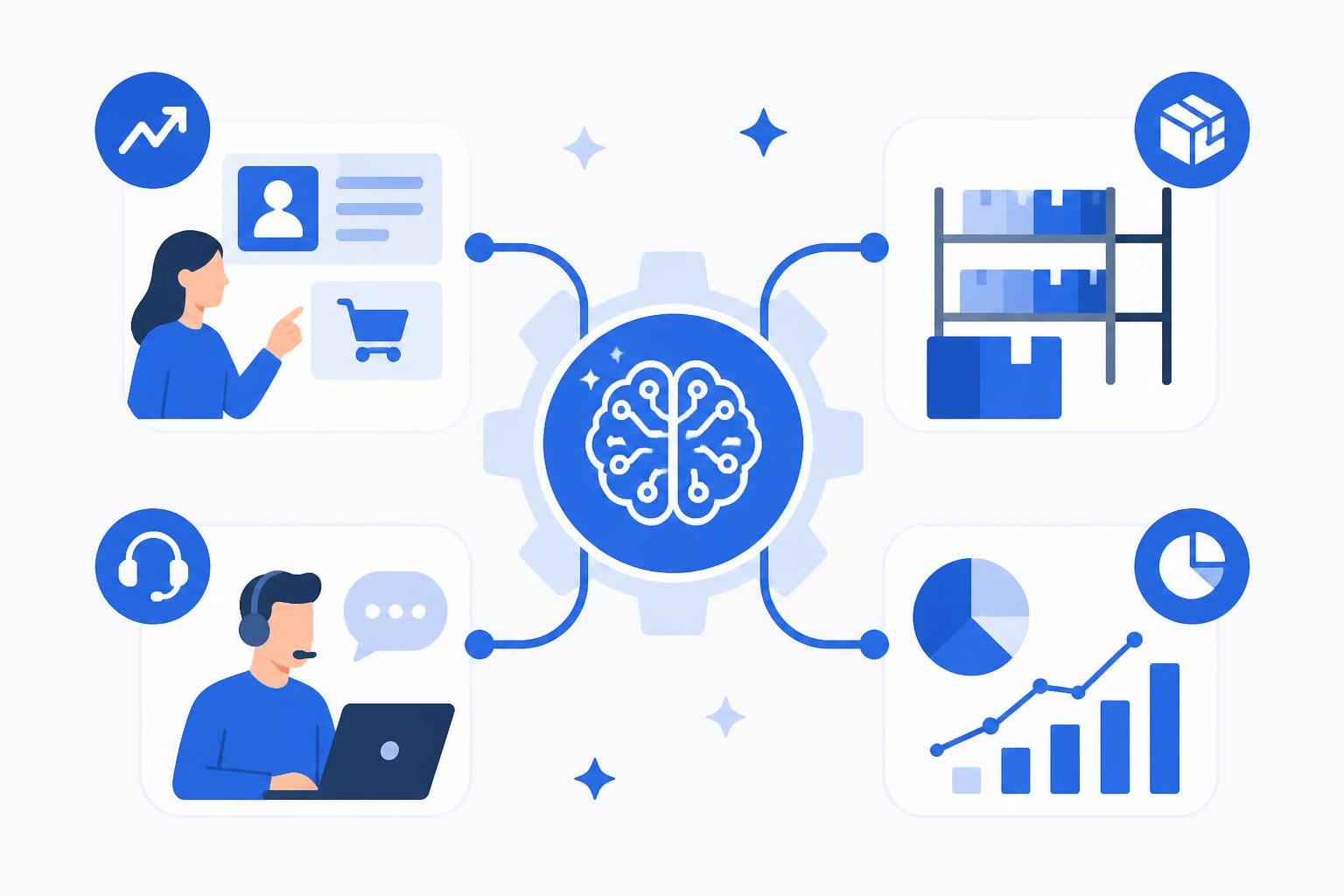
The integration of artificial intelligence into enterprise resource planning systems has fundamentally changed how businesses operate in 2026. Odoo AI represents a significant leap forward in making sophisticated automation accessible to companies of all sizes. Rather than requiring extensive technical expertise or massive budgets, businesses can now leverage intelligent features that understand context, automate repetitive tasks, and provide actionable insights directly within their existing workflows. This democratization of AI technology aligns perfectly with the broader movement toward accessible business solutions, much like how no-code platforms have transformed enterprise development.
Understanding Odoo AI Capabilities
Odoo AI encompasses a comprehensive suite of intelligent features designed to enhance productivity across every business function. The platform doesn't just add AI as an afterthought but weaves it throughout the entire ecosystem.
At its core, the AI functionalities within Odoo include context-aware assistants, automated data processing, intelligent search capabilities, and predictive analytics. These features work together to reduce manual effort while improving accuracy and decision-making speed.
Three Layers of Intelligence
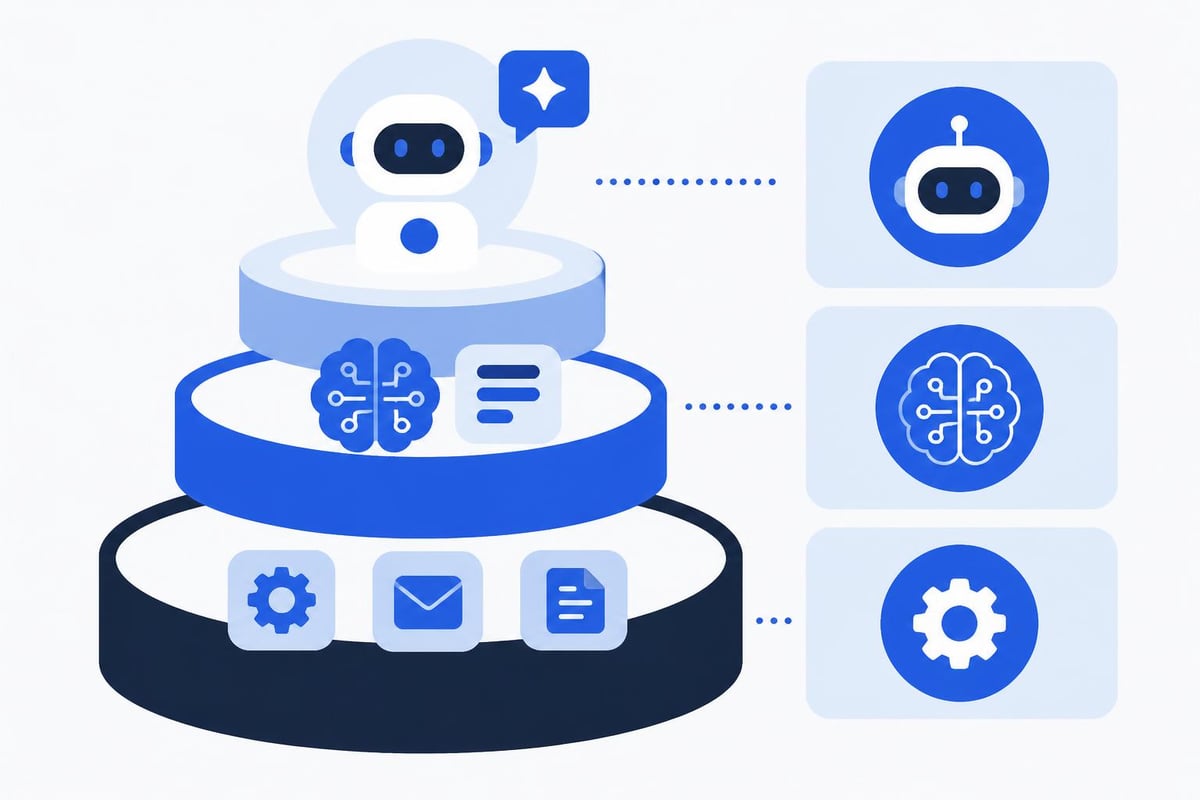
The architecture of Odoo AI operates on three distinct levels that work in harmony:
- Automation Layer - Handles routine tasks like data entry, report generation, and workflow triggers
- Intelligence Layer - Analyzes patterns, provides recommendations, and predicts outcomes
- Agent Layer - Custom AI assistants trained on your specific business knowledge and processes
This layered approach ensures that businesses can start with basic automation and gradually adopt more sophisticated capabilities as their needs evolve. The flexibility mirrors the scalability that enterprises expect from modern business solutions.
Practical Applications Across Business Functions
The real value of Odoo AI emerges when examining specific use cases across different departments. Each module within the Odoo ecosystem benefits from targeted AI enhancements that address industry-specific challenges.
Sales and CRM Enhancement
Sales teams benefit from AI-powered lead scoring that automatically prioritizes prospects based on historical conversion data and engagement patterns. The system analyzes communication history, website interactions, and demographic information to recommend the next best action for each opportunity.
Key features include:
- Automated email response suggestions based on customer context
- Intelligent meeting scheduling that considers time zones and preferences
- Revenue forecasting using machine learning algorithms
- Customer sentiment analysis from communication history
Inventory and Supply Chain Optimization
Inventory management receives a significant boost through predictive analytics that forecast demand patterns with remarkable accuracy. The AI capabilities in Odoo analyze seasonal trends, historical sales data, and external factors to optimize stock levels.
| Feature | Traditional Approach | Odoo AI Approach |
|---|---|---|
| Reorder Points | Fixed thresholds | Dynamic based on trends |
| Demand Forecasting | Manual analysis | Automated predictions |
| Supplier Selection | Experience-based | Data-driven scoring |
| Stock Allocation | First-come-first-serve | Priority-based intelligence |
The system automatically adjusts reorder points, suggests optimal purchase quantities, and even recommends alternative suppliers when primary vendors face delays.
Customer Service Automation
Customer support teams leverage AI chatbots that handle routine inquiries while escalating complex issues to human agents. These virtual assistants learn from every interaction, continuously improving their ability to resolve customer questions.
The intelligent routing system analyzes ticket content, customer history, and agent expertise to assign cases optimally. This ensures that customers reach the right person faster, reducing resolution time and improving satisfaction scores.
Building Custom AI Agents in Odoo
One of the most powerful aspects of Odoo AI is the ability to create custom AI agents tailored to specific business needs. These agents go beyond generic chatbots to become specialized assistants with deep knowledge of your operations.
Training Your AI Assistant
The process of creating a custom agent involves several strategic steps:
- Define the agent's scope and responsibilities
- Feed it relevant documentation and business knowledge
- Connect it to appropriate Odoo modules and data sources
- Test with real scenarios and refine responses
- Deploy and monitor performance metrics
Building custom AI agents in Odoo requires no coding expertise. The platform provides intuitive interfaces where you can upload documents, set parameters, and configure integration points through visual workflows. This approach mirrors the philosophy behind AI-powered development platforms that prioritize accessibility without sacrificing capability.
Integration With Business Processes
Custom agents integrate seamlessly into existing workflows. For example, a procurement agent might monitor inventory levels, analyze supplier performance data, and automatically initiate purchase orders when specific conditions are met. The agent can answer employee questions about ordering procedures, track shipment status, and even negotiate better terms based on historical data patterns.
Common agent use cases:
- HR onboarding assistant guiding new employees through paperwork and policies
- Finance agent answering questions about expense policies and approvals
- Technical support bot troubleshooting common software issues
- Compliance checker validating documents against regulatory requirements
AI-Powered Content Creation and Communication
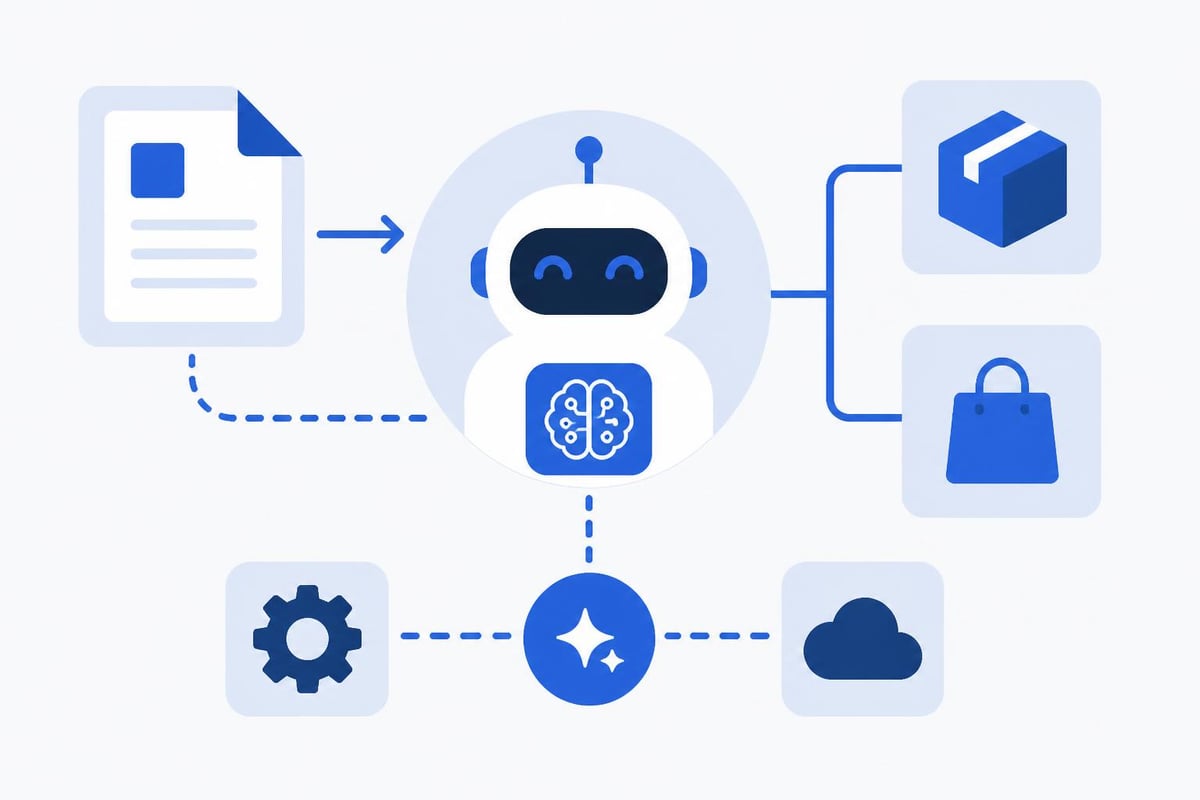
Content generation represents another frontier where Odoo AI delivers substantial value. The platform assists with drafting emails, creating product descriptions, generating social media posts, and even composing marketing copy.
The AI writing assistant understands context from your CRM data, previous communications, and product information. When drafting an email to a customer, it automatically pulls relevant details about their purchase history, outstanding invoices, and recent interactions to craft personalized messages.
Smart Search and Data Discovery
Finding information across a large ERP system traditionally required knowing exactly where to look. The AI-powered search function in Odoo understands natural language queries and searches across all connected modules simultaneously.
Instead of navigating through menus and filters, users can simply ask "show me all overdue invoices from European customers over 10,000 euros" and receive immediate results. The system interprets intent, applies appropriate filters, and even suggests related information that might be relevant.
Predictive Analytics and Business Intelligence
Odoo AI transforms raw data into actionable insights through sophisticated predictive models. The platform analyzes historical trends, identifies patterns, and forecasts future outcomes across various business metrics.
Revenue and Financial Forecasting
Financial planning becomes more accurate when AI models analyze multiple variables simultaneously. The system considers seasonal patterns, market conditions, sales pipeline health, and historical performance to project revenue with greater precision than traditional spreadsheet methods.
Cash flow predictions help businesses anticipate shortfalls and optimize payment schedules. The AI identifies patterns in customer payment behavior and vendor terms to recommend optimal timing for major expenditures.
Human Resources Analytics
AI reshaping Odoo ERP extends into talent management and HR functions. The platform can screen applicant resumes, match candidates to job requirements, and even analyze essay responses for cultural fit.
Performance analytics identify trends in employee productivity, predict turnover risk, and recommend training interventions. This data-driven approach to human capital management helps organizations retain top talent and develop more effective teams.
| Analytics Type | Insights Provided | Business Impact |
|---|---|---|
| Sales Trends | Product performance, regional variations | Optimized inventory allocation |
| Customer Behavior | Purchase patterns, churn indicators | Targeted retention campaigns |
| Operational Efficiency | Bottlenecks, resource utilization | Process improvements |
| Financial Health | Cash flow gaps, expense anomalies | Better financial planning |
Implementation Considerations for Enterprises
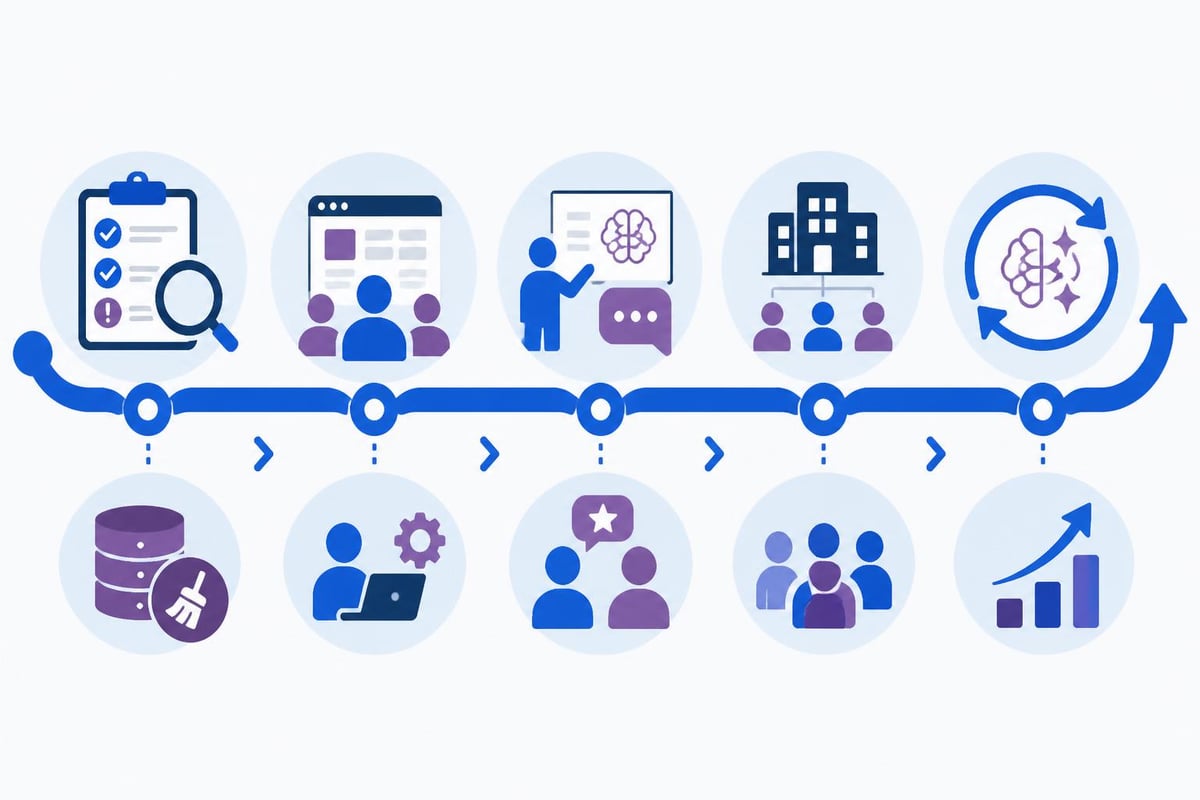
Deploying Odoo AI within an enterprise environment requires careful planning to maximize value while managing change effectively. Organizations must consider data quality, user adoption, and integration with existing systems.
Data Quality and Preparation
AI models are only as good as the data they're trained on. Before implementing Odoo AI features, businesses should audit their existing data for completeness, accuracy, and consistency. Cleaning historical records and establishing data governance policies ensures that AI-generated insights are reliable.
Critical preparation steps:
- Standardize data formats across modules
- Remove duplicate records and outdated information
- Establish clear data entry protocols for staff
- Define access controls and privacy policies
- Create feedback loops for continuous improvement
User Training and Change Management
The most sophisticated AI features deliver little value if employees don't understand or trust them. Comprehensive training programs should emphasize how AI augments human capabilities rather than replacing workers.
Successful implementations typically start with a pilot program in one department, gathering feedback and demonstrating wins before rolling out more broadly. Champions within each department can help colleagues understand practical applications and overcome resistance.
Comparing Odoo AI to Other Business Automation Solutions
When evaluating Odoo AI against alternatives, several distinguishing factors emerge. Unlike standalone AI tools that require complex integrations, Odoo's native AI capabilities work seamlessly across all modules because they're built into the platform's foundation.
The cost structure also differs significantly from enterprise AI solutions that charge per API call or user. Odoo AI features are included in the platform licensing, making sophisticated automation accessible to smaller businesses that might otherwise find such capabilities prohibitively expensive.
Integration With No-Code Development
For businesses already leveraging no-code platforms, Odoo AI can complement these tools effectively. Organizations building custom applications might use no-code platforms for customer-facing interfaces while relying on Odoo AI for backend operations and data processing.
The API-first architecture of Odoo allows developers to connect AI features to external applications. This flexibility enables hybrid approaches where businesses use the best tool for each specific need while maintaining data synchronization across systems.
Future Directions and Emerging Capabilities
The Odoo AI roadmap for 2026 and beyond includes several exciting developments that will further enhance business automation. Advanced natural language processing will enable more nuanced understanding of context, while computer vision capabilities will add visual analysis to workflows.
Predictive maintenance models will help manufacturers anticipate equipment failures before they occur. Supply chain optimization algorithms will become more sophisticated, accounting for geopolitical factors and climate events that impact logistics.
The platform continues expanding its agent marketplace, where businesses can access pre-trained AI assistants for specific industries and use cases. This ecosystem approach accelerates implementation by providing proven solutions that organizations can customize to their needs.
Ethical AI and Transparency
As AI becomes more prevalent in business operations, Odoo emphasizes transparency in how algorithms make decisions. The platform provides explanation features that show users why certain recommendations were made and which data points influenced predictions. This transparency builds trust and helps organizations meet regulatory requirements around AI governance.
Privacy protections ensure that sensitive business data remains secure while still enabling powerful AI analysis. The comprehensive documentation on Odoo's AI functionalities includes detailed information about data handling and security measures.
Maximizing ROI From Odoo AI Implementation
Measuring the return on investment from AI features requires establishing clear baselines before implementation and tracking relevant metrics afterward. Common KPIs include time saved on routine tasks, reduction in errors, improvement in forecast accuracy, and increase in employee productivity.
ROI measurement framework:
- Identify processes where AI will be applied
- Document current performance metrics (time, cost, accuracy)
- Set realistic improvement targets
- Track actual results after deployment
- Calculate cost savings and productivity gains
- Adjust implementation based on findings
Beyond quantitative metrics, qualitative benefits like improved employee satisfaction and better customer experiences contribute significantly to overall value. Staff spending less time on data entry can focus more energy on strategic thinking and relationship building.
The scalability of Odoo AI means that benefits compound over time as more processes incorporate intelligent automation. Early adopters within an organization often discover additional use cases once they experience the technology firsthand, creating a virtuous cycle of innovation and efficiency improvement.
Odoo AI represents a fundamental shift in how businesses can leverage intelligent automation without requiring deep technical expertise or massive budgets. By embedding AI throughout its ERP platform, Odoo makes sophisticated capabilities accessible to organizations of all sizes. If you're ready to explore how intelligent automation can transform your business operations, Big House Technologies specializes in helping enterprises and startups implement scalable solutions using cutting-edge no-code and AI platforms. Our team brings deep expertise in scoping, designing, and deploying systems that deliver measurable results on time and within budget.

About Big House
Big House is committed to 1) developing robust internal tools for enterprises, and 2) crafting minimum viable products (MVPs) that help startups and entrepreneurs bring their visions to life.
If you'd like to explore how we can build technology for you, get in touch. We'd be excited to discuss what you have in mind.
Other Articles
Discover everything beginners need to know about software designers in 2025. Learn roles, skills, tools, and career tips to start your design journey today.
Unlock creative AI art in 2025 with our Dream by Wombo guide Explore features tips and real world uses Start making stunning art effortlessly today
Discover 9 essential ai powered no code development tools for 2026 that accelerate app creation and empower non technical users to innovate faster and smarter