
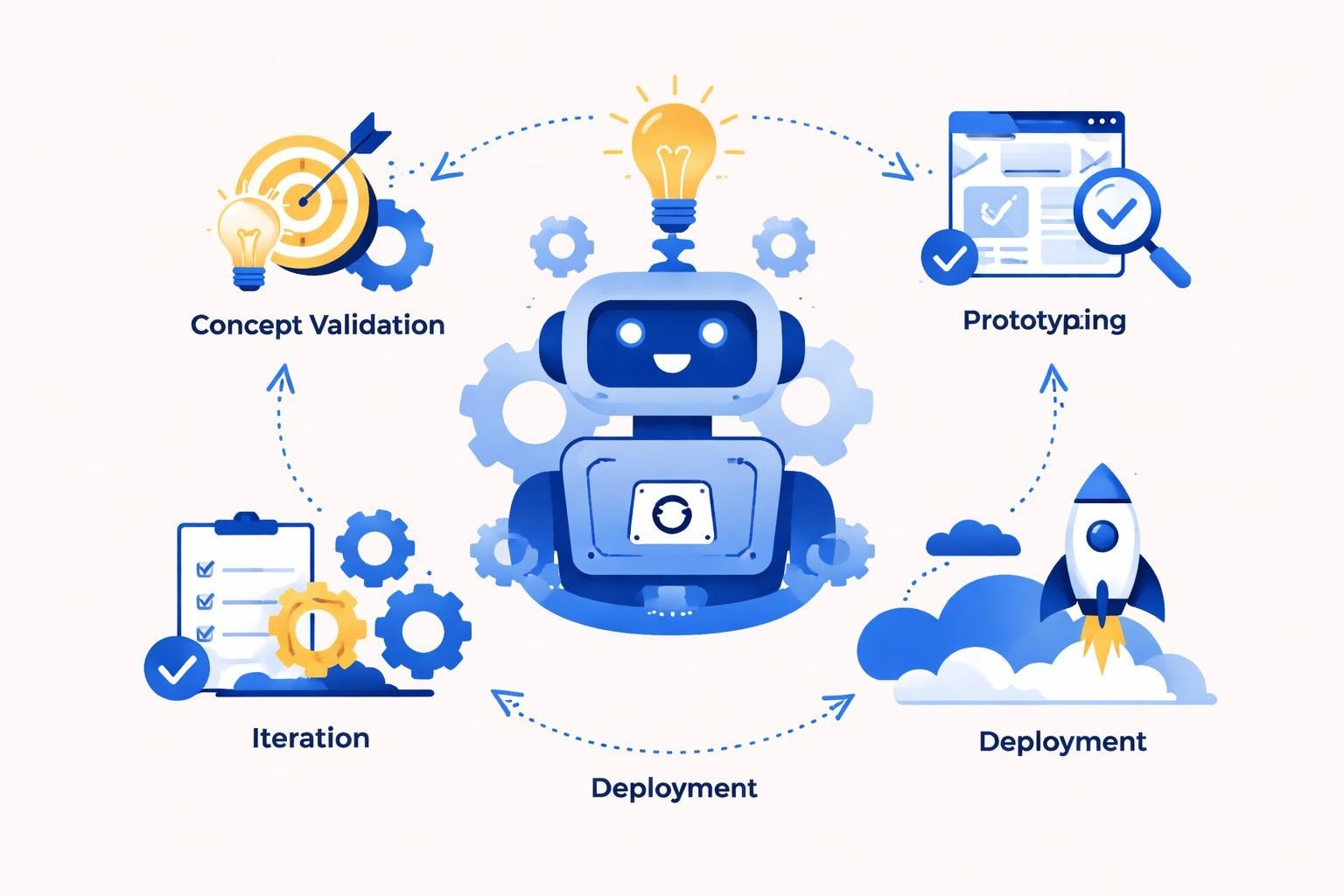
Building a minimum viable product no longer requires months of development and substantial upfront investment. The convergence of artificial intelligence and no-code platforms has fundamentally transformed how founders, product teams, and enterprises bring ideas to market. Today's ai tools for rapid mvp building enable teams to validate concepts, iterate on feedback, and launch functional products in weeks rather than quarters, democratizing software development for technical and non-technical builders alike.
The New Landscape of AI-Powered MVP Development
The traditional MVP development process involved hiring developers, writing extensive code, managing infrastructure, and navigating complex deployment pipelines. This approach created barriers for entrepreneurs with limited technical expertise or budget constraints.
Modern ai tools for rapid mvp building have dismantled these barriers through intelligent automation and visual development interfaces. These platforms leverage machine learning models to generate code, suggest optimal architectures, automate testing procedures, and even predict user behavior patterns. The result is a dramatically compressed timeline from concept to launch.
Key advantages of AI-enhanced MVP development include:
- Automated code generation from natural language descriptions
- Intelligent component libraries that adapt to project requirements
- Real-time error detection and correction during development
- Predictive analytics for feature prioritization
- Automated testing and quality assurance workflows
The shift toward AI-assisted MVP development has created opportunities for businesses to experiment with multiple product variations simultaneously, testing different value propositions with minimal resource commitment.
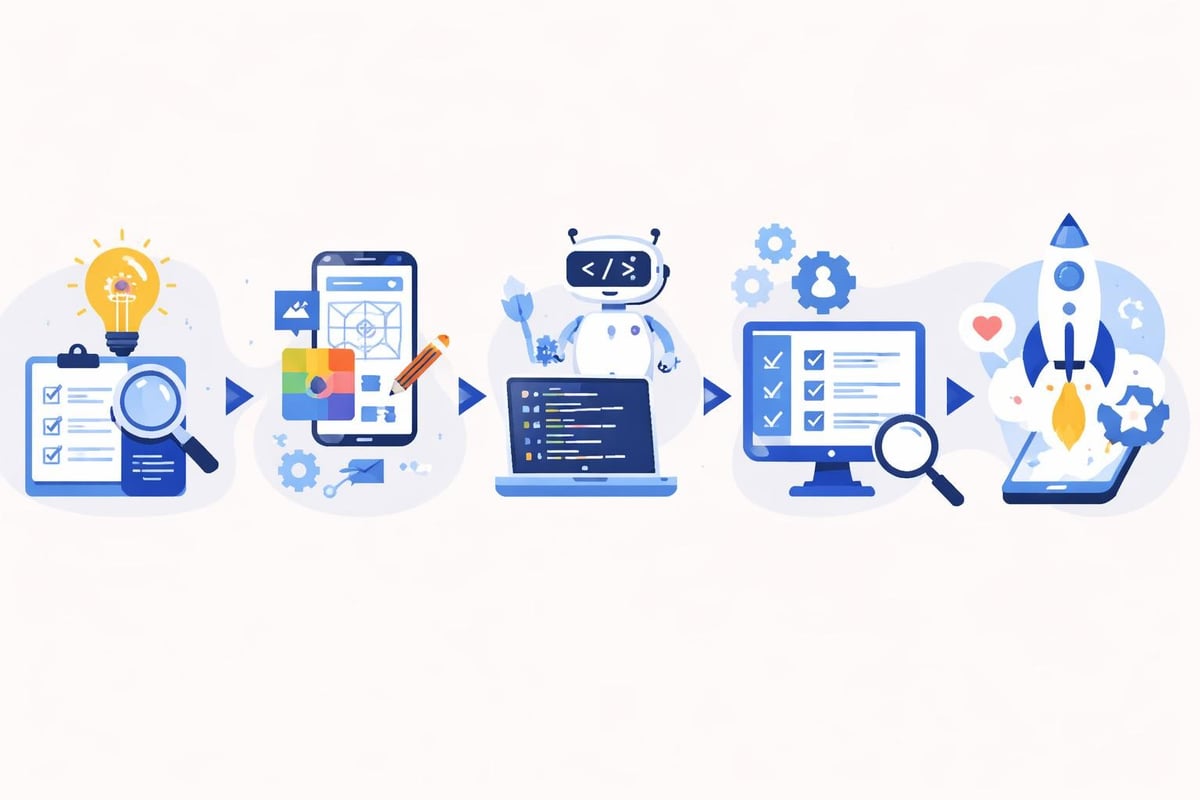
Essential AI Platforms for No-Code MVP Creation
Selecting the right platform depends on project complexity, team composition, and specific functional requirements. The ecosystem has matured significantly, offering specialized solutions for different use cases.
Visual Development Platforms with AI Integration
Bubble represents one of the most comprehensive platforms for building scalable web applications without traditional coding. When combined with AI capabilities, Bubble enables developers to create sophisticated database structures, complex workflows, and responsive interfaces through visual programming. The platform's plugin ecosystem includes numerous AI integrations for natural language processing, image recognition, and predictive analytics.
Lovable takes a different approach by using AI to generate production-ready code from conversational inputs. Developers describe features in plain language, and the platform translates these descriptions into functional components. This methodology proves particularly effective for teams transitioning from concept sketches to working prototypes.
For enterprise applications requiring advanced AI integration, platforms like Vertex AI provide managed machine learning infrastructure that connects seamlessly with no-code builders. This combination allows teams to incorporate sophisticated AI models without managing complex ML operations.
Database and Backend Automation Tools
Modern ai tools for rapid mvp building extend beyond front-end development into backend infrastructure and data management. Platforms like Xano and Supabase offer AI-powered database design tools that suggest optimal schema structures based on application requirements.
| Platform Type | Primary Use Case | AI Capabilities | Best For |
|---|---|---|---|
| Visual Builders | Full-stack apps | Code generation, UI design | Startups, web apps |
| Backend Platforms | API and database | Schema optimization, query suggestions | Mobile apps, SaaS |
| Workflow Automation | Business logic | Process automation, decision trees | Enterprise tools |
| Testing Frameworks | Quality assurance | Bug detection, test generation | All projects |
These platforms analyze data relationships and automatically generate API endpoints, authentication systems, and data validation rules. The integration with front-end builders creates a seamless development environment where changes propagate automatically across the stack.
Accelerating Development with AI-Generated Components
Component libraries have evolved from static templates to intelligent systems that adapt based on project context. Modern ai tools for rapid mvp building include generative capabilities that create custom UI elements, workflow automations, and integration connectors on demand.
When building an MVP, speed matters as much as functionality. AI-powered component generation allows teams to describe desired functionality and receive working implementations within minutes. For example, requesting "a user authentication system with email verification and password reset" produces a complete authentication flow with all necessary screens, logic, and security measures.
The component generation process typically includes:
- Natural language description of required functionality
- AI analysis of project architecture and existing components
- Automatic generation of UI elements and logic flows
- Integration with existing database structures and APIs
- Suggestion of relevant third-party integrations
- Automated testing of generated components
This approach significantly reduces the time spent on boilerplate code and common functionality, allowing teams to focus on unique value propositions. Building MVPs with no-code tools becomes accessible even for non-technical founders when AI handles technical implementation details.
Smart Integration and API Management
Connecting various services represents a significant time investment in traditional development. AI tools streamline this process by automatically generating integration code, managing authentication, and handling data transformations between systems.
The latest platforms can analyze API documentation and create working connectors without manual configuration. Simply specify the external service, and the AI generates the necessary authentication flows, error handling, and data mapping logic.
Practical Applications Across Industries
Different sectors leverage ai tools for rapid mvp building in unique ways, each adapting the technology to specific market requirements and regulatory constraints.
Financial Technology Startups
Fintech MVPs require robust security, compliance features, and complex data processing. AI platforms accelerate this development by automatically implementing industry-standard security protocols, generating compliance documentation, and creating audit trails. Teams can focus on unique financial features while AI handles regulatory requirements.
Payment processing integrations, KYC verification workflows, and transaction monitoring systems that traditionally required months of development now deploy in weeks. The AI suggests optimal data structures for financial records, automates calculation logic, and generates reports meeting regulatory standards.
Healthcare and Wellness Applications
Healthcare MVPs must balance user experience with privacy regulations and data security. Modern ai tools for rapid mvp building include HIPAA-compliant templates, automated consent management, and encrypted data handling as standard features.
Teams building wellness apps leverage AI for personalized user experiences, automated health tracking, and intelligent notifications. The AI analyzes user behavior patterns and suggests engagement strategies, helping MVPs achieve product-market fit faster. No-code startups in healthcare particularly benefit from these accelerated development timelines.
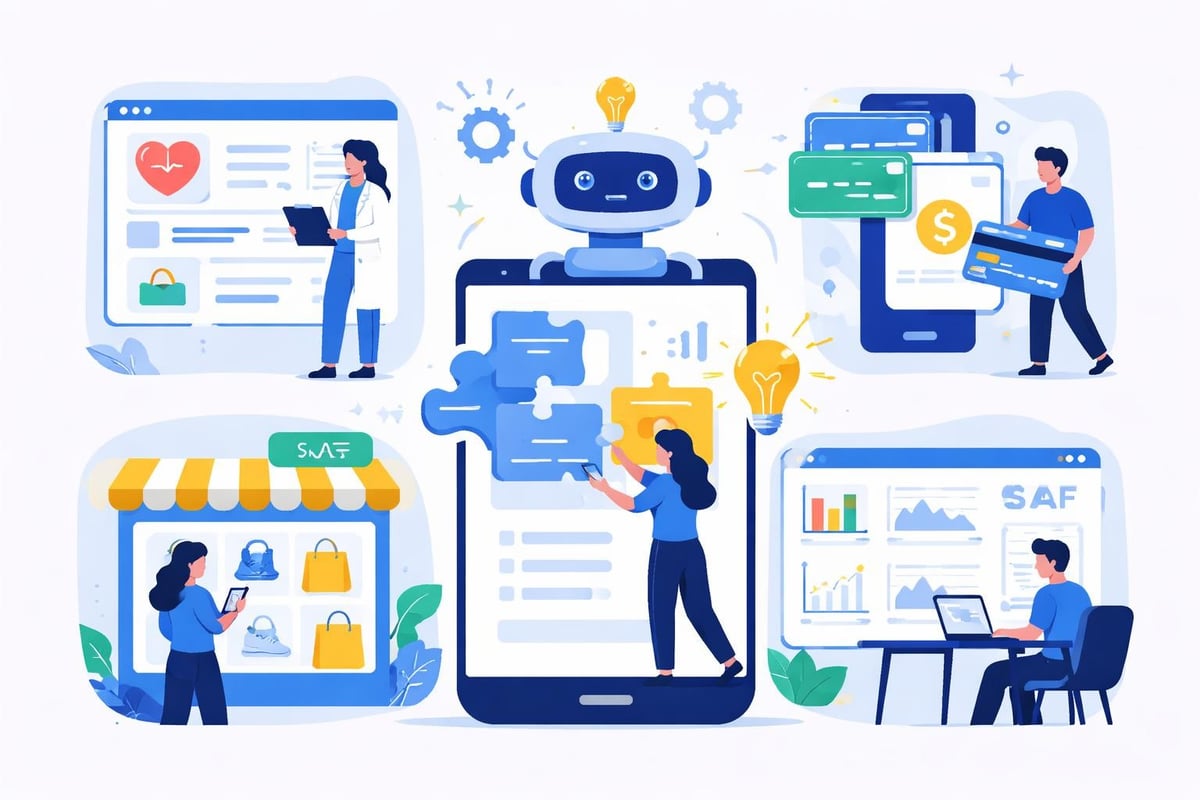
E-Commerce and Marketplace Platforms
Marketplace MVPs require complex multi-sided functionality including vendor management, inventory systems, payment processing, and customer support. AI platforms generate these interconnected systems by analyzing marketplace requirements and creating appropriate database relationships, user roles, and transaction flows.
Recommendation engines, dynamic pricing logic, and inventory forecasting that once required dedicated data science teams now integrate through AI-powered plugins and workflows. The tools learn from user interactions and continuously optimize conversion funnels.
Testing and Quality Assurance Automation
Quality assurance represents a critical bottleneck in MVP development. Traditional testing requires writing test cases, executing scenarios, and documenting bugs across multiple iterations.
AI transforms this process through automated test generation, intelligent bug detection, and predictive quality metrics. The systems analyze application logic and automatically create comprehensive test suites covering edge cases and error conditions.
AI-powered testing capabilities include:
- Automatic generation of unit and integration tests
- Visual regression detection across UI changes
- Performance monitoring and optimization suggestions
- Accessibility compliance checking
- Security vulnerability scanning
- User flow simulation and conversion tracking
These automated processes run continuously during development, catching issues before they reach production. The AI learns from previous bugs and proactively identifies similar patterns in new code, significantly reducing post-launch fixes. Resources on rapid MVP development using AI and no-code tools provide detailed implementation strategies.
Continuous Improvement Through AI Analytics
Once deployed, MVPs generate valuable user interaction data. AI tools analyze this data to identify improvement opportunities, predict churn, and suggest feature enhancements. The platforms create dashboards tracking key metrics and automatically alert teams to anomalies requiring attention.
This feedback loop accelerates iteration cycles, enabling teams to implement improvements based on actual user behavior rather than assumptions. The AI can even A/B test variations automatically, implementing winning versions without manual intervention.
Deployment and Scaling Considerations
Launching an MVP involves more than pushing code to production. Infrastructure provisioning, domain configuration, SSL certificates, CDN setup, and monitoring systems all require attention.
Modern ai tools for rapid mvp building automate these operational concerns through intelligent deployment pipelines. The platforms analyze application requirements and automatically provision appropriate server resources, configure auto-scaling rules, and implement caching strategies.
| Deployment Aspect | Traditional Approach | AI-Automated Approach |
|---|---|---|
| Server Setup | Manual configuration | Automatic provisioning |
| Database Scaling | Manual optimization | Predictive scaling |
| Security Patches | Scheduled updates | Continuous monitoring |
| Performance | Manual tuning | AI-driven optimization |
| Monitoring | Custom dashboards | Intelligent alerts |
Teams no longer need deep DevOps expertise to ensure reliable operations. The AI monitors application health, predicts resource needs, and implements optimizations proactively. This operational simplicity allows founders to focus on product development and customer acquisition.
Cost Optimization Through Smart Resource Management
Cloud infrastructure costs can quickly spiral without careful management. AI platforms optimize resource allocation by analyzing usage patterns and right-sizing infrastructure automatically. The systems identify underutilized resources, suggest more cost-effective alternatives, and implement changes during low-traffic periods.
For startups operating on limited budgets, these optimizations make the difference between sustainable growth and runaway costs. The platforms provide transparent cost projections based on usage trends, enabling informed decisions about feature priorities and scaling timelines. AI-powered no-code development tools continue evolving to provide even greater cost efficiency.
Strategic Implementation for Maximum Impact
Successfully leveraging ai tools for rapid mvp building requires strategic planning beyond simply choosing platforms. Teams must define clear validation criteria, prioritize features ruthlessly, and establish feedback mechanisms from day one.
Feature Prioritization Frameworks
AI can assist with feature prioritization by analyzing competitor offerings, user research data, and market trends. The tools score potential features based on estimated development time, expected user impact, and strategic value. This data-driven approach prevents feature creep while ensuring MVPs deliver core value propositions effectively.
Effective prioritization involves:
- Defining success metrics aligned with business objectives
- Mapping features to specific validation hypotheses
- Estimating development effort using AI project analysis
- Assessing market timing and competitive pressures
- Balancing technical debt against speed to market
Teams should resist the temptation to build comprehensive solutions when simple MVPs suffice. The goal is learning, not perfection. AI platforms enable rapid iteration, making it better to launch lean and enhance based on feedback.
Building for Future Scalability
While MVPs prioritize speed, completely ignoring future scalability creates problems as products succeed. AI development platforms address this tension by automatically implementing scalable architectures even for simple applications. Database structures accommodate future complexity, API designs follow industry standards, and code organization supports expansion.
This built-in scalability means successful MVPs transition smoothly into full products without complete rebuilds. The platforms suggest architecture improvements as applications grow, ensuring technical foundations support business expansion. Understanding application development platforms helps teams make informed platform selections.

Real-World Success Stories and Lessons Learned
Numerous startups and enterprises have compressed development timelines using ai tools for rapid mvp building, achieving market validation in record time. These case studies reveal common patterns and strategies worth emulating.
A financial services startup built a complete loan comparison platform in three weeks using Bubble combined with AI-powered data processing. The MVP included real-time rate comparisons, user accounts, saved searches, and email notifications. Traditional development estimates projected four months. The rapid launch enabled market testing before competitors entered the space.
An enterprise client needed an internal project management system integrating with existing tools. Using AI-assisted development, the team delivered a working MVP in ten days, complete with custom workflows, reporting dashboards, and third-party integrations. The solution handled authentication through existing corporate systems and scaled to support hundreds of users without performance issues.
Common Pitfalls to Avoid
Despite powerful capabilities, ai tools for rapid mvp building present potential challenges requiring awareness and mitigation strategies.
Typical mistakes include:
- Over-relying on AI suggestions without validating outputs
- Neglecting security considerations in pursuit of speed
- Building features without clear validation hypotheses
- Ignoring performance optimization until problems arise
- Underestimating integration complexity with legacy systems
Successful teams maintain balance between automation and oversight. AI accelerates development but doesn't replace strategic thinking, user research, or market validation. The most effective implementations combine AI capabilities with human judgment about product direction and user needs.
Integration with Existing Development Workflows
For teams already using traditional development practices, ai tools for rapid mvp building complement rather than replace existing workflows. The platforms integrate with version control systems, project management tools, and collaboration platforms used by development teams.
Hybrid approaches prove particularly effective, with AI handling routine implementation while developers focus on complex business logic and unique features. This division of labor maximizes efficiency while maintaining code quality and architectural consistency.
Teams can start with specific use cases like building internal dashboards or customer portals before expanding to core product development. This gradual adoption builds confidence and allows teams to develop AI-assisted workflows matching their culture and processes.
Training and Skill Development
Adopting ai tools for rapid mvp building requires new skills, though significantly less than traditional programming. Teams invest time learning platform-specific concepts, understanding AI capabilities and limitations, and developing strategies for effective prompting and component composition.
Most platforms offer extensive documentation, video tutorials, and community resources supporting skill development. The learning curve proves manageable even for non-technical team members, typically requiring weeks rather than months to achieve productivity.
Organizations benefit from pairing experienced developers with platform newcomers, creating knowledge transfer opportunities while building institutional expertise. This investment pays dividends through accelerated future projects and increased team autonomy.
Future Trends in AI-Assisted Development
The landscape of ai tools for rapid mvp building continues evolving rapidly, with emerging capabilities promising even greater efficiency and sophistication. Understanding these trends helps teams prepare for upcoming opportunities.
Research into autonomous development systems suggests future platforms may handle entire feature implementations from high-level descriptions. Projects like AI2Apps for rapid prototyping and AIAP workflow builders demonstrate the potential for natural language interfaces replacing visual programming entirely.
Advances in AI understanding of business requirements will enable more accurate requirement translation, reducing iteration cycles between stakeholders and development teams. The systems will ask clarifying questions, suggest alternative approaches, and identify potential issues before implementation begins.
Integration with design tools will create seamless workflows from initial sketches to working applications. AI will generate functional prototypes from wireframes, maintaining design fidelity while implementing interactive behaviors automatically. This convergence eliminates handoff delays between designers and developers.
The revolution in ai tools for rapid mvp building has fundamentally changed what's possible for startups and enterprises seeking to validate ideas quickly and cost-effectively. By combining intelligent automation with visual development platforms, teams compress months of traditional development into weeks while maintaining quality and scalability. Big House Technologies specializes in leveraging these advanced AI and no-code platforms to help clients transform concepts into market-ready products, providing comprehensive support from initial scoping through deployment and beyond. Whether you're a startup founder validating a new concept or an enterprise team building internal tools, our expertise in Bubble and Lovable platforms ensures your MVP launches on time and within budget.

About Big House
Big House is committed to 1) developing robust internal tools for enterprises, and 2) crafting minimum viable products (MVPs) that help startups and entrepreneurs bring their visions to life.
If you'd like to explore how we can build technology for you, get in touch. We'd be excited to discuss what you have in mind.
Other Articles
Discover how no code app builders empower businesses to create applications without programming. Expert insights on platforms, benefits, and trends.
Discover how low code no code platforms are transforming software development in 2026. Learn benefits, use cases, and choosing the right platform.
Learn how replit com python helps developers build, test, and deploy Python applications quickly with cloud-based tools, AI assistance, and collaboration.