
The landscape of voice-enabled applications has transformed dramatically over the past few years, and building an al voice app is now more accessible than ever. With advances in artificial intelligence, natural language processing, and no-code development platforms, businesses can deploy sophisticated voice solutions without extensive programming expertise. Whether you're creating a customer service assistant, interactive voice response system, or conversational AI companion, understanding the fundamentals of voice app development is essential for success in 2026.
Understanding the Al Voice App Ecosystem
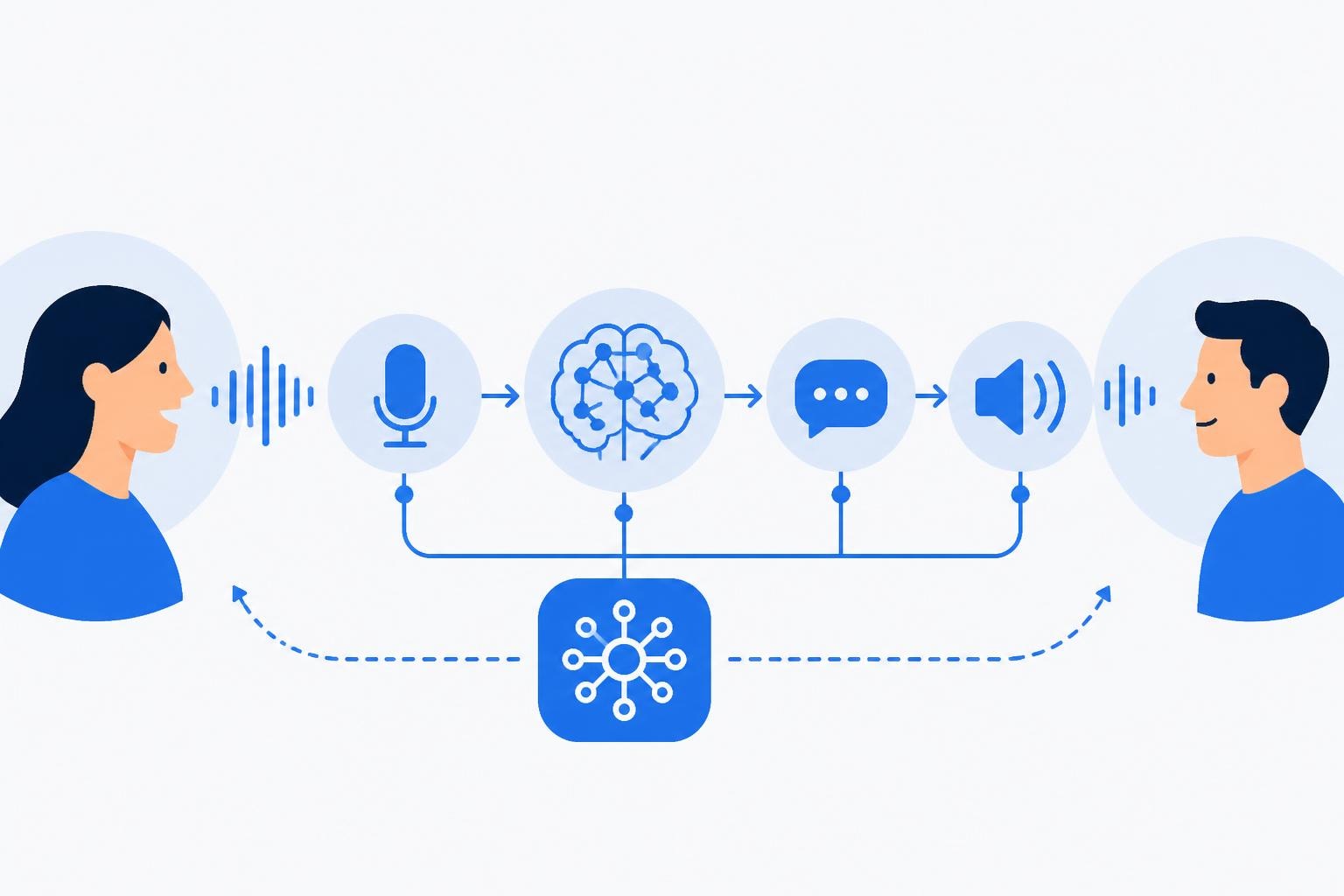
An al voice app combines several technological layers to create seamless conversational experiences. At its core, these applications process human speech, interpret intent, generate appropriate responses, and convert text back into natural-sounding audio. The convergence of machine learning models, cloud infrastructure, and API-driven architectures has made it possible to build robust voice solutions faster than traditional development methods allowed.
Key Components of Voice Applications
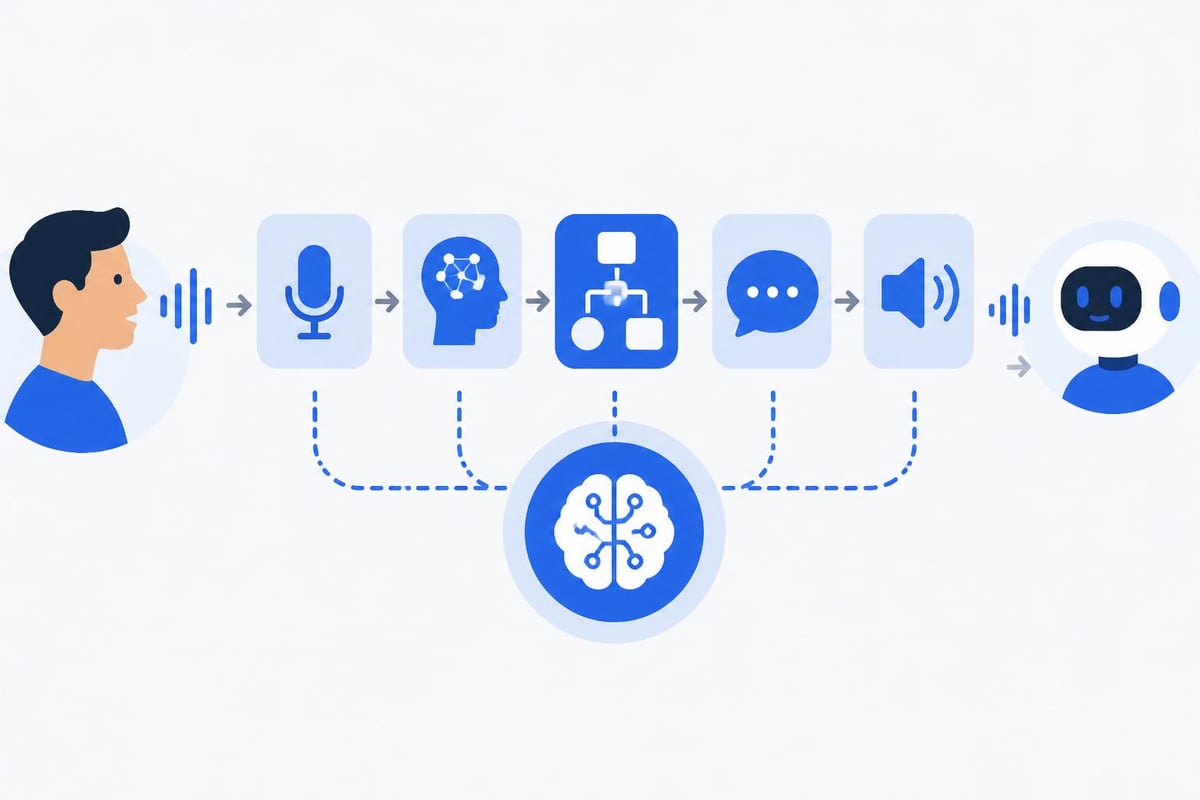
Modern voice apps rely on integrated systems working together harmoniously. The architecture typically includes:
- Speech recognition engines that convert audio to text with high accuracy
- Natural language understanding models that interpret user intent and context
- Dialog management systems that maintain conversation flow and state
- Response generation modules that create contextually relevant replies
- Text-to-speech synthesizers that produce human-like voice output
Each component requires careful selection and configuration to deliver quality user experiences. The rise of no-code platforms for AI development has simplified the integration process, allowing developers to focus on business logic rather than infrastructure management.
The Role of No-Code in Voice Development
No-code platforms have democratized access to voice technology by providing pre-built integrations with leading AI services. Teams can now prototype, test, and deploy al voice app solutions in weeks instead of months. This acceleration is particularly valuable for startups and enterprises looking to validate concepts quickly before committing to larger investments.
Development Strategies for Voice Applications
Building an effective al voice app requires more than assembling technical components. Strategic planning around use cases, user journeys, and performance benchmarks sets successful projects apart from those that struggle to gain adoption.
Defining Your Voice App Use Case
Before writing a single line of code or configuring your first workflow, identify the specific problem your voice application will solve. Narrow focus leads to better results than attempting to build an all-purpose solution. Common use cases include:
- Customer support automation handling frequently asked questions
- Appointment scheduling managing calendars through natural conversation
- Information retrieval providing instant answers from knowledge bases
- Transaction processing enabling voice-based purchases or bookings
- Personal assistance helping users with daily tasks and reminders
Each use case demands different capabilities and performance characteristics. A customer support al voice app might prioritize accuracy and escalation protocols, while a personal assistant emphasizes personalization and context retention. Understanding these nuances guides technology selection and workflow design decisions.
Workflow Design Best Practices
The conversation flow forms the backbone of any voice application. Best practices for AI voice agents emphasize creating clear, logical paths through dialogs while accounting for variations in user input. Your workflow should accommodate interruptions, corrections, and unexpected requests gracefully.
| Workflow Element | Purpose | Implementation Tip |
|---|---|---|
| Welcome message | Establish context | Keep under 10 seconds |
| Intent recognition | Determine user goal | Use 3-5 second timeout |
| Confirmation loops | Verify understanding | Limit to critical actions |
| Error handling | Manage misunderstandings | Offer specific examples |
| Escalation paths | Connect to humans | Set clear triggers |
Mapping these elements before development prevents costly redesigns later. Tools available through platforms like Bubble and Lovable enable visual workflow builders that make complex logic manageable for non-technical stakeholders.
Technical Implementation Considerations
Translating strategy into a functioning al voice app involves numerous technical decisions. From selecting the right speech recognition service to optimizing response latency, each choice impacts user satisfaction and operational costs.
Choosing Speech Recognition Services
Speech-to-text accuracy varies significantly across providers and languages. In 2026, leading services achieve over 95% accuracy for clear audio in common languages, but performance degrades with accents, background noise, or domain-specific terminology. Evaluate providers based on:
- Language and dialect support matching your target audience
- Real-time vs. batch processing capabilities
- Custom vocabulary training for industry terms
- Pricing models aligning with expected usage volumes
- Integration complexity with your chosen development platform
Testing with representative audio samples from your actual user base provides more reliable insights than published benchmarks. Many no-code platforms offer connections to multiple speech services, allowing you to switch providers without rebuilding your entire application.
Natural Language Understanding Configuration
Interpreting user intent from transcribed speech presents unique challenges compared to text-based chatbots. People speak differently than they type, using filler words, incomplete sentences, and verbal corrections. Your NLU system must handle these patterns while extracting actionable information.
Training data quality directly correlates with intent recognition accuracy. Start by collecting real conversations or simulating diverse phrasing for each intent your al voice app supports. Even with no-code tools, investing time in utterance examples and entity definitions pays dividends in user experience quality.
Optimizing Voice Quality and Performance
Technical excellence means little if users struggle to understand responses or wait too long for replies. Voice quality and latency optimization separate professional applications from amateur experiments.
Text-to-Speech Selection and Tuning
Modern TTS engines produce remarkably natural speech, but not all voices suit every application. Consider these factors when selecting and configuring voice output:
- Voice personality matching your brand identity
- Speech rate balancing clarity with efficiency
- Pronunciation customization for names and technical terms
- Emotional range if your use case requires varied tone
- Audio format quality appropriate for delivery channels
The best practices for voice cloning highlight how creating custom voices can enhance brand consistency, though this adds complexity to development timelines.
Latency Reduction Strategies
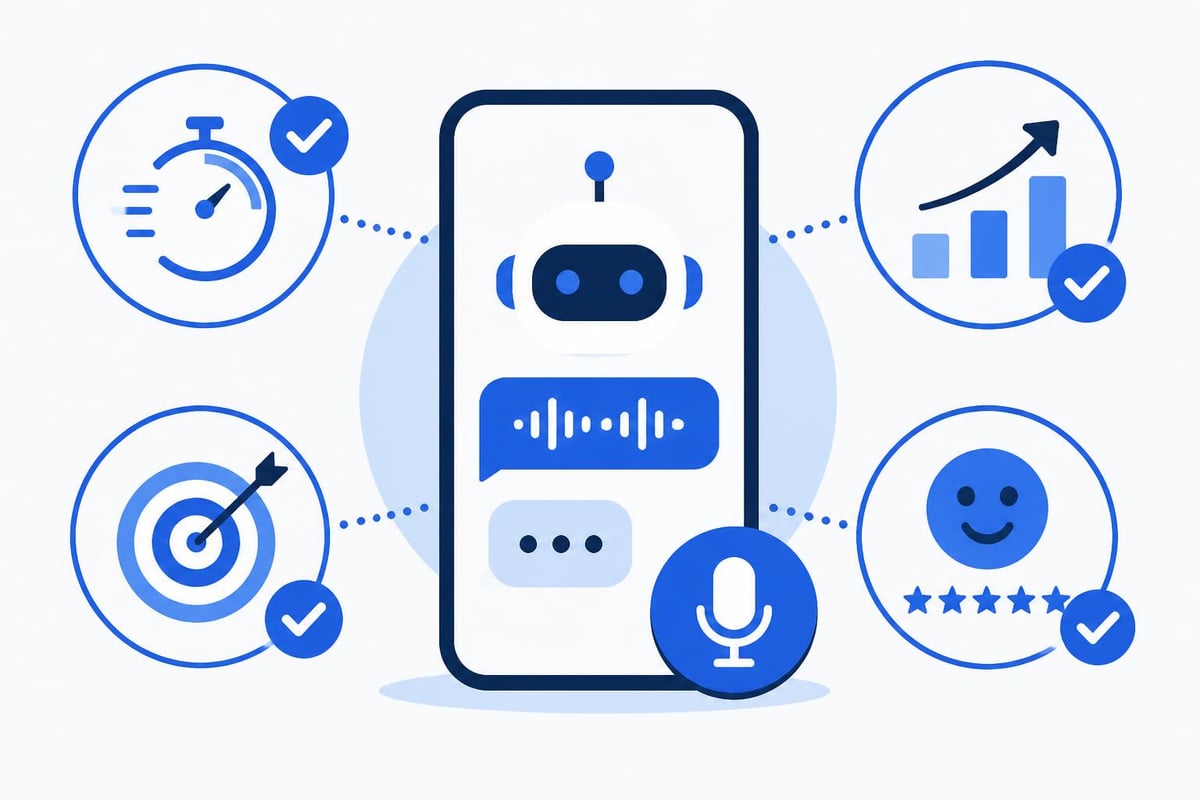
Response speed critically impacts conversational flow. Users expect replies within 1-2 seconds, with anything beyond 3 seconds feeling sluggish. Optimize latency through:
- Pre-loading common responses and caching frequent queries
- Streaming audio output before complete response generation
- Using edge computing for speech processing when available
- Minimizing external API calls in the critical path
- Implementing timeout handlers to prevent indefinite waits
Monitoring real-world latency across different user conditions helps identify bottlenecks. The infrastructure provided by application development platforms often includes performance analytics that surface these issues automatically.
Integration and Deployment Approaches
An al voice app rarely operates in isolation. Most implementations require connections to existing systems, databases, and communication channels to deliver meaningful value.
System Integration Patterns
Voice applications typically integrate with multiple backend services:
| Integration Type | Common Examples | Complexity Level |
|---|---|---|
| CRM systems | Salesforce, HubSpot | Medium |
| Calendar platforms | Google Calendar, Outlook | Low |
| Payment processors | Stripe, PayPal | High |
| Knowledge bases | Notion, Confluence | Medium |
| Communication tools | Twilio, Slack | Low |
Modern APIs and webhook architectures make these connections feasible without custom coding. Platforms specializing in no-code versus custom code development demonstrate significant time and cost advantages for standard integrations.
Channel Deployment Options
Your al voice app can reach users through various channels, each with distinct technical requirements. Popular deployment targets include:
- Telephone systems via SIP trunking or CPaaS providers
- Mobile applications with embedded voice interfaces
- Smart speakers through Alexa, Google Assistant, or Siri
- Web browsers using WebRTC for real-time audio
- Messaging platforms combining voice and text interactions
Choosing deployment channels early influences architecture decisions. Enterprise-scale voice AI implementations often start with a single channel and expand gradually, validating performance and user acceptance before broader rollouts.
Testing and Quality Assurance
Rigorous testing separates reliable al voice app deployments from those plagued by user complaints and negative reviews. Voice applications introduce testing challenges beyond traditional software validation.
Functional Testing Approaches
Comprehensive testing covers multiple dimensions of voice app behavior:
- Intent recognition testing with varied phrasings and accents
- Dialog flow validation ensuring all paths work correctly
- Error handling verification confirming graceful failures
- Integration testing validating external system connections
- Performance testing measuring latency under load
Automated testing tools can replay audio samples and verify response accuracy, though human evaluation remains essential for assessing conversation quality. Building test suites that cover edge cases and unexpected inputs prevents embarrassing failures in production.
User Acceptance Testing
Real users often interact with voice applications differently than developers anticipate. Beta testing with representative users uncovers usability issues that technical validation misses. Implementation case studies consistently show that user feedback during development reduces post-launch modifications and support burden.
Structured UAT sessions should measure:
- Task completion rates for primary use cases
- Average conversation duration and turn counts
- Escalation frequency to human agents
- User satisfaction ratings and qualitative feedback
- Technical performance metrics during realistic usage
Advanced Features and Capabilities
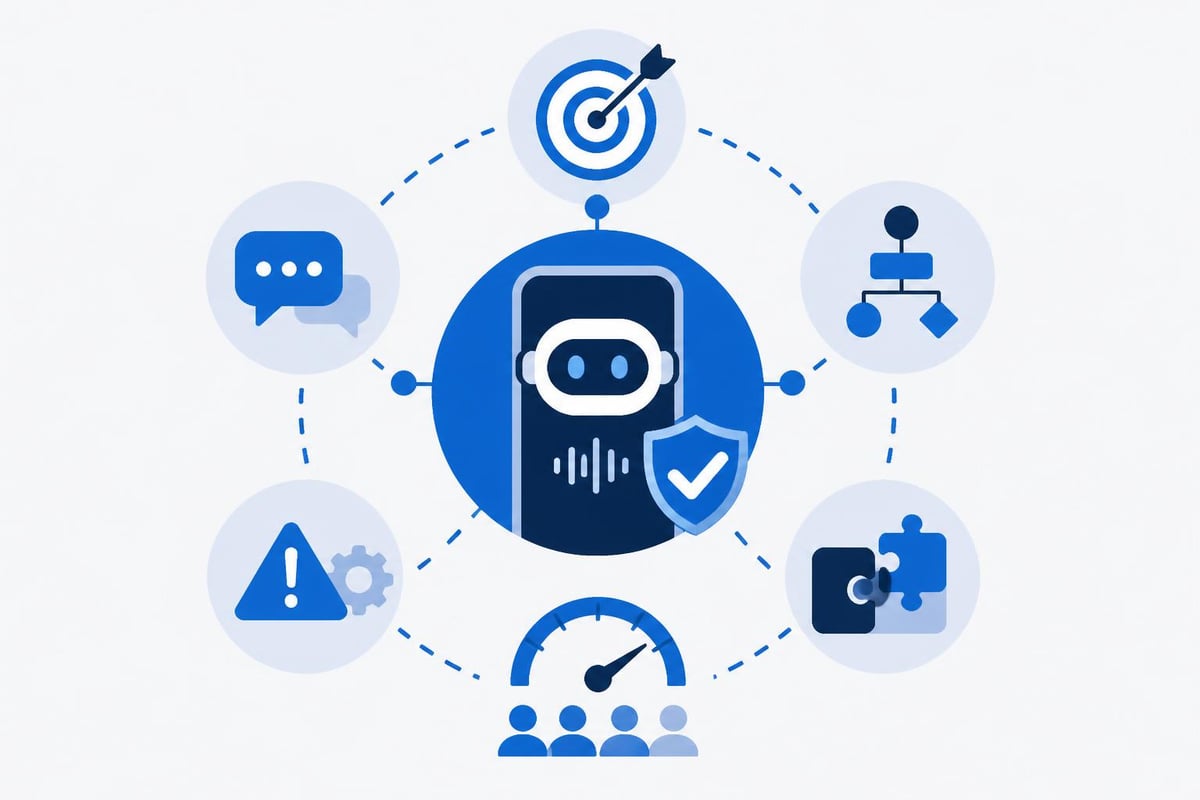
Basic voice functionality gets applications to market, but advanced features create competitive differentiation and drive user engagement. Consider these enhancements as your al voice app matures.
Personalization and Context Awareness
Remembering user preferences and conversation history transforms generic voice interfaces into personalized assistants. Implementing context awareness requires:
- User profiling storing preferences and historical interactions
- Session management maintaining state across conversation turns
- Cross-session memory recalling information from previous conversations
- Adaptive responses tailoring language to individual users
Privacy considerations and data protection regulations significantly impact personalization implementation. Clear user consent and transparent data practices build trust while enabling powerful customization. The best database options for no-code platforms provide guidance on storing user data securely and efficiently.
Multilingual Support
Global reach demands multilingual capabilities. Modern al voice app platforms support dozens of languages, though implementation complexity varies. Key considerations include:
| Aspect | Challenge | Solution Approach |
|---|---|---|
| Speech recognition | Accent variation | Use region-specific models |
| Intent understanding | Cultural context | Train separate NLU per language |
| Response generation | Idiomatic expressions | Employ native speakers for content |
| Voice synthesis | Natural pronunciation | Select culturally appropriate voices |
The development of real-time translation capabilities showcases how voice apps can bridge language barriers, though this remains an advanced feature requiring specialized expertise.
Compliance and Security Considerations
Voice applications handle sensitive data and operate in regulated environments. Security and compliance aren't optional features but foundational requirements for production deployment.
Data Protection Requirements
Voice recordings and transcripts often contain personally identifiable information, financial details, or health data. Compliance frameworks like GDPR, CCPA, and HIPAA impose strict requirements on collection, storage, and processing. Your al voice app must implement:
- Encryption for audio data in transit and at rest
- Access controls limiting who can review recordings
- Retention policies automatically deleting old data
- Audit logging tracking all data access and modifications
- User rights management enabling data access and deletion requests
Research into developer experiences with voice platforms highlights security challenges and liability concerns that teams must address proactively rather than reactively.
Authentication and Authorization
Verifying user identity through voice alone presents unique challenges. Options range from simple knowledge-based authentication to sophisticated biometric voice recognition. Balance security requirements against user convenience to avoid creating friction that drives abandonment.
Monitoring and Continuous Improvement
Launching an al voice app marks the beginning of an optimization journey rather than the finish line. Systematic monitoring and data-driven improvements sustain competitive advantage over time.
Key Performance Indicators
Track metrics that directly correlate with business outcomes and user satisfaction:
- Intent accuracy rate measuring NLU performance
- Task completion percentage indicating workflow effectiveness
- Average handle time showing efficiency gains
- Escalation rate revealing limitations requiring human intervention
- User retention and engagement demonstrating overall value
Analytics platforms integrated with no-code development tools provide dashboards visualizing these metrics without custom instrumentation code.
Iterative Enhancement Strategies
Continuous improvement relies on systematic analysis of usage patterns and failure modes. Following AI voice message response best practices helps teams identify common issues and implement targeted fixes.
Successful teams establish regular review cycles:
- Weekly review of critical incidents and user complaints
- Monthly analysis of trending conversation patterns
- Quarterly reassessment of supported intents and features
- Annually evaluation of underlying technology platforms
This cadence ensures rapid response to emerging issues while maintaining focus on strategic improvements rather than constant firefighting.
Cost Management and ROI
Understanding the economics of voice application development and operation enables informed investment decisions and realistic ROI projections.
Development Cost Factors
Building an al voice app involves both upfront and ongoing expenses. No-code approaches significantly reduce initial development costs compared to custom programming, but operating expenses require careful planning. Major cost components include:
- Platform fees for no-code tools and AI service subscriptions
- API usage charges based on speech recognition and synthesis volumes
- Infrastructure costs for hosting and data storage
- Design and UX research ensuring conversation quality
- Testing and QA validating functionality across scenarios
Comparing no-code versus custom code cost structures reveals that no-code often delivers 60-80% cost savings for standard voice applications, though highly specialized requirements may justify traditional development.
Operational Efficiency Gains
Voice applications deliver ROI through multiple mechanisms beyond direct revenue generation. Documented benefits include:
| Benefit Category | Typical Impact | Measurement Method |
|---|---|---|
| Support cost reduction | 30-50% decrease | Cost per interaction |
| Availability improvement | 24/7 coverage | After-hours utilization |
| Response time acceleration | 80-90% faster | Average handle time |
| Scalability enhancement | 10x capacity | Concurrent conversations |
| Customer satisfaction | 15-25% increase | CSAT scores |
Best practices for implementation emphasize starting with high-volume, low-complexity use cases that generate measurable savings quickly, building organizational confidence for more ambitious projects.
Future-Proofing Your Voice Strategy
Technology evolution accelerates continuously, and voice applications developed today must adapt to tomorrow's capabilities and user expectations. Strategic planning accounts for emerging trends without over-engineering current solutions.
Emerging Technology Trends
Several technological developments will reshape voice applications over the next few years:
- Multimodal interfaces blending voice with visual and touch interactions
- Emotional intelligence detecting and responding to user sentiment
- Generative AI integration enabling more creative and contextual responses
- Edge processing reducing latency through on-device computation
- Federated learning improving models while preserving privacy
Platforms specializing in AI-based design and development increasingly incorporate these advances, making them accessible without deep technical expertise.
Building Flexible Architectures
The pace of innovation in AI voice technology means platforms and capabilities evolve rapidly. Design your al voice app with flexibility in mind:
- Use abstraction layers that isolate specific AI services from core logic
- Implement feature flags enabling controlled rollout of new capabilities
- Maintain comprehensive API documentation for future integrations
- Store conversation data in formats supporting additional analysis
- Plan infrastructure to scale horizontally as usage grows
This architectural approach lets you adopt new technologies incrementally without requiring complete rebuilds, protecting your initial investment while maintaining competitive advantage.
Voice-enabled applications represent a fundamental shift in how users interact with software, and building an effective al voice app requires balancing technical capabilities with user experience design. By leveraging no-code platforms and following established best practices, organizations can deploy sophisticated voice solutions faster and more cost-effectively than ever before. Big House Technologies specializes in helping enterprises and startups navigate this landscape, combining no-code efficiency with AI innovation to deliver voice applications that drive measurable business results. Whether you're exploring initial concepts or scaling proven solutions, expert guidance accelerates your path from idea to production deployment.

About Big House
Big House is committed to 1) developing robust internal tools for enterprises, and 2) crafting minimum viable products (MVPs) that help startups and entrepreneurs bring their visions to life.
If you'd like to explore how we can build technology for you, get in touch. We'd be excited to discuss what you have in mind.
Other Articles
Discover the 2025 software house guide—learn definitions, services, trends, and how to choose the right partner for digital transformation and project success.
Discover how coding with AI is revolutionizing software development. Learn best practices, tools, and strategies for AI-assisted coding in 2026.
Discover the top tools for building internal dashboards in 2026 Compare features pricing and benefits to find the perfect solution for data driven business success