

Finding the right development partner can make or break your startup's journey from idea to market-ready product. The landscape of MVP development has evolved dramatically, with no-code and AI-powered platforms enabling faster, more cost-effective solutions than traditional coding approaches. Choosing among the best MVP developers for startups requires understanding your specific needs, budget constraints, and timeline expectations while evaluating technical capabilities and proven track records.
What Makes MVP Developers Stand Out in 2026
The MVP development landscape has shifted significantly as startups demand faster turnaround times without sacrificing quality. Today's best MVP developers for startups leverage advanced platforms that eliminate months of traditional coding work while maintaining scalability and security standards.
Key differentiators include:
- Platform expertise (no-code, low-code, or AI-assisted development)
- Speed to market capabilities
- Post-launch support and iteration flexibility
- Transparent pricing models
- Industry-specific experience
When evaluating MVP development companies, startups should prioritize partners who understand the fundamental goal: validating product-market fit with minimal time and resource investment. The right developer doesn't just build features; they challenge assumptions, recommend essential functionality, and eliminate scope creep that derails early-stage projects.
The No-Code Revolution in MVP Development
No-code platforms have transformed how startups approach product development. Traditional MVP timelines of 6-12 months have compressed to 4-8 weeks for comparable functionality. This acceleration isn't just about speed-it fundamentally changes the economics of startup validation.

| Development Approach | Typical Timeline | Average Cost | Flexibility for Changes |
|---|---|---|---|
| Traditional Code | 6-12 months | $50,000-$150,000 | Low (expensive iterations) |
| No-Code Platforms | 4-8 weeks | $10,000-$40,000 | High (rapid iterations) |
| AI-Assisted Code | 8-16 weeks | $30,000-$80,000 | Medium (structured changes) |
The cost comparison between no-code and custom code reveals substantial advantages for startups operating with limited runway. Beyond initial development costs, no-code solutions reduce ongoing maintenance expenses and enable non-technical founders to make updates independently.
Essential Criteria for Selecting MVP Development Partners
Identifying the best MVP developers for startups demands a structured evaluation framework. Price alone shouldn't drive your decision-costly mistakes from inexperienced developers far outweigh any initial savings.
Technical Expertise and Platform Proficiency
The platform your developer uses directly impacts your product's capabilities and future scalability. Bubble, Lovable, and other enterprise-grade no-code platforms offer robust functionality when wielded by experienced developers. Understanding how to build an MVP with no-code tools requires deep platform knowledge and architectural planning.
Ask potential partners:
- How many MVPs have they launched on their chosen platform?
- Can they demonstrate complex features like payment processing, user authentication, and API integrations?
- What's their approach to data architecture and scalability planning?
- How do they handle mobile responsiveness and cross-browser compatibility?
Red flags to watch for:
- Inability to show portfolio examples with similar complexity
- Vague answers about technical limitations
- No discussion of performance optimization
- Lack of post-launch support plans
Communication and Project Management Standards
Technical skills mean nothing if communication breaks down. The MVP development process requires constant collaboration between founders and developers to refine features and make rapid decisions.
Top-tier developers establish clear communication protocols from day one. They provide regular progress updates, maintain transparent project boards, and respond promptly to questions. They also push back when feature requests threaten the "minimum" in MVP.
Top Categories of MVP Development Specialists
The best MVP developers for startups fall into distinct categories, each with unique advantages depending on your specific situation.
Full-Service No-Code Agencies
These agencies handle everything from initial scoping through launch and beyond. They bring multidisciplinary teams including designers, developers, and product strategists who work collaboratively on your project.
Advantages:
- Comprehensive service offering eliminates coordination headaches
- Established processes reduce project risks
- Access to specialized expertise (UX design, database architecture, API integration)
- Proven track records with portfolio validation
Considerations:
- Higher cost than freelancers
- May have minimum project sizes
- Timeline dependencies on agency availability
Agencies like Big House Technologies exemplify this approach, combining Bubble and Lovable expertise with end-to-end service delivery. Their structured methodology ensures startups receive production-ready products that can scale as user bases grow.
Specialized Platform Experts
Some developers focus exclusively on single platforms, developing deep expertise that translates to superior technical execution. Bubble agencies and Lovable specialists fall into this category.
These partners understand platform nuances that generalist developers miss. They know optimization techniques, workaround strategies for platform limitations, and best practices for complex functionality.

| Platform | Best For | Learning Curve | Scalability | Mobile Support |
|---|---|---|---|---|
| Bubble | Complex web applications | Medium | High | Responsive web |
| Lovable | AI-powered rapid prototyping | Low | Medium-High | Progressive web apps |
| FlutterFlow | Mobile-first applications | Medium | High | Native mobile |
| Webflow | Content-driven websites | Low-Medium | Medium | Responsive web |
Hybrid Development Teams
Some startups benefit from hybrid approaches combining no-code for rapid MVP development with selective custom code for unique features. These teams assess requirements pragmatically, recommending the most efficient solution for each component.
This approach works particularly well for startups anticipating complex integrations or unique algorithms that stretch no-code platform capabilities. The enterprise integration platforms landscape has matured significantly, enabling sophisticated connections between no-code MVPs and existing business systems.
Vetting Process: Questions to Ask Prospective Developers
Finding the best MVP developers for startups requires thorough vetting beyond reviewing portfolios and pricing sheets. The right questions reveal true capabilities and alignment with your startup's needs.
Discovery and Scoping Approach
How developers conduct discovery conversations indicates their strategic thinking and commitment to your success. Strong developers invest time understanding your business model, target users, and competitive landscape before proposing solutions.
Key questions:
- What's your discovery process before providing estimates?
- How do you determine which features belong in an MVP versus future iterations?
- Can you show examples of MVPs you've scoped that later scaled successfully?
- What happens when we discover new requirements during development?
The common mistakes when choosing an MVP development company include accepting developers who rush through scoping or fail to challenge feature assumptions. Your developer should act as a strategic partner, not just an order-taker.
Technical Architecture and Scalability Planning
Even minimum viable products require architectural planning to avoid costly rebuilds during growth phases. Understanding how developers approach database design, API architecture, and performance optimization separates amateur builders from professional firms.
Request detailed explanations of:
- Database structure and relationship modeling
- User authentication and security protocols
- API integration strategies for third-party services
- Performance optimization techniques
- Mobile responsiveness implementation
Post-Launch Support and Iteration Strategy
Your MVP launch marks the beginning of real product development, not the end. The best MVP developers for startups provide ongoing support for bug fixes, feature additions, and performance optimization based on user feedback.
Clarify support terms upfront:
- What's included in post-launch support periods?
- How are emergency fixes handled?
- What are typical response times for different issue severities?
- How do you price iteration work after initial launch?
- Can you provide references from clients who've iterated with you long-term?
Cost Structures and Budget Optimization
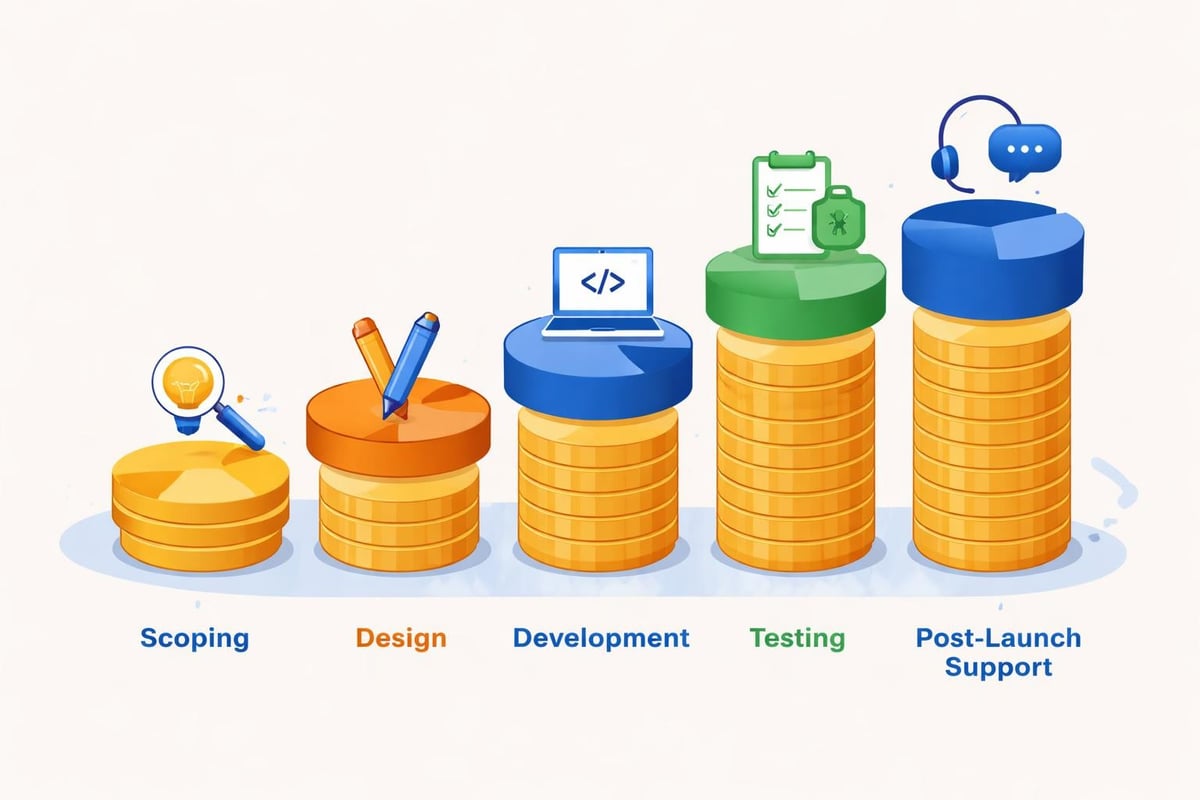
MVP development pricing varies dramatically based on scope, complexity, and developer experience. Understanding cost structures helps startups allocate budgets effectively and avoid unexpected expenses.
Fixed-Price versus Time-and-Materials Contracts
Fixed-price agreements provide budget certainty but require extremely detailed scoping upfront. Any scope changes trigger change orders that can inflate costs substantially. This model works best for startups with crystal-clear requirements and limited iteration expectations.
Time-and-materials contracts offer flexibility for discovery-driven development but carry budget risk. Startups using this model must establish clear milestone gates and budget caps to prevent overruns.
Hybrid approaches combine fixed pricing for core features with time-and-materials allocation for exploratory work. This balances budget predictability with necessary flexibility.
Hidden Costs to Account For
Beyond development fees, factor these often-overlooked expenses into your MVP budget:
- Platform subscription costs ($29-$500/month depending on features needed)
- Third-party API fees (payment processing, email services, analytics)
- Custom domain and hosting (if not included in platform pricing)
- Design assets (custom illustrations, stock photos, icon sets)
- Testing and QA (if not included in development pricing)
- Post-launch monitoring and maintenance (ongoing platform fees, developer retainer)
Working with agencies that provide transparent, all-inclusive pricing eliminates surprise costs. When reviewing proposals from top MVP development companies, ensure you're comparing equivalent scope and included services.
Platform-Specific Considerations for Startup MVPs
The platform your developer uses fundamentally shapes your MVP's capabilities, limitations, and evolution path. Understanding platform trade-offs helps you select developers whose technical stack aligns with your product vision.
Bubble for Complex SaaS Applications
Bubble excels at building sophisticated web applications with complex workflows and database relationships. Startups building multi-sided marketplaces, B2B SaaS tools, or internal enterprise applications find Bubble's capabilities match their needs.
Bubble strengths:
- Robust database and relational data modeling
- Complex workflow automation
- Extensive plugin ecosystem for integrations
- Responsive design capabilities
- Strong security features for enterprise applications
Agencies specializing in Bubble MVP development bring platform-specific optimization knowledge that dramatically impacts performance and user experience quality.
Lovable for AI-Powered Rapid Development
Lovable represents the cutting edge of AI-assisted development, enabling remarkably fast MVP creation through natural language instructions. This platform suits startups prioritizing speed-to-market above all else and those building relatively standard application patterns.
The AI-powered approach reduces development time but requires experienced partners who can guide the AI effectively and supplement generated code with optimization and customization.
Choosing Between Platforms
Your product requirements should drive platform selection, not developer preferences or cost alone. Consider these factors:
| Decision Factor | Bubble | Lovable | Traditional Code |
|---|---|---|---|
| Complex data relationships | Excellent | Good | Excellent |
| Rapid iteration cycles | Good | Excellent | Poor |
| Custom algorithm implementation | Limited | Limited | Excellent |
| Learning curve for founders | Medium | Low | High |
| Long-term scalability | High | Medium-High | Highest |
Discussing platform selection with potential developers reveals their strategic thinking. The best MVP developers for startups recommend platforms based on your specific requirements rather than defaulting to their comfort zone.
Red Flags When Evaluating Development Partners
Certain warning signs should immediately disqualify developers from consideration, regardless of pricing or promises. Recognizing these red flags protects your startup from costly mistakes and delays.
Unrealistic Timeline Promises
Developers promising 2-3 week turnarounds for complex applications either don't understand the scope or plan to deliver substandard work. Even with no-code platforms, proper MVP development requires adequate time for:
- Thorough requirements gathering and scoping
- User experience design and prototype validation
- Development and internal testing
- Quality assurance and bug fixing
- User acceptance testing and refinement
Be skeptical of timelines that seem too good to be true-they usually are.
Portfolio Inconsistencies
Request live links to portfolio projects, not just screenshots or case studies. Test the applications yourself to evaluate:
- Performance and loading speeds
- Mobile responsiveness quality
- User interface polish and attention to detail
- Feature completeness and workflow logic
- Bug frequency and error handling
Developers who can't provide working examples or whose portfolio shows dramatically different quality levels across projects likely lack consistent processes and expertise.
Communication Warning Signs
Pay attention to communication patterns during the sales process-they predict the development experience. Red flags include:
- Days-long response delays to simple questions
- Vague or evasive answers to technical questions
- Pressure tactics or artificial urgency ("special pricing expires tomorrow")
- Unwillingness to provide detailed proposals or contracts
- Defensive reactions to questions about processes or experience
Lack of Strategic Input
The best MVP developers for startups challenge your assumptions and recommend feature cuts, not just accept requirements blindly. Developers who don't ask "why" about feature requests or push back on scope likely lack the experience to guide you toward successful outcomes.
When reviewing guidance on selecting MVP development companies, you'll consistently find emphasis on strategic partnership over transactional execution. Your developer should care about your startup's success, not just completing the contracted work.
Making Your Final Decision
After evaluating multiple developers against these criteria, synthesize your findings into a comparison framework that weights factors according to your priorities.
Create a scorecard covering:
- Technical expertise and portfolio quality (30%)
- Communication and cultural fit (25%)
- Pricing and value proposition (20%)
- Timeline and availability (15%)
- Post-launch support offerings (10%)
Schedule final conversations with your top 2-3 candidates to discuss specific aspects of your project and gauge working relationship potential. Trust your instincts about personality fit-you'll work closely with this partner for months.
Reference checks provide invaluable insights. Request contacts for 2-3 clients with similar project scope and ask about:
- Quality of delivered work and attention to detail
- Ability to meet timeline and budget commitments
- Responsiveness to questions and issues
- Handling of unexpected challenges
- Whether they'd hire the developer again
The best MVP development companies earn consistently positive references across multiple clients and project types. Single glowing testimonials matter less than patterns of satisfied clients.
Industry-Specific MVP Development Considerations
Different startup categories face unique MVP development challenges that require specialized expertise or platform selection.
FinTech and Regulated Industries
Financial technology startups require developers experienced with:
- Payment gateway integrations (Stripe, PayPal, Plaid)
- Security compliance (PCI DSS, SOC 2)
- User authentication and data encryption
- Regulatory reporting capabilities
- Audit trail implementation
No-code platforms can absolutely support FinTech MVPs when developers understand security best practices and compliance requirements. The key is finding partners with relevant experience rather than assuming custom code is necessary.
Marketplace and Multi-Sided Platforms
Building platforms connecting multiple user types (buyers and sellers, service providers and customers) requires sophisticated data architecture and workflow design. Look for developers who've successfully launched marketplace MVPs and understand:
- User role management and permissions
- Search and filtering optimization
- Payment splitting and escrow functionality
- Rating and review systems
- Notification and messaging systems
Enterprise SaaS Tools
B2B startups building internal tools for enterprises need developers who understand corporate buying processes and security requirements. Enterprise buyers scrutinize security, compliance, and integration capabilities more thoroughly than consumer users.
Your MVP must demonstrate enterprise-grade reliability even in minimum viable form. Partner with developers experienced in B2B products who can implement proper user management, SSO integration capabilities, and data security from day one.
Selecting the best MVP developers for startups ultimately comes down to finding partners who balance technical excellence with strategic thinking and transparent communication. The right developer challenges your assumptions, recommends pragmatic feature cuts, and commits to your long-term success beyond initial launch. Big House Technologies brings exactly this approach to every engagement, leveraging Bubble and Lovable expertise to transform startup ideas into market-ready products within weeks, not months. Whether you're building a complex SaaS platform or a consumer marketplace, partnering with experienced no-code specialists accelerates your path from concept to validated product while preserving capital for growth.

About Big House
Big House is committed to 1) developing robust internal tools for enterprises, and 2) crafting minimum viable products (MVPs) that help startups and entrepreneurs bring their visions to life.
If you'd like to explore how we can build technology for you, get in touch. We'd be excited to discuss what you have in mind.
Other Articles
Discover the best artificial intelligence app picks for 2025 Explore top AI apps transforming productivity creativity and business with key features and expert tips
Unlock the future of erp ai in 2026 with our expert guide Learn how AI transforms ERP with smarter automation real time insights and industry trends
Discover the best countries to hire Bubble developers in 2026 Compare top destinations for skill, cost, and reliability to power your next no code project