
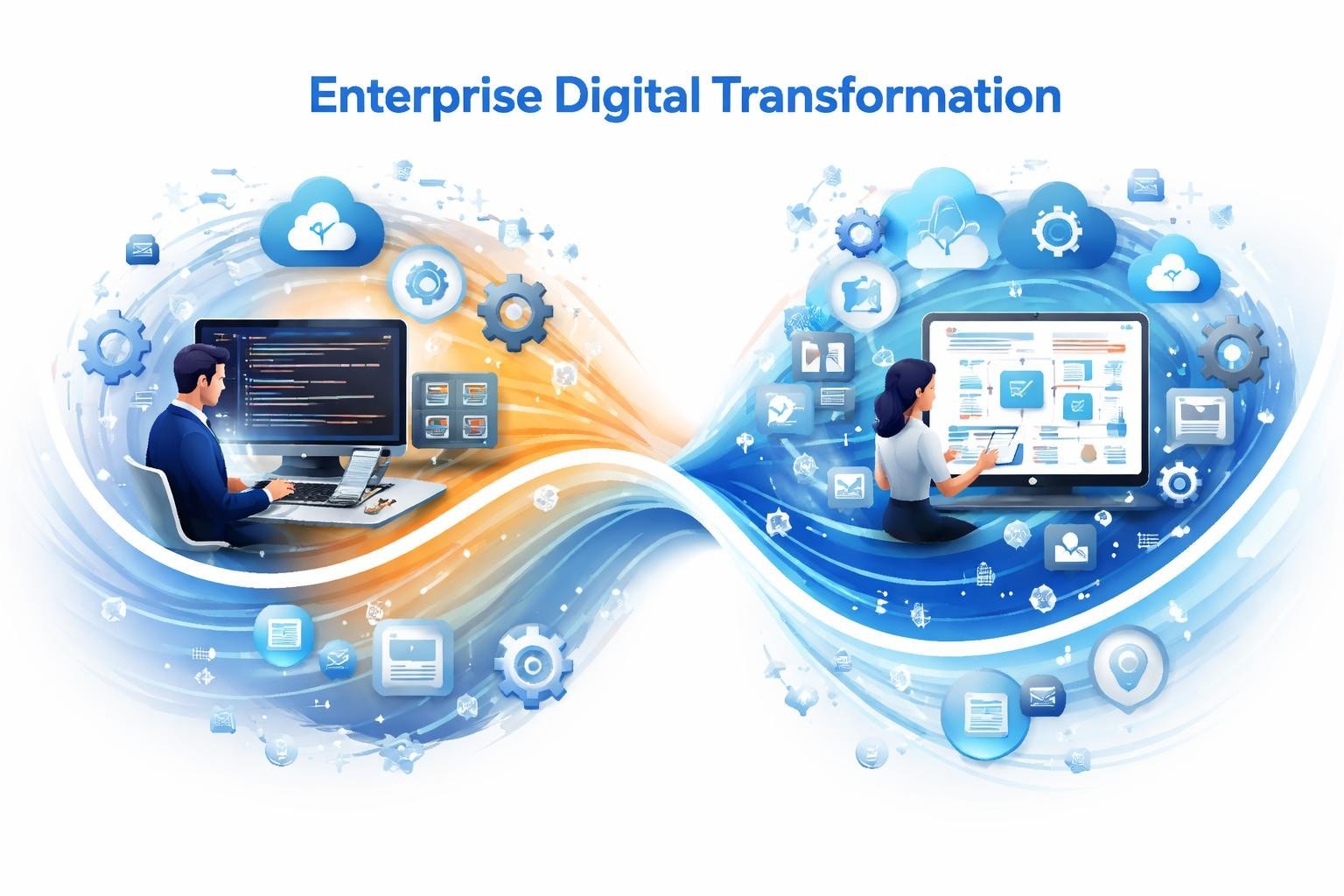
Enterprise organizations face unprecedented pressure to digitize operations, modernize legacy systems, and deliver innovative applications at speeds that traditional development simply cannot match. Low code development for enterprises has emerged as a strategic solution, enabling companies to build sophisticated applications with minimal hand-coding while maintaining the security, scalability, and governance requirements that large organizations demand. This paradigm shift in software development has fundamentally changed how enterprises approach digital transformation, allowing business users and professional developers to collaborate more effectively than ever before.
Understanding Low Code Development in the Enterprise Context
Low code platforms provide visual development environments where users create applications through drag-and-drop interfaces, pre-built components, and declarative logic rather than writing extensive code. For enterprises, this approach solves critical challenges that have plagued IT departments for decades: application backlogs, skill shortages, and the inability to respond quickly to changing business needs.
The enterprise landscape differs significantly from smaller organizations:
- Complex integration requirements with existing systems
- Stringent security and compliance mandates
- Multi-layer governance and approval processes
- Scalability demands across thousands of users
- Legacy system dependencies spanning decades
Low code development platforms address these challenges through sophisticated architectures designed specifically for enterprise environments. Unlike consumer-grade tools, enterprise platforms provide robust API management, single sign-on integration, role-based access controls, and audit trails that meet regulatory requirements.
The Strategic Value Proposition
When examining low code development for enterprises, the value extends far beyond faster application delivery. Organizations gain strategic advantages that reshape their competitive positioning.
| Strategic Benefit | Traditional Development | Low Code Approach |
|---|---|---|
| Time to Market | 6-18 months | 2-8 weeks |
| Development Cost | $200K-$2M+ | $30K-$300K |
| Iteration Speed | Quarterly releases | Weekly updates |
| Business Involvement | Minimal | Active collaboration |
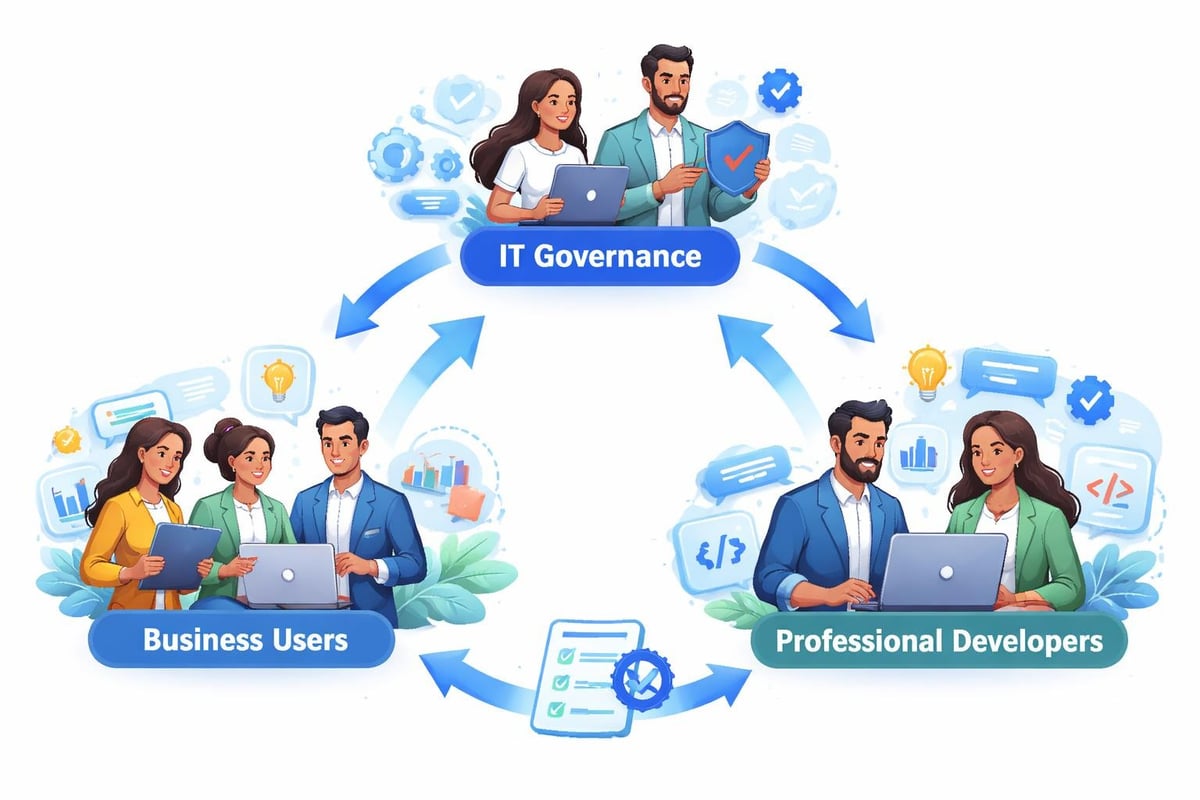
Organizations implementing enterprise integration platforms discover that low code enables business units to take ownership of their digital solutions while IT maintains appropriate oversight. This balance proves essential for sustainable transformation.
Core Capabilities Required for Enterprise Adoption
Not all low code platforms meet enterprise standards. Organizations must evaluate solutions against rigorous criteria that ensure long-term viability and strategic alignment.
Security and Compliance Architecture
Enterprise-grade low code platforms must provide:
- Data encryption at rest and in transit using industry-standard protocols
- Identity management integration with Active Directory, SAML, and OAuth providers
- Audit logging capturing all system changes, user actions, and data access
- Compliance certifications including SOC 2, HIPAA, GDPR, and industry-specific standards
- Network security supporting VPN, private clouds, and on-premises deployment
Companies like Stellium Consulting help enterprises implement AI-powered solutions with appropriate security frameworks, ensuring that low code applications meet the same standards as traditionally developed systems.
Scalability and Performance Engineering
Low code development for enterprises must support applications serving thousands of concurrent users while maintaining sub-second response times. Selecting the right platform requires evaluating performance characteristics under realistic load conditions.
Critical scalability factors include:
- Database query optimization and caching strategies
- Horizontal scaling across multiple application servers
- Content delivery network integration
- Asynchronous processing for long-running operations
- Load balancing and failover capabilities
Platforms like Bubble provide sophisticated caching mechanisms and database optimization tools that allow no-code applications to handle enterprise-scale workloads efficiently.
Implementation Strategies for Enterprise Success
Successful low code adoption requires deliberate planning and phased implementation rather than wholesale replacement of existing development practices.
Establishing Governance Frameworks
Enterprises need clear policies governing who can build what applications using which platforms. This governance prevents shadow IT proliferation while enabling innovation.
A comprehensive governance framework addresses:
- Application approval workflows and review boards
- Data access permissions and classification rules
- Platform selection criteria and vendor evaluation
- Development standards and naming conventions
- Testing requirements and quality gates
- Deployment procedures and rollback protocols
Many enterprises start with internal tools and departmental applications before expanding to customer-facing systems. This phased approach builds organizational competency while limiting risk.
Building Centers of Excellence
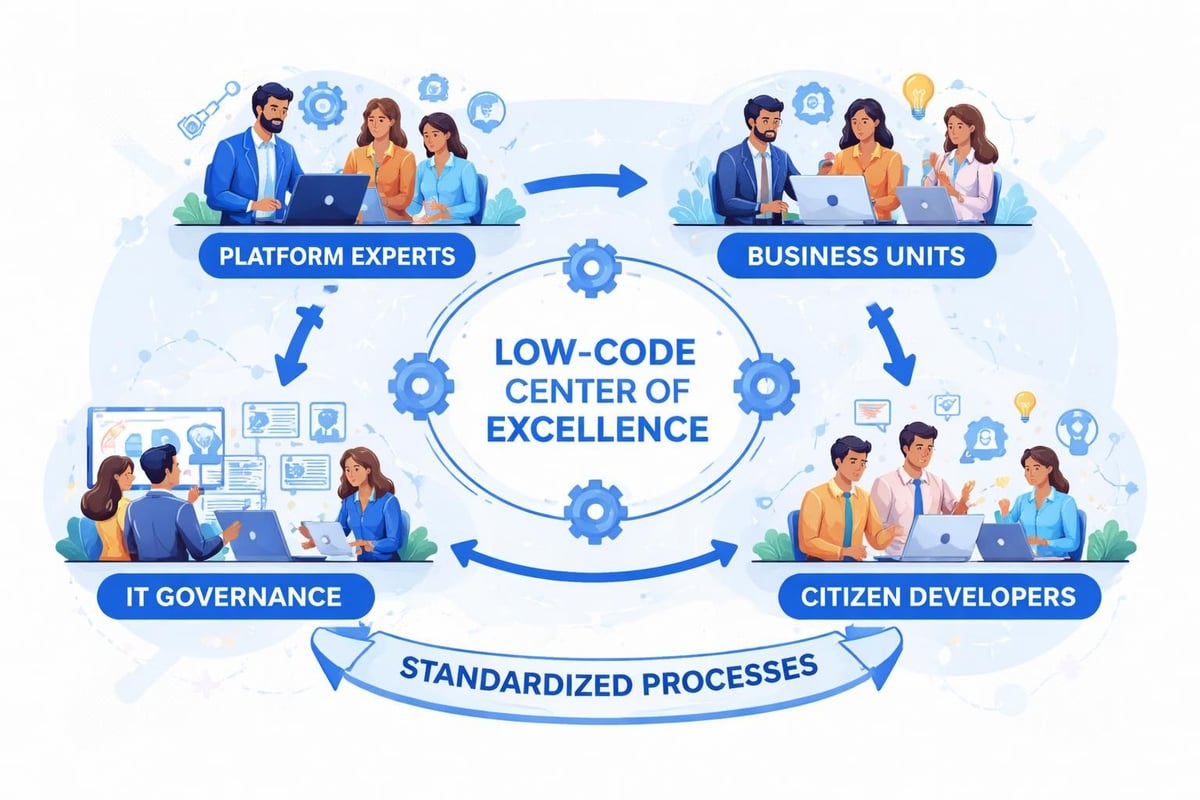
A low code center of excellence (CoE) serves as the central resource for platform expertise, best practices, and strategic guidance. The CoE typically includes:
- Platform architects who design reusable components
- Business analysts who translate requirements into solutions
- Developer advocates who train and support builders
- Governance specialists who ensure compliance
- Product owners who prioritize the application portfolio
Addressing the Talent Equation
The demand for business-savvy developers has intensified as low code development for enterprises becomes mainstream. Organizations face a dual challenge: upskilling existing staff while recruiting new talent comfortable in visual development environments.
Citizen Developer Enablement
Citizen developers represent business users with domain expertise who can build applications with appropriate training and support. Enterprises benefit from their deep understanding of business processes and requirements.
Successful citizen developer programs include:
- Structured training curricula with certification paths
- Mentorship pairing technical and business experts
- Sandboxed development environments for experimentation
- Regular office hours and community forums
- Recognition programs celebrating successful projects
However, citizen developers require guardrails. IT must provide templates, component libraries, and automated testing that prevent common pitfalls while accelerating delivery.
Professional Developer Integration
Professional developers initially skeptical of low code often become advocates once they experience productivity gains. Rather than replacing developers, low code development for enterprises amplifies their impact.
Developers focus on:
- Building custom components and integrations
- Optimizing complex business logic and algorithms
- Creating reusable templates and design systems
- Establishing testing frameworks and CI/CD pipelines
- Providing technical mentorship to citizen developers
Organizations working with specialized agencies gain access to experienced developers who understand both low code platforms and enterprise requirements, accelerating initial projects while building internal capability.
Platform Selection and Vendor Evaluation
Choosing low code platforms represents a multi-year commitment with significant organizational impact. Enterprises must evaluate options systematically against current and future requirements.
Essential Evaluation Criteria
| Category | Key Considerations |
|---|---|
| Technical Capabilities | API ecosystem, database options, mobile support, offline functionality |
| Vendor Viability | Financial stability, roadmap transparency, customer base, market position |
| Total Cost | Licensing models, scaling costs, training expenses, maintenance requirements |
| Ecosystem | Partner network, marketplace extensions, community resources, documentation |
| Support | SLA guarantees, technical support quality, professional services, training programs |
Leading platforms offer different strengths aligned with specific use cases. Microsoft Power Apps excels in Office 365 integration, while Bubble provides exceptional flexibility for custom applications without traditional infrastructure limitations.
Hybrid and Multi-Platform Strategies
Rather than standardizing on a single platform, forward-thinking enterprises adopt portfolio approaches matching tools to use cases. Internal workflow automation might use one platform while customer-facing applications require another.
This strategy provides:
- Best-fit technology for each application type
- Vendor leverage and risk mitigation
- Flexibility to adopt emerging platforms
- Specialized expertise development
However, multi-platform approaches increase complexity in governance, training, and integration architecture. Organizations must weigh flexibility against operational overhead.
Integration Architecture and Legacy System Connectivity
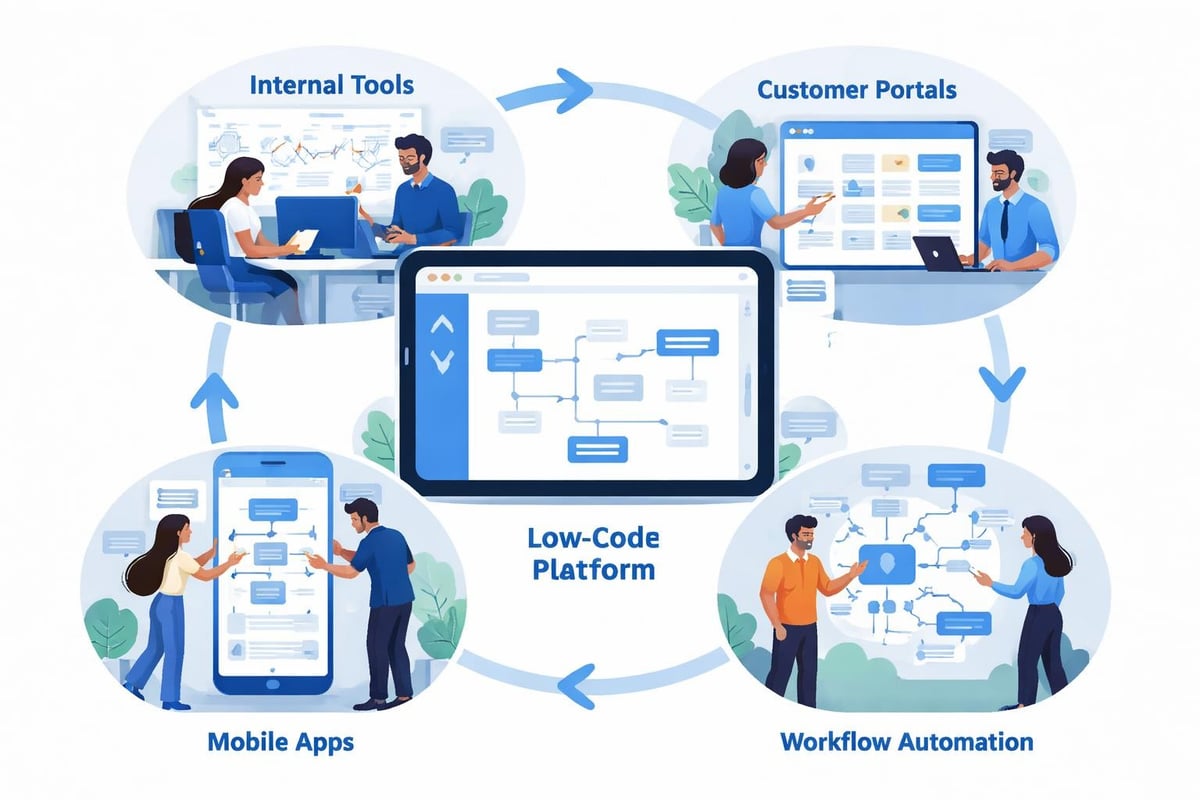
Low code development for enterprises succeeds or fails based on integration capabilities. Applications must connect seamlessly with ERP systems, databases, APIs, and legacy applications that form the enterprise backbone.
API-First Design Principles
Modern low code platforms embrace API-first architectures where every application component exposes and consumes well-documented APIs. This approach enables:
- Clean separation between presentation and business logic
- Flexible front-end options including web, mobile, and voice
- Third-party integration through standard protocols
- Microservices architecture when appropriate
- Future-proof extensibility as requirements evolve
Understanding application development platforms helps enterprises architect solutions that remain flexible as business needs change and technology evolves.
Data Integration Patterns
Enterprises typically implement several integration patterns simultaneously:
- Real-time synchronization for transactional systems requiring immediate consistency
- Batch processing for large-scale data transfers and analytics pipelines
- Event-driven integration responding to business events across systems
- Master data management ensuring single sources of truth for critical entities
- Caching and replication balancing performance with data freshness
The complexity of these patterns requires careful architecture planning. Organizations partnering with experienced development agencies benefit from proven integration frameworks that accelerate implementation while avoiding common pitfalls.
Measuring ROI and Business Impact
Justifying low code investments requires demonstrating tangible business value beyond theoretical benefits. Enterprises must establish clear metrics aligned with strategic objectives.
Quantitative Success Metrics
Development efficiency improvements:
- Application delivery time reduction (baseline vs. low code)
- Cost per application comparison
- Developer productivity increases
- Iteration cycle time decreases
- Backlog reduction percentages
Business outcome measurements:
- Revenue generated from new capabilities
- Operational cost savings from process automation
- Customer satisfaction score improvements
- Employee productivity gains
- Time savings in business processes
Organizations implementing low code development for enterprises typically see 3-5x faster delivery than traditional methods, with development costs reduced by 50-70% for appropriate use cases.
Qualitative Benefits Assessment
Beyond numbers, enterprises value improvements in organizational agility, employee satisfaction, and innovation capacity. Business units empowered to solve their own problems report higher engagement and ownership.
Research indicates that enterprises adopting low code platforms experience cultural shifts toward experimentation and continuous improvement, with business users more willing to iterate on solutions rather than demanding perfection upfront.
Common Implementation Challenges and Solutions
Despite compelling benefits, low code development for enterprises faces predictable obstacles that can derail initiatives without proper mitigation strategies.
Technical Debt Accumulation
Low code platforms make building applications easy, but poorly architected solutions create maintenance burdens. Common issues include:
- Overly complex workflows that become unmaintainable
- Hardcoded values that should be configurable parameters
- Missing documentation and unclear business logic
- Inadequate testing leading to production defects
- Performance problems from inefficient data queries
Prevention strategies:
- Mandatory code reviews before production deployment
- Automated testing requirements for all applications
- Architecture review boards for complex projects
- Regular refactoring sprints to address technical debt
- Documentation standards enforced through governance
Platform Lock-In Concerns
Enterprises worry about dependency on proprietary platforms and vendors. While legitimate, this concern often receives disproportionate weight compared to actual business risk.
Mitigation approaches include:
- Abstracting business logic into separate services when possible
- Using platforms with standard export formats and APIs
- Documenting application architecture and dependencies
- Maintaining relationships with multiple vendors
- Including exit clauses in enterprise agreements
The reality is that traditional development creates vendor lock-in through technology stack choices, developer expertise, and framework dependencies. Low code simply shifts where those dependencies exist.
The Future Trajectory of Enterprise Low Code
Low code development for enterprises continues evolving rapidly, with several trends shaping the next generation of platforms and practices.
AI-Augmented Development
Artificial intelligence increasingly assists low code builders through:
- Natural language interfaces converting descriptions to applications
- Automated testing generation based on user workflows
- Intelligent suggestions for component configuration
- Anomaly detection identifying potential issues
- Performance optimization recommendations
Platforms incorporating AI capabilities enable even faster development while reducing expertise requirements for common scenarios.
Composable Architecture Advancement
The future emphasizes composability where applications assemble from standardized, reusable components across platforms. This approach enables:
- Faster development through component marketplaces
- Consistency across application portfolios
- Specialized components from ecosystem partners
- Easier maintenance and updates
- Cross-platform functionality
Organizations investing in component libraries and design systems position themselves to capitalize on this trend.
Industry-Specific Solutions
Generic platforms increasingly offer vertical-specific solutions with pre-built components, workflows, and integrations tailored to healthcare, financial services, manufacturing, and other industries. These solutions accelerate implementation while ensuring regulatory compliance.
Sogeti research suggests that industry-specific low code solutions will dominate enterprise adoption over the next five years as vendors recognize that differentiated value comes from vertical depth rather than horizontal breadth.
Building Sustainable Low Code Practices
Long-term success with low code development for enterprises requires institutionalizing best practices and continuous improvement rather than treating platforms as temporary solutions.
Knowledge Management Systems
As application portfolios grow, documenting solutions becomes critical. Effective knowledge management includes:
- Centralized repositories for component libraries
- Searchable databases of design patterns
- Video tutorials for common tasks
- Case studies highlighting successful projects
- Regular knowledge-sharing sessions
Continuous Learning Culture
Technology evolution demands ongoing education. Enterprises should establish:
- Annual recertification requirements
- Attendance at vendor conferences and training
- Internal hackathons exploring new capabilities
- Dedicated learning time in work schedules
- Reward systems recognizing skill development
Organizations that view low code as strategic capabilities rather than tactical tools invest appropriately in these foundational elements.
Low code development for enterprises represents far more than a faster way to build applications - it fundamentally transforms how organizations approach digital innovation, enabling business and IT collaboration that was previously impossible. The platforms, practices, and strategic frameworks outlined here provide a foundation for sustainable adoption that delivers measurable business value while maintaining enterprise standards for security, governance, and scalability. Big House Technologies specializes in helping enterprises navigate this transformation through expert implementation of no-code and AI platforms, delivering scalable solutions that accelerate your digital initiatives while ensuring quality and maintainability. Whether you're just beginning your low code journey or scaling existing programs, partnering with experienced practitioners ensures you avoid common pitfalls and maximize return on your platform investments.

About Big House
Big House is committed to 1) developing robust internal tools for enterprises, and 2) crafting minimum viable products (MVPs) that help startups and entrepreneurs bring their visions to life.
If you'd like to explore how we can build technology for you, get in touch. We'd be excited to discuss what you have in mind.
Other Articles
Discover how to hire Bubble developer for your 2025 project with this step-by-step guide. Learn key skills, vetting tips, and avoid costly hiring mistakes.
Discover startup product development without engineers using no code and AI tools in 2026 Learn expert steps real examples and strategies for fast scalable growth
Unlock 2025 success with expert software platform development strategies. Discover trends, step-by-step processes, and tools to build scalable, future-ready platforms.