
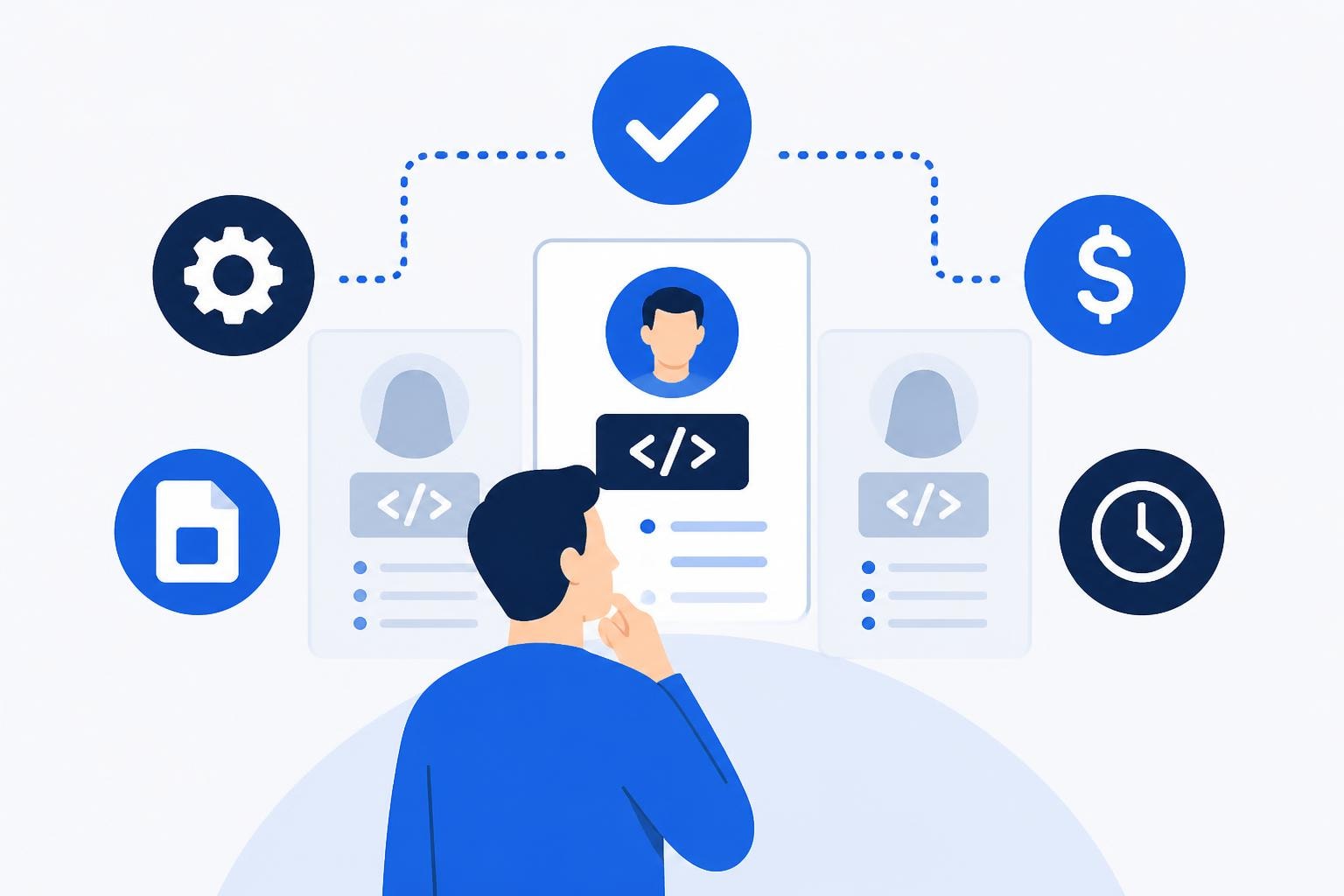
Finding the right programmer for hire has become both easier and more complex in 2026. With thousands of talented developers available across multiple platforms and pricing models, businesses face a critical decision: invest in traditional coding talent or explore modern alternatives like no-code development. This choice impacts not only your budget but also your project timeline, scalability, and long-term maintenance costs. Understanding the landscape of hiring programmers today requires knowledge of platforms, pricing structures, evaluation criteria, and emerging technologies that are reshaping how software gets built.
Understanding the Programmer for Hire Landscape
The freelance programming market has exploded over the past decade, creating unprecedented access to technical talent. Businesses can now connect with developers from around the world, each bringing specialized skills in languages like Python, JavaScript, Ruby, or frameworks like React and Node.js.
The traditional hiring model involves several key steps:
- Defining project requirements and technical specifications
- Posting job descriptions on freelance platforms
- Reviewing applications and portfolios
- Conducting technical interviews or coding tests
- Negotiating rates and contract terms
- Managing the development process
- Handling ongoing maintenance and updates
However, this process comes with challenges. Hiring programmers requires careful consideration of both technical capabilities and soft skills like communication and project management abilities. The average hourly rate for a programmer for hire ranges from $50 to $200 depending on expertise, location, and technology stack.
Platform Options for Finding Programmers
Multiple platforms serve different hiring needs and budget levels. Each platform offers unique features, vetting processes, and pricing structures.
| Platform Type | Best For | Average Cost | Vetting Level |
|---|---|---|---|
| Premium (Toptal) | Enterprise projects | $150-$200/hr | Very High |
| Mid-tier (Upwork) | Most projects | $50-$150/hr | Medium |
| Budget (Fiverr) | Small tasks | $25-$75/hr | Low to Medium |
| Specialized (GitHub Jobs) | Technical roles | $80-$180/hr | Self-managed |
Popular freelance platforms provide varying levels of quality control and support. Premium platforms thoroughly vet candidates but charge higher rates, while budget options offer accessibility at the cost of additional screening work on your end.
The Hidden Costs of Traditional Development
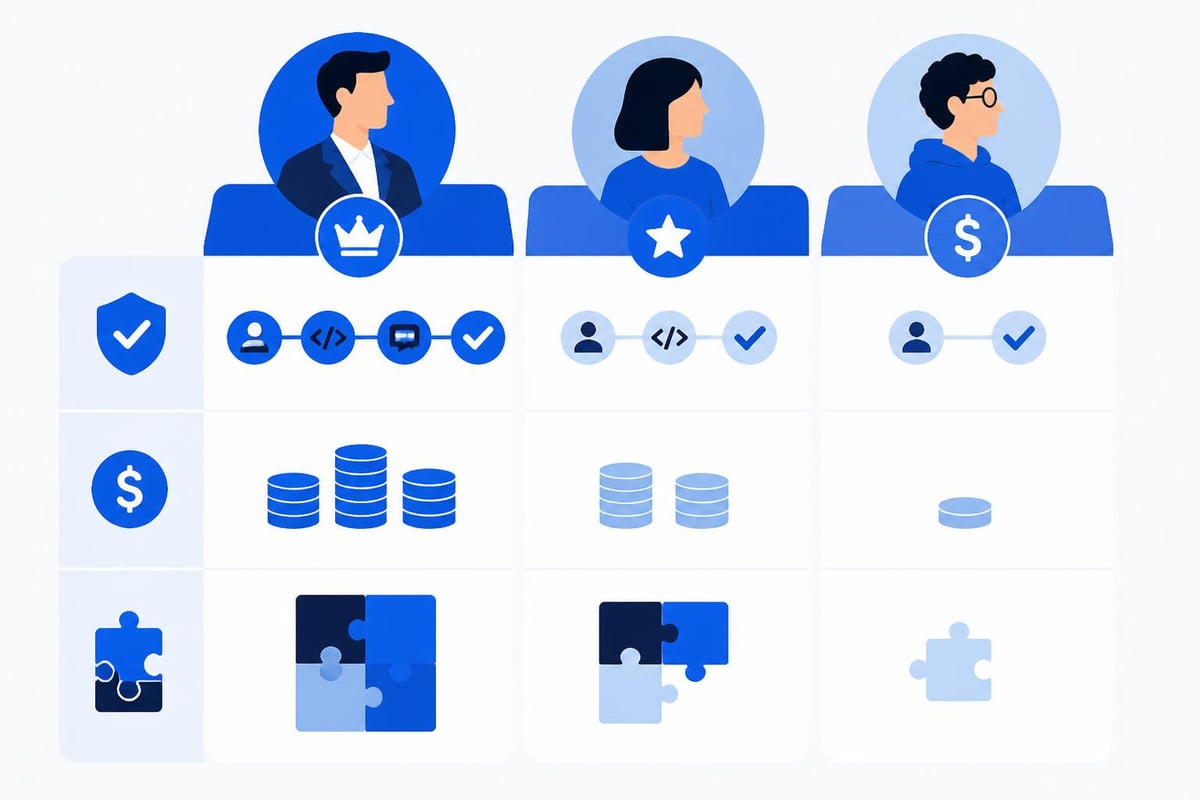
Hiring a programmer for hire involves more than hourly rates. Many businesses underestimate the total cost of ownership when engaging freelance developers for custom software projects.
Direct and Indirect Expenses
Direct costs include:
- Developer hourly or project rates
- Contract and legal review fees
- Payment processing charges
- Platform commission fees (typically 10-20%)
Indirect costs often overlooked:
- Time spent writing detailed specifications
- Project management overhead
- Communication delays across time zones
- Bug fixes and quality assurance
- Knowledge transfer and documentation
- Ongoing maintenance after launch
A $10,000 development project might actually cost $15,000-$18,000 when factoring in these hidden expenses. Additionally, understanding freelance developer contracts becomes essential to protect both parties and establish clear expectations around deliverables, timelines, and intellectual property rights.
Timeline Considerations
Traditional development timelines extend beyond pure coding hours. A simple web application requiring 100 development hours might take 8-12 weeks to complete when accounting for:
- Initial consultation and requirement gathering (1-2 weeks)
- Design mockups and approval cycles (1-2 weeks)
- Development sprints (4-6 weeks)
- Testing and bug fixes (1-2 weeks)
- Deployment and launch support (1 week)
These extended timelines can prove costly for startups racing to validate ideas or enterprises needing quick internal tool deployment.
Evaluating Programmer Quality and Fit
Not all programmers for hire deliver equal value. Successful hiring requires systematic evaluation of technical skills, communication abilities, and cultural alignment with your organization.
Technical Assessment Strategies
Portfolio review remains fundamental. Examine previous projects for code quality, complexity, and relevance to your needs. Look for diversity in projects and technologies, indicating adaptability and continuous learning.
Skills testing validates capabilities. Consider these approaches:
- Take-home coding assignments matching real project challenges
- Live coding sessions to observe problem-solving processes
- Technical discussion of architecture decisions
- Review of open-source contributions on GitHub
Reference checks provide context. Contact previous clients to understand reliability, communication quality, and ability to meet deadlines. Ask specific questions about challenges encountered and how the developer handled them.
Communication and Collaboration
Technical skills alone don't guarantee project success. A programmer for hire must communicate effectively, especially in remote arrangements spanning different time zones and cultures.
| Communication Factor | Why It Matters | How to Assess |
|---|---|---|
| Language proficiency | Prevents misunderstandings | Video interview |
| Responsiveness | Maintains momentum | Trial period |
| Documentation habits | Enables future maintenance | Portfolio review |
| Proactive updates | Reduces anxiety | Reference checks |
When hiring programmers globally, consider legal and compliance requirements for international contractors. Different countries have varying tax obligations, payment methods, and employment classifications that affect both cost and administrative burden.

The No-Code Alternative Revolution
While searching for a programmer for hire remains common, 2026 has brought no-code platforms to enterprise-grade maturity. These platforms enable rapid development without traditional coding, fundamentally changing the build-versus-buy equation.
No-Code Platform Capabilities
Modern no-code platforms like Bubble and AI-powered tools like Lovable now handle complex applications previously requiring custom development. They offer:
- Visual development interfaces replacing code syntax
- Pre-built components for common functionality
- Database management without SQL expertise
- API integrations connecting third-party services
- Responsive design automatically adapting to devices
- User authentication and permission systems
These capabilities make building MVPs with no-code viable for startups validating ideas quickly. Development time shrinks from months to weeks, and costs drop by 60-80% compared to custom coding.
When No-Code Makes Sense
No-code proves particularly effective for certain project types and business scenarios. Consider this approach when:
- Speed to market is critical - Launch in weeks instead of months
- Budget constraints exist - Low-cost MVP development preserves capital
- Requirements may evolve - Visual builders enable rapid iteration
- Internal tools are needed - Building internal dashboards without IT bottlenecks
- Technical resources are limited - Business users can contribute directly
AI-powered no-code development tools have accelerated this trend, enabling natural language descriptions to generate functional applications. This democratization of development challenges the necessity of hiring programmers for many common business software needs.
Strategic Hiring Decisions for Modern Businesses
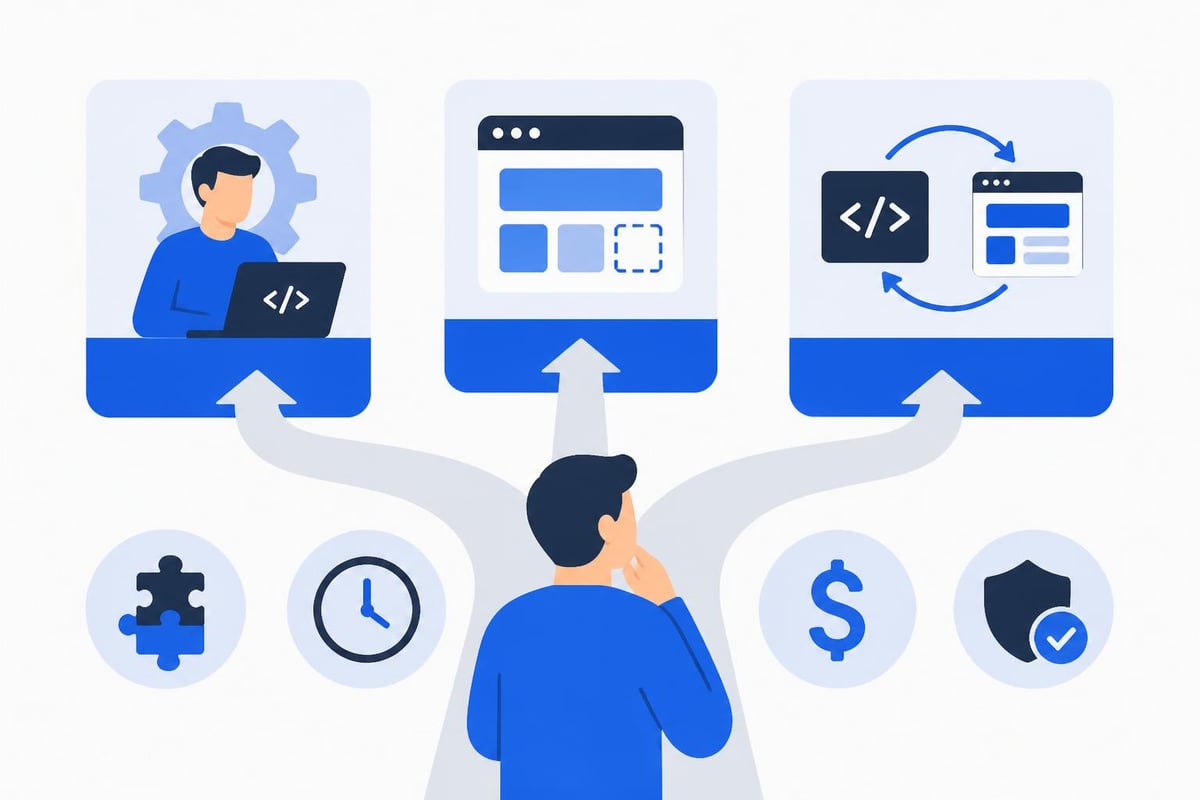
The choice between hiring a programmer for hire versus leveraging no-code platforms depends on project complexity, long-term goals, and organizational capabilities.
Project Complexity Matrix
Different projects suit different development approaches based on technical requirements and business constraints.
Custom development makes sense for:
- Highly specialized algorithms or data processing
- Applications requiring low-level system access
- Projects with unique security or compliance requirements
- Software intended for resale or white-labeling
- Systems needing maximum performance optimization
No-code excels at:
- CRUD applications (Create, Read, Update, Delete operations)
- Workflow automation and process management
- Customer portals and basic e-commerce
- Internal dashboards and reporting tools
- Marketplace and directory applications
Many enterprises now adopt hybrid approaches, using no-code for rapid prototyping and internal tools while reserving custom development for core differentiating features. This strategy optimizes both speed and cost.
Building Internal Development Capabilities
Rather than repeatedly hiring programmers for hire, some organizations invest in building internal capabilities. This approach involves:
Training existing staff in no-code platforms to reduce dependency on external developers. Business analysts, product managers, and operations teams can learn visual development tools in weeks rather than the years required for traditional programming.
Establishing citizen developer programs that empower non-technical employees to build solutions for their departments. Proper governance and best practices prevent technical debt while accelerating innovation.
Partnering with specialized agencies that provide expertise without the overhead of full-time hires. Agencies bring proven processes, multiple skilled developers, and faster delivery timelines compared to individual freelancers.
Managing Programmer Relationships Successfully
When you do hire a programmer for hire, effective management determines project success. Clear communication, structured processes, and appropriate tools create productive working relationships.
Contract and Agreement Essentials
Well-drafted contracts protect both parties. Essential clauses include:
- Detailed scope of work with specific deliverables
- Timeline with milestones and payment schedules
- Intellectual property assignment to client
- Confidentiality and non-disclosure terms
- Termination conditions and notice requirements
- Dispute resolution procedures
Payment structures vary by project type and risk tolerance:
| Payment Model | Best For | Risk Distribution |
|---|---|---|
| Hourly | Uncertain scope | Client bears risk |
| Fixed price | Defined deliverables | Developer bears risk |
| Milestone-based | Phased projects | Shared risk |
| Retainer | Ongoing work | Predictable costs |
Project Management Best Practices
Successful programmer relationships require active management and clear processes throughout development.
Establish communication cadence early:
- Daily or weekly check-ins depending on project size
- Shared project management tools (Jira, Trello, Asana)
- Video calls for complex discussions
- Written summaries of all decisions
Define success metrics explicitly:
- Functional requirements must meet
- Performance benchmarks to achieve
- Testing procedures to complete
- Documentation standards to follow
Maintain version control and backups. Ensure code repositories remain accessible and regularly backed up. Request admin access to all project assets, preventing vendor lock-in if the relationship ends.
Alternative Models: Staff Augmentation and Agencies
Beyond hiring individual programmers for hire, businesses can explore staff augmentation or full-service development agencies as alternatives offering different benefits.
Staff Augmentation Benefits
Staff augmentation places developers within your existing team while remaining employed by an agency. This model provides:
- Faster onboarding with agency support
- Replacement guarantees if fit isn't right
- Reduced administrative burden
- Access to multiple skill levels
- Built-in quality control processes
Costs typically run 20-30% higher than direct freelancer hiring but include management overhead and reduced risk.
Agency Partnership Advantages
Full-service development agencies handle entire projects from conception to launch. When considering agencies:
Evaluate their portfolio and specialization. Bubble development agencies focused on no-code platforms offer different capabilities than traditional software firms. Specialized expertise often delivers better results than generalist developers.
Assess their development approach. Leading agencies provide comprehensive services including scoping, design, development, testing, and deployment. This end-to-end capability reduces coordination overhead compared to managing multiple freelancers.
Consider their technology stack. Agencies building on platforms like Bubble for app development leverage proven frameworks and reusable components, accelerating delivery while maintaining quality standards.
Emerging Trends Reshaping Programmer Hiring
The programmer for hire market continues evolving rapidly as new technologies and working models emerge. Understanding these trends helps businesses make forward-looking hiring decisions.
AI-Assisted Development
Artificial intelligence tools are transforming how programmers work. GitHub Copilot, ChatGPT, and similar tools automate routine coding tasks, boosting developer productivity by 30-50%. This shift means:
- Programmers accomplish more in less time
- Junior developers access senior-level capabilities
- Routine tasks get automated, freeing time for complex problems
- Quality improves through AI-assisted code review
For businesses, this suggests AI and software development integration will continue changing both what programmers do and how much they cost. Practical implementations through platforms like AI 4 Small Business demonstrate how AI augments rather than replaces developer capabilities, making software creation more accessible and efficient.
Global Talent Access
Remote work normalization means businesses can hire talent anywhere. The best countries to hire developers now includes emerging tech hubs offering excellent skills at competitive rates. This global marketplace creates opportunities but requires navigating:
- Time zone coordination for real-time collaboration
- Cultural differences affecting communication styles
- Legal compliance across jurisdictions
- Payment processing and currency conversion
- Tax implications for international contractors
Hybrid Skill Expectations
The line between traditional programmers and no-code developers blurs as technical talent increasingly works across both domains. Modern programmers often:
- Build prototypes in no-code before custom coding
- Integrate no-code tools with custom APIs
- Recommend appropriate platforms for different needs
- Combine visual development with code extensions
This versatility makes programmers for hire who understand multiple development paradigms particularly valuable for organizations exploring modern development approaches.
Making Your Hiring Decision
Choosing how to build software in 2026 requires balancing multiple factors specific to your situation. No single approach fits all circumstances.
Start by clearly defining your requirements:
- What problem does the software solve?
- Who are the end users and what do they need?
- What integrations with existing systems are necessary?
- What performance or scalability requirements exist?
- What timeline drives the project?
- What budget constraints apply?
Then evaluate your options systematically:
Compare the total cost of ownership across approaches, not just initial development expenses. Factor in maintenance, updates, and potential scaling needs over 3-5 years.
Consider speed-to-market advantages. For time-sensitive opportunities, faster delivery through no-code or agency partnerships may outweigh cost savings from cheaper individual programmers.
Assess internal capabilities honestly. If you lack technical project management expertise, structured agency approaches reduce risk compared to managing individual freelancers.
Test before committing fully. Many platforms offer trial periods for development tools while good programmers accept small pilot projects to demonstrate capabilities. Use these opportunities to validate fit before major investments.
The right choice depends on your specific context, but understanding the full landscape of options ensures informed decisions that balance cost, speed, quality, and long-term sustainability.
Finding the right programmer for hire or choosing alternative development approaches requires careful evaluation of your specific needs, timeline, and budget constraints. Whether you opt for traditional freelance developers, staff augmentation, full-service agencies, or modern no-code platforms, success depends on clear requirements and realistic expectations. Big House Technologies specializes in delivering scalable software solutions using no-code and AI platforms, combining the speed and cost-efficiency of modern development tools with enterprise-grade quality and professional project management to transform your ideas into production-ready applications.

About Big House
Big House is committed to 1) developing robust internal tools for enterprises, and 2) crafting minimum viable products (MVPs) that help startups and entrepreneurs bring their visions to life.
If you'd like to explore how we can build technology for you, get in touch. We'd be excited to discuss what you have in mind.
Other Articles
Learn how to hire a software programmer in 2026. Expert strategies for vetting talent, choosing development approaches, and building high-performing teams.
Discover the future of QA software development in 2025. Explore trends, tools, AI, best practices, and step-by-step strategies to ensure software excellence.
Discover the 7 best AI tool for code solutions in 2025. Compare features, pricing, and pros to boost productivity and code quality. Find your ideal AI tool now.