
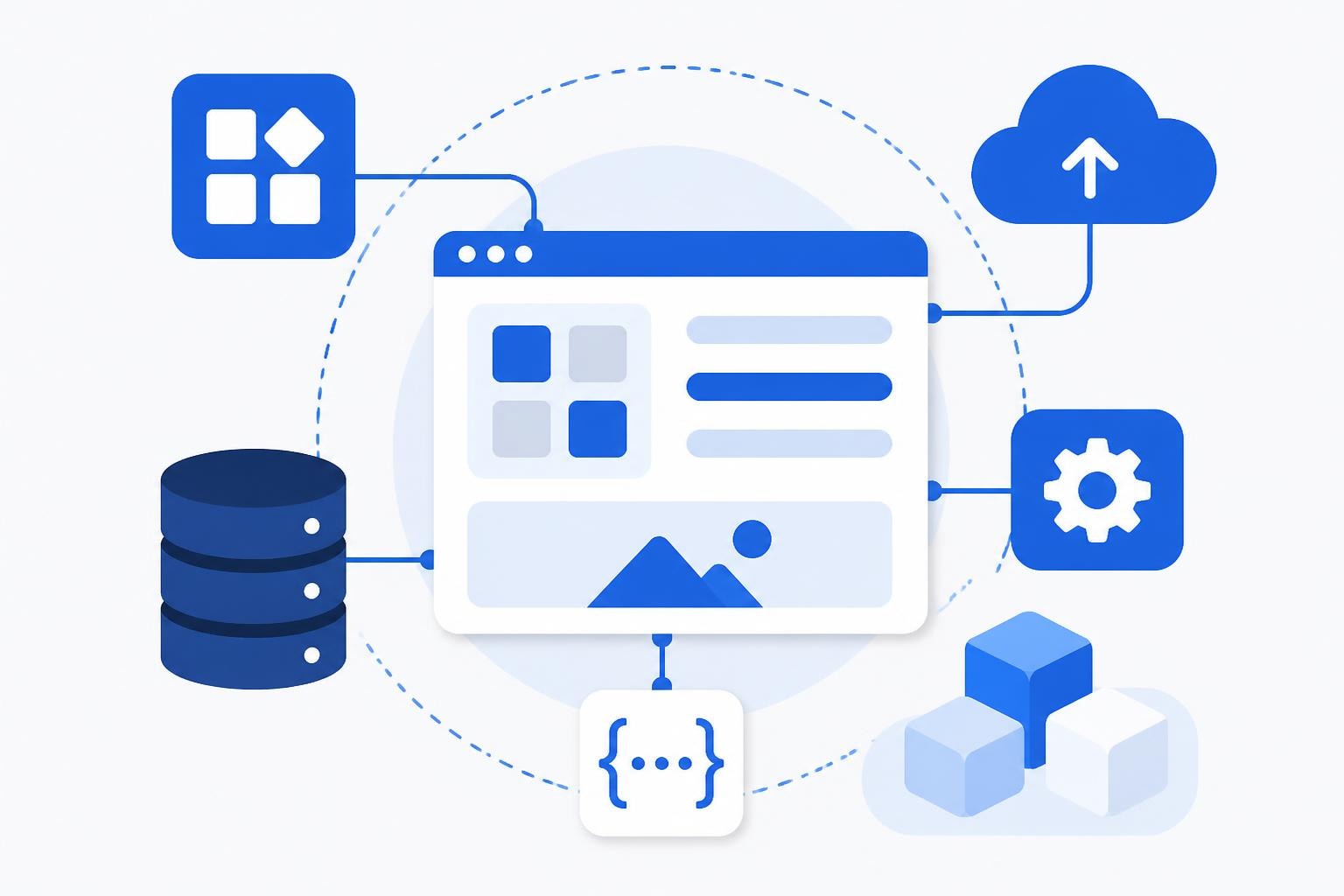
The digital transformation landscape in 2026 continues to evolve at an unprecedented pace, driven by the symbiotic relationship between software applications and the platforms that support them. Understanding how software and platforms interact has become essential for businesses seeking to build scalable, efficient solutions that meet modern market demands. Whether you're an enterprise leader evaluating development options or a startup founder planning your first product, grasping the fundamental differences and connections between software and platforms will inform every technical decision you make.
Understanding the Core Distinction Between Software and Platforms
At its most basic level, software refers to the collection of programs, data, and instructions that tell computers how to perform specific tasks. Software encompasses everything from the operating systems running your devices to the specialized applications solving particular business problems. Applications, system software, middleware, and programming tools all fall under this umbrella.
Platforms, however, serve a different purpose. A platform in IT functions as the foundational infrastructure upon which software applications are built and operated. Think of platforms as the stage where software performs-they provide the environment, tools, and services that enable software to function effectively.
The Platform Foundation
Platforms establish standards and provide capabilities that multiple software applications can leverage. This creates several key advantages:
- Consistency across applications using the same underlying infrastructure
- Reduced development time through pre-built services and components
- Scalability that grows with business needs
- Integration capabilities connecting diverse systems and data sources
The relationship between software and platforms mirrors construction: platforms provide the foundation, framework, and utilities (like plumbing and electrical), while software represents the customized spaces and features built on top.

Categories of Modern Software Platforms
The software and platforms ecosystem encompasses numerous specialized categories, each serving distinct purposes within the technology stack. Understanding different types of software platforms helps businesses select the right foundation for their specific needs.
Infrastructure and Computing Platforms
These platforms provide the fundamental computing resources and environments where software runs. Cloud infrastructure platforms like AWS, Azure, and Google Cloud offer virtualized computing power, storage, and networking capabilities. Organizations build and deploy their applications on these platforms without maintaining physical hardware.
Operating systems represent another critical infrastructure layer. Windows, macOS, Linux, iOS, and Android all function as platforms that applications target during development. When developers build software, they must consider which operating system platforms they'll support.
Developer and Application Platforms
Developer platforms focus on accelerating the software creation process. These platforms provide integrated development environments, testing frameworks, deployment pipelines, and collaboration tools that streamline how teams build and ship software.
Low-code and no-code development platforms have transformed this category dramatically. Instead of writing thousands of lines of code, developers and business users can assemble applications through visual interfaces, pre-built components, and workflow automation. This democratization of software creation enables faster time-to-market and reduces development costs significantly.
| Platform Type | Primary Users | Key Capabilities | Best For |
|---|---|---|---|
| Infrastructure | IT Operations | Compute, storage, networking | Scalable hosting |
| Developer | Software teams | IDEs, APIs, deployment tools | Building applications |
| No-Code | Business users | Visual builders, templates | Rapid prototyping |
| Data | Analysts, engineers | Storage, processing, analytics | Information management |
Services and SaaS Control Planes
Services and SaaS platforms operate at a higher abstraction level, delivering complete business capabilities through software-as-a-service models. Rather than building functionality from scratch, organizations integrate these platform services into their workflows.
Customer relationship management platforms, marketing automation systems, and enterprise resource planning solutions exemplify this category. These platforms offer both end-user interfaces and APIs that other software can consume, creating interconnected business ecosystems.
The Strategic Value of Platform-Based Development
Choosing to build on established platforms rather than starting from zero delivers measurable business advantages. The software and platforms approach fundamentally changes development economics and timelines.
Speed and Efficiency Gains
Time-to-market acceleration stands as the most immediate benefit. When platforms handle infrastructure provisioning, security protocols, user authentication, and data persistence, development teams focus exclusively on business logic and user experience. What might take months with traditional development can be completed in weeks.
For enterprises evaluating no-code versus custom code cost comparisons, the speed advantage compounds over time. Faster initial development leads to earlier market validation, quicker iteration cycles, and more responsive adaptation to changing requirements.
- Reduced technical debt through platform-managed updates and security patches
- Lower maintenance burden as platforms handle infrastructure concerns
- Faster feature deployment using platform capabilities and integrations
- Simplified scaling leveraging platform elasticity
Cost Optimization Through Platform Economics
Traditional software development requires substantial upfront investment in infrastructure, tooling, and specialized technical expertise. Platform-based development shifts this to operational expenses with usage-based pricing models.
Development agencies like those specializing in no-code solutions can deliver production-ready applications at a fraction of traditional costs. The platform absorbs infrastructure complexity, allowing smaller teams to accomplish what previously required large engineering departments.

Selecting the Right Platform Architecture for Your Needs
Not all platforms suit every use case equally. Strategic platform selection requires analyzing your specific requirements, constraints, and long-term objectives. Software and platforms should align with both immediate project needs and future scalability plans.
Evaluating Platform Capabilities
Start by mapping your application requirements to platform features. Consider data complexity, user volume expectations, integration needs, and compliance requirements. A sophisticated enterprise application with complex business logic has different platform needs than a simple customer-facing tool.
When examining application development platforms, assess these critical dimensions:
- Scalability ceiling - Can the platform grow with your business?
- Customization depth - How much can you tailor functionality?
- Integration ecosystem - What third-party services connect easily?
- Data sovereignty - Where is data stored and who controls it?
- Vendor lock-in risk - How portable is your application?
- Support and community - What resources exist for troubleshooting?
Platform-Specific vs. Cross-Platform Strategies
Some software targets a single platform exclusively, optimizing for that environment's specific capabilities and conventions. Native mobile applications built specifically for iOS or Android exemplify this approach, delivering the best possible user experience on their target platform.
Cross-platform strategies prioritize broader reach and development efficiency. Web applications, progressive web apps, and cross-platform mobile frameworks enable a single codebase to serve multiple platforms. The trade-off involves some platform-specific optimization in exchange for faster development and unified maintenance.
Platform-agnostic software takes portability further, minimizing dependencies on any particular platform's unique features. This approach maximizes flexibility but may sacrifice some performance or capability advantages that platform-specific optimizations provide.
No-Code and AI Platforms Reshaping Development
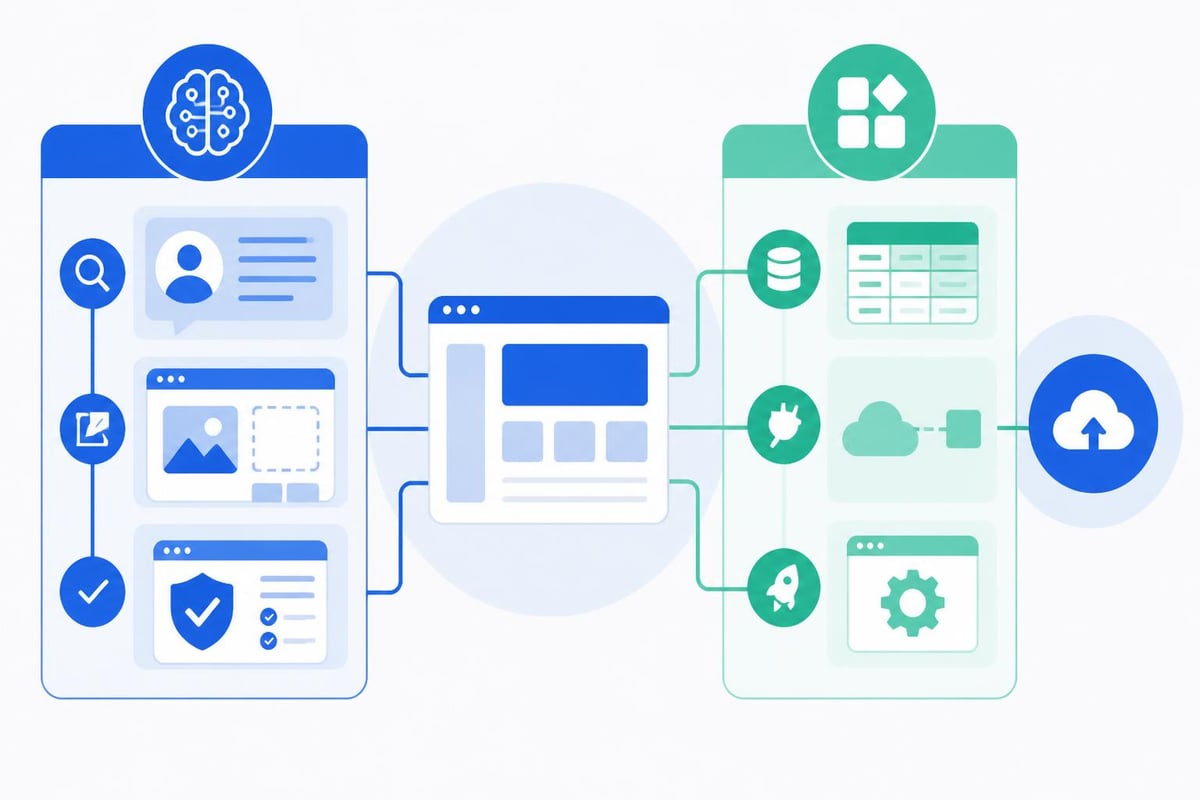
The convergence of no-code development and artificial intelligence has created a new category of software and platforms that fundamentally reimagines how applications come to life. These platforms combine visual development interfaces with AI-powered assistance to accelerate every stage of the software lifecycle.
The No-Code Platform Revolution
No-code platforms have matured significantly by 2026, now powering mission-critical enterprise applications alongside rapid prototypes. Modern no-code platforms like Bubble offer sophisticated capabilities including complex workflow automation, robust database options, custom API integrations, and responsive design systems.
These platforms enable business users to become builders. Subject matter experts who understand processes and user needs can now create the software solutions they envision without translating requirements through traditional development teams. This direct path from idea to implementation reduces miscommunication and accelerates innovation.
For organizations building internal tools, no-code platforms offer particular advantages. Internal applications typically require rapid development, frequent iteration based on user feedback, and tight integration with existing business systems-all areas where no-code platforms excel.
AI-Enhanced Development Platforms
Artificial intelligence integration into development platforms represents one of the most significant shifts in software creation. AI-based design to code tools now translate mockups and wireframes directly into functional components, dramatically reducing the manual work of implementing designs.
AI platforms assist with:
- Code generation from natural language descriptions
- Automated testing that identifies bugs and edge cases
- Design optimization suggesting improvements to user interfaces
- Performance analysis recommending efficiency enhancements
The combination of no-code platforms and AI assistance creates a multiplicative effect. Developers work at higher abstraction levels, focusing on business outcomes while AI handles implementation details and no-code platforms manage infrastructure complexity.
Digital Platforms and Business Model Innovation
Beyond their technical function, digital platforms enable entirely new business models and market structures. Platform businesses create value by facilitating exchanges and interactions between different user groups, fundamentally differing from traditional linear value chains.
Platform Network Effects
The most successful digital platforms harness network effects where each additional user increases the value for all participants. Marketplaces, social networks, and multi-sided platforms all demonstrate this dynamic. Software built on these platforms taps into existing user bases and established trust relationships.
Consider how platform economics affect development strategy. Building on an established platform with millions of users differs dramatically from creating a standalone application. Integration with platform features, adherence to platform guidelines, and participation in platform ecosystems all influence design decisions.
Composable Business Architecture
Modern enterprises increasingly adopt composable architecture approaches, assembling business capabilities from various software and platforms rather than building monolithic custom systems. This modularity enables faster adaptation to market changes and reduces dependency on any single vendor or technology.
| Architecture Approach | Flexibility | Time to Market | Integration Complexity | Best Use Case |
|---|---|---|---|---|
| Monolithic Custom | Low | Slow | Low | Stable, unique requirements |
| Platform-Based | Medium | Fast | Medium | Standard business processes |
| Composable/Modular | High | Very Fast | High | Rapidly changing needs |
Composable strategies leverage APIs and integration platforms to connect specialized software and platforms, each excellent at specific functions. Marketing automation, customer service, analytics, and commerce capabilities come from dedicated platforms, unified through integration layers.
Platform Governance and Vendor Management
As organizations build critical operations on third-party software and platforms, effective governance becomes essential. Platform dependencies introduce risks around service availability, pricing changes, feature deprecation, and data access that require active management.
Establishing Platform Policies
Define clear criteria for platform evaluation and selection. Document decision factors including security requirements, compliance needs, performance expectations, and total cost of ownership calculations. Standardizing these criteria ensures consistent platform choices across the organization.
Regular platform audits help identify redundancy, underutilization, and optimization opportunities. Many organizations discover they're paying for overlapping capabilities across multiple platforms or maintaining legacy platforms no longer aligned with current needs.
- Create an inventory of all platforms currently in use
- Document business-critical dependencies on each platform
- Establish service level requirements and monitor performance
- Define contingency plans for platform service disruptions
- Review platform roadmaps to anticipate upcoming changes
Managing Vendor Relationships
Platform vendors control significant aspects of your operations, making vendor management a strategic concern. Maintain regular communication with platform providers, participate in user communities, and stay informed about platform direction and upcoming changes.
For business-critical platforms, consider establishing direct relationships with vendor account teams, negotiating service level agreements, and understanding escalation procedures. The investment in vendor management pays dividends when you need support or influence platform development priorities.
Future Trends Shaping Software and Platforms
The evolution of software and platforms continues accelerating, driven by technological advances and changing market expectations. Understanding emerging trends helps organizations make forward-looking platform investments that remain relevant as the landscape shifts.
Edge Computing and Distributed Platforms
While cloud platforms currently dominate, edge computing is shifting some processing closer to data sources and end users. This distributed approach reduces latency, conserves bandwidth, and enables applications in locations with limited connectivity. Future platforms will seamlessly span cloud, edge, and on-premises environments.
Hybrid platform architectures will become standard, with workloads dynamically allocated to the most appropriate computing location. Some processing happens on user devices, other tasks leverage edge nodes, and still others utilize centralized cloud resources based on performance requirements and data sensitivity.
Platform Consolidation and Specialization
The platform market shows simultaneous trends toward both consolidation and specialization. Major cloud providers expand their platform offerings to provide increasingly comprehensive suites of services. Meanwhile, specialized platforms emerge targeting specific industries, use cases, or technical domains.
This creates strategic choices for organizations: adopt comprehensive platforms from major vendors or assemble best-of-breed specialized platforms into custom stacks. Neither approach is universally superior-the right choice depends on organizational priorities, technical capabilities, and specific requirements.
Sustainability and Green Computing Platforms
Environmental impact considerations are becoming platform selection criteria. Organizations increasingly evaluate the carbon footprint of their software and platforms, choosing providers committed to renewable energy and efficient resource utilization. Platforms will compete on sustainability metrics alongside traditional performance and cost measures.
Understanding how software and platforms work together empowers better technology decisions that accelerate innovation while controlling costs and complexity. The strategic selection of platforms aligned with your business objectives, combined with expert implementation, transforms your ability to deliver solutions that drive competitive advantage. Big House Technologies specializes in leveraging no-code and AI platforms to build scalable software solutions that meet enterprise and startup needs alike, delivering fully functional products on time and within budget while maximizing the strategic advantages modern platforms provide.

About Big House
Big House is committed to 1) developing robust internal tools for enterprises, and 2) crafting minimum viable products (MVPs) that help startups and entrepreneurs bring their visions to life.
If you'd like to explore how we can build technology for you, get in touch. We'd be excited to discuss what you have in mind.
Other Articles
Master bubble app load time optimization with expert strategies for faster apps in 2026 Diagnose issues optimize workflows and leverage the latest Bubble features
Develop MVP for 2025 success with this step by step guide covering market validation feature selection design tech stacks testing and launch strategies for growth
Discover Lovable pricing structure, costs, and value for AI-powered development. Compare plans and learn if Lovable fits your project budget.