
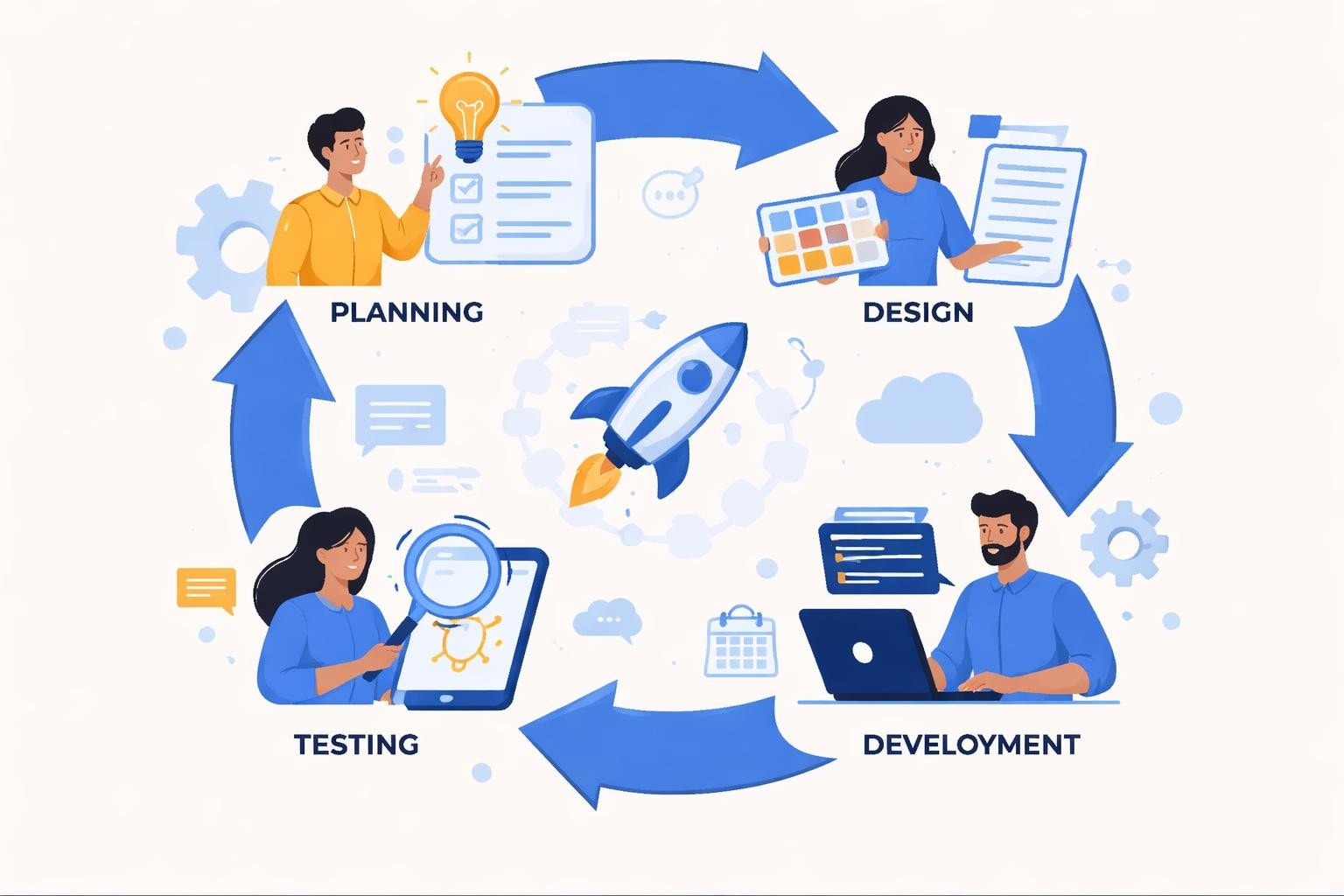
The landscape of software company development has undergone dramatic transformation in recent years, driven by advances in no-code platforms, AI-assisted development, and evolving methodologies that prioritize speed without sacrificing quality. Organizations that once relied exclusively on traditional coding approaches now have access to powerful tools that accelerate delivery while maintaining enterprise-grade standards. Understanding how to navigate this modern development ecosystem is essential for companies seeking to build competitive advantages through technology. Whether you're launching a startup MVP or scaling an enterprise platform, the principles of effective software company development remain crucial to success.
The Foundation of Successful Software Company Development
Building software that meets market demands requires more than technical expertise. It demands a strategic approach that aligns business objectives with development capabilities. Modern software company development starts with clear requirement definition and stakeholder alignment.
Effective scoping sets the stage for everything that follows. When teams invest time upfront to understand user needs, technical constraints, and business goals, they avoid costly pivots and rework later. This foundation includes:
- Detailed user stories and acceptance criteria
- Technical architecture decisions
- Integration requirements and dependencies
- Security and compliance considerations
- Performance benchmarks and scalability targets
The rise of no-code platforms for enterprise workflows has fundamentally changed how companies approach this planning phase. Instead of abstract wireframes and lengthy specification documents, teams can now create functional prototypes during discovery, allowing stakeholders to interact with tangible solutions before committing significant resources.
Choosing the Right Development Methodology
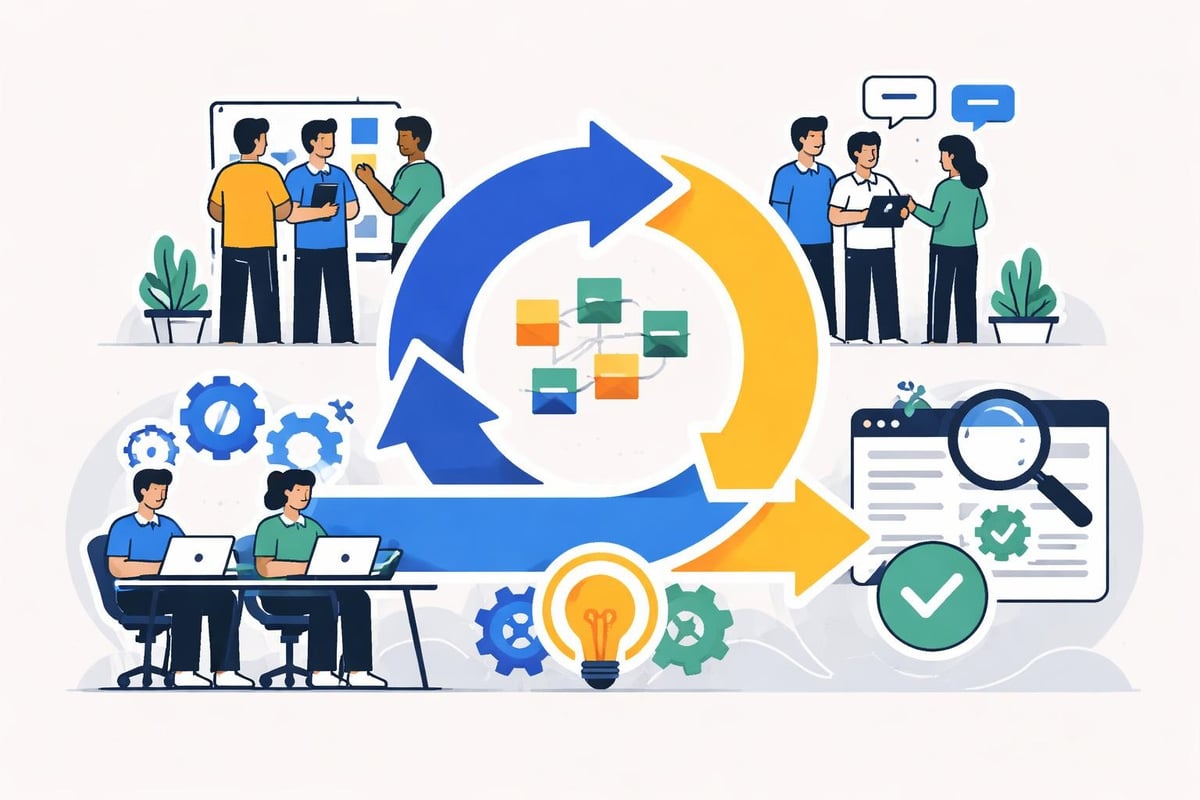
Software company development methodologies have evolved considerably, with Agile approaches dominating the modern landscape. However, the key isn't simply adopting Agile - it's understanding which framework best serves your specific context.
| Methodology | Best For | Key Advantage | Primary Challenge |
|---|---|---|---|
| Scrum | Cross-functional teams | Clear sprint goals | Ceremony overhead |
| Kanban | Continuous delivery | Flexibility | Less structure |
| Lean Startup | MVP development | Fast validation | Limited documentation |
| Hybrid Agile | Enterprise projects | Customizable | Requires expertise |
Organizations should recognize that software development best practices emphasize adaptability over rigid adherence to any single framework. The best teams customize their approach based on project complexity, team size, and stakeholder expectations.
Modern Development Tools and Platforms
The tooling landscape for software company development has expanded dramatically, offering options that range from traditional IDEs to visual development environments. This democratization of development capabilities means companies can now choose tools based on project requirements rather than developer availability.
No-code and AI-assisted platforms have emerged as legitimate enterprise solutions. Platforms like Bubble and Lovable enable rapid prototyping and production deployment without the traditional constraints of hand-coded software. These tools excel particularly for:
- Internal dashboard creation where building internal dashboards requires custom logic but not custom code
- Customer-facing applications that need frequent iteration based on user feedback
- Integration layers connecting disparate systems through API-driven workflows
- MVP development for startups testing product-market fit
Traditional development still maintains advantages for computationally intensive applications, highly specialized algorithms, or scenarios requiring absolute performance optimization. The strategic decision involves matching tool capabilities to project requirements rather than defaulting to familiar approaches.
Quality Assurance Throughout the Development Lifecycle
Software company development quality cannot be an afterthought. Modern practices integrate testing and quality checks throughout every development phase, creating continuous feedback loops that catch issues early when they're cheapest to fix.
Continuous Integration and Continuous Deployment (CI/CD) pipelines form the backbone of quality assurance. As highlighted in this guide on CI/CD best practices, automated testing ensures code remains in a releasable state at all times. This approach includes:
- Automated unit tests running on every commit
- Integration tests validating component interactions
- End-to-end tests simulating real user workflows
- Performance tests identifying bottlenecks before production
- Security scans detecting vulnerabilities early
For teams using no-code platforms, quality assurance adapts but remains equally important. Visual development doesn't eliminate the need for thorough testing - it simply shifts focus from syntax errors to logic validation and user experience verification.
Planning and Scoping Best Practices
Successful software company development begins long before the first line of code. The planning phase determines project trajectory, resource allocation, and ultimately whether delivered software meets stakeholder expectations.
Defining Your Minimum Viable Product
The MVP concept has become central to modern software company development, but many organizations misunderstand its application. An effective MVP isn't simply a scaled-down version of a larger vision - it's a strategic tool for learning and validation.
Your MVP should answer specific questions about your market. Start by identifying the core hypothesis you need to validate. What assumptions underpin your product strategy? Which features are genuinely essential versus nice-to-have? How will you measure success?
Consider this framework for MVP scoping:
- Identify the single most important problem you're solving
- Design the simplest solution that addresses this problem completely
- Define measurable success criteria
- Plan for rapid iteration based on user feedback
- Establish clear graduation criteria for moving beyond MVP
Teams exploring AI-assisted app builder platforms often discover they can test multiple MVP variations quickly, gathering data that would have taken months using traditional development approaches.

Development Phase Excellence
The actual coding or configuration phase of software company development is where planning translates into tangible products. This phase demands discipline, consistency, and attention to detail that separates successful projects from troubled ones.
Code quality standards matter regardless of your development approach. Whether writing JavaScript or configuring visual workflows, maintaining consistency improves maintainability and reduces technical debt. Establish clear guidelines covering:
- Naming conventions for variables, functions, and components
- File and folder organization structures
- Comment and documentation standards
- Reusability patterns and component libraries
- Error handling and logging approaches
The article on production-ready development discipline emphasizes that rapid development doesn't excuse poor practices. Speed and quality aren't mutually exclusive when teams implement proper safeguards.
Collaboration and Code Review Processes
Modern software company development is inherently collaborative. Even solo developers benefit from structured review processes that catch errors and improve design decisions before they become embedded in production systems.
Effective code review goes beyond finding bugs. It serves as knowledge transfer, ensuring multiple team members understand each system component. Reviews also maintain consistency across a codebase and provide mentoring opportunities for junior developers.
| Review Type | Frequency | Primary Goal | Time Investment |
|---|---|---|---|
| Peer Review | Every PR | Quality gate | 15-30 min |
| Architecture Review | Major features | Design validation | 1-2 hours |
| Security Review | Regular cadence | Vulnerability detection | Varies |
| Performance Review | Pre-release | Optimization | 30-60 min |
Research compiled from over 100 CTOs on development best practices consistently highlights structured review processes as differentiating high-performing teams from average ones.
Testing and Quality Control
Software company development quality control extends far beyond basic functionality testing. Comprehensive quality assurance encompasses user experience, performance under load, security resilience, and operational reliability.
Automated testing provides consistent coverage that manual testing cannot match. While human testers excel at exploratory testing and UX evaluation, automated tests ensure regression protection and enable confident refactoring. A mature testing strategy includes multiple layers:
- Unit tests validating individual components in isolation
- Integration tests confirming components work together correctly
- End-to-end tests verifying complete user workflows
- Performance tests measuring response times and throughput
- Security tests identifying vulnerabilities and compliance gaps
Teams working with enterprise automation consulting approaches often discover that automated testing becomes even more critical when multiple systems interconnect. A failure in one integration point can cascade across entire business processes.
Security Integration from Day One
Security cannot be a late-stage addition to software company development. Modern threats require security considerations throughout the entire development lifecycle, from initial architecture decisions through ongoing maintenance.
Shift-left security principles embed protection early. This approach includes threat modeling during design, secure coding practices during development, and automated security scanning before deployment. Key security practices include:
- Input validation and sanitization at all entry points
- Proper authentication and authorization controls
- Encryption for data in transit and at rest
- Regular dependency updates and vulnerability patching
- Comprehensive logging and monitoring for incident detection
Organizations should recognize that security requirements often drive architectural decisions. Choosing between different software company development approaches may hinge on compliance requirements, data residency rules, or industry-specific regulations.
Deployment and DevOps Practices
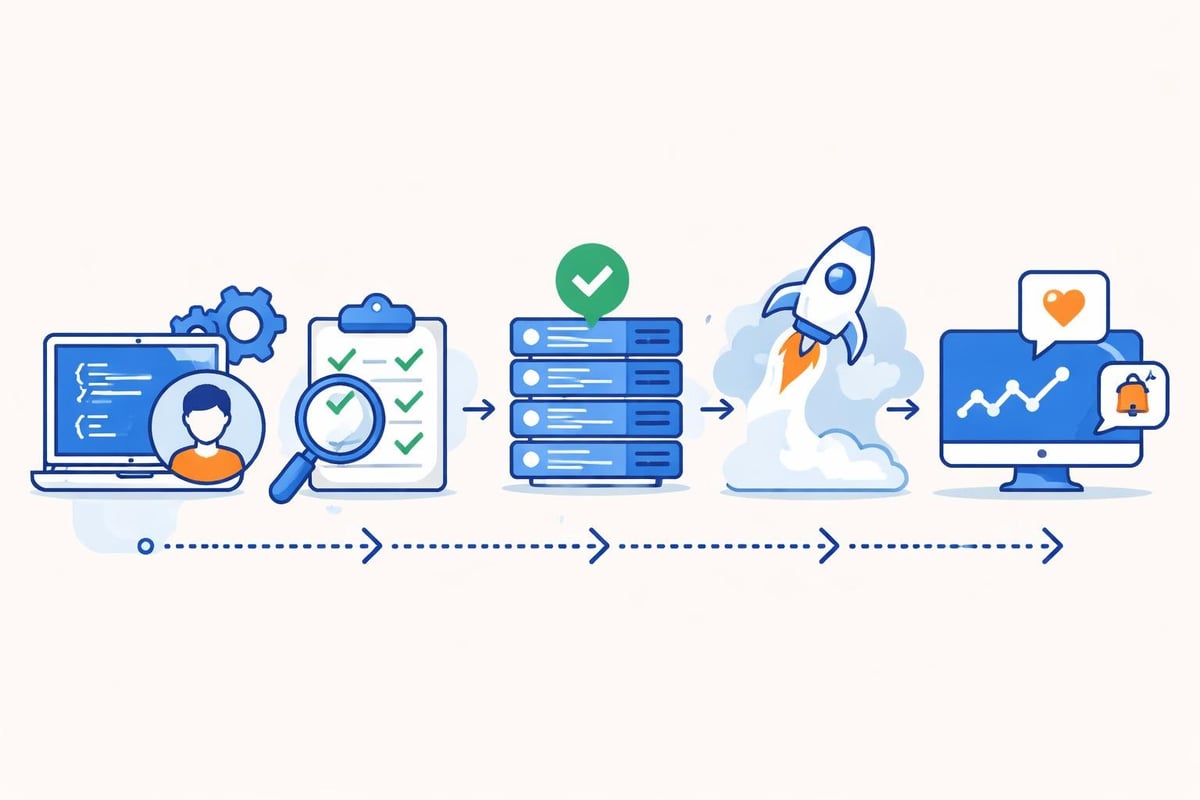
The deployment phase of software company development determines how reliably new features reach users. Modern DevOps practices transform deployment from a risky, manual process into a routine, automated operation.
Infrastructure as Code (IaC) brings consistency to environment management. By defining infrastructure through version-controlled code, teams ensure development, staging, and production environments maintain parity. This consistency eliminates the "works on my machine" problem that has plagued software development for decades.
Cloud platforms have democratized access to enterprise-grade infrastructure. Startups can now deploy with the same reliability and scalability that once required dedicated operations teams and significant capital investment.
Monitoring and Observability
Software company development doesn't end at deployment. Production monitoring provides essential feedback for continuous improvement and rapid incident response.
Effective observability encompasses three pillars: logs, metrics, and traces. Together, these data sources enable teams to understand system behavior, identify optimization opportunities, and diagnose issues quickly when they arise.
Modern monitoring strategies focus on:
- Application performance monitoring (APM) for user experience metrics
- Infrastructure monitoring for resource utilization and capacity planning
- Error tracking with contextual information for debugging
- Business metrics connecting technical performance to outcomes
- Alerting systems that notify relevant team members proactively
Teams should establish clear service level objectives (SLOs) that define acceptable performance thresholds. These objectives guide monitoring configuration and inform prioritization decisions when issues arise.
Scaling Development Teams and Processes
As organizations grow, software company development practices must evolve to maintain velocity while increasing headcount. What works for a team of three developers breaks down at thirty.
Documentation becomes critical at scale. When team members can't simply turn to a colleague for context, written documentation fills knowledge gaps. Effective documentation includes:
- Architecture decision records (ADRs) explaining why choices were made
- API documentation with examples and use cases
- Onboarding guides for new team members
- Runbooks for operational procedures
- Component libraries with usage guidelines
The challenge lies in maintaining documentation without creating bureaucratic overhead. Teams should treat documentation as code - version controlled, reviewed, and updated through the same workflows as application code.
Communication Patterns for Growing Teams
Software company development communication complexity grows exponentially with team size. A team of five has ten possible communication channels; a team of ten has forty-five.
Structured communication reduces coordination overhead. Successful scaling organizations implement clear patterns for different communication types. Synchronous meetings address complex decisions requiring discussion. Asynchronous updates via documentation or messaging platforms share information without disrupting focus time. The guide on effective communication in software development emphasizes matching communication methods to content urgency and complexity.
| Communication Type | Best Channel | Response Expectation | Example Use |
|---|---|---|---|
| Urgent blocker | Chat/phone | Immediate | Production outage |
| Decision required | Scheduled meeting | Same day | Architecture choice |
| Status update | Async documentation | 24 hours | Sprint progress |
| Knowledge sharing | Wiki/docs | As needed | How-to guides |
Measuring Success and Continuous Improvement
Software company development effectiveness requires measurable outcomes. Teams should track metrics that inform decision-making rather than vanity metrics that look impressive but provide limited insight.
DORA metrics provide research-backed performance indicators. These four metrics - deployment frequency, lead time for changes, time to restore service, and change failure rate - correlate with organizational performance and team effectiveness.
Beyond technical metrics, successful software company development aligns with business outcomes. Track how technical decisions impact customer satisfaction, revenue growth, operational costs, and competitive positioning. This business alignment ensures development efforts focus on maximum value creation.
Retrospectives and Learning Culture
Continuous improvement in software company development stems from deliberate reflection. Regular retrospectives create space for teams to examine what's working and what needs adjustment.
Effective retrospectives produce actionable changes. Rather than generic discussions about "communication" or "process," focus on specific, measurable improvements. Teams might experiment with new tools, adjust meeting structures, or refine documentation practices. The key is implementing changes, measuring results, and iterating based on evidence.
Organizations embracing internal tool-building using their own platforms often discover valuable insights that inform customer-facing products. This dogfooding approach provides authentic feedback loops that drive meaningful improvement.
No-Code and AI in Modern Development
The emergence of sophisticated no-code and AI platforms represents the most significant shift in software company development since the rise of open-source frameworks. These tools don't replace traditional development - they expand the solution space available to organizations.
No-code platforms excel for specific use cases. When rapid iteration matters more than performance optimization, or when business logic changes frequently, visual development approaches deliver faster time-to-value. Organizations exploring no-code AI app development platforms discover they can test product concepts in weeks rather than months.
The strategic consideration involves matching problems to appropriate tools. Some scenarios demand hand-coded solutions for performance, complexity, or specific technical requirements. Others benefit from the speed and accessibility of no-code approaches. The best software company development organizations maintain capability across multiple paradigms, selecting the right tool for each challenge.
AI-Assisted Development Tools
AI coding assistants have moved from experimental novelties to production tools that enhance developer productivity. These assistants help with code generation, documentation, testing, and debugging - augmenting rather than replacing human developers.
AI assistance works best when developers maintain critical oversight. Tools can generate boilerplate code, suggest implementation patterns, or identify potential bugs. However, humans must validate suggestions, ensure architectural consistency, and make strategic design decisions. The partnership between human expertise and AI capability amplifies what both can achieve independently.
Teams should establish clear guidelines for AI tool usage, including code review requirements for AI-generated code and security considerations for AI assistants that access codebases. These safeguards ensure AI enhances quality rather than introducing new risks.
Successful software company development in 2026 requires balancing speed with quality, innovation with stability, and standardization with flexibility. Organizations that implement disciplined processes while remaining adaptable to new tools and methodologies position themselves for sustained competitive advantage. Whether you're building with traditional code, no-code platforms, or AI-assisted approaches, the fundamental principles of clear requirements, thorough testing, and continuous improvement remain essential. Big House Technologies specializes in helping enterprises and startups navigate these choices, delivering scalable software solutions through modern no-code and AI platforms that accelerate time-to-market while maintaining enterprise-grade quality standards.

About Big House
Big House is committed to 1) developing robust internal tools for enterprises, and 2) crafting minimum viable products (MVPs) that help startups and entrepreneurs bring their visions to life.
If you'd like to explore how we can build technology for you, get in touch. We'd be excited to discuss what you have in mind.
Other Articles
Master Google Sheets AI in 2026 with expert tips on automation, integrations, and predictive analytics. Unlock smarter data management and futureproof your workflow.
Unlock smart solutions with Bubble AI in 2025. Discover features, use cases, and expert tips to automate and scale your business with this AI-powered guide.
Discover the cost to build an app with Bubble in 2026 with this expert guide. Learn pricing, key cost drivers, budgeting tips, and real case studies for ROI.