
The software development landscape is experiencing a fundamental shift as developers increasingly embrace conversational approaches to building applications. Understanding the vibe coding meaning has become essential for technology leaders, developers, and businesses seeking to leverage AI-powered development tools in 2026. This emerging paradigm represents more than just a new coding technique-it's a complete reimagining of how humans and artificial intelligence collaborate to create software solutions. As enterprises and startups alike search for faster, more cost-effective ways to bring their ideas to market, vibe coding has emerged as a game-changing methodology that bridges the gap between technical expertise and creative vision.
What Is Vibe Coding and Why Does It Matter
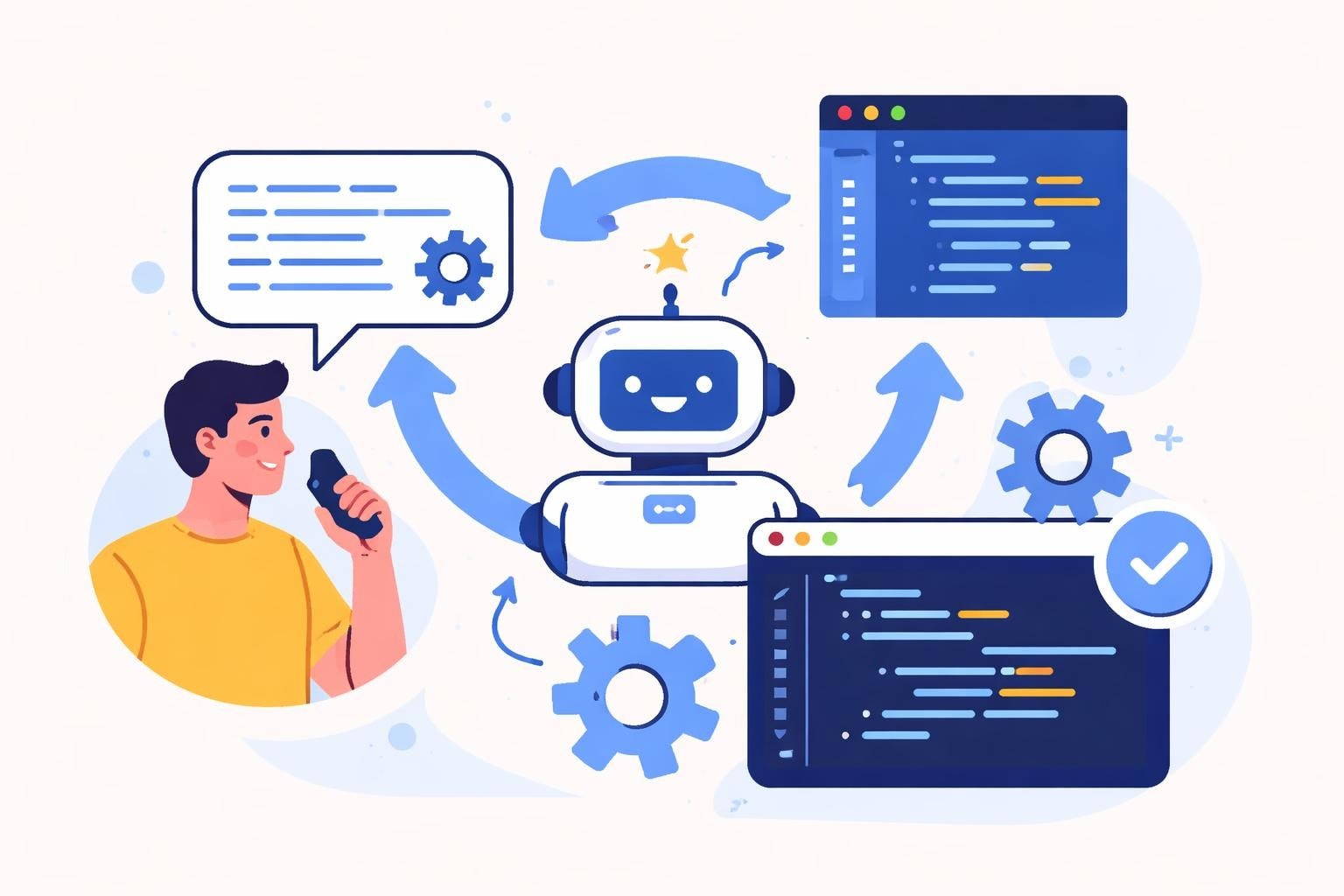
The vibe coding meaning centers on using natural language to communicate intent with AI coding assistants, allowing developers to describe what they want rather than explicitly writing every line of code. This approach represents a departure from traditional programming paradigms where developers must translate their ideas into precise syntax and structured logic.
At its core, vibe coding enables developers to work at a higher level of abstraction. Instead of focusing on implementation details, they can concentrate on solving business problems and defining desired outcomes. The AI assistant handles the translation from intent to code, managing syntax, structure, and even suggesting best practices along the way.
The Evolution From Traditional Development
Traditional software development requires deep knowledge of programming languages, frameworks, and architectural patterns. Developers spend significant time on boilerplate code, debugging syntax errors, and researching documentation. Vibe coding fundamentally changes this dynamic by allowing developers to:
- Describe features in plain English or other natural languages
- Iterate rapidly through conversational refinement
- Focus on business logic rather than implementation details
- Reduce the time spent on routine coding tasks
- Lower the barrier to entry for non-technical stakeholders
This shift doesn't eliminate the need for technical expertise entirely, but it redistributes where developers spend their cognitive energy. Much like no-code platforms for enterprise workflows have democratized application development, vibe coding makes sophisticated programming more accessible.
How Vibe Coding Works in Practice
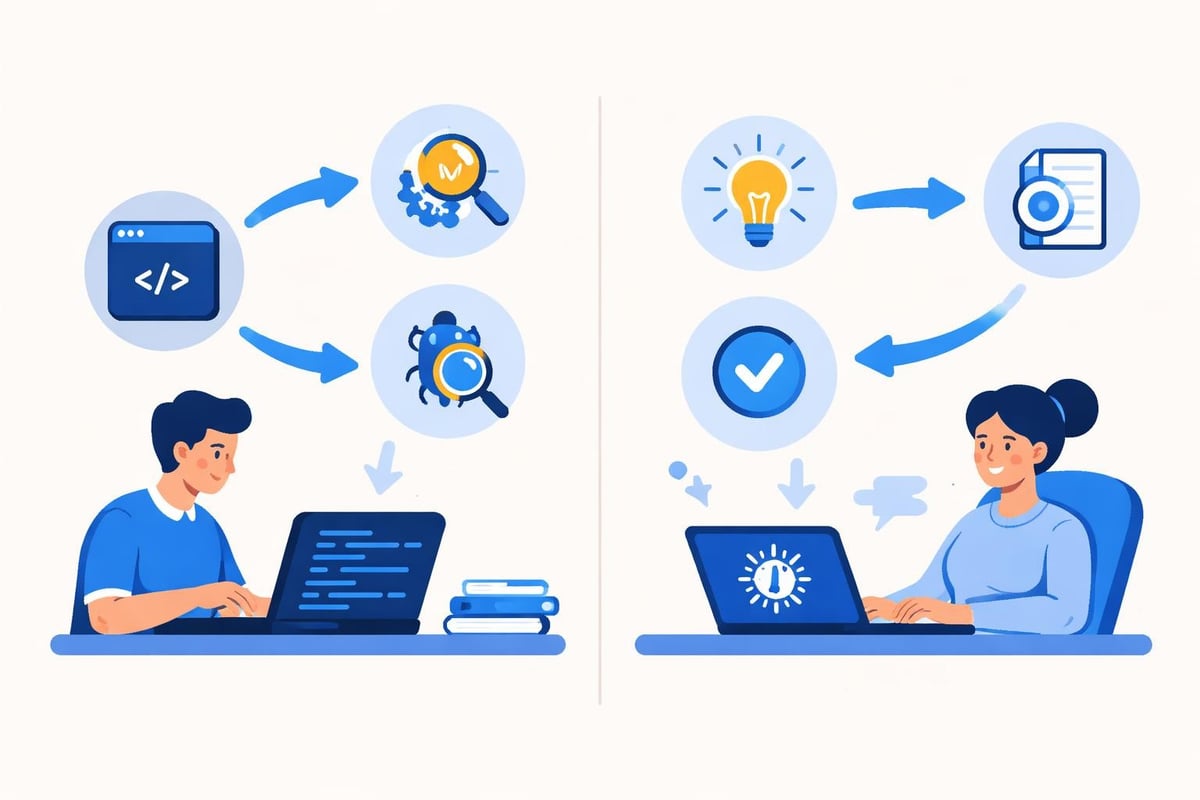
Understanding the vibe coding meaning requires examining the practical mechanics of how developers interact with AI assistants. The process typically follows an iterative pattern that resembles a conversation more than traditional programming.
The Conversational Development Loop
- Express Intent: The developer describes what they want to accomplish in natural language
- AI Interpretation: The coding assistant analyzes the request and generates appropriate code
- Review and Refine: The developer examines the output and provides feedback
- Iterate: Through successive refinements, the code evolves toward the desired solution
- Integration: The final code is integrated into the broader application
This workflow creates what Microsoft Research describes as a flow state between human and AI, where trust and communication enable rapid development cycles. The conversational nature allows for ambiguity and exploration that traditional programming doesn't accommodate.
Real-World Application Scenarios
Vibe coding excels in several development contexts that align particularly well with modern business needs:
Rapid Prototyping: Teams can quickly test ideas by describing features and seeing them materialize in minutes rather than hours or days. This acceleration proves invaluable when evaluating low-cost MVP development approaches.
API Integration: Developers can describe the desired interaction with third-party services without memorizing specific API endpoints or authentication flows. The AI handles the technical details while the developer focuses on business value.
Database Operations: Instead of writing complex SQL queries or ORM configurations, developers can describe the data they need in plain language, and the AI generates optimized queries.
UI Component Creation: Describing visual requirements and interactions allows rapid frontend development without deep framework knowledge.
| Development Task | Traditional Approach | Vibe Coding Approach |
|---|---|---|
| API Integration | Research docs, write code, debug | Describe endpoint needs, review generated code |
| Database Query | Write SQL, test, optimize | Explain data requirements, validate results |
| UI Component | Code HTML/CSS/JS, style, test | Describe appearance and behavior, refine |
| Error Handling | Write try-catch blocks manually | Specify error scenarios, AI implements patterns |
The Business Impact of Vibe Coding
For enterprises and startups evaluating development methodologies, understanding the vibe coding meaning extends beyond technical mechanics to strategic business implications. This approach fundamentally alters development economics and team dynamics.
Speed and Cost Advantages
The acceleration vibe coding provides translates directly into business value. Development cycles that traditionally required weeks can compress into days or even hours. This speed advantage proves particularly valuable for:
- Testing market hypotheses with minimal investment
- Responding quickly to competitive pressures
- Iterating based on user feedback in real-time
- Reducing time-to-market for new features
These benefits complement the advantages offered by AI-assisted app builder platforms, creating a comprehensive ecosystem for rapid development. When combined with no-code approaches, businesses can achieve unprecedented development velocity.
Team Structure and Skill Requirements
Vibe coding reshapes what technical teams need to succeed. While deep programming expertise remains valuable, the emphasis shifts toward:
- Problem definition skills: Clearly articulating what needs to be built
- System design thinking: Understanding architecture and integration points
- Critical evaluation: Assessing AI-generated code for quality and security
- Domain expertise: Understanding business requirements deeply
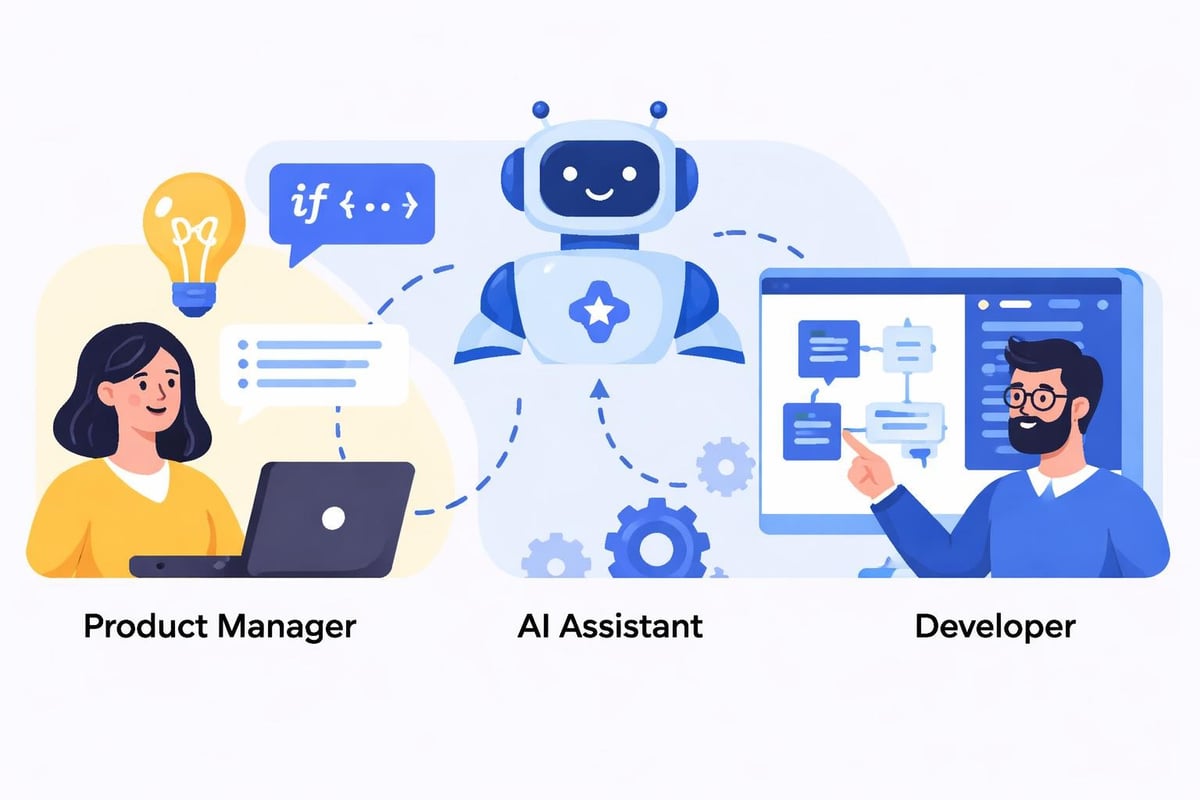
This evolution enables smaller, more efficient teams to accomplish what previously required larger engineering organizations. Product managers and business analysts can participate more directly in development, bridging communication gaps that traditionally slow projects.
Challenges and Considerations
While the vibe coding meaning encompasses tremendous potential, responsible adoption requires acknowledging significant challenges that accompany this paradigm shift. Security concerns have prompted warnings from cybersecurity agencies, highlighting the need for careful implementation.
Security and Quality Concerns
AI-generated code introduces specific risks that development teams must actively manage:
- Vulnerability Introduction: AI assistants may incorporate insecure patterns or outdated libraries without recognizing security implications
- License Compliance: Generated code might inadvertently include snippets from copyrighted sources, creating legal exposure
- Hidden Dependencies: AI-created solutions may introduce unnecessary dependencies that increase attack surface
- Testing Gaps: Automatically generated code requires rigorous testing to ensure it meets security and performance standards
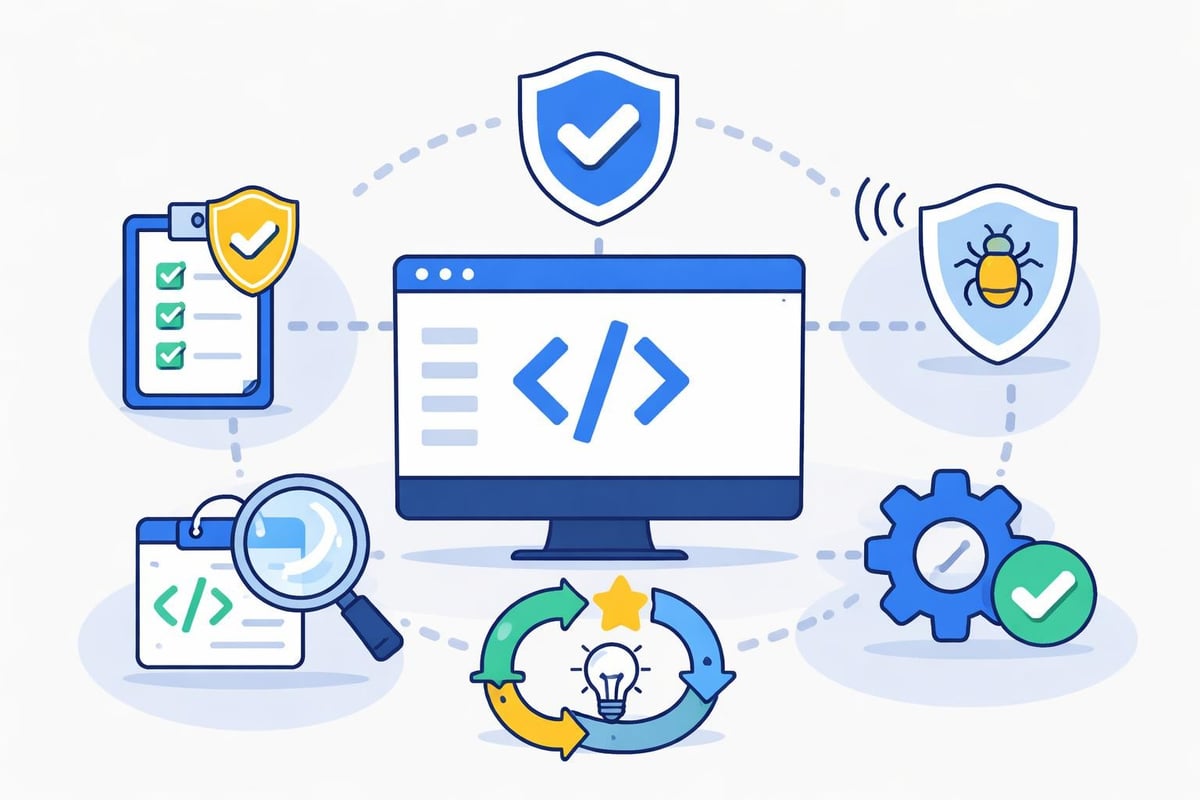
Organizations adopting vibe coding need robust code review processes and security scanning tools. The speed advantages cannot come at the expense of application security or reliability. This consideration becomes especially critical when building enterprise workflow automation tools that handle sensitive data.
The Open Source Ecosystem Impact
An emerging concern centers on how vibe coding affects open source software development. Research suggests that reduced human attention to open source projects could undermine the ecosystem that makes modern development possible.
When developers rely on AI to generate code rather than directly engaging with libraries and frameworks, several consequences emerge:
- Decreased contributions to open source projects
- Reduced reporting of bugs and issues
- Less community engagement and knowledge sharing
- Potential sustainability challenges for maintained projects
Balancing the productivity gains of vibe coding with responsible participation in the open source community represents an ongoing challenge for the industry.
Vibe Coding Versus Traditional No-Code
Understanding the vibe coding meaning requires distinguishing it from related development approaches, particularly no-code platforms. While both democratize software creation, they operate through fundamentally different mechanisms and serve complementary purposes.
Fundamental Differences
Code Output: Vibe coding generates actual source code that developers can inspect, modify, and version control. No-code platforms typically produce applications through visual configuration, with the underlying code abstracted away or proprietary.
Flexibility: Vibe coding offers nearly unlimited flexibility since it produces custom code for any requirement. No-code platforms excel within their designed use cases but may hit limitations for highly specialized needs.
Learning Curve: No-code platforms can be used effectively with minimal technical background. Vibe coding, while more accessible than traditional programming, still benefits from development knowledge for optimal results.
Maintenance: Code generated through vibe coding exists as a traditional codebase requiring ongoing maintenance. No-code applications are maintained through the platform itself.
When to Choose Each Approach
| Scenario | Best Approach | Reason |
|---|---|---|
| Standard business workflow automation | No-code | Faster, lower maintenance, proven patterns |
| Custom algorithm implementation | Vibe coding | Requires flexibility beyond platform capabilities |
| Rapid prototype for user testing | Either | Both enable fast iteration |
| Enterprise-scale data processing | Vibe coding | Performance optimization needs direct code access |
| Internal dashboard creation | No-code | Best tools for building internal dashboards handle common patterns |
| Integration-heavy application | Hybrid | Use no-code for UI, vibe coding for complex integrations |
The most sophisticated development approaches in 2026 often combine methodologies. Teams might use no-code platforms for standard features while employing vibe coding for custom components. This hybrid strategy, similar to approaches used by leading no-code tools for SaaS founders, maximizes the strengths of each approach.
Implementing Vibe Coding in Your Organization
For businesses considering vibe coding adoption, understanding what IT leaders need to know about implementation proves essential. Successful integration requires thoughtful planning and clear guidelines.
Establishing Governance Frameworks
Organizations need structured approaches to manage vibe coding adoption:
- Define Acceptable Use Cases: Identify where vibe coding provides maximum value with acceptable risk
- Create Review Processes: Establish code review standards specifically for AI-generated code
- Implement Security Scanning: Deploy automated tools to detect vulnerabilities in generated code
- Set Quality Benchmarks: Define performance, maintainability, and testing requirements
- Document Best Practices: Build organizational knowledge about effective prompt engineering
These frameworks ensure that speed advantages don't compromise security, quality, or long-term maintainability. They also help teams avoid common pitfalls as they develop expertise.
Training and Skill Development
Maximizing vibe coding effectiveness requires new skills that blend traditional development knowledge with AI interaction:
- Prompt Engineering: Learning to communicate effectively with AI assistants
- Code Evaluation: Developing the ability to quickly assess generated code quality
- Architecture Planning: Understanding how AI-generated components fit into larger systems
- Security Awareness: Recognizing common vulnerabilities in AI-generated code
Organizations should invest in training programs that help developers transition from writing every line of code to orchestrating AI assistants. This shift parallels how AI coding assistant alternatives are reshaping developer workflows across the industry.
The Future of Development With Vibe Coding
As we navigate 2026, the vibe coding meaning continues evolving alongside rapid advances in AI capabilities. Developer Relations and API platforms are adapting to support more machine-readable documentation and AI-friendly interfaces.
Emerging Trends and Capabilities
Several developments are shaping how vibe coding evolves:
Multi-Modal Interaction: AI assistants increasingly understand sketches, diagrams, and screenshots alongside text descriptions. Developers can now point to design mockups and describe functionality, with AI translating visual intent into code.
Contextual Awareness: Modern AI coding assistants understand entire project contexts, not just individual functions. They consider architectural patterns, existing code style, and project dependencies when generating new code.
Specialized Domain Models: AI assistants trained specifically for healthcare, finance, or other regulated industries understand compliance requirements and industry-specific patterns.
Collaborative Features: Teams can work together with shared AI assistants that maintain context across multiple developers, enabling more coherent large-scale projects.
Integration With No-Code Ecosystems
The boundary between vibe coding and no-code development grows increasingly permeable. Platforms now allow developers to:
- Generate no-code configurations through natural language
- Export AI-generated code from no-code platforms for customization
- Use vibe coding to create custom plugins for no-code systems
- Blend visual development with conversational code generation
This convergence creates powerful hybrid approaches that combine the speed of no-code with the flexibility of custom development. Organizations working with low-code digital transformation tools are already leveraging these combined capabilities.
Vibe Coding in Enterprise Contexts
Large organizations face unique considerations when adopting vibe coding methodologies. The scale, complexity, and regulatory requirements of enterprise software demand careful implementation strategies.
Compliance and Regulatory Considerations
Enterprises operating in regulated industries must ensure vibe coding practices align with:
- Code Auditing Requirements: Maintaining clear provenance and documentation for all generated code
- Change Management: Integrating AI-assisted development into existing software development lifecycle processes
- Data Privacy: Ensuring that prompts to AI assistants don't inadvertently expose sensitive information
- Intellectual Property: Clarifying ownership of AI-generated code and protecting proprietary algorithms
These considerations require robust policies and technical controls. Many enterprises establish dedicated AI governance committees to oversee vibe coding adoption and ensure compliance.
Performance and Scalability
While vibe coding accelerates initial development, enterprise applications demand rigorous performance optimization. AI-generated code may not always produce the most efficient implementation, requiring:
Performance Testing: Comprehensive benchmarking of AI-generated components under realistic load conditions
Optimization Reviews: Expert developers reviewing critical paths to identify and improve inefficient patterns
Monitoring Integration: Ensuring generated code includes appropriate instrumentation for production observability
Scaling Strategies: Validating that AI-generated architectures support horizontal and vertical scaling requirements
Organizations building enterprise team collaboration tools must balance development speed with long-term performance and scalability.
Best Practices for Vibe Coding Success
Based on early adopter experiences and industry research, several best practices emerge for teams implementing vibe coding:
Effective Prompt Strategies
- Be Specific: Provide detailed context about requirements, constraints, and desired outcomes
- Include Examples: Reference similar existing code or describe analogous systems
- Specify Standards: Mention coding conventions, preferred libraries, and architectural patterns
- Iterate Incrementally: Build complex features through successive refinements rather than single large requests
- Request Explanations: Ask AI assistants to explain their implementation choices
Quality Assurance Approaches
Maintaining code quality requires adapted testing strategies:
- Automated Testing: Generate comprehensive test suites alongside production code
- Manual Review: Human developers review all generated code before merging
- Security Scanning: Run static analysis tools specifically configured for AI-generated code patterns
- Performance Profiling: Benchmark generated code against performance requirements
- Documentation: Ensure AI assistants document complex logic and architectural decisions
Continuous Improvement
Organizations should treat vibe coding adoption as an ongoing learning process:
- Track metrics on development speed, bug rates, and security vulnerabilities
- Build libraries of effective prompts and patterns for common use cases
- Share knowledge across teams about what works and what doesn't
- Regularly evaluate new AI coding assistants and capabilities
- Gather developer feedback to refine processes and guidelines
Measuring Vibe Coding ROI
Business leaders need concrete metrics to evaluate whether vibe coding delivers promised benefits. Key performance indicators should span multiple dimensions:
Development Velocity:
- Time from feature request to deployment
- Number of features delivered per sprint
- Iteration speed on user feedback
Cost Efficiency:
- Development hours per feature
- Total cost of ownership including maintenance
- Comparative costs versus traditional development
Quality Metrics:
- Bug density in production
- Security vulnerability rates
- Performance characteristics
Team Satisfaction:
- Developer experience scores
- Retention rates
- Learning curve for new team members
These metrics provide a comprehensive view of vibe coding's impact beyond simple speed measurements. They help organizations make informed decisions about when and where to apply this approach versus alternatives.
The vibe coding meaning encompasses far more than a new development technique-it represents a fundamental shift in how humans and AI collaborate to build software. As this approach matures, businesses that thoughtfully integrate vibe coding alongside no-code and traditional development will gain significant competitive advantages in speed, cost, and innovation. Whether you're exploring rapid prototyping, enterprise application development, or building your next SaaS product, Big House Technologies combines vibe coding principles with proven no-code platforms to deliver scalable solutions that transform your vision into reality faster and more cost-effectively than traditional approaches.

About Big House
Big House is committed to 1) developing robust internal tools for enterprises, and 2) crafting minimum viable products (MVPs) that help startups and entrepreneurs bring their visions to life.
If you'd like to explore how we can build technology for you, get in touch. We'd be excited to discuss what you have in mind.
Other Articles
Discover who competes with Replit in the AI coding and cloud development space. Compare features, pricing, and enterprise solutions in 2026.
Discover the top 9 enterprise team collaboration tools for 2026 Compare features pricing and use cases to boost productivity innovation and team success
Discover how Claude code review transforms development workflows with AI-powered analysis, multi-agent architecture, and seamless integration.