
Selecting the right software development company in 2026 requires understanding a dramatically transformed landscape. Traditional coding practices now merge with AI-powered tools and no-code platforms, creating unprecedented opportunities for businesses to build scalable solutions faster and more affordably than ever before. As AI coding tools become the default for top engineering teams, companies must evaluate development partners based on entirely new criteria. This guide explores what modern software development companies offer, how to assess their capabilities, and what to expect when building applications in today's AI-augmented environment.
Understanding Modern Development Approaches
The definition of a software development company has evolved significantly over the past few years. Where teams once relied solely on hand-coded solutions, today's leading firms leverage a sophisticated mix of technologies to deliver results.
Traditional vs. Modern Development Models
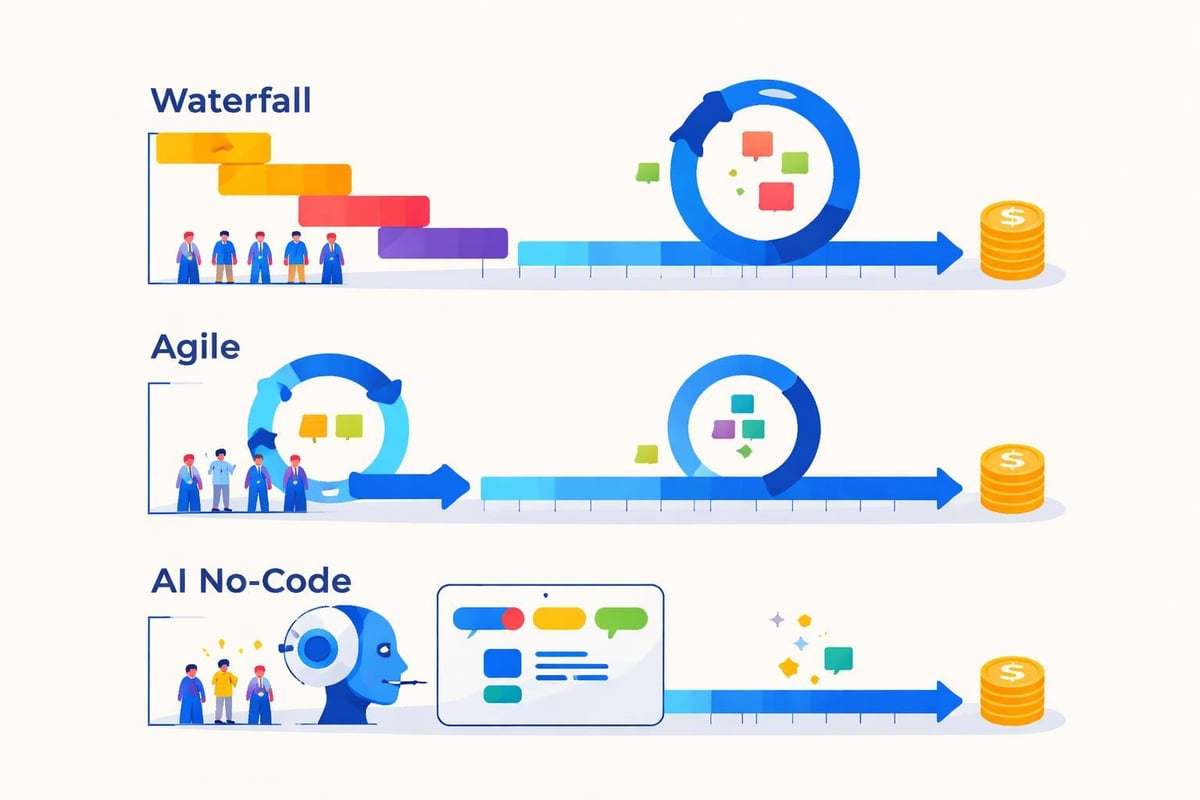
Traditional software development companies follow waterfall or agile methodologies using conventional programming languages. These approaches remain valuable for complex, highly customized systems but often require substantial time and budget investments.
Modern development firms incorporate multiple methodologies:
- AI-assisted coding for rapid prototyping and standard functionality
- No-code platforms for business logic and user interfaces
- Hybrid approaches combining custom code with platform capabilities
- Automated testing powered by machine learning algorithms
The shift toward AI-first development teams means that by 2030, approximately 80% of organizations will evolve their large engineering teams into smaller, AI-augmented groups. This transformation affects how you should evaluate potential partners.
No-Code and AI Platform Integration
Forward-thinking software development companies now specialize in no-code platforms for enterprise workflows, recognizing that not every project requires building from scratch. Platforms like Bubble and Lovable enable rapid development while maintaining the scalability enterprises demand.
Benefits of this approach include:
- Accelerated development cycles reducing time-to-market by 60-80%
- Lower total cost of ownership through reduced maintenance requirements
- Greater flexibility for rapid iterations based on user feedback
- Built-in scalability without infrastructure management overhead
Companies specializing in these platforms understand how to architect solutions that grow with your business while avoiding common pitfalls that plague amateur implementations.
Key Capabilities to Evaluate
When assessing any software development company, certain capabilities distinguish exceptional partners from mediocre ones. Your evaluation should go beyond checking boxes on a feature list.
Technical Expertise and Platform Mastery
The best firms demonstrate deep expertise across multiple technologies rather than superficial knowledge of many tools. Look for companies that can articulate when to use different approaches and why.
| Capability | What to Look For | Red Flags |
|---|---|---|
| Platform Expertise | Case studies with measurable outcomes | Vague claims without proof |
| AI Integration | Actual implementations, not just buzzwords | Generic AI promises |
| Security Practices | Documented protocols and certifications | Dismissive attitude toward security |
| Scalability Planning | Architecture diagrams and growth strategies | "We'll handle that later" responses |
A quality software development company should explain their approach to production-ready software, emphasizing that speed must never compromise quality, security, or maintainability.
Comprehensive Service Offering
Look beyond just coding capabilities. The most valuable partners provide end-to-end services that address your entire product lifecycle.
Essential services include:
- Requirements gathering and project scoping
- UI/UX design and user research
- Architecture planning and database design
- Development and quality assurance
- Deployment and infrastructure setup
- Ongoing maintenance and optimization
Companies offering AI-assisted app builder platforms often combine multiple technologies to deliver comprehensive solutions. They understand that successful software requires more than writing code - it demands strategic thinking about user needs, business objectives, and technical sustainability.
Quality Assurance and Testing Protocols
Quality assurance separates professional software development companies from amateur operations. Robust testing ensures your application functions reliably under real-world conditions.
Modern QA approaches incorporate:
- Automated test suites that run with every code change
- User acceptance testing with real stakeholders
- Performance testing under various load conditions
- Security audits identifying potential vulnerabilities
- Accessibility compliance for inclusive user experiences
While developers express concerns about AI accuracy, disciplined testing processes catch errors before they impact users. Ask potential partners about their testing methodologies and how they validate AI-generated code.
Cost Structures and Budget Planning
Understanding how a software development company prices their services helps you budget appropriately and avoid surprises. Pricing models vary significantly based on project scope, timeline, and technical complexity.
Common Pricing Models
Different projects suit different pricing structures. Choose a model that aligns with your risk tolerance and project certainty.
Fixed-price contracts work well for clearly defined projects with stable requirements. You know the total cost upfront, but changes often trigger expensive change orders.
Time and materials arrangements offer flexibility for evolving requirements. You pay for actual hours worked, which accommodates discovery and iteration but requires careful budget monitoring.
Retainer agreements suit ongoing development relationships where you need consistent access to development resources. Monthly fees provide predictable costs and dedicated team availability.
Value-based pricing ties costs to business outcomes rather than hours spent. This model aligns incentives but requires clear success metrics and mutual trust.

Factors Affecting Development Costs
Multiple variables influence what you'll ultimately invest in your software project. Understanding these helps you make informed decisions and set realistic expectations.
- Project complexity including integrations, custom logic, and user workflows
- Platform selection with no-code solutions typically costing 40-70% less than custom development
- Team composition balancing senior architects with junior developers
- Timeline constraints where rushed projects often cost significantly more
- Ongoing maintenance accounting for updates, hosting, and support
Companies specializing in no-code solutions for startups often deliver enterprise-quality applications at startup-friendly budgets by leveraging platform capabilities intelligently.
Evaluating Company Culture and Communication
Technical skills matter tremendously, but cultural fit and communication style often determine project success or failure. A software development company might have exceptional developers but fail to deliver results if communication breaks down.
Collaboration and Transparency
The best development partners treat you as a collaborator, not just a client. They welcome your input, explain technical decisions in understandable terms, and proactively communicate progress and challenges.
Look for companies that:
- Provide regular updates through your preferred channels
- Maintain transparent project tracking systems
- Respond promptly to questions and concerns
- Admit mistakes and propose solutions quickly
- Celebrate milestones and acknowledge team contributions
When evaluating enterprise team collaboration tools, consider how potential partners use these platforms internally. Their own collaboration practices often predict how they'll work with you.
Adaptability and Problem-Solving
Software development rarely proceeds exactly according to plan. Requirements evolve, unexpected technical challenges emerge, and market conditions shift. Your development partner's adaptability determines how well they navigate these inevitable changes.
Strong partners demonstrate:
- Creative problem-solving when facing technical constraints
- Willingness to recommend alternative approaches when plans prove suboptimal
- Honest assessments of risks and realistic timeline estimates
- Proactive identification of potential issues before they become critical
- Flexible processes that accommodate changing priorities
Emerging Trends Shaping Development Companies
The software development industry continues evolving rapidly. Understanding emerging trends helps you select partners positioned for long-term success rather than those relying on outdated practices.
AI-Augmented Development Workflows
Artificial intelligence transforms how software development companies operate. Rather than replacing developers, AI tools amplify their capabilities and accelerate delivery timelines. The transformative potential of AI in software development includes new approaches like vibe coding, where developers describe desired functionality in natural language.
Leading firms integrate AI throughout their workflows:
- Code generation for standard functionality and boilerplate
- Automated testing identifying bugs and edge cases
- Documentation creation keeping technical docs current
- Code review assistance catching potential issues early
- Performance optimization suggesting improvements automatically
| AI Application | Impact on Timeline | Impact on Quality | Current Maturity |
|---|---|---|---|
| Code Generation | 40-60% faster | Requires oversight | High |
| Automated Testing | 30-50% faster | Very high | Medium-High |
| Documentation | 60-80% faster | Good with review | Medium |
| Security Scanning | Continuous | Excellent | High |
However, AI implementation requires adaptive governance and careful risk management. Software development companies must embed quality control and security practices even as AI accelerates production.
Platform-Based Development Maturity
No-code and low-code platforms reached enterprise-grade maturity in recent years. What began as tools for simple applications now powers complex, mission-critical systems at Fortune 500 companies.
Sophisticated software development companies leverage these platforms strategically. They understand when low-code digital transformation tools provide optimal solutions and when custom development better serves specific requirements.
Platform advantages include:
- Pre-built components reducing development time
- Automatic scaling handling growth seamlessly
- Regular platform updates adding features without custom work
- Lower maintenance burden compared to custom codebases
- Faster onboarding for new team members
Security and Compliance Evolution
As cyber threats grow more sophisticated, security capabilities become non-negotiable for any software development company. Clients increasingly demand comprehensive security practices from initial architecture through ongoing maintenance.
Modern security requirements encompass:
- Secure coding practices preventing common vulnerabilities
- Regular security audits and penetration testing
- Compliance with industry regulations (GDPR, HIPAA, SOC 2)
- Data encryption at rest and in transit
- Access controls and authentication systems
- Incident response planning and backup strategies
Companies that treat security as an afterthought create substantial risks for their clients. Prioritize partners who demonstrate security expertise and proactive risk management.
Vetting Process and Selection Criteria
Choosing the right software development company requires systematic evaluation. A structured vetting process helps you make objective decisions based on capabilities rather than marketing promises.
Portfolio and Case Study Review
Examine previous work to understand what a company actually delivers. Look beyond polished screenshots to understand project complexity, technical challenges overcome, and measurable business outcomes.
Evaluate portfolios for:
- Projects similar in scope and complexity to yours
- Diversity of industries and use cases
- Technical sophistication and innovation
- Long-term client relationships indicating satisfaction
- Quantifiable results and success metrics
Case studies should tell complete stories including challenges faced, solutions implemented, and results achieved. Vague descriptions or generic templates suggest limited real-world experience.
Technical Assessment and Discovery Process
How a software development company approaches initial discovery reveals their professionalism and expertise. Thorough discovery processes identify requirements, constraints, and opportunities that superficial assessments miss.
Quality discovery includes:
- Stakeholder interviews understanding different perspectives
- User research validating assumptions about needs
- Technical architecture planning for scalability
- Risk assessment identifying potential challenges
- Detailed project roadmapping with realistic timelines
Companies rushing through discovery often encounter costly surprises during development. Invest time upfront with partners who prioritize understanding your needs completely.

Reference Checks and Client Testimonials
Speaking with previous clients provides insights you cannot gain from proposals or presentations. References reveal how companies handle challenges, communicate under pressure, and support clients after launch.
Key questions for references:
- How did the team handle unexpected challenges or changes?
- Was the final product delivered on time and within budget?
- How responsive was communication throughout the project?
- What would you do differently if starting over?
- Would you hire this company again for future projects?
Be wary of companies unwilling to provide references or those offering only carefully curated testimonials. Authentic client relationships should produce enthusiastic recommendations.
Partnership Models and Long-Term Relationships
The best outcomes often emerge from ongoing partnerships rather than transactional project engagements. Consider how a software development company approaches long-term client relationships.
Initial Project vs. Strategic Partnership
Many companies begin with a single project to test compatibility before committing to deeper relationships. This approach makes sense, but consider each engagement's potential to evolve into something more strategic.
Strategic partnerships offer:
- Institutional knowledge about your business and users
- Faster execution on subsequent projects
- Proactive suggestions for improvements and new features
- Preferential scheduling and resource allocation
- Better pricing on ongoing work and maintenance
Discuss partnership possibilities during initial conversations. Companies thinking beyond individual projects often provide more strategic guidance and invest more deeply in understanding your business.
Support and Maintenance Considerations
Software development doesn't end at launch. Applications require ongoing maintenance, updates, security patches, and feature enhancements. Clarify support arrangements before signing contracts.
Support models vary significantly:
| Support Level | What's Included | Best For |
|---|---|---|
| Basic | Bug fixes, security patches | Stable apps with minimal changes |
| Standard | Above plus minor enhancements | Growing products needing iteration |
| Premium | Above plus dedicated resources | Mission-critical systems |
| Retained Team | Ongoing development capacity | Continuous product evolution |
Choose support levels matching your application's criticality and expected evolution. Underfunded maintenance creates technical debt that becomes expensive to address later.
Modern software development requires partners who combine technical excellence with strategic thinking and collaborative culture. The most successful companies leverage AI-augmented development and no-code platforms to deliver enterprise-grade solutions faster and more cost-effectively than traditional approaches allow. If you're ready to transform your ideas into production-ready applications with a team that prioritizes speed, quality, and transparency, Big House Technologies brings deep expertise in no-code and AI development to help enterprises and startups build scalable solutions that drive real business value.

About Big House
Big House is committed to 1) developing robust internal tools for enterprises, and 2) crafting minimum viable products (MVPs) that help startups and entrepreneurs bring their visions to life.
If you'd like to explore how we can build technology for you, get in touch. We'd be excited to discuss what you have in mind.
Other Articles
Discover how to maintain software quality in no-code development. Learn metrics, best practices, and strategies for 2026 from Big House Technologies.
Discover how to develops software in 2025 with expert insights on planning, tech stacks, AI, no-code, testing, deployment, and future-proof strategies for success.
Discover 9 must-try aiapps transforming productivity in 2025 Explore top features, pricing, and real-world benefits to boost your workflow and efficiency