

Startups face a critical challenge in 2026: building sophisticated digital products while managing limited resources and tight timelines. Traditional development paths often demand substantial capital investment, lengthy hiring processes, and months of coding before launching a minimum viable product. A bubble technical partner for startups offers an alternative approach, combining specialized expertise in Bubble's no-code platform with strategic guidance to accelerate product development. This partnership model enables founders to transform concepts into market-ready applications without assembling an expensive in-house technical team or sacrificing quality.
Understanding the Bubble Technical Partnership Model
A bubble technical partner for startups functions as an extension of your founding team, bringing deep platform expertise and development experience to your product journey. Unlike traditional software agencies that write custom code from scratch, these specialized partners leverage Bubble's no-code platform to build scalable applications through visual programming interfaces.
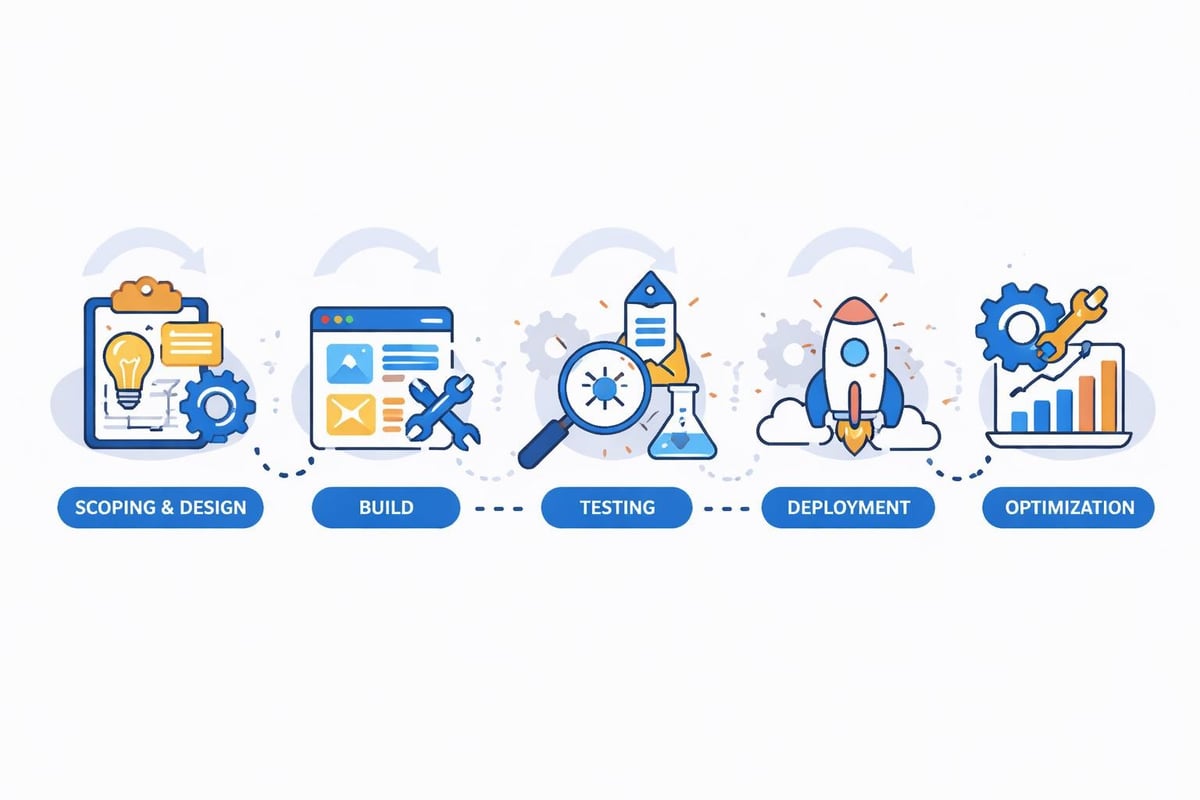
The partnership model differs fundamentally from hiring freelance developers or building internal teams. Technical partners take ownership of the entire development lifecycle, from initial scoping sessions through deployment and post-launch support. They understand startup constraints and align their processes with your business objectives rather than simply executing predefined specifications.
Core Responsibilities of Technical Partners
When you engage a bubble technical partner for startups, you gain access to comprehensive services that cover every aspect of product development:
- Strategic planning and technical architecture design aligned with business goals
- Visual development using Bubble's drag-and-drop interface and workflow builder
- Database schema design optimized for scalability and performance
- API integration connecting third-party services and external data sources
- Quality assurance testing across devices, browsers, and user scenarios
- Performance optimization ensuring fast load times and responsive interfaces
These partners bring experience from dozens or hundreds of previous projects, allowing them to anticipate challenges and recommend proven solutions. They've navigated common pitfalls, understand platform limitations, and know how to architect applications that scale from initial users to thousands of concurrent sessions.
Why Startups Choose Bubble Over Traditional Development
The decision to work with a bubble technical partner for startups stems from several competitive advantages that no-code development offers in the current market environment. Speed to market has become increasingly critical as competition intensifies across every industry vertical.
Traditional development timelines for a functional MVP typically span 4-6 months with a team of experienced engineers. Bubble development compresses this timeline dramatically, often delivering production-ready applications in 6-12 weeks depending on complexity. This acceleration stems from eliminating the need to write boilerplate code, configure servers, or build authentication systems from scratch.
Cost Efficiency and Resource Allocation
| Development Approach | Estimated MVP Cost | Time to Market | Post-Launch Flexibility |
|---|---|---|---|
| Traditional Code | $80,000 - $150,000 | 4-6 months | Low (requires developers) |
| Bubble with Technical Partner | $15,000 - $40,000 | 6-12 weeks | High (visual editing) |
| In-House Bubble Team | $25,000 - $60,000 | 8-16 weeks | Medium (training required) |
The cost differential reflects more than just development hours. Traditional projects require extensive infrastructure setup, security configuration, and ongoing DevOps management. Bubble handles these operational concerns through its managed hosting platform, allowing startups to focus on core business activities rather than server maintenance.
Resource allocation becomes dramatically simpler when partnering with Bubble specialists. Instead of recruiting, vetting, and managing multiple engineers with different specializations, founders work with a single point of contact who coordinates the entire development effort. This streamlined communication reduces overhead and accelerates decision-making.
Selecting the Right Bubble Technical Partner
Not all bubble technical partners for startups deliver equivalent value. The market has expanded significantly as no-code platforms gain legitimacy, creating variation in partner capabilities, experience levels, and service quality. Evaluating potential partners requires examining specific criteria beyond marketing claims.
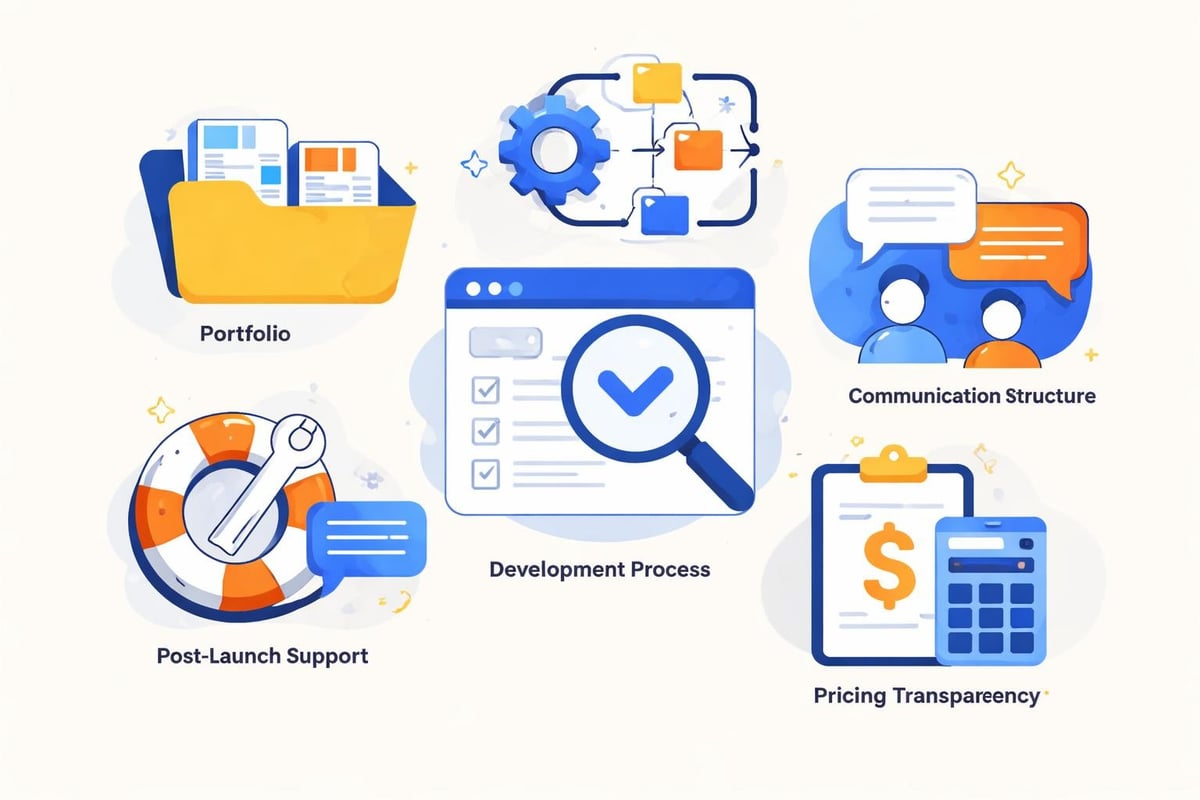
Portfolio and Domain Expertise
Review completed projects that match your application type and complexity level. SaaS platforms, marketplaces, internal tools, and mobile-responsive web apps each present unique architectural challenges. A partner with relevant domain experience understands the specific requirements and common user flows within your category.
Ask for case studies that include:
- Initial business objectives and constraints the client faced
- Technical approach and architecture decisions made during development
- Specific Bubble features and plugins utilized in the solution
- Performance metrics and user feedback following launch
- Ongoing optimization work conducted post-deployment
Partners who can articulate their problem-solving approach and explain technical decisions demonstrate the strategic thinking necessary for successful collaboration. Surface-level portfolios showing screenshots without context reveal limited engagement with client success.
Development Methodology and Communication
The best bubble technical partners for startups employ structured development methodologies adapted for no-code environments. While traditional agile practices don't translate perfectly to visual development, effective partners establish clear processes for requirements gathering, iterative development, and quality assurance.
Communication cadence matters significantly during active development sprints. Weekly sync meetings, asynchronous updates through project management tools, and transparent progress tracking prevent misalignment and scope creep. Partners should provide staging environments where you can review work in progress and provide feedback before features move to production.
Essential Capabilities Your Technical Partner Must Provide
A qualified bubble technical partner for startups brings more than basic Bubble proficiency. The platform's visual interface creates a lower barrier to entry, but building production-grade applications demands advanced technical knowledge and design sensibility.
Advanced Bubble Features and Optimization
Experienced partners leverage sophisticated Bubble capabilities that casual builders often overlook:
- Custom state management for complex user interactions
- Conditional formatting and dynamic content based on user permissions
- Backend workflows for scheduled tasks and API operations
- Database optimization through appropriate field types and indexing
- Responsive design patterns ensuring mobile and tablet compatibility
- Plugin integration and custom API connector configurations
These advanced techniques separate functional prototypes from scalable products ready for real users. Partners should demonstrate proficiency in performance optimization, understanding how to minimize page load times and reduce workflow actions that consume capacity.
Security and Compliance Knowledge
Data security and regulatory compliance cannot be afterthoughts in modern application development. Your technical partner must understand privacy requirements relevant to your industry and geographic markets. GDPR, CCPA, HIPAA, and other frameworks impose specific obligations on how applications collect, store, and process user data.
Bubble provides security features including SSL encryption, role-based access controls, and secure password handling. However, proper implementation requires configuration and testing. Partners should conduct security audits, implement proper authentication flows, and establish data retention policies aligned with legal requirements.
Integration Capabilities and Platform Ecosystem
Modern applications rarely exist in isolation. Your bubble technical partner for startups should excel at connecting Bubble applications with external services, APIs, and data sources that extend functionality beyond the platform's native capabilities.
The Bubble plugin marketplace offers hundreds of pre-built integrations for payment processing, communication services, analytics platforms, and specialized business tools. Strategic partners evaluate whether existing plugins meet your requirements or if custom API connections provide better solutions.
Common Integration Requirements
Startups typically need connections across several categories:
| Integration Type | Common Services | Implementation Complexity |
|---|---|---|
| Payment Processing | Stripe, PayPal, Square | Medium (webhook handling) |
| Authentication | Google, Auth0, Microsoft | Low (existing plugins) |
| Communication | Twilio, SendGrid, Mailchimp | Low to Medium |
| Analytics | Google Analytics, Mixpanel | Low (tracking scripts) |
| Storage | AWS S3, Cloudinary | Medium (API configuration) |
| CRM/Marketing | HubSpot, Salesforce | Medium to High |
Partners familiar with these integrations accelerate implementation and avoid common pitfalls. They understand authentication requirements, data formatting expectations, and error handling necessary for reliable connections. Programs like the Microsoft for Startups partnership with Bubble demonstrate how ecosystem relationships enhance development capabilities.
Scaling Considerations and Long-Term Partnership
Initial MVP development represents just the beginning of your product journey. The right bubble technical partner for startups remains valuable throughout subsequent growth phases, helping scale infrastructure, optimize performance, and add sophisticated features as user bases expand.
Bubble applications can support substantial user loads when properly architected. However, scaling requires proactive optimization and occasionally refactoring workflows that functioned adequately at small scale but create bottlenecks under higher traffic volumes. Partners with scaling experience anticipate these issues and design systems that accommodate growth.
Performance Optimization Strategies
As your application gains users, partners should implement progressive optimization techniques:
- Database query optimization reducing unnecessary data loading
- Workflow consolidation minimizing server-side processing
- Caching strategies for frequently accessed static content
- Conditional loading patterns displaying content only when needed
- Bubble capacity monitoring and upgrade recommendations
These technical improvements maintain fast, responsive user experiences even as data volumes and concurrent users increase. Partners should provide transparent capacity reporting and proactive recommendations before performance degradation affects user satisfaction.

Emerging Technologies and Future-Proofing
The no-code landscape continues evolving rapidly in 2026, with artificial intelligence integration becoming increasingly central to platform capabilities. Forward-thinking bubble technical partners for startups stay current with emerging tools and methodologies that enhance development efficiency and product sophistication.
Recent research exploring language models combined with Function-as-a-Service platforms demonstrates how AI can empower non-technical users to build applications through natural language descriptions. Similarly, innovations like NoCodeGPT interfaces leverage language models to assist in web application development without traditional coding.
AI-Enhanced Development Workflows
Progressive technical partners incorporate AI tools throughout their development processes:
- Automated testing using AI to generate test cases and identify edge cases
- Content generation for placeholder text, sample data, and user documentation
- Design assistance suggesting layout improvements and accessibility enhancements
- Code optimization analyzing workflow efficiency and recommending improvements
These AI-augmented workflows don't replace human expertise but amplify partner capabilities, allowing teams to deliver more value within existing timelines and budgets. Agencies that combine Bubble's no-code platform with AI development tools offer particularly compelling value propositions for startups seeking competitive advantages.
Quality Assurance and Testing Protocols
Professional bubble technical partners for startups implement rigorous testing methodologies ensuring applications function reliably across devices, browsers, and user scenarios. The visual nature of Bubble development doesn't eliminate the need for comprehensive quality assurance processes.
Effective testing encompasses multiple dimensions beyond basic functionality verification:
- Cross-browser compatibility testing (Chrome, Safari, Firefox, Edge)
- Responsive design validation across mobile, tablet, and desktop viewports
- User flow testing simulating real-world usage patterns and edge cases
- Performance testing under various load conditions and network speeds
- Security testing including authentication, authorization, and data access controls
- Accessibility evaluation ensuring compliance with WCAG standards
Partners should maintain staging environments separate from production where testing occurs without risking live user experiences. Structured testing protocols catch issues before deployment, reducing post-launch bug fixes and user frustration.
Support Models and Ongoing Maintenance
The relationship with your bubble technical partner for startups shouldn't end at application launch. Ongoing support ensures your product remains secure, performs optimally, and adapts to changing business requirements as your startup evolves.
Post-Launch Support Options
Different support models accommodate varying startup needs and budgets:
- Retainer agreements providing dedicated monthly hours for updates and optimization
- On-demand support billed hourly for occasional changes and troubleshooting
- Feature development sprints for substantial additions requiring focused effort
- Monitoring and maintenance packages covering updates, backups, and security patches
Clarify support expectations during partner selection. Understanding response time commitments, escalation procedures, and pricing structures prevents surprises when urgent issues require immediate attention. The best partners offer flexible arrangements that scale with your business growth.
Training and Knowledge Transfer
Strategic bubble technical partners for startups don't create dependency relationships. Instead, they empower internal teams through documentation, training, and knowledge transfer that builds organizational capacity over time.
Comprehensive documentation should include:
- Application architecture overview explaining major components and relationships
- Database schema documentation detailing data types and constraints
- Workflow documentation describing key business logic and processes
- Integration documentation covering API connections and authentication
- User administration guides for ongoing content and user management
Some startups choose to develop internal no-code capabilities for routine updates while relying on partners for complex features. This hybrid approach balances cost efficiency with technical expertise, allowing non-technical team members to make content changes while specialized development remains with experts.
Value Beyond Development: Strategic Guidance
The most valuable bubble technical partners for startups contribute strategic insights extending beyond technical implementation. They've worked with numerous startups across different industries and understand patterns that predict success or failure.
Strategic contributions include:
- Feature prioritization guidance based on user impact and development effort
- Competitive analysis identifying opportunities for differentiation
- Technical feasibility assessment for proposed functionality
- Scalability planning anticipating future growth requirements
- Alternative approach suggestions when initial ideas prove impractical
This consultative relationship transforms partners from service providers into invested advisors who care about business outcomes rather than simply completing assigned tasks. Look for partners who ask probing questions about your business model, target users, and growth strategy during initial conversations.
Navigating the Selection Process
Finding the right bubble technical partner for startups requires systematic evaluation rather than selecting the first option discovered through search results. The decision significantly impacts your product quality, timeline, and budget, warranting thorough diligence.
Evaluation Checklist
Use this framework when comparing potential partners:
| Evaluation Criteria | Questions to Ask | Red Flags |
|---|---|---|
| Experience | How many Bubble projects completed? What industries? | Vague answers, no portfolio |
| Process | What's your development methodology? How do you handle changes? | No defined process, rigid scope |
| Communication | How often do we meet? What's your response time? | Unclear expectations |
| Pricing | What's included? What costs extra? | Hidden fees, unclear scope |
| Support | What happens after launch? What are support options? | No post-launch plans |
Request references from previous clients with similar project types. Conversations with past clients reveal communication styles, problem-solving approaches, and how partners handle challenges that inevitably arise during development.
Organizations like Bubble's partnership programs provide vetted directories of qualified agencies and technical partners. These curated lists ensure baseline competency and platform expertise, though individual evaluation remains essential for finding the best fit.
Budget Planning and Investment Considerations
Understanding cost structures helps startups allocate resources appropriately when engaging a bubble technical partner for startups. Transparent pricing discussions during initial consultations prevent budget surprises and establish realistic expectations.
Typical cost factors include:
- Project complexity and feature count
- Custom design requirements versus template adaptation
- Number of user roles and permission levels
- External API integrations needed
- Data migration from existing systems
- Post-launch support and maintenance agreements
Fixed-price projects work well for clearly defined scopes with minimal anticipated changes. Time-and-materials arrangements provide flexibility for evolving requirements common in early-stage startups. Understanding the cost considerations for Bubble development helps establish appropriate budgets aligned with your financial constraints.
The Competitive Advantage of Expert Partnership
Startups that engage qualified bubble technical partners for startups gain significant competitive advantages in their markets. They launch faster than competitors building with traditional code, iterate more quickly based on user feedback, and allocate limited resources toward customer acquisition and business development rather than technical debt management.
The partnership model also provides flexibility unavailable with permanent hires. As needs fluctuate between intensive development periods and maintenance phases, you scale engagement up or down without the complications of hiring or laying off employees. This agility proves particularly valuable during fundraising cycles and strategic pivots.
Market dynamics in 2026 favor startups that prioritize speed and capital efficiency. Investors increasingly recognize the legitimacy of no-code platforms for serious applications, removing previous stigma around visual development tools. Technical partners who combine platform expertise with business acumen help startups capitalize on these shifts.
Choosing the right bubble technical partner for startups fundamentally shapes your product development trajectory, determining whether you'll achieve market fit quickly or struggle with technical obstacles that drain resources and delay launch. The specialized expertise, strategic guidance, and comprehensive support that qualified partners provide enable founders to focus on business growth while ensuring technical excellence. Big House Technologies combines deep Bubble platform expertise with proven development methodologies, helping startups transform concepts into scalable applications through efficient no-code development processes that deliver results on time and within budget.

About Big House
Big House is committed to 1) developing robust internal tools for enterprises, and 2) crafting minimum viable products (MVPs) that help startups and entrepreneurs bring their visions to life.
If you'd like to explore how we can build technology for you, get in touch. We'd be excited to discuss what you have in mind.
Other Articles
Discover the ultimate dev mvp guide for 2025 Learn essential steps to build, launch, and scale your MVP faster while minimizing risk and boosting success
Discover what is vibe coding, how AI-driven development works, and why it's transforming software creation for businesses in 2026.
Discover the best chat gpt app picks for 2025 Compare top features pricing and real world use cases to find the perfect AI chatbot for your needs