
Artificial intelligence has fundamentally transformed how developers write, debug, and optimize code. Among the emerging AI coding assistants, Claude AI stands out for its conversational approach and sophisticated understanding of programming contexts. As businesses increasingly seek efficient development solutions, understanding how claude ai for coding fits into modern workflows becomes essential for staying competitive. This technology bridges the gap between human creativity and machine efficiency, enabling developers to tackle complex challenges with unprecedented support.
Understanding Claude AI's Approach to Code Development
Claude AI represents a significant evolution in AI-assisted programming. Developed by Anthropic, this tool leverages advanced language models to understand code structure, context, and intent in ways that mirror human comprehension. Unlike traditional code completion tools, Claude engages in meaningful dialogue about programming challenges, architectural decisions, and implementation strategies.
The system's ability to process natural language queries makes it particularly valuable for teams working across different technical skill levels. Developers can describe what they want to accomplish in plain English, and Claude translates those requirements into functional code. This capability democratizes software development, making it accessible to a broader range of professionals.
Key capabilities include:
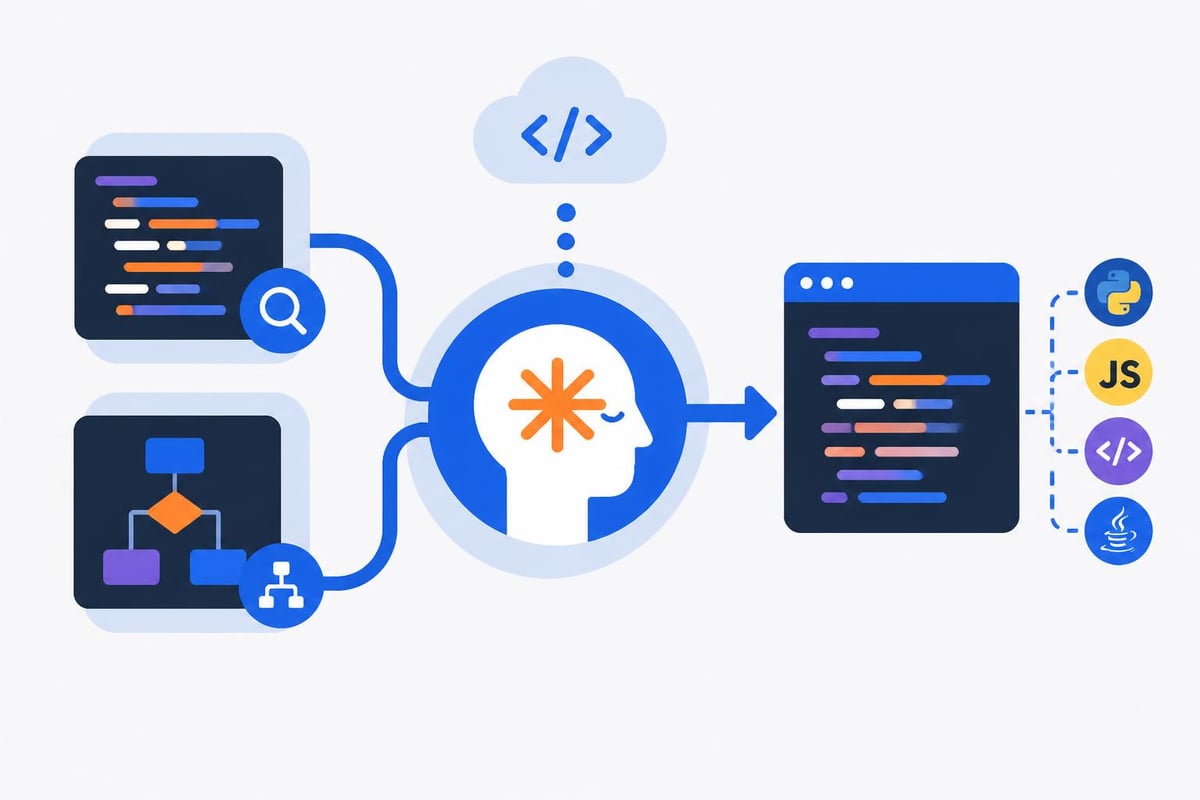
- Multi-language code generation across Python, JavaScript, Java, and more
- Debugging assistance with contextual error analysis
- Code refactoring suggestions for improved efficiency
- Documentation generation based on code structure
- Architecture planning and design pattern recommendations
The official Claude Code documentation provides comprehensive details about supported environments and integration options, making it easier for development teams to adopt the platform.
Integration with No-Code and Traditional Development Workflows
For agencies specializing in rapid application development, claude ai for coding offers unique advantages when combined with no-code platforms. While tools like Bubble and Lovable handle visual development, Claude assists with custom logic, API integrations, and complex data transformations that extend beyond standard no-code capabilities.
This hybrid approach accelerates development timelines significantly. Developers can leverage no-code platforms for UI and basic workflows while using Claude to generate custom JavaScript functions, API connectors, or database queries. The synergy between these approaches creates a powerful development stack.
Custom Code Enhancement in No-Code Environments
No-code platforms occasionally require custom code blocks for specialized functionality. Claude excels at generating these snippets with proper context. For instance, when building a Bubble application, developers might need custom date formatting, complex calculations, or third-party service integrations.
Claude can generate this code while explaining the logic, making it easier for less technical team members to understand and maintain. This educational aspect proves invaluable for teams transitioning to more technical implementations.
| Development Scenario | Traditional Approach | Claude-Assisted Approach | Time Savings |
|---|---|---|---|
| API Integration | 4-6 hours | 1-2 hours | 60-70% |
| Custom Algorithm | 8-10 hours | 2-3 hours | 70-75% |
| Database Query Optimization | 3-4 hours | 45-60 minutes | 75-80% |
| Documentation Writing | 2-3 hours | 30-45 minutes | 75-80% |
The platform's evolution has been remarkable. According to TechCrunch's coverage, Claude Code expanded to web platforms, making it more accessible than its original command-line version.
Practical Applications for Enterprise Development
Enterprise development presents unique challenges: legacy code integration, security requirements, scalability concerns, and strict compliance standards. Claude AI for coding addresses these challenges through its comprehensive understanding of enterprise architecture patterns and best practices.
Security and Compliance Considerations:
Organizations handling sensitive data benefit from Claude's ability to suggest security-hardened code patterns. The AI can identify potential vulnerabilities during code review and recommend industry-standard encryption methods, authentication protocols, and data handling procedures.
When working with internal tool development, enterprises often need rapid prototyping combined with production-grade code quality. Claude assists by generating starter templates, suggesting appropriate frameworks, and providing architectural guidance based on project requirements.
Scalability and Performance Optimization
For startups and enterprises planning growth, scalability remains paramount. Claude analyzes code for potential bottlenecks and suggests optimizations before they become production issues. This proactive approach saves significant refactoring time later.
The AI understands database indexing strategies, caching mechanisms, and asynchronous processing patterns. When developers ask about scaling a specific feature, Claude provides concrete recommendations with code examples demonstrating implementation.
IBM's analysis of Claude AI details how the platform's understanding of coding contexts makes it particularly effective for complex enterprise applications.
Balancing AI Assistance with Developer Expertise
While claude ai for coding offers impressive capabilities, it functions best as a collaborative tool rather than a replacement for human developers. The technology excels at generating boilerplate code, suggesting patterns, and catching obvious errors, but critical thinking and architectural decisions still require human expertise.
Experienced developers leverage Claude to handle routine tasks, freeing time for higher-level problem-solving. Junior developers use it as a learning tool, gaining insights into coding best practices through Claude's explanations and suggestions.
Common Pitfalls and Limitations
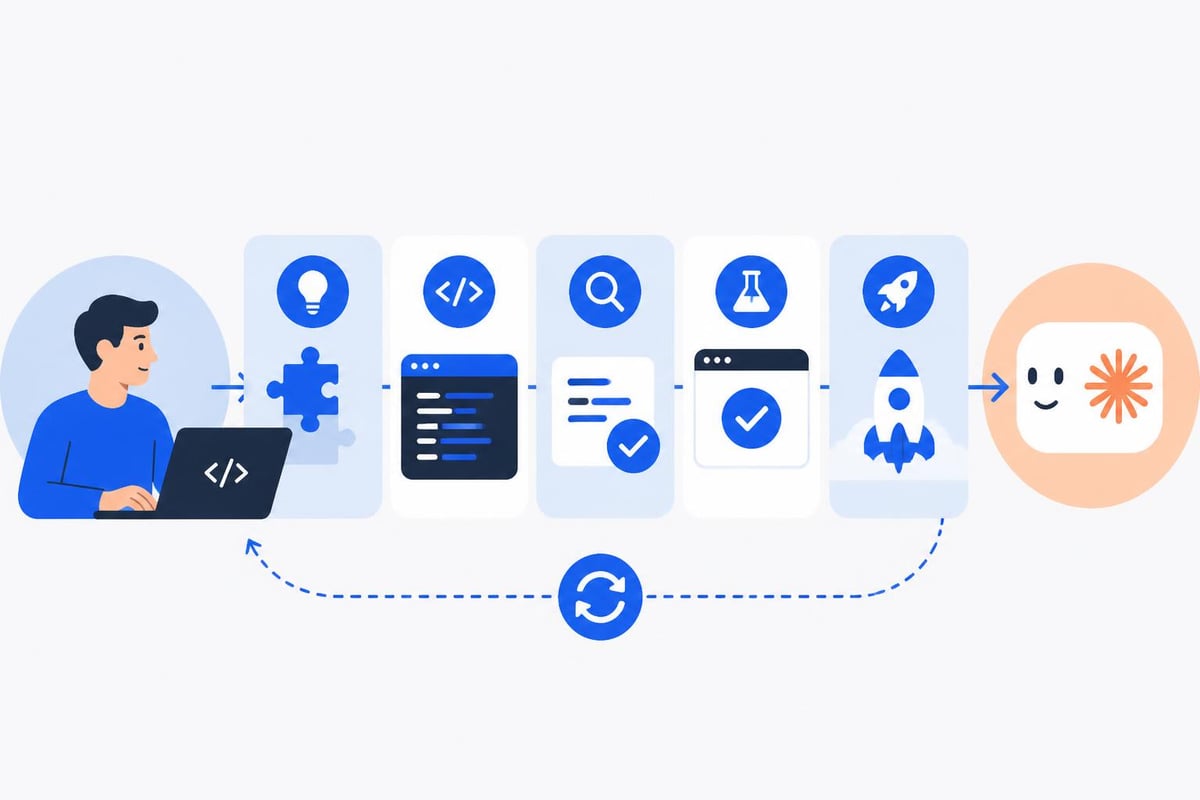
Despite its sophistication, Claude has boundaries users should understand:
- Context window limitations - Very large codebases may exceed Claude's context capacity
- Framework version specificity - Generated code might not reflect the latest framework updates
- Domain-specific knowledge gaps - Highly specialized industries may require additional context
- Over-reliance risks - Developers should verify generated code rather than accepting it blindly
PCWorld's coverage highlights the platform's evolution toward user-friendly interfaces, though understanding its limitations remains crucial.
The importance of human oversight was underscored when TechRadar reported critical feedback from industry leaders about complex engineering tasks, emphasizing that AI coding tools work best when complementing rather than replacing developer judgment.
Cost-Effectiveness and Development Speed
For agencies and businesses evaluating development approaches, cost efficiency drives many decisions. Claude AI for coding impacts budgets in multiple ways, primarily through accelerated development cycles and reduced debugging time.
When comparing no-code versus custom code cost structures, integrating AI assistance creates a middle path. Teams can deliver custom functionality at no-code speeds while maintaining the flexibility of traditional development.
Financial Impact Areas:
- Reduced development hours for routine functionality
- Faster onboarding for new team members through AI-assisted learning
- Lower maintenance costs through better-documented code
- Decreased bug fixing time with AI-powered debugging support
For startups seeking low-cost MVP development, Claude enables small teams to accomplish what previously required larger development groups. This democratization of coding capability levels the playing field for resource-constrained organizations.
ROI Considerations for Different Business Sizes
| Business Type | Primary Benefit | Typical ROI Timeline | Investment Level |
|---|---|---|---|
| Startups | Faster MVP launch | 1-2 months | Low |
| Mid-size Companies | Team productivity boost | 3-6 months | Medium |
| Enterprises | Reduced technical debt | 6-12 months | Medium-High |
| Agencies | Increased client capacity | 2-3 months | Low-Medium |
The platform's subscription model makes it accessible for various budget levels, though costs scale with usage intensity and team size.
Enhancing Team Collaboration and Knowledge Sharing
Beyond individual productivity, claude ai for coding transforms how development teams collaborate. The AI serves as a consistent knowledge base, providing similar answers to common questions regardless of which team member asks.
This consistency proves valuable for distributed teams working across time zones. A developer in one location can start a task, document their interaction with Claude, and another developer can continue seamlessly by reviewing that context.
Documentation and Code Review Benefits
Claude excels at generating comprehensive documentation from existing code. This capability addresses one of software development's persistent challenges-maintaining current, accurate documentation as projects evolve.
During code reviews, team leads can ask Claude to explain complex code sections, verify best practice adherence, or suggest alternative implementations. This speeds the review process while maintaining quality standards.
For teams building AI-powered applications, Claude can even assist with designing the AI features themselves, creating a meta-level of AI development where the tool helps build other AI solutions.
Real-World Implementation Strategies
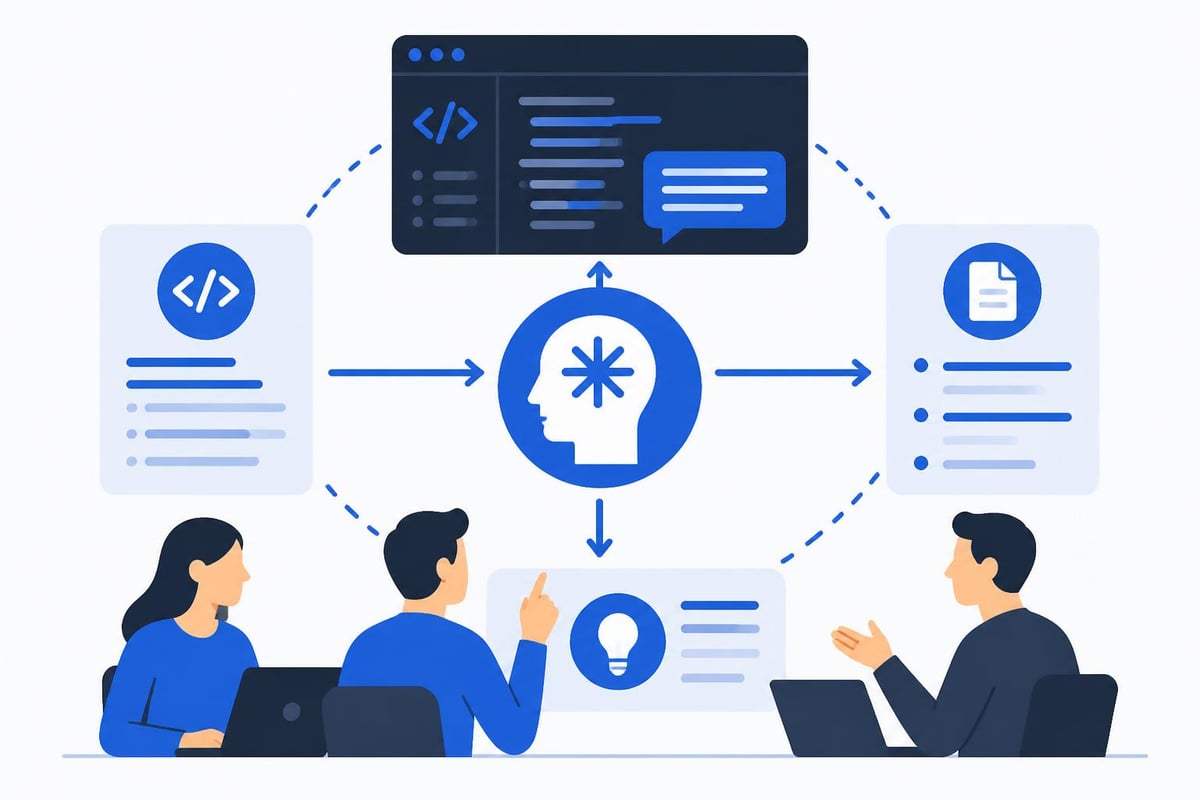
Successfully integrating claude ai for coding requires thoughtful planning. Organizations that rush adoption without clear processes often see limited benefits. Effective implementation follows structured phases.
Phase 1: Pilot Testing Select a small team and specific project type for initial trials. Gather feedback on what works well and what needs adjustment. This limited scope minimizes risk while generating valuable insights.
Phase 2: Process Integration Develop guidelines for when and how to use Claude. Establish code review procedures that account for AI-generated content. Create templates for common tasks that combine AI assistance with human oversight.
Phase 3: Team Training Educate developers on effective prompting techniques. Share successful use cases internally. Build a knowledge repository of useful Claude interactions that team members can reference.
Phase 4: Continuous Optimization Regularly assess which tasks benefit most from AI assistance. Adjust processes based on results. Stay current with platform updates and new capabilities.
Organizations focused on AI tool integration for developers find that structured adoption yields significantly better results than ad-hoc usage.
Future Developments and Industry Trends
The AI coding landscape evolves rapidly. Claude and similar tools continue improving through model updates, expanded capabilities, and deeper integrations with development environments. Understanding these trends helps organizations prepare for what's ahead.
Recent developments include enhanced code generation accuracy, better multi-file project understanding, and improved security scanning capabilities. The platform's learning from user interactions means capabilities expand organically as adoption grows.
Emerging Capabilities:
- Automated testing generation beyond basic unit tests
- Architecture-level recommendations for entire systems
- Advanced debugging including performance profiling suggestions
- Cross-language translation for legacy system modernization
- Integration with CI/CD pipelines for deployment assistance
Interestingly, recent reports highlight Claude's human-centric design, including features that encourage healthy work habits-a unique approach in developer tools.
For entrepreneurs and solo developers, platforms like CreateSell demonstrate how AI coding tools enable individual creators to build and launch digital products independently, transforming knowledge into sustainable businesses without large development teams.
Complementary Tools and Ecosystem Integration
Claude AI for coding works best within a broader development ecosystem. Integration with version control systems, project management tools, and deployment platforms creates comprehensive workflows that maximize efficiency.
Version Control Integration
Git repositories provide essential context for AI-assisted coding. When Claude understands the project history, branching strategy, and commit patterns, its suggestions become more relevant. Teams using GitHub, GitLab, or Bitbucket can leverage this context effectively.
IDE and Editor Integration
Modern development environments increasingly offer AI assistant integrations. While Claude can work through web interfaces or command-line tools, IDE plugins streamline the experience by bringing AI assistance directly into the coding environment.
For teams working with Bubble AI integrations, combining Claude's coding assistance with Bubble's visual development creates a powerful synergy. Developers can quickly prototype in Bubble while using Claude for custom logic components.
| Integration Type | Benefit | Setup Complexity | Maintenance Need |
|---|---|---|---|
| Version Control | Context awareness | Low | Minimal |
| IDE Plugins | Seamless workflow | Medium | Low |
| CI/CD Pipelines | Automated quality checks | High | Medium |
| Project Management | Requirement tracking | Medium | Low |
Understanding these integration points helps teams build efficient development pipelines that leverage AI throughout the software lifecycle.
Measuring Success and Productivity Gains
Quantifying the impact of claude ai for coding helps justify investment and optimize usage. Organizations should establish metrics before adoption to accurately measure improvements.
Key Performance Indicators:
- Time to complete specific task types
- Bug density in AI-assisted versus traditional code
- Developer satisfaction scores
- Code review duration
- Documentation completeness percentage
Teams often discover unexpected benefits beyond initial goals. For example, junior developers may advance skills faster through AI-assisted learning, or legacy code understanding may improve through Claude's explanation capabilities.
When evaluating application development platforms, including AI assistance capabilities in the comparison helps organizations choose solutions that support modern development practices.
Setting Realistic Expectations
While productivity gains from AI coding tools can be substantial, organizations should avoid inflated expectations. A realistic target involves 20-40% time savings on routine tasks, with higher percentages for specific activities like documentation or boilerplate generation.
Complex architectural decisions, creative problem-solving, and domain-specific logic typically see smaller improvements because these areas benefit most from human expertise. The sweet spot lies in combining AI efficiency for routine work with human insight for strategic decisions.
Claude AI for coding represents a powerful tool for modern development teams seeking to balance speed, quality, and cost-effectiveness. By understanding its capabilities, limitations, and optimal use cases, organizations can leverage AI assistance to accelerate delivery without sacrificing code quality. Whether you're building no-code solutions, custom applications, or hybrid platforms, Big House Technologies combines AI-powered development tools with expert no-code capabilities to deliver scalable solutions on time and within budget, transforming your ideas into production-ready products.

About Big House
Big House is committed to 1) developing robust internal tools for enterprises, and 2) crafting minimum viable products (MVPs) that help startups and entrepreneurs bring their visions to life.
If you'd like to explore how we can build technology for you, get in touch. We'd be excited to discuss what you have in mind.
Other Articles
Master software design in 2025 with best practices, trends, and actionable strategies for robust, scalable, and user centric projects. Elevate your designs now.
No-code solutions are revolutionizing software development, making it faster, more affordable, and scalable. Learn how platforms like Bubble and agencies like Big House can help bring your ideas to life.
Discover how website app development combines web and mobile experiences. Learn best practices, security guidelines, and no-code solutions.