

Building a minimum viable product quickly has become the defining factor between startups that succeed and those that run out of runway before finding product-market fit. In 2026, founders and product teams have access to unprecedented tools and methodologies that can compress what once took months into just weeks. The fastest way to build an mvp in today's landscape combines strategic planning, modern no-code platforms, and AI-assisted development to deliver functional products that real users can test and validate. This guide explores proven approaches for rapid MVP development while maintaining the quality and scalability your business needs.
Understanding the MVP-First Approach
The concept of an MVP has evolved significantly since Eric Ries popularized it in The Lean Startup. Today's MVPs aren't just stripped-down versions of a product vision. They're strategic experiments designed to test specific hypotheses about customer needs with minimal investment.
The core principle remains unchanged: build only what's necessary to learn from real users. However, the execution methods have transformed dramatically. Modern MVP development prioritizes speed-to-market over perfection, allowing teams to gather authentic user feedback before committing to extensive feature development.
Why Speed Matters More Than Ever
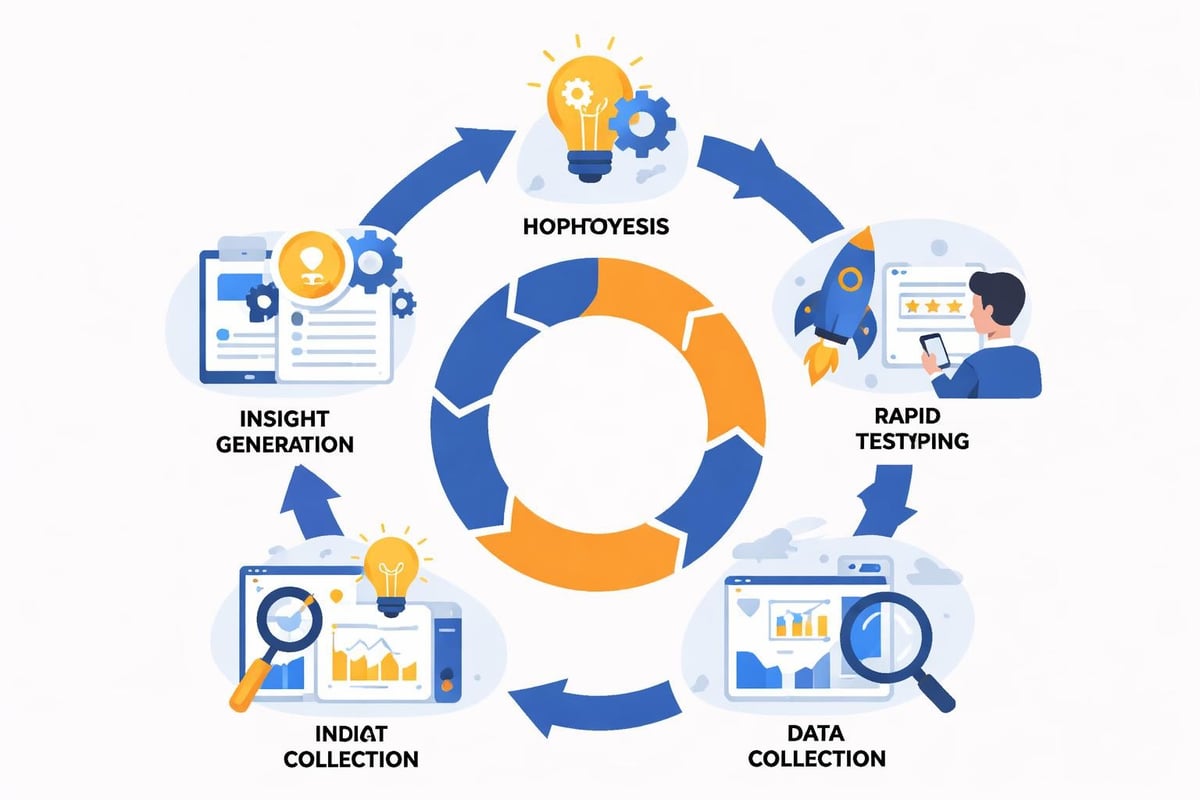
Market conditions in 2026 demand rapid iteration. Customer expectations shift quickly, competitors move fast, and investment cycles have shortened. The essential components of an MVP focus on validating assumptions quickly rather than building comprehensive solutions.
- Time-to-market compression: Launch in weeks instead of months
- Resource optimization: Validate ideas before heavy investment
- Risk reduction: Test assumptions with real users early
- Competitive advantage: Establish market presence faster
- Investor confidence: Demonstrate traction quickly
The fastest way to build an mvp in 2026 leverages platforms that eliminate infrastructure setup, reduce coding requirements, and accelerate deployment cycles. This approach doesn't sacrifice quality-it strategically focuses quality efforts where they matter most.
Choosing the Right Development Approach
Platform selection fundamentally determines your MVP timeline. Traditional coded development, while offering maximum flexibility, requires substantially more time for setup, development, and deployment. No-code and AI-assisted platforms have matured to the point where they handle complex business logic, integrations, and scalability.
No-Code Platforms for Rapid Development
The fastest no-code platforms for startups provide visual development environments where functionality is configured rather than coded. Bubble, for instance, enables complete web application development with databases, workflows, and API integrations without writing code.
| Platform Type | Development Time | Cost | Scalability | Best For |
|---|---|---|---|---|
| Traditional Code | 3-6 months | $50k-$150k+ | High | Complex enterprise systems |
| No-Code (Bubble) | 2-6 weeks | $5k-$25k | Medium-High | Web applications, SaaS |
| AI-Assisted (Lovable) | 1-3 weeks | $3k-$15k | Medium | Rapid prototypes, startups |
| Low-Code Hybrid | 1-3 months | $20k-$60k | High | Enterprise with custom needs |
AI-powered platforms like Lovable accelerate development further by generating functional code from natural language descriptions. These tools excel at creating initial structures and standard features, allowing developers to focus on unique business logic.
Evaluating Platform Capabilities
Not every platform suits every MVP. Assess your specific requirements against platform strengths. Consider these critical factors:
- Data complexity: How many entities and relationships does your product manage?
- Integration requirements: Which third-party services must connect to your MVP?
- User authentication: Do you need social logins, SSO, or role-based access?
- Performance expectations: What response times and concurrent users must you support?
- Mobile requirements: Is a responsive web app sufficient or do you need native mobile?
The fastest way to build an mvp in your specific context depends on matching these requirements to platform capabilities. Low-cost MVP development tools have expanded dramatically, offering enterprise-grade functionality at startup-friendly prices.
Defining Your MVP Scope
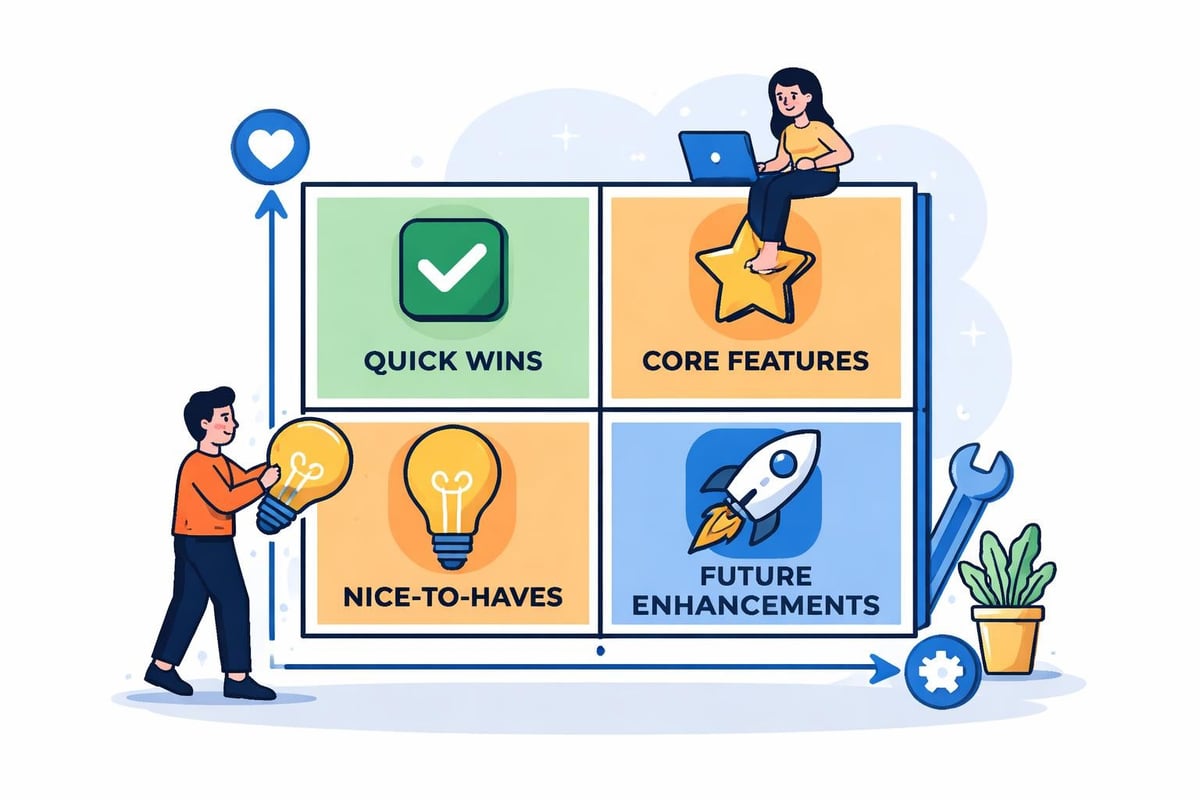
Scope definition separates successful MVPs from feature-bloated projects that never launch. The challenge isn't identifying what to build-it's determining what not to build. Best practices for building successful MVPs emphasize ruthless prioritization focused on core value propositions.
The Core Feature Framework
Start by identifying the single problem your MVP solves. Everything else is secondary. Write this problem statement clearly:
"Our target user needs [specific capability] because [concrete reason] so they can [measurable outcome]."
From this statement, derive your core feature set. Typically, a well-scoped MVP contains 3-5 primary features that directly address the stated problem.
- User onboarding: Simple account creation and initial setup
- Core interaction: The primary action users take to solve their problem
- Value delivery: The mechanism that provides the promised benefit
- Feedback collection: Built-in methods to gather user insights
- Basic management: Essential account or data management capabilities
Everything beyond these categories gets deferred to post-launch iterations. This discipline accelerates development and focuses user testing on what truly matters.
User Story Mapping
Visual representation of user journeys clarifies scope boundaries. Map out the end-to-end experience from user discovery to value realization. Identify the absolute minimum path a user can take to experience your core value proposition.
Essential user stories form your MVP backbone:
- "As a [user type], I need to [action] so that [benefit]"
- Focus on stories that directly enable core value delivery
- Defer nice-to-have enhancements and edge cases
- Validate stories against the single problem statement
When evaluating features for inclusion, apply the "must-have" test: if removing this feature makes the core value impossible to deliver, it's truly essential. Everything else waits for version 1.1.
Implementing Rapid Development Workflows
Process efficiency determines whether your MVP launches in weeks or months. The fastest way to build an mvp in 2026 employs agile methodologies adapted for small teams and tight timelines. Traditional sprint structures compress into daily build-review-iterate cycles.
The Week-by-Week Build Plan
A typical 4-6 week MVP development cycle breaks down into distinct phases:
Week 1: Foundation & Setup
- Platform configuration and environment setup
- Database schema design and implementation
- User authentication and basic security
- Core navigation structure
Week 2: Primary Features
- Main user workflows and interactions
- Data input and processing logic
- Integration with essential third-party services
- Basic responsive design implementation
Week 3: Secondary Features & Polish
- Supporting functionality completion
- User experience refinement
- Error handling and edge cases
- Initial performance optimization
Week 4: Testing & Deployment
- User acceptance testing with beta group
- Bug fixes and critical adjustments
- Production deployment preparation
- Documentation and support materials
Weeks 5-6: Buffer & Launch
- Final testing and validation
- Soft launch with limited users
- Monitoring and immediate issue resolution
- Initial feedback collection
This timeline assumes clear requirements and decisive stakeholder input. Delays typically stem from scope creep, unclear requirements, or decision bottlenecks rather than technical limitations.
Daily Development Practices
Maintain momentum through structured daily practices. Morning standup reviews progress, identifies blockers, and sets daily priorities. End-of-day demos show working functionality to stakeholders, enabling rapid feedback and course correction.
Productivity multipliers for rapid MVP development:
- Use component libraries and templates instead of building from scratch
- Implement third-party integrations for non-core functionality (authentication, payments, email)
- Automate testing and deployment through CI/CD pipelines
- Maintain a single, prioritized backlog accessible to all team members
- Make decisions within hours, not days
- Accept 80% solutions for non-critical features
AI-assisted app builder platforms accelerate these workflows by auto-generating boilerplate code, suggesting optimal component structures, and identifying potential bugs before testing.
Design and User Experience Considerations
Design velocity often bottlenecks MVP development. The solution isn't to skip design-it's to right-size design investment for an MVP context. Focus on usability over aesthetics, clarity over creativity, and consistency over customization.
Minimum Viable Design
Your MVP design must be functional and clear, not necessarily beautiful. Users forgive visual simplicity if the product solves their problem effectively. How to turn Figma designs into software becomes straightforward when designs use standard patterns and component libraries.
| Design Element | MVP Approach | Post-Launch Enhancement |
|---|---|---|
| Color Palette | 2-3 colors, high contrast | Custom brand colors, gradients |
| Typography | Single font family, 2-3 sizes | Refined type scale, web fonts |
| Spacing | Consistent grid system | Refined micro-spacing |
| Components | Standard UI kit elements | Custom component design |
| Animations | None or minimal | Thoughtful micro-interactions |
| Imagery | Stock photos, simple icons | Custom photography, illustrations |
UI component libraries provide pre-built, tested elements that maintain consistency without custom design work. Most no-code platforms include comprehensive component libraries that cover 90% of MVP needs.
Mobile-First Responsive Design
Design for mobile screens first, then adapt to larger displays. This constraint forces prioritization of essential elements and streamlines user flows. The fastest way to build an mvp in 2026 assumes mobile usage from day one-desktop-only products severely limit your testable user base.
Responsive design in no-code platforms typically involves configuring breakpoints and hiding/showing elements based on screen size. This functionality is built into modern platforms, requiring configuration rather than coding.
Testing and Validation Strategies
Testing determines whether your MVP succeeds in its primary mission: validating product hypotheses with real users. MVP development best practices emphasize rapid user feedback cycles over comprehensive test coverage.
Beta Testing Framework
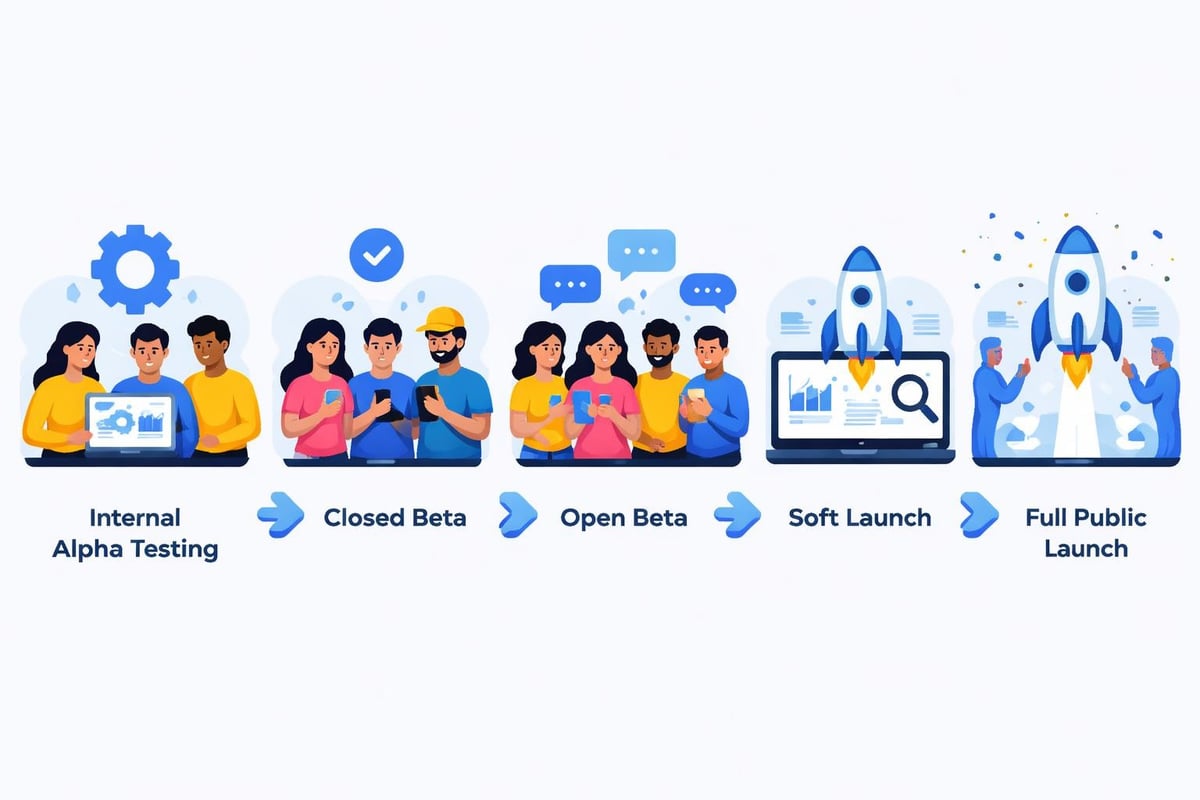
Recruit 10-20 users who represent your target market. These early adopters provide qualitative feedback that surveys and analytics can't capture. Structure beta testing in phases:
- Alpha testing (internal): Team members and stakeholders test core workflows
- Closed beta: Invited users test with direct feedback channels
- Open beta: Broader user group with structured feedback mechanisms
- Soft launch: Limited public access with monitoring and support
Each phase should last 3-7 days for an MVP. Extended testing cycles risk overbuilding before launch. The goal is identifying critical issues, not achieving perfection.
Essential metrics to track during beta:
- Activation rate: Percentage of users who complete initial setup
- Core action completion: How many users perform the primary valuable action
- Time-to-value: Duration from signup to first valuable outcome
- Feedback frequency: How often users submit suggestions or issues
- Return usage: Whether users come back after initial session
These metrics reveal whether your MVP delivers its promised value. Poor activation rates suggest onboarding issues. Low core action completion indicates the value proposition isn't clear or the execution is flawed.
Platform-Specific Implementation Tips
Different platforms require different optimization strategies. Understanding platform-specific best practices accelerates development and prevents common pitfalls.
Bubble Development Optimization
Bubble excels at database-driven applications with complex workflows. Optimize Bubble MVP development by leveraging reusable elements, custom states for temporary data, and scheduled API workflows for background processing.
Database structure best practices:
- Design normalized data structures to prevent duplication
- Use option sets for finite lists of values
- Implement privacy rules from the start
- Create indexes on frequently searched fields
Bubble developer cost considerations factor into timeline planning. Experienced Bubble developers build 2-3x faster than beginners due to platform knowledge and reusable patterns.
AI-Assisted Platform Workflows
AI platforms like Lovable generate initial code structures from natural language descriptions. The fastest way to build an mvp in these platforms involves iterative prompt refinement-describe features clearly, review generated output, refine descriptions based on results.
Effective AI-assisted development:
- Provide detailed feature specifications with examples
- Break complex features into smaller, describable components
- Review and test generated code incrementally
- Combine AI generation with manual refinement for optimal results
No-code AI app development platforms blend visual development with AI code generation, offering flexibility across the development lifecycle.
Integration and Scalability Planning
MVPs must integrate with external services and consider future growth without overengineering for hypothetical scale. Strategic integration choices prevent rework while maintaining development velocity.
Essential Third-Party Integrations
Most MVPs require 3-5 external service integrations. Common categories include:
- Authentication: Social logins, SSO providers (Auth0, Firebase)
- Payments: Stripe, PayPal for transaction processing
- Communications: Twilio for SMS, SendGrid for email
- Storage: AWS S3, Cloudinary for file management
- Analytics: Mixpanel, Amplitude for user behavior tracking
Select services with robust APIs and native integrations for your chosen platform. Best practices for MVP development recommend proven, established services over newer alternatives to minimize integration debugging.
Scalability Considerations
Design your MVP to handle 10x current load expectations without requiring architectural changes. This doesn't mean building for millions of users-it means avoiding obvious bottlenecks that force rewrites.
| Scalability Factor | MVP Approach | What to Avoid |
|---|---|---|
| Database queries | Indexed fields, reasonable pagination | Unindexed searches, loading all records |
| API calls | Caching, batch operations | Individual calls per record |
| File storage | Cloud storage services | Local file systems |
| User sessions | Stateless authentication | Server-side session storage |
| Background processing | Async workflows, job queues | Synchronous long-running tasks |
No-code platforms for enterprise workflows handle significant scale when properly architected. The limiting factor is typically design choices rather than platform capabilities.
Cost and Resource Optimization
Budget constraints often drive the search for the fastest way to build an mvp in cost-effective ways. No-code development dramatically reduces costs while maintaining quality and speed.
Budget Breakdown
Typical MVP development costs in 2026 vary by approach:
No-Code Agency Development (4-6 weeks):
- Discovery and scoping: $2,000-$4,000
- Design and UX: $3,000-$6,000
- Development and testing: $8,000-$15,000
- Total: $13,000-$25,000
Traditional Coded Development (3-4 months):
- Discovery and scoping: $5,000-$10,000
- Design and UX: $10,000-$20,000
- Development and testing: $35,000-$80,000
- Total: $50,000-$110,000
The cost differential stems from development velocity and reduced infrastructure requirements. Low-cost MVP development tools enable bootstrapped founders to launch products that previously required significant funding.
Team Composition
Minimal viable teams accelerate decision-making and reduce coordination overhead. A typical no-code MVP team includes:
- Product owner: Defines requirements and priorities (part-time, 10-15 hours/week)
- No-code developer: Implements functionality (full-time, 40 hours/week)
- Designer: Creates user experience and interfaces (part-time, 15-20 hours/week)
- QA tester: Validates functionality and user flows (part-time, 10-15 hours/week)
This lean structure delivers MVPs in 4-6 weeks. Larger teams often slow progress through communication overhead and decision paralysis.
Launch and Iteration Planning
The MVP launch represents the beginning of learning, not the end of development. A complete step-by-step guide to creating an MVP emphasizes post-launch iteration as critical to product success.
Soft Launch Strategy
Launch to a limited audience first. This controlled rollout enables monitoring, support, and rapid fixes before broader release. Invite 50-100 users initially, expanding based on stability and feedback quality.
Launch week priorities:
- Monitor error logs and user support requests hourly
- Track key metrics daily (signups, activations, core actions)
- Conduct user interviews with early adopters
- Document common questions and pain points
- Prioritize critical bug fixes and usability improvements
Resist adding new features during the first 2-3 weeks post-launch. Focus exclusively on ensuring existing functionality works reliably and delivers value.
Data-Driven Iteration
Structure iteration cycles around validated learning. Each iteration should test specific hypotheses about user behavior or value delivery.
Effective iteration framework:
- Week 1-2: Stability and critical fixes
- Week 3-4: High-impact usability improvements
- Week 5-6: Feature enhancements based on user requests
- Week 7-8: Performance optimization and scaling preparation
- Ongoing: Continuous small improvements and user feedback integration
Project management best practices for MVP launch stress the importance of maintaining a prioritized backlog and clear success metrics throughout the iteration process.
Common Pitfalls and How to Avoid Them
Understanding where MVP projects typically fail helps you navigate around these obstacles. The fastest way to build an mvp in practice means avoiding these common mistakes.
Feature Creep Prevention
Feature creep kills more MVPs than technical challenges. Establish clear scope boundaries before development begins and enforce them religiously throughout the project.
Warning signs of feature creep:
- "While we're at it, we should also add..."
- "This would be really simple to include..."
- "Users will expect this feature..."
- "Our competitors have this, so we need it..."
Counter these impulses with disciplined prioritization. Create a "version 2.0" list where you capture good ideas that don't make the MVP cut. This acknowledges the value of suggestions while protecting the launch timeline.
Decision Paralysis
Every day spent debating design choices or feature priorities delays launch and learning. Establish decision-making protocols before starting development.
- Minor decisions (colors, copy, button placement): Developer or designer decides, 24-hour review period
- Medium decisions (feature implementation approach, third-party service selection): Product owner decides within 48 hours
- Major decisions (scope changes, technology switches): Team discussion, decision within one week maximum
Time-boxing decisions forces clarity and prevents endless deliberation over marginal differences.
Over-Engineering
Building for future scalability you don't yet need wastes time and resources. Design for 10x current requirements, not 1000x. Understanding how to build an MVP means accepting technical debt in non-critical areas to maximize learning velocity.
Accept that successful products get rebuilt or heavily refactored. The fastest way to build an mvp in a sustainable way means building what you need now while keeping options open for future growth.
Building an MVP quickly in 2026 requires strategic platform selection, ruthless scope discipline, and rapid iteration cycles. By focusing on core value delivery and leveraging modern no-code and AI-assisted development tools, you can launch testable products in weeks rather than months. Whether you're validating a startup idea or exploring new market opportunities for an established business, speed-to-market combined with quality execution determines success. Big House Technologies specializes in rapid MVP development using Bubble and Lovable platforms, delivering scalable solutions that get your product in front of users quickly while staying within budget and timeline constraints.

About Big House
Big House is committed to 1) developing robust internal tools for enterprises, and 2) crafting minimum viable products (MVPs) that help startups and entrepreneurs bring their visions to life.
If you'd like to explore how we can build technology for you, get in touch. We'd be excited to discuss what you have in mind.
Other Articles
Discover 7 smart ways to hire mobile app developer in 2025 with proven strategies for sourcing vetting and future proof contracts to ensure project success
Explore the latest website development technologies for 2025. Discover top tools, frameworks, and trends to build scalable, secure, and future-ready websites.
Discover the 2026 guide to custom enterprise app development solutions Explore trends tech stacks costs security and real case studies to drive growth