
The demand for versatile developers who can handle both frontend and backend tasks has never been higher. As businesses increasingly seek efficient development solutions, the decision to hire full stack programmer talent has become a strategic priority for companies of all sizes. Whether you're building a new product from scratch or scaling an existing platform, understanding how to identify, evaluate, and onboard the right full stack developer can make the difference between project success and costly delays.
Understanding the Full Stack Programmer Role in 2026
Full stack programmers bring a comprehensive skill set that spans both client-side and server-side development. These professionals work across the entire technology stack, from database architecture to user interface design.
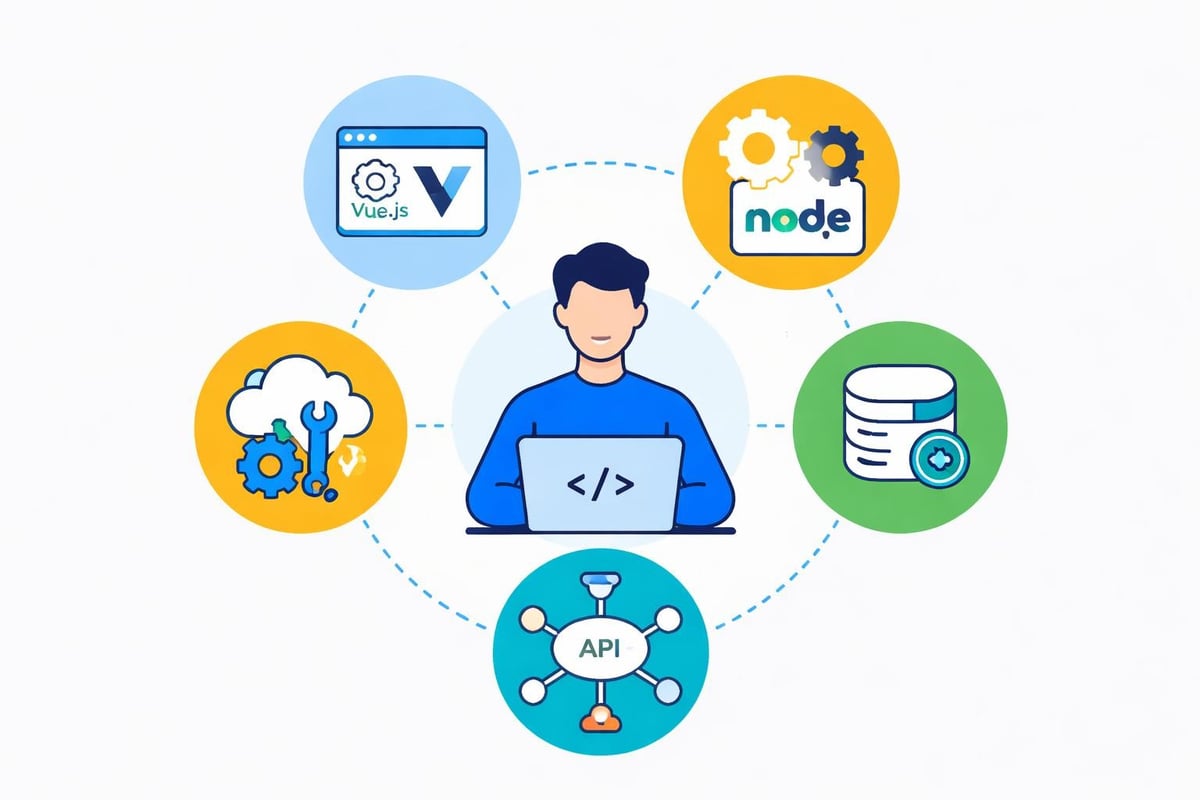
The modern full stack programmer typically masters multiple programming languages and frameworks. They're comfortable switching between JavaScript frameworks like React or Vue.js on the frontend, and Node.js, Python, or Ruby on the backend. This versatility allows them to see the big picture of how application components interact and communicate.
Key responsibilities include:
- Designing and implementing database schemas
- Building RESTful APIs and microservices
- Creating responsive user interfaces
- Optimizing application performance
- Debugging issues across all layers of the stack
In 2026, full stack developers are also expected to understand cloud infrastructure, containerization with Docker, and CI/CD pipelines. The role has evolved beyond pure coding to include DevOps capabilities and architectural decision-making.
Traditional Development vs. No-Code Approaches
While traditional full stack development remains valuable, businesses should also consider modern alternatives. No-code platforms like Bubble have transformed how companies approach software development, offering faster deployment and lower costs for certain use cases.
The choice between hiring traditional developers and leveraging no-code agencies depends on your project requirements, timeline, and budget constraints. Full stack programmers excel at building custom solutions with specific technical requirements, while no-code approaches shine for rapid prototyping and standard business applications.
Defining Your Full Stack Developer Requirements
Before you hire full stack programmer talent, clarity about your needs is essential. A well-defined role description prevents mismatched expectations and ensures you attract qualified candidates.
Start by analyzing your technology stack and project requirements. Are you building a real-time application that requires WebSocket expertise? Do you need someone experienced with specific databases like PostgreSQL or MongoDB? Understanding these technical specifics helps narrow your search.
Creating a Comprehensive Job Description
LinkedIn's guide to crafting full stack developer job descriptions emphasizes the importance of clarity and specificity. Your job posting should outline both technical and soft skills requirements.
| Requirement Category | Essential Elements | Nice-to-Have Elements |
|---|---|---|
| Technical Skills | JavaScript, HTML/CSS, Backend framework, Database management | TypeScript, GraphQL, Microservices architecture |
| Tools & Platforms | Git, REST APIs, Cloud services | Docker, Kubernetes, CI/CD tools |
| Soft Skills | Problem-solving, Communication, Team collaboration | Project management, Mentoring ability |
| Experience Level | 3-5 years full stack work | Industry-specific experience |
Be transparent about your work environment, whether remote, hybrid, or in-office. In 2026, flexibility remains a top priority for developers evaluating opportunities.
Sourcing Full Stack Programming Talent
Finding qualified candidates requires a multi-channel approach. Relying on a single source limits your access to diverse talent pools.
Effective sourcing channels include:
- Technical job boards like Stack Overflow Jobs, GitHub Jobs, and specialized platforms
- Professional networks including LinkedIn and developer communities
- Referrals from your existing development team
- Recruitment agencies specializing in tech talent
- Open source communities where developers showcase their work
Developer communities have become increasingly important for talent discovery. Platforms like Talk Shop demonstrate how specialized communities connect professionals, and similar forums exist across different technology ecosystems where you can engage with potential candidates.
Evaluating Portfolios and GitHub Profiles
A developer's GitHub profile reveals more than their resume ever could. Look for consistent commit activity, well-documented projects, and contributions to open source repositories.
Examine their portfolio for projects similar to your requirements. A full stack programmer who's built e-commerce platforms brings different experience than one focused on SaaS dashboards. Both are valuable, but alignment with your domain matters.
Pay attention to code quality indicators like proper documentation, clean architecture, and test coverage. These signals suggest a developer who thinks beyond just making code work.
Technical Assessment Strategies
Once you've identified promising candidates, rigorous technical evaluation becomes critical. TestGorilla's guide on hiring full stack developers emphasizes skills-based assessment over credentials alone.
Structured Interview Process
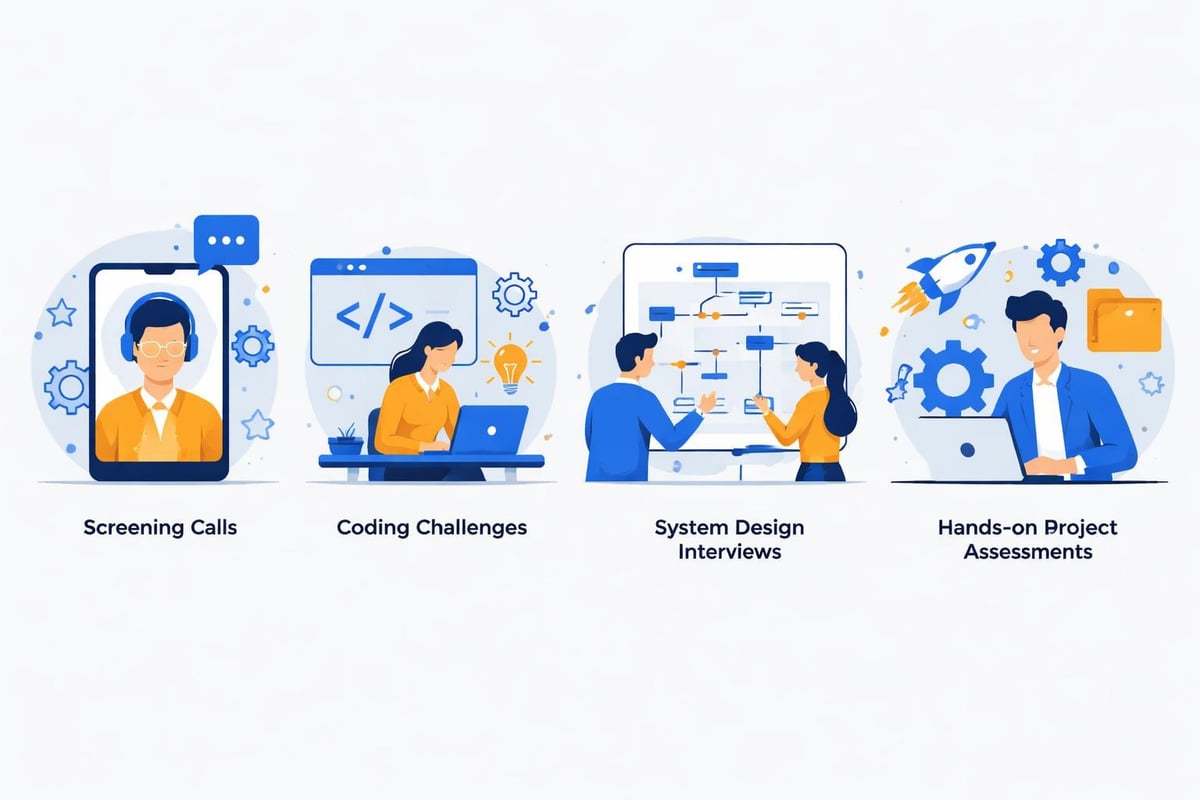
Design a multi-stage interview process that evaluates different competencies:
Stage 1: Initial Screening
- Review portfolio and experience
- Assess communication skills
- Verify basic technical knowledge
- Discuss salary expectations and availability
Stage 2: Technical Assessment
- Coding challenges that mirror real work
- System design questions
- Database schema design
- API architecture discussions
Stage 3: Practical Evaluation
- Take-home project or pair programming
- Code review of submitted work
- Discussion of technical decisions made
- Problem-solving approach analysis
Stage 4: Cultural Fit
- Team collaboration scenarios
- Discussion of work style preferences
- Alignment with company values
- Questions about learning and growth
LinkedIn provides comprehensive interview questions tailored specifically for full stack developer candidates that can strengthen your assessment process.
Coding Challenges That Matter
Avoid generic algorithm puzzles disconnected from actual work. Instead, create challenges that reflect your business needs. If you're building a project management tool, ask candidates to design a task assignment feature. If you're creating a data dashboard, have them build a data visualization component.
Time-box challenges reasonably. A 3-4 hour take-home project provides enough scope to evaluate skills without demanding excessive candidate time. Respect that strong developers often interview at multiple companies simultaneously.
Evaluating Frontend and Backend Proficiency
When you hire full stack programmer talent, balanced expertise across both domains is crucial. Some developers lean heavily toward frontend or backend despite the "full stack" label.
Frontend Evaluation Criteria
Modern frontend development extends far beyond basic HTML and CSS. Assess candidates on:
- Component-based architecture understanding (React, Vue, Angular)
- State management patterns (Redux, Vuex, Context API)
- Responsive design implementation
- Performance optimization techniques
- Accessibility standards compliance
- Browser compatibility handling
Ask candidates to explain their approach to complex UI challenges. How do they handle form validation? What's their strategy for managing application state in large applications? These discussions reveal depth of understanding.
Backend Assessment Areas
Backend evaluation should cover both practical skills and architectural thinking:
| Area | Key Evaluation Points |
|---|---|
| API Design | RESTful principles, GraphQL understanding, versioning strategies |
| Database Management | Schema design, query optimization, transaction handling, ORM usage |
| Security | Authentication/authorization, data validation, common vulnerabilities |
| Scalability | Caching strategies, load balancing, asynchronous processing |
| Testing | Unit testing, integration testing, test coverage practices |
Strong full stack programmers articulate trade-offs between different approaches. They don't just know how to implement solutions but understand when and why to choose specific patterns.
Understanding Market Rates and Compensation
Competitive compensation is essential for attracting quality talent. Indeed's hiring guide provides current salary benchmarks, but rates vary significantly by location, experience, and specialization.
In 2026, full stack programmer salaries in the United States typically range from $85,000 for junior developers to $180,000+ for senior positions in high-cost areas. Remote positions have somewhat equalized geographic disparities, though some location-based variation persists.
Factors influencing compensation:
- Years of experience and expertise depth
- Specialized knowledge (AI integration, blockchain, etc.)
- Leadership and mentoring capabilities
- Industry domain expertise
- Company size and funding stage
Beyond base salary, consider comprehensive packages including equity, bonuses, professional development budgets, and flexible work arrangements. Top developers evaluate total compensation and growth opportunities, not just salary numbers.
Contract vs. Full-Time Considerations
The decision between hiring full-time employees or contractors depends on your project scope and duration. For ongoing product development, full-time employment builds institutional knowledge and team cohesion. For specific projects or skill gaps, contractors offer flexibility without long-term commitment.
Many companies are exploring hybrid models, particularly when leveraging AI-powered no-code development tools that reduce the need for large permanent development teams.
Onboarding and Integration Best Practices
Successfully bringing a new full stack programmer onto your team requires thoughtful onboarding. The first few weeks set the tone for long-term productivity and satisfaction.
Structured Onboarding Timeline
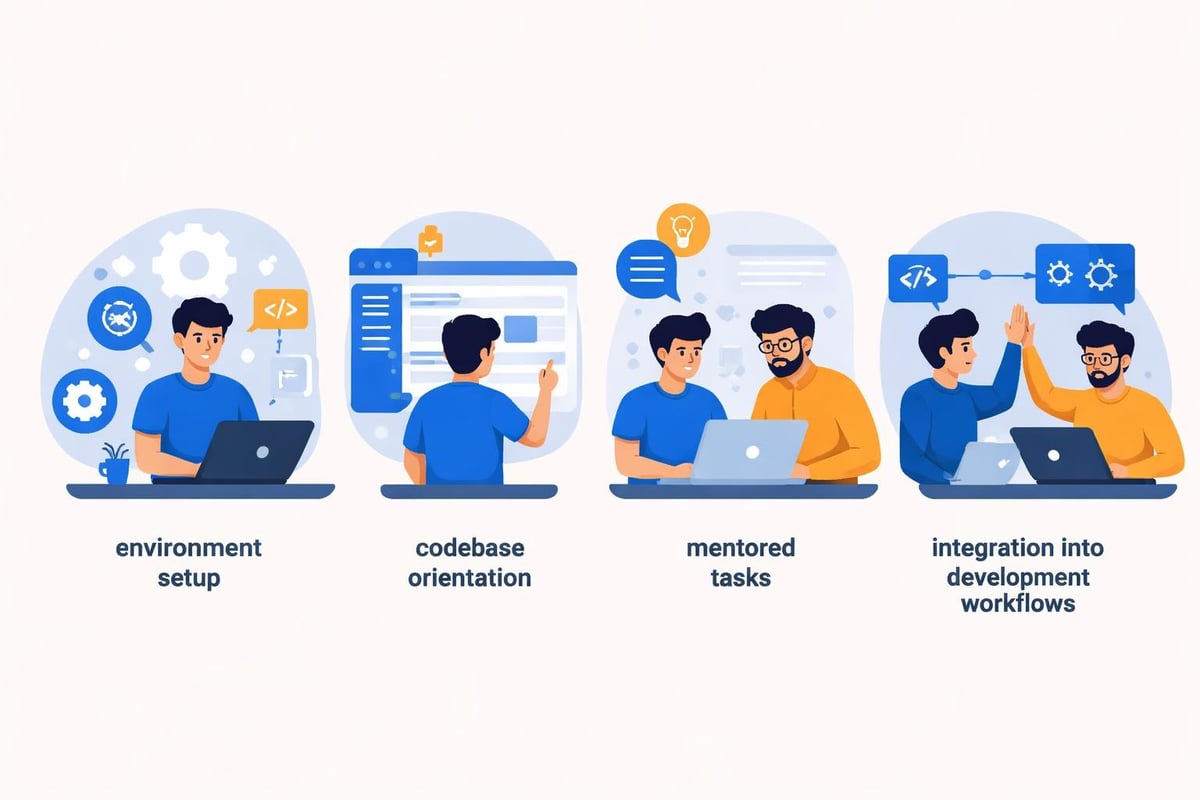
Week 1: Environment Setup and Context
- Configure development environment
- Grant necessary system access
- Introduce codebase architecture
- Meet team members and stakeholders
Week 2-3: Guided Contributions
- Assign mentored tasks
- Participate in code reviews
- Attend planning meetings
- Complete small feature implementations
Week 4+: Independent Work
- Take ownership of features
- Contribute to architecture decisions
- Mentor junior developers if applicable
- Fully integrate into sprint cycles
Documentation is critical during onboarding. Well-maintained wikis, architectural decision records, and code comments accelerate new developer productivity significantly.
Building Effective Development Teams
When you hire full stack programmer talent, consider how they'll complement existing team members. A team of all generalists may lack deep expertise in critical areas. Balance full stack developers with specialists in frontend design, backend architecture, or AI software development depending on your needs.
Cross-functional collaboration improves when full stack developers understand the entire product lifecycle. Involve them in design discussions, user research, and product strategy meetings beyond pure implementation work.
Retention and Professional Development
Hiring is only the beginning. Retaining talented developers requires ongoing investment in their growth and satisfaction.
Retention strategies that work:
- Provide challenging, meaningful work that stretches capabilities
- Support continuous learning through courses, conferences, and certifications
- Create clear career progression paths
- Offer autonomy in technical decision-making
- Recognize contributions publicly and financially
The technology landscape evolves rapidly. Developers who feel stagnant will seek opportunities elsewhere. Budget for professional development and encourage experimentation with new technologies and approaches.
Managing Remote Full Stack Teams
Remote work has become standard for many development teams. Managing distributed full stack programmers requires intentional communication and collaboration practices.
Establish clear communication norms around synchronous vs. asynchronous collaboration. Use tools like Slack for quick questions, GitHub for code discussions, and video calls for complex problem-solving. Document decisions so team members across time zones stay aligned.
Regular one-on-ones help identify issues before they become problems. Discuss not just project status but career goals, challenges, and satisfaction levels.
Alternatives to Traditional Hiring
Before committing to hire full stack programmer employees, explore whether alternative approaches might better serve your needs. For many businesses, particularly startups and enterprises building internal tools, no-code development offers compelling advantages.
MVP software development can proceed much faster with no-code platforms, allowing you to validate ideas before investing in custom development. Agencies specializing in platforms like Bubble can deliver functional products in weeks rather than months.
When No-Code Makes Sense
No-code approaches excel for:
- Internal business tools and dashboards
- Customer portals and basic web applications
- Prototypes and minimum viable products
- Workflows with standard CRUD operations
- Integration-heavy applications connecting existing systems
For projects requiring unique algorithms, complex data processing, or highly specialized functionality, traditional full stack development remains necessary. Many successful companies use both approaches strategically, reserving custom development for core differentiators while using no-code for supporting tools.
Building vs. Buying Development Capacity
The decision to hire full stack programmer talent internally versus partnering with development agencies involves multiple considerations beyond immediate cost.
Internal hiring advantages:
- Deep institutional knowledge
- Full control over priorities
- Long-term team building
- Direct communication with stakeholders
Agency partnership advantages:
- Faster project initiation
- Access to diverse expertise
- Scalable capacity up or down
- Reduced management overhead
Understanding different development approaches helps you make informed decisions about resource allocation. Some companies maintain a small core technical team while outsourcing specific projects or capacity needs during growth phases.
Evaluating Technical and Cultural Fit
Technical skills alone don't guarantee success. Cultural alignment significantly impacts long-term satisfaction and team dynamics.
During interviews, assess how candidates approach collaboration, handle disagreement, and respond to feedback. Discuss scenarios they've encountered: How did they handle a project running behind schedule? When did they last change their mind about a technical approach and why?
| Cultural Fit Indicator | Assessment Method | Red Flags |
|---|---|---|
| Communication Style | Discussion of past projects, explanation of technical concepts | Unable to simplify complex topics, dismissive of questions |
| Learning Orientation | Questions about staying current, response to unknown problems | Claims to know everything, resistant to new approaches |
| Team Collaboration | Examples of pair programming, code review experiences | Solo-focused mindset, difficulty accepting feedback |
| Problem-Solving | Approach to debugging, handling ambiguity | Gives up quickly, blames others for issues |
Values alignment matters too. A developer passionate about accessibility will naturally build more inclusive products. Someone excited about performance optimization will create faster applications. Match your company's priorities with developer interests where possible.
Legal and Administrative Considerations
When you hire full stack programmer talent, proper legal frameworks protect both parties. Work with legal counsel to create employment contracts that address:
- Intellectual property ownership
- Non-compete and non-solicitation terms where applicable
- Confidentiality agreements
- Remote work policies and equipment
- Termination conditions
For contractors, clearly define scope, deliverables, timelines, and payment terms. Independent contractor agreements should specify that the contractor maintains their own equipment and sets their own hours to properly classify the relationship.
Benefits administration for full-time employees includes health insurance, retirement plans, and paid time off. In 2026, comprehensive benefits packages remain critical for competing in the developer talent market.
Measuring Developer Performance and Impact
Establishing clear performance metrics helps developers understand expectations and provides objective evaluation criteria. Avoid vanity metrics like lines of code written, which incentivize wrong behaviors.
Meaningful performance indicators include:
- Feature delivery against estimates
- Code quality metrics (test coverage, bug rates)
- Technical debt reduction
- Documentation contributions
- Peer collaboration and mentorship
- System reliability and uptime
- User satisfaction with delivered features
Regular performance reviews should be forward-looking, focusing on growth and development rather than just backward evaluation. Discuss career goals and create actionable plans for skill development aligned with both individual aspirations and company needs.
Adapting to Industry Changes
The software development landscape continues evolving rapidly. AI-assisted coding tools, new frameworks, and changing best practices require developers who embrace continuous learning.
When you hire full stack programmer talent, prioritize learning agility over current knowledge. Specific frameworks come and go, but developers who quickly master new technologies remain valuable regardless of industry shifts. AI product development tools for startups demonstrate how rapidly new capabilities emerge that development teams must integrate.
Stay engaged with developer communities and industry trends. Encourage your team to experiment with emerging technologies during hack days or dedicated innovation time. This keeps skills fresh and helps identify valuable new tools before competitors.
Finding and hiring the right full stack programmer requires strategic planning, thorough evaluation, and ongoing investment in development and retention. Whether you choose traditional hiring, agency partnerships, or modern no-code approaches depends on your specific project requirements, timeline, and business goals. Big House Technologies specializes in delivering scalable software solutions using cutting-edge no-code and AI platforms, offering an efficient alternative to traditional development hiring that delivers quality results faster and more cost-effectively. Our comprehensive approach from scoping through testing ensures your ideas become fully functional products without the overhead and timeline of building an in-house development team.

About Big House
Big House is committed to 1) developing robust internal tools for enterprises, and 2) crafting minimum viable products (MVPs) that help startups and entrepreneurs bring their visions to life.
If you'd like to explore how we can build technology for you, get in touch. We'd be excited to discuss what you have in mind.
Other Articles
Hiring a custom application developer in 2025? This guide covers the essential skills, key trends like AI & no-code, and how to choose the right expert for your business.
Discover 7 essential application technologies shaping 2025. Learn trends, benefits, and expert tips to help your business innovate and stay ahead of the competition.
Explore application developer work in 2026, from traditional coding to no-code platforms. Learn key responsibilities, skills, and career paths.