
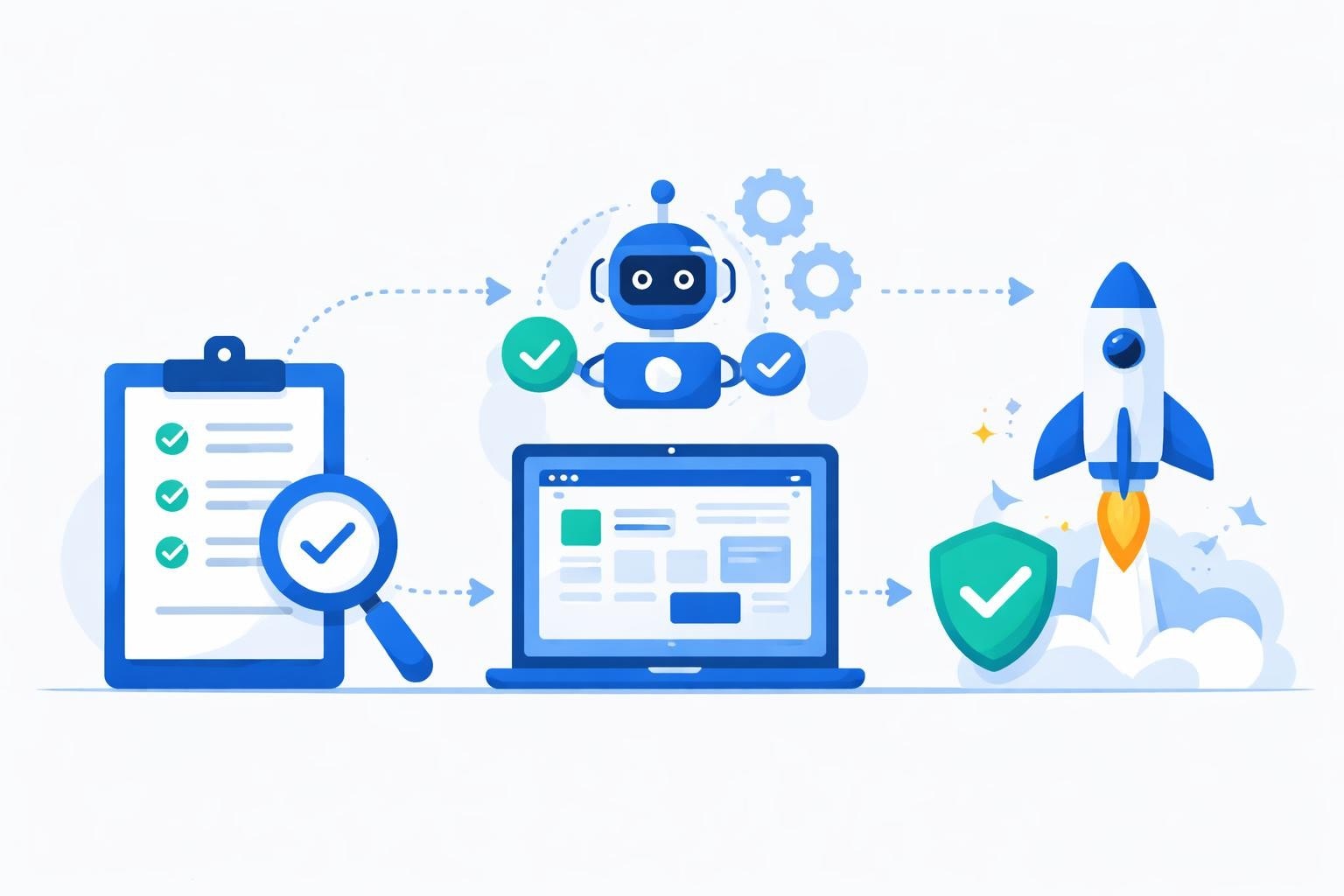
Testing projects effectively represents one of the most critical yet often underestimated phases in software development. In the no-code and AI development landscape of 2026, where platforms like Bubble and Lovable enable rapid application creation, establishing robust testing protocols becomes even more essential. Whether you're building an MVP for a startup or deploying enterprise-grade solutions, the quality of your testing projects directly impacts user satisfaction, system reliability, and long-term scalability.
Understanding the Foundation of Effective Testing Projects
The landscape of software quality assurance has evolved dramatically with the rise of no-code platforms. Traditional testing methodologies still apply, but they require adaptation to accommodate the unique characteristics of visual development environments. Testing projects in no-code contexts demand a comprehensive understanding of both platform-specific behaviors and universal software quality principles.
Modern testing projects must address multiple dimensions:
- Functional correctness across all user workflows
- Performance optimization under realistic load conditions
- Security validation for data protection and access control
- Cross-browser and device compatibility
- Integration reliability with external services and APIs
When planning testing projects for no-code applications, teams should recognize that visual development doesn't eliminate the need for systematic quality assurance. In fact, the abstraction layers introduced by no-code platforms create new testing requirements that traditional approaches might overlook.
Establishing Clear Testing Objectives
Every successful testing project begins with well-defined objectives that align with business goals and user expectations. Before executing any test cases, development teams must articulate what success looks like for their specific application. This clarity prevents scope creep and ensures testing efforts focus on high-impact areas.
For enterprise clients working with scalable backend options for Bubble, testing objectives often emphasize performance under concurrent user loads and data integrity across complex workflows. Startups building MVPs might prioritize core feature validation and critical path testing to ensure market readiness.

The process of defining clear testing objectives requires collaboration between stakeholders, developers, and QA specialists. Documentation should specify acceptance criteria, performance benchmarks, and compliance requirements before testing projects commence.
Strategic Approaches to No-Code Testing Projects
Testing projects in no-code environments benefit from a hybrid approach that combines automated validation with manual exploration. While no-code platforms provide built-in debugging tools, comprehensive testing requires supplementary strategies that validate the entire application ecosystem.
Balancing Manual and Automated Testing
The debate between manual and automated testing continues in 2026, but the most effective testing projects leverage both methodologies strategically. Balancing manual and automated testing allows teams to maximize coverage while maintaining efficiency.
Automated testing excels at:
- Regression validation after updates
- Performance benchmarking under load
- API endpoint verification
- Data validation rules
- Authentication flow testing
Manual testing remains essential for:
- User experience evaluation
- Visual design consistency
- Edge case exploration
- Accessibility compliance
- Workflow logic validation
For agencies like those specializing in AI software development, automated testing projects can validate AI model outputs and ensure consistent behavior across different input scenarios. Manual testing complements this by evaluating the contextual appropriateness of AI-generated responses.
Implementing Continuous Testing Throughout Development
The traditional waterfall approach of testing only after development completion has become obsolete. Modern testing projects integrate quality assurance throughout the entire development lifecycle, catching issues early when they're less expensive to fix.
| Development Phase | Testing Activities | Expected Outcomes |
|---|---|---|
| Scoping | Requirement validation, testability review | Clear acceptance criteria |
| Design | Prototype testing, user flow validation | Validated UX decisions |
| Development | Component testing, integration checks | Incremental quality assurance |
| Pre-launch | System testing, performance validation | Production readiness |
| Post-launch | Monitoring, user acceptance testing | Continuous improvement data |
Integrating testing throughout the development cycle transforms quality assurance from a bottleneck into an accelerator. This approach aligns perfectly with the iterative nature of no-code development, where changes can be implemented and tested rapidly.
When building applications for MVP software development, continuous testing ensures that each sprint delivers working functionality that meets quality standards. This velocity enables faster market validation without compromising reliability.
Essential Components of Comprehensive Testing Projects
Successful testing projects encompass multiple testing types, each addressing specific quality dimensions. A comprehensive testing strategy evaluates applications from various angles to identify issues that single-focus testing might miss.
Functional Testing for Core Features
Functional testing validates that application features perform as specified in requirements documentation. For no-code applications built on platforms like Bubble, functional testing projects verify that workflows execute correctly, database operations maintain data integrity, and conditional logic responds appropriately to different scenarios.
Critical functional testing areas include:
- User registration and authentication processes
- Data input validation and error handling
- Search and filtering functionality
- Payment processing and transaction completion
- Email notification delivery and content accuracy
- File upload and download operations
Testing projects should document expected behaviors for each feature and validate actual outcomes against these specifications. When discrepancies occur, teams must determine whether the issue stems from incorrect implementation or unclear requirements.
Performance and Load Testing
Performance testing evaluates how applications behave under various load conditions, from single-user scenarios to peak traffic situations. For enterprise clients expecting thousands of concurrent users, performance testing projects become mission-critical components of the development process.
Testing projects focused on performance should establish baseline metrics during low-load conditions, then systematically increase user counts to identify bottlenecks. No-code platforms like Bubble handle many performance optimizations automatically, but application architecture decisions significantly impact scalability.
The importance of testing solutions in software development extends beyond functionality to encompass responsiveness and reliability under stress. Applications that perform flawlessly with ten users but crash with one hundred fail to meet enterprise requirements.
Security and Compliance Testing
Security testing projects validate that applications protect user data and resist common attack vectors. Even with the security features provided by no-code platforms, application-level testing remains essential to ensure proper implementation of access controls and data handling procedures.
Security testing priorities for 2026:
- Authentication mechanism strength
- Authorization rule enforcement
- Data encryption validation
- API security assessment
- Privacy compliance verification (GDPR, CCPA)
- Vulnerability scanning
For healthcare, financial, or enterprise applications, compliance testing projects must validate adherence to industry-specific regulations. Documentation of testing procedures and results becomes crucial for audit purposes.

Advanced Testing Strategies for No-Code Platforms
As no-code platforms mature, testing projects must evolve to address increasingly sophisticated application architectures. Advanced testing strategies leverage platform-specific capabilities while maintaining comprehensive quality coverage.
Integration Testing for Connected Systems
Modern applications rarely operate in isolation. Testing projects must validate integrations with external services, APIs, and databases to ensure reliable data exchange and functionality. No-code platforms facilitate rapid integration development, but this speed can introduce complexity that requires thorough testing.
When applications connect to payment processors, CRM systems, marketing automation platforms, or custom APIs, integration testing projects verify that data flows correctly in both directions. Error handling becomes particularly important-applications must gracefully manage situations where external services are temporarily unavailable.
For agencies building solutions with AI-powered no-code development tools, integration testing validates AI model API connections, response parsing, and fallback behavior when AI services experience latency or errors.
Mobile Responsiveness and Cross-Platform Testing
With mobile traffic dominating web usage in 2026, testing projects must validate application behavior across diverse devices and screen sizes. No-code platforms typically generate responsive layouts automatically, but custom styling and complex interfaces require verification on actual devices.
| Device Category | Testing Priorities | Common Issues |
|---|---|---|
| Smartphones | Touch interactions, viewport rendering | Overlapping elements, small tap targets |
| Tablets | Layout adaptation, orientation changes | Inefficient space usage, broken grids |
| Desktop | Keyboard navigation, large screen optimization | Stretched layouts, missing hover states |
| Smartwatches | Core functionality accessibility | Feature unavailability, rendering failures |
Cross-browser testing projects ensure consistent behavior across Chrome, Safari, Firefox, and Edge. While browser compatibility has improved significantly, testing remains essential for validating JavaScript execution and CSS rendering consistency.
Accessibility and Inclusive Design Testing
Accessibility testing projects evaluate whether applications serve users with diverse abilities and assistive technology requirements. QA best practices increasingly emphasize inclusive design validation as both a legal requirement and ethical imperative.
Accessibility testing checklist:
- Keyboard-only navigation support
- Screen reader compatibility
- Color contrast ratios meeting WCAG standards
- Alternative text for images and media
- Form label associations
- Focus indicator visibility
- Error message clarity
Automated accessibility scanning tools identify many common issues, but comprehensive testing projects include manual validation with actual assistive technologies. This human-centered approach reveals usability barriers that automated tools might miss.
Optimizing Testing Projects for Efficiency and Coverage
As applications grow in complexity, testing projects must scale efficiently without sacrificing coverage. Strategic optimization ensures that quality assurance keeps pace with development velocity while maintaining thorough validation.
Test Case Management and Documentation
Well-organized testing projects maintain clear documentation of test cases, expected results, and actual outcomes. This documentation serves multiple purposes: guiding test execution, facilitating knowledge transfer, and providing audit trails for compliance purposes.
Writing clear, maintainable test cases requires balancing detail with readability. Each test case should specify preconditions, execution steps, and success criteria without becoming so verbose that maintenance becomes burdensome.
Effective test case structure:
- Test ID: Unique identifier for tracking
- Feature/Module: Area being tested
- Priority: Critical, high, medium, or low
- Preconditions: Required setup or state
- Steps: Specific actions to perform
- Expected Result: What should happen
- Actual Result: What actually happened
- Status: Pass, fail, or blocked
For teams managing testing projects across multiple clients or applications, test case repositories enable reuse and standardization. Common scenarios like user registration or password reset can be adapted for different projects rather than recreated from scratch.
Leveraging AI for Enhanced Testing Coverage
Generative AI has emerged as a powerful tool for augmenting testing projects in 2026. When used responsibly, AI in QA can generate test cases, identify edge cases, and even predict potential failure points based on application patterns.
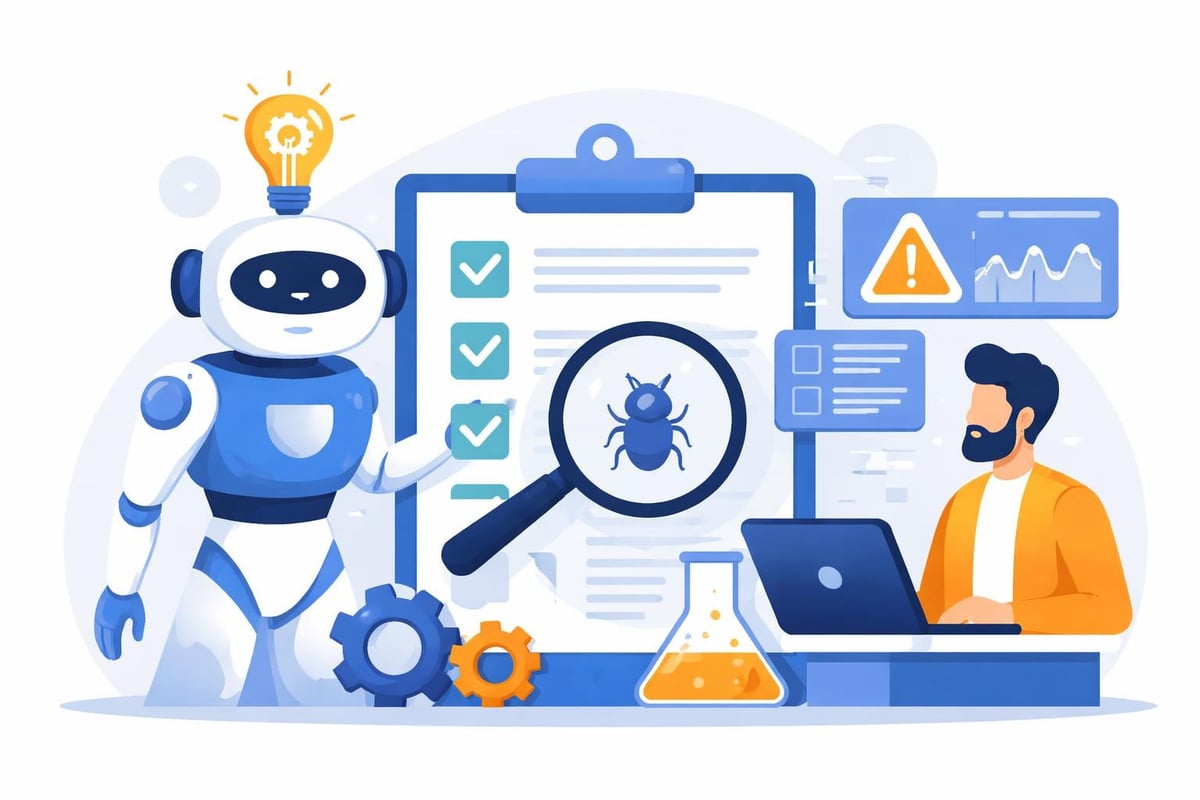
AI-powered testing tools can analyze application code or workflows to suggest test scenarios that human testers might overlook. However, testing projects should use AI as a complement to human expertise rather than a replacement. Critical validation and strategic decisions still require human judgment.
For agencies building with platforms like Lovable, AI-generated code requires specialized testing approaches. Validation must confirm not only that generated code functions correctly but also that it follows best practices and maintains security standards.
Risk-Based Testing Prioritization
Not all features carry equal risk or business impact. Testing projects optimize resource allocation by prioritizing high-risk areas that could cause significant user impact or business disruption if they fail.
Risk assessment factors:
- Feature criticality to core business functions
- Complexity of implementation logic
- Frequency of user interaction
- Potential security implications
- Integration dependencies
- Historical defect rates
By concentrating testing efforts on high-risk areas while applying lighter validation to low-risk features, testing projects achieve optimal coverage within time and budget constraints. This strategic approach proves particularly valuable when hiring Bubble developers for rapid MVP development where time-to-market pressures demand efficiency.
Building a Testing Culture Within Development Teams
Beyond methodologies and tools, successful testing projects require organizational culture that values quality as a shared responsibility. When testing becomes integrated into development workflows rather than treated as a separate phase, applications achieve higher quality with fewer iterations.
Collaboration Between Developers and QA
Traditional silos between development and testing teams create friction and delays. Modern testing projects thrive when developers and QA specialists collaborate throughout the development process, sharing insights and addressing quality concerns proactively.
Developers bring technical understanding of implementation details that help QA specialists design more effective tests. QA professionals contribute user-centric perspectives that improve feature design. This bidirectional knowledge sharing elevates both code quality and test effectiveness.
Best practices for software testing emphasize early QA involvement in requirements discussions and design reviews. When testing considerations influence architectural decisions from the beginning, applications are built with testability in mind.
Continuous Learning and Improvement
Testing projects generate valuable data about application quality, team processes, and user expectations. Organizations that systematically analyze this data and adjust their approaches achieve continuous improvement in both testing effectiveness and application quality.
Metrics worth tracking:
- Defect detection rates by testing phase
- Test coverage percentages by module
- Average time to identify and fix issues
- Test execution efficiency trends
- User-reported issues post-launch
- Testing project timeline adherence
Regular retrospectives allow teams to evaluate what worked well in recent testing projects and identify opportunities for improvement. This learning mindset transforms testing from a checkbox activity into a strategic capability that drives competitive advantage.
Investing in Testing Infrastructure
Quality testing projects require appropriate infrastructure, including test environments that accurately replicate production conditions. Investing in a secure testing environment prevents issues where applications work perfectly in development but fail in production due to configuration differences.
For no-code applications, testing infrastructure includes dedicated workspaces for different testing phases, test data management systems, and monitoring tools that track application behavior during test execution. Cloud-based testing platforms enable parallel test execution that accelerates validation cycles.
When working with UI/UX and development agencies, coordinated testing infrastructure ensures that design implementations match specifications across environments and that performance remains consistent from staging to production.
Real-World Testing Projects: Lessons from the Field
Practical experience reveals insights that theoretical knowledge alone cannot provide. Examining real-world testing projects highlights common challenges and effective solutions that apply across diverse applications and industries.
Startup MVP Testing Strategies
Startups face unique constraints when executing testing projects-limited budgets, aggressive timelines, and evolving requirements. Successful MVP testing projects focus validation efforts on core value propositions while accepting calculated risks in peripheral features.
A typical startup testing project might prioritize:
- Critical user journeys that demonstrate value
- Payment and data security features
- Core feature functionality
- Mobile responsiveness for primary use cases
- Integration reliability with essential services
Secondary features receive lighter testing initially, with plans to expand coverage as the product gains traction and resources grow. This pragmatic approach enables rapid market validation while maintaining acceptable quality standards.
Enterprise Application Testing at Scale
Enterprise testing projects operate under different constraints-extensive compliance requirements, complex integration ecosystems, and high user counts demand comprehensive validation. These projects typically span weeks or months and involve multiple testing teams specializing in different domains.
| Testing Phase | Duration | Focus Areas | Team Composition |
|---|---|---|---|
| Component | 2-3 weeks | Individual features, unit logic | Development team + QA leads |
| Integration | 2-4 weeks | API connections, data flows | QA specialists + integration engineers |
| System | 3-5 weeks | End-to-end workflows, performance | Full QA team + stakeholders |
| Acceptance | 1-2 weeks | Business requirement validation | Business analysts + key users |
Enterprise testing projects also emphasize documentation and traceability, maintaining detailed records that demonstrate compliance with industry regulations and internal governance requirements.
Effective testing projects represent the foundation of reliable, scalable software that meets user expectations and business objectives. By implementing comprehensive testing strategies that balance automation with human insight, organizations ensure their applications deliver value consistently across diverse scenarios and user populations. Big House Technologies brings deep expertise in testing no-code and AI-powered applications, helping enterprises and startups build robust solutions that pass rigorous quality validation while meeting aggressive delivery timelines. Our comprehensive approach integrates testing throughout the development lifecycle, ensuring your application launches with confidence.

About Big House
Big House is committed to 1) developing robust internal tools for enterprises, and 2) crafting minimum viable products (MVPs) that help startups and entrepreneurs bring their visions to life.
If you'd like to explore how we can build technology for you, get in touch. We'd be excited to discuss what you have in mind.
Other Articles
Hire mobile developer with confidence in 2025. Discover trends, skills, costs, and proven strategies to find and secure top talent for your next app project.
Unlock the secrets of developing an MVP in 2025 with step by step guidance trends and tools Learn how to build test and launch a standout product faster
This blog explores the cost of hiring a Bubble developer part-time vs. full-time, based on a global survey by Big House. It covers pricing strategies, earnings, work hours, experience levels, and career aspirations, helping businesses make informed hiring decisions.