
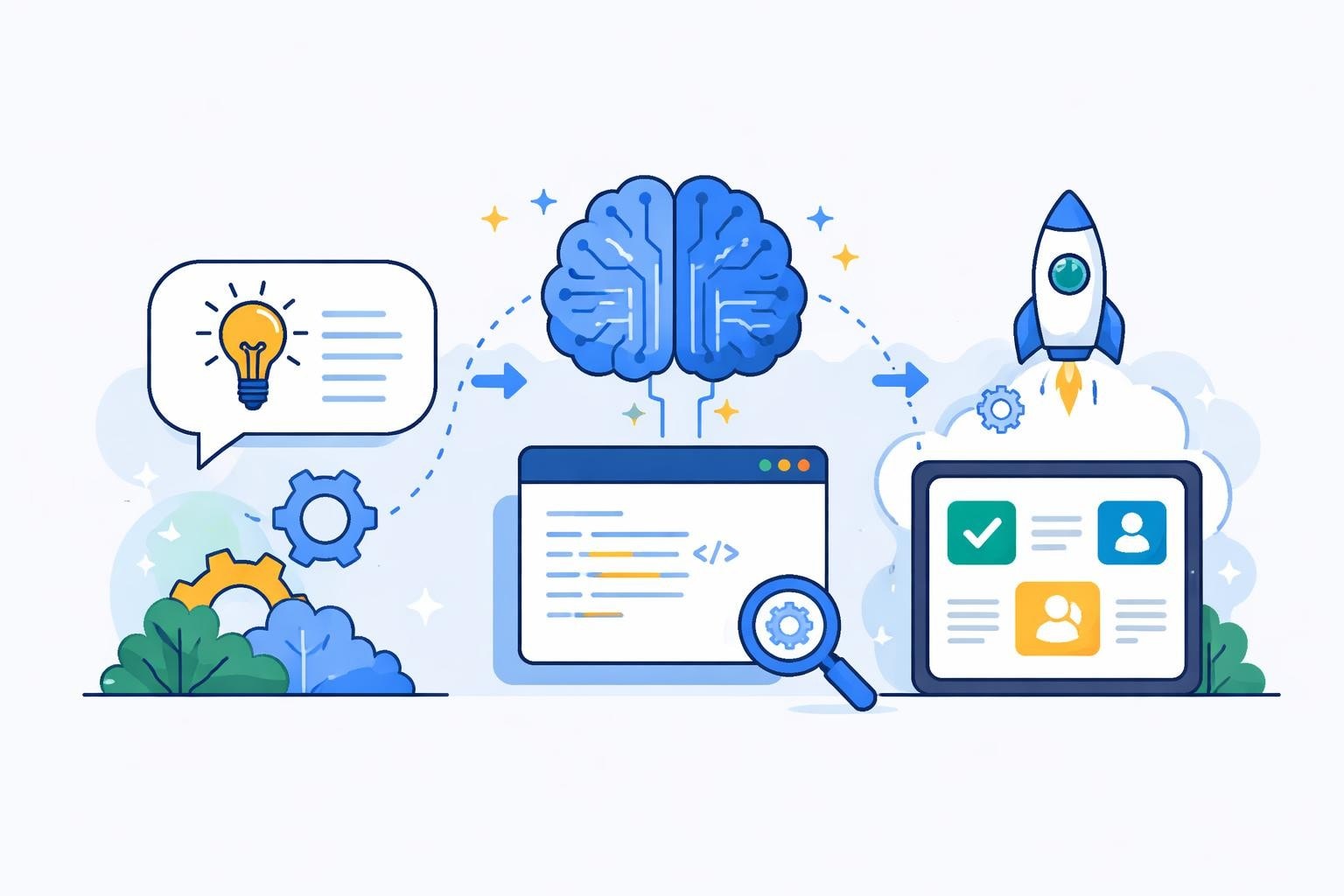
The software development landscape is experiencing a seismic shift as artificial intelligence transforms how we build applications. Vibe coding AI represents a revolutionary approach that allows anyone to create functional software simply by describing what they want in plain language. This emerging technology is bridging the gap between traditional programming and no-code development, enabling businesses to accelerate their digital transformation without requiring extensive technical expertise. As enterprises and startups seek faster, more cost-effective ways to bring their ideas to life, understanding this new paradigm becomes essential.
What Makes Vibe Coding AI Different from Traditional Development
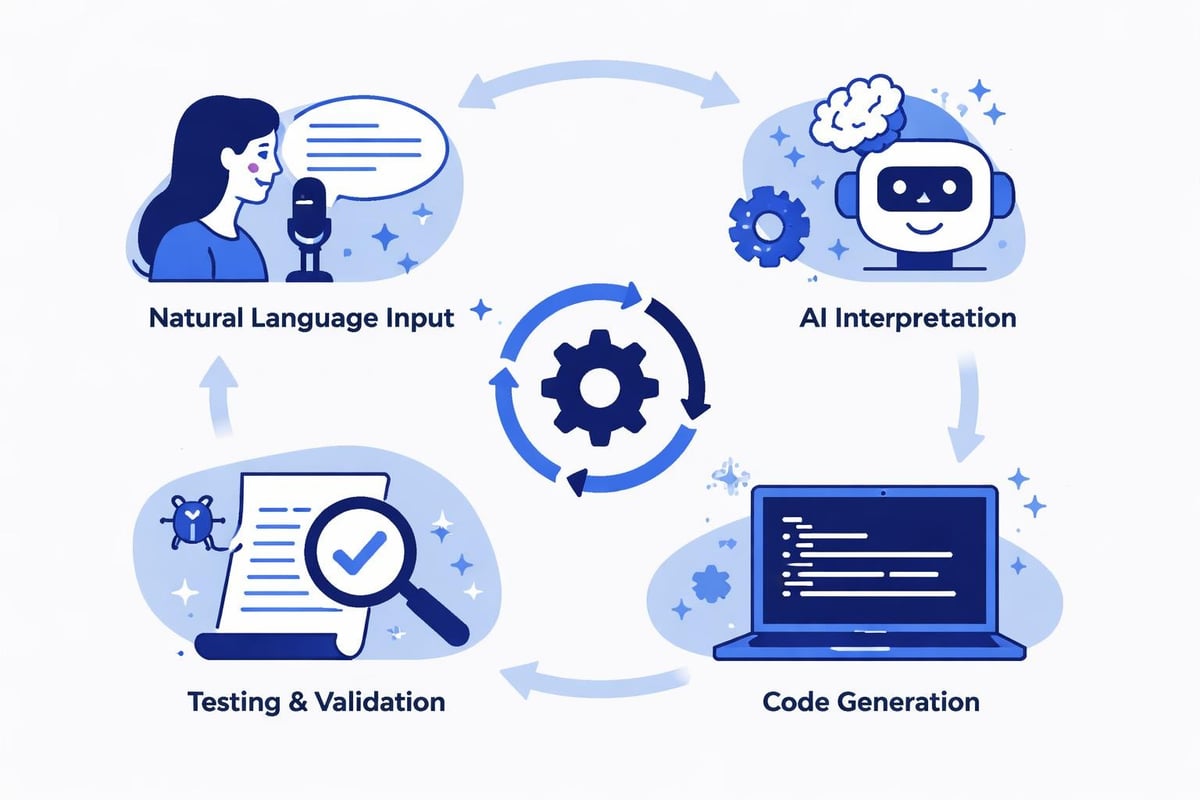
Vibe coding AI fundamentally reimagines the software creation process by eliminating the need to write code line by line. Instead of mastering programming languages, users describe their application requirements conversationally, and AI systems generate functional code automatically. This approach leverages large language models trained on millions of code examples to understand intent and produce working applications.
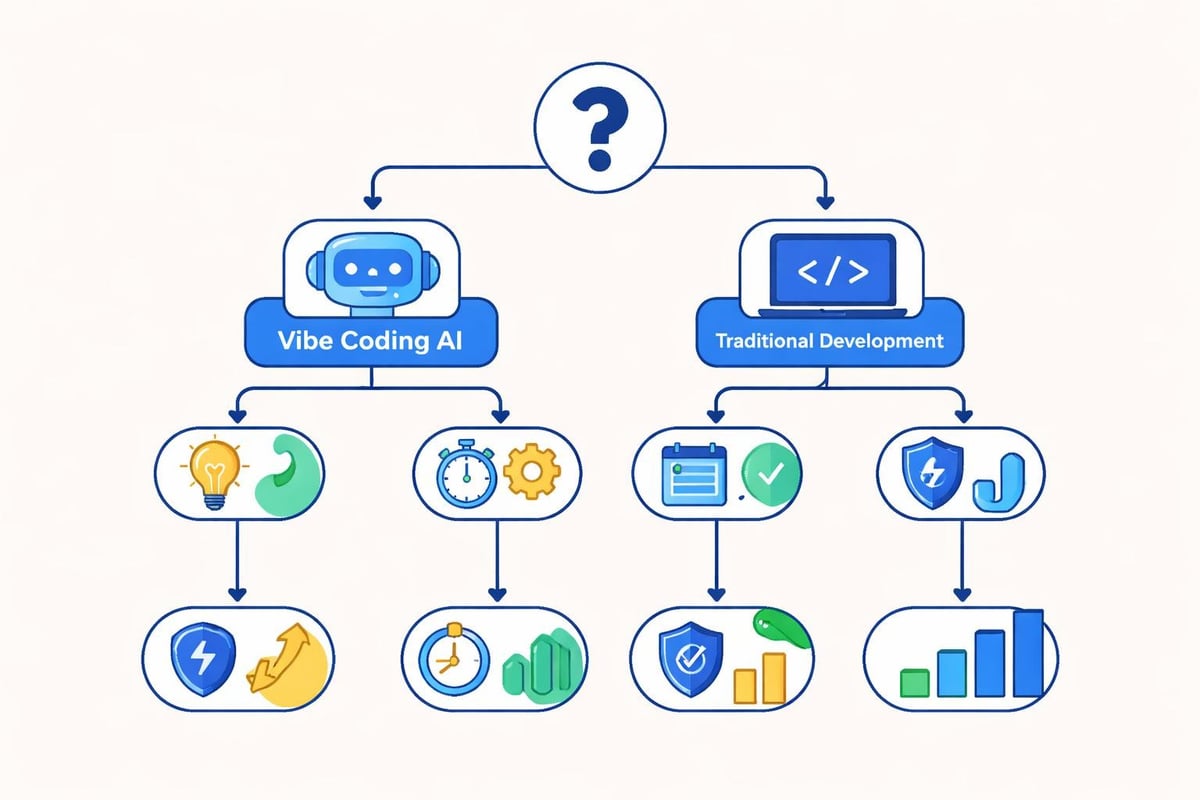
The distinction between vibe coding AI and conventional programming lies in the abstraction layer. Traditional development requires developers to think in syntax, manage dependencies, and handle low-level implementation details. With vibe coding, Google's approach to AI-powered development demonstrates how natural language becomes the primary interface, allowing creators to focus on outcomes rather than technical mechanics.
Core Components of Vibe Coding Systems
Modern vibe coding platforms integrate several sophisticated technologies working in harmony:
- Natural Language Processing that interprets user intentions from conversational descriptions
- Code Generation Engines that translate requirements into functional programming languages
- Contextual Understanding that maintains project coherence across multiple interactions
- Testing and Validation mechanisms that ensure generated code meets specifications
- Iterative Refinement capabilities allowing users to modify and improve outputs through feedback
These components create an ecosystem where technical barriers diminish significantly. Unlike traditional AI coding assistant alternatives, vibe coding AI doesn't just suggest code snippets-it architects entire applications based on high-level descriptions.
How Businesses Are Leveraging Vibe Coding AI
Organizations across industries are discovering practical applications for vibe coding AI that deliver measurable business value. The technology excels at rapid prototyping, internal tool development, and accelerating time-to-market for customer-facing applications.
Enterprise Internal Tools: Companies are using vibe coding AI to create custom dashboards, data visualization tools, and workflow automation systems without dedicating scarce developer resources. Teams can describe their needs and receive functional prototypes within hours rather than weeks.
Startup MVP Development: Early-stage companies leverage this technology to validate product concepts quickly. By describing features conversationally, founders can test market fit before investing heavily in traditional development cycles. This aligns perfectly with modern MVP software development methodologies that prioritize speed and validation.
Legacy System Modernization: Organizations with outdated software can describe desired functionality in modern terms, allowing AI to generate contemporary implementations that integrate with existing infrastructure.
| Use Case | Time Savings | Skill Level Required | Best For |
|---|---|---|---|
| Prototyping | 70-80% | Non-technical | Concept validation |
| Internal Tools | 50-60% | Minimal technical | Operations teams |
| Feature Addition | 40-50% | Some technical | Product iteration |
| Full Applications | 30-40% | Moderate technical | MVP launches |
The Technology Behind Vibe Coding AI Platforms
Understanding the technical foundation helps businesses make informed decisions about when and how to implement vibe coding AI. Google Cloud's explanation of vibe coding reveals how these systems process natural language and transform it into executable code through sophisticated AI models.
The architecture typically includes several layers of intelligence. First, semantic parsing extracts meaning from user descriptions, identifying entities, relationships, and desired behaviors. Next, planning algorithms determine the optimal code structure and component architecture. Finally, code synthesis generates actual programming language output that compiles and executes.
AI Models Powering the Revolution
Contemporary vibe coding AI relies on transformer-based models with billions of parameters trained on vast code repositories. These models understand programming patterns, best practices, and common architectural decisions. When users describe a feature like "create a user dashboard showing sales metrics from the last 30 days," the AI recognizes this requires database queries, date calculations, data aggregation, and visualization components.
The most effective platforms combine multiple specialized models:
- Intent Recognition Models that understand what users want to accomplish
- Domain-Specific Generators optimized for web, mobile, or backend development
- Security and Performance Analyzers that ensure generated code meets quality standards
- Integration Specialists that handle connections to external services and APIs
This multi-model approach enables comprehensive application development comparable to solutions built with AI-powered no-code development tools, but with greater customization potential.
Practical Considerations and Limitations
While vibe coding AI offers tremendous potential, businesses must understand its current constraints and optimal use cases. The technology works exceptionally well for standard application patterns but struggles with highly specialized or novel requirements that deviate significantly from training data.
Quality and Maintainability Concerns: As highlighted in discussions about whether vibe coding impacts open source, AI-generated code can sometimes produce bloated or unnecessarily complex implementations. Generated applications require the same maintenance, security updates, and optimization as traditionally coded software.
Skill Requirements Remain Important: Despite promises of "no coding required," effective vibe coding AI usage benefits from understanding basic programming concepts. Users who grasp how databases work, what APIs do, and general software architecture principles achieve significantly better results than those with zero technical knowledge.
When Vibe Coding AI Makes Sense
Strategic deployment of vibe coding AI maximizes its benefits while avoiding pitfalls:
- Rapid prototyping phases where speed matters more than perfect optimization
- Standard CRUD applications following conventional patterns
- Internal tools with limited user bases and clear requirements
- Feature exploration to test ideas before committing to full development
- Learning environments where understanding implementation details isn't critical
Conversely, avoid relying solely on vibe coding AI for mission-critical systems requiring highest security standards, applications with complex business logic, or platforms expecting massive scale. These scenarios still benefit from experienced developers who can review, refine, and optimize AI-generated code.
Top Vibe Coding AI Tools Transforming Development
The marketplace for vibe coding AI platforms has expanded rapidly throughout 2026, offering diverse options for different development needs. TechRadar's comprehensive review of vibe coding tools provides detailed comparisons of leading platforms.
Google's Suite: Google has introduced several tools including Gemini for code generation, Canvas for visual development, and Stitch for integration tasks. These platforms excel at understanding context and generating clean code across multiple languages.
Lovable and Similar Platforms: Specialized AI development platforms focus on specific frameworks or application types. These tools often provide tighter integration with their ecosystems and more refined outputs for their target use cases, similar to how AI-based design to code tools handle the design-to-development workflow.
Enterprise Solutions: Platforms designed for corporate environments emphasize governance, security scanning, and integration with existing development workflows. They include features like code review automation, compliance checking, and team collaboration capabilities.
| Platform Type | Strengths | Ideal Users | Learning Curve |
|---|---|---|---|
| General Purpose | Versatile, multiple languages | Diverse projects | Moderate |
| Framework-Specific | Optimized outputs, best practices | Specialized apps | Low-Moderate |
| Enterprise-Focused | Security, governance, scale | Large organizations | Moderate-High |
| No-Code Hybrids | Visual + AI, accessibility | Non-developers | Low |
Integration with Existing Development Workflows
Successfully incorporating vibe coding AI into established development processes requires thoughtful planning and change management. Organizations typically adopt hybrid approaches where AI handles routine tasks while human developers focus on architecture, optimization, and complex problem-solving.
The integration often follows this progression:
- Pilot Projects: Start with low-risk internal tools or prototypes
- Developer Training: Educate teams on effective prompt engineering and AI output review
- Quality Gates: Establish code review processes for AI-generated components
- Gradual Expansion: Increase AI usage as confidence and expertise grow
- Continuous Improvement: Refine prompts and processes based on outcomes
This measured approach helps teams understand AI capabilities and limitations without disrupting critical projects. According to insights from the Associated Press on AI-driven coding assistants, the most successful implementations maintain strong human oversight while leveraging AI for acceleration.
Complementing No-Code Platforms
Vibe coding AI creates particularly powerful synergies with no-code platforms like Bubble. While traditional no-code relies on visual interfaces and pre-built components, adding AI capabilities allows users to describe custom functionality that the platform generates automatically. This combination delivers the accessibility of no-code with the flexibility of custom development.
For businesses exploring scalable backend options for Bubble applications, vibe coding AI can generate custom API endpoints, database queries, and business logic that extend platform capabilities beyond standard features. The result is applications that maintain no-code speed advantages while accommodating unique requirements.
Security and Code Quality Management
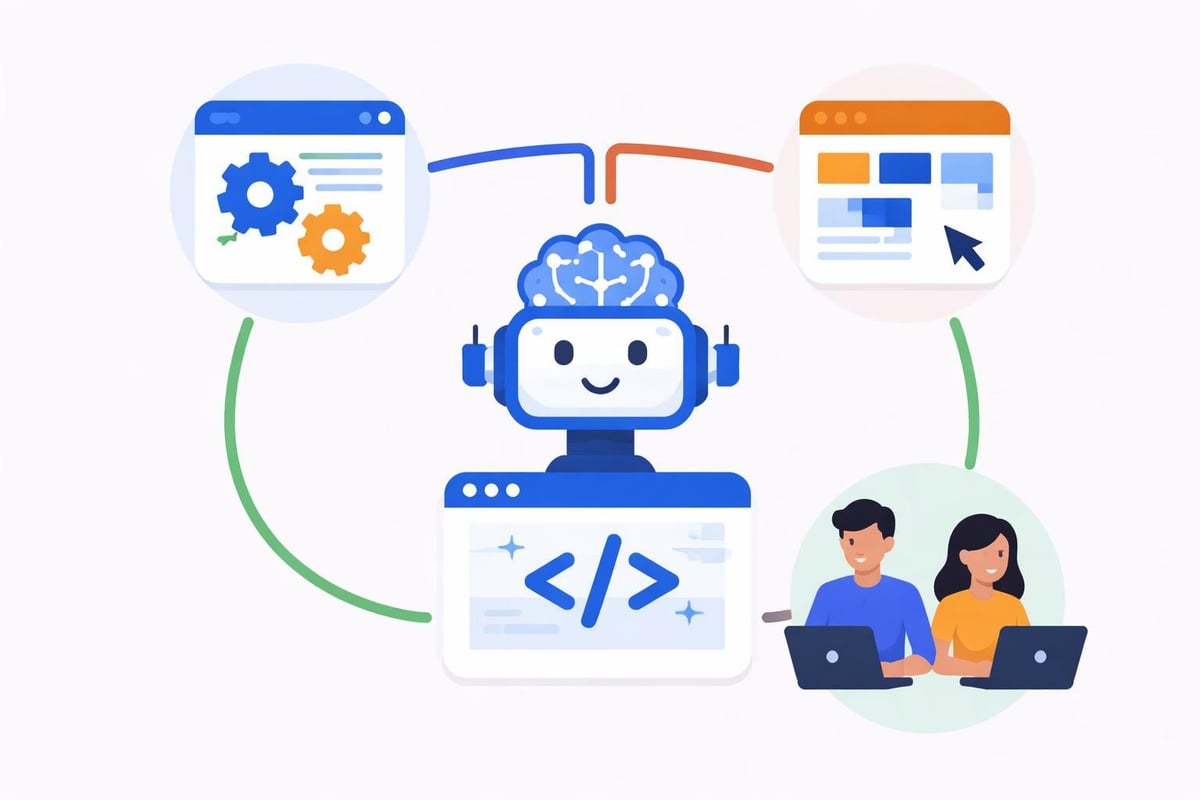
Ensuring AI-generated code meets security standards and quality benchmarks requires deliberate processes and tooling. Organizations cannot blindly trust AI outputs without verification, particularly for applications handling sensitive data or serving critical business functions.
Security Scanning: Implement automated security analysis tools that examine AI-generated code for common vulnerabilities like SQL injection, cross-site scripting, or insecure authentication. These scanners identify issues before code reaches production environments.
Code Review Protocols: Establish clear guidelines for reviewing AI-generated code. Experienced developers should verify logic correctness, assess performance implications, and ensure alignment with architectural standards. SonarSource's developer guide to vibe coding emphasizes the importance of maintaining code quality standards regardless of generation method.
Testing Requirements: AI-generated applications need comprehensive testing just like traditionally developed software. Unit tests, integration tests, and user acceptance testing validate that generated code performs as intended under various conditions.
Best Practices for Quality Assurance
- Maintain coding standards documentation that AI prompts reference explicitly
- Require peer review for all AI-generated code before merging
- Implement continuous integration pipelines that automatically test generated components
- Track technical debt introduced by AI-generated code and address it systematically
- Document AI-generated sections clearly for future maintenance teams
These practices ensure vibe coding AI accelerates development without compromising application reliability or security. The goal is leveraging AI efficiency while maintaining professional quality standards.
The Future Trajectory of Vibe Coding AI
As we progress through 2026, vibe coding AI continues evolving rapidly with improvements in accuracy, contextual understanding, and specialized capabilities. Several trends will shape the technology's development over the next few years.
Multimodal Inputs: Future platforms will accept not just text descriptions but also sketches, diagrams, screenshots, and voice commands. Users might draw a rough interface layout and describe desired functionality verbally, with AI synthesizing both inputs into working applications.
Improved Context Retention: Advanced systems will maintain better understanding across longer conversations and larger projects. They'll remember architectural decisions, coding preferences, and project requirements throughout development cycles, reducing repetition and improving consistency.
Domain Specialization: Expect emergence of vibe coding AI tools specialized for specific industries like healthcare, finance, or manufacturing. These domain-focused platforms will understand industry terminology, regulatory requirements, and common workflows, generating more relevant code with less explanation needed.
Collaborative AI Development: Teams of AI agents will work together on complex projects, with specialized agents handling frontend, backend, database design, and testing independently but coordinately. This mirrors how human development teams operate but at accelerated speeds.
The technology's maturation will expand what's achievable without extensive programming knowledge. However, as discussed in analyses about the reality of AI-generated code, human expertise remains valuable for guiding AI, validating outputs, and handling edge cases beyond AI capabilities.
Economic Impact on Development Services
Vibe coding AI is reshaping the economics of software development, influencing how agencies price services, how businesses budget for technology projects, and how developers position their expertise. Understanding these economic shifts helps organizations make strategic technology investment decisions.
Reduced Development Costs: Projects leveraging vibe coding AI typically require 30-50% fewer developer hours for initial builds, directly impacting project budgets. However, costs shift rather than disappear-resources move toward planning, requirements definition, quality assurance, and optimization.
Faster Time-to-Market: The primary economic advantage often comes from speed rather than absolute cost reduction. Launching applications weeks or months earlier can provide significant competitive advantages worth far more than development cost savings.
Changed Skill Premiums: The market increasingly values developers who excel at AI collaboration, prompt engineering, and quality assurance of generated code. Pure coding ability becomes less differentiating as AI handles routine implementation.
For agencies like Big House Technologies specializing in no-code and AI development, vibe coding AI represents an opportunity to deliver even more value to clients by combining platform expertise with AI-assisted development for maximum efficiency.
Building an AI-Augmented Development Team
Organizations implementing vibe coding AI must consider team structure, skill development, and role evolution. The traditional developer role expands to include AI collaboration while new specializations emerge.
Prompt Engineers: Specialists who craft effective natural language descriptions that produce optimal AI outputs. These professionals understand both business requirements and technical implementation, translating between domains effectively.
AI Output Reviewers: Developers focused on evaluating, refining, and optimizing AI-generated code. They identify inefficiencies, security issues, and architectural problems, ensuring generated code meets professional standards.
Traditional Developers: Experienced programmers remain essential for complex logic, performance optimization, and architectural decisions. Their role shifts toward higher-level problem-solving and validation of AI work.
Training and Development Priorities
Organizations should invest in several key competencies:
- Effective prompt engineering techniques that produce better AI outputs
- AI capability understanding knowing what vibe coding AI handles well versus poorly
- Code review skills specifically for AI-generated code patterns
- Architectural thinking to guide AI toward sound structural decisions
- Integration expertise connecting AI-generated components with existing systems
Companies offering software design services must evolve their methodologies to incorporate AI collaboration throughout the design-to-development lifecycle, ensuring designs translate effectively into AI-generated implementations.
Vibe coding AI represents a fundamental shift in how software gets built, making application development accessible to broader audiences while accelerating delivery for technical teams. The technology works best when combined with human expertise, architectural planning, and quality assurance processes rather than as a complete replacement for traditional development. Whether you're exploring rapid prototyping, building internal tools, or developing customer-facing applications, Big House Technologies brings deep expertise in both no-code platforms and AI-powered development to help you leverage these innovations effectively and deliver high-quality solutions faster than traditional approaches allow.

About Big House
Big House is committed to 1) developing robust internal tools for enterprises, and 2) crafting minimum viable products (MVPs) that help startups and entrepreneurs bring their visions to life.
If you'd like to explore how we can build technology for you, get in touch. We'd be excited to discuss what you have in mind.
Other Articles
Discover essential sw development tools for modern software creation. Learn how no-code platforms and AI solutions transform development workflows.
Discover the fastest no-code platforms for startups in 2026. Compare speeds, features, and capabilities to launch your product quickly.
Discover why partnering with a Bubble agency is the smartest way to build internal tools—cutting costs, boosting speed, and delivering custom software that scales with your business needs.