
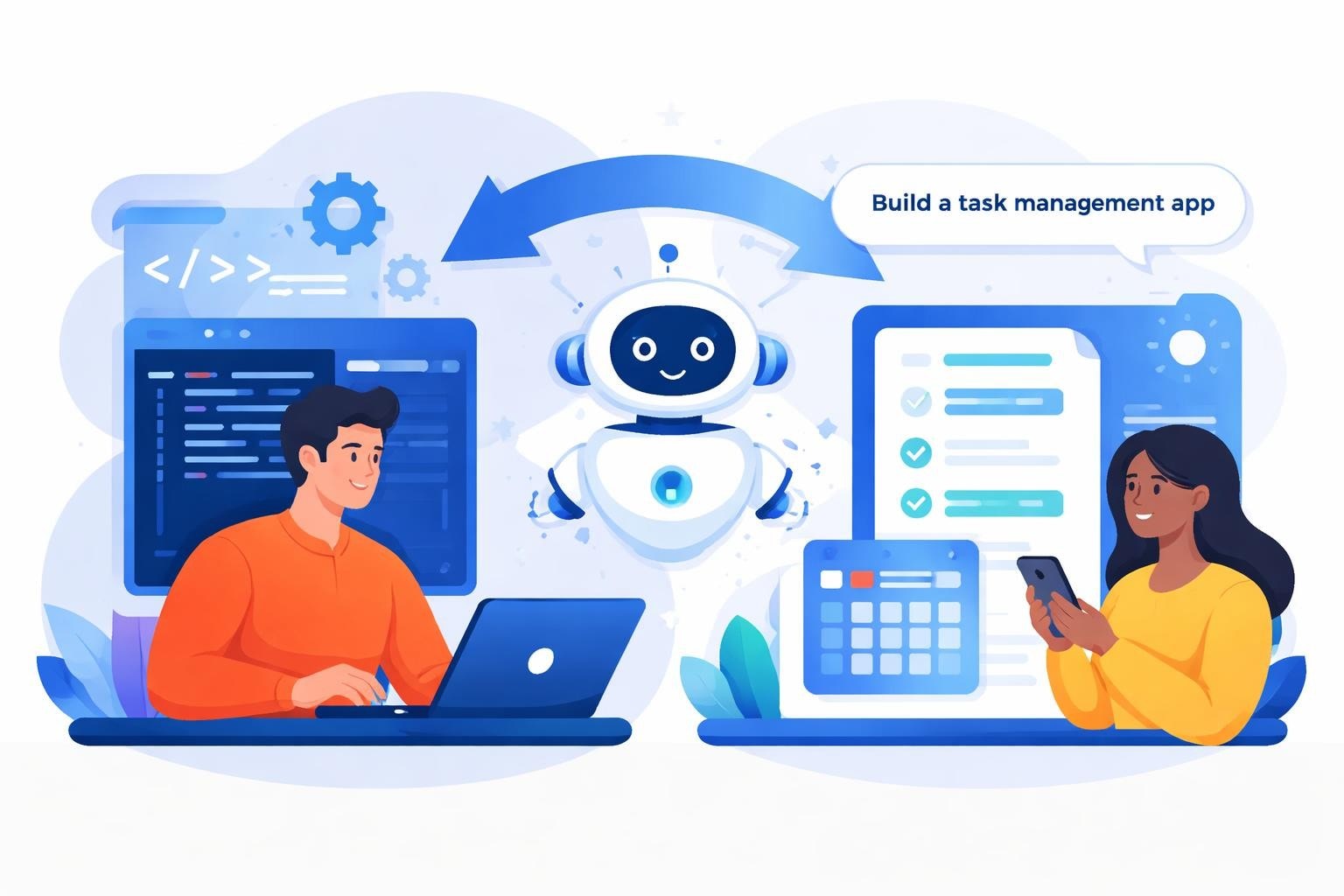
The software development landscape has undergone a dramatic transformation in recent years, with artificial intelligence reshaping how we build applications. Among the most exciting innovations is vibe coding, a methodology where developers and non-developers alike describe what they want to build using natural language, and AI translates those descriptions into working code. This approach represents a fundamental shift from traditional programming paradigms, making software creation more accessible while accelerating development timelines. For businesses seeking rapid prototyping and MVP software development, vibe coding apps offer unprecedented speed and flexibility.
Understanding the Vibe Coding Revolution
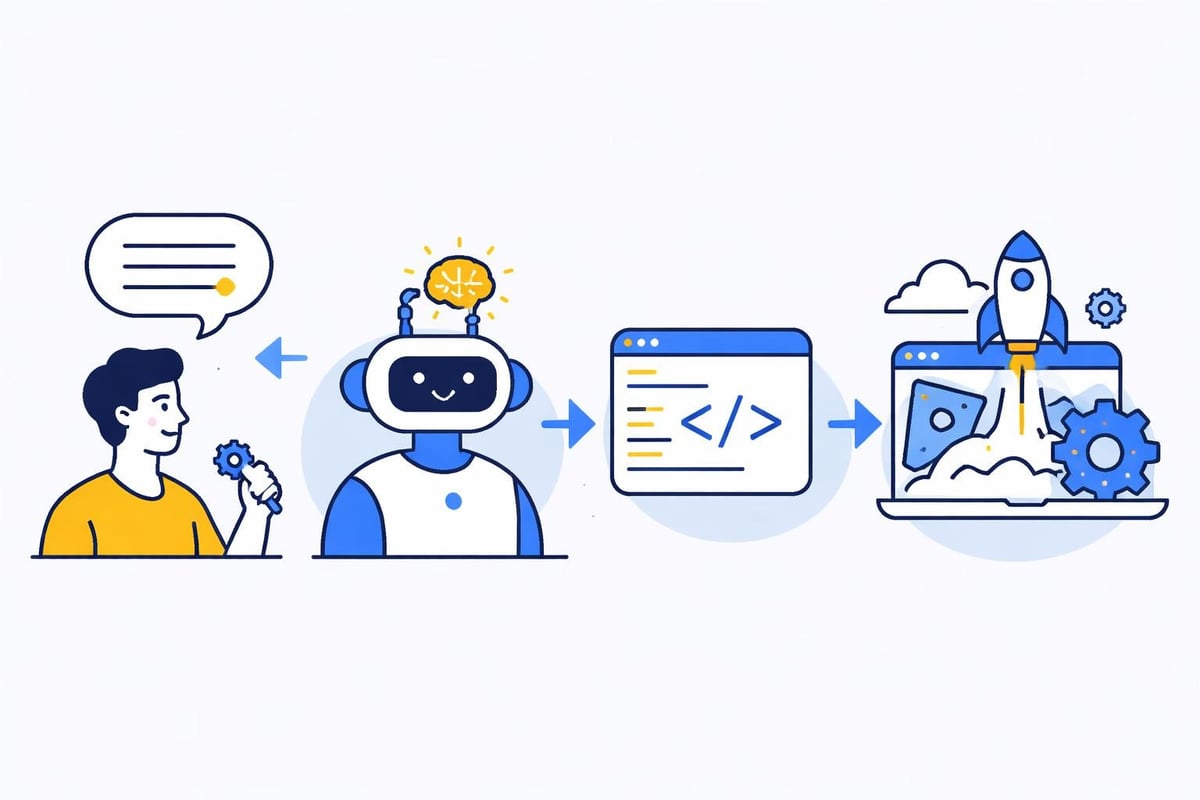
Vibe coding emerged as a distinct approach to software development that prioritizes intent over syntax. Rather than writing lines of code in specific programming languages, users describe their desired outcomes, features, and functionality in plain English. The AI interprets these descriptions and generates the necessary code to bring those ideas to life.
This paradigm shift has profound implications for both technical and non-technical teams. Product managers can prototype ideas without waiting for developer availability. Designers can create interactive prototypes that go beyond static mockups. Founders can validate concepts before committing significant resources to full development.
The Technical Foundation
Behind the scenes, vibe coding apps leverage large language models trained on massive code repositories. These models understand programming patterns, best practices, and common architectural decisions. When you describe a feature, the AI doesn't just generate random code-it applies learned patterns from millions of existing projects.
The sophistication of these systems continues to improve. Modern vibe coding platforms can:
- Generate full-stack applications with frontend and backend components
- Create database schemas based on data relationship descriptions
- Implement authentication and authorization workflows
- Integrate third-party APIs and services
- Handle responsive design across device types
Leading Vibe Coding Apps in 2026
The market for vibe coding tools has exploded, with platforms catering to different use cases and skill levels. According to TechRadar's comprehensive review, the landscape includes specialized tools for web apps, mobile applications, and enterprise software.
Platform Comparison
| Platform | Best For | Deployment Options | Learning Curve |
|---|---|---|---|
| Lovable | Web applications | Cloud hosting, export | Minimal |
| Cursor | Code assistance | Local development | Low |
| Bolt | Full-stack apps | Integrated hosting | Minimal |
| Replit Agent | Educational projects | Cloud IDE | Low |
Lovable's vibe coding approach stands out for its focus on accelerating development cycles. The platform allows users to iterate rapidly, describing changes and seeing them implemented in real-time. This feedback loop dramatically reduces the time from concept to functional prototype.
Specialized Tools for Specific Needs
Beyond general-purpose platforms, specialized vibe coding apps address niche requirements. Some focus exclusively on mobile app development, while others excel at creating data visualization dashboards or e-commerce platforms. The curated collection at Vibeware provides insights into these specialized tools and their unique capabilities.
For agencies like those in the ai-powered no-code development space, these platforms complement existing workflows. They enable rapid client prototyping during discovery phases and accelerate the transition from concept to detailed specifications.
Practical Applications for Businesses
The real value of vibe coding apps becomes apparent when examining concrete use cases. Enterprises and startups alike are finding creative ways to leverage these tools throughout their development lifecycle.
Rapid Prototyping and Validation
Speed is everything when testing market assumptions. Traditional development cycles might require weeks to build a testable prototype. With vibe coding apps, that timeline compresses to hours or days.
Consider a startup validating a new marketplace concept. Using natural language prompts, they can describe:
- User registration and authentication flows
- Listing creation with image uploads
- Search and filtering functionality
- Messaging between buyers and sellers
- Payment processing integration
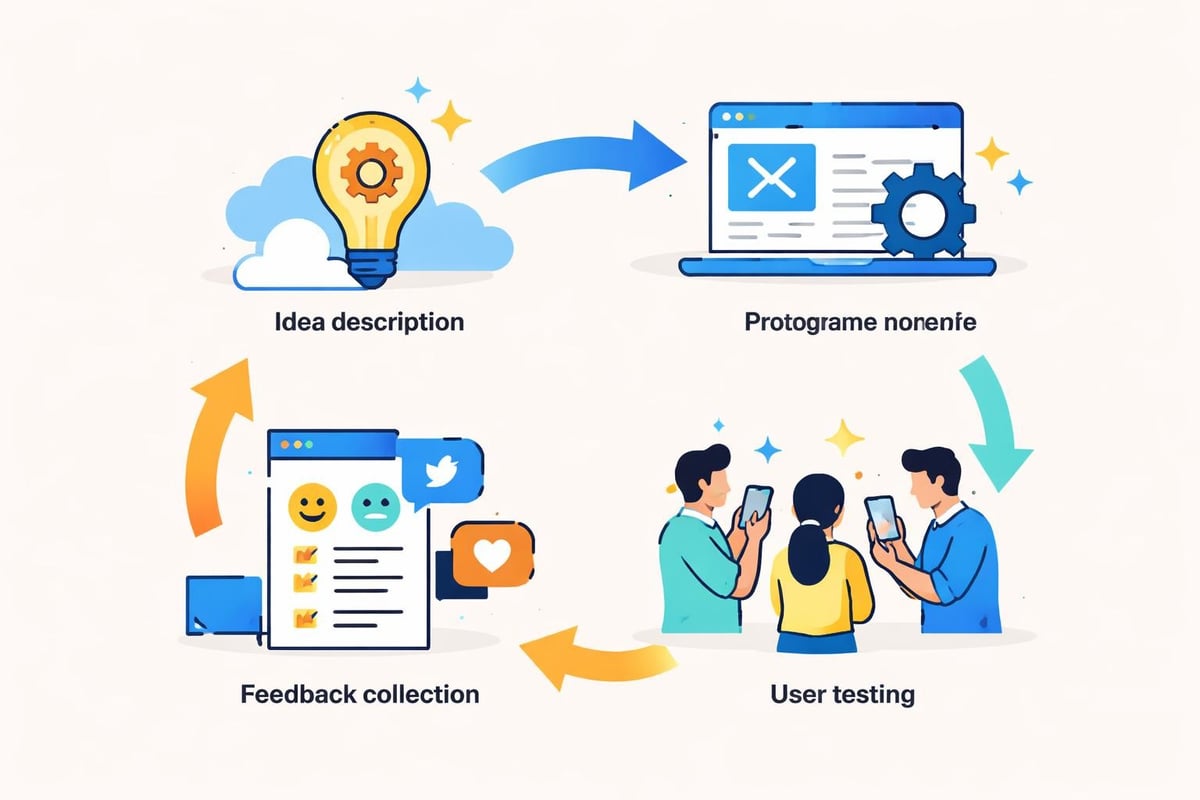
The vibe coding platform generates a functional prototype that real users can interact with. Feedback gathered from this prototype informs whether to proceed with full development or pivot to a different approach.
Internal Tool Development
Enterprises face a constant challenge: building internal tools that improve operational efficiency. These projects often compete for limited developer resources against customer-facing features. Vibe coding apps provide an alternative path.
Common internal tools built with vibe coding:
- Custom CRM systems tailored to specific workflows
- Inventory management dashboards
- Employee onboarding portals
- Report generation tools
- Data entry and validation interfaces
Operations teams with domain expertise can now build these tools themselves. They describe the workflows they need, and the AI handles the technical implementation. IT departments shift from builders to reviewers, ensuring security and compliance rather than writing every line of code.
Augmenting Professional Development
Professional developers are also finding value in vibe coding apps, though their use cases differ from non-technical users. Rather than replacing their expertise, these tools augment it. As explained in Tom's Guide's analysis, AI-assisted coding helps developers focus on architecture and complex logic while automating repetitive tasks.
Experienced developers use vibe coding to:
- Scaffold new projects with boilerplate code
- Generate CRUD operations for database entities
- Create API endpoints based on specification descriptions
- Build admin interfaces for data management
- Implement standard patterns like authentication
This approach aligns well with modern development practices. Developers describe what they need at a higher level of abstraction, review the generated code, and make refinements where necessary.
Technical Considerations and Limitations
While vibe coding apps offer remarkable capabilities, they're not without constraints. Understanding these limitations helps set appropriate expectations and choose the right tool for specific requirements.
Code Quality and Maintainability
Generated code varies in quality depending on the platform and the complexity of requirements. Simple CRUD applications typically produce clean, maintainable code. More complex business logic may require human review and refinement.
Key quality factors:
- Consistency: Does the platform maintain consistent coding patterns?
- Documentation: Are generated functions and components documented?
- Best practices: Does the code follow language-specific conventions?
- Performance: Are generated queries and algorithms optimized?
Professional development teams often treat vibe-generated code as a first draft. They review it for security vulnerabilities, performance bottlenecks, and adherence to team standards before deployment.
The Open Source Debate
Recent research has raised questions about vibe coding's impact on the open-source ecosystem. According to a study highlighted by PC Gamer, the ease of generating custom code might reduce engagement with open-source libraries and frameworks.
This concern warrants consideration, though the reality may be more nuanced. Many vibe coding platforms actively leverage and contribute to open-source projects. The code they generate often uses popular libraries rather than reinventing solutions.
Trust and Verification
TechRadar's examination of AI-generated software raises important questions about trust. When you can't read every line of code, how do you verify it does what you intended without introducing vulnerabilities?
| Verification Method | Effort Level | Effectiveness |
|---|---|---|
| Automated testing | Medium | High |
| Code review | High | Very High |
| Security scanning | Low | Medium |
| User acceptance testing | Medium | Medium |
The most reliable approach combines multiple verification methods. Automated tests catch functional bugs, security scanners identify common vulnerabilities, and human review ensures the code aligns with requirements.
Integration with No-Code Platforms
The boundaries between vibe coding and no-code development are increasingly blurred. Many platforms combine visual development with natural language prompting, offering the best of both approaches.
Complementary Approaches
No-code platforms like Bubble excel at visual development, where users drag components onto a canvas and configure them through interfaces. Vibe coding excels at describing complex logic that would be cumbersome to configure visually.
When to use each approach:
- Visual/No-Code: UI layout, workflow design, simple conditional logic
- Vibe Coding: Complex calculations, data transformations, API integrations
- Hybrid: Most real-world applications benefit from both
Agencies specializing in scalable backend options for Bubble increasingly combine these methodologies. They might use Bubble for the user interface while leveraging vibe coding for custom backend functions.
Practical Workflow Examples
Imagine building a customer portal with personalized dashboards. The visual no-code approach handles page layouts, navigation, and basic data display. Vibe coding generates the personalized recommendation algorithm, complex data aggregations, and custom reporting logic.
This division of labor plays to each tool's strengths. Designers and product managers work in the visual environment they're comfortable with, while technical requirements get addressed through natural language descriptions.
Implementation Best Practices
Successfully adopting vibe coding apps requires more than just signing up for a platform. Organizations that get the most value follow specific practices that maximize benefits while mitigating risks.
Start with Clear Requirements
The quality of AI-generated code correlates directly with the clarity of your descriptions. Vague prompts produce vague results. Specific, detailed descriptions yield precise implementations.
Effective prompt structure:
- Context: What problem are you solving?
- Functionality: What should the feature do?
- Constraints: Are there specific requirements or limitations?
- Examples: Can you provide sample inputs and outputs?
Instead of "create a search feature," try: "create a search feature that filters products by category, price range, and availability, displaying results in a grid with pagination showing 24 items per page."
Iterative Refinement
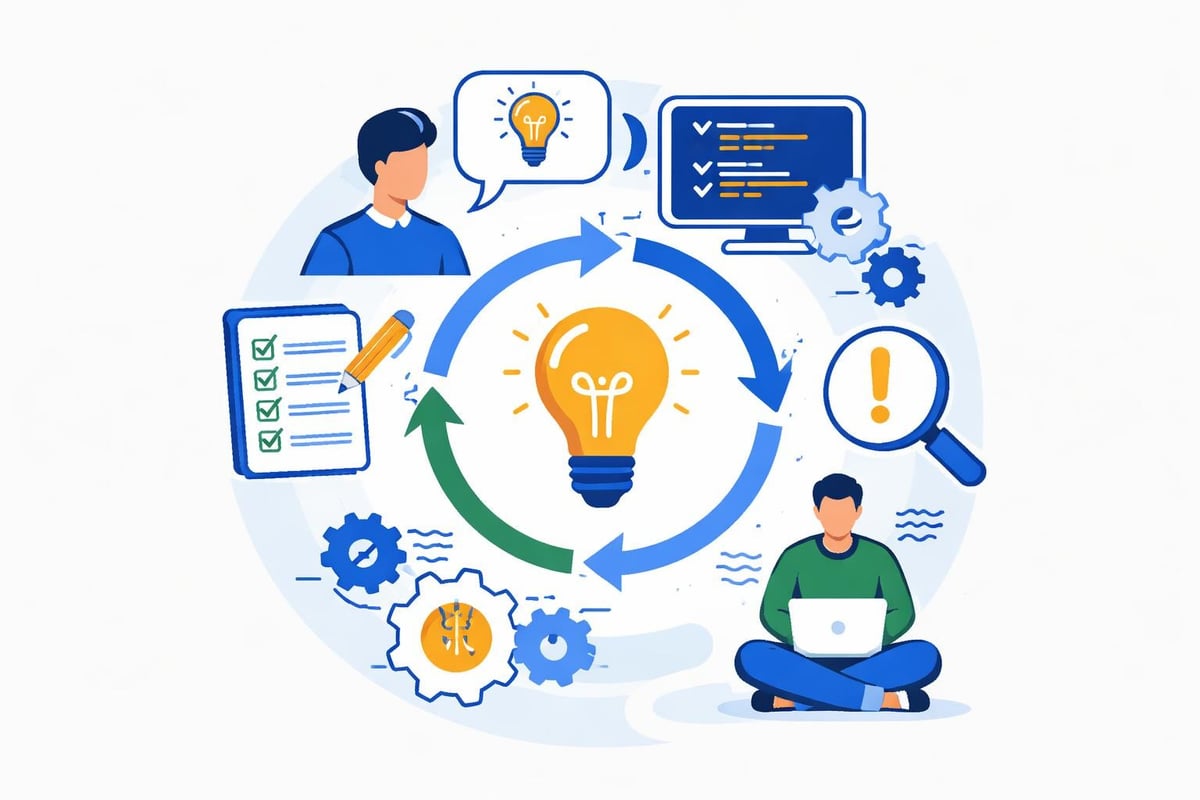
Rarely does the first generation produce exactly what you need. Vibe coding works best as an iterative process. Generate initial code, test it, identify gaps, and refine through additional prompts.
This mirrors how human developers work. The first implementation reveals edge cases and requirements that weren't obvious initially. Each iteration improves the solution.
Documentation and Knowledge Transfer
One risk with rapidly generated code is institutional knowledge gaps. When an AI builds something in minutes, the usual learning that occurs during development doesn't happen.
Combat this by:
- Documenting the prompts used to generate each feature
- Maintaining a library of successful patterns and descriptions
- Creating team guidelines for common scenarios
- Recording video walkthroughs of complex features
This documentation becomes invaluable when team members change or features need modification months later.
Choosing the Right Vibe Coding App
With dozens of platforms available, selecting the right one requires evaluating several factors beyond marketing claims. Different tools excel at different tasks.
Evaluation Criteria
| Criterion | Why It Matters | Questions to Ask |
|---|---|---|
| Target platform | Determines deployment options | Web, mobile, desktop, or all three? |
| Technology stack | Affects integration possibilities | What languages and frameworks are used? |
| Export capabilities | Ensures you own your code | Can you export and self-host? |
| Pricing model | Impacts long-term costs | Per-project, per-user, or usage-based? |
| Learning resources | Speeds up team adoption | Are there tutorials and documentation? |
For businesses working with AI product development tools, the ability to integrate vibe coding into existing workflows matters tremendously. Some platforms work as standalone tools, while others integrate with GitHub, VS Code, and other development environments.
Team Skill Considerations
Different platforms assume different baseline technical knowledge. Some vibe coding apps work beautifully for complete beginners, generating everything from database schemas to deployment configurations. Others assume familiarity with development concepts and focus on accelerating specific tasks.
Match the tool to your team's capabilities. A startup with non-technical founders might prioritize platforms with comprehensive tutorials and templates. An agency with experienced developers might prefer tools that integrate with their existing tech stack and workflows.
The Future of Vibe Coding
Looking ahead, vibe coding apps will continue evolving rapidly. Current limitations around code quality, complexity handling, and customization will diminish as underlying AI models improve.
Emerging Trends
Multi-modal inputs are already appearing, where users can sketch interfaces, upload screenshots, or reference existing applications as inspiration. The AI combines these visual inputs with text descriptions for more accurate code generation.
Collaborative vibe coding enables teams to work together on descriptions, with the AI reconciling different perspectives into coherent implementations. This mirrors how product teams already collaborate on requirements documents, but with immediate executable output.
Domain-specific platforms are emerging for industries like healthcare, finance, and e-commerce. These tools understand industry-specific terminology, regulations, and common patterns, producing more relevant code with less description effort.
Impact on Development Teams
The rise of vibe coding apps doesn't mean developers become obsolete. Instead, their roles evolve. Junior developers might start as "prompt engineers," learning to describe requirements precisely before diving into code review and customization. Senior developers focus on architecture, security, and complex problem-solving that AI still struggles with.
For agencies like those focused on UI/UX and development, vibe coding enables faster client iteration. Designers can generate interactive prototypes that go beyond static mockups, and developers can spend more time on differentiated features rather than standard implementations.
Real-World Success Stories
Theory matters less than results. Organizations across industries are already leveraging vibe coding apps to achieve concrete outcomes.
Startup Acceleration
A healthcare startup needed to validate a patient scheduling concept before raising seed funding. Using vibe coding, they built a functional prototype in three days that included appointment booking, provider availability management, and automated reminders. User testing with this prototype informed their pitch deck and convinced investors of market demand.
Enterprise Efficiency
A Fortune 500 manufacturer needed custom inventory tracking for a pilot program. Traditional development quotes came in at 12 weeks and $150,000. The operations team used a vibe coding platform to build a functional version in two weeks for minimal cost. After successful pilot results, they engaged professional developers to refine and scale the solution.
Agency Capacity
A digital agency struggled with resource constraints during peak demand periods. By incorporating vibe coding into their workflow, they could handle 40% more client projects simultaneously. Junior team members generated initial implementations from client requirements, while senior developers focused on review, refinement, and complex integrations.
Security and Compliance Considerations
For regulated industries and security-conscious organizations, vibe coding raises important questions about code provenance, vulnerability management, and compliance verification.
Security Best Practices
Generated code should undergo the same security review as human-written code. Automated scanning tools can identify common vulnerabilities like SQL injection, XSS attacks, and insecure authentication patterns.
Essential security steps:
- Run automated security scanners on all generated code
- Review authentication and authorization implementations manually
- Validate data handling against privacy regulations
- Test for common OWASP vulnerabilities
- Implement proper error handling and logging
Compliance Requirements
Industries with strict regulatory requirements need additional verification. Healthcare applications must comply with HIPAA, financial services with SOC 2 and PCI-DSS, and many organizations with GDPR.
Fortunately, many vibe coding platforms can be instructed to follow specific compliance requirements. Prompts like "implement user authentication following HIPAA guidelines with audit logging" guide the AI toward compliant implementations. However, human verification remains essential.
Vibe coding apps represent a fundamental shift in how software gets built, making development accessible to broader audiences while accelerating timelines for everyone. The combination of natural language prompting and AI code generation opens new possibilities for rapid prototyping, internal tool creation, and development augmentation. Whether you're validating a startup concept, building enterprise tools, or scaling an agency's capacity, vibe coding offers tangible benefits. If you're ready to explore how AI-powered development can transform your product roadmap, Big House Technologies combines vibe coding techniques with no-code platforms to deliver scalable solutions faster and more cost-effectively than traditional development approaches.

About Big House
Big House is committed to 1) developing robust internal tools for enterprises, and 2) crafting minimum viable products (MVPs) that help startups and entrepreneurs bring their visions to life.
If you'd like to explore how we can build technology for you, get in touch. We'd be excited to discuss what you have in mind.
Other Articles
Discover why no-code platforms like Bubble are transforming enterprise software development, offering faster build times, reduced costs, and empowering non-technical teams to create scalable, customized internal tools.
Explore the best lovable alternatives for AI-powered no-code development. Compare features, pricing, and capabilities to find your ideal platform.
Explore the latest website development technologies for 2025. Discover top tools, frameworks, and trends to build scalable, secure, and future-ready websites.