
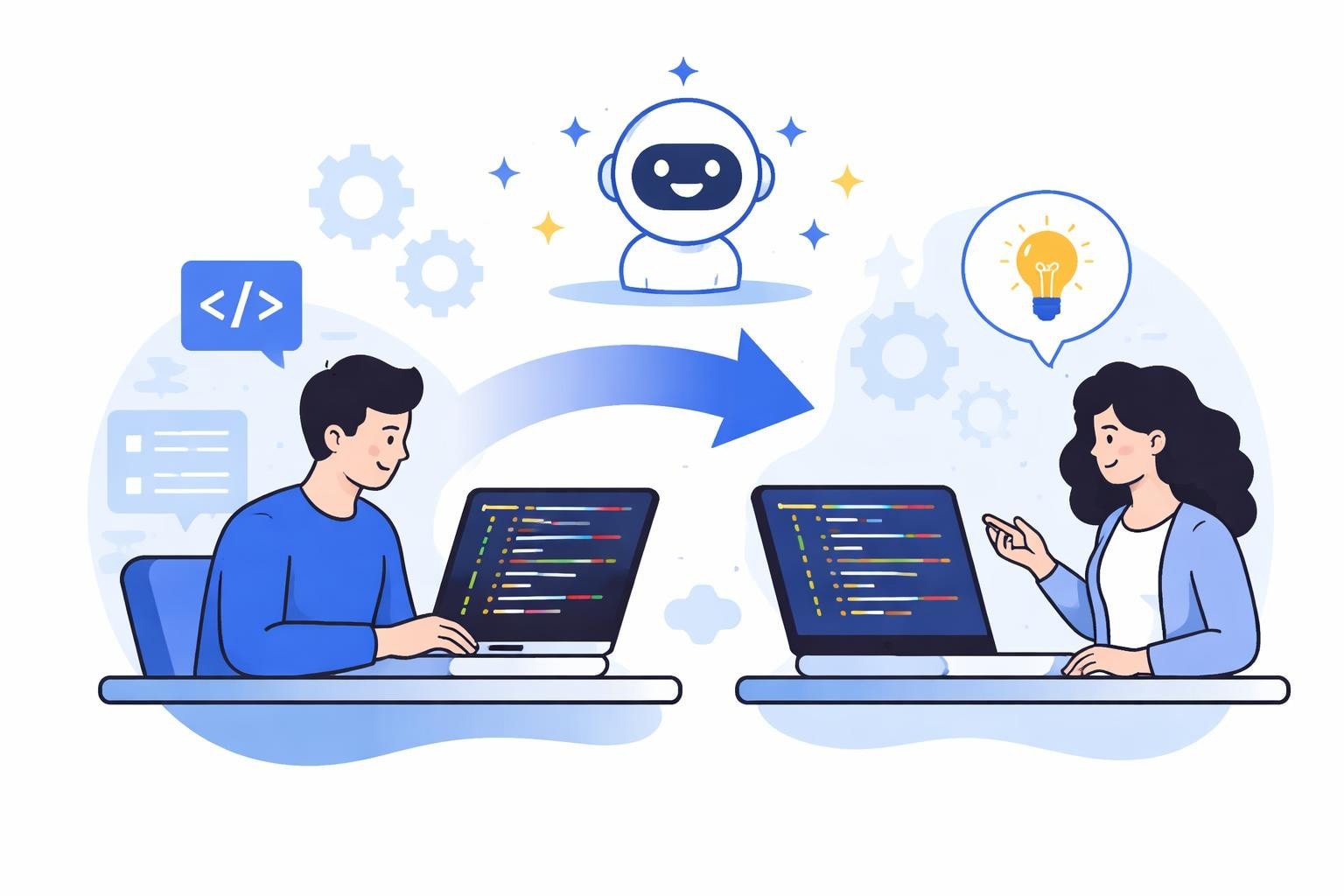
The software development landscape has undergone a seismic shift in recent years, and 2026 marks a pivotal moment in how we create applications. A new methodology has emerged that's changing the fundamental relationship between humans and code creation. What is vibe coding? It's the practice of using artificial intelligence to generate computer code based on natural language descriptions and intent, allowing developers and non-developers alike to build software by describing what they want rather than writing every line manually. This approach represents a fundamental departure from traditional programming, where technical expertise and syntax mastery were non-negotiable prerequisites for software creation.
Understanding the Core Concept of Vibe Coding
What is vibe coding at its essence? According to Merriam-Webster's definition, it's the practice of using AI to generate computer code, a term that gained prominence in 2025 and has since become a critical development methodology. The name itself suggests the informal, intuitive nature of this approach-developers work by conveying the "vibe" or general intention of what they want to build, and AI systems translate that intent into functional code.
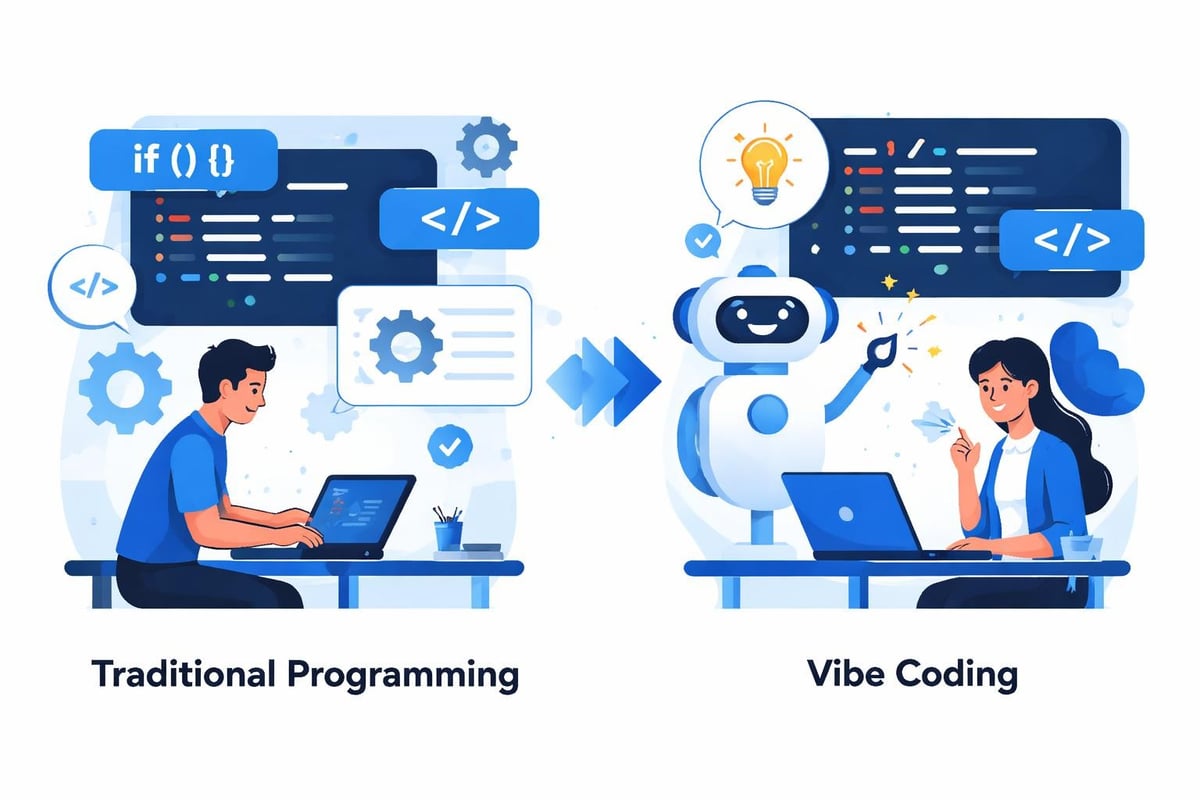
This methodology fundamentally differs from traditional programming in several ways:
- Natural language interfaces replace syntax-heavy coding environments
- Intent-driven development focuses on outcomes rather than implementation details
- Rapid iteration cycles allow for immediate feedback and adjustment
- Lower technical barriers enable broader participation in software creation
- AI-powered code generation handles boilerplate and routine coding tasks
The rise of vibe coding coincides with the maturation of large language models and AI assistants specifically trained on vast repositories of code. These systems can understand context, recognize patterns, and generate functional code snippets that align with developer intentions.
How Vibe Coding Works in Practice
The mechanics of vibe coding involve a sophisticated interplay between human intention and machine interpretation. Developers or product creators describe their desired functionality in plain language, often conversationally. The AI system processes this input, drawing on its training data to understand both the explicit requirements and implicit best practices.
For enterprises and startups exploring AI-assisted app builder platforms, vibe coding represents a natural evolution. The process typically follows this pattern:
- Intention articulation: The user describes what they want in natural language
- AI interpretation: The system analyzes the request and identifies relevant patterns
- Code generation: The AI produces functional code matching the described intent
- Review and refinement: The user evaluates the output and provides feedback
- Iterative improvement: The cycle repeats until the desired outcome is achieved
This workflow accelerates development timelines significantly. What might have taken weeks in traditional development can now happen in days or even hours, making it particularly valuable for low-cost MVP development scenarios where speed to market is critical.
The Business Case for Vibe Coding
Organizations are increasingly asking what is vibe coding and how it fits into their development strategies. The business implications are substantial, particularly for companies seeking to innovate rapidly while managing budgets and resources effectively.
Speed and Efficiency Advantages
Traditional software development follows a predictable but time-intensive pattern. Requirements gathering, architectural planning, coding, testing, and deployment can stretch across months or quarters. Vibe coding compresses this timeline by eliminating much of the manual coding phase.
Consider these comparative metrics:
| Development Aspect | Traditional Approach | Vibe Coding Approach |
|---|---|---|
| Initial prototype | 2-4 weeks | 1-3 days |
| Feature iteration | 1-2 weeks per feature | Hours to 2 days |
| Code review cycles | Multiple rounds | Reduced review needs |
| Technical documentation | Manual creation | Auto-generated options |
| Onboarding time | Weeks for new developers | Days for new contributors |
For businesses evaluating no-code platforms for enterprise workflows, vibe coding serves as a complementary approach that bridges the gap between fully visual development and traditional programming.
Cost Implications and Resource Optimization
The financial benefits extend beyond just development speed. Organizations can optimize their technical team composition, potentially reducing reliance on large development teams while still maintaining output velocity. Salesforce's guide to vibe coding demonstrates how enterprises can turn intent into code faster while maintaining security standards, a critical consideration for businesses operating at scale.
However, what is vibe coding's true cost profile? It shifts expenses from labor-intensive manual coding toward AI tool subscriptions and oversight roles. Teams need fewer junior developers writing boilerplate code but more experienced architects validating AI-generated outputs and ensuring alignment with business objectives.
Risk Factors and Security Considerations
While the benefits are compelling, understanding what is vibe coding means also acknowledging its limitations and risks. The UK's National Cyber Security Centre has warned that vibe coding poses major security risks, emphasizing the need for stricter safeguards and improved quality controls.
Security Vulnerabilities in AI-Generated Code
AI systems trained on public code repositories may inadvertently reproduce security vulnerabilities, outdated practices, or licensing issues. The primary concerns include:
- Unvetted code patterns that may contain security flaws
- Dependency management issues with outdated or vulnerable libraries
- Compliance risks when AI generates code using incompatible licenses
- Data exposure through improperly handled sensitive information
- Authentication weaknesses in auto-generated security implementations
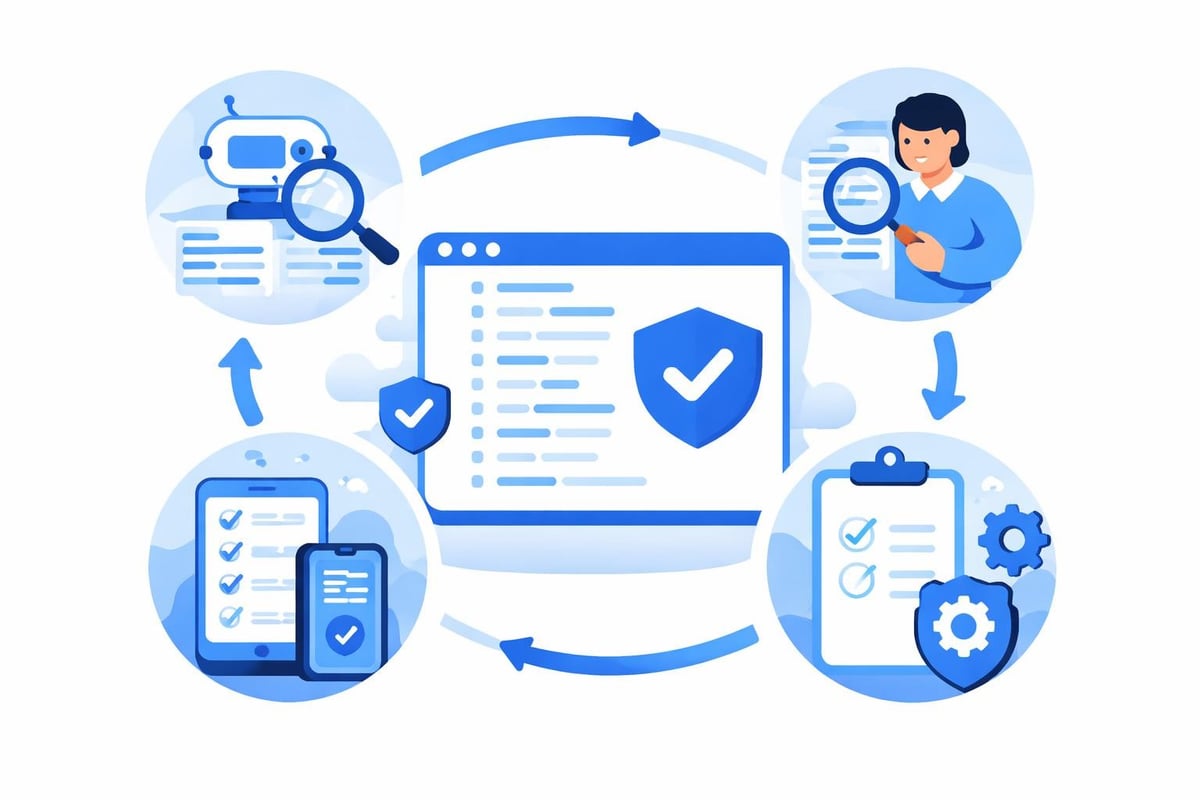
Organizations must implement robust review processes, treating AI-generated code with the same scrutiny as any third-party contribution. This is particularly critical for enterprises dealing with sensitive data or operating in regulated industries.
Quality Control and Technical Debt
TechRadar's examination of vibe coding highlights the importance of balancing AI assistance with human oversight. Without proper governance, vibe coding can accumulate technical debt rapidly. AI systems may generate code that works but isn't optimized, maintainable, or aligned with architectural standards.
The solution requires establishing clear guidelines:
- Define acceptable use cases for AI code generation
- Implement automated testing for all AI-generated components
- Require senior developer review for critical system components
- Maintain documentation standards regardless of code origin
- Regularly audit codebases for quality and consistency
Vibe Coding Versus No-Code Development
What is vibe coding's relationship to the broader no-code movement? These approaches share philosophical DNA but serve different purposes and audiences. Understanding the distinction helps organizations choose the right tools for their specific needs.
Complementary Approaches to Rapid Development
No-code platforms like Bubble provide visual development environments where users build applications through drag-and-drop interfaces and configuration rather than code. These platforms excel at democratizing software creation, enabling business users to build functional applications without programming knowledge.
Vibe coding, conversely, still involves code-it simply changes how that code is created. The output remains traditional programming languages, functions, and structures. This makes vibe coding particularly valuable when:
- Customization beyond platform capabilities is required
- Integration with existing codebases is necessary
- Specific technical requirements demand code-level control
- Teams have some technical expertise but want to accelerate output
Many organizations combine both approaches. They might use no-code platforms for rapid prototyping and business logic while employing vibe coding for custom integrations or specialized functionality. For startups exploring the fastest no-code platforms, adding vibe coding capabilities provides additional flexibility without sacrificing speed.
Technical Capabilities Comparison
| Capability | No-Code Platforms | Vibe Coding |
|---|---|---|
| Learning curve | Minimal | Low to moderate |
| Customization depth | Platform-limited | Extensive |
| Code access | Limited or none | Full access |
| Integration flexibility | Template-based | Custom-built |
| Scalability | Platform-dependent | Code-dependent |
| Maintenance | Platform-managed | Developer-managed |
The Impact on Development Teams and Roles
Organizations wondering what is vibe coding's effect on their teams should prepare for significant role evolution. This technology doesn't simply automate existing workflows-it fundamentally reshapes how development teams function and what skills they prioritize.
Evolving Skill Requirements
Traditional programming roles emphasized deep technical knowledge of languages, frameworks, and algorithms. Vibe coding shifts the emphasis toward:
- Prompt engineering: Crafting effective natural language instructions for AI systems
- System architecture: Understanding high-level design patterns and best practices
- Quality assurance: Evaluating AI-generated code for correctness and efficiency
- Business domain knowledge: Translating business requirements into technical specifications
- AI system management: Understanding AI capabilities and limitations
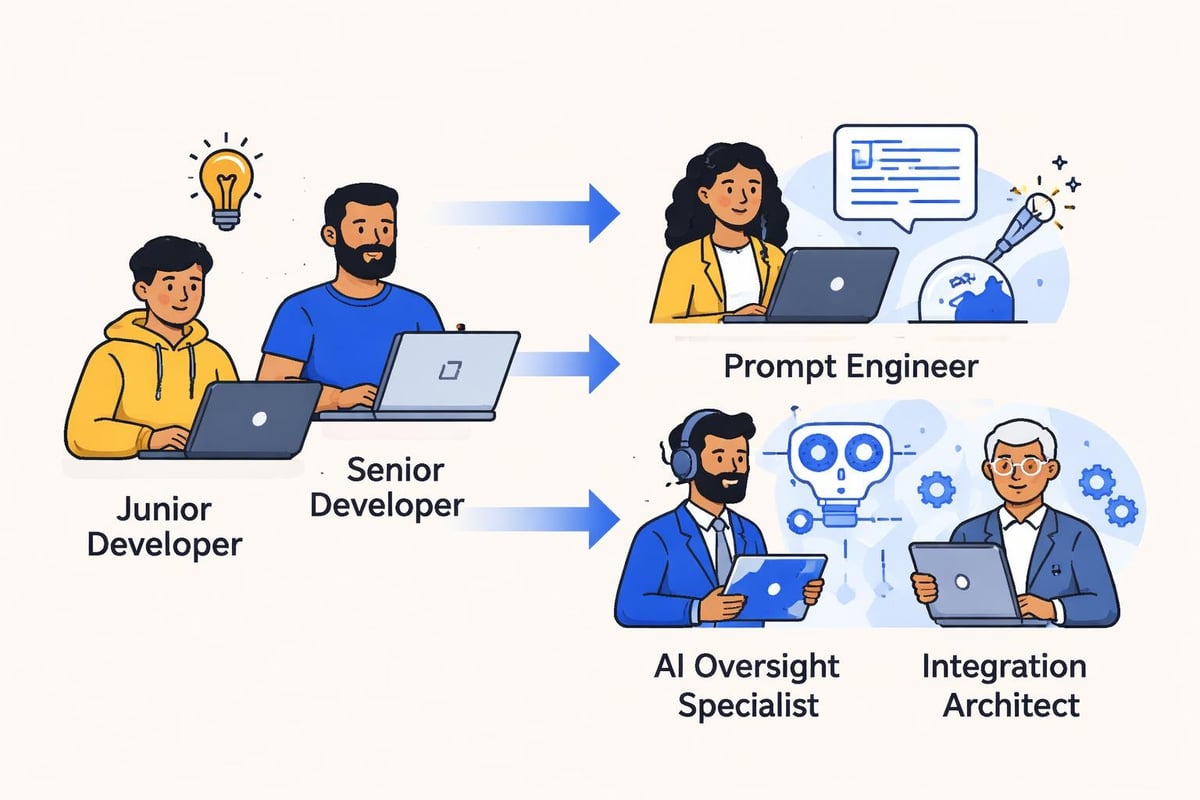
Junior developers may find their role changing from writing routine code to validating AI outputs and handling edge cases. Senior developers become more focused on architecture, system design, and ensuring AI-generated components integrate cohesively.
Team Structure Transformations
How-To Geek's exploration of vibe coding risks highlights that organizations must balance enthusiasm for AI assistance with practical governance. This requires new team structures:
- AI oversight specialists who understand both development and AI system behavior
- Integration architects who ensure AI-generated components work within existing systems
- Security auditors specifically trained to identify vulnerabilities in AI-generated code
- Prompt librarians who maintain repositories of effective prompts and patterns
Companies investing in enterprise workflow automation tools should consider how vibe coding capabilities might augment their automation strategies, potentially enabling more sophisticated workflows with less manual development effort.
Real-World Applications and Use Cases
Understanding what is vibe coding becomes clearer through practical examples. Tom's Guide's weekend app development story demonstrates the rapid development potential, showcasing how a single developer built and deployed a functional application in just days using AI assistance.
Enterprise Applications
Large organizations are experimenting with vibe coding for specific use cases where speed and customization intersect:
Internal tool development: Companies use vibe coding to create custom dashboards, reporting tools, and administrative interfaces without dedicating full development teams. These projects benefit from rapid iteration and the ability to quickly adjust to changing business requirements.
Prototyping and proof-of-concept work: Before committing resources to major development initiatives, enterprises use vibe coding to validate ideas and demonstrate functionality to stakeholders. This approach reduces risk and enables faster decision-making.
API integration layers: When connecting disparate systems, vibe coding can accelerate the creation of custom integration code, particularly for one-off connections that don't justify extensive manual development.
Startup and Innovation Scenarios
For startups and innovation teams, what is vibe coding if not a competitive advantage? The technology enables small teams to punch above their weight class:
- MVP development: Quickly validate market hypotheses with functional prototypes
- Feature experimentation: Test multiple approaches rapidly before committing to architecture
- Market expansion: Adapt existing products for new markets or use cases with minimal overhead
- Resource optimization: Accomplish more with smaller technical teams during critical early stages
Organizations exploring AI software development approaches find that vibe coding complements their broader AI strategy, enabling faster implementation of AI-driven features and capabilities.
Open Source and Community Implications
A growing concern in the development community centers on what is vibe coding's impact on open-source software. PC Gamer reports on research suggesting that vibe coding may reduce human engagement with open-source projects, as developers increasingly rely on AI-generated code rather than contributing to and learning from community projects.
The Open Source Sustainability Challenge
Open-source software thrives on community contributions, code review, and collaborative improvement. When developers use AI to generate code rather than studying and contributing to existing projects, several concerns emerge:
- Reduced contributions to foundational libraries and frameworks
- Less peer review and quality improvement in community projects
- Decreased knowledge transfer between experienced and junior developers
- Potential licensing complications when AI trains on open-source code
The community must address these challenges through new contribution models and governance frameworks that account for AI-assisted development while preserving the collaborative spirit of open source.
Balancing Innovation and Community Health
Organizations benefiting from vibe coding should consider giving back to the open-source ecosystem. This might include:
- Contributing AI-generated improvements back to source projects
- Supporting maintainers of critical dependencies financially
- Encouraging team members to engage with open-source communities
- Sharing prompts and patterns that benefit the broader developer community
- Participating in efforts to establish ethical AI development guidelines
Implementation Strategies for Organizations
For businesses evaluating what is vibe coding and whether to adopt it, a thoughtful implementation strategy is essential. TechTarget's guide for IT leaders outlines critical considerations including governance, training, and integration with existing development practices.
Getting Started with Vibe Coding
Organizations should approach vibe coding adoption systematically rather than allowing ad-hoc experimentation:
Phase 1: Pilot Projects
- Select low-risk, high-value use cases for initial experiments
- Establish success metrics focused on speed, quality, and developer satisfaction
- Document learnings and develop internal best practices
- Train a core team on effective prompt engineering and AI code review
Phase 2: Governance Development
- Create guidelines for when vibe coding is appropriate versus traditional development
- Establish code review standards specific to AI-generated code
- Implement security scanning and compliance checking workflows
- Define acceptable AI tools and platforms based on security and licensing requirements
Phase 3: Scaled Adoption
- Expand training across development teams
- Integrate vibe coding into standard development workflows
- Monitor quality metrics and technical debt accumulation
- Continuously refine processes based on team feedback and outcomes
Integration with Existing Development Processes
Vibe coding works best when thoughtfully integrated rather than treated as a separate development track. Organizations should:
- Incorporate AI-generated code into existing version control systems
- Apply the same testing standards regardless of code origin
- Maintain architectural review processes for all significant components
- Track AI-generated versus manually written code for quality analysis
- Ensure documentation standards apply uniformly across the codebase
Companies working with Bubble agencies or other development partners should discuss vibe coding capabilities and governance to ensure alignment on quality standards and security practices.
Future Trajectory and Evolution
What is vibe coding's future in the software development ecosystem? The technology continues evolving rapidly, with new capabilities and refinements emerging regularly. Several trends are shaping its trajectory:
Improving AI Model Capabilities
AI systems are becoming more sophisticated in understanding context, recognizing anti-patterns, and generating optimized code. Future developments likely include:
- Better understanding of domain-specific requirements and constraints
- Improved security awareness in generated code
- More sophisticated architectural pattern recognition
- Enhanced ability to work within existing codebases and styles
- Reduced hallucination and improved accuracy in complex scenarios
Integration with Development Tools
The boundary between traditional IDEs and AI-assisted development environments is blurring. Expect deeper integration of vibe coding capabilities into mainstream development tools, making the technology more accessible and contextually aware.
Regulatory and Standards Development
As vibe coding becomes more prevalent, industry standards and regulations will evolve to address its unique challenges. This might include certification programs for AI code review, standardized security protocols, and licensing frameworks that account for AI's role in code generation.
Organizations planning long-term technology strategies should monitor these developments and participate in industry discussions shaping vibe coding's future. The technology represents more than a temporary trend-it's a fundamental shift in how software gets created.
Vibe coding represents a transformative approach to software development that balances tremendous opportunity with meaningful challenges, requiring thoughtful implementation and governance to realize its benefits while managing risks. Whether you're exploring rapid MVP development, seeking to accelerate feature delivery, or looking to optimize development resources, Big House Technologies combines expertise in no-code platforms and AI-driven development to help you navigate this evolving landscape. Our team specializes in building scalable solutions that leverage the best of both traditional development and emerging AI-assisted methodologies, ensuring your projects benefit from cutting-edge approaches while maintaining the quality, security, and reliability your business demands.

About Big House
Big House is committed to 1) developing robust internal tools for enterprises, and 2) crafting minimum viable products (MVPs) that help startups and entrepreneurs bring their visions to life.
If you'd like to explore how we can build technology for you, get in touch. We'd be excited to discuss what you have in mind.
Other Articles
Develop MVP for 2025 success with this step by step guide covering market validation feature selection design tech stacks testing and launch strategies for growth
Learn how to validate an MVP fast using no-code tools and proven strategies. Get actionable techniques for rapid testing and real user feedback.
Discover the future of ai software development in 2025 with trends, tools, workflows, and best practices to boost productivity and future proof your projects.